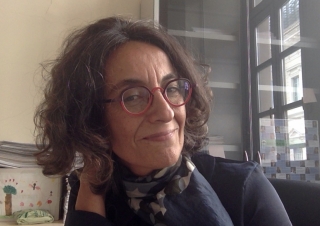
Marilena Vendittelli is a Professor at Sapienza University of Rome, affiliated with the Robotics group. Her research spans control systems, biomedical robotics, motion planning, and autonomous systems. Research Areas: Control systems for robotics and nonholonomic systems Biomedical applications (hyperthermia therapy, needle insertion) UAV navigation and obstacle avoidance Haptics and human-robot interaction Adaptive estimation algorithms Recent Publications focus on adaptive control of bio-heat equations, safe UAV motion planning, soft robotics actuation, and haptic feedback in medical procedures.
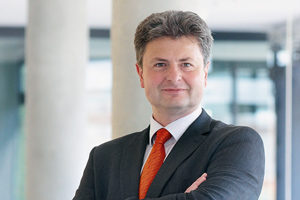
Prof. Dr. Michael Amberg is a full-time Professor of Business Informatics, specializing in IT Management, at Friedrich-Alexander University Erlangen-Nuremberg (FAU) . He has held this chair since 2001 and serves as director of the Dr. Theo and Friedl Schöller Research Center for Business and Society since 2010. Formerly, he occupied a professorship at RWTH Aachen University (1999–2001) and served as Vice Dean and Dean of FAU's Faculty of Law and Economics (2007–2012). Education: Computer Science at RWTH Aachen and FAU Erlangen-Nuremberg (1989) Research Focus: Systems development, IT management, and digitalization trends including AI, Industry 4.0, and smart services Leadership Roles: Spokesperson for the Department of Business and Social Sciences, Dean of Faculty (2007–2012), Research Center Director (since 2010) Key Collaborations: Interdisciplinary work with FAU's digitalization and innovation research cluster His recent publications address Explainable AI (XAI) integration into software development (2023) and human-centric work design in SMEs during Industry 4.0 transformations (2018). Current research emphasizes empirical methodologies for IT governance in digital ecosystems.
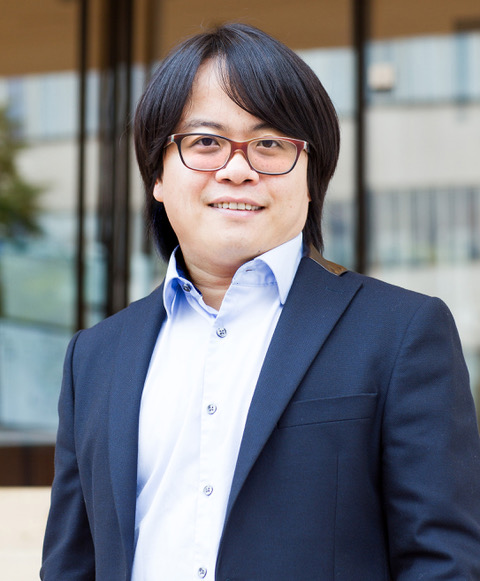
Lifeng Zhou is an Assistant Professor in the Department of Electrical and Computer Engineering at Drexel University, where he leads the Zhou Lab focused on advancing robustness and reliability in multi-robot systems through integration of foundation models. His research addresses real-world challenges in environmental monitoring, disaster response, and urban mobility. Education PhD, Electrical and Computer Engineering, Virginia Tech, 2020 MS, Control Science and Engineering, Shanghai Jiao Tong University, 2016 BS, Automation, Huazhong University of Science and Technology, 2013 Research Focus Dr. Zhou's work integrates robotics, algorithms, game theory and machine learning to develop secure and scalable autonomous systems. Primary research thrusts include: Resilient multi-robot coordination in adversarial environments Large language model integration for robotic decision-making Game-theoretic resource allocation strategies Risk-aware planning for autonomous vehicles Publication Trends Recent work (2024-2025) demonstrates strong focus on large language model applications in multi-robot systems, with 12/15 articles exploring LLM integration for flocking, scene segmentation, and decision-making. Additional emphasis includes adversarial robustness in target tracking (5 articles) and autonomous driving applications (4 articles). Awards and Recognition Best Paper Award, WACV 2025 LLVM-AD Workshop Professional Service Associate Editor, ICRA Conference Editorial Board Laboratory Focus The Zhou Lab develops foundational algorithms for secure and scalable multi-robot systems, with current projects spanning environmental monitoring drones, disaster response coordination, and autonomous vehicle perception systems.
Professor Anna Marie Munster is a distinguished academic and artist at UNSW Art and Design (College of Fine Arts), where she has held a full-time tenured position since 2001. Her work bridges theoretical scholarship with creative practice, establishing her as a leading figure in digital media art and critical theory. University: University of New South Wales School: College of Fine Arts (UNSW Art and Design) Position: Professor Qualifications: PhD from UNSW (2002), BA (Class 1 Hons with University Medal) from University of Sydney (1984) Professor Munster's research explores the intersections of art, technology, and philosophy, with particular focus on statistical visuality, radical empiricism, the politics and aesthetics of machine learning, and more-than-human perception. Her work integrates process philosophy with contemporary media practices, examining how time, movement, and sonicity shape our experience of digital environments. She approaches these topics through both theoretical scholarship and creative practice, often collaborating with artist Michele Barker on multi-channel audiovisual installations. Her publications reveal a consistent trajectory exploring the relationship between embodiment and digital media, with recent work focusing on AI and machine learning in cultural contexts. Munster's creative output demonstrates sophisticated integration of technical innovation with philosophical inquiry, particularly in how her installations challenge conventional perceptions of time and space. ARC, UNSW Student Council Award for Excellence in Postgraduate Supervision (2017) Dean's Award for Excellence in Postgraduate Supervision (2015) Highly commended for Materializing New Media at Prix Ars Electronica (2008) Winner of National Digital Art Awards 'The Harries' (2006) University Press of New England Publishing Award (2005) Professor Munster has completed over 20 PhD and Masters supervisions at UNSW and been involved in another 10 secondary supervisions. She currently supervises five PhD candidates working on diverse topics including coding materialities, critical bio-textiles, schizophrenia and XR technologies, sound and resonance, and affective drawing. Her ARC-funded research projects demonstrate sustained commitment to interdisciplinary work, particularly at the intersection of art, science, and technology. Her creative practice with Michele Barker has resulted in numerous commissioned installations exploring perception, embodiment, and the relationship between humans and technology.
Barbara J. Grosz serves as Higgins Research Professor of Natural Sciences in Harvard University's School of Engineering and Applied Sciences, renowned for foundational contributions to Artificial Intelligence through pioneering work in dialogue processing and multi-agent collaboration theories applied to human-computer interaction, healthcare coordination, and science education. Her research spans Artificial Intelligence, Natural Language Processing, Multi-agent Systems, and Computational Ethics, with recent focus on improving computer system design for healthcare and education. She co-founded Harvard's Embedded Ethics program, which integrates ethical reasoning into core computer science curricula, reflecting her commitment to responsible AI development. Professor Grosz has earned exceptional recognition including: ACM/AAAI Allen Newell Award (2009) IJCAI Award for Research Excellence (2015) ACL Lifetime Achievement Award (2017) Election to the National Academy of Engineering Membership in the American Philosophical Society Her leadership extends to establishing interdisciplinary research institutions and advancing women in science, demonstrating sustained impact across academia and societal applications of AI.
Steve Collins is an Associate Professor of Mechanical Engineering at Stanford University, with a courtesy appointment in the Department of Bioengineering. His research focuses on wearable robotics, biomechanics, and human-machine interaction. He leads projects on exoskeleton optimization, prosthetic design, and energy-efficient robotic actuators. His work aims to improve mobility for older adults and individuals with mobility impairments through innovative assistive technologies. Research Interests: Collins explores biomechanical principles underlying human movement, exoskeleton torque control strategies, and the design of devices that reduce metabolic costs during walking. His lab develops both hardware (e.g., exoskeleton emulators) and software (e.g., AddBiomechanics modeling tools) to advance assistive technologies. Key Contributions: He pioneered human-in-the-loop optimization methods for exoskeleton control, demonstrated energy-saving designs for ankle exoskeletons, and investigated how exoskeletons can enhance balance and reduce fall risks. His team also developed the 'Tripod' prosthesis emulator and electrostatic clutch systems for energy-efficient actuators. Grants & Collaborations: His work is supported by NSF grants (e.g., NRI: Small grant for exoskeleton control) and industry partnerships. He collaborates with clinicians to translate robotic innovations into clinical applications for amputees and aging populations. Labs & Teams: His research is conducted in Stanford's robotics and biomechanics facilities, focusing on interdisciplinary projects at the intersection of mechanical engineering, bioengineering, and computer science.
Dr. Frederick Li is an Associate Professor in the Department of Computer Science at Durham University, UK. He holds editorial roles as Associate Editor of Frontiers in Education (Digital Education) and Editorial Board Member of Virtual Reality & Intelligent Hardware. His research focuses on Computer Graphics, Machine Learning, Geometric Modelling, Collaborative Virtual Environments, Visual Aesthetics, and Educational Technologies. He earned his B.A. (Hons) and M.Phil. from The Hong Kong Polytechnic University and his Ph.D. in Computer Graphics from City University of Hong Kong. Prior roles include Assistant Professor at HK PolyU and project manager of a Hong Kong Government ITF-funded project. **Education**: B.A. (Computing Studies) and M.Phil. from HK PolyU; Ph.D. in Computer Graphics (CityU Hong Kong). **Research Interests**: His work spans mesh saliency detection, human-object interaction recognition, cloud modeling, face beautification, and educational technology. Recent achievements include awards for papers (e.g., Best Paper at ITiCSE 2014) and recognition such as EPSRC Peer Review College membership. He leads Durham's Undergraduate Board of Examiners and has been an external examiner at Northumbria University. **Awards**: Best Paper (ACM ITiCSE 2014), Outstanding Paper (ICALT 2013), EPSRC Peer Review College (2024), Outstanding BMVC 2024 Reviewer. **Grants & Labs**: His research is supported by grants from EPSRC and others. He collaborates with the Centre for Vision and Visual Cognition, VIViD, and AIHS group at Durham.
Niko Troje is a Professor at York University, affiliated with the Departments of Psychology, Biology, and Electrical Engineering & Computer Science. He holds cross-appointments and leadership roles, including Director of the BioMotion Lab. His research focuses on perceptual representations, biological motion, and vision science. Education: Ph.D. in Biology (1994) - Albert-Ludwigs Universität B.Sc. in Biology (1990), Physics & Mathematics (1987) - Albert-Ludwigs Universität Research Interests: Troje investigates how the brain processes biological motion, perception of human and animal movement, and applications in virtual reality. His work bridges neuroscience, psychology, and computer science. Key Contributions: Pioneered point-light displays for motion perception, explored gait analysis in mental health, and developed tools for motion capture and analysis (e.g., bmlTUX). Awards: Humboldt Research Prize (2014) NSERC Steacie Fellowship (2008-2009) Canada Research Chair (2003-2013) Grants & Labs: Led funded projects on movement perception, collaborated with institutions like the Max Planck Institute, and directs the BioMotion Lab at York University.
David Wettergreen is a Research Professor at the Robotics Institute within Carnegie Mellon University's School of Computer Science , where he has been a faculty member since 2000. He directs the PhD Program in Robotics and holds a courtesy appointment in Mechanical Engineering. His research focuses on robotic exploration systems for extreme environments, spanning planetary surfaces, underwater caves, and terrestrial deserts. Key areas include autonomous navigation , science autonomy , multi-modal perception , and resource-cognizant planning . Field validation drives his work, with deployments in the Atacama Desert, Antarctic volcanoes, and lunar analog sites. Co-founder of Mesh Robotics LLC for off-road autonomy Former Research Fellow at Australian National University Former National Research Council Research Associate at NASA Ames Research Center His 15 most recent publications (2023-2025) demonstrate expertise in autonomous path planning , machine learning applications , terrain modeling , and science-driven exploration . Collaborations span planetary science, environmental monitoring, and space systems engineering. He has advised 17 PhD and 33 MS students , many of whom now work in space exploration or field robotics, and teaches courses in Robotics Systems Engineering . Current projects include the MoonRanger lunar micro-rover and technologies for autonomous resource mapping .
Achilleas Psyllidis is an Assistant Professor of Urban Mobility and Director of the Urban Analytics Lab at TU Delft. He also leads the Social Urban Data Lab at Amsterdam Institute for Advanced Metropolitan Solutions and is affiliated with the LDE Centre for BOLD Cities. His roles include membership in TU Delft's Transport & Mobility Institute, the Mobility Futures Vision Team, and serving on the Executive Board of CUPUM. Education: PhD in Spatial Data Science (TU Delft, Faculty of Architecture and the Built Environment) Master of Science in Spatial Planning (National Technical University of Athens) Engineering Diploma in Architectural Engineering (National Technical University of Athens) Research Interests: Focuses on accessibility, walkability, land-use dynamics, and travel behavior. Develops computational methods for analyzing access equity, spatial segregation, and human mobility. Leads projects on sustainable urban mobility, environmental exposures, and the 15-minute city concept. Awards: CTwalk Map: Best Demo Award (ICT.Open 2024) ROUTE Ontology of Urban Transportation Entities (2015) Grants & Projects: Involved in initiatives like PERISCOPE (Social Resilience Design), Horizon2020 'Equal-Life' (Environmental Health), and SocialGlass (Urban Analytics Dashboard). Active in research collaborations across Europe and Asia. Labs & Teams: Directs Urban Analytics Lab and Social Urban Data Lab, focusing on data-driven urban solutions. Engages in interdisciplinary teams addressing mobility futures, urban health, and sustainable design.
John Nassour is a Researcher at the Technical University of Munich's School of Computation, Information and Technology, affiliated with the Chair of Cognitive Systems. He holds engineering degrees from Tishreen University (electronics), a Master's in intelligent systems from University of Cergy-Pontoise/École Nationale Supérieure de l'Électronique, and a joint PhD from University of Versailles/TUM. His interdisciplinary research focuses on computational cognitive systems applied to robotics, including wearable devices, humanoid robots, soft robotics, and robot learning for locomotion/manipulation. Before joining TUM in 2020, he was a lecturer/researcher at Chemnitz University of Technology. He teaches courses in cognitive systems, neuro-inspired engineering, and soft robotics.
Dr Jonathan Cook is a Research Fellow at Jesus College, University of Oxford, affiliated with the Medical Sciences division. He holds a primary medical qualification from Queen’s University (Canada, 2021) and a PhD investigating viral immune evasion mechanisms under Prof Jeffrey Lee. His work was supported by the Vanier Canada Graduate Scholarship and recognized with the Stuart Alan Hoffman Memorial Prize. As an incoming Banting Fellow at the Jenner Institute, he focuses on vaccine design for infectious diseases. His research interests include malaria eradication, emerging pathogens, and structure-based vaccine strategies. **Education**: - PhD (Investigation of viral entry glycoproteins), University of Toronto, supervised by Prof Jeffrey Lee - Primary Medical Qualification, Queen’s University, Canada **Research Interests**: - Malaria Eradication : Developing vaccines targeting Plasmodium species. - Emerging Infectious Diseases : Designing rapid-response strategies for pathogens like SARS-CoV-2. - Structure-Based Vaccine Design : Leveraging protein structural data to enhance immunogenicity. **Awards**: - Vanier Canada Graduate Scholarships Programme (2017–2020) - Stuart Alan Hoffman Memorial Prize (2021) - Banting Fellowship (incoming) **Grants/Advising**: Works on Jenner Institute-funded projects. No listed advisees yet. **Labs/Teams**: Collaborates with Prof Lee's lab at the Jenner Institute and the University of Toronto's Medical Microbiology program.
Hui Pan is a distinguished academic holding dual positions as Nokia Chair in Data Science and Professor of Computer Science at the University of Helsinki, and Chair Professor of Computational Media and Arts at the Hong Kong University of Science and Technology (HKUST). His research spans networking, mobile computing, augmented reality, and computational social science. He earned his Ph.D. in Computer Science from the University of Cambridge in 2007. His work bridges social networks with mobile systems, pioneering fields like mobile social networks and opportunistic forwarding algorithms. Research interests include data science, complex networks, and innovative applications of augmented reality. His recent publications focus on low-latency AR frameworks, blockchain for computation offloading, and mobile web visualization. He has received prestigious awards, including IEEE Fellow (2018), ACM Distinguished Scientist (2016), and the Nokia Chair Endowment (2017). He has supervised over 15 PhD and 12 MPhil graduates, with 13 current Ph.D. students and 2 MPhil students. His editorial roles include Associate Editorships at IEEE Transactions journals and guest editorships at top venues like IEEE JSAC and ACM Transactions. He has organized conferences such as WWW Track Chair and ExtremeCom General Chair.
Maya Balakrishnan is an Assistant Professor of Operations Management at the Jindal School of Management (JSOM), University of Texas at Dallas. She holds a PhD in Business Administration from Harvard Business School (2024) and a BS in Computer Science from Stanford University (2016). Her primary research focuses on Human-AI collaboration, Corporate Social Responsibility, and Behavioral Operations Management. She teaches courses such as AI in Supply Chain Management (OPRE 4393) and Advanced AI in Supply Chain Management (OPRE 6383). Her research explores how humans interact with algorithms in operational contexts and the ethical implications of workforce diversity disclosures on consumer behavior. Recent work emphasizes trust-building through operational design and mitigating risks in human-AI systems. Her awards include multiple first-place recognitions in behavioral operations competitions and a best presentation award at the Advances in Decision Analysis Conference. Awards: 2024 Production and Operations Management Junior Scholar Paper Competition (1st Place) 2023 INFORMS Behavioral Operations Working Paper Competition (2nd Place) 2022 Best PhD Blitz Presentation (Advances in Decision Analysis) Dr. Balakrishnan is actively involved in professional organizations such as INFORMS and the Manufacturing and Service Operations Management Society (MSOM). Her work bridges behavioral insights with operational systems, addressing real-world challenges in AI ethics and supply chain innovation.
Professor George Buchanan is a leading researcher in human-computer interaction and digital libraries at RMIT University . His work bridges information science, digital humanities, and health informatics, focusing on usability in sensitive contexts like healthcare and misinformation. Deputy Dean, Research at RMIT University Former Director, University of Melbourne iSchool Research Interests: Digital information interaction Health and aging informatics Disinformation analysis Mobile interface design Digital library systems Key Contributions: Developed mobile web usability benchmarks, spatial hypertext tools, and thermal feedback interfaces. Currently seeking PhD students for 2025 projects on digital browsing and view change dynamics. Awards: Over twenty best paper awards and Honorary Life Fellow of the Royal Society of Arts. Advising: Accepting Masters/PhD supervision in information interaction and digital health domains.