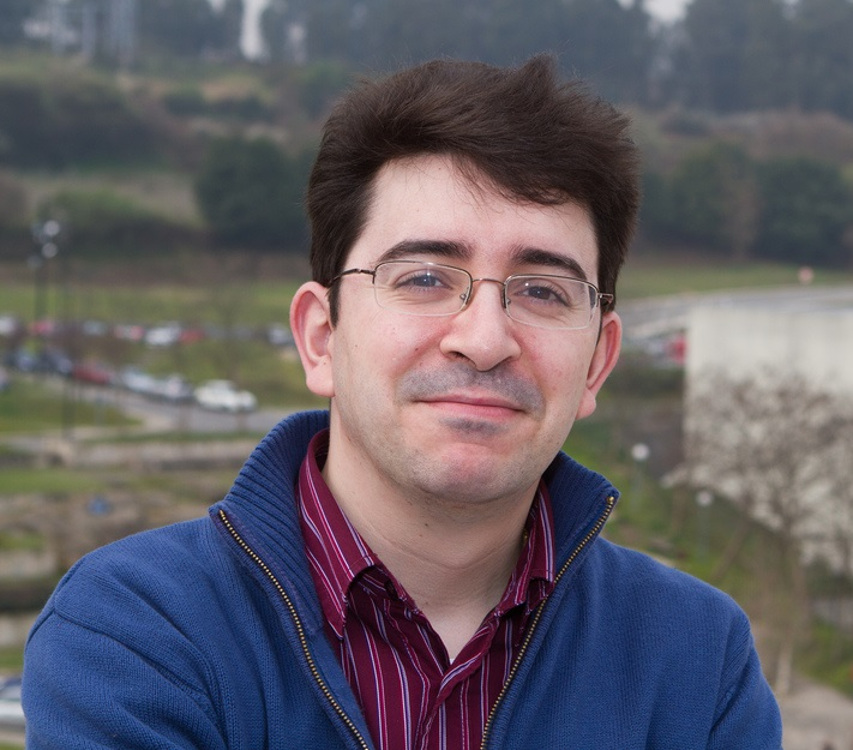
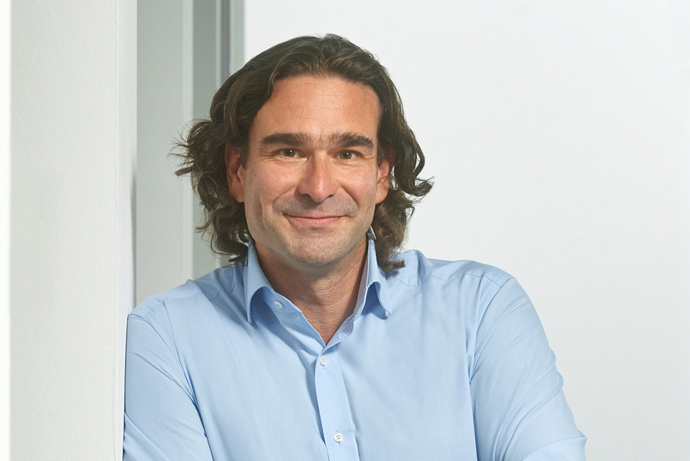
Jesús Vilares Ferro is a Research Professor at the Universidade da Coruña , Faculty of Computer Science, Department of Computer Science and Information Technology. His research focuses on Natural Language Processing , Computational Linguistics , and Information Retrieval . Current projects include machine translation, text mining, and semantic analysis. He has led multiple national and autonomous grants since 2007. His teaching includes Programming II , Programming Paradigms , and Advanced Natural Language Processing Techniques across Computer Engineering and Artificial Intelligence degrees. He has directed numerous final-year projects, including adaptive game designs for accessibility and social media analytics systems. His recent publications analyze efficient parsing techniques, multilingual retrieval, and sentiment analysis frameworks.
Jiasi Shen is an Assistant Professor in the Department of Computer Science and Engineering at The Hong Kong University of Science and Technology. She leads the HKUST Automated Reasoning and Transformation of Software research group. PhD and Master's from Massachusetts Institute of Technology Bachelor's from Peking University Her research focuses on automating software development through program analysis , program transformation , and active learning . She explores how to systematically introduce safety checks, optimize performance, and enable cross-platform adaptation while maintaining core functionality. Recent work includes: Dynamic graph-based fingerprinting for cryptomining detection Benchmarking LLMs for operating system verification tasks Improving program comprehension via deimplicitization techniques She has received the Distinguished Artifact Award at SLE 2017 and serves on program committees for OOPSLA, Onward!, and SPLASH conferences. Her group supervises multiple PhD and MPhil students while developing systems like Konure (database application modeling) and KumQuat (parallel Unix command synthesis).
João Pedro Matos-Carvalho is an Assistant Professor at Lusófona University in Lisbon, affiliated with the School of Engineering and the Department of Electrical and Computer Engineering. He is also an Integrated Member of the Center of Technology and Systems (CTS) at UNINOVA and COPELABS, Lusófona University, contributing to interdisciplinary research in robotics and intelligent systems. Ph.D. in Electrical and Computer Engineering, FCT NOVA (2021) M.Sc. (Hons.) in Electrical and Computer Engineering, FCT NOVA (2017) His research focuses on aerial robotics, machine learning, remote sensing, and sensor networks, with applications in UAV navigation, precision agriculture, environmental monitoring, and embedded AI. He has made significant contributions to GPS-denied navigation, multispectral imaging, and AI-driven signal processing. The recent publications reflect a strong trend in integrating deep learning with real-world engineering systems, particularly in UAV autonomy, IoT, and human-centric applications like fall detection and online learning analysis. His work spans algorithm design, software development, and practical deployment in complex environments. Best Paper Award at IEEE Conference (2018) Distinguished Paper Award by LASIGE at FCUL (2021) Best Poster Presentation Award at International Complex Systems and Their Applications Conference (2023) He has secured the competitive Scientific Employment Stimulus (CEEC) grant from FCT and has advised or collaborated on multiple research projects. He has guest-edited special issues in journals such as Drones and Frotiers in Computer Science , and serves as a reviewer for leading scientific journals. He leads the development of open-source tools like AutoNAV and Raster Forge, supporting simulation and geospatial analysis. He is actively involved in research teams at CTS-UNINOVA and COPELABS, focusing on intelligent systems, aerial robotics, and data fusion. His lab work emphasizes practical UAV platforms, sensor integration, and AI deployment in real-time systems.
Aditya Sharma is a researcher at the University of California Santa Barbara , focusing on Natural Language Processing , Computer Vision , and Artificial Intelligence . His work bridges vision-language models, medical AI evaluation, and knowledge graph reasoning. PhD : Advancing AI Understanding in Language & Vision (UCSB, 2024) Research Interests: • Vision-Language Models for geometric reasoning and mixed reality • Medical LLM evaluation and hallucination reduction • Temporal knowledge graph reasoning and multimodal systems Article Trends: Recent publications emphasize vision-language integration (e.g., GeoCoder, OCTO+), LLM reliability in medical contexts (MedHELM), and temporal reasoning (TwiRGCN). He explores applications in dark web security , healthcare diagnostics , and energy-efficient computing .
Prof. Dr.-Ing. Daniel Sonntag serves as Scientific Director of Interactive Machine Learning at the German Research Center for Artificial Intelligence (DFKI) and holds an Endowed Chair of Applied Artificial Intelligence at University of Oldenburg. He leads multiple significant research initiatives including No-IDLE (Interactive Deep Learning Enterprise), MASTER (Mixed reality ecosystem for teaching robotics), Ophthalmo-AI (intelligent eye care diagnostics), pAItient (AI applications in medicine), and XAINES (explainable AI with narratives). His research spans intelligent user interfaces, natural language processing, information retrieval, dialogue systems, common-sense modeling, and explainable machine learning methods for cognitive computing. His work particularly focuses on multimodal-multisensor interfaces for medical and health systems and Industry 4.0 applications. His research has had industrial impact, with SmartWeb's multimodal interaction design forming the technical infrastructure for Apple's Siri. His recent publications demonstrate strong trends in medical AI applications, particularly in eye tracking, radiology report generation with enhanced interpretability, and interactive federated learning frameworks. His work consistently bridges theoretical AI advances with practical medical and industrial applications. German High Tech Champion Award (2011) As a principal investigator, Sonntag leads national and European projects funded by the Federal Ministry of Education and Research, Federal Ministry for Economic Affairs and Energy, Federal Ministry of Health, and Horizon Europe. He has supervised numerous researchers including Michael Barz, Jan Zacharias, and Alexander Prange across multiple projects. His research group has successfully transitioned technologies to industry, with former researchers joining companies like Apple, Wacom, and Semvox. Sonntag's laboratory work centers on the Interactive Machine Learning department at DFKI, with strong connections to medical institutions and industry partners. His team develops cognitive assistance systems, mixed reality applications for smart factories, and AI-based diagnostic support tools, particularly in ophthalmology and radiology.
Adam Tindale is an Associate Professor of Human-Computer Interaction at OCAD University’s Faculty of Arts & Science, specializing in electronic musical instruments and innovative interaction design. He is renowned for his work on the E-Drumset, an instrument combining physical modeling, machine learning, and intuitive interfaces. His research bridges music technology, wearable systems, and immersive environments, emphasizing cross-disciplinary collaboration. Education: B.Mus. (Queen's University), M.M. in Music Technology (McGill University), Ph.D. in Interdisciplinary Studies (University of Victoria, focusing on Music, Computer Science, and Electrical Engineering). Research interests include: Design of digital musical instruments Wearable technology for performance VR audio interfaces Gesture-based interaction systems His recent work explores: Generative art through GANs (e.g., calligraphic Arabic scripts) Anisochronous rhythmic interfaces 3D-printed information embedding Key contributions include the JunctionBox toolkit for sound interfaces and frameworks like Flocking for web-based music.
Professor Flora Salim is a leading academic at the University of New South Wales (UNSW) Sydney, holding a full Professorship in the School of Computer Science and Engineering. She serves as Deputy Director (Engagement) of the UNSW AI Institute and contributes to multidisciplinary research at the intersection of ubiquitous computing, machine learning, and data science. Human-centred AI and ethical systems Spatio-temporal data modeling Applications for climate resilience and urban mobility Her research focuses on multimodal foundation models, continual learning, and responsible AI deployment in real-world environments. She explores: Time-series and sensor data analysis Wearable and environmental sensing AI for sustainable infrastructure Robustness and trustworthiness in models Recent publications highlight her work on: Transformer-based climate downscaling Cross-modal fairness in mobility Privacy-preserving spatio-temporal generation Patient similarity networks in healthcare She has received multiple competitive fellowships including: Humboldt Fellowship Bayer Fellowship Victoria Fellowship ARC Australian Postdoctoral Industry (APDI) Fellowship Additional accolades include: Women in AI Award Australia and New Zealand (2022) IBM Smarter Planet Industry Innovation Award As Chief Investigator in: ARC Centre of Excellence for Automated Decision Making and Society (ADM+S) ARC Training Centre for Whole Life Design for Carbon Neutral Infrastructure She maintains active collaborations through: Associate position at ELLIS Alicante Visiting Professor roles at University of Kassel (2019-2020) and University of Cambridge (2019) Editorial board memberships in ACM TIST, IEEE Pervasive Computing, and Nature Scientific Data
Byron C. Wallace is an Adjunct Associate Professor of Health Services, Policy and Practice at Brown University. His research focuses on machine learning, data mining, and natural language processing (NLP), with an emphasis on healthcare applications such as evidence synthesis, systematic review automation, and computational methods for biomedical data analysis. Wallace completed his PhD in Computer Science at Tufts University in 2012 under the supervision of Carla Brodley. His work bridges computational methods and real-world healthcare challenges, particularly in reducing human workload in evidence-based practices through AI-driven systems like abstrackr . Key areas of research include: Developing machine learning models for systematic review pipeline optimization Addressing class imbalance in datasets and improving probability estimates Computational narrative analysis and multi-threaded text disentanglement Collaborative tools for methodologists and end-users in evidence-based medicine Publications span high-impact journals like Genetics in Medicine and conferences such as IEEE ICDM and NAACL. His work frequently intersects computational biology (e.g., single-cell analysis) and clinical decision support systems. No awards or grants were explicitly mentioned in the provided texts, though his contributions to evidence synthesis tools suggest significant institutional impact.
FH-Prof. Dr. Michael Iber is a faculty member at the St. Pölten University of Applied Sciences, affiliated with the Department of Media and Digital Technologies. He holds academic roles including Academic Director of GRACE (MA) and E³UDRES², and serves as International Coordinator. His research focuses on sonification, audio-visual analytics, and interdisciplinary applications in healthcare and production systems. Education & Background Studied piano at Karlsruhe University of Music and Royal Academy of Music, London Interdisciplinary doctorate in 'Auditory Logistic Analysis' (Jacobs University Bremen) Research Interests Iber's work bridges art and technology, emphasizing multimodal data analysis through sound and visual interfaces. Key areas include: Real-time sonification for healthcare (e.g., gait analysis via wearable devices) Audio-visual analytics for complex data exploration Applications in production logistics and cyber-physical systems Key Projects Leading initiatives like SoniVis (data analysis via audio/visual fusion) and SONIGait (wearable gait monitoring). Collaborates on EU-funded projects such as E³UDRES² and CARMA (healthcare tech). Publications & Recognition Over 40 peer-reviewed papers in journals like Personal and Ubiquitous Computing and conferences like EuroVis/IEEE VIS. Focus on interdisciplinary methodologies and practical implementations.
Dr. Micheal Axelsen is a Senior Lecturer in Business Information Systems at the UQ Business School, University of Queensland, and serves as Deputy Director (Teaching & Learning) for Commerce Programs. He holds a PhD and is a Fellow of CPA Australia, with memberships in multiple professional organizations including ISACA and the Association for Information Systems. Affiliations: UQ Business School, School of Business, Faculty of Business, Economics and Law Education: PhD (UQ), Master's (UQ), Bachelor of Commerce (Honours) (UQ) His research focuses on Information Systems Audit , IT Governance , and Cybersecurity Governance , with notable contributions in decision aids' impact on professional knowledge and experiential IT education. He teaches in Master's programs like Business Analytics and Commerce, integrating industry insights from 15+ years as an IS consultant and Director. Publications span journals like Business and Information Systems Engineering and International Journal of Accounting Information Systems , addressing topics from low-code development to healthcare data governance. He has advised on cybersecurity strategies for government and industry, including a 2020 submission to Australia's Cyber and Critical Technology Engagement Strategy. Awards: CPA Australia Fellowship Grants/Industry Work: Seed funding projects, IS consulting for public/private sectors Current research explores cybersecurity accountability models and pedagogical innovations in information systems education.
Professor Patrick E. Mantey is a distinguished faculty member at the University of California, Santa Cruz (UCSC), where he serves in the Jack Baskin School of Engineering. He is the founding dean of the school (1997–2001) and continues to contribute as a professor in Computer Engineering. He also holds leadership roles as Director of the Institute for Networking, Information Systems and Technologies and as the UCSC affiliate director of CITRIS. His career bridges academia and industry, with prior experience at IBM and teaching at Stanford University. Ph.D., Electrical Engineering, Stanford University (NSF Fellow) M.S., Electrical Engineering, University of Wisconsin-Madison B.S., Electrical Engineering, University of Notre Dame (magna cum laude) His research spans signals and systems, with early contributions in digital signal processing, geographic information systems, and database applications. His current focus is on resilient and renewable energy systems through the RREES Lab, where he investigates microgrid energy management, anomaly detection, and federated microgrid systems. His work integrates machine learning, real-time data analysis, and decision support systems. The majority of his recent publications center on real-time environmental monitoring, multimedia systems, and educational technology. Trends show a strong emphasis on distributed systems, data visualization, and networked applications in environmental and educational contexts. His earlier work laid foundations in digital filtering, power systems, and interactive geographic data systems. Fellow of the IEEE (2001) NSF Fellowship during doctoral studies Microsoft, NOAA, NSF, and U.S. Army Corps of Engineers research awards Professor Mantey has advised numerous students through capstone projects and research initiatives, particularly in networked systems and environmental informatics. His research has been supported by major grants from the National Science Foundation, Office of Naval Research, NOAA, and industry partners including IBM, Cisco, Sun, Microsoft, and Hewlett-Packard. He has led large-scale projects such as REINAS and contributed to the development of the UCSC Scientific Visualization Laboratory. He is actively involved in multiple research groups, including the Storage Systems Research Center (SSRC), the Telecollaboration Lab, the Computer Communication Research Group (CCRG), and the CARNIVORE Project. These labs focus on storage systems, educational technology, wireless networks, and environmental sensor networks, reflecting the interdisciplinary nature of his work.
Dr. Sergi Jordà is a Senior Researcher and Associate Professor at the Music Technology Group of Universitat Pompeu Fabra (UPF) in Barcelona. He obtained his B.S. in Fundamental Physics (1986) and PhD in Computer Science and Digital Communication (2005) from UPF. He leads the Music & Advanced Interaction (MAIn) team and teaches courses in Computer Music, Audio Signal Processing, Human-Computer Interaction (HCI), and Interactive Media. In 2011, he joined the tenure-track faculty at UPF. Research Interests Jordà's research focuses on the intersection of Human-Computer Interaction (HCI) and tangible musical interfaces , including applications in education, collaborative music creation, and brain-computer interfaces . His work explores how tabletop interfaces and visual feedback can enhance intuitive instrument design and real-time performance. He is best known for co-inventing the Reactable , a tangible tabletop musical instrument that gained global recognition after being used by Icelandic artist Björk in her 2007-08 world tour. Scientific Awards Prix Ars Electronica Golden Nica (2008) MIDEM Hottest Music Biz Start-Up Award (2008) Yellow Pencil, D&AD Design Awards (2008) Rolling Stone Magazine's Hot Instrument of the Year (2007) Premi Ciutat de Barcelona (1999, 2007) Möbius International Award (2001) Innova Business Ideas Contest (2008) Projects and Grants He has participated in over 30 international scientific committees, including chairing TEI'13 (Tangible, Embedded and Embodied Interaction Conference) . Jordà has secured funding from the European Commission and Spanish government for six research projects, two as Principal Investigator (IP). In 2009, he co-founded the spin-off company Reactable Systems , which launched Reactable Mobile for iOS devices in 2010.
Ralf Engbert is a Professor of Experimental and Biological Psychology at the University of Potsdam's Faculty of Human Sciences, where he leads research in eye movement control, attention, and dynamical modeling of cognitive processes. He serves as a member of the Executive Committee of the Research Focus 'Cognitive Sciences' at the university, demonstrating his leadership role in interdisciplinary research. His work bridges psychology, neuroscience, and mathematical modeling to understand fundamental cognitive mechanisms through rigorous empirical and computational approaches. Engbert received his Dr. rer. nat. in 1998 from the Department of Physics at the University of Potsdam and completed his Dipl.-Physiker in 1994 at RWTH Aachen University. His physics background has profoundly shaped his research methodology, emphasizing quantitative and mathematical approaches to psychological phenomena. This interdisciplinary foundation enables him to develop sophisticated computational models that capture the dynamic nature of cognitive processes. Professor Engbert's research program centers on the dynamical systems approach to cognition, with particular emphasis on attention and eye movements. His work integrates biological and mathematical psychology to create computational models explaining visual information processing during reading and scene viewing. Key contributions include advancing understanding of microsaccades, peripheral vision in scene perception, and Bayesian approaches to modeling eye movement control. His research frequently involves cross-disciplinary collaborations with mathematicians, computer scientists, and linguists, reflecting the integrative nature of modern cognitive science. Analysis of his recent publications reveals a clear progression toward more sophisticated dynamical modeling of eye movements, with increasing incorporation of Bayesian statistical methods. His work spans multiple domains including reading research, scene perception, and infant cognition, with a notable trend toward integrating computational modeling with empirical eye-tracking data to develop comprehensive theories of cognitive processing. This evolution reflects both methodological advances and expanding theoretical scope in his research program. Project B03 of CRC 1294: Parameter inference and model comparison in dynamical cognitive models (with Prof. Sebastian Reich) Project B05 of CRC 1294: Attention selection and recognition in scene viewing (with Prof. Tobias Scheffer) Project B03 of CRC 1287: Modeling the interaction between eye-movement control and parsing processes (with Prof. Shravan Vasishth) Mobile eye tracking: Generalizability and limitations of the static scene viewing paradigm (Lead PI: Dr. Hans A. Trukenbrod) Professor Engbert maintains an active research group within the Department of Experimental and Biological Psychology, contributing to the Potsdam Eye-Movement Corpus and other shared research resources. His laboratory combines experimental eye-tracking facilities with computational modeling expertise, supporting a pipeline from data collection to theoretical development. The group's work has significant implications for understanding fundamental cognitive mechanisms and developing applications in human-computer interaction, educational technology, and clinical assessment.
Liao Lizi is an Assistant Professor and Lee Kong Chian Fellow at Singapore Management University's School of Computing and Information Systems. She received her Ph.D. from the National University of Singapore under Professor Tat-Seng Chua. Her research explores the intersection of Machine Learning, Natural Language Processing, and Multimedia, focusing on developing conversational AI systems. Key areas include: Proactive conversational agents that anticipate user needs Multimodal conversational search and recommendation systems Task-oriented dialogue frameworks Human-machine collaborative systems Emotional support and empathetic response generation Her publications demonstrate a strong focus on advancing conversational AI through novel architectures for dialogue planning, multimodal understanding, and knowledge-enhanced generation. Recent work shows increasing emphasis on LLM optimization, financial reasoning benchmarks, and emotional intelligence in dialogue systems. Scientific Awards: Lee Kong Chian Fellowship Google South Asia & Southeast Asia Research Awards 2023 She leads the CoAgent Lab and advises multiple PhD students including recipients of the SMU Presidential Doctoral Fellowship. Current teaching includes Visual Analytics for Business Intelligence (IS428) and Text Analytics and Application (ISSS609).
Adriano Lopes is an Invited Assistant Professor at Iscte - Instituto Universitário de Lisboa, affiliated with the Department of Information Science and Technology within the School of Technologies and Architecture. He is also an Associate Researcher at ISTAR-IUL, the university's research center in Information Sciences, Technologies, and Architecture. His academic work spans software systems engineering, visual analytics, and big data technologies. PhD in Computer Science – University of Leeds, UK (1999) Master’s in Computer Science – University of Coimbra (1993) Bachelor’s in Electrical Engineering (Computer Science branch) – University of Coimbra (1986) Postgraduate studies in Financial Analysis – Technical University of Lisbon, ISEG (2013) Adriano Lopes’ research focuses on visual analytics, big data, software engineering, and computer graphics, with a strong emphasis on data visualization and its applications in domains such as smart tourism and urban planning. His work integrates human-centric design with advanced computational techniques to support decision-making in complex systems. His recent publications highlight a shift toward applied research in digital transformation for sustainable tourism, particularly through spatiotemporal visualization of tourism crowding and carrying capacity modeling. These works demonstrate a consistent trend in leveraging data-driven platforms for real-world societal challenges, especially in the context of post-pandemic recovery and sustainable development. Adriano has supervised numerous Master’s students at both Iscte and Universidade Nova de Lisboa, with thesis topics covering sentiment analysis, GPU-based rendering, anomaly detection, and tourism flow forecasting. He has participated in EU-funded research projects such as RESETTING, which aims to relaunch sustainable tourism models through digitalization. His academic service includes organizing roles in major visualization conferences like EUROVIS 2006 and the Eurographics UK Conference. He has been actively involved in research labs and teams including ISTAR-IUL and CITI (research center at FCT/UNL), contributing to interdisciplinary projects that bridge computer science with architecture, telecommunications, and tourism. His work reflects a strong commitment to collaborative, applied research with societal impact.