معرفی
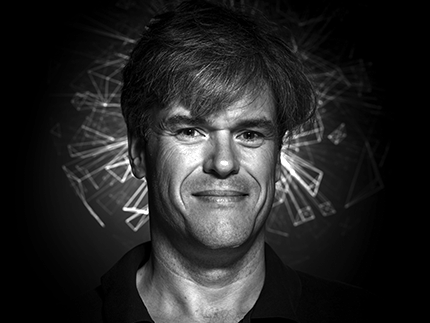
Ralf Engbert is a Professor of Experimental and Biological Psychology at the University of Potsdam's Faculty of Human Sciences, where he leads research in eye movement control, attention, and dynamical modeling of cognitive processes. He serves as a member of the Executive Committee of the Research Focus 'Cognitive Sciences' at the university, demonstrating his leadership role in interdisciplinary research. His work bridges psychology, neuroscience, and mathematical modeling to understand fundamental cognitive mechanisms through rigorous empirical and computational approaches.
Engbert received his Dr. rer. nat. in 1998 from the Department of Physics at the University of Potsdam and completed his Dipl.-Physiker in 1994 at RWTH Aachen University. His physics background has profoundly shaped his research methodology, emphasizing quantitative and mathematical approaches to psychological phenomena. This interdisciplinary foundation enables him to develop sophisticated computational models that capture the dynamic nature of cognitive processes.
Professor Engbert's research program centers on the dynamical systems approach to cognition, with particular emphasis on attention and eye movements. His work integrates biological and mathematical psychology to create computational models explaining visual information processing during reading and scene viewing. Key contributions include advancing understanding of microsaccades, peripheral vision in scene perception, and Bayesian approaches to modeling eye movement control. His research frequently involves cross-disciplinary collaborations with mathematicians, computer scientists, and linguists, reflecting the integrative nature of modern cognitive science.
Analysis of his recent publications reveals a clear progression toward more sophisticated dynamical modeling of eye movements, with increasing incorporation of Bayesian statistical methods. His work spans multiple domains including reading research, scene perception, and infant cognition, with a notable trend toward integrating computational modeling with empirical eye-tracking data to develop comprehensive theories of cognitive processing. This evolution reflects both methodological advances and expanding theoretical scope in his research program.
- Project B03 of CRC 1294: Parameter inference and model comparison in dynamical cognitive models (with Prof. Sebastian Reich)
- Project B05 of CRC 1294: Attention selection and recognition in scene viewing (with Prof. Tobias Scheffer)
- Project B03 of CRC 1287: Modeling the interaction between eye-movement control and parsing processes (with Prof. Shravan Vasishth)
- Mobile eye tracking: Generalizability and limitations of the static scene viewing paradigm (Lead PI: Dr. Hans A. Trukenbrod)
Professor Engbert maintains an active research group within the Department of Experimental and Biological Psychology, contributing to the Potsdam Eye-Movement Corpus and other shared research resources. His laboratory combines experimental eye-tracking facilities with computational modeling expertise, supporting a pipeline from data collection to theoretical development. The group's work has significant implications for understanding fundamental cognitive mechanisms and developing applications in human-computer interaction, educational technology, and clinical assessment.