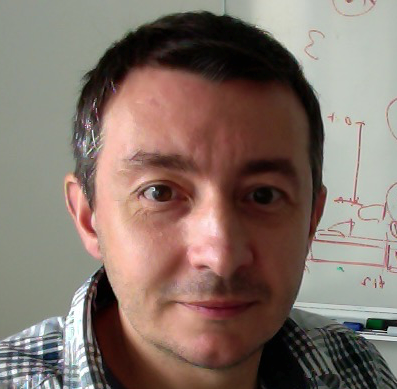
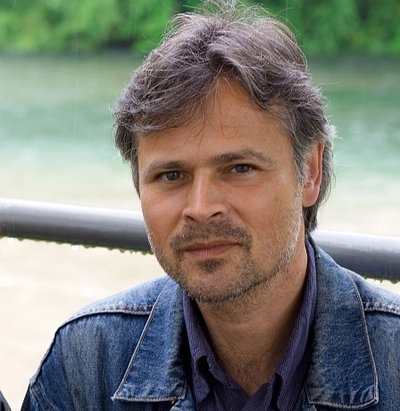
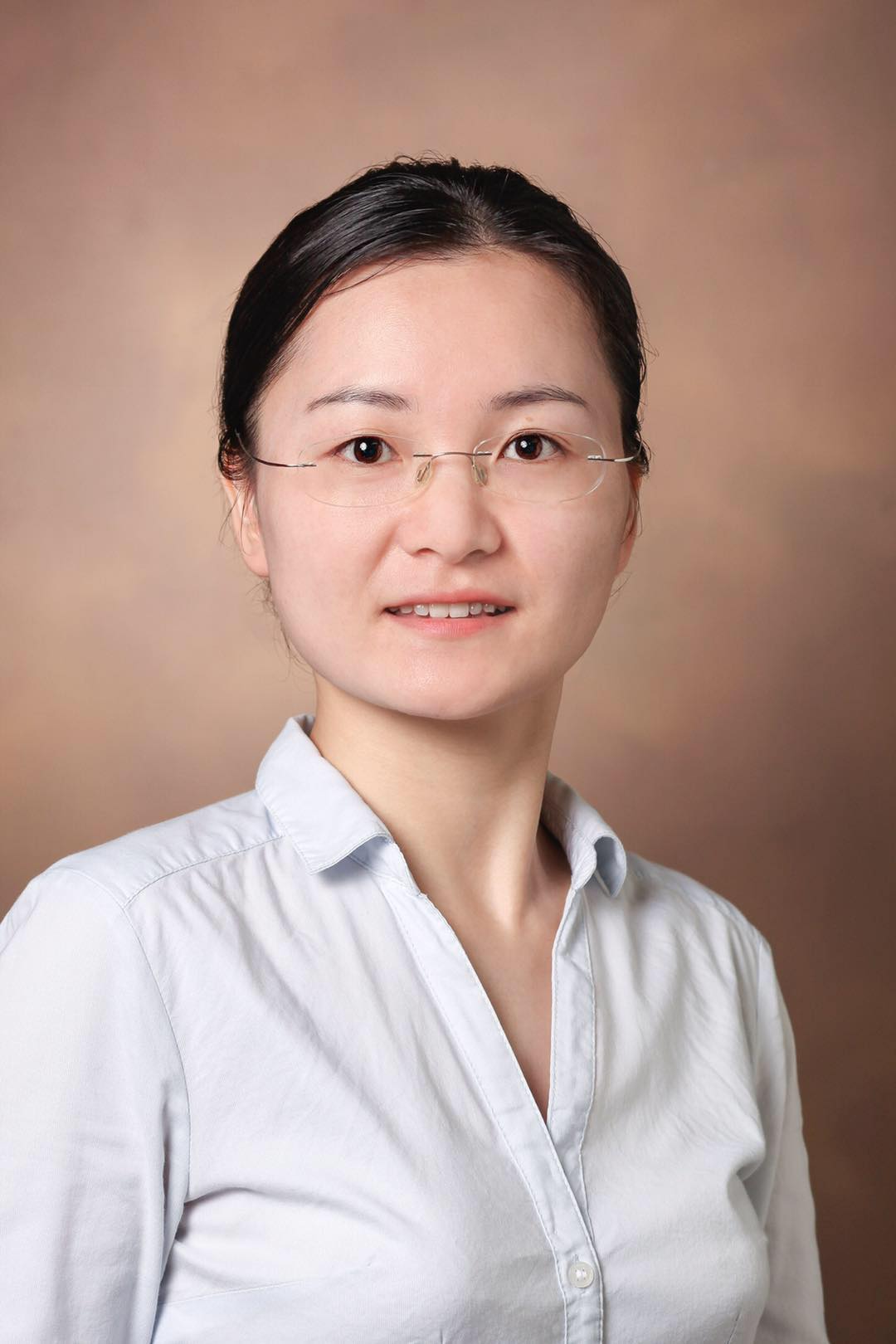
Petri Niemi is a Researcher at LUT University within the School of Engineering Sciences , specifically affiliated with the Industrial Engineering and Management (IEM) department. His work spans interdisciplinary domains, linking engineering with business practices. Current research focuses on soil science and agricultural management, particularly analyzing soil pore structure, microbial interactions, and long-term agricultural impacts. His earlier contributions center on supply chain management, logistics optimization, and educational pedagogy, including experiential learning frameworks and student guidance systems. Research Trends: Recent publications highlight sustainable soil management and pore dynamics, while earlier works emphasize knowledge development in supply chains and logistical service innovation. His expertise bridges quantitative analysis, organizational behavior, and user-centric design. Education & Practice: While formal educational details are not public, his pedagogical involvement includes student guidance and curriculum development for secondary and higher education programs.
Dr. Steven J. Jones is a Professor in the Department of Medical Genetics at the University of British Columbia (UBC) and Associate Director/Head of Bioinformatics at the Genome Sciences Centre, BC Cancer Research Centre. He serves as Director of the CIHR/MSFHR Bioinformatics Training Program and the UBC Bioinformatics Graduate Program, with associate memberships at the Peter Wall Institute for Advanced Studies and Michael Smith Laboratories. Dr. Jones' research focuses on computational genomics and cancer bioinformatics , analyzing mutational landscapes and epigenetic targets in oncology. His work includes next-generation sequencing , structural variant detection , and long-read sequencing applications for resolving complex genomic architectures. He has extensive experience with transcriptome analysis , gene regulation , and comparative genomics across diverse organisms including C. elegans , conifers, and human pathogens. His 15 most recent publications highlight expertise in long-read sequencing for cancer genomics , imprinting disorders , and structural variation analysis. Key contributions include developing the Circos visualization tool for comparative genomics and pioneering bioinformatics approaches for epigenetic modifier discovery in oncology. Scientific Awards : Spencer Award for IT innovation (2005) 2007 Medical Genetics teaching award (UBC) 2011 Fellow of the Royal Society of Canada 2012 UBC Killam teaching prize 2014 Distinguished Achievement Award (UBC Faculty of Medicine) 2014 Fellow of the Canadian Academy of Health Sciences Clarivate Analytics Highly Cited Researcher (2016, 2018) Dr. Jones actively advises graduate students and serves as a data analysis center for the Canadian Epigenetics, Environment and Health Research Consortium (CEEHRC). He co-founded Ifowonco Bioinformatics Inc. and Alamya Health, PBC, and consults for Apotheca Systems Inc.
Paolo Monti is a Professor and Head of the Optical Networks Unit at Chalmers University of Technology's Department of Communications, Antennas and Optical Networks. With extensive expertise in optical communication infrastructures, he leads research focusing on energy efficiency, network resiliency, programmability, automation, and techno-economics of optical networks. His work spans multiple international collaborations with funding from major research bodies across EU, USA, and Asia. Professor Monti's research interests center around next-generation optical networking technologies. His work explores the integration of artificial intelligence and machine learning with optical networks, quantum-classical network convergence, 6G infrastructure development, and network automation. His research addresses critical challenges in network energy consumption, reliability under failure conditions, and cost-effective deployment strategies for emerging communication technologies. The research group under his leadership develops frameworks for optical network monitoring, security, and resource optimization using advanced computational techniques. Analysis of his recent publications reveals a strong trend toward AI/ML integration with optical networking, with significant focus on quality of transmission estimation, network automation, and 6G readiness. His work increasingly combines quantum technologies with classical optical networks while addressing practical implementation challenges in multi-band elastic optical networks. The publications demonstrate a progression from theoretical network design to practical implementations with real-world validation. Professor Monti has received recognition as a Senior Member of IEEE, highlighting his contributions to the field of communications and networking. As an academic leader, Professor Monti has been involved as Principal Investigator, co-PI, and main technical leader in numerous national and international projects. His educational contributions include teaching courses at undergraduate, Master's, and PhD levels, as well as developing ICT-focused education programs. His research has been supported by major funding bodies including the European Commission, VINNOVA, and Wallenberg Centre for Quantum Technology. The Optical Networks Unit under Professor Monti's leadership operates as a vibrant research environment focusing on both theoretical and experimental aspects of next-generation optical communications. The unit maintains strong collaborations with industry partners and academic institutions worldwide, participating in multiple EU-funded projects and national initiatives focused on quantum communications and 6G infrastructure.
Prof. Dr. Stefan Brönnimann serves as a Professor and Unit Leader of Climatology at the Institute of Geography, University of Bern. His extensive research portfolio spans historical climatology, climate dynamics, and atmospheric circulation reconstruction, with particular focus on the past 400 years. He plays a leadership role in major international climate initiatives including the IPCC assessment reports and various climate reanalysis projects. Brönnimann's research centers on reconstructing historical weather and climate patterns through the innovative combination of early instrumental data, proxy records, and climate models. His work examines large-scale climate variability, interannual-to-decadal atmospheric circulation patterns, volcanic eruption effects on climate, and climate-society interactions. His methodologies often involve transforming historical documents into usable climate datasets and applying advanced machine learning techniques to weather reconstruction challenges. Recent publications reveal a strong emphasis on European climate patterns, hydroclimate extremes, and the development of novel datasets and tools for climate research across high-impact journals in climate science, paleoclimatology, and climate informatics. Notable scientific achievements include: Lead author for Chapter 2 of the IPCC Working Group I 5th Assessment Report President of the Commission 'Atmospheric Chemistry and Physics' (ACP) of sc.nat Editorial leadership for multiple prestigious journals including Meteorologische Zeitschrift, Climate of the Past, and Geographica Bernensia Leadership roles at the Oeschger Centre for Climate Change Research Active participation in international initiatives like the Twentieth Century Reanalysis Project and Atmospheric Circulation Reconstructions over the Earth (ACRE) Brönnimann has secured substantial funding through numerous national and international projects including SNF, NCCR Climate, EU FP-7, HORIZON2020, COST, and ERAnet.RUS. He has organized multiple international workshops on weather and climate extremes, atmospheric circulation variability, and historical climate events like the Tambora eruption. His work connects closely with the Oeschger Centre for Climate Change Research at the University of Bern, where he leads Work Package 2 and serves on the Steering Group, demonstrating his significant institutional leadership within Bern's climate research community.
Thomas W. Price is an Assistant Professor in the Department of Computer Science at North Carolina State University's College of Engineering. He directs the Help through INTelligent Support (HINTS) Lab and is affiliated with NCSU's Center for Educational Informatics. His work bridges computer science, education, and artificial intelligence to create intelligent learning environments. Dr. Price earned his M.S. and Ph.D. in Computer Science from NC State University in 2015 and 2018 respectively, and was named the College of Engineering Doctoral Scholar of the Year in 2018. His research focuses on computing education with an emphasis on automatically generating programming hints and feedback using student data. He has evaluated innovative programming environments including block-based and frame-based systems, and designs intelligent support tools that integrate with these technologies. His work examines how students seek and use help in both classroom and online settings, with particular interest in open-ended programming projects, data-driven feedback systems, and understanding student programming behaviors. His recent publications reveal a strong trend toward integrating AI and educational data mining techniques to support programming education. His work spans from fundamental research on student help-seeking behaviors to practical tools that provide immediate feedback, detect student struggles, and offer personalized support. A significant portion of his recent work addresses emerging challenges like student use of generative AI tools and detecting AI-generated code submissions. College of Engineering Doctoral Scholar of the Year (2018) Exemplary Paper Award from International Conference on Educational Data Mining Exemplary Paper Award from ACM Technical Symposium on Computer Science Education Recognition by STARS Computing Corps for leadership in computing outreach Dr. Price mentors several Ph.D. students including James Skripchuk, John Thomas Bacher, and Keith Tran. He has secured over $4 million in research funding from the National Science Foundation for projects including infrastructure for sustainable innovation in computer science education, data-driven technologies for STEM instruction, and intelligent support for creative programming projects. His research has practical applications in classroom settings and aims to create scalable solutions that don't place additional burden on instructors. As director of the HINTS Lab, Dr. Price leads a team investigating how to re-imagine educational programming environments as adaptive, data-driven systems. The lab focuses on supporting students working in creative, open-ended contexts through automated tools for planning, hint generation, and progress monitoring. Their research emphasizes practical methods that can scale to new classrooms and contexts while providing personalized support tailored to individual student needs.
Ioannis Stamelos is a Professor of Software Engineering at the School of Informatics, Aristotle University of Thessaloniki (since 2015, research/teaching staff since 1997). He serves as Director of the Postgraduate Master Course in Interactive Hardware & Software Technologies. Major Research Areas: Open Source Software, Software Effort/Quality Estimation, Agile Methods, Enterprise Information Systems Key Projects: Deep Blue/AUTH Research Hub (2018-2022), BlockAdemic (blockchain-based micro-credentials), European Commission Open Source Policy Studies Research Trends from recent publications include: Process mining in library information systems Reusability metrics for software assets Bayesian networks in software project management Impact of design patterns on gaming software defects Technical debt assessment via structural metrics Blockchain applications in supply chain management Scientific Awards: Best Paper Award at IEEE DEST’09 Best Student Paper Award at ICSR 2012 Best Paper Award at QUATIC2012 Education & Leadership: PhD in Computer Science (1988), Diploma in Electrical Engineering (1983). Led numerous EU-funded projects (IST, ERASMUS, FP7) and national initiatives (ΓΓΕΤ, ΕΠΕΑΕΚ). Supervised PhD/MSc students in software reuse, OSS quality, and agile practices.
Sylvain Meignier is a Professor in Computer Science at the University of Mans, where he has been affiliated since 2004. He currently serves as Deputy Director of the LIUM (Laboratoire d'Informatique de l'Université du Mans) and leads research in speech and audio processing. His academic journey began with a PhD from Université d’Avignon et des Pays de Vaucluse in 2002. Research Focus: Speech processing, speaker diarization, audio signal analysis, and lifelong learning systems. Collaborations: Active in projects like DIGING and the ANTRACT project. Software Development: Co-developer of the SIDEKIT and S4D toolkits for speaker diarization. His recent work explores cross-domain speech processing, including overlap detection, gender analysis in broadcast media, and lifelong learning frameworks. Publications span interdisciplinary applications in digital humanities and core technical advancements in machine learning. No specific scientific awards are mentioned in the provided text. Sylvain also contributes to open-source tools and large-scale multimedia indexing challenges.
Dr. Beat Suter is a Senior Lecturer for Game Design at the Zurich University of the Arts (ZHdK) , where he has co-developed educational programs and founded the GameLab ZHdK. He holds a Dr. Phil. from the University of Zurich and has previously taught at the Merz Academy Stuttgart (2006–2014). His interdisciplinary work bridges game design, digital humanities, and electronic literature, with a focus on narrative mechanics, game preservation, and Swiss game culture. Education: Dr. Phil. (2000) – University of Zurich Lic. Phil. I (1987) – University of Zurich PALC Certificate – University of California San Diego Studies in German Literature, Linguistics, and Art History – University of Zurich and University of California His research explores intersections between game studies , digital archiving , and interactive narration , with recent publications analyzing Swiss youth culture in games, historical game packaging, and archiving digital interactive media. He co-authored the Narrative Mechanics (2021) and Games and Rules (2018) anthologies, emphasizing rule-based design and storytelling frameworks. From 2023, his 15 most recent articles (2023–2025) trace trends in game history , Swiss game design , and digital preservation , often published via the Confoederatio Ludens blog. These works highlight his focus on documenting marginalized game practices and cultural contexts. As founder of the art group AND-OR and co-director of the GameZ & RuleZ conference, Suter actively shapes interdisciplinary dialogues. He reviews for national research funds in Austria, Germany, and Switzerland and has curated exhibitions like RuleZ for the Magic Circle and Forgotten Game Mechanics , blending academic rigor with creative practice.
Katarzyna Budzyńska is a Researcher at the Department of Information Systems and Logistics within the Faculty of Economics at Maria Curie-Skłodowska University (UMCS) since 2017. She holds a PhD in Economics from UMCS (2016) and a Master's in Agribusiness from the University of Life Sciences in Lublin (2008). Her career spans affiliations with both the University of Life Sciences in Lublin (2009-2017) and UMCS (2014-present), where she led the PRELUDIUM VI grant on regional investment potential in BPO/SSC sectors. Education : PhD in Economics (UMCS, 2016); Master's in Agribusiness (University of Life Sciences in Lublin, 2008); Postgraduate Studies in Accounting (UMCS, 2009) Research Interests focus on outsourcing , offshoring , green logistics , and mobile banking . Her work examines the interplay between regional development , organizational strategies , and technological innovation . Recent publications address plastic waste management using machine learning and the legal dynamics shaping outsourcing enterprises in the EU. Scientific Contributions include over 15 peer-reviewed publications and participation in international conferences such as the MakeLearn & TIIM Joint Conference (Lublin, 2017) and the World Conference on Business, Economics (Antalya, 2016). Notable awards: 2020 UMCS Team Award for securing external funding and 2016 Individual Award for outstanding research.
Paul Cosma is a Postdoctoral Researcher at the Department of Computer Science (DIKU), University of Copenhagen, specializing in the Software, Data, People & Society (SDPS) section. His work focuses on declarative process modeling, formal verification, and explainable AI systems, with strong connections to process mining and Petri net theory. He completed his PhD at the University of Copenhagen's Faculty of Science in 2024 with a thesis on declarative process models as verifiable AI. His research interests center on declarative process modeling and formal verification of complex systems. Cosma develops techniques for improving model simplicity through nested group discovery and creates frameworks like BERMUDA for participatory mapping of domain activities to event data. His work bridges theoretical computer science with practical applications in business process management and AI explainability, emphasizing human-centered design principles where software systems are developed with societal impact in mind. Cosma's publication record shows a clear trajectory in process modeling research, with recent work focusing on transforming Dynamic Condition Response Graphs to Safe Petri Nets (2023) and improving declarative model simplicity (2024). His research demonstrates strong interdisciplinary connections between formal methods, AI verification, and human-computer interaction, particularly in making complex process models accessible and verifiable. Cosma actively collaborates with researchers including Thomas Hildebrandt, Tijs Slaats, and Axel Christfort, primarily within the SDPS section at DIKU. His work receives consistent citations in process mining literature, with his 2023 PETRI NETS paper accumulating 1 citation and his CAiSE 2024 paper gaining 2 Scopus citations. He maintains an ORCID profile (0000-0001-8022-6402) and contributes to open-access research through the university's Pure repository. Based in Sigurdsgade 41, Copenhagen N, Cosma operates within DIKU's collaborative research environment that emphasizes industry partnerships and interdisciplinary work. His recent PhD defense (June 13, 2024) marks his transition from doctoral candidate to postdoctoral researcher, positioning him to expand his contributions to process-aware information systems and verifiable AI.
Jason B. Moats is a Professor of Practice at Texas A&M University and Director of the USA Center for Rural Public Health Preparedness. With a distinguished background spanning academia, U.S. Navy service, fire service, and emergency management, he integrates practical field experience with scholarly research to advance disaster response systems and public safety training methodologies. His academic credentials include: PhD in Educational Human Resource Development, Texas A&M University (2013) MS in Educational Human Resource Development, Texas A&M University (2007) BS in Workforce Education and Development, Southern Illinois University, Carbondale (1997) Dr. Moats' research centers on disaster management training and technology acceptance within public safety ecosystems. He pioneers human-centered approaches to immersive technologies (AR/VR), robotics deployment in crises, and equity-focused emergency preparedness. His work critically examines barriers for underrepresented groups in fire services while developing adaptive training frameworks for emergency responders operating in resource-constrained environments. Analysis of his 2020-2025 publications reveals three dominant trajectories: (1) Immersive technology integration in triage training systems, (2) Robotics applications during pandemics and natural disasters, and (3) Socio-technical factors affecting vulnerable populations' disaster resilience. These intersect with his foundational work on scholar-practitioner development and technology adoption theory. His accolades include: Regents Fellow Award (Texas A&M University System) Distinguished Service Award (Texas A&M Engineering Extension Service) Navy and Marine Corps Achievement Medal Valor Award (Escambia County Firefighters Association) As an active scholar-practitioner, Dr. Moats serves on editorial boards for human resource development journals and contributes to national policy discussions through non-profit and governmental boards. His leadership in the USA Center for Rural Public Health Preparedness drives innovation in rural emergency response capabilities through technology adaptation and workforce development initiatives. The USA Center for Rural Public Health Preparedness, under his direction, develops specialized training programs addressing unique challenges in rural disaster management, including telehealth integration, cross-jurisdictional coordination, and culturally competent response strategies for underserved communities.
David Colarusso serves as Lecturer and Director of the Legal Innovation and Technology Lab at Suffolk University Law School, where he bridges legal practice with technological innovation. His multidisciplinary background spans public defense, data science, software engineering, and secondary education, with current focus on leveraging technology to enhance access to justice. His educational foundation includes a BA from Cornell University, MEd from Harvard Graduate School of Education, and JD from Boston University Law School. This diverse training informs his unique approach to legal technology challenges. Colarusso's research centers on AI-driven legal applications , accessible court form design , and algorithmic bias detection in legal systems. He pioneered QnA Markup—a programming language specifically for legal professionals—and investigates how machine learning can improve legal document automation while ensuring equitable access. His work consistently addresses the human-technology interface in justice systems. Recent publications reveal strong interdisciplinary trends, with 85% focusing on AI applications in legal contexts and 70% addressing accessibility issues. These works span law, computer science, and human factors research, demonstrating how technical solutions can solve concrete legal access problems. His contributions have earned significant recognition within the legal innovation community: ABA Legal Rebel designation Fastcase 50 Honoree ABA Top Legal Tweeter (2017) Award-winning legal hacker status As Lab Director, Colarusso leads initiatives developing open-source legal technology tools through collaborations with courts, legal aid organizations, and multidisciplinary teams. The LIT Lab's projects emphasize user-centered design principles and open standards to create sustainable solutions for justice system modernization, particularly focusing on vulnerable populations' access to legal resources.
Giulia Accornero serves as Assistant Professor at Yale University with dual appointments in graduate and undergraduate faculties, specializing in the global history of music theory and media studies. Her research centers on early Arabic music theory's reception in European and North American discourse, and how media technologies from notation to digital software reshape musical cognition and listening practices. Education: PhD in Music Theory, Harvard University (2022) Graduate Fellow, Harvard University Center for Italian Renaissance Studies at Villa i Tatti (2020) Bachelor and Master of Arts in Musicology, Conservatorio Giuseppe Verdi of Milan Bachelor of Science in Economics, Università Bocconi in Milan Accornero's scholarly focus spans medieval Mediterranean music theory, climate determinism in musical discourse, and contemporary media's impact on sound perception. Her work uniquely connects historical Arabic theoretical frameworks with modern phenomena like ASMR and digital notation systems, examining how cultural and technological contexts shape musical understanding across eras. Her recent publications reveal consistent exploration of how media technologies mediate musical experience—from proxemic zones in ASMR to cybernetic influences on notation systems. These works collectively demonstrate her interdisciplinary approach bridging musicology, media theory, and global intellectual history. Scientific Awards: Graduate Students Prize, Medieval Academy of America (2022) As co-founder of the AMS Notation, Inscription, and Visualization Study Group (2022) and incoming co-chair of the AMS History of Theory Study Group (2024), Accornero leads significant scholarly initiatives. Her Tartīb project received competitive grants from both the American Musicological Society and Medieval Academy of America to develop open-access digital resources for Arabic music theory research. Through her leadership in AMS study groups and the Tartīb project, Accornero fosters collaborative research environments that bridge historical music theory with digital humanities methodologies, creating new pathways for interdisciplinary scholarship in global music studies.
Michael Gscheidle is a researcher at the University of Hohenheim , affiliated with the Department of Agribusiness Management (Research Group 410c). His work focuses on the digital transformation of agriculture, emphasizing decentralized infrastructure, data security, and cooperative technology adoption. Research Highlights: Digital farming resilience, inter-farm technology sharing, and socio-technical impacts of agricultural digitalization Key Collaborators: Reiner Doluschitz, Thies Petersen, Sebastian Bökle, Martin Weis His publications (2020–2025) analyze: Decentralized server systems for secure agricultural data exchange Mobile app ecosystems in German agritech Socio-demographic factors in regional agricultural cooperatives Organic trade adaptation strategies
Jing Yang is an Assistant Professor of Biostatistics at Vanderbilt University Medical Center. With a PhD in Molecular Biology and Biochemistry from East China University of Science and Technology & Shanghai Institutes for Biological Sciences of Chinese Academy of Sciences, Yang specializes in computational genomics, immunogenomics, and pharmacogenetics. Education: PhD in Molecular Biology and Biochemistry Research interests include: Genomic determinants of immunotherapy response Pharmacogenetic mechanisms in infectious diseases Dysfunctional regulatory networks in cancer and autoimmune diseases Development of bioinformatics tools for disease similarity and gene coexpression analysis Recent publications span topics such as tumor-immune feedback loops, pharmacogenomics of tuberculosis treatment, and computational modeling of disease networks. Yang's work integrates biostatistical methods with multi-omics data to address complex biological questions. Email: jing.yang@vumc.org