Arash Arami is an Associate Professor in the Department of Mechanical and Mechatronics Engineering at the University of Waterloo, cross-appointed in Systems Design Engineering. He directs the Neuromechanics and Assistive Robotics Laboratory and maintains affiliations with Waterloo Robohub, the Centre for Bioengineering and Biotechnology, Waterloo AI institute, and KITE institute at Toronto Rehab Institute. He earned his Doctorate in Electrical Engineering from EPFL (2014), Master of Science from University of Tehran (2009), and Bachelor of Science from University of Tabriz (2006), all in Control Engineering. His research in Assistive Robotics and Rehabilitation Engineering integrates Machine Learning with Neuromechanics to develop intelligent systems for human movement analysis. Key focus areas include exoskeleton control algorithms, wearable sensor systems, and neural control modeling for rehabilitation applications. Recent publications demonstrate interdisciplinary work spanning robotics, biomedical engineering, and materials science, with emphasis on real-time human locomotion prediction, exoskeleton-human interaction, and data-driven health monitoring solutions. Dr. Arami serves as Chair of the NSERC Scholarship Committee (2021-2023) and mentors graduate students through the Mechatronics Exchange Study program. His teaching includes core courses in control systems, robot manipulators, and biomechanical engineering. The Neuromechanics and Assistive Robotics Laboratory fosters collaborations with clinical partners at Toronto Rehab Institute, focusing on translating robotic innovations into practical rehabilitation tools through interdisciplinary teamwork.
Jeremy Dahl is a Professor of Radiology (Pediatric Radiology) at Stanford University School of Medicine. He directs the Ultrasound Imaging & Instrumentation Lab and serves as Director of Research Academic Affairs in the Department of Radiology since 2020. He holds multiple affiliations across Stanford including Bio-X, the Cardiovascular Institute, Wu Tsai Human Performance Alliance, Maternal & Child Health Research Institute, Stanford Cancer Institute, and Wu Tsai Neurosciences Institute. Dr. Dahl received his B.S. in Electrical Engineering from the University of Cincinnati (1999) and Ph.D. in Biomedical Engineering from Duke University (2004). His research focuses on developing ultrasonic beamforming and image reconstruction methods for diagnostic imaging applications, particularly techniques that generate high-quality images in difficult-to-image patients. His laboratory specializes in B-mode and Doppler imaging techniques that utilize additional information from ultrasonic wavefields to improve image quality and develop real-time imaging systems for clinical applications including cardiac, liver, and fetal imaging. Dr. Dahl's research has led to significant advancements in ultrasound molecular imaging platforms, sound speed estimation, aberration correction, and reverberation noise suppression. His work often bridges engineering innovation with clinical applications for cancer detection and other diseases. His recent publications demonstrate strong focus on machine learning applications in ultrasound, distributed aberration correction, and molecular imaging techniques. Fellow, American Institute of Ultrasound in Medicine (2021) Senior Member, Institute of Electrical and Electronics Engineers (2020) Distinguished Investigator Award, The Academy for Radiology & Biomedical Imaging Research (2018) Outstanding Paper Award, IEEE Ultrasonics, Ferroelectrics, and Frequency Control Society (2011) Dr. Dahl serves in editorial roles for major journals including IEEE Transactions on Medical Imaging (2017-2024) and IEEE Transactions on Ultrasonics, Ferroelectrics, and Frequency Control (2013-Present). His laboratory has successfully translated numerous innovations into clinical applications, with multiple patents including recent developments in pulsed focused ultrasound therapy and speed of sound quantification.
Matthew B. Blaschko is a Professor in the Department of Electrical Engineering at KU Leuven, Belgium. He serves as director of the KU Leuven ELLIS unit and is a fellow in the ELLIS Health program. He is a Core PI in the Flanders AI Research Program, working as a workpackage lead for Decision Support Systems and Medical Imaging. Blaschko is also a member of the KU Leuven Institute for Artificial Intelligence and one of the leaders of the working group on Machine Learning and Data Science. Professor Blaschko received his B.S. from Columbia University, M.S. from the University of Massachusetts Amherst, and Dr. rer. nat. from Technische Universität Berlin (awarded for work at Max Planck Institutes Tübingen). He was a Newton International Fellow at the University of Oxford and received his Habilitation (HDR) from École Normale Supérieure de Cachan. Prior to joining KU Leuven, he was a Permanent Research Scientist in the INRIA Saclay Research Center and a Faculty Member at Ecole Centrale Paris. His research focuses on machine learning techniques applied to visual data, with particular emphasis on calibration in deep learning, medical image analysis, and federated learning. Blaschko's work bridges theoretical foundations with practical applications, as evidenced by technology developed in his research being incorporated into MONA, software for ophthalmic image analysis. His research group has made significant contributions to the fields of model calibration, uncertainty estimation, and medical imaging analysis, with recent publications showing strong trends toward improving reliability of AI systems in medical contexts and advancing theoretical understanding of calibration metrics. Professor Blaschko has been recognized with several awards including the Université Paris-Saclay STIC Doctoral School Best Scientific Contribution Award, Best Paper Award at CVPR 2008, Main Award at DAGM 2008, and Best Student Paper Award at ECCV 2008. Professor Blaschko has supervised numerous PhD and Master's students, with current and former students including Deniz Soysal, Claire Marchal, Dongli Xu, Sebastian Gruber, Jiameng Li, Marco Mezzina, and many others working on diverse topics from Alzheimer's disease analysis to surgical phase recognition. His research has been supported by various funding sources including the Flanders AI Research Program. He has co-organized several influential workshops including the "Another Brick in the AI Wall: Building Practical Solutions from Theoretical Foundations" at CVPR 2025, Commands 4 Autonomous Vehicles workshop at ECCV 2020, and the Learning from Limited Labeled Data workshop series at NIPS 2017 and ICLR 2019. His laboratory focuses on machine learning for medical image analysis, with applications in ophthalmology, neurology, and surgical robotics. The group maintains active collaborations with medical institutions and participates in international challenges such as the KNee OsteoArthritis Prediction (KNOAP2020) challenge.
Alex Mariakakis is an Assistant Professor in the Department of Computer Science at the University of Toronto, leading the Computational Health and Interaction (CHAI) lab. His research focuses on leveraging ubiquitous and wearable technologies for healthcare applications, including smartphone-based health sensing for conditions like traumatic brain injury, jaundice, and inebriation. He holds affiliations with KITE@UHN and AXL venture studio, emphasizing translational research. Education: PhD in Computer Science (University of Washington, advised by Shwetak Patel and Jacob O. Wobbrock), B.S. in Electrical and Computer Engineering and Computer Science (Duke University). Prior roles include postdoctoral work at Sage Bionetworks and academic advising roles at UW. Key research interests include mobile health (mHealth), human-computer interaction, and machine learning applied to sensor data. His work has received Best Paper Awards at ACM CHI and COMPASS, and media attention from BBC and National Geographic. Recent activities include talks on embracing ubiquitous tech for healthcare (KITE Research Rounds, June 2025) and contributions to courses like 'Advanced Topics in Mobile Health.'
Konstantinos Anastassiadis is a Professor at the Center for Molecular and Cellular Bioengineering (CMCB) of Dresden University of Technology , leading the Stem Cell Engineering group at the Biotechnology Center (BIOTEC) . His research focuses on unraveling molecular pathways regulating stem cell self-renewal and lineage commitment, with a strong emphasis on genetic engineering tool development and epigenetic mechanisms during cellular reprogramming. The lab utilizes mouse and human embryonic stem cells, neural stem cells, mesenchymal stromal cells, and induced pluripotent stem cells (iPSCs) in their investigations. Core Research Areas: Molecular regulation of stem cell fate Epigenetic mechanisms (e.g., UTX/UTY histone demethylases) Genetic engineering tool development (Flp, Dre, Vika recombinases, CRISPR protocols) Conditional immortalization systems for rare cell expansion Publications highlight his contributions to understanding: Role of histone methyltransferases (MLL1, MLL2, Setd1b) in hematopoiesis and cancer Epigenetic regulation during mouse development and spermatogenesis Genetic tools for protein tagging, transposon-mediated BAC transgenesis Interactions between stem cells and niche microenvironments Transcriptional and mechanical markers during reprogramming Collaborations span immunology , developmental biology , and bioinformatics . The lab actively participates in teaching activities at CMCB and maintains a focus on translational applications of stem cell research.
Professor Guy Williams is a leading academic at the University of Cambridge with a focus on imaging science and clinical neurosciences, affiliated with Downing College and the Wolfson Brain Imaging Centre . Holding a PhD in Physics from his initial Natural Sciences degree, he specializes in nuclear magnetic resonance (NMR) and MRI techniques for brain imaging. Education: BA, PhD in Physics His research centers on non-invasive imaging of brain structure and function, particularly in traumatic brain injury (TBI) and dementia. His work involves developing novel MRI pulse sequences and advanced data analysis algorithms, including AI-based diagnostic tools. He leads studies on white matter integrity post-trauma, longitudinal dementia assessment, and applications of MRI in disorders of consciousness and addiction. Recent publications highlight collaborations in traumatic brain injury outcomes, AI-guided dementia prediction, and neuroimaging of post-COVID cognitive deficits. His team's work on ultra-high field laminar fMRI and distortion correction methods has advanced clinical neuroscience applications. Key techniques include diffusion tensor imaging (DTI), 7 Tesla MRI, and positron emission tomography (PET/MR). His research spans from basic NMR physics to clinical translation, with a strong emphasis on multi-site studies and real-world diagnostic implementation.
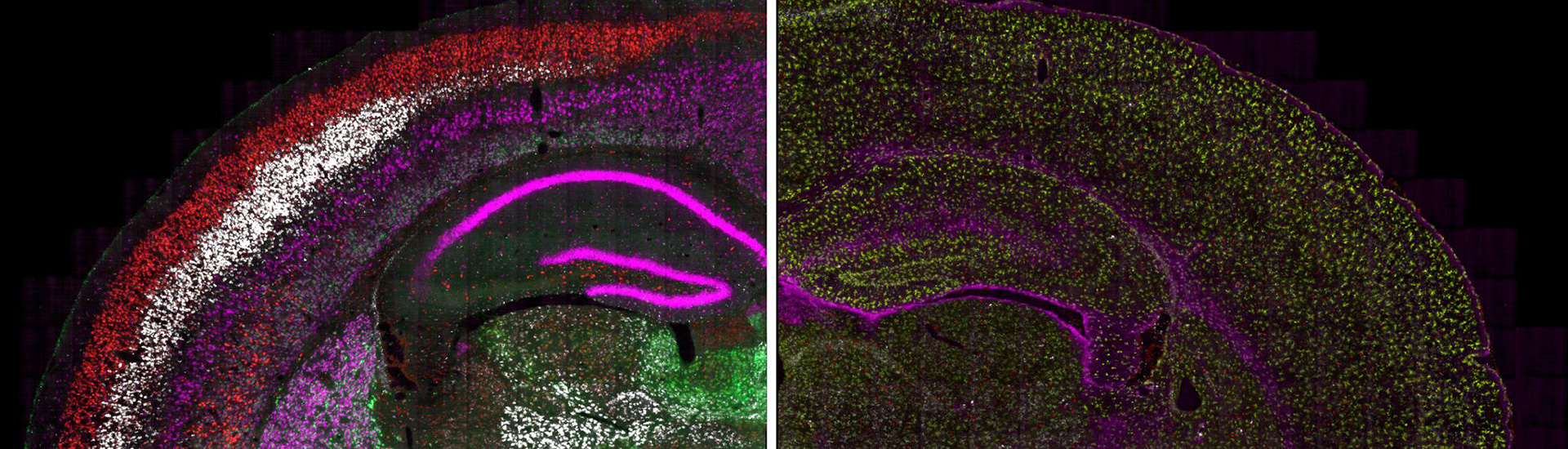
Omer Bayraktar is a Group Leader at the Wellcome Sanger Institute , leading research in the Cellular Genomics Programme. His work focuses on decoding human brain cellular diversity using spatial transcriptomics , imaging , and functional screening to study neural complexity in health and disease. Bayraktar's educational background includes a PhD from HHMI under Chris Doe, investigating neural diversity development in Drosophila , followed by postdoctoral work at University of California, San Francisco and University of Cambridge as a Life Sciences Research Foundation Fellow. He developed a spatial transcriptomic pipeline during his postdoc to analyze astrocyte heterogeneity in the cerebral cortex. His research explores neural cell type mapping , glial-neuronal interactions , and cellular pathways in neurodevelopmental disorders . Recent publications emphasize 3D tissue mapping , multi-omic integration , and computational tools like Cell2fate and WebAtlas. His work bridges neurogenetics and computational biology to advance understanding of human tissue ecosystems. Bayraktar's lab collaborates with the Human Cell Atlas initiative and develops technologies such as automated histology pipelines and highly-multiplexed smFISH for molecular cell typing. His team also investigates glia-based therapies and astrocyte functional heterogeneity in neurodevelopmental contexts. Key scientific contributions include: Discovering astrocyte layer patterns independent of neuronal laminae Developing cell2location for spatial cell mapping Characterizing Drosophila neural stem cell models with human relevance Notable awards include the Life Sciences Research Foundation Fellowship during his postdoctoral training. His current group includes a PhD student , Senior Data Scientists , and Bioinformaticians .
Professor Julie Harris is a faculty member at the University of St Andrews, holding the position of Professor of Psychology within the School of Psychology and Neuroscience since 2005. She previously held academic posts at Newcastle University and the University of Edinburgh, and conducted postdoctoral research at the Smith-Kettlewell Eye Research Institute in California. Her research focuses on human visual processing, including vision and camouflage, depth perception, binocular stereopsis, and eye movements in natural environments. She earned a BSc in Physics from Imperial College London and a DPhil from Oxford University. Research interests include exploring how visual systems process environmental cues for depth and motion, with applications in camouflage design and stereo display technologies. Her lab employs psychophysical, behavioral, and computational methods. Notable projects address countershading camouflage effectiveness, motion-in-depth perception, and visual-motor interactions in driving scenarios. Selected grants include funding from BBSRC, Leverhulme Trust, and Medical Research Scotland. Collaborations span evolutionary biology, neuroscience, and applied vision science. She supervises PhD students Federico De Filippi and Rebecca Maguire. Awards include the Davida Teller Award Nomination and Fellowship in the Society of Biology. Labs/Teams: Julie Harris Lab (St Andrews), St Andrews Vision Labs, and the Institute of Behavioural and Neural Sciences. Current projects investigate warning signal design, visual perception in virtual environments, and the impact of visual processing on driving ability.
Professor Ian Davidson is a faculty member in the Department of Computer Science at the University of California Davis, College of Engineering. His research focuses on machine learning, data mining, and constraint programming, with applications in neuroscience, healthcare, and social networks. He emphasizes rigorous algorithm design and human-in-the-loop learning paradigms. Editorial Board Member: ACM TKDD, IEEE TKDE, Springer DMKD Conference Leadership: PC Chair (SDM 2012), Vice/Area Chair (IEEE ICDM, ACM KDD, SIAM DM, ECML/PKDD 2013-2015) Research Interests: Human-in-the-loop learning (active, transfer, and transductive frameworks) Constraint programming and spectral methods for clustering and classification Applications in neuroimaging analysis, intelligent tutoring systems, and social impact domains Fairness in machine learning and clustering algorithms Tensor decomposition and matrix factorization techniques Interdisciplinary collaborations in neuroscience and healthcare Recent publications highlight his work on fairness-aware clustering with constraint programming, advanced spectral methods for brain connectivity analysis, and explainable AI frameworks. His research often combines theoretical rigor with practical applications in clinical domains. Scientific Awards: Best Paper Award, SIAM Data Mining Conference 2005 Best Paper Award, ECML/PKDD 2006 Best Paper Award, ICDM 2006 Students & Collaborators: Former students: Xiang Wang (IBM Watson), Buyue Qian (Xi'an Jiaotong University), Tom Kuo (Google), Sean Gilpin (Google) Current advisees: Aubrey Guess, Zilong Bai, Erin McGinnis, Zheng Fang, Hongjing Zhang
Rui Li is an Associate Professor in the Ph.D. program at Rochester Institute of Technology's Golisano College of Computing and Information Sciences. She directs the Lab for Use-inspired Computational Intelligence (LUCI), focusing on AI applications in computational biology and medical imaging. Education includes: B.Sc. in Computer Science, Harbin Institute of Technology M.Sc. in Computer Science, Tianjin University of Technology Ph.D. in Computing and Information Sciences, RIT Research integrates statistical machine learning with computational biology, medical image analysis, and human visual attention modeling. Current projects include deep learning for histopathology, multimodal medical image registration, and gene network inference. Publications demonstrate consistent focus on medical AI applications, with recent advances in unsupervised image registration, interactive segmentation, and multimodal fusion techniques. Key trends include self-supervised learning, uncertainty-aware models, and human-AI collaboration frameworks. Awards include the NSF CAREER Award for developing adaptive machine intelligence systems. Advises multiple PhD students on projects spanning deep learning architectures, biomedical image analysis, and biological network modeling. Leads several NSF-funded projects including human-centered image understanding systems and gene-protein network inference tools. Directs LUCI lab investigating machine learning for healthcare applications and teaches graduate courses in Statistical Machine Learning and Deep Learning.
Dr. İsmail ÖZTEL serves as an Assistant Professor in the Department of Computer Engineering at Sakarya University's Faculty of Computer and Information Sciences. He has been a faculty member since 2019, following his tenure as a Research Assistant from 2012-2019 at the same institution. His educational background includes: Doctorate in Computer and Information Engineering (2014-2018) from Sakarya University with thesis on "Facial expression detection on partial and full face images using machine learning methods" Master's Degree in Computer and Information Engineering (2012-2014) from Sakarya University with thesis on "Driver simulator for educational purposes" Bachelor's Degree in Computer Engineering (2007-2011) from Sakarya University Dr. ÖZTEL's research focuses on artificial intelligence, deep learning, and computer vision with significant applications in healthcare, mobile technology, and public safety. His work has evolved from foundational facial expression recognition to sophisticated medical applications including skin disease classification using smartphones, monkeypox detection from skin lesions, and pandemic response systems for face mask detection. His research demonstrates strong interdisciplinary connections between computer science and healthcare. An analysis of his publication trends reveals a clear progression toward increasingly complex deep learning architectures applied to real-world problems, with recent work emphasizing medical applications using mobile technology and public health safety systems. His 2023-2025 publications show particular focus on skin disease classification, intelligent vehicle systems, and hybrid feature extraction methods for pandemic response. Dr. ÖZTEL has served as a reviewer for numerous prestigious journals including Expert Systems With Applications (multiple years), World Wide Web, Multimedia Tools and Applications, and Journal of King Saud University - Computer and Information Sciences, demonstrating his recognition in the academic community across multiple domains. His research projects include work on facial expression detection in open scientific databases (2020), performance evaluation of transfer learning approaches (2019), and current projects on brain tumor classification systems and earthquake safety education for individuals with developmental disabilities. His international research experience includes collaboration with Filiz Bunyak in 2017, indicating global engagement in his field.
Anna Levina is an Assistant Professor for Computational Neuroscience at the University of Tübingen , affiliated with the Department of Computer Science under the Faculty of Science. Her research focuses on the self-organization of neuronal activity, critical dynamics in neural networks, and the excitation/inhibition balance in cortical circuits. Current positions: Assistant Professor (since 2018), Group Leader (2017-2018), Equality Officer (Computer Science) Previous roles: IST Fellow (2015-2017), Associated Researcher (2011-2015), Postdoc/PI (2011-2015), Postdoc (2008-2011) Her research integrates mathematical modeling , statistical physics , and computational neuroscience to study criticality phenomena, neural avalanches, and adaptive network dynamics. Key interests include: Self-organized criticality in neural systems Excitation/Inhibition balance mechanisms Network topology and dynamics Timescale analysis in neural processing Stochastic modeling of neural activity Recent publications reveal trends in understanding critical dynamics across biological and artificial networks, with applications to memory systems, sensorimotor integration, and disease modeling. She has received recognition as an IST Fellow .
Florian 'Floyd' Mueller is a Professor of Future Interfaces at Monash University in Melbourne, Australia, where he directs the award-winning Exertion Games Lab within the Department of Human-Centred Computing (ranked among the top 20 HCI departments globally). Previously, he held positions at RMIT University, Stanford, University of Melbourne, Microsoft Research, MIT Media Lab, Fuji-Xerox Palo Alto Labs, Xerox Parc, and Australia's CSIRO. Mueller is a member of the prestigious ACM SIGCHI Academy, an honorary group recognizing leaders who have made substantial contributions to Human-Computer Interaction (HCI). Professor Mueller's research focuses on the intersections between technology, the human body, and play. He originated the concept of "Exertion Interface," arguing that we should not just design "easy-to-use" interactions when "hard-to-use" interactions can also be beneficial. His work spans movement-based interactions, whole-body interfaces, uncomfortable interactions, somaesthetics, and exertion games. Mueller's research methodology often employs research through design, design ethnography, and autoethnography to explore these novel interaction paradigms, incorporating mixed-reality, augmented reality, virtual reality, electronic muscle stimulation, biosensors, wearables, and drones. His recent publications demonstrate a continued focus on bodily interactions and human-computer integration, with particular emphasis on emerging subfields like WaterHCI and SportsHCI, brain-computer interfaces, and gustosonic (taste and sound) experiences. Mueller's work has evolved from foundational exertion game concepts to more sophisticated explorations of human-computer integration where technology becomes seamlessly woven into the fabric of human experience. Professor Mueller's contributions have been widely recognized with numerous awards including: Inaugural honouree of the Australian Design Centre's Design Honours Tall Poppy award for "intellectual and scientific excellence" 10 "Best Paper Honorable Mentions" (top 5%) from premier HCI conferences 2 "Best Paper" awards (top 1%) at CHI PLAY and CHI Shortlisted for the European Innovation Games Award (alongside Nintendo's WiiFit) Nokia Mindtrek Ubimedia Award Mueller has successfully secured some of Australia's largest and most competitive research grants, achieving a remarkable 14% success rate on Australian Research Council Discovery Project applications. He has served as General co-Chair for CHI PLAY'18 and CHI'20, becoming the first Australian-based researcher to spearhead HCI's highest-ranked publication outlet, and is currently General co-Chair for CHI'24. He is Associate Editor for tier A journals including Elsevier's IJHCS (International Journal of Human-Computer Studies) and ACM's IMWUT (Interactive, Mobile, Wearable and Ubiquitous Technologies). As director of the Exertion Games Lab, Mueller leads a research team whose innovations have been experienced by over 20,000 users across 3 continents and featured on the BBC, ABC, Discovery Science Channel, and Wired magazine. The lab has produced groundbreaking work in bodily interfaces, co-founding the CHI PLAY conference series and establishing new research directions in SportsHCI and WaterHCI through recent "Grand Challenges" papers. Mueller's lab continues to push boundaries with projects exploring brain-to-brain interfaces, lucid dreaming induction, and novel gustosonic experiences.
Miroslav Pajic serves as a Professor in the Department of Electrical and Computer Engineering at Duke University's Pratt School of Engineering. He also holds joint appointments as Associate Professor in the Thomas Lord Department of Mechanical Engineering and Materials Science and Associate Professor of Computer Science. As Director of Master's Studies, he oversees the graduate program in Electrical and Computer Engineering and teaches numerous courses spanning embedded systems, cyber-physical systems design, and robotics. Education: Ph.D. in Electrical and Computer Engineering from University of Pennsylvania (2012) Miroslav Pajic's research focuses on the design and analysis of cyber-physical systems (CPS) with varying levels of autonomy and human interaction. His work spans the intersection of embedded systems, artificial intelligence, machine learning, control theory, formal methods, and robotics. He specializes in developing high-assurance autonomous systems with applications in robotics, automotive systems, and medical devices, with particular emphasis on CPS security and resilient autonomy. His research addresses fundamental challenges in creating systems that can operate reliably in uncertain environments while maintaining security against potential cyber attacks. Analysis of Pajic's recent publications reveals a strong interdisciplinary research program bridging theoretical foundations with practical applications. His work spans secure sensor fusion for distributed autonomy, medical applications of CPS (particularly deep brain stimulation for neurological disorders), and innovative sensing technologies for autonomous vehicles. A significant portion of his research addresses security challenges in cyber-physical systems, including stealthy GPS attacks on UAVs and methods for attack-resilient state estimation. His publications increasingly integrate machine learning techniques with traditional control theory to create more adaptive and robust autonomous systems. Pajic actively mentors graduate students and leads research groups focused on cyber-physical systems security and high-assurance autonomy. His research is supported by multiple grants, including the NSF AI Institute for Edge Computing (Athena), which he co-leads. He has received funding from various sources to support his work on secure and resilient cyber-physical systems, medical device security, and autonomous vehicle technologies. Pajic collaborates extensively with medical researchers on applications of cyber-physical systems in healthcare, particularly in deep brain stimulation for neurological disorders. His work bridges the gap between theoretical control systems and practical implementations in safety-critical domains, with a growing emphasis on translating research into real-world applications that improve system security and reliability.
Guillaume Lajoie is an Associate Professor in the Department of Mathematics and Statistics at Université de Montréal and a Core Academic Member of Mila – Quebec Artificial Intelligence Institute. He holds a Canada CIFAR AI Research Chair and a Canada Research Chair in Neural Computation and Interfacing. His research focuses on the intersection of AI and neuroscience, particularly in understanding neural network dynamics and developing brain-machine interfaces for clinical and scientific applications. He is affiliated with the Centre de recherches mathématiques (CRM), the Interdisciplinary Center for Research on the Brain and Learning (CIRCA), and the UNIQUE initiative. Education: PhD in Applied Mathematics from the University of Washington (Seattle), postdoctoral fellowships at the Max Planck Institute for Dynamics and the University of Washington Institute for Neuroengineering. Awards include the FRQS Scholar designation and leadership roles in strategic research initiatives like UNIQUE and CIRCA. Research interests include neural computations, recurrent neural networks, neurotechnology, and responsible AI development. Supervised students include François Paugam (PhD), Giancarlo Kerg (PhD), and others. Key grants include projects on adaptive neuroprosthetics, neural decoding, and Canada Research Chairs funding.