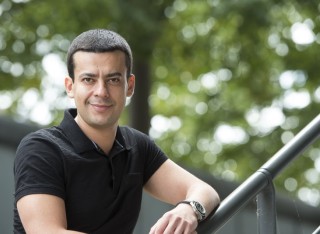
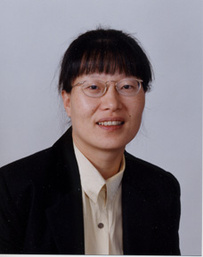
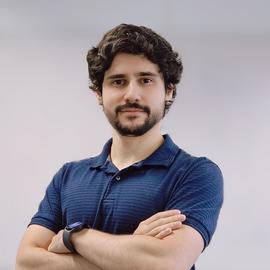
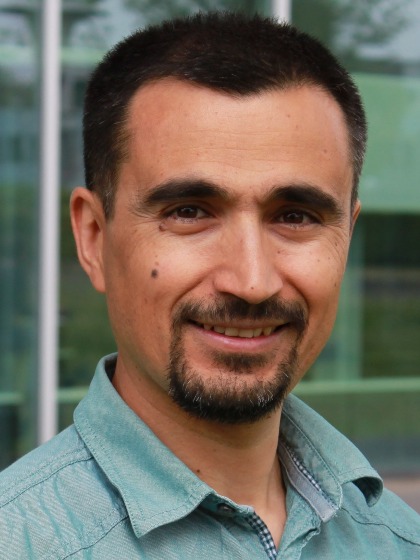
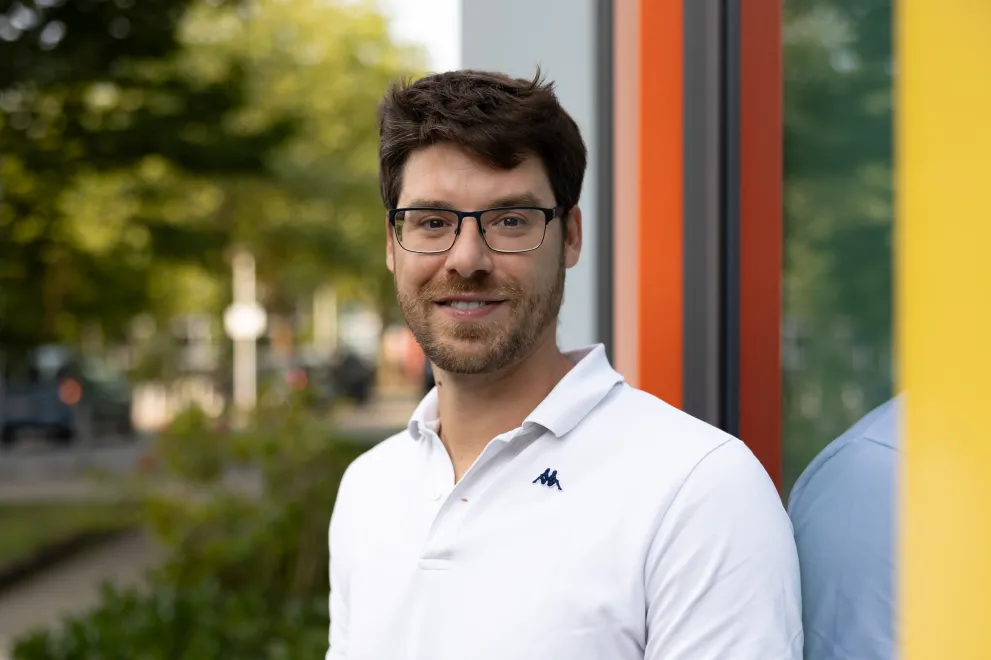
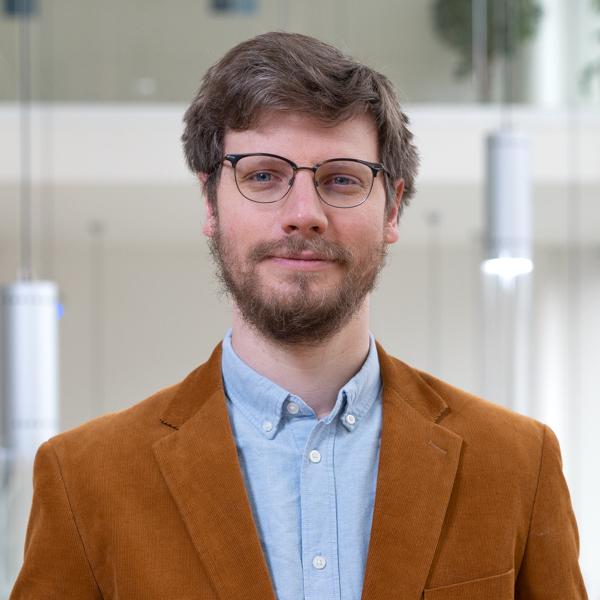
Martin Juráš is Professor of Mathematics in the School of Liberal Arts at Savannah College of Art and Design (SCAD), Savannah, GA, holding this position since August 2015. He earned dual Ph.D. degrees in Mathematical Sciences from Utah State University and Mathematical Engineering from Brno University of Technology, along with an M.S. in Information Systems and Theoretical Computer Science from Univerzita J.E. Purkyně. His research spans algebra, cryptography, topological rings, and computational mathematics, with applications in encryption systems and invariant theory. Key domains include public-key cryptosystems, polynomial irreducibility, and differential equations. Recent scholarly work demonstrates a strong trend toward cryptographic mathematics, with 10+ publications on group invariants applied to security systems. Notable theoretical contributions include extensions of Eisenstein-Dumas irreducibility criteria. Qatar National Research Foundation Grants (2012-2016, 2013-2017)
Prof. Dr. Mark Manulis is a Full Professor at the Department of Computer Science, Universität der Bundeswehr München, Germany, and a Visiting Professor at the Surrey Centre for Cyber Security, University of Surrey, UK. He heads the Privacy and Applied Cryptography (PACY) Lab and specializes in cryptographic protocols, privacy-enhancing technologies, and cybersecurity. His research focuses on secure communication, blockchain, IoT security, and decentralized systems. Education: Earned his Dr.-Ing. (PhD) in 2007 from Ruhr-Universität Bochum under advisors Jörg Schwenk and David Pointcheval. Held positions at TU Darmstadt, University of Surrey, and UCL Crypto Group. Research interests include authentication protocols, cryptographic primitives, and privacy-preserving systems. Notable awards include the Best Paper Award at ISC 2016 and E-Teaching Award 2010. Supervises PhD students and mentors researchers in cryptographic protocol design and analysis. Publications span over 150 papers in top venues like ACM CCS, EUROCRYPT, and IEEE S&P. Active in academic service, including program chair roles at ACNS and SECITC. Leads research projects on post-quantum cryptography and decentralized key generation.
Lixin Gao is a Distinguished Professor in the Department of Electrical and Computer Engineering at the University of Massachusetts Amherst, affiliated with the College of Engineering. Her research focuses on networking, distributed systems, algorithms, computational biology, and privacy-preserving data analytics. She holds dual appointments in the Manning College of Information and Computer Sciences and the College of Engineering. Education PhD in Electrical Engineering, University of Massachusetts Amherst BSc in Computer Science, University of Science and Technology of China Her research interests span Internet routing architectures, cloud computing frameworks, distributed machine learning systems, and privacy-preserving technologies . Notable contributions include scalable quality-of-service control for next-generation networks and secure inference protocols for convolutional neural networks. Awards and Recognition NSF CAREER Award (1999) Alfred P. Sloan Fellow (2003–2005) IEEE Fellow (2010) and ACM Fellow (2012) ACM SIGMETRICS Test of Time Award (2011) Her work bridges theoretical foundations with practical applications, addressing challenges in network stability, distributed systems optimization, and corrosion-resistant materials for energy systems. Ongoing projects include privacy-preserving AI frameworks and fault-tolerant distributed computing architectures.
Chunlei Li is a Professor in the Department of Informatics at the University of Bergen, specializing in Coding Theory and Cryptography. His research focuses on signal design, error-correcting codes, cryptographic primitives, and blockchain technology. He holds a PhD from the University of Bergen (2014) and has held postdoctoral positions at the University of Stavanger and the Selmer Center. He teaches courses in algebraic coding, cybersecurity, and cryptography. His research spans waveform design for wireless communications, feedback shift register sequences, rank metric codes, homomorphic encryption, and discrete mathematics. He leads projects such as 'Sequences and Their Applications' and contributes to conferences like SETA and NISK. Supervised students include those in symmetric cryptography, sequence design, and code-based cryptography. His work emphasizes cryptographic strength, with contributions to APN functions, permutation polynomials, and decoding algorithms for rank metric codes. He has authored numerous papers on topics like differential properties of functions and blockchain-based security systems.
Antonio Guimarães is a postdoctoral researcher at the IMDEA Software Institute in Madrid, Spain. His research focuses on practical aspects of Fully Homomorphic Encryption (FHE), including verifiable FHE, fast bootstrapping algorithms, and efficient homomorphic evaluation of cryptographic primitives. He holds a Ph.D. in Computer Science from the University of Campinas (2019-2023), where he also completed his MSc (2017-2019) and Computer Engineering degree (2012-2016). During his Ph.D., he was a visiting student at Aarhus University (2022-2023). His work emphasizes privacy-preserving technologies and verifiable computation, with applications in secure cloud computing and encrypted machine learning. Education: Ph.D. in Computer Science, University of Campinas (2019-2023) Visiting Ph.D. Student, Aarhus University (2022-2023) MSc in Computer Science, University of Campinas (2017-2019) Computer Engineering, University of Campinas (2012-2016) His research interests include advancing FHE efficiency, developing verifiable computation frameworks for encrypted data, and exploring practical implementations of post-quantum cryptographic algorithms. He has presented work at venues such as CRYPTO, ASIACRYPT, and CHES, and contributed to open-source cryptographic libraries like MOSFHET and HELIOPOLIS. His recent projects focus on homomorphic evaluation of neural networks and optimizing FHE for real-world applications. His publications highlight contributions to bootstrapping algorithms, verifiable computation over approximate arithmetic, and privacy-preserving machine learning. These works emphasize balancing cryptographic security with computational efficiency. Grants and Collaborations: Collaborations include projects on secure transciphering for MPC and high-performance seismic data processing in cloud environments. His work often bridges theoretical cryptography with practical software implementations. Labs/Teams: His research is conducted within the IMDEA Software Institute’s cryptography group, focusing on applied cryptography and privacy-preserving technologies.
Fatih Turkmen is an Associate Professor at the University of Groningen's Faculty of Science and Engineering, specializing in Computer Science and Artificial Intelligence . His work focuses on security and privacy with applications in machine learning, blockchain, and genomic data protection. PhD in Computer Science from University of Trento (2012) Research interests: Privacy-enhancing technologies (PET), security of ML systems, access control, formal verification, computation over encrypted data Teaching: Data Privacy , System and Software Security , and other advanced security courses His recent research explores privacy-preserving decentralized learning , verifiable differential privacy , and secure genomic data analysis . Publications address challenges in blockchain applications, federated learning, and security testing in multi-cloud environments. Scientific Contributions : Editorial Board, International Journal of Information Security (2025) Program Committee, CCS'25, PETS'25, SACMAT'25 Co-chair, Security and Trust Track at ICT-Open 2025 He actively supervises student projects and leads funded initiatives like LESSEN (NWO), CYCLONE (EU H2020), and ACCUS (EU Artemis), focusing on secure multi-cloud systems and smart energy solutions.
Françoise LEVY-DIT-VEHEL is a Professor and HDR (Habilitation à Diriger des Recherches) holder at ENSTA Paris, part of Institut Polytechnique de Paris (IP Paris), within the Computer Science and Systems Engineering Unit (U2IS). She serves as an associate researcher in the GRACE team at INRIA Saclay and is a member of LIX (Polytechnique computer science laboratory). Her academic roles include teaching cryptography courses at the third-year level and specialized master's degree in Information Systems Architecture, discrete mathematics for information protection at the second-year level, and previously taught algorithms at the first-year level (2006). She actively participates in the IP Paris Cybersecurity Master's degree committee (M1/M2) and has taught discrete mathematics at MPRI (2007, 2011). Her research focuses on securing large remote data sets through cryptographic protocols, particularly Private Information Retrieval and Proofs of Retrievability based on Locally Decodable/Correctable Codes. She also investigates Function Secret Sharing, Homomorphic Secret Sharing, and has previously worked extensively in public-key cryptography, studying algebraic problems underlying cryptographic schemes. Her current research explores interactive cryptographic protocols for privacy protection and efficient secure remote storage solutions. Analysis of her recent publications reveals a strong focus on cryptographic protocols for data integrity and privacy in cloud environments. Her work consistently bridges theoretical cryptography with practical applications, particularly in remote data verification and secure information retrieval. The trend shows increasing specialization in proofs of retrievability and updatable encryption systems, with growing emphasis on composable security frameworks. She has made significant contributions to several research areas including coding for remote storage (with D. Augot), Polly Cracker-type schemes (with Carlo Traverso, Téo Mora and Ludovic Perret), word problems in monoids/groups, rank-metric decoding, and the MinRank problem. Her work on the MinRank problem has been particularly influential in both cryptographic design and cryptanalysis. Françoise LEVY-DIT-VEHEL obtained her HDR (accreditation to direct research) from Paris 6 University in September 2010 and completed her PhD "Divisibilité des codes cycliques: applications et prolongements" at Université Pierre et Marie Curie in October 1994. She has authored or co-authored numerous publications in top cryptography venues and holds several patents related to cryptographic systems. Her laboratory affiliations include the Computer Science and Systems Engineering Unit (U2IS) at ENSTA Paris, the GRACE research team at INRIA Saclay, and LIX (Laboratoire d'Informatique de l'École Polytechnique). These institutions form a collaborative research ecosystem focused on advancing cryptographic techniques with practical applications in data security and privacy.
Tom Sanders is a Senior Research Fellow at the Mathematical Institute, University of Oxford, and a Tutorial Fellow at St. Hugh's College. His research spans algebra, analysis, combinatorics, geometry, and number theory, with a focus on additive combinatorics, harmonic analysis, and analytic number theory. University: University of Oxford Department: Mathematical Institute College: St. Hugh's College His work explores the intersection of algebraic and analytic methods in number theory and combinatorics, particularly on problems involving additive structures and Boolean functions. Recent publications highlight trends in Diophantine equations, Ramsey theory, and spectral analysis of Boolean functions. Adams Prize (2011) European Mathematical Society Prize (2012) Whitehead Prize (2013) European Prize in Combinatorics (2013) ICM Section Lecture (2014) His research includes collaborations with mathematical institutions and contributions to analytic number theory and harmonic analysis.
Vipul Goyal is an Associate Professor in the Computer Science Department at Carnegie Mellon University and a Senior Scientist at NTT Research . He previously spent 7 years at Microsoft Research before joining CMU. His academic journey includes a PhD from UCLA under advisors Rafi Ostrovsky and Amit Sahai , and a B.Tech. from IIT (BHU) Varanasi . Research Interests: Cryptography, Quantum Cryptography, Security & Privacy, Theoretical Computer Science Grants: NSF, DARPA, Department of Energy NETL, JP Morgan, Cisco, PNC, Ripple, DoS Networks, CyLab initiatives Education: PhD in Computer Science (UCLA, 2009) B.Tech. in Computer Science (IIT BHU Varanasi) His recent work focuses on Quantum Cryptography , Secure Multi-Party Computation , and Unclonable Security . Notable awards include the 2019 JP Morgan Faculty Award and the 2016 ACM CCS Test of Time Award . He advises the CMU Blockchain Group and has served on program committees for Crypto 2025 , FOCS 2024 , and others. Scientific Awards: 2019 JP Morgan Faculty Award 2016 ACM CCS Test of Time Award Microsoft Research Graduate Fellowship Google Outstanding Graduate Student Award Forbes 30 Under 30 in Science and Healthcare (2013) Students & Postdocs: He has mentored numerous PhD students and Postdocs , many of whom are now faculty at institutions like Tsinghua University, Max Planck Institute, and UT Austin. Former research assistants include Yifan Song and Elisa Masserova .
Lorenzo Grassi is a postdoctoral researcher in symmetric cryptography at Ruhr University Bochum's Cluster of Excellence CASA and a consultant at Ponos Technology. He holds a PhD in Mathematics from Graz University of Technology (2019) and a degree in Mathematics from the University of Milano. Funded by the CASA Jump.Start Program for Postdocs since 2023, he focuses on cryptography for future applications, including quantum-resistant protocols and MPC-/FHE-/ZK-friendly schemes. Education: University of Milano (Mathematics), Graz University of Technology (PhD in Mathematics) Positions: Ruhr University Bochum (CASA Cluster), Ponos Technology (Consultant), Radboud University Nijmegen (2020-2023) His research spans symmetric encryption, hash function design, algebraic attacks, and cryptanalysis of modern cryptographic primitives. Recent work includes Gröbner basis attacks, side-channel secure implementations, and quantum cryptanalysis. Key trends in his publications include the development of zero-knowledge proof-friendly hash functions (e.g., Poseidon2), structural analysis of symmetric primitives (e.g., Subspace Trails, Feistel networks), and optimization of cryptographic schemes for MPC and FHE applications. Quantum cryptanalysis and truncated differential attacks also feature prominently. Scientific Awards: ERC Starting Grant 2024 Grassi contributes to advancing cryptographic security through innovative designs like Monolith and Reinforced Concrete, while also analyzing vulnerabilities in schemes like AES and Grendel. His work bridges theoretical analysis with practical implementations, emphasizing efficiency and resistance to emerging threats.
Dario CATALANO is a Full Professor of Informatics at the Department of Mathematics and Computer Science, University of Catania, where he has been employed since 2003, progressing from Associate Professor (2006-2020) to his current position since March 2020. He previously held research positions at the French CNRS (permanent researcher 2003-2006), Ecole Normale Supérieure in Paris, and conducted research at Columbia University and IBM's T.J. Watson Research Center. Education: Master's Degree in Computer Science (Laurea in Scienze dell'Informazione) with honors (110/110 cum laude) from University of Catania, 1995 Ph.D. in Computer Science from University of Catania, 2002 Professor CATALANO's research for the past twenty years has focused primarily on cryptography, with emphasis on reducing the gap between theoretical foundations and practical implementations. His work addresses foundational issues driven by real-world security needs, specializing in password-based cryptography, electronic voting systems, and cryptographic primitives with special properties including homomorphic signatures, MACs, and functional encryption. Early in his career, he also conducted research in machine learning theory. He leads the Crypto@DMI research group at the University of Catania (since 2006) and has held significant administrative roles including Chair of the Master's Degree in Computer Science (2019-2023), Member of the Orientation Committee (2015-present), and Local Coordinator of the National Cybersecurity Lab (2014-2017).
Nico Döttling is a faculty member at the CISPA Helmholtz Center for Information Security, where he leads research in cryptographic foundations. His work focuses on advancing theoretical and practical aspects of modern cryptography, with particular emphasis on homomorphic encryption, post-quantum cryptography, and secure multi-party computation. Dr. Döttling received his PhD in Computer Science from the Karlsruhe Institute of Technology in 2014 under the supervision of Jörn Müller-Quade. Prior to joining CISPA in 2018, he held positions as an Assistant Professor at Friedrich-Alexander University Erlangen-Nuremberg (2017-2018), a postdoctoral researcher at UC Berkeley (2016-2017) supported by a DAAD fellowship, and a postdoctoral researcher at Aarhus University's Cryptography Group (2014-2016) working with Ivan Damgård and Jesper Buus Nielsen. Dr. Döttling's research centers on the theoretical foundations of cryptography with practical applications. His work spans public-key encryption, communication-efficient secure multi-party computation, homomorphic encryption, and post-quantum cryptographic systems. He has made significant contributions to laconic cryptography, time-lock puzzles, and verifiable delay functions, with his ERC Starting Grant project 'Next Generation Laconic Cryptography (LACONIC)' driving innovation in communication-efficient cryptographic protocols. His research bridges theoretical computer science with practical security applications, addressing fundamental questions while developing usable cryptographic primitives. Analysis of Dr. Döttling's recent publications reveals a strong focus on efficient cryptographic primitives with particular attention to communication complexity, security proofs, and practical implementations. His work spans theoretical foundations of cryptography, post-quantum security, and novel applications of cryptographic techniques to real-world problems. A notable trend is his exploration of laconic cryptography - developing protocols with minimal communication overhead - which has applications in resource-constrained environments and large-scale distributed systems. Dr. Döttling's scientific achievements have been recognized with several prestigious awards: ERC Starting Grant for the project 'Next Generation Laconic Cryptography (LACONIC)' (2021) Best Paper Award at Crypto for 'Identity-Based Encryption from the Diffie-Hellman Assumption' (2017) Postdoctoral Fellowship at UC Berkeley sponsored by DAAD (2016) Best Paper Award at ProvSec 2015 for 'From Stateful Hardware to Resettable Hardware Using Symmetric Assumptions' (2015) Biennial dissertation award for best dissertation in computer science at Karlsruhe Institute of Technology (2014) As a faculty member at CISPA, Dr. Döttling leads an active research group focused on cryptographic foundations. His ERC Starting Grant provides significant research funding to advance laconic cryptography. While specific information about his advisees is not provided in the source material, his extensive publication record with multiple co-authors suggests active collaboration with students and researchers. His work bridges theoretical cryptography with practical security applications, making contributions that advance both academic understanding and real-world cryptographic implementations. Dr. Döttling leads the Algorithmic Foundations and Cryptography research group at CISPA, focusing on developing theoretically sound yet practically efficient cryptographic protocols. His team explores innovative approaches to longstanding cryptographic challenges, particularly in making cryptographic protocols more communication-efficient without sacrificing security. Current research directions include post-quantum cryptographic systems, verifiable delay functions, and novel applications of homomorphic encryption to privacy-preserving computation.
Marten van Dijk is an Associate Professor in the Department of Electrical and Computer Engineering at the School of Engineering, University of Connecticut. He is affiliated with the Secure Computation Lab and holds the Charles H. Knapp Associate Professorship. Education: PhD in Mathematics, MSc in Mathematics, and MSc in Computer Science from Eindhoven University of Technology As a systems security researcher, Marten focuses on foundational security problems in cloud computing environments by combining theoretical cryptography, algorithms, and systems architecture. His work emphasizes deployable trustworthy systems for secure data outsourcing and workload management. His research spans secure processor design, memory integrity verification (e.g., Aegis single-chip secure processor), oblivious RAM techniques, and authenticated file systems (IRIS). He has contributed to cryptology advancements in homomorphic encryption and error-correcting codes for Blu-ray discs. Scientific Awards & Recognition: A. Richard Newton Technical Impact Award in Electronic Design Automation (2015) ACSAC'02 Outstanding Student Paper Award CCS 2013 Best Student Paper Award NYU-Poly AT&T Best Applied Security Paper Award (3rd Place, 2012) Eurocrypt 2010 Best Paper Nomination Inclusion in 25 Years of International Conference on Supercomputing (2014) Marten has led interdisciplinary research bridging security theory with practical implementations, including Physical Unclonable Functions (PUFs) and data center security architectures.
Zvika Brakerski is a Professor at the Department of Computer Science and Applied Mathematics of the Weizmann Institute of Science. He is an active researcher in theoretical computer science with a focus on cryptography and quantum computing. His work bridges foundational aspects of computer science with practical cryptographic applications. His educational background includes: Ph.D. from Weizmann Institute of Science (2011), advised by Shafi Goldwasser M.Sc. from Faculty of Engineering of Tel-Aviv University (2002), advised by Boaz Patt-Shamir B.Sc. joint degree from Faculty of Engineering and School of Computer Science of Tel-Aviv University (2001) Brakerski's research primarily focuses on the foundations of computer science, with particular emphasis on cryptography and quantum computing. His work explores the intersection of these fields, developing new cryptographic primitives that are secure against quantum adversaries while also leveraging quantum phenomena for cryptographic purposes. He has made significant contributions to lattice-based cryptography, fully homomorphic encryption, and quantum cryptography, establishing new connections between computational complexity and cryptographic security. His recent publications demonstrate a consistent focus on advancing the theoretical foundations of post-quantum cryptography while exploring novel applications of quantum computing to cryptographic problems. There's a clear trend toward establishing connections between seemingly disparate areas such as quantum information theory, computational complexity, and traditional cryptographic constructions. His work often introduces new frameworks that unify previously separate concepts, creating bridges between theoretical computer science and practical cryptographic applications. Brakerski has mentored students and collaborated with numerous researchers in the field, contributing to the advancement of cryptographic theory and quantum computing. His work has been supported by various research grants, though specific details are not provided in the source material.
Nelly Fazio is an Associate Professor in the Department of Computer Science at the City University of New York (CUNY), with dual appointments at The City College of New York and The Graduate Center. She is affiliated with the CAISS Center at City College and is a core member of the Graduate Center Crypto Group (GCCG). Her research interests focus on cryptography and information security, with specific expertise in: Cryptography Security Content Protection Broadcast Encryption Traitor Tracing Anonymity Dr. Fazio's research has been consistently funded through prestigious grants including an NSF CAREER award, multiple NSF grants, U.S. Army Research Laboratory funding, U.K. Ministry of Defence support, a CUNY CIRG award, and two PSC-CUNY awards. Her publication record shows a strong trajectory from theoretical cryptographic foundations to practical security applications, with recent work focusing on secure group messaging (Amigo, 2024), broadcast encryption techniques, and hardness of learning problems in non-commutative algebra. She has advised three doctoral students to completion and mentored numerous undergraduate researchers through programs at CCNY, NYU, and international institutions. Dr. Fazio maintains an active teaching schedule with courses on Algorithms, Modern Cryptography, and Computer Security at both undergraduate and graduate levels. Her academic service includes organizing major conferences such as TCC '12 and PKC '11 as General co-Chair, organizing the Faces of Modern Cryptography conference series, serving on numerous program committees for top security venues, and organizing tutorials on content protection for ACM Multimedia. She also reviews for prestigious journals including the IACR Journal of Cryptology and ACM Transactions on Information and System Security.