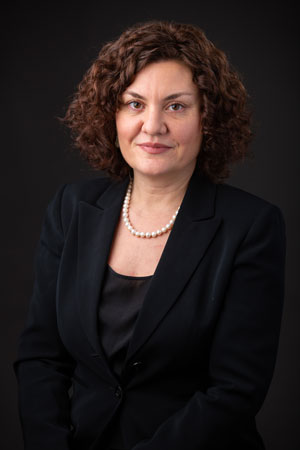
Dr Rod Thornton is a Senior Lecturer in Russian Defence and Security Studies at King’s College London, affiliated with the Defence Studies Department and School of Security Studies. He specializes in the Russian military's kinetic and sub-threshold warfare, with a focus on cyber capabilities, space warfare, and UK homeland resilience. His research includes recent British Academy-funded work on UK civil defense capacity during the pandemic, advocating for dedicated civil defense organizations. He has published extensively on Russian military tactics in Ukraine, AI-cyber integration, and space-based deterrence. Russian military cyber operations Space warfare dynamics UK resilience capacity gaps Scientific awards include a British Academy grant (2020). His students focus on asymmetric warfare, AI, cyber, and regional security issues. He teaches at the UK Defence Academy and has collaborated with institutions in Finland, South Korea, and the Freeman Air and Space Institute.
Carey Rappaport is a Professor of Electrical and Computer Engineering at Northeastern University. He serves as deputy director of the U.S. Department of Homeland Security’s ALERT Center (Awareness and Localization of Explosive-Related Threats) and associate director of the Gordon-CenSSIS Center (Bernard M. Gordon Center for Subsurface Sensing and Imaging Systems). His research focuses on microwave and millimeter-wave sensing technologies for homeland security and biomedical applications, including tunnel detection, airport security systems, and breast cancer diagnostics. His work on explosives detection involves standoff and portal-based millimeter-wave radar, X-ray backscatter, IR and Terahertz spectroscopy for trace detection, and electronic sensing of hidden triggers. He has emphasized balancing technological effectiveness with privacy, health, and cost considerations in security systems. His projects include developing airport scanners with improved imaging and analyzing challenges in securing "soft targets" like public events. Rappaport's research has been highlighted in media outlets such as Boston Herald, The Economist, and Northeastern University news. He has discussed technical limitations of ground-penetrating radar in tunnel detection and policy implications for international airport security measures, including the 2011 Moscow airport bombing and 2023 Gaza Metro tunnel network analysis.
Angela Di Fulvio is an Associate Professor and Donald Biggar Willett Faculty Scholar at the University of Illinois at Urbana-Champaign, holding joint appointments in the Department of Nuclear, Plasma, and Radiological Engineering and the Center for Digital Agriculture at NCSA. She leads the Nuclear Measurement Laboratory (NML), focusing on radiation detection technologies for nonproliferation, medical physics, and nuclear security. Her academic journey includes a Ph.D. in Nuclear Engineering and Industrial Safety from the University of Pisa (2012), preceded by M.Sc. and B.Sc. degrees in Bioengineering. Her research emphasizes neutron detection instrumentation, radiation protection in therapy, and safeguards applications. Key areas include next-generation thermal neutron detectors, boron neutron capture therapy dosimetry, and spent nuclear fuel imaging. She has pioneered work on pulse shape discrimination using commercial ASICs and developed algorithms for neutron-gamma discrimination in harsh environments. Di Fulvio’s 15+ peer-reviewed articles span advanced detection systems, Monte Carlo modeling, and machine learning for radiation imaging. Notable contributions include a physics-based forward model for spent fuel imaging and variational autoencoder-based pulse discrimination. Her work has been recognized with the Dean’s Award for Excellence in Research. Professional roles include Associate Editor of Radiation Measurements and editorial board member of Nature Scientific Reports . She chairs APS’s Instrumentation and Measurement Science group and ANS’s Nuclear Nonproliferation Policy Division. Recent courses taught include NPRE 451-452 labs, Nuclear Safeguards, and Student Research Seminars.
Edward H. Kaplan is the William N. and Marie A. Beach Professor of Management Sciences at the Yale School of Management, Professor of Public Health at the Yale School of Medicine, and Professor of Engineering at the Yale School of Engineering and Applied Sciences. He holds secondary appointments in Chemical and Environmental Engineering, Health Policy & Management, the Institution for Social and Policy Studies, and Statistics. Education: PhD in Urban Studies, Massachusetts Institute of Technology (1984) SM in Mathematics, Massachusetts Institute of Technology (1982) SM in Operations Research and City Planning, Massachusetts Institute of Technology (1979) BA in Urban/Economic Geography, McGill University (1977) Kaplan is an expert in operations research, mathematical modeling, and statistics, focusing on public policy and management. His research spans counterterrorism, HIV prevention, bioterrorism, and public health modeling. He has developed models for suicide bomber detection, smallpox response logistics, needle exchange program effectiveness, and wastewater-based disease surveillance. His work has been recognized with numerous awards, including the Koopman Prize (2003, 2005), INFORMS President’s Award (2002), Charles C. Shepard Science Award (2009), and INFORMS Fellow (2005). He has also served as President of INFORMS (2016) and co-directs the Daniel Rose Technion-Yale Initiative in Homeland Security.
Karen Panetta is a Professor at Tufts University School of Engineering with appointments in Electrical and Computer Engineering, Computer Science, Mechanical Engineering, and Academic Services. She currently serves as Dean of Graduate Education for the School of Engineering and holds the title of Distinguished Professor. Ph.D. in Electrical Engineering, Northeastern University M.S. in Electrical Engineering, Northeastern University B.S. in Computer Engineering, Boston University Dr. Panetta's research focuses on developing efficient algorithms for simulation, modeling, and signal and image processing for security and biomedical applications. Her work brings together artificial intelligence, machine learning, and visual sensing systems to create solutions for robot vision and biomedical imaging. She develops algorithms inspired by the human visual system to enable machines to 'see' like humans, with applications in homeland security, biomedicine, facial recognition, and search and rescue operations. Her research has significant humanitarian applications, addressing global challenges facing women and children. Dr. Panetta has received numerous prestigious awards including induction into the National Academy of Engineering (2023), the Presidential Award for Science and Engineering Education and Mentoring (2011), and the IEEE Award for Distinguished Ethical Practices (2013). She is a fellow of multiple prestigious academies including the National Academy of Inventors, European Academy of Sciences and the Arts, and IEEE. Member, National Academy of Engineering (2023) Presidential Award for Science and Engineering Education and Mentoring (2011) IEEE Award for Distinguished Ethical Practices (2013) Fellow, National Academy of Inventors Fellow, European Academy of Sciences and the Arts Fellow, Asia-Pacific Artificial Intelligence Association As an educator and mentor, Dr. Panetta founded the nationally acclaimed Nerd Girls program to promote engineering to young students, particularly women. She previously served as worldwide director for IEEE Women in Engineering and editor-in-chief of the IEEE Women in Engineering magazine. Her approach to graduate education emphasizes the importance of building strong collaborative relationships between faculty and students, with a focus on proactive communication and documentation of research progress. Dr. Panetta's humanitarian research applies engineering solutions to global challenges, including developing technology to help doctors find cancerous tumors, security screeners find concealed weapons, and law enforcement agencies find criminals and missing children. Her work demonstrates a commitment to 'Doing The Right Thing' by addressing issues affecting populations with limited resources or 'voice' in society.
Ragib Hasan is a Professor in the Department of Computer Science at the University of Alabama at Birmingham (UAB), affiliated with the College of Arts and Sciences. His research focuses on cybersecurity, with specialties in cloud security, IoT systems, digital forensics, and biomedical device security. He leads the Secure and Trustworthy Computing Lab (SECRETLab) and contributes to the UAB Center for Cyber Security and NIST Cloud Forensics Working Group. Education: M.S. and Ph.D. in Computer Science from the University of Illinois at Urbana-Champaign, followed by a postdoctoral fellowship at Johns Hopkins University. Affiliations: NIST Cloud Forensics Working Group, UAB Center for Cyber Security. His research addresses threats in smart cities, autonomous vehicles, and healthcare technologies. Key interests include securing IoT networks, mitigating cyberattacks on critical infrastructure, and advancing forensic methodologies in cloud environments. Recent work emphasizes threat modeling for connected vehicles, medical devices, and AI-driven systems. Dr. Hasan’s funding comes from the Department of Homeland Security, NSF, ONR, and industry partners like Facebook, Google, and Amazon. His awards include the NSF CAREER Award (2014), Google RISE Award (2013), and Deutsche-Welle Best of Blogs (2014) for his BanglaBraille initiative. Grants & Projects: Supported by DHS, NSF, and corporate collaborations. Outreach: Founded Wikimedia Bangladesh, Shikkhok.com (STEM education platform), and contributed to Bangla and English Wikipedia. His lab develops frameworks like StreetBit for pedestrian safety and InSight for emergency alert systems, integrating Bluetooth beacon technology to enhance urban security and sustainability.
Rajesh Krishna BALAN is a Full-Time Professor at the School of Computing and Information Systems (SCIS) at Singapore Management University (SMU) . His research focuses on Human-Machine Collaborative Systems , Pervasive Sensing , and Health & Wellbeing technologies. Based in Singapore, he leverages mobile computing to address urban sustainability and quality-of-life challenges. PhD from Carnegie Mellon University (2006) Specializes in WiFi sensing , VR/AR , and health monitoring Advises PhD students in areas like urban mobility , empathetic design , and cyber-physical systems Beyond academia, BALAN's work bridges ubiquitous computing and public health , with applications in ageing populations , mental health analytics , and smart city optimization . His recent publications highlight cross-disciplinary approaches to sleep analysis , group behavior modeling , and contactless physiological sensing . BALAN actively contributes to educational technology through projects like Technology-Enhanced Learning frameworks. He is also a mentor in collaborative research areas including biomedical informatics and lifestyle monitoring , with a focus on mobile GPU optimization and low-power systems .
Laurent Lessard is an Associate Professor of Mechanical and Industrial Engineering at Northeastern University, with courtesy appointments in Electrical and Computer Engineering and the Khoury College of Computer Sciences. He is a core faculty member of the Institute for Experiential AI. Previously, he was at the University of Wisconsin-Madison. His research focuses on control theory, optimization algorithms, machine learning, and decentralized systems. He holds a PhD from Stanford University (2011) and completed postdocs at Lund University and Berkeley. Education: PhD in Aeronautics and Astronautics, Stanford University, 2011 MS in Aeronautics and Astronautics, Stanford University, 2005 BASc in Engineering Science (Aerospace), University of Toronto, 2003 Research Interests: Control theory, optimization algorithms, machine learning, distributed systems, and robust control. His work bridges control theory and optimization, emphasizing algorithm design and analysis with applications to AI and autonomous systems. Key Projects: Includes NSF-funded research on distributed optimization, Army-funded work on cognitive distributed sensing, and studies on algorithm equivalence and robustness. Awards: NSF CAREER Award (2018), Hugo Schuck Best Paper Award (2013), Gerald Holdridge Teaching Excellence Award (2019). Grants & Labs: Principal investigator on multiple NSF grants, including work on decentralized control and optimization. Active in the Kostas Research Institute for Homeland Security. Leads a research group with a focus on theoretical and applied control systems. Publications: Over 50 peer-reviewed articles, including foundational work on optimization algorithms and control theory. Recent work emphasizes robustness, distributed systems, and machine learning integration.
Raju Vatsavai is an Associate Professor in the Department of Computer Science at North Carolina State University, affiliated with the Center for Geospatial Analytics. He joined NC State in 2014 as part of the Chancellor’s Faculty Excellence Program cluster hire in Geospatial Analytics. Education: PhD and MS in Computer Science from University of Minnesota Prior Roles: Lead Data Scientist at Oak Ridge National Lab, roles at University of Minnesota, IBM Research, AT&T Labs, and C-DAC (India) His research in geospatial analytics spans big data management , spatiotemporal data mining , deep learning for remote sensing , and high-performance computing , with applications in national security, climate change, and crop monitoring. Recent work includes deep learning frameworks for cloud imputation , multi-sensor satellite data harmonization , and transfer learning applications in crop classification . He has been a leading investigator on grants from the National Geospatial-Intelligence Agency, Department of Energy, and Department of Homeland Security. Labs: Associate Director of the Center for Geospatial Analytics Expertise: Spatial computing, Earth observation, nuclear proliferation detection via remote sensing
Rongjia Tao is a Professor of Physics at Temple University's College of Science and Technology (CST). He specializes in experimental and theoretical condensed matter physics, with a focus on soft matter systems. His research explores electrorheological (ER) and magneto-rheological (MR) effects on complex fluids like blood, chocolate, and crude oil. Notable contributions include developing magnetic devices to reduce blood viscosity and turbulence for hypertension treatment, ER-based methods to improve chocolate healthiness, and ER/ MR technologies enhancing energy efficiency in oil transportation. Education Ph.D. Physics, Columbia University, 1982 M.Ph. & M.A. Physics, Columbia University, 1982-1980 B.S. Physics, University of Science and Technology of China, 1970 Research Interests Tao's work spans ER/MR fluid dynamics, biophysical applications (e.g., blood rheology and thrombosis treatment), superconductivity under electric fields, and quantum Hall effect physics. His innovations address real-world challenges in healthcare, energy, and environmental science. Recent focus includes magnetic field therapies for severe Covid-19 complications and tornado suppression via atmospheric electric field manipulation. Awards 2023 Lifetime Achievement Award (Electrorheological Fluids Conference) 2019 Marquis Who’s Who Lifetime Achievement Award 2004 APS Fellow (Condensed Matter Physics) 1987 Omni Magazine Prize for solving the 'vicious neighbor problem' Advancing Knowledge Tao holds patents on medical devices, fuel treatments, and sensor technologies. His lab collaborates across disciplines to translate fundamental physics into practical solutions, emphasizing industry partnerships for commercialization. Current projects explore terahertz spectroscopy for hazardous material detection and sustainable energy systems.
James C. Davis is an Assistant Professor in the Elmore Family School of Electrical and Computer Engineering at Purdue University. He leads the Duality Lab, which focuses on the engineering of software-intensive computing systems with particular interest in how these systems fail and how those failures can be mitigated. His research takes a socio-technical approach, considering both human and technical perspectives in system engineering. Dr. Davis received his PhD in Computer Science from Virginia Tech, where he was advised by Dongyoon Lee. His research interests span empirical software engineering, security, safety, testing, and web technologies, with a strong emphasis on practical impact and measurement. He applies a socio-technical philosophy to his work, believing high-quality systems must be engineered considering both human and technical perspectives. His recent research focuses on software supply chain security, regular expression vulnerabilities (particularly ReDoS), pre-trained model security, and failure analysis in software systems. His work often involves empirical studies of real-world software systems and security practices, with a strong emphasis on practical impact and measurable results. Dr. Davis has received significant funding from the National Science Foundation, Google, Cisco, and Rolls Royce for his research. His publications appear in top-tier venues including ICSE, FSE, ASE, and USENIX Security. He has served on program committees for many major software engineering and security conferences. Among his notable achievements are being elevated to IEEE Senior Member in 2022, receiving the Ruth and Joel Spira Outstanding Teacher Award from ECE@Purdue in 2022, and multiple Best Paper and Best Poster awards. He has successfully mentored numerous PhD and Master's students, with several completing their theses on topics related to software security and engineering. Dr. Davis actively recruits graduate and undergraduate research assistants for his Duality Lab, which has produced influential work on software failure analysis, regular expression security, and machine learning supply chain security. His lab is supported by multiple federal and industry grants focused on improving the security and reliability of software systems.
Lawrence M. Wein is the Jeffrey S. Skoll Professor of Management Science at Stanford University's Graduate School of Business, where he also serves as Senior Associate Dean of Academic Affairs. He holds a PhD in Operations Research from Stanford (1988) and has taught operations management at MIT (1988–2002) and Stanford since 2003. His research spans operations management, public health, and homeland security, with notable contributions to HIV therapy optimization, bioterror response logistics, and forensic science innovations. His academic roles include Senior Fellow at Stanford’s Center for International Security and Cooperation, and editorial leadership as Editor-in-Chief of Operations Research (2000–2005). Notable awards include the Kimball Medal, Lanchester Prize, and membership in the National Academy of Engineering. Research interests emphasize applying operations research to real-world challenges, such as optimizing radiation detection systems, analyzing sexual assault kit backlogs, and improving ballistic imaging techniques. His work bridges theoretical models with practical policy, impacting areas like healthcare, counterterrorism, and criminal justice. Key contributions include developing the workload regulating release policy in semiconductor manufacturing, influencing U.S. smallpox vaccination strategy, and advancing mathematical models for cancer treatment and pandemic influenza control. His recent focus includes forensic genetic genealogy and crime-solving technologies. Grants and collaborations span industries, governments, and academic institutions, reflecting interdisciplinary impact. His teaching includes courses on operations management, stochastic networks, and homeland security applications.
Lana Obradovic is an Associate Professor in the Department of Political Science at the University of Nebraska at Omaha (UNO), College of Arts and Sciences. She serves as Program Director of the International Studies program, Director of the Intelligence Community Center of Academic Excellence, and Academic Director of the BOLD Leadership Institute, funded by the U.S. Embassy in Sarajevo, Bosnia and Herzegovina. She is also a faculty member in USSTRATCOM's Strategic Leadership Fellows Program and teaches the Department of Defense National Security Innovation Network’s 'X-Force' and 'Hacking for Defense' capstone courses. Her research interests focus on international security, American foreign and national security policymaking, gender and security, post-communist transitions, and regional dynamics in the Balkans and East Asia. She has over 18 years of experience teaching international relations and comparative politics at institutions including St. John’s University, CUNY, Mercy College, and Yonsei University. Her recent publications and research projects include 'Teaching Deterrence: A 21st Century Update' in the Journal of Political Science Education, USSTRATCOM’s Women, Peace and Security and Deterrence study, and DHS’s workforce intelligence training in counterterrorism. These works reflect a strong trend toward innovative pedagogy in national security education and policy-relevant research on gender integration and strategic deterrence. Scientific Awards: ERGOMAS 2015 Best Book in Civil-Military Relations award for 'Gender Integration in NATO Military Forces' Lana Obradovic actively advises students and leads research initiatives in political science and national security. She has secured grants and institutional funding, particularly for the BOLD Leadership Institute and Intelligence Community Center of Academic Excellence. Her work bridges academic scholarship with practical national security applications through partnerships with USSTRATCOM, the Department of Defense, and the Department of Homeland Security. She leads and mentors teams in the BOLD Leadership Institute and Intelligence Community Center of Academic Excellence, fostering leadership development and intelligence education among students, particularly those from Bosnia and Herzegovina and underrepresented groups in security studies.
Damon P. Coppola is an Adjunct Assistant Professor at the School of Public Health , specializing in disaster management and emergency preparedness. His work bridges academic theory with practical application through publications and educational campaigns. Key Roles : Adjunct faculty, Author, Emergency Preparedness Educator Research Focus : Coppola’s research emphasizes global disaster management frameworks, risk communication, and climate change adaptation. His publications explore: Incident command systems in international contexts Technological and intentional hazards Humanitarian spending and stakeholder coordination Practical strategies for public and private sector preparedness Climate resilience and geospatial technologies Publications : His works span recent to historical analyses, including: The Path of Flames (2023) on wildfire response Introduction to Homeland Security (2020) on national security frameworks Communicating Emergency Preparedness (2017) on behavioral change campaigns Living with Climate Change (2017) on adaptation strategies
Ioanna Kakoulli is a Professor in the Department of Materials Science and Engineering at the University of California, Los Angeles (UCLA), affiliated with the Henry Samueli School of Engineering and Applied Science. She leads the Molecular & Nano Archaeology Lab, focusing on interdisciplinary research at the intersection of materials science and cultural heritage preservation. Her work spans archaeological materials characterization, forensic imaging techniques, and conservation science. Education: D.Phil. (PhD) in Archaeological Science from the University of Oxford (1999). Key research interests include ancient pigment technologies, materials diagenesis, and the analysis of Hellenistic/Roman painting. She pioneered studies on Egyptian blue pigments and cross-cultural material exchanges via trade routes like the Silk Road. Awards include membership on the CAARI Board of Trustees, Visiting Fellowship at ICCROM, and multiple research awards from the A.G. Leventis Foundation and Overseas Research Scheme. Her lab collaborates with international institutions (e.g., Homeland Security Investigations) on looted antiquities and integrates cutting-edge imaging technologies (multispectral/hyperspectral) for non-destructive analysis. Guides students like Xuanyi Wu (SCSMM award winner), Aileen Shin, Lindsey Perry, and others in the Archaeomaterials Group. Research highlights include revealing asbestos use in Byzantine murals and identifying arsenic exposure in pre-Columbian Chilean mummies. Active in developing sustainable preservation strategies for rock-cut tombs and globigerina limestone monuments.