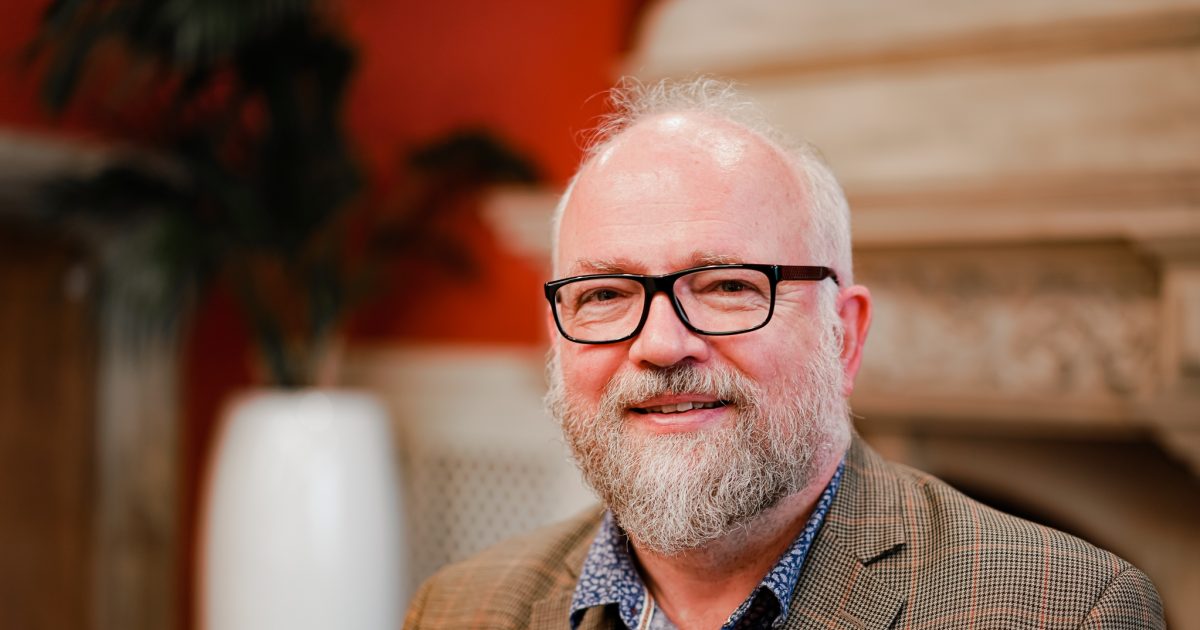
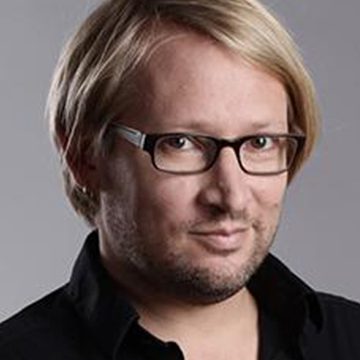
Klaus-Michael Guse is a Lecturer at the Chair of History Didactics in the Department of History, Faculty of Arts and Humanities, University of Siegen. He is actively involved in teaching and research related to the didactics of history and cultural history education. His research interests focus on History Didactics , Historical Education , and Cultural History , with particular relevance to transnational and regional contexts. These interests align with the research centers housed within Faculty I, including the Research Center for Transnational Cultural History and the Research Center for Regional Cultural History. No recent publications are listed in the available materials, so no trend analysis can be performed on article output. Scientific Awards: No awards listed. There is no public information available regarding student advising, research grants, or funded projects. Dr. Guse offers consultation hours by appointment via email, indicating an active teaching and mentoring role within the department. He is associated with the Chair of History Didactics, which likely involves curriculum development, teacher training, and pedagogical research in history education, though no formal lab or research team is mentioned.
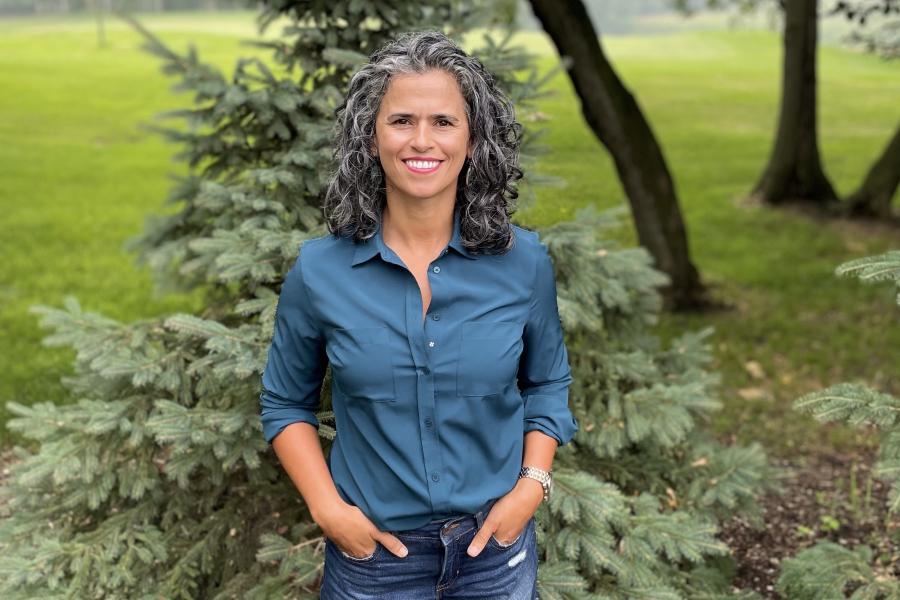
Dr. Silvia Baiocco serves as Assistant Professor at University of Rome Tor Vergata, teaching entrepreneurship, tourism management, and marketing courses across Bachelor and Master programs including 'Creation of Enterprises and Entrepreneurship' (Master), 'Fundamentals of Service Management' (Bachelor), and 'Tourism and Cultural Management for Sustainability' (Bachelor). Her institutional affiliation centers on Business Economics (sector ECON-07/A) with research rooted in co-evolutionary theory. Her research critically examines sustainable business model innovation through three interconnected lenses: (1) tourism-destination co-evolution in historic villages and Alberghi Diffusi, (2) university-industry knowledge exchange for sustainable spin-offs via PNICube Observatory frameworks, and (3) technology integration in smart tourism through AI-driven destination management. She emphasizes context-specific adaptation in both high-income (Italy) and low/middle-income settings (Ghana), with strong focus on social impact and heritage preservation. Analysis of her 2023-2025 publications reveals accelerating focus on digital tourism transformation (AI applications, smart city integration) and resilience-building in accommodation firms. Her work consistently applies co-evolutionary frameworks to decode organizational adaptation, particularly in sustainable entrepreneurship contexts. The PNICube Observatory reports highlight her policy-relevant contributions to university research valorization. As educator, Dr. Baiocco actively shapes future business leaders through courses spanning startup creation to sustainable destination management. Her research trajectory indicates deepening engagement with technology-mediated sustainability solutions and cross-sectoral innovation ecosystems, particularly through ongoing PNICube Observatory initiatives.
Jeanna Matthews is a Full Professor of Computer Science at Clarkson University and an affiliate at Data and Society. She holds a PhD from UC Berkeley (1999) and teaches courses ranging from operating systems to cybersecurity. Her research focuses on algorithmic transparency, AI ethics, and societal impacts of automated systems. Matthews is a prominent ACM leader, serving on multiple committees including the Technology Policy Subcommittee on AI Accountability. She has pioneered work on forensic software analysis in criminal justice systems and delivered DEF CON presentations on virtualization security and adversarial testing. Awards include ACM Distinguished Speaker and Fulbright Specialist roles. Her work emphasizes open-source tools and critical thinking in education, extending to global service learning programs in the Dominican Republic and Brazil. Education: PhD in Computer Science (UC Berkeley, 1999), B.S. in Math/Computer Science (Ohio State, 1994), B.A. in Spanish (SUNY Potsdam, 2016). Research Interests: Cybersecurity vulnerabilities, algorithmic accountability frameworks, automated decision systems in justice contexts, and ethical AI design. Recent projects include investigating bias in DNA forensic software through a Brown Institute grant and analyzing political polarization on social platforms. Awards & Recognition: ACM Distinguished Speaker (2018-present) Fulbright Specialist (2018-present) 2018-2019 Brown Institute Magic Grant ACM SIGOPS Chair (2011-2015) ACM Special Interest Group Governing Board Chair (2016-2018) Teaching & Outreach: Designed courses integrating open-source tools and critical inquiry, including abroad programs in Mexico, Brazil, and the Dominican Republic. Advocates for lifelong learning strategies and questioning underlying assumptions in computing systems. Key Projects: Forensic Software Accountability: Examining discrepancies in DNA analysis tools Algorithmic Transparency: Frameworks for auditing automated systems Cybersecurity Education: Adversarial testing methodologies for justice software
David De Roure is Professor of e-Research at the University of Oxford and Academic Director of both the Digital Scholarship initiative and the Laboratory for AI Security Research. He is also an Honorary Research Professor at the Royal Northern College of Music (RNCM), where he serves as Technical Director of the Centre for Practice & Research in Science & Music (PRiSM). His work bridges computer science, digital humanities, cybersecurity, and music through his distinctive interdisciplinary approach. De Roure received his PhD in 1990 supervised by David W Barron and Peter Henderson, with research in Lisp and distributed systems. Prior to joining Oxford in 2010, he was Professor of Computer Science at the University of Southampton and Director of the Centre for Pervasive Computing in the Environment. His career spans multiple institutions and research domains, reflecting his commitment to interdisciplinary work. De Roure's research focuses on new methods of digital scholarship, innovation in knowledge infrastructure, cybersecurity, and computational approaches to music. His work uniquely combines humanities (digital musicology), social sciences (social machines and web science), engineering (Internet of Things), and computer science (distributed systems, AI). A key theme is empowering human creativity through technology rather than replacing humans with AI. He emphasizes co-creation between humans and machines, particularly in music composition where he explores how algorithms can generate fragments for human assembly. His recent publications reveal a strong focus on AI security in IoT systems, digital scholarship methods, and the intersection of music with computational approaches. There's a clear trajectory from foundational work in social machines and web science toward current applications in cybersecurity and music-AI co-creation. His publications consistently bridge technical domains with humanistic inquiry, demonstrating his commitment to interdisciplinary scholarship that addresses real-world challenges. Fellow of the British Computer Society (FBCS) Fellow of the Institute of Mathematics and its Applications (FIMA) Fellow of the Royal Society of Arts (FRSA) Chartered IT Professional (CITP) Turing Fellow at The Alan Turing Institute (2018-2024) De Roure has co-founded three major interdisciplinary initiatives: PETRAS National Centre of Excellence for IoT Systems Cybersecurity (the world's largest socio-technical research center focused on IoT security), the Software Sustainability Institute (dedicated to improving research software), and PRiSM at RNCM. He was Director of the Oxford e-Research Centre from 2012-17 and has led numerous research projects including SOCIAM (The Theory and Practice of Social Machines), FAST (Fusing Audio and Semantic Technologies), and Transforming Musicology. The Laboratory for AI Security Research, which he directs, took its first PhD students in 2024. At Oxford, De Roure chairs the Digital Research Cluster at Wolfson College and oversees the Laboratory for AI Security Research. The PRiSM team at RNCM has produced numerous musical works and performances, including six premieres in New York in 2024. He has been involved in designing gesture recognition software used in many performances and has collaborated on public engagement projects including the Science Together project which released a Hip Hop album. His current work includes exploring Chladni Plates for new musical instrument design and developing algorithmically enhanced instruments.
Dr Shu-Ling Lu is an Associate Professor at the University of Reading , serving as Director of the MSc Project Management Programme and a Member of Senate . Her research spans Innovation Management , Quality Control , and Net Zero Transitions in construction, alongside Heritage Building Integration and Gender Dynamics in built environment sectors. Her academic journey includes a PhD , MSc in Construction Engineering , and a Diploma in Architectural Engineering , all from institutions in Taiwan and the UK, complemented by a Postgraduate Certificate in Higher Education Practice from the University of Salford. Research Interests : Innovation in construction, quality management, heritage conservation, net-zero transitions, gender equity, and system dynamics applications. Article Trends : Focus on defects analysis , heritage integration , gender dynamics , system dynamics , and net-zero strategies across 15 recent publications. Scientific Awards : Fellow of the Chartered Institute of Building (FCIOB) Fellow of Higher Education Academy (FHEA) Full member, Association for Project Management (MAPM) BSI Committee Participation (Quality Management Standards) Supervision & Grants : Mentored 7 PhD students and led/co-led projects funded by Natural Environment Research Council (NERC) , EPSRC , and COST , with total grants exceeding £500,000.
David Alan Goldberg is an Associate Professor in the School of Operations Research and Information Engineering (ORIE) at Cornell University, part of Cornell Engineering. He joined Cornell in 2017 and previously held the A. Russel Chandler III Associate Professorship at Georgia Tech’s Industrial and Systems Engineering department. Goldberg earned his Ph.D. in Operations Research from MIT (2011) and a B.S. in Computer Science from Columbia University (2006). Education: B.S. in Computer Science, Columbia University (2006) Ph.D. in Operations Research, MIT (2011) Research Interests: Goldberg’s work focuses on applied probability and stochastic processes, including optimal stopping, inventory and queueing models, combinatorial optimization, and robust optimization. He develops algorithms and insights for complex systems, addressing challenges like the curse of dimensionality. His research spans applications in data science, operations research, and stochastic modeling. Notable contributions include distributionally robust inventory control and high-dimensional decision-making frameworks. Awards and Honors: 2025 Community-Engaged Practice and Innovation Award (David M. Einhorn Center) 2023 Sunny Yau ’72 Teaching Award (Cornell) 2019 INFORMS Applied Probability Society Best Publication Award 2015 NSF CAREER Award Multiple INFORMS Nicholson Student Paper Competitions (First Place, 2019 & 2015) Teaching and Service: Goldberg leads Cornell ORIE’s undergraduate research program, connecting students to real-world applications of OR and data science. He teaches courses in probability modeling, stochastic models, and academic skills for PhD students. He chairs the INFORMS Applied Probability Society and serves on editorial boards for Operations Research and Stochastic Systems . At Cornell, he advises the Undergraduate ORIE Society and directs undergraduate studies in ORIE. Labs & Collaborations: Goldberg’s research integrates theoretical rigor with practical applications, often involving collaborations across disciplines. His work bridges operations research, statistics, and computer science to address modern challenges in inventory systems, queueing networks, and decision-making under uncertainty.
Prof. Fatih Terzi is a faculty member in the Department of Urban and Regional Planning at Istanbul Technical University's Faculty of Architecture. His research focuses on sustainable urban development, resilience, ecology, GIS applications, and smart cities. He has held visiting researcher positions at Clemson University (USA), University College London, and Technical University Berlin. He has led projects supported by EU, TÜBİTAK, and others, addressing ecological planning, risk reduction, and urban regeneration. His work bridges academic research with practical urban planning, including projects with municipalities and the Ministry of Environment. He has received multiple awards for research and design, including the Best Paper Award (2025) and TÜBİTAK recognitions. Education: PhD in Urban and Regional Planning from Istanbul Technical University (2010), MSc in Urban Planning (2004), BSc in Urban and Regional Planning from Yıldız Technical University (2000). Research interests include spatial strategic planning, ecological cities, and climate-sensitive urban design. He uses urban modeling and GIS to address sustainability challenges. His recent projects include Istanbul's flood risk analysis, green space strategies, and sustainable city planning in Kayseri and Malatya. Notable awards include the 2024 TÜBİTAK award for urban resilience projects and the 2023 Istanbul Technical University Academic Performance Award. He has also been recognized for design competitions, including the İzmir Ecological Living Area Project (2021) and the 2017 Balkan Architectural Biennale Urbanism Grand Prix. Prof. Terzi holds administrative roles at Istanbul Technical University, including Merkez Danışma Kurulu Üyeliği (2023–present). He oversees academic projects on urban resilience, smart cities, and ecological planning, contributing to both national and international initiatives.
Associate Professor Paola Leardini holds dual roles as Director (Research) and Associate Professor at the University of Queensland's School of Architecture, Design and Planning, within the Faculty of Engineering, Architecture and Information Technology. Her work bridges design and performance in built environments, focusing on net-zero targets, urban resilience, and circular economy strategies in construction. She is a key researcher in the Centre for Future Building Structures and advises on Queensland’s social/affordable housing through the Design Excellence Panel. Leardini earned a PhD in building energy efficiency and environmental quality from Politecnico di Milano, supervised by Prof. P. Ole Fanger. Her educational journey includes studies in Milan, Berlin, Leicester, and Copenhagen. Research highlights include eco-retrofitting of historical districts (e.g., Milan’s Quartiere Mazzini), Passive House adaptations for subtropical climates, and timber construction innovations with the ARC Advance Timber Hub. She co-founded Passive House Institute New Zealand (PHINZ) and collaborates globally on projects like water-sensitive cities and flood-resilient urban design. Her recent publications emphasize timber’s role in sustainable construction, circular economy frameworks, and climate-responsive building systems. Advising includes leading an ARC Linkage project on adaptable housing while fostering industry partnerships through projects like Norman Creek Catchment flood resilience studies. She actively contributes to labs/teams advancing timber use and urban resilience, aligning with UQ's mission for future-ready built environments.
Verónica Loureiro-Rodríguez is an Associate Professor in the Department of Linguistics at the University of Manitoba's Faculty of Arts. Her research focuses on sociolinguistics, language identity, and code-switching, with special attention to global hip hop and multilingual communities. She holds a PhD from the University of California, Davis, an MA from the University of Colorado at Boulder, and a BA from the Universidade de Santiago de Compostela. Dr. Loureiro-Rodríguez's work examines language attitudes across diverse contexts, including French-English dynamics in Manitoba, Spanish-Valencian bilingual processing, and code-switching in music. She has also explored language use in robotics and cultural hybridity among Puerto Rican and Mexican communities. Her teaching excellence was recognized with the 2021 Faculty of Arts Teaching Excellence Award. Education: PhD (UC Davis), MA (CU Boulder), BA (USC) Awards: 2021 Teaching Excellence Award (Established Faculty) Research Focus: Language policy, digital sociolinguistics, and cultural identity She currently supervises graduate students in Master's and PhD programs, focusing on sociolinguistic methodologies like the matched-guise technique. Her research often intersects with music studies, robotics, and diaspora linguistics.
Charles Perin is an Assistant Professor of Computer Science at the University of Victoria, leading the UViz research group. He holds a PhD from Université Paris-Sud (2014) and has held roles including Post-doc at the University of Calgary and Lecturer at City, University of London. His research focuses on information visualization, personal visualization, human-computer interaction, and sports visualization. Education: PhD in Computer Science (2014), Université Paris-Sud; Post-doc at University of Calgary (InnoVis lab); MS and earlier studies in Computer Science and HCI in France. Research interests include designing interactive visualization tools for personal data reflection, health data communication, and sports analytics. He emphasizes authoring tools for non-experts and physical/tangible visualization systems. Recent work explores embedded data physicalizations and mobile visualization design. His articles span topics like data storytelling, patient-generated health visualizations, and soccer data analysis, often appearing in top venues like IEEE VIS, CHI, and Eurovis. He has advised over 20 students across PhD, MSc, and undergraduate levels. Teaching includes courses on Information Visualization and HCI at UVic, City, and other institutions. He co-organized workshops on topics like Personal Visualization and Sports Data at IEEE VIS. His UViz lab collaborates internationally with institutions like Monash University and the National Archives (UK).
Rahul Kapoor is a Professor at the Wharton School of the University of Pennsylvania, where he also serves as the Chair of the Management Department. His research focuses on innovation management, business ecosystems, and technology strategy, with a particular emphasis on how firms navigate technological and organizational challenges in dynamic industries. University: University of Pennsylvania School: Wharton School Department: Management Department Academic Rank: Professor His research explores the interplay between organizational design, external collaboration, and innovation outcomes. Recent work includes studies on forecasting strategies, ecosystem interdependencies, and the role of setbacks in technology development. He has contributed to leading journals such as Strategic Management Journal and Research Policy , with a recurring focus on technology ecosystems and modular innovation. Kapoor’s research spans both theoretical and applied dimensions. He has examined how firms can optimize value creation in business ecosystems, the impact of organizational design on invention sourcing, and the dynamics of technology emergence. His studies often integrate historical case analyses and simulation models to uncover patterns in innovation management. Scientific Awards: Inaugural Academy of Management Emerging Scholar Award Strategic Management Journal Best Paper Prize Wharton Teaching Excellence Award (multiple years) Editorial Roles: Associate Editor, Strategic Management Journal Contributing Editor, Strategy Science Teaching: Undergraduate, MBA, Executive MBA, and PhD courses on technology and innovation strategy Leadership in Wharton’s Executive Education programs He has advised firms on innovation initiatives and draws on over seven years of industry experience in high-tech, including roles at Texas Instruments and co-founding a startup, to inform his academic work.
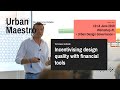
Dr. Tommaso Gabrieli is an Associate Professor in Real Estate at the Bartlett School of Planning, University College London (UCL), where he has been employed since September 2015. His academic career spans multiple institutions including the University of Reading, City University London, University of Warwick, and the Catholic University of Milan. His educational background includes: PhD in Economics from the University of Warwick (2009) MSc in Economics from the London School of Economics and Political Science (2003) Fellowship of the Higher Education Academy from the University of Reading (2013) As a theoretical economist trained in the ambrosian tradition of social welfare, Gabrieli's research focuses on the economic analysis of urban policy issues. His expertise encompasses economic modeling of real estate markets, financial viability of urban projects, multi-dimensional value measurements, and value-capture mechanisms. He has developed novel interdisciplinary methods bridging urban planning and design with economics, making him one of few economists actively collaborating with urban planning scholars in the UK. His work addresses Sustainable Development Goals including No Poverty, Good Health, Decent Work, Reduced Inequalities, Sustainable Cities, and Climate Action. His recent publications demonstrate a strong focus on urban design governance, value capture mechanisms, and the interface between economic theory and urban planning practice. The research spans theoretical explorations of post-growth planning and practical applications in land value recovery, particularly examining implications for housing affordability, wealth distribution, and community wellbeing in both urban and rural contexts. His work often integrates behavioral economics with spatial planning considerations. Professional recognition includes: Fellow of the Higher Education Academy Gabrieli has extensive experience supervising PhD and MSc dissertations across multiple institutions. His teaching portfolio includes Real Estate Appraisal and Valuation at UCL, where he leads relevant modules for both undergraduate and graduate programs. He has contributed to significant research projects including 'Street Appeal' commissioned by Transport for London and the Horizon 2020-funded 'UrbanMaestro' project worth 1 million Euros. His research impact has been formally recognized by Transport for London. Currently, he leads the 'Future Urban Growth Lab' project, funded by UCL Knowledge Exchange and Innovation Funding, in partnership with the Royal Town Planning Institute and Politecnico of Turin. This project aims to operationalize an urban growth model prototype for use by local authorities in planning future city development, bridging academic research with practical planning applications.
Phil Bernstein is a Distinguished Scientist in the Data Systems Group at Microsoft Research Redmond and an Affiliate Professor at the University of Washington where he occasionally teaches CSEP 545 Transaction Processing. With over four decades of pioneering work in database systems, he has made significant contributions across transaction processing, data integration, and distributed systems. His research interests focus on database systems, transaction processing, and data integration, with recent work on approximate nearest neighbor search over vector databases, improving database servers using disaggregated cloud resources, and the Orleans distributed systems programming framework. Bernstein's work on Orleans (2012-2019) resulted in an open-source framework widely used inside and outside Microsoft, with components addressing indexing, geo-distribution, and transactions. Bernstein has received numerous prestigious awards including being named a Fellow of the ACM and AAAS, receiving the SIGMOD Edgar F. Codd Innovations Award, and election to the National Academy of Engineering and Washington State Academy of Sciences. Fellow of the ACM Fellow of the AAAS SIGMOD Edgar F. Codd Innovations Award Member of the National Academy of Engineering Member of the Washington State Academy of Sciences As an active researcher and academic, Bernstein serves on numerous conference program committees including SIGMOD 2024 (keynotes), VLDB 2024 (Industry), and has held editorial positions for Information Systems and Springer Data-Centric Systems and Applications. His influential books, Principles of Transaction Processing (2009) and Concurrency Control and Recovery in Database Systems, remain foundational texts in the field.
Ana Paulina Lee is an Assistant Professor of Writing and Digital Humanities in the Comparative Literature, English, and Creative Writing Department at the American University of Paris. She joined AUP in 2025 after teaching Latin American literature and culture at Columbia University for eight years and serving as a Mellon Postdoctoral Fellow at Tulane University. Her interdisciplinary scholarship bridges literature, history, law, and urban studies with particular focus on marginalized narratives in the Americas. Ph.D. from University of Southern California M.A. from New York University B.A. from Binghamton University Professor Lee's research examines how stories—archival, fictional, oral—shape legal imagination, social life, and urban experience in the Americas. She specializes in the intersections of magic, law, and literature in Latin America, with particular focus on Asian and African diasporas in Brazil. Her work traces how narrative functions as both historical record and catalyst for social transformation, exploring themes of slavery, emancipation, colonial legacies, and urban memory. She approaches these topics through interdisciplinary lenses combining literary analysis with histories of labor, migration, and performance. Lee's recent publications reveal a consistent focus on marginalized narratives and their impact on social structures. Her scholarship connects legal history with cultural production, showing how magical thinking and narrative practices shape urban spaces and social relations. Works like 'Urban Sorcery, Segregation, and Spectacle in Twentieth-Century Rio de Janeiro' and 'Black Magic City' demonstrate her innovative approach to understanding the relationship between occult logics and legal frameworks in Brazilian contexts. Her research on diasporic communities, particularly Chinese and Japanese experiences in Latin America, contributes significantly to transnational and comparative race studies. David B. Larson Fellowship in Health and Spirituality, Kluge Center, United States Library of Congress (2025-2026) National Endowment for the Humanities Fellowship (2025) Social Sciences Research Council, Inaugural Recipient of Interdisciplinary Projects in the Social Sciences (2020-2023) Institute for Ideas and Imagination Fellowship, Columbia University in Paris, France (2021-2022) Provost's Tsunoda Senior Fellowship, Visiting Scholar, Waseda University, Tokyo, Japan (2019) Heyman Center Fellow, The Heyman Center for the Humanities, Columbia University (2017-2018) Fulbright, Lisbon, Portugal (2013-2014) Professor Lee's scholarly activities have been generously supported by major research grants from the National Endowment for the Humanities, the Social Sciences Research Council, and the Library of Congress. Her work demonstrates a commitment to interdisciplinary approaches that bridge humanities and social sciences, particularly through projects examining intersections of race, migration, and cultural production in the Americas. Her publication 'Socially Engaged Oral History Pedagogy Amid the COVID-19 Pandemic' indicates a strong commitment to innovative teaching methods and community-based research. While specific details about current advisees aren't provided, her research program suggests engagement with graduate students interested in diaspora studies, urban history, and literary-cultural analysis. Though not explicitly mentioned in the available information, Professor Lee's research on urban spaces, magic, and law in Brazil likely involves collaborative work with scholars across disciplines. Her participation in centers like the Institute for Ideas and Imagination at Columbia University suggests engagement with interdisciplinary research communities focused on global cultural production and social transformation. Her work contributes to ongoing conversations about how narrative practices shape legal frameworks and social structures in the Americas, particularly regarding racial formation and diasporic experiences.
Guy Hoffman is Associate Professor and Associate Director of Undergraduate Affairs at Cornell University's Sibley School of Mechanical and Aerospace Engineering. He holds faculty appointments in Aerospace Engineering, Computer Science, Information Science, and Mechanical Engineering. Hoffman earned his Ph.D. in Human-Robot Interaction from MIT and M.Sc. in Computer Science from Tel Aviv University. His research explores computational, design, and social aspects of Human-Robot Interaction (HRI), with focus areas including: Embodied cognition for social robots Anticipation and timing in HRI Nonverbal behavior in human-robot collaboration Robotics for performing arts Non-anthropomorphic robot design Publications demonstrate interdisciplinary work spanning social robotics, adaptive interfaces, inclusive design, and AI education. Recent articles explore shadow-based interaction privacy, emotional conveyance through shape-changing interfaces, and cultural aspects of robot morphology. Major recognitions include: Andrew P. Sage Best Transactions Paper Award (IEEE, 2020) Dennis G. Shepherd Teaching Award (Cornell, 2019) Best Paper Award, IEEE/ACM HRI Conference (2015) His research group develops robotic platforms like Blossom and investigates human-robot collaboration in workspaces, inclusive play for children with mixed abilities, and open-source educational tools for AI literacy.