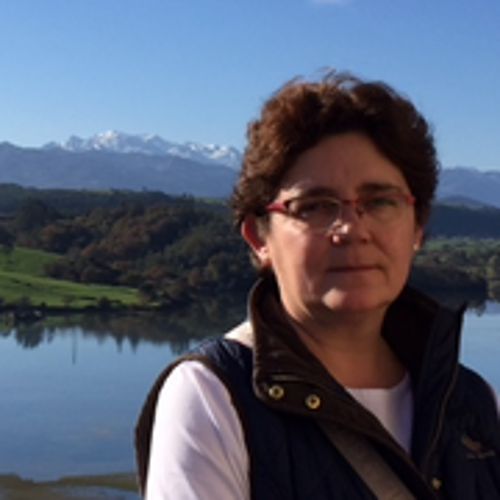
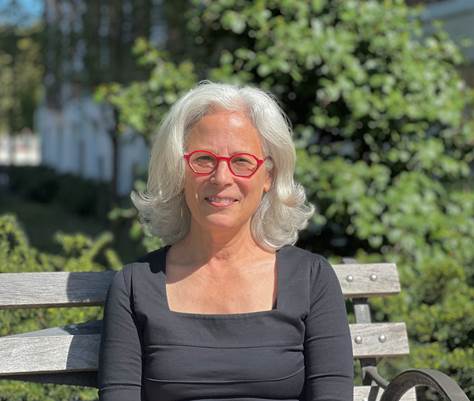
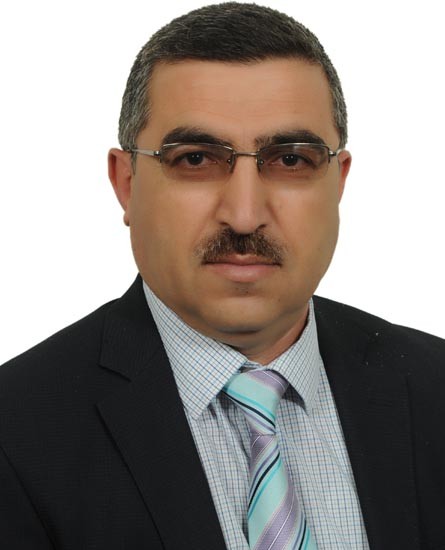
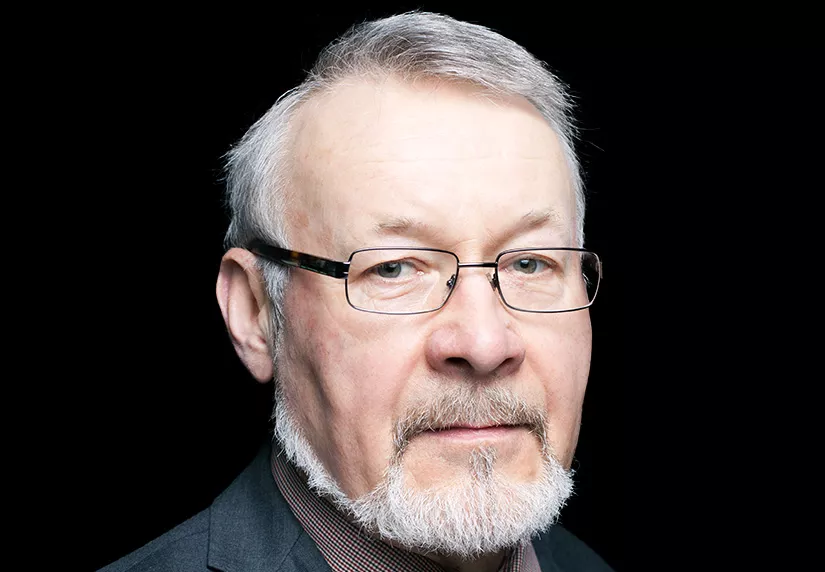
Na'ama Pat-El is a Professor in the Department of Middle Eastern Studies at the University of Texas at Austin, affiliated with the College of Liberal Arts and the Middle Eastern Languages and Cultures Graduate Studies Committee (MELC GSC). She holds a Ph.D. (2008) in Semitic Philology from Harvard University, preceded by studies at Hebrew University under Gideon Goldenberg and Harvard under John Huehnergard. Education: Ph.D., 2008, Harvard University (Semitic Philology) B.A. and M.A., Hebrew University of Jerusalem Her research focuses on Comparative Semitic Linguistics, Historical Linguistics, Syntax, and Language Contact , with a particular emphasis on syntactic change and morphological evolution. She investigates phenomena such as the development of verbal paradigms, plural morphemes, and copulae across Semitic languages, including Akkadian, Hebrew, and Aramaic. Recent publications address topics like the nondevelopment of third-person nominative pronouns in Semitic perfect/stative paradigms, the diachronic shift of East Semitic subordination markers into West Semitic indicative markers, and the reevaluation of Hebrew 'sign' terminology through epigraphic and comparative evidence. Her work also challenges assumptions about paired body part gender assignment in Semitic languages. Selected Publications (2025–2020) explore: Proto-Semitic verbal morphology Historical syntax in Akkadian and Neo-Assyrian Plural-gender mismatches in Hebrew Substrate influences in Levantine Arabic Biblical text linguistics
Eleanor Dickey is a Professor of Classics at the University of Reading. She has held academic positions at Columbia University, the University of Exeter, and the University of Ottawa. Her research focuses on Greek and Latin linguistics, classical literature, and ancient language use, with a particular emphasis on papyrology and historical pragmatics. She holds a D.Phil. in Literae Humaniores from the University of Oxford and has held fellowships at institutions including the Institute for Advanced Study in Princeton and All Souls College, Oxford. Education: BA (summa cum laude) and MA from Bryn Mawr College; M.Phil. and D.Phil. from Oxford University. Her research interests include the study of ancient language pedagogy, sociolinguistics in antiquity, and the analysis of Greek and Latin texts in papyri. She has authored several influential books, including Ancient Greek Scholarship and Latin Forms of Address . Her work explores the intersection of language, culture, and social dynamics in the ancient world. Key awards include the 2014 Fellowship of the British Academy and the 1996 Hellenic Foundation Prize. Her contributions to classical scholarship have been recognized through teaching accolades and research fellowships worldwide.
Orwin Martin is an Associate Professor of Somali Language and Literature at the University of Naples 'L'Orientale', Department of Asia, Africa and Mediterranean. He holds a First Class Honors degree in Arabic and Amharic from SOAS (1986) and a PhD in Somali Phonology (1994). Previously, he served as Senior Lecturer at SOAS (2008–2020) and held various administrative roles including Head of Department (2011–2014). His research focuses on Somali poetry's linguistic and aesthetic dimensions, including meter analysis, Arabic influences, and literary translation. He has published extensively on Somali poets like Hadraawi and Weedhsame, and collaborates with international institutions like the Poetry Translation Centre. Teaching spans Somali language at all levels, comparative literature, and translation studies. He has organized conferences, including the 2018 Somali Studies Congress in Hargeysa, and contributed to academic roles such as editorial boards for African Languages and Cultures and the Journal of Somali Studies. Awards include a certificate from Hargeisa Youth Development Association for outreach work.
Inmaculada Delgado Jara is an Associate Professor of Greek Philology at the Facultad de Ciencias Humanas y Sociales, Universidad Pontificia de Salamanca, specializing in Biblical Studies and Patristics. Her academic profile shows extensive engagement with ancient Greek texts, particularly focusing on San Juan Crisóstomo, Erasmus of Rotterdam, and Septuagint studies. Her educational background includes a doctorate from Universidad Pontificia de Salamanca with the thesis "Sermones in Genesim de San Juan Crisóstomo estudio temático, estilístico y traducción" (1999), supervised by Dr. Alfonso Ortega Carmona. She is a member of the research groups "Humanismo, reformas y ciencia: del Medievo a la Ilustración" and "ICS. Innovación en Ciencias Sociales". Delgado Jara's research interests center on Greek Philology, Biblical Philology, Patristics, Septuagint Studies, Erasmus of Rotterdam studies, and San Juan Crisóstomo studies. Her scholarly work demonstrates deep expertise in ancient Greek language and literature, particularly as applied to biblical and patristic texts. She has made significant contributions to understanding the intersection of classical literature and early Christian thought. An analysis of her recent publications reveals a consistent focus on textual criticism, philological analysis of biblical and patristic works, and the reception history of classical texts in Christian contexts. Her work often bridges linguistic analysis with historical and theological interpretation, particularly examining how ancient Greek texts were transmitted, interpreted, and utilized in later periods. Her scholarly activity includes numerous books, edited volumes, and academic papers, with recent work focusing on Erasmus's biblical scholarship, San Juan Crisóstomo's homilies, and the Septuagint. Despite her extensive publication record, no specific scientific awards are mentioned in the available information. Delgado Jara is actively involved in academic supervision and research direction, as evidenced by her editorial work on major scholarly projects and her participation in academic conferences. Her work shows collaboration with numerous scholars across Spain and internationally, particularly in the fields of Biblical Studies and Renaissance Humanism.
Armin D. Baum is Professor of New Testament at the Freie Theologische Hochschule (FTH) Giessen (since 2010) and has additionally served as Prorector for Research since 2016. He is also Adjunct Professor in the doctoral programme of the Evangelical Theological Faculty, Leuven (Belgium) and was Visiting Professor at the Theological University Kampen (Netherlands) from 2012-2017. Education 1993 – Dr. theol., Theological University Kampen, Netherlands 1990 – Drs. theol., Theological University Kampen, Netherlands 1989 – M.Div., Freie Theologische Akademie, Giessen, Germany 1984 – Abitur, Elsa Brändström-Schule Hannover, Germany Research Focus Baum’s scholarship centres on the historical reliability of the New Testament writings , the formation of the biblical canon , and literary questions of authorship, anonymity and pseudepigraphy . A second strand of research engages contemporary ethical debates , producing detailed exegetical studies on homosexuality, women in ministry and sexual ethics. His methodological interests include the historical-critical method , the relationship between faith and historical scholarship, and the use of ancient historiographical conventions in the Gospels. Publications & Trends Across more than 120 scholarly works, Baum consistently explores how ancient literary and rhetorical conventions shape the New Testament text. Recent monographs such as Einleitung in das Neue Testament (2017) and edited volumes like Kernthemen neutestamentlicher Theologie (2022) consolidate decades of research on Gospel genre, Pauline authenticity, and canon theology. His 2024 articles extend this trajectory by addressing anonymity in Hebrews and the Catholic Epistles and by offering exegetical foundations for evangelical sexual ethics. Professional Memberships & Awards Society for New Testament Studies (SNTS) Society of Biblical Literature (SBL) Institute for Biblical Research (IBR) Tyndale Fellowship (TF) Rhein-Main-Exegesetreffen Coordinator, New Testament Study Group of the Arbeitskreis für evangelikale Theologie (AfeT) Advising & Research Leadership As Dean of Research (2012-2016) and Prorector for Research (2016-), Baum oversees doctoral training at FTH Giessen and mentors candidates in New Testament and canon studies. He has directed externally funded projects on the origins of the New Testament canon and regularly convenes colloquia for doctoral students and international guests.
Arto Anttila is an Associate Professor in the Department of Linguistics at Stanford University and holds an Adjunct Professor (dosentti) position in General Linguistics at the University of Helsinki. His research spans multiple linguistic subfields with particular focus on the interfaces between phonology, syntax, and prosody. Dr. Anttila's research interests include phonology, morphology, syntax, metrics, and language variation. His work often explores how phonological constraints interact with syntactic structures and how variation manifests across different linguistic domains. He has made significant contributions to Optimality Theory, MaxEnt grammar, and probabilistic approaches to phonology. His recent publications demonstrate a strong focus on metrical patterns, stress systems, syllable structure, and the relationship between prosody and syntax. Anttila frequently collaborates with researchers like Giorgio Magri, Adams Bodomo, and Ryan Heuser, examining phenomena across diverse languages including English, Finnish, and Dagaare (an African language). Anttila has developed several computational tools for linguistic research, including CoGeTo (Convex Geometry Tools for constraint-based phonology), MetricalTree (for English phrasal stress prediction), Prosodic (for automatic metrical scansion), T-Order Generator, and OTOrder. These tools reflect his interest in the mathematical and computational aspects of linguistic theory.
Jane Bennett is the Andrew W. Mellon Professor in Humanities at Johns Hopkins University, holding joint appointments in the Departments of Comparative Thought and Literature (CTL) and Political Science. She serves as Director of Graduate Studies for CTL and is affiliated with the Krieger School of Arts & Sciences. Her research focuses on political theory, ecophilosophy, environmental humanities, and American romanticism. Bennett has held visiting professorships at institutions including Oxford University, Birkbeck Institute for the Humanities, and the Humanities Research Centre at Australian National University. She has edited major journals like Political Theory and co-founded Theory & Event . Her influential works include Vibrant Matter (2010), translated into eleven languages, and Influx & Efflux: Writing Up with Walt Whitman (2020). Her scholarly trajectory reflects interdisciplinary engagement with new materialism, environmental ethics, and the intersections of literature and politics. Recent work addresses Anthropocene discourse, material agency, and creative approaches to ecological thinking. Bennett’s academic leadership includes seminar direction at the School for Criticism and Theory (Cornell, 2013) and global collaborations through visiting roles. Her writing bridges theoretical rigor with accessible cultural critique, emphasizing the political dimensions of nonhuman forces. Award-winning author and editor, Bennett’s contributions span academic monographs, edited volumes, and public-facing essays. Her current projects explore ‘acting amidst’ ecological crises through concepts of entanglement and material vitality. Teaching and mentorship are central to her role at Johns Hopkins, where she guides graduate studies in comparative thought and literature.
Viktória Dabóczi is a lecturer in the Department of German Studies at the University of Siegen, Faculty I. She holds a doctorate from the University of Siegen (2016) and has been actively involved in teaching and research in German linguistics since 2012. Her current academic role as AOR aZ (Akademische Oberrätin auf Zeit) began in June 2025, indicating a senior academic position. She teaches courses such as Introduction to German Linguistics, Grammatical Variation, and Language Acquisition. Research Interests: Her work focuses on word classes, spoken language, grammar theory, language acquisition, and lexical change in German, often with comparative insights from Hungarian. She investigates how words are conceptualized in speech and writing, the evolution of discourse markers, and grammatical variation in contemporary usage. The analysis of her recent publications (2005–2025) reveals a consistent focus on theoretical and applied German linguistics, with increasing attention to sociolinguistic phenomena such as pandemic-related neologisms and ideological word formations. Her research bridges empirical analysis, cognitive linguistics, and language teaching, often in interdisciplinary or contrastive frameworks. Reviewed works on German morphology and grammar Contributed to international projects like EuroGr@mm and ProGr@mm Participated in interdisciplinary conferences on ellipsis and language processing Advising and Grants: While no formal students are listed, her editorial and collaborative roles suggest mentorship and academic leadership. She has been involved in long-term research projects, including EuroGr@mm (2004–2012), indicating sustained grant-supported activity. Her current role at Siegen reflects ongoing institutional support for her research and teaching. Labs and Teams: She has collaborated with researchers at Justus Liebig University of Giessen, University of Szeged, and IDS-Mannheim. Her work with the Diskursmonitor research group and participation in interdisciplinary conferences highlight her integration into active research networks in German linguistics.
MUSTAFA KESKİN serves as an Associate Professor in the Department of Arabic Language and Rhetoric within the Faculty of Theology at Gaziantep University, Turkey. Appointed to this position in 2021 after serving as a Doctor Lecturer since 2013, his academic career is deeply rooted in Islamic theological studies with specialized expertise in Arabic linguistics and rhetoric. His institutional affiliation spans both the Department of Fundamental Islamic Sciences and the specialized Department of Arabic Language and Rhetoric, reflecting his dual focus on theological scholarship and linguistic analysis. His educational trajectory includes: Doctorate (2013-2017): Gaziantep University, Institute of Social Sciences, Department of Basic Islamic Sciences Master's (2011-2013): Harran University, Institute of Social Sciences, Tafsir (Thesis) Licence (2008-2010): Ankara University, Faculty of Theology, Theology Undergraduation Completion (Distance Education) Associate Degree (2006-2008): Anadolu University, Faculty of Open Education, Department of Theology Licence (1995-2002): Anadolu University, Faculty of Business Administration Professor Keskin's research centers on the intersection of Arabic linguistic structures and Islamic theological texts, with particular emphasis on rhetorical devices in the Quran and Hadith literature. His work explores how classical Arabic grammatical frameworks inform Quranic exegesis, analyzes historical linguistic schools like the Baghdad tradition, and investigates poetic devices in early Islamic literature. This scholarship bridges philological precision with theological interpretation, revealing how linguistic choices shape religious meaning in foundational Islamic texts. His publications consistently demonstrate methodological rigor in applying classical Arabic linguistic theories to theological source materials. Analysis of his 15 most recent publications (2018-2024) reveals three dominant scholarly trajectories: systematic examination of rhetorical devices in Quranic surahs (particularly tibāq and metaphor), critical engagement with classical Arabic grammatical treatises (including works by Müberred and al-Fārisī), and historical studies of Islamic scholarly networks connecting Anatolia and Syria. His work demonstrates growing international collaboration, with increasing co-authorship in Arabic-language publications alongside Turkish and English outputs. The research consistently applies linguistic analysis to theological questions, creating a distinctive niche in Quranic stylistics and classical Arabic rhetoric. No scientific awards were documented in the source materials. Professor Keskin has supervised 15 graduate students across doctoral and master's programs, with thesis topics reflecting his core research interests. Doctoral work includes semantic analysis of Quranic roots (e.g., 'krm') and classical rhetorical poetry, while master's research spans prophetic traditions in poetry, Quranic command structures, and human values in early Arabic poetry. His editorial work on 6 academic volumes complements this mentoring role, particularly in publishing classical Arabic texts with contemporary commentary. Conference presentations (9 international venues) demonstrate active scholarly engagement, though specific research grants were not documented in the source materials. No dedicated research laboratories or formal research teams were mentioned in the institutional documentation.
Dr. hab. Witold Maciejewski is a linguist and Scandinavianist at SWPS University in Krakow, Poland. He serves as faculty in the Interdisciplinary Faculty's Department of Humanities, where he teaches courses on Swedish language grammar and history, comparative grammar of Scandinavian languages, and contrastive grammar. Specializing in general linguistics, Scandinavian and Polish studies, and regional studies, Dr. Maciejewski focuses particularly on Polish-Swedish contrastive linguistics. His research examines linguistic differences between Polish and Scandinavian languages and cultures, including work approaches between Poland and Scandinavia, particularly regarding working hours and efficiency. He has made significant contributions to understanding cross-cultural communication patterns and linguistic structures across these language families. Dr. Maciejewski co-authored the book "Runy" (2011), has published numerous book chapters and scholarly articles, and serves as editor-in-chief of "Acta Sueco-Polonica," a journal dedicated to Polish-Scandinavian relations. His publication history shows consistent research in Scandinavian linguistics, translation studies, and Polish-Scandinavian cultural comparisons, with particular emphasis on historical documents, Bible translations, and grammatical structures. Order of the Polar Star (2011) - One of Sweden's most important decorations awarded to foreigners for outstanding contributions to Sweden and promoting its culture worldwide As a leading scholar in Scandinavian studies in Poland, Dr. Maciejewski has been instrumental in developing academic programs and research initiatives in this field. He served as head of the Department of Scandinavian Studies at SWPS University and participated in the inauguration of the Institute of Scandinavian Studies at SWPS University in Warsaw in March 2006. His work has helped establish and strengthen academic connections between Polish and Scandinavian institutions.
Prof. dr. Enoch O. Aboh is Professor of Linguistics at the University of Amsterdam , Faculty of Humanities, Department of Literature and Linguistics. His office is located at Spuistraat 134, room 647, and he can be contacted at e.o.aboh@uva.nl . Research Interests: Prof. Aboh’s work lies at the intersection of formal syntax, language contact, and learnability. He investigates creole formation , multilingual ecologies , Gbe and Kwa syntax , cartographic approaches to clause structure , and sign language morphosyntax . A recurring theme is the emergence and evolution of grammatical systems under contact, approached through both descriptive fieldwork and formal theoretical modelling. His publications reveal a methodological breadth spanning experimental studies with kindergarteners on statistical learning, computational detection of loanwords, and fine-grained syntactic analyses of serial verb constructions, predication patterns, and determiner systems. This spectrum underscores his commitment to integrating cognitive, typological, and formal perspectives on language. Awards & Recognition: While no specific prizes are listed in the current material, Prof. Aboh’s extensive editorial and collaborative work—evidenced by numerous co-edited volumes and Festschrift contributions—attests to his standing in the field. Students & Grants: Details on PhD advisees or funded projects are not provided in the source text. Labs & Teams: No dedicated laboratory or research group names are mentioned, yet his affiliation with the Amsterdam Center for Language and Communication (ACLC) can be inferred from the institutional context.
Assoc. Prof. Dr. Ali Şükrü Özbay currently serves as an Associate Professor at Karadeniz Technical University's Faculty of Arts, Department of English Language and Literature. He earned his PhD and MA in Applied Linguistics from Karadeniz Technical University and holds a BA in English Language and Literature from Ankara University. Education : PhD (2015) and MA (2004) from Karadeniz Technical University; BA (1996) from Ankara University Dr. Özbay's research focuses on Corpus Linguistics , Learner Corpora , Academic Writing , Translation Studies , and Language Pedagogy . His work investigates lexical bundles, support verb constructions, and pragmatic markers through computational corpus analysis. Recent publications analyze four-word recurrent expressions in educational technology contexts, collocational priming in Turkish EFL learners' mental lexicon, and semantic prosody of intensifiers in academic corpora. He supervises theses on data-driven learning applications and corpus-based teaching materials. Dr. Özbay has held managerial roles including Deputy Head of Department (2019–present) and Assistant Coordinator for Erasmus+ programs (2017–2021). He actively participates in international conferences and has published in journals like Turkish Studies , Australian Journal of Applied Linguistics , and Hacettepe Eğitim Dergisi .
Prof. Dr. Frank Kammerzell is a Professor at the Department of Archaeology and Cultural History of Northeast Africa within Humboldt University of Berlin since May 2003. His academic career includes habilitation at the University of Göttingen (1999) and extensive research collaborations with Hebrew University of Jerusalem and University of Vienna. His educational background encompasses Medieval and Modern History (major 1980), Egyptology (major), Coptic Studies, General and Indo-European Linguistics, and Assyriology. He earned his Dr. phil. from Göttingen with a dissertation on 'Studies on the Language and History of the Carians in Egypt' (1990) and completed habilitation with 'Language contact and language change in ancient Egypt' (1999). Kammerzell's research spans Egyptian phonology, morphology, syntax, lexis, language history, diachronic typology, language contact, writing systems, and Carian history in Egypt. His work integrates linguistic analysis with archaeological contexts, examining language evolution through contact and typological shifts. Notable projects include studies on Egyptian-Akkadian typological developments and classifiers in ancient Egypt. His publications since 2000 demonstrate sustained focus on Egyptian linguistic structures, writing systems, and cross-linguistic influences. Key themes include verb classifiers, glossing rules for Ancient Egyptian, and lexical semantics-pragmatics interfaces, bridging Egyptology with broader linguistic theory. Graduate Scholarship from the State of Lower Saxony (Doctoral Scholarship) 1987-1989 Kammerzell has led significant research projects funded by the DFG, Fritz Thyssen Foundation, and Volkswagen Foundation. His collaborative work with institutions in Jerusalem and Göttingen highlights international partnerships. While specific advisees aren't listed, his editorial roles suggest mentorship in academic publishing. He co-founded research groups on multilingualism and script systems, contributing to journals like Lingua Aegyptia and Ägypten und Levante , underscoring team-based archaeological-linguistic research.
Prof. Sabine Schulte im Walde is an Associate Professor at the University of Stuttgart's Institute for Natural Language Processing. She holds affiliations with the International Max Planck Research School for Intelligent Systems (IMPRS-IS), ELLIS Society, and CLARIN-D. Her research focuses on computational modeling of lexical-semantic phenomena, including compositionality of noun compounds and particle verbs, abstract/concrete semantics, and diachronic language change. She has contributed to datasets on association norms for German compounds and led projects on multimodal semantic analysis. Research Interests: Her work bridges computational linguistics and cognitive science, emphasizing data-intensive methods. Key areas include semantic classification of verbs, metaphor detection, and evaluating semantic relations using distributional models. She explores how abstractness influences plausibility judgments and investigates semantic shifts in compounds over time. Awards: Nominated for AcademiaNet by the German Research Foundation (DFG). Active in professional societies including ACL, GSCL, and DGfS. Publications span over 50 peer-reviewed articles in venues like Computational Linguistics and ACL. Labs/Teams: Leads research on computational terminology and semantic change analysis at the Stuttgart Research Focus Language and Cognition (SRF). Collaborates internationally on projects like the DURel annotation tool for diachronic semantics.
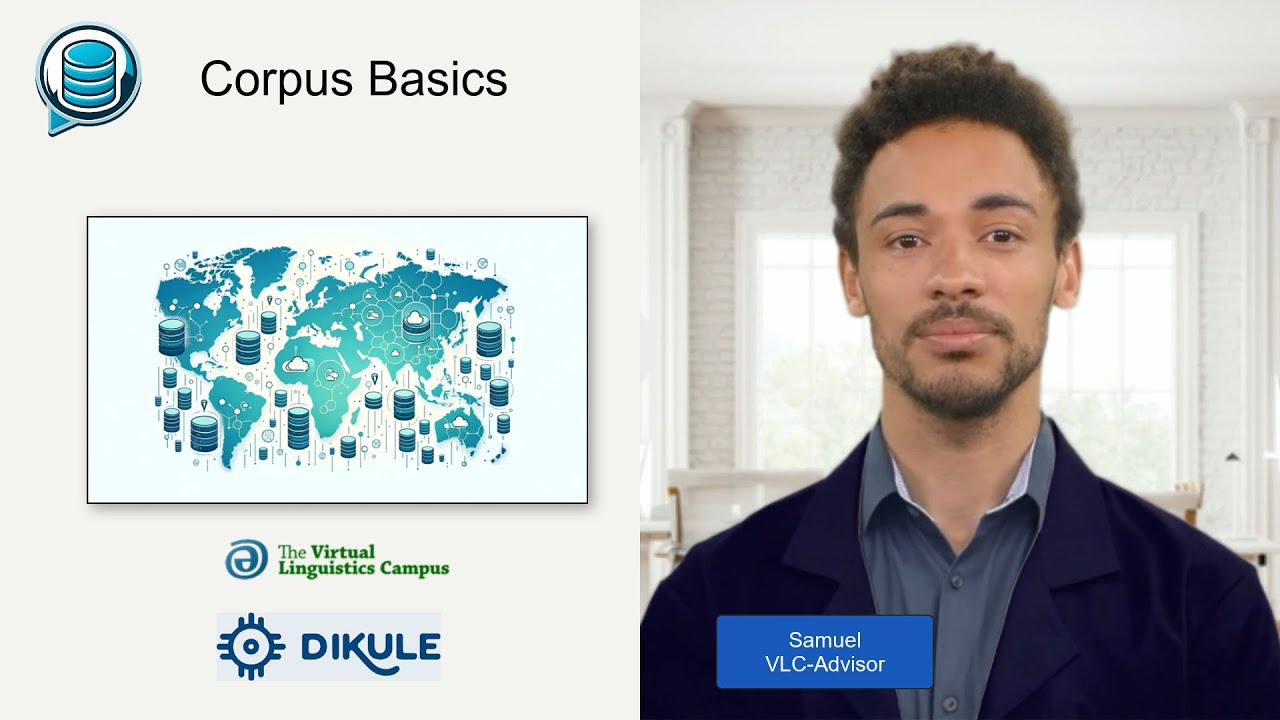
Professor Julia Schlüter is a distinguished academic in the Chair of English Linguistics within the Humanities Faculty at the University of Bamberg, Germany. She has served as Senior Lecturer at the Chair of English Linguistics and Language History under Prof. Manfred Krug since June 2008, holding the title of Professor following her habilitation in 2008. Her institutional profile demonstrates deep commitment to both research and teaching innovation, particularly through her leadership of the KorPLUS project and development of open educational resources for corpus linguistics. Her research interests span corpus linguistics for English language learners, empirical methods for studying language variation and change, and the application of corpus methods to teaching. She specializes in examining grammatical, phonological, and lexical differences between British and American English across historical periods from Middle English to present-day usage. Her work investigates phonological variation (particularly phonotactically controlled alternations), morphological change, and syntactic variation through corpus analysis, with special attention to functional grammar and grammaticalization theory. Professor Schlüter's recent publications (2022-2025) reveal a strategic evolution in her research focus, with increasing emphasis on the intersection of corpus linguistics and digital education. While maintaining her foundational work in historical English linguistics, she has developed significant expertise in applying corpus methods to language teacher education and evaluating AI writing tools. Her work demonstrates consistent methodological innovation, moving from traditional corpus analysis to blended learning approaches and digital educational resource development. Her scientific recognition includes: Winner of the 2025 Teaching Innovation Prize from the International Society for the Linguistics of English for the KorPLUS project University of Bamberg Prize for outstanding habilitation (2009) Lise Meitner Programme post-doctoral scholarship (2005-2006) Rectorate Prize from University of Paderborn for outstanding Ph.D. thesis (2005) Multiple DAAD scholarships for international study Professor Schlüter actively supervises doctoral research, currently guiding three Ph.D. candidates (Katharina Deckert, Aklima Nahar, and Nikolai Beland) while having successfully completed supervision for several others. She leads the KorPLUS project (2021-2025), funded by the Stiftung Innovation in der Hochschullehre, which develops open educational resources for corpus linguistics. Her research has been consistently supported by the German Research Foundation (DFG) and other funding bodies throughout her career. She heads the KorPLUS team (with Carina Großmann and Katharina Deckert) which develops the interactive Open Educational Resource platform for corpus linguistics. Her YouTube channel offers video tutorials on corpus basics, and she has created the Video Podcast Series "How to Update your Grammar" for English teachers. She regularly organizes in-service teacher trainings and collaborates with the Virtual Linguistics Campus at RWTH Aachen University to deliver her educational materials globally.