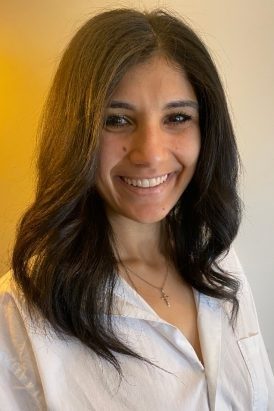
Dr. Bogi Perelmutter (they/them or e/em) is an Assistant Teaching Professor in the Department of Slavic, German, and Eurasian Studies at the University of Kansas. A Hungarian Jewish immigrant, they earned their PhD in Speech, Language, & Hearing from KU in 2022. Their interdisciplinary work bridges linguistic research, cultural studies, and science fiction scholarship. Research Focus Dr. Perelmutter's research explores: Linguistic and societal aspects of Hungarian and Jewish cultures in historical-political contexts Translation studies and cross-cultural adaptation Atypical language acquisition through laboratory research Gender nonconformity in literature through a Jewish studies lens Academic Contributions They have taught diverse courses including: Introduction to Slavic Folklore Jewish Mysticism and actively contributes to the KU Gunn Center for the Study of Science Fiction . Their research has been recognized with the Hadassah-Brandeis Institute Jewish Gender Studies Research Award for analyzing gender nonconformity in Zsuzsa Kántor's works.
Alice Corr is an Associate Professor in Modern Languages at the University of Birmingham. She holds a PhD from the University of Cambridge (2017) and has held prestigious fellowships including Drapers’ Company Research Fellow at Pembroke College, Cambridge, and Lumley Bye-Fellow at Magdalene College, Cambridge. Her research focuses on comparative morphosyntax, dialectology, and historical linguistics of Ibero-Romance languages, with a particular emphasis on endangered and minoritized varieties like Judeo-Spanish. She leads the British Academy/Leverhulme-funded ‘Grammars under threat’ project documenting Judeo-Spanish syntax and coordinates the Transatlantic LISTEN! initiative promoting linguistics in K-12 curricula. Education: PhD (University of Cambridge, 2017), MPhil (University of Cambridge, 2012), BA (University of Cambridge, 2010). She has taught at Oxford, Queen Mary University of London, and multiple Cambridge colleges. Her work addresses language endangerment, diaspora linguistics, and policy-driven language education reforms. Awards include the PGCHE high achievement recognition (2020). Key projects include the Linguistics in MFL initiative (introducing linguistics into UK A-level curricula) and EUniWell-funded multilingualism projects. Her research outputs span 31 peer-reviewed articles/chapters since 2015, focusing on syntax, historical linguistics, and educational policy. Recent activities include keynote addresses at international conferences on Medieval Romance linguistics and policy forums addressing the UK’s languages crisis.
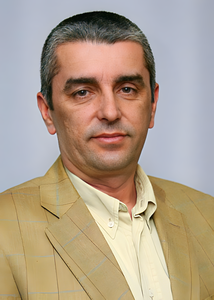
Martin Klotz is a Researcher at the Institute for German Language and Linguistics, Humboldt University of Berlin, affiliated with the Collaborative Research Center (SFB1412) and the Research Unit for Emerging Grammars (RUEG). His work focuses on corpus linguistics, computational linguistics, and digital humanities infrastructure. He holds an MSc in Cognitive Systems (2019, University of Potsdam) and a BA in German Linguistics & Computer Science (2015, Humboldt University). Key research interests include corpus architectures, historical and parallel corpora, language modeling for non-standard varieties, and research software engineering. He contributes to projects like the RUEG corpus and FALKO learner corpus, emphasizing multilingual and multimodal corpus development. His publications span corpus design, software tools (e.g., Annatto), and analyses of heritage languages. He actively organizes academic events, such as the 2021 DGfS short working group on contrastive corpus methodology. He participates in lab collaborations like Deutsch Diachron Digital and contributes to open-source corpus tools. His work bridges computational methods with linguistic theory, focusing on dynamic language systems.
Costas Vassilakis is a Professor in the Department of Informatics and Telecommunications at the University of Peloponnese, serving as Dean of the Faculty of Economics and Technology since 2019. He holds a PhD from the University of Athens (1995) and has held academic roles since 2005, including Associate Professor and Visiting positions. His research focuses on information systems, semantic web technologies, and cultural informatics, with contributions to projects like Virtual Museums and SmartGov. He leads initiatives in digital cultural heritage, cybersecurity, and smart agriculture. Notable projects include Experimedia Blue for personalized cultural experiences and Cyber-Trust for IoT security. Active in teaching, he has instructed courses on operating systems, software engineering, and real-time systems. He contributes to academic governance, including roles in the University Council and strategic planning units. His work bridges technology and cultural preservation, emphasizing interdisciplinary innovation. Education: PhD in Informatics, University of Athens (1995); MSc equivalent in Informatics, University of Athens (1990). Research Interests: Focuses on recommenders systems, collaborative filtering optimization, cybersecurity frameworks, and AI applications in agriculture. Active in cultural heritage digitization, museum technologies, and VR systems. Recent Projects: Includes TripMentor (tourism platform), PaloAnalytics (market analytics), and Rehabotics (rehabilitation robotics). Leads EN.I.R.I.S.S.T., a national infrastructure for maritime and logistics research. Awards: No explicit awards listed, but recognized through extensive project leadership and academic roles.
Marcel Bollmann is an Associate Professor at the Department of Computer and Information Science (IDA) at Linköping University, Sweden, where he leads research in the Artificial Intelligence and Integrated Computer Systems (AIICS) division. His work focuses on natural language processing (NLP), machine learning, and computational linguistics, particularly in under-resourced languages, multilinguality, and historical document analysis. Education: He holds a PhD in Computational Linguistics from Ruhr-Universität Bochum (2018), funded by projects on historical German language corpora. Previously, he was a postdoc at the University of Copenhagen (2018–2021), supported by an EU Marie Skłodowska-Curie Fellowship, and an assistant professor at Jönköping University (2021–2023), where he developed AI Engineering courses. Research: Bollmann’s interests include linguistically-informed NLP approaches, historical text normalization, and improving NLP accessibility across language genres. His work has addressed challenges like morphology-aware models and low-resource language support. Awards: His 2021 paper on morphology’s role in error analysis won the EACL Best Long Paper Award. He also contributed to the ACL Anthology as Site Development Lead, advancing NLP infrastructure. Advising & Grants: He has supervised projects on historical language corpora and received funding from EU initiatives. His lab collaborations focus on advancing AI through interdisciplinary methods. Labs/Teams: Active in the AIICS division at IDA, contributing to WASP (Wallenberg Autonomous Systems Program) and other interdisciplinary AI initiatives.
Alice Mitchell is Junior Professor for Anthropological Linguistics of Africa at the University of Cologne's Institute for African Studies within the Faculty of Arts and Humanities. Her research focuses on anthropological linguistics, interactional sociolinguistics, and language documentation, with particular emphasis on African languages and cultures. Her work examines linguistic practices related to kinship, social hierarchy, and cultural norms in Tanzanian Datooga communities. Recent publications investigate children's acquisition of avoidance registers, kinship categorization, and the sociolinguistic history of pastoral societies in eastern Africa. Research Methodology: Fieldwork-based language documentation Cross-cultural linguistic comparisons Quantitative and qualitative analysis of social interactions
Dag Trygve Truslew Haug is a Professor at the Department of Classics at the University of Oslo, specializing in Greek and Latin linguistics with a focus on syntax and computational approaches. His research bridges classical philology with modern computational linguistics, particularly through treebank development and semantic analysis. His primary research interests include: Greek and Latin grammatical structures Lexical-Functional Grammar and formal semantics Computational linguistics and treebank development Historical linguistics and syntactic change Semantic annotation frameworks Morphological tagging systems His recent publications demonstrate a strong focus on computational linguistics applications for classical languages, semantic parsing methodologies, and the development of linguistic resources for Norwegian. The work shows consistent innovation in formal semantics, corpus linguistics, and interdisciplinary applications in computational biology. He leads the DAMOS project (Database of Mycenaean at Oslo) and participates in multiple research groups including Digital Humanities, Grammar and Meaning, Language Change, Linguistics and Poetics, Pragmatics: Theory & Experiments, and Super Linguistics.
Yourdanis Sedarous is a Lecturer I in the Department of Linguistics at the University of Michigan, within the College of Literature, Science, and the Arts (LSA). Her primary research focuses on bilingualism, syntax, and psycholinguistics, exploring how bilingual speakers' cognitive representations of syntactic structures interact across languages. She employs experimental methods such as acceptability judgments, eye-tracking, and pupillometry to study processing complexity in bilingual communities. Her work bridges theoretical linguistics with empirical approaches, addressing topics like code-switching, A-bar movement, and the construct state in Egyptian Arabic. Her research interests include syntax, psycholinguistics, and sociolinguistics, with a particular emphasis on the cognitive and linguistic mechanisms underlying bilingual grammars. She advocates for equitable and just linguistic methodologies, challenging traditional notions of 'nativeness' in language research. Her studies often involve Egyptian Arabic and English bilinguals, examining phenomena such as resumptive pronouns, island effects, and the syntax of code-switched sentences. Dr. Sedarous has contributed to the revitalization of Creole languages and the decolonization of linguistic theory. Her experimental work combines offline and online measures to investigate grammatical knowledge and language use, emphasizing data-driven approaches. Though no specific grants or advising roles are noted, her research has implications for linguistic theory and language education. Her work is housed within the Department of Linguistics at U-M, where she also maintains an active personal website.
Professor Michael Meeuwis is a distinguished academic at Ghent University's Department of Languages and Cultures, Faculty of Arts and Philosophy, where he serves as Professor of Lingala and African Sociolinguistics. With expertise spanning linguistic anthropology, African languages, and colonial history, Professor Meeuwis has established himself as a leading scholar in the study of Lingála and language policy in the Democratic Republic of Congo. Professor Meeuwis holds an MA in African History and Philology from Ghent University (1990), an MA in General Linguistics from the Universities of Antwerp and Amsterdam (1991), and a PhD in Sociolinguistic-Ethnographic studies from the University of Antwerp (1997). He was a Postdoctoral Research Fellow of the Fund for Scientific Research - Flanders from 1997-2002 and served as Professor of Anthropological Linguistics at the University of Amsterdam in 2001-2002 before joining Ghent University in 2002. Professor Meeuwis's research focuses on the linguistic, historical, and sociopolitical dimensions of African languages, particularly Lingála. His work examines the grammatical structure and historical development of Lingála, the sociolinguistic situation in the Democratic Republic of Congo, colonial language policies in the Belgian Congo, and the epistemological dimensions of colonial knowledge production. He explores how language ideologies intersect with power structures, colonial histories, and contemporary decolonial movements. His research bridges linguistic anthropology, historical sociolinguistics, and postcolonial theory to analyze how language functions as both a tool of colonial domination and a medium for resistance and identity formation. Professor Meeuwis's extensive publication record reflects his interdisciplinary approach, spanning linguistic description, historical analysis, and critical theory. His recent work has increasingly focused on the decolonial dimensions of language knowledge, examining how colonial language policies continue to shape contemporary linguistic landscapes in Africa. He has made significant contributions to understanding the complex relationship between missionary activity, language standardization, and political power in Central Africa. Professor Meeuwis has supervised numerous PhD students including Margot Luyckfasseel, Eric Mijts, Hilde Gunnink, Minah Nabirye, Bienvenu Sene Mongaba, and Gilbert Kadima Batumona Adi. His research has been supported by multiple projects including 'A historiography of Kikongo language studies and management (1624-1960),' 'Victor Roelens and the 'missionaries of Africa' (white fathers) in colonial society in Congo, 1880-1926,' and 'Lingala franca. Language, conflict and political power in Mobutu's Congo/Zaire, 1965-1997.' Professor Meeuwis is affiliated with several research centers at Ghent University, including the Afrikaans - Ghent Center for Afrikaans and the Study of South Africa, CARAM - Center for Anthropological Research on Affect and Materiality, CESSMIR — Center for the Social Study of Migration and Refugees, and MULTIPLES - Research Center for Multilingual Practices and Language Learning in Society. These affiliations reflect the interdisciplinary nature of his work, which connects linguistic analysis with broader social, historical, and political contexts.
Associate Professor Biser Grigorov, Ph.D., is affiliated with the Department of Gymnastics at the Faculty of Public Health, Health Care and Tourism of the National Sports Academy V. Levski. His professional journey spans over four decades in choreography, pedagogy, and cultural animation. Education: Academy of Music, Dance and Theatre Arts – Plovdiv Specialization: Choreographic Directing and Pedagogy Research Interests: Focused on Bulgarian folklore choreography preservation, rhythmic pedagogy innovation, and the intersection of dance with sports and cultural events. His work emphasizes classification systems for traditional dances, Olympic ceremony choreography, and rhythmic sense development in performers. Awards: First Prize (2005, 2014) for children's dance authorship Historic recognition for contributions to national dance heritage (1990-2016) Advising/Grants: No formal grants noted, but extensive creative collaborations including: Choreographed over 140 BNT episodes (2007–2009) Jury member for national dance competitions (2002–2016) Labs/Teams: Lead creative roles in: National Sports Academy's ensemble productions State Folklore Ensemble "Trakia" Ensemble "ROSNA KITKA" as Artistic Director
Nuria Calvo Cortés is a part-time Senior Lecturer in the Department of English Studies at Complutense University of Madrid (UCM), where she has worked since 2006. She holds a PhD in English Linguistics (UCM, 2012, sobresaliente cum laude ), a Teaching Diploma (1997), and a BA in English Philology (UCM, 1991-1996). Research Focus: Her work centers on historical and diachronic linguistics, particularly Late Modern English (18th-19th centuries). Using corpus-based methods, she analyzes grammatical/pragmatic features in historical texts (letters, petitions, novels), socio-historical contexts of marginalized groups (women, servants), cognitive linguistics (motion semantics, metaphors), and English varieties. She welcomes PhD proposals in these areas. Publication Trends: Her 15 most recent publications (2012-2025) predominantly investigate linguistic features in 18th-19th century texts through corpus analysis. Key themes include: politeness strategies in petitions, variation in perfect auxiliary usage among women writers, socio-linguistic patterns of marginalized groups in Britain, and the influence of letter-writing manuals. Her work consistently intersects with pragmatics, sociolinguistics, and cognitive frameworks. Grants & Projects: Key funded research includes: PID2020-117973GB-I00: Conceptualization/Perception of Female Childhood in Anglophone Cultures (Ministerio de Ciencia, 2021-2025) FFI2016-77540-P: Emerging/Peripheral Discourses: Critical Socio-Cognitive Approaches (Ministerio de Economía, 2016-2020) PR26/16-20300: Linguistic-Cognitive Modeling of 'Normative Age' in British Society (Santander-UCM, 2017-2018) Supervision & Academic Service: Has supervised 2 completed PhD theses (code-switching in digital communication; Australian English syntax) and currently supervises 1 PhD candidate (sociolinguistics of school logbooks). Coordinates English Language courses (C1.1, C2) and serves on departmental committees (Permanent Commission, Claims Committee). External reviewer for multiple linguistics journals and conferences. Research Groups: Member of 'Lingüística Cognitiva: Estudios Socioculturales y Contrastivos' (UCM, since 2015) and external collaborator with 'DING: Dialectología Inglesa, Diacronía Inglesa' (University of Salamanca, since 2021). Co-organizes academic seminars on topics like Jane Austen's childhood discourse.
Ranke de Vries is the Ben Alder Professor and Chair of the Department of Celtic Studies at St Francis Xavier University. She holds a Master's in Celtic Languages and Literature and Medieval Studies from Utrecht University, followed by a PhD in Early Irish from Trinity College Dublin. Her research focuses on medieval Irish and Welsh languages, narrative traditions, textual editions, and the intersection of medieval Celtic medicine with continental-European and Arabic traditions. She leads the MMIST project (Medicine in Medieval Irish Saga Texts), examining pre-15th century Irish medical knowledge influenced by external traditions. Current courses include Celtic Civilizations I & II, Medieval Manuscripts, Medieval Medicine, and Old Irish language courses. Her publications span academic monographs, journal articles on medieval medical practices, and pedagogical grammar guides. Teaching responsibilities in 2024-25 include advanced Old Irish language instruction and specialized seminars on medieval Celtic medicine and manuscript culture. No awards are explicitly listed in the provided materials.
Professor Alexandra Simonenko (Ghent University) is a leading scholar in historical and diachronic linguistics, specializing in the evolution of determiners, nominal syntax, and pragmatic-driven language change across French, Finno-Ugric, and Scandinavian languages. Her work integrates treebank analysis, computational modeling, and formal semantics to trace grammatical shifts over time. Research Interests: Diachronic Semantics: Tracking how determiners and possessives shift from strong to weak interpretations Treebank-Based Methodology: Leveraging annotated corpora for quantitative analysis of Medieval French syntax Pragmatic Reasoning: Modeling language change through game-theoretic and information-theoretic frameworks Determiner Typology: Cross-linguistic analysis of full vs. clitic vs. bound determiners DP Islands and Factive Constraints: Investigating syntactic-pragmatic interactions in question structures Key Article Trends: Her recent work (2022-2026) focuses on determiner semantics, French possessive evolution, and computational models of definiteness. Earlier studies (2015-2019) emphasize Medieval French null subjects, cliticization, and treebank-based syntactic analysis.
Brigitte Bauer is a distinguished Professor and Research Fellow at the University of Texas at Austin, with a focus on Comparative (Indo-European) Linguistics, Historical Linguistics, and the Evolution of Latin-Romance languages. She serves as a Guest Researcher at the Max Planck Institute for Psycholinguistics and has held affiliations with Wolfson College, University of Cambridge, and the Linguistics Research Center at UT Austin. Her career spans over three decades, including roles as a University Lecturer at Radboud University Nijmegen and Visiting Fellow at All Souls College, Oxford.
Giuliana Russo is an Associate Professor in the Department of Humanities at the University of Catania, where she has taught English linguistics and translation since 2006. She holds the academic rank of Associate Professor since 2022 and is actively involved in teaching and research. She also teaches at the PhD program in English and American Studies at DISUM and serves as a tutor at the Advanced School of the University of Catania. Her teaching extends to professional training courses such as SiSS, PAS, and CLIL. Academic Rank: Associate Professor Institution: University of Catania Department: Department of Humanities Office: Room 117 Office Hours: Mondays and Wednesdays, 10:00–11:30 (in person) Email: giuliana.russo@tiscali.it Phone: 0957102245 Giuliana Russo's research focuses on both diachronic and synchronic aspects of English linguistics and translation theory and practice. Her work encompasses a wide range of topics, including audiovisual translation, political discourse, language variation, historical syntax (e.g., periphrastic 'do'), anglicisms, bilingualism, and cultural aspects of language. She has contributed to international scholarly efforts such as the Lexicon Grammaticorum and participates in national (PRIN), local (Prometeo), and international (Prescriptivism) research projects. Her research bridges theoretical inquiry with practical pedagogical applications, particularly in language teaching and professional translation. The 15 most recent theses she has supervised reveal a consistent focus on translation studies—especially audiovisual and specialized translation—and English linguistics, including discourse analysis, idiomatic expressions, gender and ideology in translation, and historical language change. Her students frequently explore cultural and media-related topics, such as the influence of social media on language, the localization of video games, and the representation of political and gender issues in language and translation. Giuliana Russo has not received any explicitly mentioned scientific awards in the provided text. She actively supervises graduate students, as evidenced by a long list of thesis topics in areas such as Shakespearean language, political discourse, adolescent language, Euroenglish, and post-colonial translation. She is also engaged in research funding through participation in national and international projects. Her academic service includes tutoring at the Advanced School and contributing to doctoral education. She is involved in ongoing research collaborations and projects but no specific labs or research teams are named in the text. Her work is conducted within the Department of Humanities at the University of Catania.