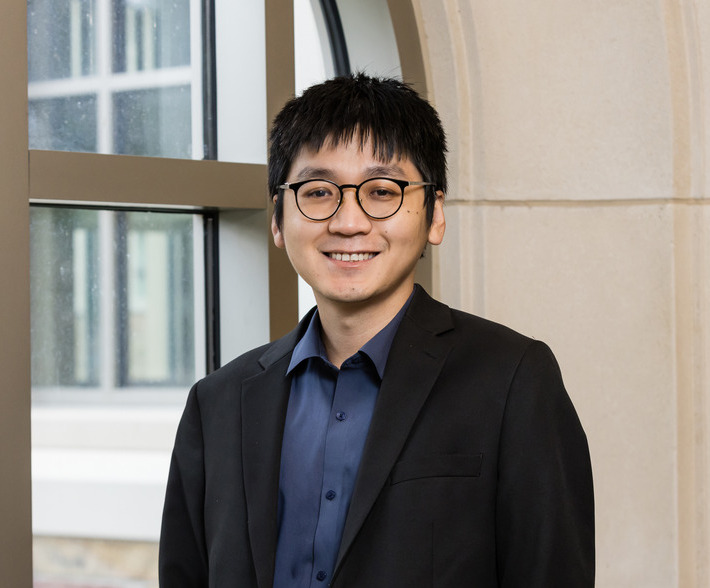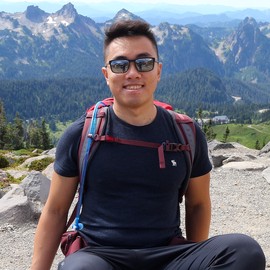
Keng-Chi Changمشاهده پروفایل
استادیار
Keng-Chi Chang serves as Assistant Professor in Quantitative Social Science within Dartmouth College's Faculty of Arts and Sciences. His research program integrates artificial intelligence and computational methodologies to investigate critical questions about technology's impact on political systems and democratic processes, with particular focus on censorship circumvention mechanisms, visual media dynamics in online ecosystems, and algorithmic recommendation systems. Professor Chang's academic foundation spans multiple disciplines: PhD in Political Science with Specialization in Computational Social Science, University of California, San Diego MS in Computer Science, University of California, San Diego BA in Economics, National Taiwan University His research synthesizes computational social science with political methodology to address pressing questions about digital politics. Key investigations examine how citizens circumvent censorship during crises like COVID-19, how visual content influences news credibility perceptions, and how social media chat environments alter political debate experiences. This work consistently bridges computer science innovation with social science theory through rigorous analysis of large-scale behavioral datasets. Recent publications reveal evolving methodological sophistication, progressing from social media election prediction models to advanced AI applications for neuron-level model explanations. His work spans political communication, computer vision, and causal inference, appearing in premier interdisciplinary venues including PNAS and top communication journals. Research support includes competitive awards: NSF/APSA Dissertation Research Fellowship Rapoport Family Foundation Fellowship As an emerging faculty member, Professor Chang builds his research program through active grant acquisition and interdisciplinary collaboration. His mentorship develops students' capabilities in computational methods while addressing substantive questions about technology's societal impacts. Though no formal lab structure is specified, his projects involve collaborative teams working at the computer science-social science interface.