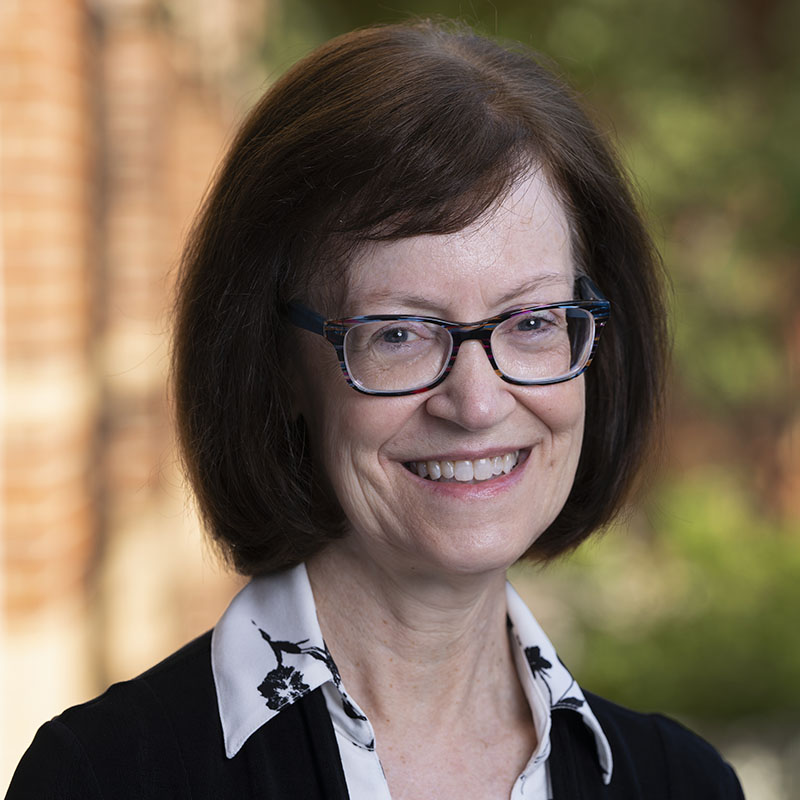
Barbara H. Haggh-Huglo is a Professor of Musicology at the University of Maryland School of Music , specializing in medieval and Renaissance Western European music, notation, and archival research. She teaches courses on Renaissance and Baroque music, seminars on music-art-architecture interplay, and music theory history. Research spans music manuscripts, liturgical practices, and the pipe organ in the Low Countries/France. Awarded Honorary Member of the American Musicological Society (2022) for outstanding contributions. Her work is supported by grants from Fulbright-Hays, ACLS, NEH, and others. Her recent articles focus on medieval liturgical dating methods, responsory verse evolution, and the origin of 'L’homme armé'. She serves on editorial boards for Historiae , Journal of the Alamire Foundation , and digital projects like CANTUS . Collaborative efforts with her late husband Michel Huglo include studies on 13th-century polyphony and manuscript diagrams of Plato’s Timaeus .
Jane Morlet Hardie is an Honorary Senior Lecturer at the Medieval and Early Modern Centre of the University of Sydney. She specializes in Medieval and Renaissance Iberian liturgical music , with a focus on manuscript studies and liturgical chant analysis. Her research has been supported by grants including the Australian Research Council (ARC) Network for Early European Research Cluster , which she convenes, and the Fulbright Foundation . Her scholarly work encompasses musicology , manuscript studies , and cultural history , particularly examining Iberian musical traditions between 1100-1750. She has published extensively on topics such as Spanish sacred polyphony, Portuguese lamentation prints, and the intersection of music with visual culture in medieval and early modern manuscripts. Recent publications like Into the Diaspora: Essays on Medieval and Early Modern Liturgical Music Manuscripts (2020) and Mapping Processions: Four Sixteenth-Century Spanish Music Manuscripts (2018) highlight her expertise in Medieval liturgical chant Iberian manuscript traditions Liturgical processions Music and cultural context Awards and honors include 2009 - Fellowship of the Australian Academy of the Humanities 1999-2000 - Fulbright Foundation Senior Scholar Award 1972 - Wayne State University Florence Cleary Award She serves on the editorial advisory board of Musicology Australia and engages in international academic activities, including lectures at the Autonomous University of Barcelona.
Carlota Piedehierro Sáez serves as a Lecturer in Hispanic Linguistics and Translation at the UFR EILA (Intercultural Studies of Applied Languages) at the University of Paris. She is also recognized as an Associate Professor of Spanish and works as a Translator-linguist at the Academy of Commercial Sciences. Her educational background includes a Doctorate in Language Sciences from the School for Advanced Studies in the Social Sciences in Paris and Spanish Language from the Autonomous University of Madrid, where she earned the distinction of "Doctor Europeus" and the extraordinary UAM prize in 2015. She also holds an M2 in Didactics of the Spanish Language and a DEA in Linguistics applied to the acquisition and teaching of Spanish from Antonio de Nebrija University in Madrid, along with a Degree in Hispanic Philology from the Universidad Autonoma de Madrid. Dr. Piedehierro Sáez's research focuses on Hispanic linguistics with emphasis on enunciative semantics and pragmatics, including discursive markers, polyphony, mediativity, linguistic stereotypes, and inference and argumentation processes. Her work also spans French-Spanish contrastive linguistics, examining pragmatic analysis of translation errors, neural machine translation, and specialized Spanish-French translation. Additionally, she applies linguistics to the teaching of translation and to the acquisition and teaching of Spanish. Her recent publications demonstrate a strong focus on the intersection of linguistics, pragmatics, and translation studies, with particular attention to Spanish-French language dynamics. Her work shows consistent exploration of how theoretical linguistic concepts can be applied to practical translation challenges and language teaching methodologies. Doctor Europeus distinction Extraordinary UAM prize 2015 Dr. Piedehierro Sáez teaches Spanish translation courses across multiple levels (L2 LEA, L3 LEA, M1 ILTS/LSCT, M1 MLCIN) and has conducted projects with second-year students of the LEA License (English-Spanish) at the UFR. Her work includes developing educational materials for non-native Spanish specialists and creating videos for university students in modern language degrees. Her academic work is deeply integrated with practical applications in translation and language teaching, bridging theoretical linguistic research with classroom implementation and professional translation practice.
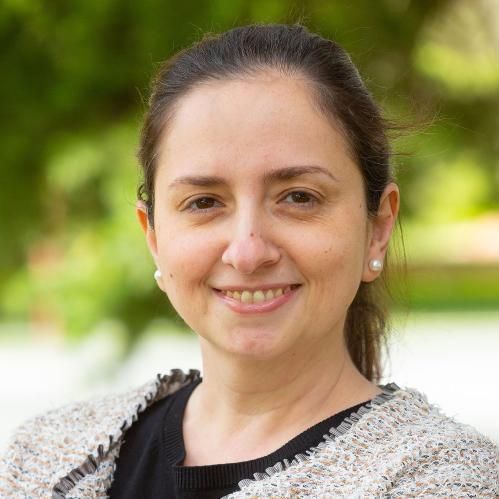
María José Gallucci Natale is an Assistant Professor in the Department of Philology at the University of Navarra. She holds a PhD in Hispanic Linguistics from the University of Zaragoza and has held previous roles as a lecturer and researcher at the Universidad Central de Venezuela (UCV) and the Romanisches Seminar of Eberhard Karls Universität Tübingen. She is a member of the UNoral Research Group on Orality and co-directs the PRESEEA-Pamplona project, which examines sociolinguistic variation in Spanish. She also coordinates the Writing Center at the College of Philosophy and Letters, UNAV. Educational Background: PhD in Hispanic Linguistics, University of Zaragoza (2018) Her research focuses on variationist sociolinguistics and discourse analysis, particularly the study of polyphony in spoken Spanish. She has contributed to projects analyzing Caracas speech under the PRESEEA framework and explores oral corpora to understand linguistic structures and sociocultural dynamics. Affiliations: Department of Philology, University of Navarra UNoral Research Group on Orality PRESEEA-Pamplona Project (Co-director) Writing Center, College of Philosophy and Letters, UNAV
João RIBEIRO TEIXEIRA is a Part-Time Lecturer in Hispanic Linguistics at the School of Foreign Languages and Civilizations, University of Artois. His research focuses on semantics and pragmatics within the frameworks of polyphony (Ducrot and Anscombre) and stereotype theory (Anscombre), particularly examining discourse operators like entonces and por (lo) tanto in Spanish, and alors and donc in French. Doctoral candidate in Language Sciences at LT2D (EA 7518, CY Cergy Paris Université) Supervised by Patrick Haillet Holds a 2019 Master's and 2017 LLCER degree in Spanish from University of Cergy-Pontoise His research explores the functional and structural roles of discourse operators in articulating semantic operations, with a focus on cross-linguistic comparisons between Spanish and French. Current work includes analyzing polysemy, anaphora, and pragmatic markers in international conferences such as the International Congress of French Linguistics and Res Per Nomen. Published in peer-reviewed journals, including a forthcoming article in Çédille: Revista de estudios franceses , and presented at major academic events in Spain and France (2021–2022). Teaching experience includes linguistics courses and grammar tutorials for L2 Spanish, as well as methodology tutorials for L1/L2 English/Spanish programs.
Javier Marín-López is a Full Professor of Music at the University of Jaén, Spain, where he has been teaching since earning his Ph.D. in Musicology from the University of Granada in 2007 with Special Award and International Diploma. He serves as the Artistic and General Director of the Festival de Música Antigua de Úbeda y Baeza (FeMAUB) since 2007, and as Editor-in-Chief of the Revista de Musicología, demonstrating his dual commitment to academic scholarship and cultural leadership. His primary research areas include: Latin American Colonial Music Spanish Music History Early Music Soundscape Studies Digital Musicology Marín-López specializes in the musical connections between Iberia and the Americas, particularly colonial Mexican music from the 16th-19th centuries. His work examines how music circulated across the Atlantic, the adaptation of European musical practices in the New World, and the development of distinctive musical traditions in colonial contexts. He has pioneered work in digital musicology applied to Latin American music studies, exploring how digital tools can transform research and teaching in this field. His research often focuses on specific composers like Ignacio Jerusalem (1707-1769), the most significant composer of galant music in the Americas. His publications demonstrate a consistent focus on the music of New Spain/Mexico, particularly cathedral music traditions. His editorial work shows strong commitment to advancing scholarship in Iberoamerican music studies through collaborative international projects that connect researchers across continents. His recent work explores the application of digital humanities to musicological research in Latin America. Among his notable achievements are: Receiving Special Award and International Diploma for his doctoral dissertation Being recognized among the top 0.5% of scholars on Academia.edu with over 106,000 public views Establishing significant editorial projects that have advanced the field of Iberoamerican music studies Directing the Festival de Música Antigua de Úbeda y Baeza for over 15 years As an academic leader, Marín-López has directed numerous conferences, supervised doctoral students, and led major research initiatives. His work bridges academic research with public engagement through festival direction, cultural programming, and digital humanities applications to musicological research.
Professor Jennifer Bain holds a position in Musicology at the Fountain School of Performing Arts, Dalhousie University, with a cross-appointment in Gender and Women's Studies. Her work bridges historical and modern scholarship, focusing on medieval musical traditions and their contemporary interpretations. Education: Bachelor of Music (BMus) from Wilfrid Laurier University Master of Arts (MA) from McGill University Doctor of Philosophy (PhD) from Stony Brook University Research Interests: Professor Bain’s research explores the secular music of Guillaume de Machaut, medieval music theory, digital chant analysis, and the 19th-20th-century revival of Hildegard of Bingen. She emphasizes the role of women in music composition and production, particularly in medieval contexts. Her interdisciplinary approach integrates digital humanities, chant studies, and music historiography. Publications Trends: Her recent articles highlight digital methodologies applied to medieval music, such as MEI encoding and optical music recognition. She also examines the cultural and historical reception of Hildegard, underscoring her legacy and modern reinterpretations. Collaborative editing projects, including work on Florilegium and Music Theory Online , reflect her leadership in academic publishing. Awards & Grants: Recipient of the 2020 Sheila K. Piercey Award for Performing Arts Educators Elected to the Royal Society of Canada’s College of New Artists, Scholars, and Scientists (2016) Principal Investigator of multiple SSHRC grants, including a Partnership Grant (2023–2030) funding digital chant research Her grants emphasize collaborative, technology-driven approaches to medieval music preservation and analysis. Advising & Grants: While no advisees are listed, her roles as editor and grant PI indicate significant contributions to mentoring through editorial projects and research initiatives. Her grants also support interdisciplinary teams working on chant transmission and early music notation. Labs & Teams: Bain leads projects in digital musicology, collaborating with institutions like the Digital Research Alliance. Her work often involves cross-disciplinary teams focused on technology’s role in musicological research, such as the MEI encoding collaboration with Behrendt, Fujinaga, and others.