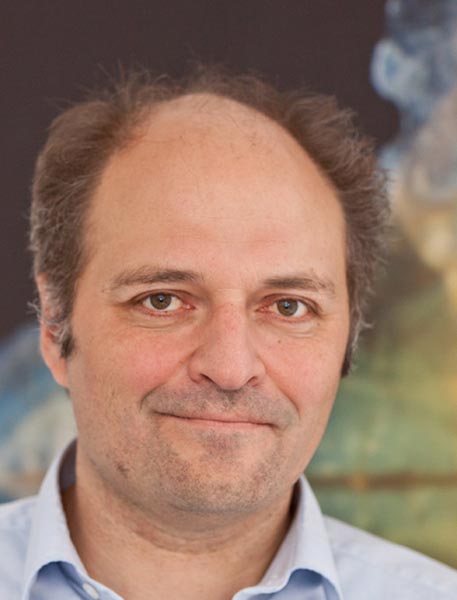
Joseph Cichonمشاهده پروفایل
استادیار
- Neuroscience
- Anesthesiology
- Critical Care
- +۴ مورد دیگر
Joseph Cichon, MD, PhD, serves as Assistant Professor of Anesthesiology and Critical Care at the Perelman School of Medicine, University of Pennsylvania, where he directs the In Vivo Imaging Center for Anesthetics and Psychedelics. His dual clinical expertise in neuroanesthesia and research focuses on neural circuit mechanisms underlying rapid-acting antidepressants. His educational background includes: BS in Pennsylvania State University, 2008 MS in Pennsylvania State University, 2009 PhD in Neuroscience & Physiology, NYU School of Medicine, 2015 MD, NYU School of Medicine, 2017 Dr. Cichon investigates how anesthetics and psychedelics like ketamine and nitrous oxide produce rapid antidepressant effects through modulation of prefrontal cortical circuits. His work combines in vivo imaging , electrophysiology , and rodent behavioral models to decode cellular mechanisms of neural plasticity, with emphasis on SK2 channel function, somatostatin interneuron activity, and dendritic calcium dynamics. This research bridges anesthesiology, psychiatry, and neuroscience to develop novel therapeutics for depression and neuropathic pain. His publication record demonstrates consistent contributions to high-impact journals including Nature Neuroscience and Nature Communications , with recent work revealing nitrous oxide's antidepressant mechanism via prefrontal SK2 channel inhibition (2025) and ketamine's disruption of cortical calcium spikes (2020). Key research themes include neural circuit modulation by rapid-acting agents, sleep-dependent synaptic plasticity, and neuropathic pain mechanisms. No scientific awards are documented in available sources. Dr. Cichon directs the In Vivo Imaging Center for Anesthetics and Psychedelics at Penn, where his team employs advanced GCaMP-based imaging and transgenic models to visualize real-time neural activity during anesthetic and psychedelic interventions. His laboratory focuses on translating circuit-level discoveries into clinical applications for mood disorders.