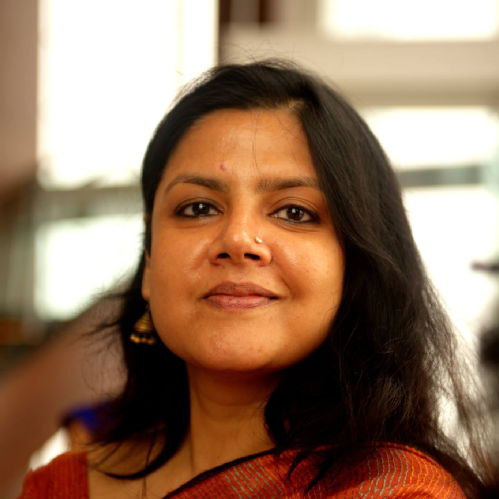
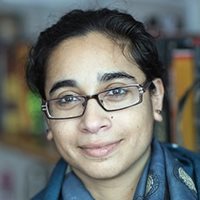
Rashmi Varma is a Professor at the University of Warwick, affiliated with the Faculty of Arts. She has previously taught at the University of North Carolina, Chapel Hill, and Jesus and Mary College, University of Delhi. Education: BA in English (Honours) from Lady Shri Ram College, University of Delhi MA in English Literature from University of Delhi PhD in English and Women’s Studies from University of Illinois at Chicago Research interests: Varma specializes in the postcolonial city, postcolonial Indian and African theory, global feminism, representations of indigeneity, and world literature theory. Her work interrogates urban political ecologies, feminist pedagogy, and subaltern politics. Scientific awards: British Academy Mid-Career Fellowship (2011-2012) for Modern Tribal: Representing Indigeneity in Postcolonial India Supervision: She currently supervises PhD students Angel Maria Varghese, Shavena Malvika Nair (Chancellor's International Scholar), Ragesree Roy, and Archana Vinod (Chancellor's International Scholar). Collaborations: Varma co-edited journals like Feminist Dissent and special issues on transnational feminism, urban political ecologies, and postcolonial theory. She was involved in the Tate Exchange workshop on 'Production, Truth and Justice' (2021).
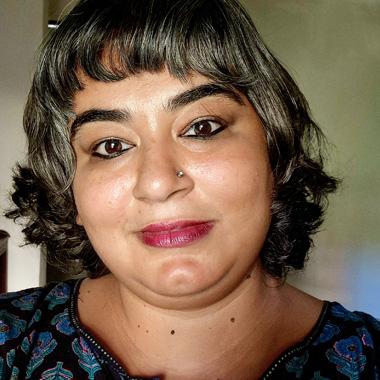
Akanksha Mehta is a Lecturer in Gender, Race and Cultural Studies at Goldsmiths, University of London , where she co-directs the Centre for Feminist Research. She joined Goldsmiths in September 2018 after lecturing at the School of Global Studies, University of Sussex (2016-2018). Research Focus: Intersections of gender, sexuality, race, and everyday politics/violence; affective and material structures in nationalist movements; decolonial pedagogies. Key Projects: Co-founded the 'Mind the BAME Gap' initiative at Sussex; ongoing book project on right-wing women's mobilizations. Recognition: Recipient of the EISA Best Dissertation Award (2018) and Rachel Tanur Memorial Prize (2016). Publication Trends: Her work spans feminist critiques of Hindutva, queer rights in post-377 India, ethnographic analyses of right-wing women, and decolonial pedagogical frameworks. Recent outputs engage with racial justice in universities, affect theory, and visual sociology. Scientific Awards: Best Dissertation Award, EISA (2018) Rachel Tanur Memorial Prize, ISA (2016) Collaborative Work: Engages with decolonial visual practices, collective complaint mechanisms in academia, and intergenerational feminist dialogues through the podcast 'The F Less Travelled'.
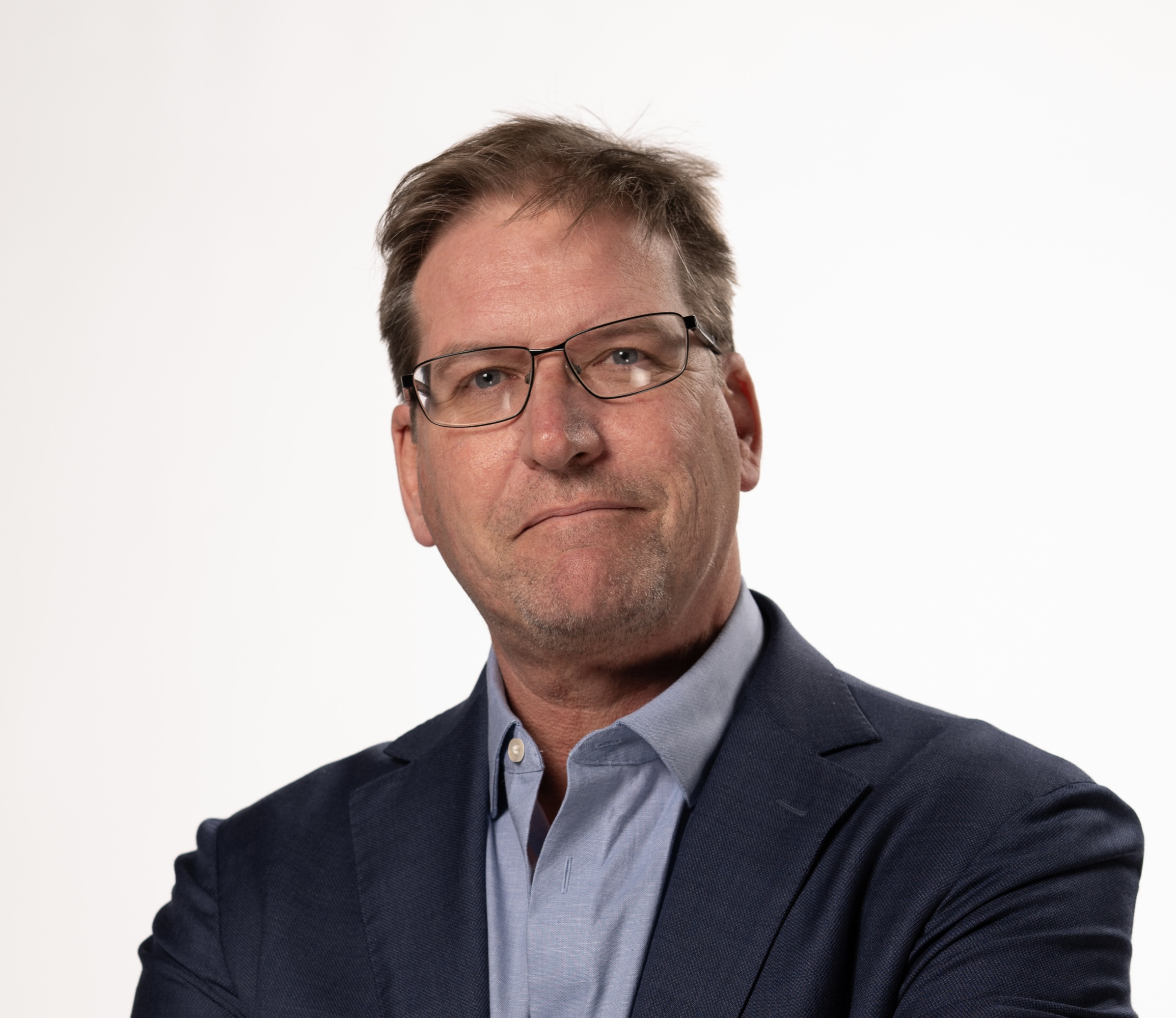
Dr. Gavin Mount is a researcher at UNSW Canberra , specializing in non-traditional security studies , ethnic conflict , and the sociopolitical implications of emerging technologies . His work bridges theoretical analysis with practical applications in conflict transformation and defense studies. Research Focus: Global politics of ethnic conflict, hybrid peace/war frameworks, and socio-political impacts of drone technology. Teaching: Courses like Ethnic Conflict in World Politics and Law, Force and Legitimacy , with a focus on military education and strategic studies. Publications: Recent work includes contributions to Thinking Swarms (2025) and Hybridity on the Ground in Peacebuilding and Development (2018). Grants: Leads the Curricula Integration of Student Wellbeing Resources project under HERDSA. Key Themes across his research include the intersection of technology and conflict, evolving defense paradigms, and pedagogical innovations in security studies.
Rutgers, The State University of New JerseyUnited States
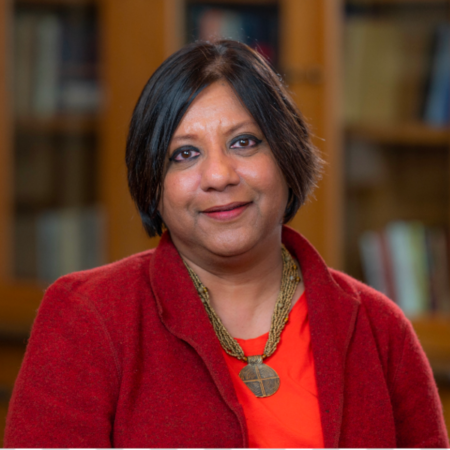
Audrey Truschke is Professor of South Asian History and Director of Asian Studies at Rutgers University–Newark, within the Department of History, Faculty of Arts and Sciences. She holds a Ph.D. from Columbia University and specializes in the cultural, imperial, and intellectual history of early modern and modern India (c. 1500–present). Her scholarship bridges deep historical inquiry with urgent contemporary debates, particularly around religious identity, nationalism, and decolonization. Truschke earned her B.A. in Religious Studies from the University of Chicago (2004) and her Ph.D. in Middle Eastern, South Asian, and African Studies from Columbia University (2012). Her academic journey includes prestigious fellowships at Stanford University, the University of Cambridge, and the University of Sorbonne Nouvelle Paris III. Her research centers on South Asian history, with a focus on the Mughal Empire, Indo-Muslim rule, Sanskrit-Persian cultural exchanges, and the historical construction of Hindu identity. She critically examines how premodern histories are mobilized in modern political projects, especially Hindu nationalism (Hindutva). Her work spans cultural, intellectual, and religious history, emphasizing philology, translation, and the politics of historical memory. Truschke’s recent publications reveal a consistent trajectory: analyzing the evolution of religious and ethnic identities, particularly 'Hindu' and 'Han', through longue durée historical lenses. Her articles explore how empires, religions, and languages interacted in South Asia, and how these pasts are weaponized in the present. She frequently engages with themes of hegemony, identity formation, and the dangers of historical falsification, especially in the context of Hindutva ideology and its global manifestations. Scientific Awards and Honors: Karwaan Book Award (2022) National Endowment for the Humanities Public Scholars Fellowship (2021) Rutgers Board of Trustees Research Fellowship for Scholarly Excellence (2020) John F. Richards Prize in South Asian History, American Historical Association (2017) Andrew W. Mellon Postdoctoral Fellowship (2013–2016) Fulbright-Hays Doctoral Dissertation Research Abroad Fellowship (2009–2010) Truschke is an active advisor and mentor, though specific student names are not listed in the provided texts. She has secured significant research funding, including grants from the NEH and Princeton University Press. Her public scholarship includes contributions to the South Asia Scholar Activist Collective , the Hindutva Harassment Field Manual , and the Reporting Guide on Hindu Nationalism . She is currently writing a single-volume history of India for Princeton University Press, forthcoming in 2025. She is affiliated with several research initiatives, including the South Asia Scholar Activist Collective (SASAC), and maintains an active public presence through her personal website, media appearances, and public writings. Her work bridges the academy and public discourse, challenging dominant narratives and promoting historical accuracy in understanding South Asia.
Shenila Khoja-Moolji is an Associate Professor at Georgetown University's Edmund A. Walsh School of Foreign Service and holds the Hamad bin Khalifa al-Thani Chair of Muslim Societies. Her work critically examines intersections of gender, race, religion, and power in Muslim contexts across South Asia and the diaspora. She earned degrees from Brown University, Harvard University, and Columbia University, with a postdoctoral fellowship at the University of Pennsylvania. Her research focuses on: Colonial/postcolonial education systems Sovereignty and affective politics Ismaili diaspora communities Anti-Muslim racism and security studies Notable awards include the 2019 Jackie Kirk Book Award, 2022 ISA Theory Section Best Book Award, and 2024 Nautilus Award. She serves on boards for the American Academy of Religion and Ismaili Tariqa & Religious Education USA. Her recent works analyze: "The Impossibility of Muslim Boyhood" (2025) "Rebuilding Community" (2023) "Sovereign Attachments" (2021) Her scholarship bridges anthropology, sociology, and critical theory to challenge hegemonic narratives around Muslim societies. Current projects explore carceral logics and global affective economies.
Ishita Sinha Roy is a Professor at Allegheny College in the Department of Communication, Media, & Performance. She earned her Ph.D. in Communication from the Annenberg School for Communication at the University of Southern California and her B.A. and M.A. in English Literature from the University of Bombay. Her expertise spans media studies, nation branding, global media, integrated marketing communication, and digital media communities. Education: B.A. & M.A. in English Literature, University of Bombay M.A. & Ph.D. in Communication, Annenberg School for Communication, University of Southern California Her research focuses on postcolonial media analysis, nation branding, and the ethics of sustainable development through community-engaged learning. She has co-designed projects like the Global Citizen Scholars program, emphasizing gender equality (SDG 5) and collaborative partnerships with organizations like Women’s Services Inc. and the Green Belt Movement. Her work bridges academic theory with real-world applications, including anti-domestic abuse book projects and student-led research on topics like QAnon conspiracies and political podcasting. Scientific Awards: Student-nominated Teaching Award, Annenberg School for Communication (USC), 2000 Thoburn Award for Excellence in Teaching, Allegheny College, 2008 She mentors students in media literacy, storytelling, and ethical communication, with alumni like John Meyer and Hillary Santel engaging her classroom. Her collaborations with institutions like the Andrew W. Mellon Foundation and the National Council for Undergraduate Research highlight her commitment to interdisciplinary and experiential learning.
Catarina Kinnvall is a Professor at the Department of Political Science, Lund University , Sweden, and serves as Director of SASNET . She is a leading scholar in political psychology, with a focus on globalization, security, religion, nationalism, and gender, particularly in South Asia and Europe. Former Vice-President of the International Society of Political Psychology (ISPP) Former Editor-in-Chief of the journal Political Psychology Her research explores political psychology , migration , multiculturalism , religion and nationalism , radicalization , and gender , with a critical lens on postcolonialism and far-right populism. Key themes include ontological insecurity , far-right fantasies , and gendered violence in global contexts. Recent articles analyze deglobalization , white supremacy , emotional governance , and neocolonial subjecthood , reflecting her engagement with contemporary crises. She has edited volumes on climate hazards and gender ramifications , and her work intersects with UN Sustainable Development Goals related to gender equality and reduced inequalities . Scientific Awards: Precariousness at Work (2017): Addressing gendered violence in outsourced labor. Climate Disasters and Gendered Violence in Asia (2015): Studying vulnerabilities post-catastrophe.
Prof. Jayati Ghosh is a renowned economist and Professor at the Department of Economics, University of Massachusetts Amherst (since January 2021). Previously, she held the rank of Professor at the Centre for Economic Studies and Planning, School of Social Sciences, Jawaharlal Nehru University (JNU), New Delhi (1998–2020). She holds a Ph.D. (1983) and M.Phil. (1979) in Economics from the University of Cambridge, and an M.A. (1977) in Economics from Jawaharlal Nehru University. Her research focuses on development economics, gender studies, macroeconomics, and the political economy of globalization. She has authored/co-authored over 30 books and 300+ articles, including seminal works like *Crisis as Conquest* (2001) and *Demonetisation Decoded* (2017). Her awards include the ILO Decent Work Research Prize (2010), the NordSud Research Prize (2010), and the Lancet Lecture (2011). She has advised numerous international bodies, including the UNDP, WHO, and ILO, and serves on global committees like the UN Secretary-General’s High-Level Advisory Board on Economic and Social Affairs. She has supervised 45 M.Phil. and 34 Ph.D. dissertations. Her work emphasizes equitable development, gender justice, and critical analysis of neoliberal policies. Beyond academia, she has engaged in public policy initiatives, including chairing the Commission on Farmers’ Welfare for Andhra Pradesh (2004) and contributing to the *West Bengal Human Development Report* (2004). She actively advocates for progressive economic reforms and social justice through think tanks like the Economic Research Foundation and the International Development Economics Associates (IDEAS).
Anisha Datta is an Associate Professor in the Sociology Department at Western University, Canada. She holds a Ph.D. from the University of British Columbia. Her research focuses on social theory, postcolonial studies, diaspora/transnational dynamics, neoliberalism, South Asian studies, consumer culture, and historical sociology. She has published extensively on topics like Hindutva ideology in diaspora media, consumption ethics in Bengal, and caste-based social inequalities. Key affiliations include King’s University College at Western University and participation in global academic networks. Her teaching includes courses on modern sociological theory, global divides, and capitalism in contemporary society. Recent invited talks include discussions on decoloniality in India (2024), possibilities of decolonization in Canada (2022), and feminist film censorship in India (2022). She has presented at institutions like Victoria University of Wellington, Lancaster University, and Jagiellonian University. Her work critically examines intersections of political economy, cultural practices, and power structures, with a focus on South Asia and diasporic communities. She engages with themes of cultural hegemony, neoliberal governance, and the legacy of colonial thought in sociological frameworks.
Associate Professor Pradip Thomas is a Principal Centre Associate and Theme Leader for Communication Technologies at the University of Queensland's Centre for Communication and Social Change. He also serves as an Associate Professor at the School of Communication and Arts, focusing on communication technologies, social change, and the political economy of communications. His research explores the intersection of communication technologies, religious media, platform regulation, and digital India. Key areas include the ethical implications of content moderation, the evolution of digital policy frameworks, and the role of media in fostering social cohesion and resistance. His work critically examines how digital infrastructures shape societal transformation through historical and contemporary lenses. 2010 QU Travel Awards 2008 Australian Centre for International Agricultural Research Grant 2007 Australian Centre for International Agricultural Research Grant 2005-2006 UQ New Staff Research Start-Up Fund As a supervisor, Pradip Thomas has guided PhD students in topics such as digital India, platform regulation, community radio, and media's impact on gender norms. His expertise spans communication rights, religion and media, and the political economy of digital systems, positioning him as a leading academic in these areas.
Professor James Staples is a prominent social anthropologist at Brunel University London, affiliated with the Department of Anthropology within the College of Business, Arts and Social Sciences. His research focuses on medical anthropology, disability, food, and identity in South Asia, particularly India. He is actively engaged in fieldwork, teaching, and academic leadership, including roles as Divisional Senior Tutor and Director of the South Asia Studies Research Group. PhD in Social Anthropology, SOAS, University of London (2003) BA (Hons) in Social Anthropology, SOAS, University of London (1990) PG Cert, Brunel University (2008) James Staples' research explores the social and cultural dimensions of bodily difference, leprosy, disability, suicide, and food practices in South India. His work combines ethnography with deep engagement on identity, stigma, and personhood. He has conducted long-term fieldwork in a South Indian leprosy colony since 1984, producing rich biographical and ethnographic insights. His recent publications reflect a strong trajectory in food anthropology and identity politics, especially regarding beef consumption and caste. Articles and books such as 'Sacred Cows and Chicken Manchurian' and 'Blurring Bovine Boundaries' analyze how food becomes a site of political and social contestation. His earlier work on leprosy, disability, and suicide continues to inform contemporary debates in medical anthropology. He frequently collaborates with scholars like Rebecca Marsland and Michele Friedner, and his interdisciplinary approach spans health, ethics, and social change. James Staples has received research funding from the ESRC and British Academy for projects on suicide, beef politics, and food mobility. He has served as External Examiner at prestigious institutions including the University of Cambridge, Oxford, and SOAS, reflecting his academic standing. Co-editor, Medical Anthropology: Cross-cultural Studies in Health and Illness (2021–2025) Vice-President, Royal Anthropological Institute (2015–2018) Chair, Publications Committee, Royal Anthropological Institute (2013–) Editorial board member, Ethnographica: Journal of Culture and Disability He supervises PhD students on topics ranging from obesity and policing to maternal health and sterilization in India. His leadership in research groups like CRIMA and his editorial roles demonstrate his commitment to shaping the field. James Staples combines rigorous ethnography with public engagement, contributing to debates on climate change and health, communal tensions, and the future of medical anthropology.
Malavika Kasturi serves as Associate Professor in the Department of Historical Studies at the University of Toronto Mississauga, with cross-appointments as graduate faculty in the Department of History and Centre for the Study of Religion. Her scholarship critically examines intersections of religion, gender, and political power in South Asia through colonial legal frameworks and urban histories, positioning her at the forefront of historical studies on Hindu nationalism and monastic traditions. Her educational foundation includes: PhD from the University of Cambridge MPhil from Jawaharlal Nehru University, India MA from Jawaharlal Nehru University, India BA from Delhi University, India Kasturi's research centers on monasticism's political dimensions, with primary expertise in ascetic lineages, guru movements, and urban sacred spaces. She investigates how religious institutions negotiate state power through legal archives and ethnographic approaches, particularly examining gendered household formations, Hindu nationalist articulations, and Mughal diaspora communities in Hindu-majority pilgrimage centers. Her methodological rigor combines historical anthropology with colonial legal analysis to reveal continuities between pre-colonial practices and contemporary identity politics. Her publication trajectory demonstrates deepening engagement with monastic networks' political mobilization, evolving from Rajput lineage studies in colonial North India toward contemporary analyses of Hindutva's monastic foundations. Recent work increasingly focuses on Banaras as a contested urban space where Muslim pensioner communities reshape Hindu pilgrimage landscapes, reflecting her signature approach of using micro-histories to interrogate macro-political formations. Her scholarly recognition includes: SSHRC Standard Research Grant for "Gurus and the Making of Hindutva in Twentieth Century India" SSHRC Insight Grant (2015) for "The 'Lost' Mughal Pensioners of Banaras" Yale University's Agrarian Studies Fellowship Indian Institute of Advanced Study (Shimla) residency Nehru Memorial Museum research fellowship External funding from Canada's Social Sciences and Humanities Research Council has sustained her archival work across India while enabling mentorship of graduate researchers in historical methods. Current projects bridge legal history and religious studies to analyze how monastic property disputes become vehicles for political Hinduism, with future work prioritizing ascetic sexuality and family structures within guru lineages.
Luisa Steur is an Associate Professor in the Department of Anthropology at the University of Amsterdam. Her research focuses on political anthropology, indigenous mobilization, and Dalit activism, with particular emphasis on Kerala's social movements. She serves as Managing and Lead Editor of Focaal—Journal of Global and Historical Anthropology . Her research examines the intersection of caste, class, and indigenous identity in contemporary social movements. Steur investigates how global capitalism shapes local political struggles, with extensive fieldwork in Kerala analyzing tensions between communist politics, Hindutva nationalism, and indigenous rights movements. Her work critically engages with Marxist theory while exploring new forms of political subjectivity emerging in neoliberal contexts. Steur's publications consistently explore themes of resistance, identity politics, and economic transformation. Her recent work demonstrates an increasing focus on comparative analysis of social movements across different political systems, examining how marginalized communities navigate state power and capitalist expansion.
London School of Economics and Political Science (LSE)United Kingdom
Shakuntala Banaji is a Professor of Media, Culture and Social Change at the London School of Economics and Political Science (LSE). She leads the MSc Media, Communication and Development program and lectures on topics including International Media in the Global South, film theory, and critical approaches to media and development. Her research focuses on intersections between socio-political contexts, media, identities, and participation, particularly regarding children/youth agency, disinformation, and hate speech in digital spaces. She has conducted major projects such as the EU-funded CATCHEyoU (on youth citizenship) and research on WhatsApp misinformation linked to Indian lynching cases. Her expertise includes Bollywood studies, media literacy, and the impact of social media on civic engagement. Banaji has authored influential books like Children and Media in India (2017) and Social Media and Hate (2022). Her work critiques exclusionary citizenship discourses and advocates for critical media education to combat disinformation and promote social justice. Recent research explores historical propaganda and contemporary disinformation in India, Brazil, Myanmar, and the UK, emphasizing grassroots resistance against hate speech. She collaborates internationally on projects addressing media ethics, youth activism, and the role of technology in democratic processes.
Raju J Das is a Professor at York University's Faculty of Environmental and Urban Change, affiliated with graduate programs in Geography, Social and Political Thought, Environmental Studies, Development Studies, and Communication and Culture. His research bridges Marxist political economy with contemporary issues including neoliberal industrialization in India, class struggle, and the political dimensions of climate change and public health. Das earned a PhD in Geography from The Ohio State University, an MA in Urban Studies from the University of Akron, an MA in Geography from the University of Delhi, and a BA (Honours) in Geography from Utkal University. He serves on editorial boards of journals like Science & Society , Class, Race and Corporate Power , and the Dialectical Anthropology advisory board. His scholarly work examines geographical uneven development, the ruralization/urbanization of capital, and the interplay between neoliberal state policies and class power. Recent projects funded by SSHRC Insight Grant (2016-2022) analyze industrialization patterns in India's rural periphery, focusing on land acquisition conflicts and the dialectics of capitalist expansion. Das teaches radical political economy at the graduate level and undergraduate courses on global economy, international development, and state-civil society relations. He is a Faculty Fellow at York's Dahdaleh Institute for Global Health, integrating his critique of capitalism with health equity concerns.