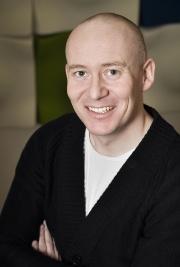
Bjørn B. Larsen is an Associate Professor in High-performance Digital Systems at the Norwegian University of Science and Technology (NTNU), affiliated with the Department of Electronic Systems. His academic responsibilities include teaching and advising across multiple engineering programs. He serves as part of the teacher's guild for the five-year integrated master's program in Electronic Systems Design and Innovation (ELSYS). Key roles include coordinating the TFE4205 Student-defined Development Project and acting as an academic advisor for ELSYS, the international master's in Electronic Systems Design, and the Erasmus Mundus master's in Embedded Computing Systems (EMES), collaborating with institutions in Kaiserslautern, Southampton, and Turin. He also advises incoming exchange students in Electronics. Larsen's technical competencies span 3D silicon devices, embedded systems, FPGA design, microelectronics, and VLSI design. His work emphasizes practical applications in high-performance digital systems and self-test methodologies. Though no specific grants or labs are detailed, his involvement in international programs highlights a focus on collaborative and applied research in electronics and embedded systems.
Gunnar Tufte is a Professor and Deputy Head of Research at the Department of Computer Technology and Informatics, NTNU. He leads the Computer Architecture Lab and advises PhD programs in Computer Science and Informatics within the Faculty of Information Technology and Electrical Engineering. His primary research focuses on unconventional computing, including artificial spin ice systems, self-organizing nanomaterials, and bio-inspired architectures. Research Interests include: Unconventional Machines: Architecture, Design, and Computation Spin-based Computing and Energy Efficient Systems Evolution-in-Materio and Nanoscale Computation Reservoir Computing and Dynamical Systems Nano-Magnetic Orchestration and Self-Organization Key Projects: SpinENGINE (EU Horizon 2020 FET-Open): Developing parallel computing platforms using nanomagnet ensembles. SPrINTER (Norwegian Research Council): Low-power spin-based computing technology. flatspin: Open-source simulator for artificial spin ice systems (GPLv3). Grants and Collaborations: Horizon 2020 FET-Open funding for SpinENGINE. NFR funding for SPrINTER project. Lab/Team: Maintains the Computer Architecture Lab and collaborates on interdisciplinary projects with researchers in nanotechnology, AI, and biology.
Svein Erik Bratsberg is a Professor at the Norwegian University of Science and Technology (NTNU) in the Department of Computer Science, Faculty of Information Technology and Electrical Engineering. His research focuses on databases, distributed systems, and high-velocity big data. Current Affiliation: NTNU/IDI Research Focus: Velocity in Big Data, Scalable Indexing, Structured Queries Previous Affiliation: Clustra (real-time databases) Research Centers: SFI iAD (2007-14), SFU Excited He has developed next-generation search engines and optimized distributed inverted indexes. His work includes entity linking, query processing, and dynamic optimization of pivot-based indexing systems. Scientific awards are not documented in the provided text. His recent publications focus on entity search, query processing techniques, and distributed retrieval architectures. Courses: TDT4145 Data Modeling, TDT4225 Distributed Data Volumes, TDT02 Distributed Systems Contact: sveinbra@ntnu.no
Anne C. Elster is a Professor in the Department of Computer Science at the Norwegian University of Science and Technology (NTNU), within the Faculty of Information Technology and Electrical Engineering. She is the founder and director of the HPC-Lab, a leading research group in heterogeneous and parallel computing. She also maintains a long-standing affiliation with the Oden Institute at the University of Texas at Austin as a Senior Visiting Scientist until Summer 2025. Research Interests: Her work spans high-performance computing (HPC), GPU computing, parallel algorithms, auto-tuning, performance optimization, and machine learning applications in scientific computing. She leads research in heterogeneous architectures and has contributed significantly to compiler and runtime systems for GPUs and accelerators. Publications Trends: Her recent publications (2021–2024) focus on GPU acceleration, auto-tuning frameworks (e.g., BAT, LS-CAT), performance modeling (Roofline), machine learning integration in HPC, and applications in geophysical and scientific computing. There is a strong emphasis on empirical evaluation, benchmarking, and practical optimization techniques. Scientific Awards and Recognition: IEEE Senior Member (2000) IEEE Computer Society Distinguished Contributor Charter member, NTNU's Board (2021) Distinguished Speaker, IEEE Computer Society (2019–2022) Advising and Grants: She has advised over 100 master’s students and several PhD students. She has led major funded projects including the RCN SFI Centre for Geophysical Forecasting, EU H2020 CloudLightning and TICOH, and NFR FRINATEK on Computational Microscopy. She has served on numerous international program committees and evaluation boards. Labs and Teams: She leads the HPC-Lab at NTNU, which includes postdocs, PhDs, and master’s students, and collaborates with international researchers. The lab is a hub for innovation in GPU computing, auto-tuning, and HPC applications.
Knut Omang serves as an Associate Professor in the Department of Informatics at the University of Oslo, Faculty of Mathematics and Natural Sciences. His academic position has been maintained since completing his Dr.Scient (Ph.D) from the same department in 1998, where he has held the position of 1.amanuensis-II continuously. His educational background includes a Doctor Scientiarum (Ph.D) from the University of Oslo's Department of Informatics (1998). Prior to his academic career, he gained extensive industry experience including positions at Oracle (2010-2020), Paradial (2006-2010), Fast Search and Transfer (2001-2006), and Scali (1998-2001). Professor Omang's research spans virtualization technologies, high-speed interconnects, distributed systems architecture, and Linux kernel development. His work bridges academic research and practical industry applications, with particular focus on solving real-world challenges in system performance, maintainability, and scalability. He has developed significant open-source contributions including the Kernel Test Framework (KTF) for Linux kernel testing and has been actively involved in QEMU development. His current research interests include challenges with Internet of Things networks, novel applications of commercial building sensor data, Rust programming language applications, and virtualization platform development. He actively supervises master's students on topics related to these research areas. Professor Omang currently serves as CTO for Properate, a startup developing cloud-based solutions for monitoring and managing energy usage in commercial buildings, where he addresses challenges ranging from sensor network management to cloud infrastructure using Kubernetes. Haakon Andersen: Thesis on challenges around operating multiple gateways to remote sensor networks Arild Lillegård: Thesis on Test Driven Development in the Linux Kernel using KTF Christian Resell: Thesis on Forward-Edge and Backward-Edge Control-Flow Integrity Performance in the Linux Kernel His teaching responsibilities include courses INF 3151/4151 and IN 5070, with a focus on supervising master's students in systems-level computing topics. His industry experience directly informs his academic work, creating a strong bridge between theoretical research and practical implementation.
Nadine Parker is a Researcher at the Centre for Precision Psychiatry within the Faculty of Medicine at the University of Oslo. She is affiliated with Oslo University Hospital HF - Ullevål, Section for Precision Psychiatry, where she conducts cutting-edge research at the intersection of psychiatric genetics, neuroimaging, and precision medicine. Her work primarily focuses on understanding the genetic architecture of mental health disorders and their biological underpinnings. Dr. Parker's research interests center on psychiatric genetics, neuroimaging biomarkers, and precision psychiatry approaches. Her work explores the genetic overlap between various mental health conditions including depression, schizophrenia, bipolar disorder, and substance use disorders. She investigates how these disorders relate to physiological markers like white blood cell counts, inflammatory markers, and brain structure. Her research employs advanced genomic techniques including genome-wide association studies, polygenic risk scoring, and cross-disorder pleiotropy analysis to uncover shared biological mechanisms. Her publication record shows a strong focus on genetic architecture of psychiatric disorders, with numerous high-impact publications in journals like Nature Communications, Biological Psychiatry, and Molecular Psychiatry. Her work often examines how mental health conditions intersect with immune function, metabolic processes, and brain structure. A recurring theme across her publications is the identification of shared genetic mechanisms across seemingly distinct disorders, suggesting common biological pathways that could inform new treatment approaches. Dr. Parker is an active collaborator within the precision psychiatry research community, frequently working with colleagues including Guy Hindley, Alexey Shadrin, and other researchers at the University of Oslo. Her research is supported by institutional resources at Oslo University Hospital and likely external funding sources given the scale of her collaborative projects involving large datasets and international consortia. She is part of the Precision Psychiatry research group at Oslo University Hospital, which focuses on developing more targeted approaches to psychiatric diagnosis and treatment through integration of genetic, neuroimaging, and clinical data. This group works at the forefront of translating genetic discoveries into clinically actionable insights for mental health care.
Shiliang Zhang is a Postdoctoral Fellow at the University of Oslo working with the Networks and Distributed Systems research group. His research focuses on privacy preservation in smart grid and transactive energy management systems, including the Privacy preserving Transactive Energy Management (PriTEM) project. He teaches Energy Informatics and Artificial Intelligence for Energy Informatics courses while developing interactive visualization tools for Norwegian energy infrastructure. His primary research areas encompass Smart Grid systems, Transactive Energy Management, and Privacy Preservation through Differential Privacy techniques. He applies Artificial Intelligence and Energy Informatics to address renewable energy integration challenges, grid resilience, and autonomous navigation systems. Recent work explores bionic data-driven approaches for underwater navigation and anomaly-resistant control mechanisms. Publications from 2022-2025 reveal strong interdisciplinary focus on machine learning applications for energy systems and navigation. Key themes include privacy-preserving pricing schemes for smart grids, robust control under system uncertainties, and deep reinforcement learning for geomagnetic navigation. His work spans IEEE Transactions, SmartGridComm, and Mathematics journals with significant contributions to resilient energy infrastructure. No scientific awards were mentioned in available sources. Zhang has no listed advisees but actively contributes to the PriTEM project within Networks and Distributed Systems. His research leverages collaborations across energy informatics domains, evidenced by publications in high-impact venues and development of practical tools like Norway's energy consumption and solar panel distribution maps. He operates within the Networks and Distributed Systems research group, developing interactive visualizations for Norwegian energy infrastructure including municipal energy consumption (May 2025), Oslo's solar panel distribution (April 2025), and national power lines (May 2025). His work bridges theoretical control systems with real-world energy applications through the PriTEM project.
Elias Roland Udnæs is a Doctoral Research Fellow at the Rosseland Centre for Solar Physics, University of Oslo. His research focuses on radiative transfer in stellar atmospheres, leveraging machine learning and programming expertise in Python & Julia. He contributes to advancing computational methods for non-local thermodynamic equilibrium (NLTE) simulations in astrophysics. His academic work includes a notable publication in Astronomy and Astrophysics (2023), addressing irregular grid techniques for 3D radiative transfer models. Udnæs’ interdisciplinary approach bridges theoretical astrophysics with advanced computational tools, aiming to enhance accuracy in stellar atmosphere modeling. No scientific awards or grants are explicitly mentioned in the provided texts. His affiliation with the Rosseland Centre positions him within a leading institution for solar and stellar physics research.
Jonas Kristiansen Nøland is a Full Professor of Energy Conversion at NTNU and holds a concurrent position as Professor II at USN. He is a senior member of IEEE and leads research initiatives such as NTNU's Clean Aviation program and the SysOpt hydropower project. His academic journey includes a PhD in Engineering Physics from Uppsala University (Ångström Laboratory) and participation in NTNU's Outstanding Academic Fellows Programme since 2022. Research interests focus on modern nuclear energy (SMRs/4th gen), clean aviation (e-fuels/battery/hydrogen-electric), hyperloop technology, superconductivity, and grid resilience. He serves as an Associate Editor for IEEE Transactions on Energy Conversion, Industrial Electronics, and Transportation Electrification, and chairs the IEEE Power and Energy Society Norway Chapter. His work often bridges academia and industry, addressing global energy challenges via advanced electrical systems, renewable integration, and disruptive transportation technologies. Key contributions include studies on SMR grid roles, battery-electric aircraft feasibility, and hyperloop technical viability. He advises doctoral candidates on topics like superconducting motors and energy systems optimization.
Tom Heine Nätt is an Associate Professor at the Department of Computer Science and Communication at Høgskolen i Oslo og Akershus. His academic work focuses on foundational computer science concepts, information security, and programming language theory. He has contributed extensively to technical lexicon entries covering IT infrastructure, cyber-security practices, software development methodologies, and digital literacy education. His research interests include exploring system reliability through redundancy mechanisms, mitigating cyber-threats via robust validation techniques, and clarifying core IT concepts for educational purposes. He has authored over 50 entries in the Store Norske Leksikon , addressing topics ranging from API architecture to quantum computing basics . Professionally, he teaches courses in software engineering and cyber-security at HiOA. His publications consistently emphasize clear technical communication and practical application of theoretical principles.
Niclas Larson is an Associate Professor at the University of Agder (UiA), affiliated with the Faculty of Engineering and Sciences and the Department of Mathematical Sciences. His academic journey includes teaching positions in Swedish secondary schools, doctoral studies at Linköping University, and faculty roles at Stockholm University. Larson specializes in mathematics education, teacher training, and computer-aided assessment, with a focus on linear equations and algebraic competence. Education: Bachelor's and Licentiate in Mathematics (Stockholm University), PhD in Mathematics Education (Linköping University) Current Roles: Teaches mathematics and mathematics education at UiA; supervises master’s and PhD students Research: Cross-cultural analysis of pre-service teachers' equation-solving explanations; digital assessment systems; algebra in compulsory education Podcast: Runs "Spøkelser etter avdøde størrelser" (Ghosts of Departed Mathematicians), connecting historical mathematical concepts with modern pedagogy Larson's research examines how pre-service teachers explain mathematical solutions, particularly linear equations, across Norway and Sweden. He explores transitions from high-stakes exams to continuous assessment models using digital tools like STACK-tests. His work bridges theoretical frameworks with practical implementation, focusing on pedagogical innovation and comparative judgement in educational settings. Scientific publications demonstrate expertise in mathematics education, teacher development, and digital assessment tools. Recent articles analyze cross-national differences in algebraic reasoning, cognitive aspects of mathematical memory, and ethical challenges in academic writing. Larson contributes to curriculum development through textbooks like "Matematik Origo" and participates in academic committees, including the Research Education Committee for the PhD Programme in Engineering and Science at UiA. His podcast initiatives and collaborative projects highlight his commitment to public engagement and interdisciplinary approaches in mathematics education.
Lei Jiao is a Professor in the Department of Information and Communication Technology at the University of Agder's Faculty of Engineering and Science. Previously serving as an Associate Professor from May 2014 to October 2022, Dr. Jiao has established himself as a leading researcher in artificial intelligence, with particular expertise in Tsetlin Machines and their applications across diverse domains. PhD in Information and Communication Technology, University of Agder (2008-2012) Master of Engineering in Communication and Information System, Shandong University (2005-2008) Bachelor of Engineering in Telecommunication Engineering, Hunan University (2001-2005) Dr. Jiao's research spans multiple cutting-edge areas including interpretable artificial intelligence, wireless communication protocols, network resource allocation, and signal processing. His work on Tsetlin Machines has pioneered new approaches to machine learning that emphasize interpretability while maintaining high performance. The research group he contributes to at the University of Agder focuses on Autonomous and Cyber-Physical Systems (ACPS), Battery recycling, and the Centre for Artificial Intelligence Research (CAIR). Analysis of Dr. Jiao's recent publications reveals a strong emphasis on interpretable AI systems, particularly through Tsetlin Machines. His work spans applications in GNSS jammer detection, crowd anomaly detection, DNA sequence classification, and hardware acceleration of machine learning models. The research consistently demonstrates how logical, rule-based approaches can provide transparent alternatives to traditional neural networks while maintaining competitive performance. Supervised numerous PhD students including Vojtech Halenka, Ahmed K. Kadhim, and Sindhusha Jeeru Mentored over 30 Master's thesis projects covering topics from Tsetlin Machines to signal processing and computer vision Collaborates extensively with Ole-Christoffer Granmo and other leading researchers in the AI field Dr. Jiao actively contributes to advancing the field through supervision of doctoral candidates, collaboration on major research projects, and development of novel machine learning approaches that balance performance with interpretability. His work bridges theoretical foundations with practical applications across telecommunications, computer vision, and natural language processing domains.
Per M. Aslaksen is a Professor at UiT The Arctic University of Norway, where he is an active member of the Cognitive Neuroscience Research Group. His work spans multiple research projects focused on non-invasive brain stimulation methods and cognitive neuroscience, with particular emphasis on pain mechanisms, placebo effects, and neuropsychological assessment. He teaches Cognitive Neuroscience for psychology students and leads a PhD course in Experimental Design and Statistics. Dr. Aslaksen's research interests center on pain, neuropsychology, and brain imaging, with significant contributions to understanding placebo analgesia, pain modulation, and the application of transcranial direct current stimulation (tDCS) in clinical settings. His work bridges psychological, neurological, and physiological perspectives to investigate how cognitive and emotional processes influence pain perception and treatment outcomes. He has extensively explored how factors like fear of pain, genetic markers, and nonverbal communication affect placebo responses. Analysis of his recent publications reveals strong trends in Alzheimer's disease research using brain stimulation techniques, depression treatment through theta burst stimulation, and detailed investigations into pain mechanisms. His work frequently employs advanced methodologies including computational modeling, neuroimaging, and rigorous experimental designs to explore cognitive and neural processes. The interdisciplinary nature of his research connects psychology, neuroscience, and clinical medicine to address complex questions about brain function and dysfunction. Dr. Aslaksen actively participates in multiple research projects including Transcranial Magnetic Stimulation for depression treatment, developing non-invasive brain stimulation methods, and investigating neurocognitive changes following theta burst stimulation. His laboratory work focuses on brain stimulation techniques and their applications in cognitive neuroscience and clinical settings, with particular attention to executive functions and pain processing.
Kyrre Matthias Begnum serves as an Associate Professor at the Department of Information Security and Communication Technology at the Norwegian University of Science and Technology (NTNU). His academic career spans over two decades with significant contributions to cloud infrastructure, virtualization technologies, and system administration practices. Dr. Begnum's research focuses on several key areas within computer systems: Cloud computing and virtualization technologies Resource management and optimization in data centers Network security and intrusion detection systems System administration education and pedagogy Unikernels and lightweight virtualization approaches Application of machine learning to system management problems His publication record demonstrates consistent innovation in virtual machine management, with notable contributions including the application of stable marriage matching theory to load distribution problems and the development of Bayllocator, a proactive system using Bayesian networks for memory resource allocation. Begnum's work bridges theoretical computer science with practical infrastructure challenges, particularly in data center optimization. His recent publications show expanding interests into historical perspectives of computing, as evidenced by his 2024 book 'From EDB to KI. 40 years of information technology,' which examines the evolution of information technology over four decades. This demonstrates his ability to connect historical context with current developments in artificial intelligence and computing systems. Dr. Begnum has made substantial educational contributions through works like 'The Uptime challenge: A learning environment for value-driven operations through gamification' and his investigations into MSc program learning outcomes for Network and System Administration. His commitment to science communication is evident through public engagements like the 'Anti-IKT debatt' and 'Vitenshow: Roboten og du' presentations.
Professor Yuming Jiang is affiliated with the Norwegian University of Science and Technology (NTNU) as a full Professor in the Department of Information Security and Communication Technology, Faculty of Information Technology and Electrical Engineering. He leads the Master of Science in Digital Infrastructure and Cyber Security program and serves on the board of IEEE Norway Section. BSc: Peking University MEng: Beijing Institute of Technology PhD: National University of Singapore (NUS) His research focuses on network calculus , quality of service guarantees in communication networks, and performance analysis of wireless systems and time-sensitive networks . He has developed foundational models for stochastic network calculus (snetcal) and explored deterministic networking (DetNet) principles. Recent publications address UAV-assisted IoT networks , NFV recovery strategies , and blockchain transaction analysis . He has held visiting positions at Northwestern University (2009-2010) and Columbia University (2015-2016). ERCIM Fellowship recipient Member of Norwegian Academy of Technological Sciences (NTVA) His work spans network management , virtualization , and cybersecurity in both theoretical and applied contexts.