معرفی
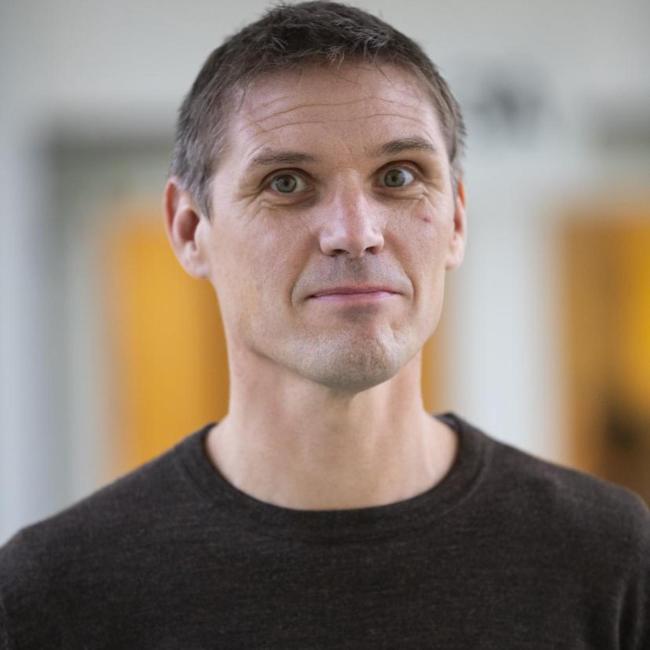
Niclas Larson is an Associate Professor at the University of Agder (UiA), affiliated with the Faculty of Engineering and Sciences and the Department of Mathematical Sciences. His academic journey includes teaching positions in Swedish secondary schools, doctoral studies at Linköping University, and faculty roles at Stockholm University. Larson specializes in mathematics education, teacher training, and computer-aided assessment, with a focus on linear equations and algebraic competence.
- Education: Bachelor's and Licentiate in Mathematics (Stockholm University), PhD in Mathematics Education (Linköping University)
- Current Roles: Teaches mathematics and mathematics education at UiA; supervises master’s and PhD students
- Research: Cross-cultural analysis of pre-service teachers' equation-solving explanations; digital assessment systems; algebra in compulsory education
- Podcast: Runs "Spøkelser etter avdøde størrelser" (Ghosts of Departed Mathematicians), connecting historical mathematical concepts with modern pedagogy
Larson's research examines how pre-service teachers explain mathematical solutions, particularly linear equations, across Norway and Sweden. He explores transitions from high-stakes exams to continuous assessment models using digital tools like STACK-tests. His work bridges theoretical frameworks with practical implementation, focusing on pedagogical innovation and comparative judgement in educational settings.
Scientific publications demonstrate expertise in mathematics education, teacher development, and digital assessment tools. Recent articles analyze cross-national differences in algebraic reasoning, cognitive aspects of mathematical memory, and ethical challenges in academic writing.
Larson contributes to curriculum development through textbooks like "Matematik Origo" and participates in academic committees, including the Research Education Committee for the PhD Programme in Engineering and Science at UiA. His podcast initiatives and collaborative projects highlight his commitment to public engagement and interdisciplinary approaches in mathematics education.