Dr Irvin Teh is a Senior Research Fellow at the University of Leeds' School of Medicine, affiliated with the Leeds Institute of Cardiovascular and Metabolic Medicine (LICAMM) and the Biomedical Imaging Science group. He serves as MRI Lead for the Experimental and Preclinical Imaging Centre (ePIC) and Impact Champion for LICAMM, focusing on advanced diffusion MRI techniques for cardiac microstructural analysis. PhD in MRI Physics, Imperial College London MSc in Biomedical Engineering BSc in Mechanical Engineering His research bridges preclinical and clinical MRI, emphasizing diffusion tensor imaging to quantify myocardial microstructural changes in diseases like hypertrophic cardiomyopathy. Techniques such as q-space trajectory imaging and motion-compensated tensor encoding are central to his work, validated through collaborations, phantoms, and complementary imaging modalities. His methods aim to improve non-invasive cardiac diagnosis without ionizing radiation. Recent publications highlight advancements in high-gradient cardiac diffusion imaging, outlier detection algorithms, and multi-centre validation studies. He advocates for collaborative research, leading educational modules and training programs, and holds leadership roles in ISMRM and SCMR committees.
Antonio Piccininni serves as an Assistant Professor in the Department of Mechanics, Mathematics & Management at Polytechnic University of Bari, Italy. His academic focus centers on advanced manufacturing technologies with particular expertise in metal forming processes, biomedical implant production, and sustainable manufacturing techniques. His research interests span multiple domains of manufacturing engineering, with emphasis on incremental forming , hydroforming , laser-assisted manufacturing , and superplastic forming techniques. Dr. Piccininni has made significant contributions to the development of customized biomedical implants, particularly cranial prostheses using titanium alloys, and has pioneered research in eco-friendly manufacturing processes including sustainable lubricants for metalworking applications. Analysis of his publication record reveals a clear progression from fundamental metal forming research toward increasingly specialized applications in biomedical engineering and sustainable manufacturing. His recent work demonstrates sophisticated integration of computational methods including machine learning, finite element analysis, and multi-criteria optimization techniques to solve complex manufacturing challenges. The trend shows growing emphasis on biomedical applications and environmental sustainability in manufacturing processes. Dr. Piccininni's research has practical applications in multiple industries including medical device manufacturing, automotive components production, and sustainable metalworking practices. His work bridges theoretical modeling with experimental validation, often incorporating advanced materials like titanium alloys and aluminum for specialized applications requiring high precision and biocompatibility.
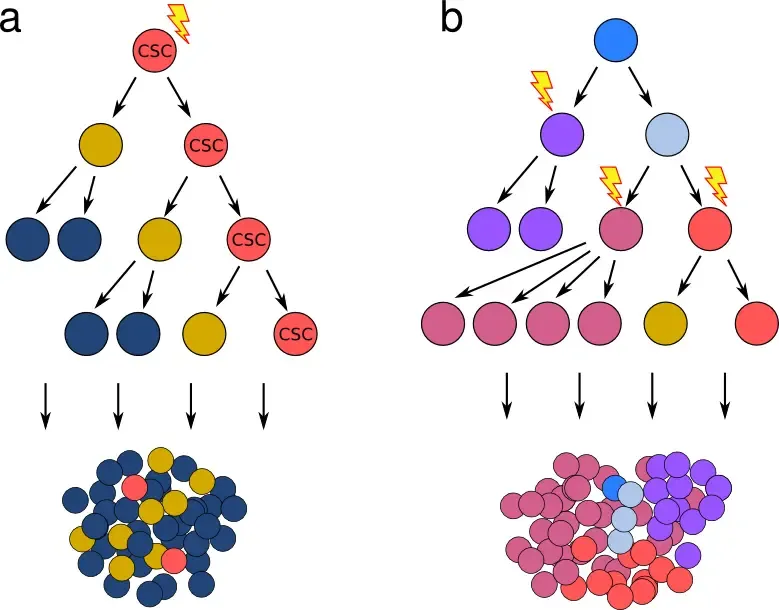
Martin Enge is a Senior Researcher and Associate Professor in the Department of Oncology-Pathology at Karolinska Institutet. He holds a Medicine Doctoral degree (2009) from Karolinska Institutet and has been recognized for developing innovative single-cell multiomics methodologies to study cancer biology. Employment: Senior Researcher (2022-), Associate Professor (2023) Location: Bioclinicum v6, Stockholm His research focuses on clonal evolution , gene regulation , and cell interaction in cancer, particularly in pediatric acute lymphoblastic leukemia (ALL) . He investigates how both genetic and epigenetic changes drive tumor progression and response to treatment, using advanced single-cell techniques to distinguish cancer stem cells from stochastic models of tumor growth. His 15 most recent publications span topics including MYC super-enhancer regulation , single-cell transcriptomics in psoriasis , pre-malignant subclones in neuroblastoma , and chromatin interactome in colorectal cancer . These works integrate genomic , transcriptomic , and computational approaches to decode complex disease mechanisms. Scientific Awards: Swedish Childhood Cancer Foundation grant (2021) He leads the research group Cancer stem cells and clonal structure in acute lymphoblastic leukemia at Karolinska Institutet, which has developed novel methods for analyzing functional and genetic errors in individual cells across leukemias and other cancers. His lab is actively involved in understanding pre-leukemic states , relapse mechanisms , and stromal interactions in tumor microenvironments.
Guillaume Lavanchy is a researcher at the Department of Ecology and Evolution within the College of Biology and Medicine at the University of Lausanne. His work focuses on evolutionary biology, genomics, and biodiversity conservation, with particular emphasis on insects and amphibians. Current affiliation: Department of Ecology and Evolution, University of Lausanne Collaborative groups: Groupe Schwander, Groupe Fumagalli, Groupe Perrin Lavanchy investigates hybridization dynamics, sex chromosome evolution, and non-invasive DNA sampling methods. His research bridges molecular ecology with conservation strategies, including the use of environmental DNA (eDNA) for ecosystem monitoring and the role of citizen science in biodiversity assessment. Recent publications highlight his contributions to understanding parthenogenesis transitions in stick insects, homomorphic sex chromosomes in amphibians, and transalpine invasive species impacts. His work often involves interdisciplinary approaches, combining genomic data with ecological field studies. As a co-author on multiple high-impact journal articles and a doctoral graduate from the University of Lausanne, Lavanchy actively contributes to taxonomic revisions, hybrid zone analyses, and conservation policy recommendations. Key research themes include: Evolutionary transitions between sexual and asexual reproduction Genomic tools for species delineation and hybrid detection Long-term ecological management of wetlands and avian DNA sampling
Jingmei Qiu is a Unidel Professor of Mathematical Sciences at the University of Delaware , where she co-leads the Center for Hierarchical and Robust Modeling of Non-Equilibrium Transport (CHaRMNET) - a Department of Energy Mathematical Multifaceted Integrated Capability Center. She specializes in high-order numerical methods for multi-scale kinetic models and plasma physics simulations. Education : B.S. from University of Science and Technology of China (2003), Ph.D. in Applied Mathematics from Brown University (2007) Her research focuses on: High-dimensional sampling and data compression Low-rank tensor approximation for PDEs Multi-scale kinetic modeling Structure-preserving algorithms Applications to plasma physics, astrophysics, and climate modeling Recent publications highlight her work on: Low-rank tensor methods for kinetic equations Semi-Lagrangian discontinuous Galerkin approaches Adaptive-rank implicit time integrators High-order WENO schemes for conservation laws Awarded the 2024 MURI grant for tensor networks research, she has also received recognition through: AFOSR Young Investigator Award (2012-2015) University of Houston Research Excellence Award (2017) Ostrach Fellowship at Brown University (2006) She serves on editorial boards for Kinetic and Related Models and CSIAM Transactions on Applied Mathematics , and actively participates in international conferences like ICOSAHOM 2025 and Midwest Numerical Analysis Day 2025 .
Alejandra Alvarez Munera is a researcher in the Animal & Dairy Science department at the University of Georgia's College of Agricultural & Environmental Sciences . Her work focuses on statistical genetics and genomic prediction methodologies for livestock improvement. Research interests include: Quantitative genetics modeling Linear mixed models optimization Genomic selection algorithms Biostatistical computation Recent publications highlight trends in: Genomic prediction software development (Blupf90 suite) Random regression modeling for animal growth Double hierarchical generalized linear models Reliability approximation techniques
David Mallasen Quintana is a Scientist and Lecturer at the Swiss Federal Institute of Technology Lausanne (EPFL), affiliated with both the School of Engineering (STI) and the Integrated Systems Laboratory (ESL) within the Institute of Electrical and Microengineering. He also holds teaching responsibilities in the School of Computer and Communication Sciences (IC) at EPFL. Dr. Quintana completed his Ph.D. in Computer Engineering at Universidad Complutense de Madrid in 2024. His research focuses on: Computer architecture and arithmetic systems RISC-V ecosystem development and customization Energy-efficient hardware design and domain-specific accelerators Posit arithmetic implementations and optimizations Embedded systems and low-power computing solutions His recent publications demonstrate consistent focus on RISC-V extensions, posit arithmetic implementations, and hardware/software co-design approaches for efficient computing. The work spans from fundamental arithmetic units to application-specific accelerators, with evolving emphasis on scientific computing applications and energy-constrained environments. Dr. Quintana actively contributes to open-source hardware projects including PERCIVAL, x-HEEP, and various arithmetic unit implementations. His research group develops energy-efficient platforms and tools for hardware deployment within the RISC-V ecosystem.
Professor Theodoridis Ioannis is a distinguished faculty member in the Department of Informatics at the University of Piraeus, where he serves as Director of the Data Science Laboratory within the School of Information and Communication Technologies. With a career spanning over two decades, he has established himself as a leading expert in data management and analysis. His research interests focus on Data Science, particularly in databases, big data management, data mining, and geoinformatics. Professor Theodoridis has made significant contributions to spatial database systems, time series analysis, and distributed data processing. His work bridges theoretical foundations with practical applications in areas such as smart cities, mobility analytics, and scientific data management. His publication record demonstrates consistent research productivity with over 100 peer-reviewed articles in top-tier venues, accumulating more than 10,000 citations. His research output shows a clear evolution from foundational database techniques toward contemporary challenges in big data analytics, machine learning integration, and privacy-preserving methods. Member of editorial board of ACM Computing Surveys (since 2016) Reviewer for numerous international journals and conferences Active participant in data management conference committees Professor Theodoridis has secured significant research funding through Horizon 2020 projects, serving as project coordinator and research team leader since 2001. His work demonstrates strong industry and academic collaboration, with applications spanning multiple domains. He has also co-authored three influential monographs in his field. He leads the Data Science Laboratory, which serves as a hub for interdisciplinary research at the intersection of database systems, machine learning, and domain-specific applications. The laboratory fosters collaboration between computer scientists, domain experts, and industry partners to address real-world data challenges.
Ali Saleh is an Adjunct Associate Professor at the School of Civil and Environmental Engineering , University of Technology Sydney. With a PhD from RWTH Aachen University, he specializes in structural mechanics, finite element analysis, and cold-formed steel systems. Dr.-Ing, RWTH Aachen University (1982) Dipl.-Ing, RWTH Aachen University (1978) His research focuses on: Composite flooring systems integrating cold-formed steel and timber Seismic performance of industrial racking structures Slender high-rise building stability Advanced global-local finite element analysis Cable-stayed bridge failure modes Key trends in his 15 most recent publications include composite systems optimization (2018-2022), connection behavior in steel structures (2013-2019), and educational innovations (2008-2011). His work has been cited over 150 times, with high-impact studies on vibration behavior and shear connector performance. As a supervisor, he has guided PhD student Ahmad Firouzianhaji (2012-2015) He has held leadership roles including Deputy Head of School (2015-2017) and contributed to 14 funded industry collaborations with Dexion (Australia) Pty Ltd since 2003. His work bridges academic research with practical applications in structural engineering.
Dr. Ziyang Lyu is a Lecturer (tenure track assistant professor) in Statistics at the School of Mathematics and Statistics, UNSW Sydney. He completed his Ph.D. in Statistics at the Australian National University in 2020, followed by postdoctoral research at the University of Queensland (2020-2021) and University of New South Wales (2021-2024). His research spans asymptotic analysis, mixed models with crossed random effects, finite Gaussian mixture models, and machine learning from a statistical perspective with emphasis on semi-supervised learning. Education: Ph.D. in Statistics, Australian National University (2020) Previous Positions: Postdoctoral Research Fellow at University of Queensland (2020-2021), University of New South Wales (2021-2024) His scholarly contributions focus on: Asymptotic theory for mixed effects models Crossed random effects modeling Finite mixture model analysis Statistical approaches to semi-supervised learning Missing data mechanisms in Gaussian mixture models Research trends from his 12 publications (2018-2025) show sustained focus on asymptotic theory, mixed effects modeling, and statistical machine learning with applications to high-dimensional data analysis. His methodological work bridges theoretical statistics with practical implementation in R software. Teaching responsibilities include: 2025 Course Convenor for Data Management for Statistical Analysis and Probability/Stochastic Processes 2024 Course Convenor for Statistics Fundamentals and Applied Regression Analysis
Frank Melandsø is a Professor at the Department of Physics and Technology, UiT The Arctic University of Norway. His research focuses on ultrasound, microwaves, and optics, particularly in nondestructive testing and acoustic imaging technologies. Key research interests include: Development of advanced ultrasound and acoustic microscopy techniques Finite element modeling for wave propagation and transducer design Image processing algorithms for noise reduction and defect visualization Applications in materials science, marine biology, and biomedical imaging Recent publications highlight trends in deep learning applications, tilt compensation methods, and 3D imaging of complex materials. His collaborative work spans institutions and disciplines, with extensive contributions to sensors, imaging systems, and computational analysis. Professor Melandsø is actively involved in the Ultrasound, Microwaves and Optics research group and the VirtualStain project, based at Teknologibygget Tromsø 2.053.
Yuto Otoguro is an Associate Professor (non-tenure-track) at Waseda University's Faculty of Science and Engineering, Department of Modern Mechanical Engineering, and also serves as a Researcher at the Institute for Frontier Fluid-Structure Interaction Analysis. He earned his PhD, M.Eng, and B.Eng in Modern Mechanical Engineering from Waseda University in 2018, 2016, and 2014 respectively. His academic career focuses on advanced computational methods for fluid dynamics and structural mechanics. Dr. Otoguro's primary research interests lie in Fluid Engineering, Computational Fluid Dynamics (CFD), and Isogeometric Analysis (IGA). His work centers on developing and applying space-time computational methods with isogeometric discretization for complex flow problems. He has made significant contributions to element length calculation in B-spline and T-spline meshes, stabilization parameters for variational multiscale methods, and general-purpose NURBS mesh generation techniques for complex geometries. His research has important applications in turbomachinery, wind turbine analysis, fluid-structure interaction, and computational aerodynamics. His publication record shows a strong focus on computational methods development, with particular emphasis on isogeometric analysis applications. His work on local-length-scale calculation in complex geometries, hyperelastic shell models, and space-time computational flow analysis represents cutting-edge research in computational mechanics. His papers frequently address challenges in representing complex geometries and handling moving boundaries in fluid flow simulations. Among his scientific achievements, Dr. Otoguro received the JSCES 20th Anniversary Scholarship Award. He has been actively involved in research projects including 'On new developments of Isogeometric Analysis (IGA) for highly accurate and efficient fracture mechanics analysis' funded by the Japan Society for the Promotion of Science, and 'Compressible-flow engine-valve analysis with response motion and contact' as part of the Early-Career Scientists program. As an educator, Dr. Otoguro teaches multiple courses at Waseda University including Fluid Dynamics, Engineering Thermodynamics, Material Mechanics, and Mechanical Engineering Laboratory courses. He has also organized workshops on isogeometric analysis to promote this emerging computational method within Japan's research community. His academic service includes participation in the Team for Advanced Flow Simulation and Modeling (T*AFSM), where he contributes to advancing computational methods for fluid-structure interaction problems.
Dr. Kevin Lehmann is a Commonwealth Professor of Chemistry at the University of Virginia. He holds a Ph.D. in Chemistry from Harvard University (1983) and specializes in experimental chemical physics and atomic, molecular, and optical physics. His research focuses on the development of advanced spectroscopic techniques, particularly double resonance methods and cavity ring-down spectroscopy, applied to studying molecular dynamics, intermode coupling, and environmental monitoring. Education: Ph.D., Chemistry, Harvard University (1983) Lehmann's work centers on high-resolution laser spectroscopy of polyatomic molecules, with recent efforts emphasizing frequency comb integration into cavity-enhanced systems for unprecedented accuracy in measuring methane rotational and vibrational energy levels. His publications highlight applications to planetary science (e.g., Martian methane isotopologues) and biomedical detection (e.g., S-nitrosocompounds). His 15 most recent publications (2025-2022) demonstrate expertise in cavity-enhanced optical-optical double-resonance spectroscopy, frequency comb technology, and collisional dynamics of molecules in helium and hydrogen nanoclusters. Topics span from sub-Doppler resolution methods to modeling quantum state transitions in CH₄. While no explicit awards or student advisement records were found in the provided texts, his technical contributions to spectrometer design, including prism retroreflectors and portable systems, underscore his impact on the field. The lack of school/college details reflects incomplete institutional information in the source texts.
Teja Kattenborn serves as Professor for Sensor-based Geoinformatics (geosense) at the University of Freiburg, Germany. With 118 publications, over 95,000 reads, and 7,103 citations, he has established himself as a leading researcher in remote sensing applications for ecological monitoring and environmental assessment. His work bridges advanced technological approaches with fundamental ecological questions, making significant contributions to understanding vegetation dynamics and forest health through innovative remote sensing methodologies. Professor Kattenborn's research focuses on integrating cutting-edge remote sensing technologies with ecological science to monitor plant species distributions, forest health, and ecosystem dynamics. His expertise spans UAV/drone imagery analysis, satellite data interpretation, and deep learning applications for vegetation mapping. He has pioneered methods to extract plant functional traits from spectral data, enabling new approaches to understanding biodiversity patterns and ecosystem responses to climate change. His work demonstrates how advanced computational techniques can transform raw remote sensing data into meaningful ecological insights about plant functioning and community composition. His recent publications reveal a strong emphasis on advancing remote sensing methodologies for ecological applications, particularly using deep learning for fine-grained plant species mapping, monitoring forest dieback and tree mortality at unprecedented scales, and retrieving plant functional traits from diverse remote sensing platforms. His research spans from centimeter-scale UAV applications to global analyses using satellite data, demonstrating both technical innovation and ecological relevance. Notably, his work increasingly addresses climate change impacts on forest ecosystems, particularly drought-induced forest dieback and its cascading effects on ecosystem services. Scientific recognition includes: Best oral presentation at the IAVS Annual Symposium 2019 Best oral presentation at the EARSel SIG Imaging Spectroscopy Workshop 2019 ARCADIS price for Geo- and environmental research Fellowship for UAV-Based beach-profile monitoring system Karl-Steinbuch-fellowship 2013 As principal investigator of the Sensor-based Geoinformatics (geosense) research group, Professor Kattenborn leads multiple collaborative projects, including participation in the ECOSENSE Collaborative Research Centre funded by the German Research Foundation (DFG). His extensive publication record with numerous co-authors across institutions indicates active mentorship of graduate students and postdoctoral researchers, though specific advisees aren't listed in the provided information. His research program appears well-funded through various national and international grants supporting innovative environmental monitoring approaches. The geosense research group develops and applies novel remote sensing techniques for environmental monitoring, with particular strengths in UAV-based systems, deep learning applications, and multi-sensor data fusion. Professor Kattenborn maintains extensive collaborations across Germany and internationally, as evidenced by his diverse publication record spanning European institutions and global research initiatives focused on forest ecology, biodiversity monitoring, and climate change impacts.
Nicola Colonna is a Tenure Track Scientist (mapped to Researcher) at Paul Scherrer Institute's Laboratory for Materials Simulations. Focuses on Koopmans spectral functionals and electronic structure theory. Research develops computational methods for predicting electronic properties of quantum materials, perovskites, and nanoporous systems using orbital-density-dependent functionals. Recent publications (2021-2024) demonstrate: 60% focus on Koopmans functional methodology development, 25% on perovskite electronic structures, and 15% on quantum material characterization. Common themes include spectral accuracy, high-throughput screening, and validation against experimental benchmarks. Software Development: Contributed to open-source koopmans package for spectral property prediction.