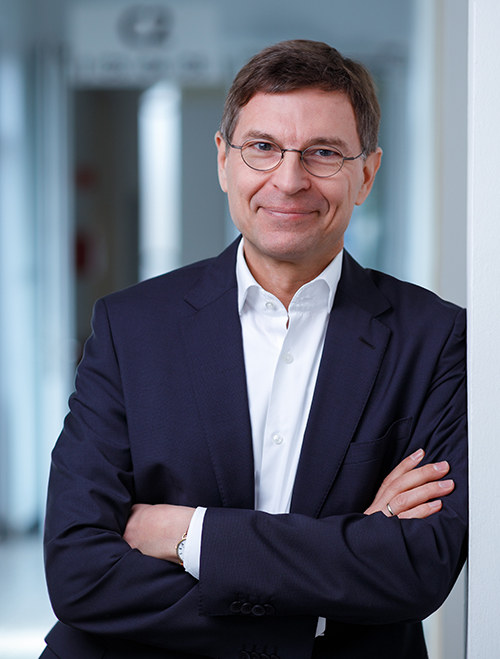
Viktor Prasanna is the Charles Lee Powell Chair in Engineering and Professor of Electrical and Computer Engineering and Computer Science at the University of Southern California. He holds courtesy appointments in Computer Science and leads the Center for Energy Informatics, focusing on interdisciplinary research linking energy technologies, computer science, and engineering. Education: BE in Electronics (Bangalore University), ME (Indian Institute of Science), PhD in Computer Science (Pennsylvania State University) His research spans reconfigurable computing, FPGA accelerators, parallel and distributed systems, and big data applications. He has pioneered high-performance architectures and algorithms using FPGAs, impacting domains like networking, security, HPC, and machine learning. Prasanna has published over 600 papers, received 22 best paper awards, and secured >$50M in grants. His work emphasizes energy-efficient computing, with recent grants totaling $12.9M (2016–2021). His h-index is 73, with 23,454 total citations. Scientific Awards: IEEE Fellow, ACM Fellow, AAAS Fellow, W. Wallace McDowell Award, multiple Distinguished Alumnus Awards He has advised over 70 doctoral students and led major centers including CiSoft (Big Data in oilfield tech) and CAST. His editorial roles include Editor-in-Chief of IEEE Transactions on Computers and Journal of Parallel and Distributed Computing.
Ari Jantunen is a Professor in Strategy Research at the LUT Business School, LUT University, Lappeenranta, Finland. He is affiliated with the Department of Business Studies and has been actively contributing to academic research in strategic management and organizational behavior. University: LUT University School: LUT Business School Department: Business Studies Position: Professor, Strategy Research Email: Ari.Jantunen@lut.fi He earned his D.Sc. (Econ.) from Lappeenranta University of Technology in 2005, establishing a long-standing academic career focused on strategic change and innovation. Ari Jantunen’s research centers on strategic change and renewal, organizational cognition, dynamic capabilities, dominant logic, and industry dynamics . His work explores how managerial cognition influences strategic decisions and organizational performance, particularly in industries undergoing transformation such as media, energy, and forest sectors. He also investigates sustainability strategies, the circular bioeconomy, and corporate social performance. His recent publications reflect a strong trend in using cognitive mapping, qualitative comparative analysis (fsQCA), and simulation modeling to understand strategic phenomena. Articles on dominant logic, strategic renewal, and cognitive diversity highlight his focus on the cognitive underpinnings of strategic management. Among his notable works are studies on the bioeconomy transition in the pulp and paper industry, innovation races in high-tech sectors, and the interplay between corporate social and financial performance. Jantunen has collaborated extensively with researchers such as Anni Tuppura, Satu Pätäri, Kalevi Kyläheiko, and Anssi Tarkiainen, often co-authoring studies in journals like European Management Journal , Journal of Business Research , and Futures . Ari Jantunen is actively engaged in research and supervision, though no specific students are listed in the provided sources. He does not appear to have received any explicitly mentioned scientific awards, but his consistent publication record in high-impact journals underscores his academic contributions. He has been involved in interdisciplinary research projects, particularly those examining the interface between the energy and forest sectors, the diffusion of energy services, and innovation in cleantech firms. His work often combines theoretical rigor with practical insights, contributing to both academic discourse and industry applications.
Stephan Golla is a full-time Professor of Business & Management at the Fulda University of Applied Sciences. His academic focus spans Corporate Management and Entrepreneurship, with an emphasis on venture capital dynamics, entrepreneurial orientation, and lean startup methodologies. He contributes extensively to research in technology commercialization and social identity in entrepreneurship. Ph.D. in Business & Management (2009): Empirical thesis on Corporate Venture Capital M.Sc. in Business & Management (2000): Majors in Banking, Mechanical Engineering, and Innovation Management Golla's research explores intersections between social identity and entrepreneurial performance, startup finance, and innovation ecosystems. His recent publications analyze how founders' identities influence business outcomes and the evolution of entrepreneurial finance frameworks. His awards include the 2018 Sauer Foundation Best Paper Award in Social Entrepreneurship and the 2010 Vice Chancellor’s Award for Excellence at the University of Western Sydney. He has taught courses in Start-up Management, Innovation & Technology Management, and International Management. 2018: Best Paper Award (Social Entrepreneurship) 2010: Vice Chancellor’s Award for Excellence
Dr. Anna Baldycheva is a Senior Lecturer in Electronic Engineering at the University of Exeter, within the College of Engineering, Mathematics and Physical Sciences. She leads the interdisciplinary STEMM Laboratory, focusing on applied R&D in smart materials, photonics, AI, and IoT. With prior research experience at MIT, Trinity College Dublin, and Tyndall National Institute, she has established herself as an internationally recognized innovator and entrepreneur in emerging technologies. PhD in Electronic and Electrical Engineering, Trinity College Dublin (2008–2012) BSc (Hons) in Physics, St. Petersburg State University (2003–2008) Postgraduate Certificate in Academic Practice, University of Exeter (2016–2017) Postgraduate Certificate in Technology Management, Smurfit Business School (2009–2010) Her research spans Nano-Engineering, Opto-Electronics, Photonics, AI, and IoT , with a strong emphasis on real-world applications. She pioneers work in fluid opto-electronics , graphene nanocoatings , and AI-driven emotion recognition and early cancer detection . Her lab develops smart composite materials for flexible electronics, e-textiles, and structural applications, integrating machine learning into healthcare, education, and communications systems. The recent publications highlight a strong trend toward applied interdisciplinary innovation , combining materials science with AI and photonics for healthcare diagnostics, energy-efficient computing, and educational technology. Her work frequently bridges fundamental physics with commercialization potential, as seen in spin-out technologies like GSurf and the Electronic-Nose for lung cancer detection. Fellow, Royal Microscopical Society (RMS) Fellow, Higher Education Academy (FHEA) Expert, Future and Emerging Technologies, European Commission Featured in Forbes and Forbes Tech Council Editor-in-Chief, InSTEMM Journal Associate Editor, Nature Scientific Reports and Discover Nano Trustee, Royal Microscopical Society Founder, STEMM Global Scientific Society Founder, It’s Her! Women in STEMM Initiative Dr. Baldycheva actively supervises PhD students and has secured industrial collaborations with organizations such as Qinetiq and Lumentum. She leads multiple outreach initiatives, including STEMM Junior for underprivileged children, and serves on the committee for the Jocelyn Bell Brunel PhD Scholarship. She has raised significant research funding through national and international grants, though specific grant names are not listed. She leads the STEMM Laboratory , a multidisciplinary research group with divisions in Smart Composite Materials, Machine Learning & AI, and Opto-Electronics & Photonics. The lab emphasizes industry collaboration and technology transfer, having produced a university spin-out (GSurf) and multiple media-highlighted innovations.
Mitchell Walker is the John W. Young Chair and Professor at the Daniel Guggenheim School of Aerospace Engineering , Georgia Institute of Technology. With over 20 years of expertise in electric propulsion and plasma physics , he leads the High-Power Electric Propulsion Laboratory (HPEPL) and directs the Joint Advanced Propulsion Institute . His work spans theoretical and experimental research in spacecraft propulsion , space debris mitigation , and plasma diagnostics , with significant contributions to Hall thrusters , ion engines , and vacuum facility effects . Education : Ph.D., University of Michigan (2004) M.S.E., University of Michigan (2000) B.S.E., University of Michigan (1999) Research Interests focus on electric propulsion systems , plasma physics , and hypersonic aerodynamics . His laboratory investigates Hall effect thrusters , magnetoplasmadynamic thrusters , and pulsed inductive thrusters , emphasizing plasma diagnostics , vacuum testing , and spacecraft integration challenges . Scientific Awards : AIAA Fellow (2023) AIAA Sustained Service Award (2020) Georgia Power Professor of Excellence (2017) Provost's Emerging Leaders Program (Georgia Tech, 2017) Lawrence Sperry Award (2010) AFOSR Young Investigator Program Award (2006) Students include Ph.D. researchers such as Chhavi (2024), Jean Luis Suazo Betancourt (2024), and David R. Jovel (2023), who have explored topics like magnetic field gradients , Laser Thomson scattering , and impedance characterization . Lab & Collaborations : HPEPL operates one of academia’s largest vacuum test facilities, supporting partnerships with NASA, Lockheed Martin, and the Department of Defense. Recent projects include JANUS (Joint Advanced Propulsion Institute) and Helicon Plasma Source development.
Juliet Schor is a Professor of Sociology at Boston College, specializing in work, consumption, and environmental sustainability. She holds a Ph.D. in Economics from the University of Massachusetts Amherst and previously taught at Harvard University for 17 years. Her research focuses on consumer culture, sustainable economies, and the four-day workweek trials. She has authored influential books like The Overworked American and The Overspent American , which shaped national debates on work-life balance and consumerism. Education: B.A., Wesleyan University; Ph.D., University of Massachusetts Amherst. Research interests include: Consumer society and political consumption Environmental degradation and sustainability transitions Sustainable sharing economies and platform cooperativism Work-hour reduction and carbon emissions Recent work analyzes global four-day workweek trials, funded by 4 Day Week Global. Collaborations include studies on Airbnb’s environmental impact and platform labor dynamics. Her research bridges academia, policy, and activism. Awards: ASA Public Understanding of Sociology Award (2014) Herman Daly Award (2011) Leontief Prize (2006) Guggenheim Fellowship Grants and advising: Member of MacArthur Foundation’s Connected Learning Network; leads PhD student collaborations (e.g., After the Gig ). Organized the Summer Institute in New Economics. Labs/Initiatives: Co-founder of the Center for a New American Dream; chairs the Better Future Project (climate justice). Active in global sustainability networks like 4 Day Week Global.
Elisa Riedo is a tenured Professor of Chemical and Biomolecular Engineering at New York University (NYU) Tandon School of Engineering, with joint appointments as Professor of Physics in NYU’s College of Arts and Science and as affiliated Professor of Mechanical Engineering at Tandon. She serves as Director of Faculty Development at NYU Tandon and has held prior tenured positions at Georgia Tech (2003–2015) and CUNY ASRC (2015–2018). Her academic career spans over two decades, with a Ph.D. in Physics from the University of Milano (2000) and postdoctoral work at EPFL. Her research focuses on nanotechnology , graphene and 2D materials , and thermal scanning probe lithography (tSPL) , with applications in biomedical diagnostics quantum electronics electromagnetic interference shielding mechanical reinforcement of materials She pioneered tSPL for sustainable nanofabrication and discovered diamene—a single-layer diamond structure from graphene under pressure. Her recent work involves transparent infrared electrodes using silver nanowires (2025) and self-organized graphene stacking domains for quantum technologies (2024). She has secured major grants from National Science Foundation , Department of Defense , and Army Research Office . Scientific honors include: 2023 NYU Tandon Excellence in Research Award 2013 American Physical Society Fellow 2005 CREA Innovation Award Membership in the Academy of Europe (2023) She contributes to editorial boards for journals like 2D Materials and Applications and advises companies such as Mirimus Inc. and SwissLitho AG .
Mohamed Hefeeda is a Professor in the School of Computing Science at Simon Fraser University (SFU), Canada. He leads the Network and Multimedia Systems Lab (NMSL) and previously served as Director of the School from 2018 to 2023. His research focuses on multimedia networking, mobile computing, cloud systems, and hyperspectral imaging. He holds an ACM Distinguished Member designation and has received prestigious awards including the NSERC Discovery Accelerator Supplements (2011) and multiple best paper awards at top conferences like ACM MM and IEEE Infocom. Education: Ph.D., Purdue University, 2004 M.Sc., University of Connecticut, 2001 B.Sc., Mansoura University, Egypt, 1994 Research Interests: Design of efficient multimedia systems and protocols for wired/wireless networks Cloud gaming optimization and video encoding techniques Hyperspectral imaging for healthcare and mobile applications AI-driven multimedia systems and mobile computing innovations Grants & Industry Collaborations: Funded by NSERC, CFI, and companies like AMD, Huawei, and CBC Co-founded Video Semantics (acquired by tech firm) Partnered with CBC on peer-assisted content distribution systems Awards Highlights: 2025: ACM Distinguished Member 2019: Best Student Paper Award at ACM MMSys 2015: NSERC Discovery Accelerator Supplements Labs & Leadership: Network and Multimedia Systems Lab (NMSL) at SFU Contributed to creation of Qatar Computing Research Institute (QCRI)
Albert H. Titus is a Professor in the Department of Biomedical Engineering and an Adjunct Professor in the Department of Electrical Engineering at the University at Buffalo, State University of New York. He serves as Associate Vice President for Regulatory Support in the Office of the Vice President for Research and Economic Development. His research focuses on analog VLSI design for neuromorphic visual processing, biosensors, wearable devices, optoelectronic systems, and neural networks. Education: PhD in Electrical and Computer Engineering, Georgia Institute of Technology (1997) MS in Electrical Engineering, University at Buffalo (1991) BS in Electrical Engineering, University at Buffalo (1989) Research Interests: His work spans wearable and implantable sensors, bioinstrumentation, neural network-based visual processing, analog VLSI implementations, optoelectronics, and electronic packaging. He pioneered CMOS-based neuromorphic systems and developed patented technologies for glare sensing and RF power calorimetry. Publication Trends: His recent articles emphasize CMOS-integrated sensors, machine learning for bioimpedance analysis, implantable medical devices, and xerogel-based optical biosensors. These works bridge biomedical engineering and microelectronics. Scientific Recognition: He is a Fellow of the National Academy of Inventors and has received the SUNY Chancellor’s Award for Excellence in Service (2017), NSF CAREER award, and Western New York Inventor of the Year (2010). His inventions include a patented low-power glare sensor (U.S. Patent 7,586,079) featured in Popular Science’s 2011 Top Ten Inventions. Academic Leadership: As a faculty member, he has supervised nearly 20 PhD and over 40 MS students, while teaching courses in circuits, IC design, sensors, and signal processing across electrical and biomedical engineering disciplines.
Prof. Dr. Christina Raasch is Professor of Digital Economy at Kühne Logistics University (KLU) and holds a joint appointment with the Kiel Institute for the World Economy (IfW) . Since 2017 she has led research and teaching on how digitalization reshapes innovation processes, enterprise crowdfunding, and customer-driven disruptive innovation. Education Habilitation (Dr. habil.) in Business Administration, Hamburg University of Technology (TUHH), 2012 PhD in Management, University of Erlangen-Nuremberg, 2006 MSc (lic. oec.) in Economics & Management, University of St. Gallen (HSG), 2002 Visiting Researcher, MIT Sloan School of Management, 2010-2012 Research Interests Prof. Raasch’s work centers on digital transformation of innovation . She investigates how firms leverage digital technologies—ranging from AI to crowdfunding platforms—to enhance idea generation, evaluation, and implementation. Core themes include: Open & User Innovation: understanding when and how users become valuable innovators inside and outside firms. Disruptive Innovation Dynamics: analyzing whether disruptive ideas stem from users or producers under varying environmental conditions. Enterprise Crowdfunding: designing decentralized decision-making systems that mitigate hierarchy-induced biases. Publication Trends Her 70+ publications reveal a systematic exploration of demand-side innovation . Early work modeled welfare impacts of user innovation; recent studies use large-scale field data from Siemens and other multinationals to uncover cognitive and social biases in idea evaluation. A consistent thread is bridging micro-level behavioral insights with macro-level policy and strategy implications. Scientific Awards & Honors Fellow of the Open and User Innovation (OUI) Society Host of the 2023 OUI Conference at KLU Research Funding & Industry Collaboration Current grants exceed €2 million and include: FabCity-Citizen Extension (2025-2026) – decentralized urban innovation funded by the German Federal Ministry of Education and Research. EvaluationShirking (2024-2026) – idea evaluation biases in collaboration with a global industrial manufacturer. Idea Evaluation in Democratized Innovation (2019-2023) – DFG-funded project on enterprise crowdfunding design. Labs, Teams & Knowledge Transfer Prof. Raasch leads the Open & User Innovation Research Group at KLU, supervising doctoral researchers and managing industry partnerships with firms in automotive, high-tech, and logistics sectors. She regularly contributes to policy panels and media outlets such as Harvard Business Manager and Springer Professional .
Manju Ahuja is a Scientia Professor of Information Systems and Technology Management at the UNSW Business School, University of New South Wales, and holds the Frazier Family Professor of Information Systems at the College of Business, University of Louisville (on leave). Recognized globally as a top-tier researcher in Information Systems, she has held faculty roles at Indiana University, Florida State University, and Penn State University. Education & Affiliations: PhD-level training and research assistantships at University of Pittsburgh (1990–1994) Research assistantship at Pace University (1982–1984) Graduated with high honors from Indore University, India (1980) Research Focus: Professor Ahuja's scholarship centers on the intersection of information technology and human behavior, with particular emphasis on IT workforce dynamics, AI ethics, digital transformation, work-life balance, innovation, and entrepreneurship . Her work explores how emerging technologies reshape organizational practices, employee well-being, and societal norms. Editorial Leadership: She currently serves as Senior Editor for Information Systems Research , and previously held senior editorships at MIS Quarterly (2014–2017) and Journal of AIS (2017–2019). She has also served as Associate Editor for MIS Quarterly , Information Systems Research , and Management Science . Scientific Recognition: Fellow, Association of Information Systems (2021) Lifetime Achievement Award, Academy of Management OCIS Division (2020) Stanford University’s Top 2% Scientists List (2020) Presidential Distinguished Faculty Award, University of Louisville (2022) Enterprising Women Award, Louisville Business First (2023) Multiple Best Paper Awards and Faculty Research Awards Grants & Funding: Professor Ahuja has secured over $2 million in National Science Foundation funding across four major grants focused on IT workforce issues, highlighting her sustained impact on policy and practice. Teaching & Mentorship: She teaches courses in Research Methods, Information Systems Theory, and Behavioral IS , and actively mentors doctoral students and early-career researchers. While specific student names are not listed, her editorial roles and conference leadership indicate extensive supervision and collaboration. Global Engagement: Her visiting scholar appointments span premier institutions including HEC Paris, Bocconi University, National University of Singapore, UC Irvine, and University of Hawaii at Manoa, underscoring her role in shaping global IS research agendas.
Prof. Stefan Wrobel is a Professor of Computer Science at the University of Bonn and Director of the Fraunhofer Institute for Intelligent Analysis and Information Systems (IAIS). He holds leadership roles, including Co-Director of the Lamarr Institute for Machine Learning and Artificial Intelligence and Managing Director of the Bonn-Aachen International Center for Information Technology (b-it). His research focuses on AI, machine learning, and big data applications in industry and society. He earned his PhD from the University of Dortmund and has held academic positions at Magdeburg University and Berlin Technical University. Active in national/international AI initiatives, he chairs the Fraunhofer Strategic Research Field on Artificial Intelligence and co-leads the Machine Learning Rhine-Ruhr (ML2R) Competence Center. Education: Master's (Georgia Tech), PhD (University of Dortmund). Research emphasizes intelligent algorithms, data analysis, and AI ethics. Awarded GI-Fellow (2022) and honored by the German Computer Science Society for contributions to AI history. Key roles include Editorial Board member of Machine Learning journals and advisory roles in AI ethics and certification. Scientific contributions span over 100 publications in machine learning, data mining, and visual analytics. Advised numerous PhD students on topics like graph mining and trustworthy AI. Leadership in institutions like Fraunhofer Technology Hub for Machine Learning and the German Computer Science Society's Special Interest Group on Knowledge Discovery.
Onur Mutlu is a Professor of Computer Science at ETH Zurich, affiliated with the Department of Information Technology and Electrical Engineering. He also holds adjunct professorships at Carnegie Mellon University and Bilkent University. His research focuses on computer architecture, systems security, bioinformatics, and energy-efficient computing. He has pioneered work on memory-centric computing paradigms, RowHammer security vulnerabilities, and bio-inspired computing systems. He teaches courses such as Digital Design & Computer Architecture and supervises the SAFARI research group, which explores cutting-edge topics in memory systems, AI accelerators, and genomics. Recent activities include keynote talks at ISCA, HiPEAC, and IEEE conferences, emphasizing emerging hardware-software co-design principles. Key contributions include foundational work on memory reliability, cross-layer system design, and accelerating genomic data analysis. His research has been showcased in over 200 publications and industry collaborations with tech leaders like Intel, Huawei, and Micron.
James Sweeney serves as Professor in the Department of Mathematics and Statistics at the University of Limerick, concurrently holding memberships in the Centre for Battery and Energy Materials Research and the Mathematics Applications Consortium for Science and Industry (MACSI). Actively accepting PhD students, his research bridges theoretical mathematics with practical industry applications across diverse sectors including energy materials, real estate, and public health. His research portfolio demonstrates exceptional interdisciplinary range, with core expertise in machine learning algorithms (particularly time series classification and neural networks), geospatial statistics for property valuation, and epidemiological modeling for disease surveillance. Key methodological contributions include evolutionary algorithms for optimization, dissimilarity-preserving representation learning, and flexible geospatial smoothing techniques that address complex real-world data challenges. Analysis of his 23 publications (2015-2024) reveals accelerating scholarly output since 2020, with 2024 being particularly prolific. His work consistently targets high-impact applications: developing diagnostic thresholds for bovine tuberculosis, modeling COVID-19 transmission dynamics in Dublin, and creating neural network solutions for geodemographic clustering. This trajectory reflects deepening engagement with computational approaches to solve pressing societal problems through mathematical innovation. As a PhD supervisor, he cultivates next-generation researchers in advanced computational methods. His collaborative framework extends through MACSI's industry partnerships and the Centre for Battery and Energy Materials Research, where mathematical modeling directly informs energy technology development. These dual affiliations position him at the critical intersection of academic research and industrial application, particularly in Ireland's growing tech and energy sectors. His laboratory activities center around computational mathematics teams within MACSI, focusing on applying statistical learning to battery materials research and real-world data challenges. Current projects involve time series analysis for sensor data, geospatial modeling for economic forecasting, and optimization algorithms for veterinary epidemiology – demonstrating remarkable methodological versatility across traditionally disparate domains.
Maria Rumyantseva is a Senior Lecturer and Academic Fellow in Innovation Studies at the University of Sydney Business School . She serves as Deputy Director of the Sydney Nano Institute and is affiliated with the Sydney Environment Institute. With a PhD from the University of St. Gallen, Maria employs longitudinal process-based methodologies to advance innovation management theory and practice. Interdisciplinary research intersecting strategy, international business, and ecosystem analysis Industry collaborations with startups (Genesis, Incubate programs) and scientists Multiple teaching awards and media recognition for pedagogical innovation Research Focus : Commercialisation of nano-scale inventions (Sydney Nano Institute), mapping innovation ecosystems (CSIRO spinoffs), assessing Australian international competitiveness, and developing process-based qualitative methodologies. Selected Awards : Best Paper Award (R&D Management Journal Workshop, 2024) Top Citations (Strategic Management Journal, 2023; Journal of International Business Studies, 2023) Dean's Citations and USS Teaching Awards (2020-2024) Supervision & Grants : Supervises research students on topics like government roles in ecosystem emergence and innovation in state-owned enterprises. Leads grants including the 2024 Innovation and Commercialisation Policy Node and 2021 Nano Technology-Economy-Society project.