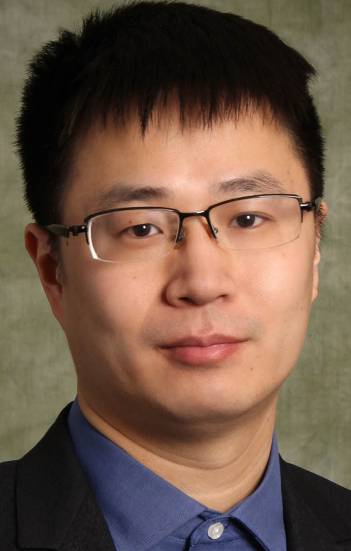
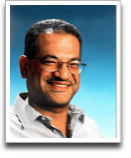
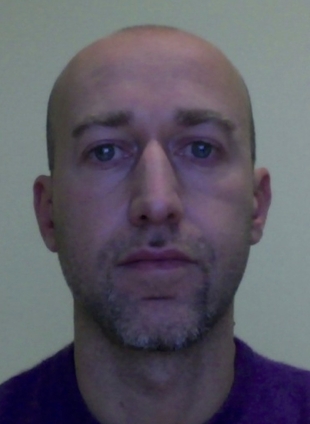
Wenfeng Zhao is an Assistant Professor in the Department of Electrical and Computer Engineering at Binghamton University. He holds a PhD from the National University of Singapore (2014) and BS/MS degrees from Huazhong University of Science and Technology (2007-2009). Prior to this role, he conducted postdoctoral research at the University of Minnesota's Biomedical Engineering Department. His research focuses on neural engineering, compressed sensing, ultra-low-power VLSI systems, and in-memory computing. Key areas include hardware security, biomedical signal processing, and energy-efficient computing architectures. His work spans applications in neural interfaces, cryptographic hardware, and IoT edge devices. Recent publications highlight advancements in block-cipher-in-memory architectures, emotion recognition via EEG analysis, and energy-efficient FPGA accelerators for neural networks. His research also addresses challenges in cryogenic memory systems and MRI-compatible neural recording devices. Zhao's contributions emphasize interdisciplinary approaches at the intersection of hardware design, signal processing, and cybersecurity. His lab develops novel solutions for low-power embedded systems and trustworthy IoT infrastructure.
Gianluca Setti is a Full Professor at the Department of Electronics and Telecommunications (DET) at Polytechnic University of Turin, where he has been serving since 2017. He previously held positions at the University of Ferrara from 1997 to 2017. His institutional roles include being the Contact Person for the Research Quality Evaluation process, Member of the Interdepartmental Center SmartData@PoliTO - Big Data and Data Science Laboratory, and Member of the University Quality Assurance Committee. He serves as Editor-in-Chief of the Proceedings of the IEEE, the first non-US editor to hold this position. Dr. Setti's research spans multiple interdisciplinary fields including machine learning, artificial intelligence, big data analytics, Internet of Things, biomedical signal processing, power electronics, and electromagnetic compatibility. His work bridges theoretical foundations with practical applications, particularly focusing on compressed sensing, neural networks, and circuit design for specialized applications. His research has significant implications for healthcare, sustainable infrastructure, and next-generation electronics. His publication record reveals a consistent trajectory from foundational work in chaotic systems and neural networks to contemporary applications in AI, IoT, and edge computing. The most recent publications demonstrate his focus on anomaly detection at the edge, neural oracles for biosignal processing, and power electronics innovations. His work shows strong integration between theoretical signal processing and practical circuit implementation. 1998 Caianiello prize (best Italian Ph.D. thesis on Neural Networks) IEEE Fellow (2006) IEEE Circuits and Systems Society Distinguished Lecturer (2004, 2015) 2004 IEEE CAS Society Darlington Award 2013 IEEE CAS Society Meritorious Service Award 2013 IEEE CAS Society Guillemin-Cauer Award 2019 IEEE Transactions on Biomedical Circuits and Systems best paper award Multiple best paper awards at major conferences including ECCTD2005, EMCZurich2005, ISCAS2011, PRIME2019, and EMCCOMPO2019 Dr. Setti has supervised numerous PhD students across various research domains including electromagnetic compatibility, signal and power integrity, communication networks, mechatronics and robotics. His research is supported by significant funding including national PRIN projects, EU-funded JTI-ECSEL initiatives, and commercial contracts. He leads the VLSILAB Group at DET, focusing on circuit architectures, embedded systems, and AI applications. His current projects include DECORI (anomaly detection), StorAIge (embedded storage for AI), PROGRESSUS (energy infrastructure), CONNECT (smart grid), and CONVERGENCE (wearable healthcare applications).
Andrew Ho is an active academic researcher with publications spanning computer science, electrical engineering, and interdisciplinary applications. His recent work focuses on hybridizable discontinuous Galerkin methods for plasma simulations (2024) and AI/LLM applications in scholarly knowledge organization. 2025: Project Alexandria (LLM for copyright-free knowledge) 2024: Hybridizable DG plasma methods, GPU-accelerated kinetic simulations 2023: Low-resource translation techniques 2022: Multimodal VR interfaces 2003-2006: High-speed serial link transceivers and radiography artifact detection His research interests include: Computer science applications in plasma physics and medical imaging LLM-based scholarly knowledge graphs and literature reviews High-speed communication systems Educational technology implementations Co-authors include Vladimir Stojanovic (Stanford, 2003-2005), Carl W. Werner (2003-2005), and Genia Vogman (GPU plasma simulations, 2024).
Dr. Vishnu Unnikrishnan is an Assistant Professor at the Department of Electrical Engineering, Tampere University, within the Faculty of Information Technology and Communication Sciences. His research focuses on energy-efficient high-performance analog/digital/RF integrated circuits and systems in nanometer-scale CMOS technologies. Key areas include time-based data conversion, high-speed serial links, and 5G/6G wireless transceivers. He leads research on analog interfaces using digital/switch components and collaborates with the SoC Hub ecosystem to bridge academic and industrial interests in system-on-chip design. He has secured significant funding, including an EU Marie Curie ITN grant (SMArT) worth €818k and an Academy of Finland Project (2021) of €821k. His work spans over 40 peer-reviewed publications, emphasizing innovations in time-based ADCs, beamforming receivers, and RF system design. Dr. Unnikrishnan actively supervises doctoral and postdoctoral researchers, offers paid master's theses and summer jobs in IC design, and collaborates with industry through the SoC Hub. His research aims to advance cross-technology portable analog interfaces and high-performance mixed-signal systems.
Prof. Vlassis Spyridon holds a full professor position in the Electronics Laboratory at the University of Patras. He specializes in integrated circuit design, wireless communication systems, and low-power electronics. With a Ph.D. in Electronics from Aristotle University of Thessaloniki (2000), his career spans academic research and industry collaborations. His research interests include battery-less RF tags for IoT, clock/data recovery systems, and high-speed serial interfaces. He has led projects in MEMS-based clock generators, transceiver ASICs, and power management ICs for hearing aids. Education: B.Sc. Physics (1994), Aristotle University M.Sc. Electronics (1996), Aristotle University Ph.D. Electronics (2000), Aristotle University Research focuses on analog integrated circuits, including voltage-controlled oscillators (VCOs), phase interpolators, and time-mode signal processing. He has developed innovative circuits for multi-Gigabit serial links and holds five patents, with over 70 peer-reviewed publications. Recent work includes MPHY-compliant serial interfaces and temperature-compensated oscillators. Industry collaborations include projects with telecom providers and startups, designing ASICs for MEMS headphones, solid-state relays, and wireless transceivers. His articles highlight advancements in low-power CMOS circuits, jitter optimization, and digital-to-PWM conversion. Patents: Wireless transmitter DC offset recalibration (2006) Subthreshold MOS resistor (2014) Tunable subliminal transconductor (2016) Additional Czech-registered innovations Labs/Teams: Active in the Electronics Laboratory at University of Patras, contributing to multi-disciplinary projects in analog and digital circuit design.
Dr. Hung Le is an Instructional Associate Professor at the University of Houston's Cullen College of Engineering, Department of Electrical and Computer Engineering. He holds IEEE Life Senior Member and Senior Member of the National Academy of Inventors statuses. With over 30 years of industry experience in computer, telecom, and oil/gas sectors, his expertise spans embedded systems, IoT, reconfigurable systems, and memory controller design. Education: M.Sc., Electrical Engineering, University of Alberta Ph.D., Electrical Engineering, University of Houston Research Interests: Embedded Systems & IoT Reconfigurable Systems (ASIC/FPGA) Memory Controllers Machine Learning His work emphasizes hardware-software co-design, adaptive systems, and secure memory architectures. Publications highlight advancements in memory subsystems, dynamic buffer mechanisms, and secure embedded systems. Over 20 patents underscore his contributions to memory management, password security, and low-power device communication. Advising focuses on graduate instruction, with no listed advisees. Professional experience includes adjunct roles (2005-2008) and current instructional professorship since 2017. No specific labs or teams explicitly mentioned, though his patents indicate involvement in interdisciplinary hardware research.
Seyed Armin Tajalli is a Visiting Professor at the École polytechnique fédérale de Lausanne (EPFL), affiliated with the School of Engineering (STI), Institute of Electrical Engineering (IEM), and Integrated Neurotechnologies Laboratory (INL). He has extensive experience in ultra-low power integrated circuit design and high-speed serial communication systems. Dr. Tajalli received his B.S.E.E. and M.S.E.E. degrees (with honors) from Sharif University of Technology, Tehran, and Tehran Polytechnic University in 1997 and 1999, respectively. He earned his Ph.D.E.E. on low-power integrated circuit design techniques in 2010 from EPFL. Prior to his academic career, he worked with Emad Semicon from 1998-2006 as a senior analog/RF design engineer and technical manager. His research focuses on ultra-low power circuit design, including subthreshold source-coupled logic, analog/mixed-signal circuits, data converters, and serial data transceivers. His work addresses critical challenges in low-power design, high-speed communication, and energy-efficient circuit implementations. Recent publications demonstrate his expertise in spectrum shaping techniques, crosstalk reduction, and high-speed serial links for memory interfaces and multi-drop communication systems. Dr. Tajalli's publications span high-impact journals and conferences including IEEE Journal of Solid-State Circuits, IEEE Transactions on Circuits and Systems, and major conferences like ISSCC, ISCAS, and VLSI Symposium. His research demonstrates consistent innovation in low-power circuit techniques with practical applications in high-speed communication systems. Kharazmi Award on Research and Development, 2000 Outstanding Design Engineer, Emad Semicon, 2001 Presidential Award of the best Iranian researchers, 2003 ACM/CICC Award, 2009 EPFL Prime Special Award, 2009 Dr. Tajalli has advised PhD students including Kiarash Gharibdoust, whose thesis focused on Hybrid NRZ/Multi-Tone Signaling for High-Speed Low-Power Wireline Transceivers. His collaborative work with the ALGO team has resulted in significant contributions to high-speed serial data transceiver architectures. His research has been supported by various academic and industrial partnerships focused on advancing integrated circuit design techniques. His work is primarily conducted within EPFL's Integrated Neurotechnologies Laboratory (INL) and previously with the Microelectronic Systems Laboratory (LSM). These labs provide state-of-the-art facilities for mixed-signal IC design, characterization, and testing, supporting his research in ultra-low power circuits and high-speed communication systems.
Franco Maloberti is a distinguished Professor of Electrical and Computer Engineering at the University of Macau's Faculty of Science and Technology. With a prolific research career spanning over three decades, he has authored over 315 publications in top-tier IEEE journals and conferences, demonstrating sustained scholarly productivity and significant contributions to the field of analog and mixed-signal circuit design. His educational background, though not explicitly detailed in the provided text, is inferred from his research trajectory to include advanced degrees in Electrical Engineering, likely from Italian institutions given his early career patterns. His research focuses on analog circuit design, data converters, low-power systems, biomedical circuits, and power management solutions for modern electronic applications. Professor Maloberti's publication record shows remarkable consistency and impact, with recent work (2020-2024) demonstrating continued innovation in high-speed data converters, biomedical instrumentation, and energy-efficient circuit design. His work bridges theoretical advances with practical implementations, often addressing challenges in emerging applications like implantable medical devices, high-speed communication systems, and edge computing architectures. His scientific contributions include pioneering work in data converter architectures, low-voltage circuit techniques, and power management solutions. The breadth of his research is evident in publications spanning IEEE Journal of Solid-State Circuits, IEEE Transactions on Circuits and Systems, and major conferences like ISCAS, ISSCC, and ESSCIRC. Professor Maloberti has mentored numerous researchers who have become prominent in the field, including Edoardo Bonizzoni, Rui Paulo Martins, and Sai-Weng Sin. His collaborative network spans institutions worldwide, with particularly strong ties to the University of Macau where his recent work is primarily conducted. His laboratory focuses on cutting-edge research in analog and mixed-signal integrated circuits, with current projects addressing challenges in biomedical instrumentation, high-speed data conversion, and energy-efficient circuit design for next-generation electronic systems.
Dominique Ginhac is a Professor of Electrical Engineering at the Laboratory of Electronics, Informatics and Image (Le2i UMR 6306) at the University of Burgundy in Dijon, France. He joined Le2i as an assistant professor in 2000 and was promoted to professor in 2009, also becoming head of the Sensors & Hardware Architectures team. In 2010, he became head of the Electronic department of Le2i, and in 2011, he was appointed Deputy Director of Le2i, overseeing approximately 200 people across three scientific departments: Computer Sciences, Vision, and Electronic. Ginhac holds a Master's Degree in Engineering from Polytech Clermont-Fd (1995) and a PhD in Computer Vision from Blaise Pascal University (1999). In 2008, he received his Habilitation qualification (Accreditation to supervise research) from the University of Burgundy. From 2007 to 2009, he was a visiting professor at Université Libre de Bruxelles in the Consciousness, Cognition & Computation lab, expanding his expertise into cognitive science applications for imaging systems. His research focuses on the development of smart imaging technology where sensing and processing are integrated as closely as possible to achieve low cost, low power, and high processing capabilities. His work spans hardware design of smart vision systems, implementation of real-time image processing applications, VLSI CMOS imaging technology, and embedded image processing on DSP/FPGA platforms. His research activities represent the crossroads between algorithmic and hardware solutions dedicated to real-time embedded image processing applications. An analysis of Ginhac's recent publications reveals a strong focus on smart camera and sensor development, particularly in high dynamic range imaging, single-photon detection, and configurable hardware accelerators. His work shows a clear trajectory from fundamental VLSI image sensor design toward increasingly sophisticated integrated systems combining sensing, processing, and specialized applications in medical imaging and real-time vision. His interdisciplinary approach bridges electronics, computer vision, and application-specific system design. Throughout his career, Ginhac has supervised 8 PhD students and published 20 papers in international peer-reviewed journals, 3 book chapters, and more than 50 conference papers. His research has resulted in several significant projects including VerIDIS (Vertically Integrated Digital Image Sensor), CAPTIvA (Asynchronous Photon-counTing Image sensor Architecture), HDR-ARtiSt (High Dynamic Range Adaptive Real-time Smart camera), and ASTICO (Assistance Textile Cognitive). Ginhac leads the Electronic department at Le2i, which is part of a research laboratory under the supervision of the University of Burgundy and the CNRS. His work involves close collaboration with industry partners and has resulted in practical implementations of smart imaging systems for applications ranging from medical monitoring to automotive vision systems. His current research continues to push the boundaries of integrated vision systems, with particular emphasis on 3D-stacked image sensors and photon-counting technologies.
Dr. Edward Gebara is an Associate Professor of Electrical and Computer Engineering at Michigan State University's College of Engineering. His expertise spans radiation-tolerant electronics, extreme-temperature integrated circuits, and self-healing mixed-signal techniques. He holds B.S., M.S., and Ph.D. degrees in Electrical and Computer Engineering from Georgia Institute of Technology (1996–2003). Research Interests: Radiation-tolerant electronics for aerospace Extreme temperature environment circuits Self-healing and reconfigurable ICs Wireless cancellation and signal integrity solutions Professional Activities: Former Director of Engineering at Electromagnetic Sensor Technologies Inc. (2011–2023) Adjunct Assistant Professor at Georgia Tech (2010–2011) IEEE MTT-S Symposium roles: Vice Chair (2010–2012), Technical Committee Chair (2018–2021), and Workshop Chair (2021) Awards: Best Paper Award at IEEE International Microwave Symposia (2000) Grants & Advising: Directed Ph.D. students in mixed-signal and microwave systems Led industry-academia collaborations in GaAs/GaN technologies Labs & Teams: Mixed-Signal Research Group at Georgia Tech (2003–2011) Electromagnetic Sensor Technologies R&D team
Mustapha CE Yagoub serves as a Professor in the School of Electrical Engineering and Computer Science at the University of Ottawa, where he has maintained an active academic position since joining in 2001. His professional background spans both industry and academia across three continents, with significant contributions to microwave engineering and RF circuit design. His research interests focus on RF/Microwave CAD, RFID Design, Neural networks for high-frequency applications, Planar antennas, and Applied electromagnetism. This specialization is reflected in his extensive publication record of over 300 journal and conference papers, along with two books including 'Conception de circuits linéaires et non linéaires micro-ondes' (2000) and 'Computer Manipulation and Stock Price Trend Analysis' (2005). His recent work demonstrates strong continuity in microwave circuit analysis, RFID applications, and neural network implementations for high-frequency systems, with particular emphasis on practical engineering solutions for wireless communications and sensor networks. As an educator, Professor Yagoub teaches undergraduate courses including Circuit Theory I (ELG 2538) and Electronics for Mechanical Engineers (ELG 3736), along with graduate-level Nonlinear Microwave Devices (ELG 6369). He actively supervises fourth-year undergraduate projects and graduate research in his specialty areas. Professor Yagoub maintains active professional standing as a Senior Member of the IEEE Microwave Theory and Techniques Society, a member of the Professional Engineers of Ontario (Canada), and a member of the Ordre des ingénieurs du Québec (Canada). His international academic journey began with engineering education at École nationale polytechnique in Algiers, continued with doctoral studies in Toulouse, France, and included academic positions at Houari Boumediene University of Science and Technology in Algiers before his current appointment at uOttawa.
Prof. Cesare Fantuzzi is a Full Professor at the Department of Engineering Sciences and Methods , University of Modena and Reggio Emilia. His expertise lies in robotics, automatic control, and human-robot interaction , with a focus on Industry 4.0/5.0 applications . He teaches courses in Industrial Robotics, Automatic Control, and Industrial System Control , emphasizing practical implementation in real environments. His research spans collaborative robotics, fault diagnosis systems, adaptive interfaces, and digital twin technology . Notable projects include IOT-enabled diagnostics for welding cobots , high-velocity robotic programming architectures , and smart AGV traffic management . Publications cover control barrier functions, passivity-based interaction methods, and universal design for industrial HMIs , often in collaboration with European research teams. Recent work explores self-configuring BLE networks , adaptive training systems , and natural gesture-based robot control . He employs Microsoft Teams for teaching materials and open-source IoT platforms in research implementations.
Nagi N. Mekhiel is a Professor in the Department of Electrical and Computer Engineering at Toronto Metropolitan University (formerly Ryerson University), where he teaches courses including Digital Systems, Microprocessors, Advanced Computer Architecture, and Parallel Computing. His office is located in the George Vari Engineering and Computing Centre at 245 Church St., Toronto. Dr. Mekhiel received his B.Sc. in Electrical Engineering from Assiut University, Egypt (1973), M.A.Sc. from University of Toronto (1981), and Ph.D. in Computer Engineering from McMaster University (1995). Prior to academia, he worked as a Biomedical Engineer at Toronto's Hospital for Sick Children (1981-1987), Senior Hardware Engineer at Definicon Systems Corporation (1987-1990), and Senior Member of Technical Staff at Yarc System Corporation (1996-1998). His research focuses on solving fundamental computer industry challenges, particularly the processor/memory speed gap and scalability of parallel processors. His work spans computer architecture, parallel processing, high-performance memory systems, VLSI, and performance evaluation. Mekhiel's research has been cited in patents by major tech companies including IBM, Google, Apple, Intel, Microsoft, and others. Analysis of his recent publications reveals a strong trajectory toward quantum computing applications, orbital data processing architectures, and memory system innovations for big data applications. His work consistently addresses the processor/memory speed gap through novel architectural solutions, with increasing emphasis on quantum information representation and parallel time computing models. Intel Xeon+FPGA system access via Intel's Hardware Accelerator Research Program Senior Member of IEEE Dr. Mekhiel has supervised numerous graduate students who have co-authored publications with him in areas including facial recognition systems, quantum computing implementations, and parallel processing architectures. His research has received industry support through patent licensing agreements with Intellectual Ventures US. He leads a research group focused on advanced computer architecture solutions, with current projects involving quantum bit encoding, reconfigurable memory systems, and orbital network architectures for scalable multi-core processing.
George Souliotis is an Associate Professor at the Department of Electrical and Computer Engineering, University of Peloponnese, where he has been a faculty member since 2019. With over twenty years of professional and research experience in analog integrated circuit design, he has worked for multinational microelectronic companies and continues to serve as a consultant to companies in Greece and abroad. His expertise spans multiple domains of electronic circuit design including high-speed interfaces, RF circuits, and biomedical applications. Dr. Souliotis received his B.Sc. in Physics from the University of Ioannina in 1993, followed by M.Sc. and Ph.D. degrees in Electronics from the University of Patras in 1998 and 2003, respectively. Prior to his current position, he served as a Lecturer at the Department of Electrical Engineering, TEI of Western Greece (2015-2019), and as an Adjunct Lecturer there from 2002 to 2015. He was also a specialized technical and teaching laboratory staff member at the Department of Physics, University of Patras from 2005 to 2015. His research focuses on analog and mixed signal integrated circuit design , with particular expertise in high-speed serial interfaces (USB2, USB3, BLE, M-PHY), RF circuits operating up to 80 GHz, and low-power design. Dr. Souliotis has made significant contributions to circuits for communication protocols, precision analog design, and biomedical instrumentation. He has published over 60 papers in prestigious journals and conferences and holds two patents in the field, demonstrating consistent research productivity through 2024. Analysis of his recent publications reveals three dominant research streams: high-precision comparators and data converters, power-efficient DC-DC solutions, and biomedical interface circuits. His work consistently addresses challenges in speed, accuracy, and power consumption across diverse applications from consumer electronics to medical devices. The integration of traditional analog design with modern communication protocols represents a unifying theme across his research portfolio. Senior Member of IEEE Two patents in analog circuit design Dr. Souliotis serves as a reviewer for more than 10 international journals and conferences, contributing to scholarly discourse in his field. His industry consulting work demonstrates the practical applicability of his research, while his role in the ECSA Laboratory supports both undergraduate and graduate education in hardware design. His collaborations span academic and industrial partners in Greece and internationally. As a core member of the ECSA Laboratory (Electronics Circuits, Systems and Applications) at the University of Peloponnese, Dr. Souliotis contributes to research in FPGA and ASIC design, analog/mixed signal circuits, RF design, and digital systems for security applications. The laboratory provides essential infrastructure for advancing research in integrated circuit design while training students in state-of-the-art techniques across the analog-digital spectrum.
Francesco Driussi is an Associate Professor at the Polytechnic Department of Engineering and Architecture (DPIA), University of Udine, Italy. He received his Ph.D. in Electronics from the University of Udine in 2004 and has been affiliated with DPIA since 2005, initially as a Research Associate (2005-2018) before assuming his current role in 2018. He has also served as a Visiting Scientist at Philips Research Leuven (IMEC, Belgium) in 2003. His research focuses on nano/microelectronic device physics , specializing in characterization techniques and physics-based modeling for emerging technologies. Key areas include memory cells, CMOS transistors, sensors, 2D materials (e.g., MoS 2 ), ferroelectric memristors, and neuromorphic computing systems. His work bridges experimental design with theoretical simulations to advance semiconductor device architectures. Analysis of his 15 most recent articles (2022-2025) reveals dominant themes: ferroelectric devices (capacitors, tunnel junctions), 2D material interfaces , avalanche photodiodes for radiation detection, and high-frequency circuit modeling . Methodologies emphasize ab initio simulations, experimental characterization, and compact modeling for real-world applications. He maintains active collaborations with semiconductor industry leaders (NXP, ST Microelectronics) and European research institutions including CEA-Leti (France), KTH (Sweden), AMICA-AMO/NaMLab (Germany), IMEC (Belgium), and IMM-CNR/Elettra (Italy). His projects are funded by the EU and Italian Ministry for University Education and Research (MIUR). Driussi serves as Associate Editor for Frontiers in Electronics and reviews for 15+ international journals. He participates in technical committees for premier conferences like the International Electron Devices Meeting (IEDM) and International Conference on Microelectronic Test Structures (ICMTS).