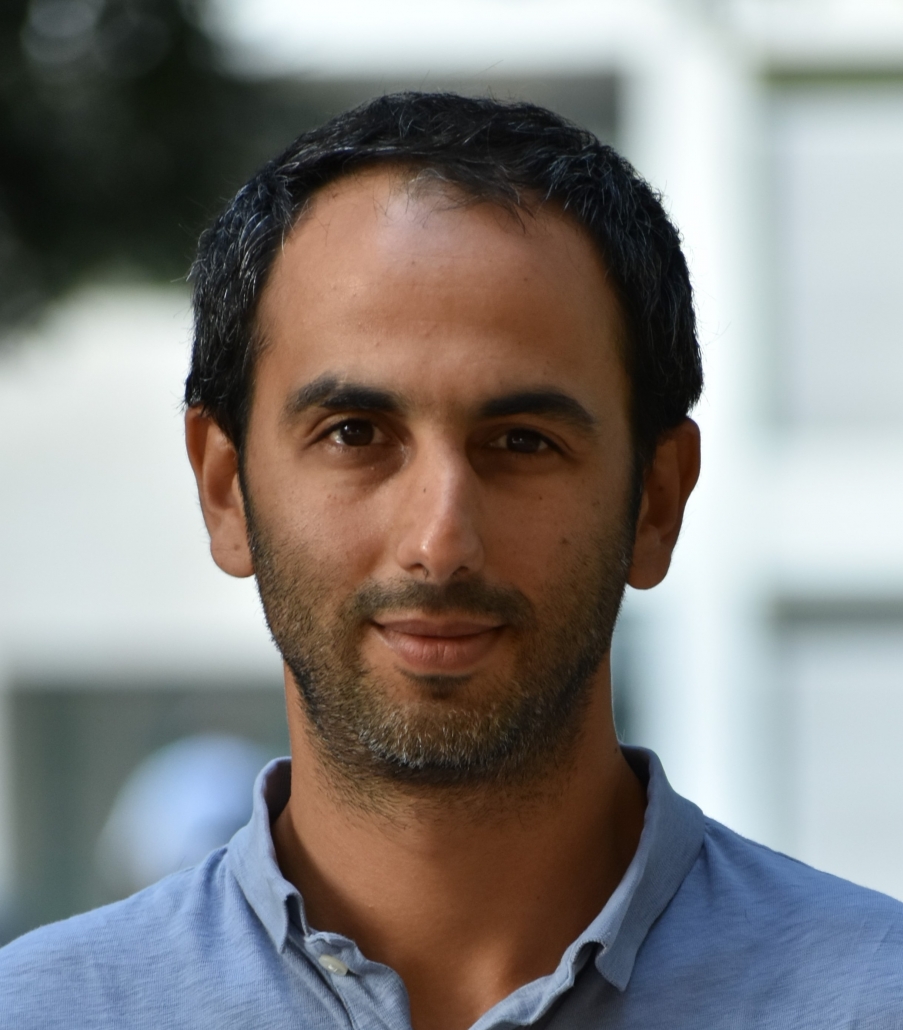
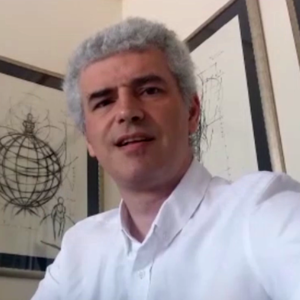
Saverio Bolognani is a Research Fellow at the Massachusetts Institute of Technology (MIT), focusing on advanced control systems for electric drives and power systems. His work bridges graphical models, Bayesian networks, and sensorless control techniques for synchronous and induction motors. Current affiliation: MIT, USA Past affiliation: Department of Information Engineering, University of Padua Research interests include: Model Predictive Control for electric drives Sensorless and self-sensing motor control Microgrid topology identification Machine learning applications in power systems His publications reveal a focus on optimization algorithms for electric vehicles, reliability of electrified transportation systems, and real-time control strategies using Kalman filters and digital twins. Key subfields include deadbeat control, high-frequency signal injection, and torque ripple minimization.
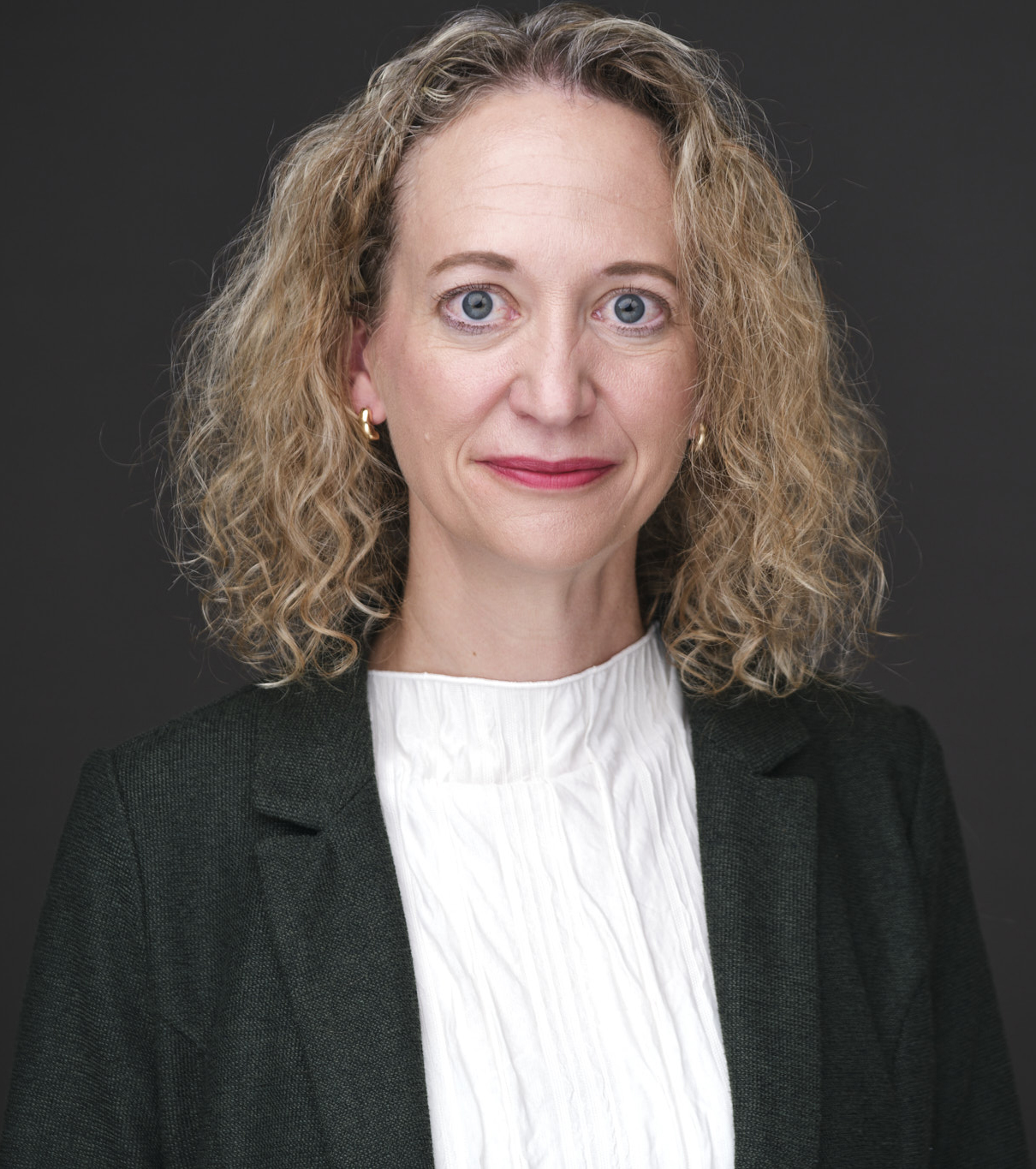
Sara Johnson is a Lecturer in the Political Science Department at Southern Methodist University (SMU). She previously served as a Visiting Assistant Professor at the University of Texas at Dallas (UTD). Dr. Johnson holds a Ph.D. in Public Policy and Political Economy from UTD, awarded in 2022. Her research focuses on political polarization, rural policy, state/local governance, and urban-rural dynamics. Education: Ph.D. in Public Policy and Political Economy, University of Texas at Dallas (2022) Her work bridges policy analysis and political behavior, with recent publications exploring high-speed rail public opinion and co-authored research on cultural conflicts in U.S. politics. She actively contributes to debates on infrastructure policy and regional disparities. No grants or advising roles are explicitly detailed in the provided text.
John Riley Edwards is an Assistant Professor in the Department of Civil and Environmental Engineering at the University of Illinois. His research focuses on railway engineering, track dynamics, and infrastructure materials. Key areas include railway fastening systems, crosstie performance, and track buckling analysis. Recent work explores frozen ballast strength, turnout frog optimization, and data-driven approaches for track stability. His studies combine laboratory experiments with advanced modeling techniques like finite element analysis. Edwards collaborates on projects involving railway transition zones, track component durability, and innovative fastening solutions. Notable contributions include developing the Track Strength Index (TSI) for buckling prediction and evaluating spring washers for spike failure mitigation. His research bridges theoretical mechanics with practical railway maintenance challenges.
Doğa Ceylan is an Assistant Professor at the Electromechanics and Power Electronics department of Eindhoven University of Technology. His research focuses on sustainable electromechanical systems, particularly reluctance machines for heavy-duty electric vehicles and agricultural applications. He specializes in multi-physical design, rare-earth-free structures, and novel control strategies. Education: B.Sc. and M.Sc. in Electrical and Electronics Engineering from Middle East Technical University (2016–2018), followed by a Ph.D. at TU/e (2019–2024) culminating in a cum laude distinction. Postdoc work involved developing high-torque variable flux reluctance motors for electric tractors. Research Interests : Electromechanical systems design, electric mobility, finite element analysis, vector hysteresis modeling, and sustainable energy solutions. His work aligns with UN SDGs, emphasizing clean energy and innovation. Articles Trends : Recent publications emphasize variable flux reluctance machines, flux-weakening control, and cross-coupling effects in motor control. He explores heavy-duty applications, thermal characteristics, and optimization techniques for high-torque operations. Awards : PhD with distinction cum laude (2024). Grants & Projects : Participated in the Smaragd-Farmtronics project (2017–2021) focusing on solar energy and agricultural technologies. Current work includes EU-funded initiatives on sustainable drive systems. Labs & Teams : Leads research in the Electromechanics Lab and collaborates with the Electromechanics and Power Electronics group. Active in developing demonstrators for agricultural electric tractors and heavy-duty vehicle systems.
Eric Paul Kroes is an Associate Professor of Transport Economics at the School of Business and Economics, Vrije Universiteit Amsterdam, and a Visiting Fellow. He holds an MSc from the Institute for Transport Studies at the University of Leeds. With 30 years of applied transport research experience, he has worked at the Nederlands Vervoerswetenschappelijk Instituut (NEA), Hague Consulting Group (as co-founder), and RAND Europe (as director). His expertise spans transport modeling, stated preference research, public and air transport studies, project evaluation, and policy analysis. Education: Bachelor's in Traffic Engineering and Civil Engineering Master's from Institute for Transport Studies, University of Leeds Research Interests: Travel time reliability and network performance Modal shift between air and high-speed rail Public transport comfort and passenger preferences Airport and aviation economics Policy evaluation frameworks Professional Engagement: Regular expert contributor to audits and second opinion studies Former director of transport team at RAND Europe Co-founder of Hague Consulting Group Grants & Advising: Prominent in ex-ante/ex-post evaluation methodologies Focus on infrastructure projects and policy impact
Pablo Fajgelbaum is a Professor of Economics at the University of California, Los Angeles (UCLA), holding the Dubchansky Chair in Economics. He specializes in international trade and regional policy analysis, focusing on the distributional impacts of trade and spatial economic dynamics. His work bridges economic theory and empirical applications, addressing topics such as trade wars, optimal spatial policies, and the effects of transport infrastructure. Education: Ph.D. in Economics from Princeton University. His research interests include international trade distribution, regional policy design, spatial equilibrium models, and development economics. He has explored themes such as trade barriers, lockdown strategies during pandemics, and the economic consequences of geopolitical tensions like the US-China trade war. Key research trends in his articles emphasize policy analysis in spatial contexts, including place-based policies, optimal transport networks, and the interplay between trade and regional growth. His studies also highlight the role of uncertainty in economic decision-making and the measurement of trade's unequal benefits. No scientific awards are explicitly listed, though his prolific publication record in top journals like the Quarterly Journal of Economics and Econometrica underscores his academic influence. He advises no listed students, focusing primarily on research and policy-oriented work. His office is located in Bunche Hall 8347, and he maintains an active personal website at http://www.econ.ucla.edu/pfajgelbaum/ .
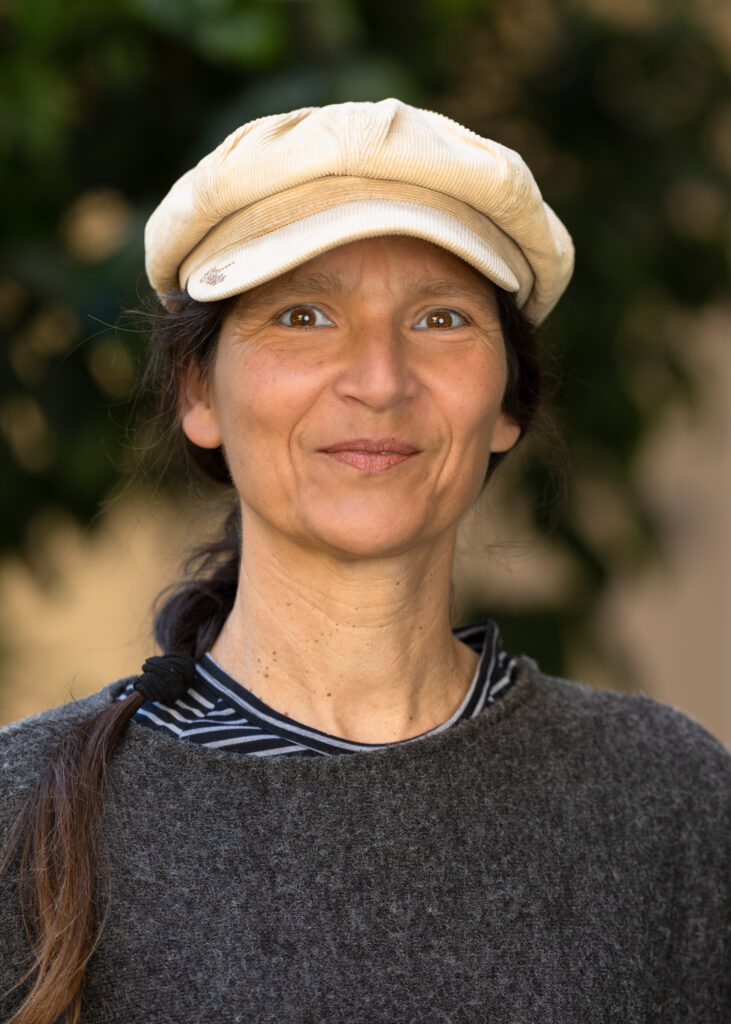
Deike Peters is an Associate Professor of Environmental Planning & Practice at Soka University of America. She holds a PhD from Rutgers University and has taught at institutions including USC Price School and Technische Universität Berlin. Her research focuses on urban ecological restoration, sustainable transportation, and the socio-spatial impacts of megaprojects. She has published extensively on rail infrastructure, high-speed rail station design, and the intersection of urban planning with ecological restoration. Education highlights include a PhD from Rutgers University, an MA and MSc from Columbia University, and undergraduate studies in Urban Design from TU Hamburg. She has served on editorial boards for Built Environment and Progress in Planning , and her work includes over 30 peer-reviewed articles and authored/co-edited 10 books. Research interests span ecological restor(y)ation, megaproject analysis, and gendered mobility patterns. Recent projects include studies on LA’s Ballona Wetlands and the Emscher River renaturalization in Germany. She has received awards such as the Friedrich List Dissertation Award and contributed to UN Habitat’s global reports on sustainable cities and transport. Her current work emphasizes interdisciplinary approaches, including a monograph on 'The Spliced City' and collaborations like the 'Listening to Ballona' sound installation. Teaching includes courses on sustainable cities, environmental design, and urban planning theory.
Chih-Hao Wang is an Associate Professor in the Department of Geography and City & Regional Planning at California State University, Fresno, where he has taught since 2014. His academic background includes a PhD and MCRP from The Ohio State University (2013, 2010) and prior degrees from National Taipei University (2002, 2000). He specializes in environmental planning, natural hazard mitigation, and spatial statistics, with a focus on seismic risks, climate change adaptation, and equity in transportation accessibility. PhD in City and Regional Planning, The Ohio State University (2013) MCRP in City and Regional Planning, The Ohio State University (2010) MA and BA in Land Economics and Administration, National Taipei University (2002, 2000) His research integrates GIS and spatial econometrics to analyze interactions between urban development and hazards, including earthquake impacts, drought response, and transportation equity. Recent publications examine seismic-climate hazard exposure, optimization models for land-use resilience, and spatially varied built-environment effects on housing and transportation behavior. Key trends in his work include: Application of geographically weighted regression (GWR) to assess localized impacts Multi-objective optimization for balancing economic efficiency and equity in infrastructure Integration of high-speed rail and seismic mitigation strategies Focus on mental wellbeing through green infrastructure planning He has secured over $600,000 in grants as principal investigator, including projects on seismic-resistant land-use planning, emergency accessibility during disasters, and equity in active transportation systems. His work has been presented at conferences like the Association of Collegiate Schools of Planning (ACSP), Transportation Research Board (TRB), and International Association for China Planning (IACP).
Martín Hernández, Juan Carlos is a University Professor at the University of Las Palmas de Gran Canaria, affiliated with the Department of Applied Economic Analysis. He is a key member of the GIR TIDES (Research in Tourism and Transportation) and the IU of Tourism and Sustainable Economic Development. His research focuses on tourism economics, transport systems, environmental policy, and service quality analysis. He has advised numerous theses on topics ranging from public transport efficiency to sustainable tourism development. His interdisciplinary work integrates quantitative methods, such as best-worst scaling and fuzzy clustering, to address complex issues like climate change impacts and public service impartiality. He has contributed to projects funded by the European Commission and national agencies, including studies on air-rail intermodal transport and entrepreneurial innovation in airlines post-COVID-19. Recent articles highlight his exploration of passenger preferences for high-speed rail, spatial correlations between climate change and economic growth, and the role of religion in societal well-being. His work bridges theoretical frameworks with practical applications, influencing policy and business strategies in tourism and transport sectors.
Varun Raturi is an Affiliate Researcher in the School of Social & Political Sciences at the University of Glasgow, affiliated with the Urban Big Data Centre. His work focuses on transport geography, urban analytics, and the application of mobile and crowdsourced data to understand mobility patterns. Raturi has contributed to studies on bicycle commuting infrastructure, privacy implications in data collection, and modal competition between high-speed rail and other transport modes. His research employs methodologies from GIScience, game theory, and machine learning to address challenges in sustainable urban planning and transport policy. Recent projects include analyzing the reliability of app-based travel surveys, developing novel techniques for estimating origin-destination matrices using mobile data, and evaluating the impact of privacy measures on crowdsourced cycling data utility. Raturi has presented at leading conferences such as GIScience and AGILE, and his work appears in journals like Journal of Transport Geography and Transportation Planning and Technology . His research datasets include Strava-derived mobility data from cities like Glasgow, Manchester, and Sheffield, highlighting his focus on leveraging real-world data for urban mobility insights. These datasets underpin his exploration of spatial-temporal mobility patterns and infrastructure impacts, contributing to evidence-based policy recommendations for sustainable urban development.
Gorka Bueno is a Professor of Electronic Technology at the School of Engineering, Bilbao (UPV/EHU). He holds a PhD in Telecommunications Engineering and specializes in sustainability challenges, energy transitions, and renewable energy systems. His work focuses on sustainable development pathways, including energy planning, transportation sustainability, waste management, and lifecycle analysis of infrastructure projects like high-speed rail networks. He collaborates with social agents on sustainability issues and has authored/co-authored numerous publications and patents in photovoltaic technology and sustainable systems. His academic trajectory includes pioneering research on photovoltaic cell fabrication processes (1994–2006) and later transitioning to sustainability-focused studies. He has led projects analyzing energy footprints, environmental justice, and socio-technical transitions toward decarbonized societies. His recent work explores resilience in complex socio-ecological systems and the feasibility of sustainable mobility options through life cycle assessments. Key research areas include: Environmental impact assessments of infrastructure (e.g., high-speed rail) Energy justice and global footprint accounting Alternative energy models for decarbonization Sustainable waste management strategies Social dimensions of energy transitions His publications emphasize interdisciplinary approaches to sustainability challenges, with a focus on policy-relevant analyses for transitioning to equitable, low-carbon systems. He contributes to both technical and societal debates about energy systems' ecological and social implications.
Celia Maria Chain Navarro is a Professor in the Department of Information and Documentation at the Faculty of Communication and Documentation, Universidad de Murcia, Spain, specializing in Library and Documentation Science. Her academic career spans decades with significant contributions to digital humanities and cultural heritage management. Her educational background includes: Doctorate from Universidad de Murcia (1993) with thesis "La gestión de los recursos de la información en la investigación histórica" supervised by Dr. Juan Andreo García and Dr. Francisco Javier Bernal Cruz. Her research spans Digital Humanities, Maritime Heritage, Information Management, Documentation Science, Cultural Heritage Dissemination, and Library Science. She pioneers the integration of digital tools for preserving and disseminating maritime and cultural heritage, particularly within Hispanic contexts. Her work bridges historical archival practices with modern technologies, focusing on Mediterranean and Latin American heritage through innovative web-based platforms and semantic web applications. Analysis of her 15 most recent publications (2019-2025) reveals three dominant research trajectories: (1) Maritime heritage documentation (35% of works), including Spanish galleys and Mediterranean shipbuilders; (2) Digital cultural dissemination (40%), covering web 2.0 tools for museums and heritage institutions; (3) Interdisciplinary applications (25%), extending into women's health and economic analysis. Her publications consistently demonstrate methodological innovation in applying digital humanities to historical research. She actively contributes to the SEMIODOC Research Group, focusing on documentation science and information management methodologies. Her collaborative projects emphasize practical applications for cultural institutions, particularly in Spanish-speaking countries, developing analytical frameworks for digital heritage management.
Sivaselvan Mettupalayam is a Professor in the Department of Civil, Structural and Environmental Engineering at the University at Buffalo's School of Engineering and Applied Sciences, where he conducts advanced research in structural dynamics and computational mechanics. His academic background includes: PhD in Civil Engineering, University at Buffalo (2003) MS in Civil Engineering, University at Buffalo (1999) BTech in Civil Engineering, Indian Institute of Technology Madras, India (1997) Professor Mettupalayam's research centers on computational mechanics , nonlinear dynamics , and hybrid simulation techniques , with significant contributions to earthquake engineering and nuclear safety systems. His work develops novel numerical methods for structural analysis, optimization algorithms for material modeling, and impedance-matching control systems for dynamic testing. Current projects focus on seismic response of high-temperature gas reactor components and real-time hybrid simulation of complex structural systems. His 15 most recent publications (2023-2025) demonstrate consistent focus on nuclear reactor safety , seismic resilience of critical infrastructure , and advanced hybrid simulation methodologies , with recurring themes in graphite-block dynamics, impedance control, and vehicle-track-structure interaction. Professor Mettupalayam maintains active research through the UB-NEES (University at Buffalo - Natural Hazards Engineering Research Infrastructure) facility, utilizing advanced testing capabilities for large-scale structural experiments. His work bridges theoretical computational mechanics with practical engineering applications in nuclear safety and earthquake resilience.
Tamás Soltész is a researcher affiliated with the Department of Transport Technology and Transport Economics at Budapest University of Technology and Economics (BME), holding roles in both the Department of Transport Technology and Transport Economics (2021–present) and the Department of Transport Operations and Transport Economics (2013–2020). His research focuses on optimizing transportation systems, urban planning, and sustainable mobility solutions. Key research interests include public transport scheduling, intercity rail propulsion systems, traffic simulation models, and pedestrian dynamics. He has contributed to projects like the PROSPECT study on road user conflicts and developed methods for analyzing travel time patterns in urban settings. His articles span topics such as express transport scheduling, hydrogen-powered rail systems, and infrastructure booking systems. Notable works address challenges in optimizing passenger flow through simulation techniques and improving traffic management algorithms. No scientific awards or grants are explicitly listed in the provided text. His academic contributions emphasize practical solutions for transportation efficiency and safety, with a focus on匈牙利 (Hungarian) urban and intercity networks.
Simon Barrans is a Professor in the Department of Engineering at the School of Computing and Engineering, University of Huddersfield. He is a member of the Centre for Engineering Materials and the Centre for Efficiency and Performance Engineering. His educational background includes a degree in Nuclear Engineering from Manchester University and a PhD focused on enhancing finite element analysis boundary stress predictions (awarded 1996). Research Interests: Professor Barrans specializes in mechanical engineering domains including structural integrity of turbocharger systems, air bearings, multi-criteria optimization, and finite element analysis. His work emphasizes practical applications in fatigue prediction, material coatings, and turbomachinery, with recent projects targeting rail electrification and composite footbridge design. Key methodologies include computational modeling, experimental validation, and design optimization. Publication Trends: His 91 publications consistently address mechanical durability, predictive modeling, and material performance. Recent articles (2021-2025) focus on fatigue analysis in machined components, friction-surfaced coatings, turbine/compressor fluid dynamics, and rail infrastructure innovations, demonstrating a strong integration of finite element analysis and experimental mechanics. Awards: No scientific awards are mentioned in the provided data. Projects and Advising: He leads projects such as: Innovative product design methodologies for rail electrification (2017-2020) FRP footbridge development for rail safety (2020-2022) He accepts PhD students and supervises research in mechanical design and materials engineering. Grant activities emphasize industry-academia collaboration in rail and energy sectors. Laboratories and Teams: He collaborates with the Turbocharger Research Institute (where he was appointed Reader in 2014) and leads investigations in the Centre for Efficiency and Performance Engineering, focusing on experimental mechanics and computational simulations.