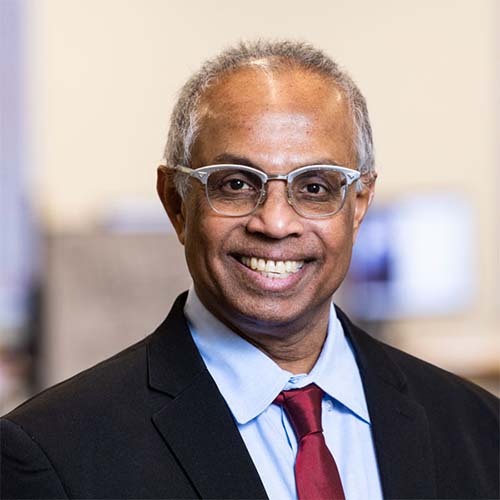
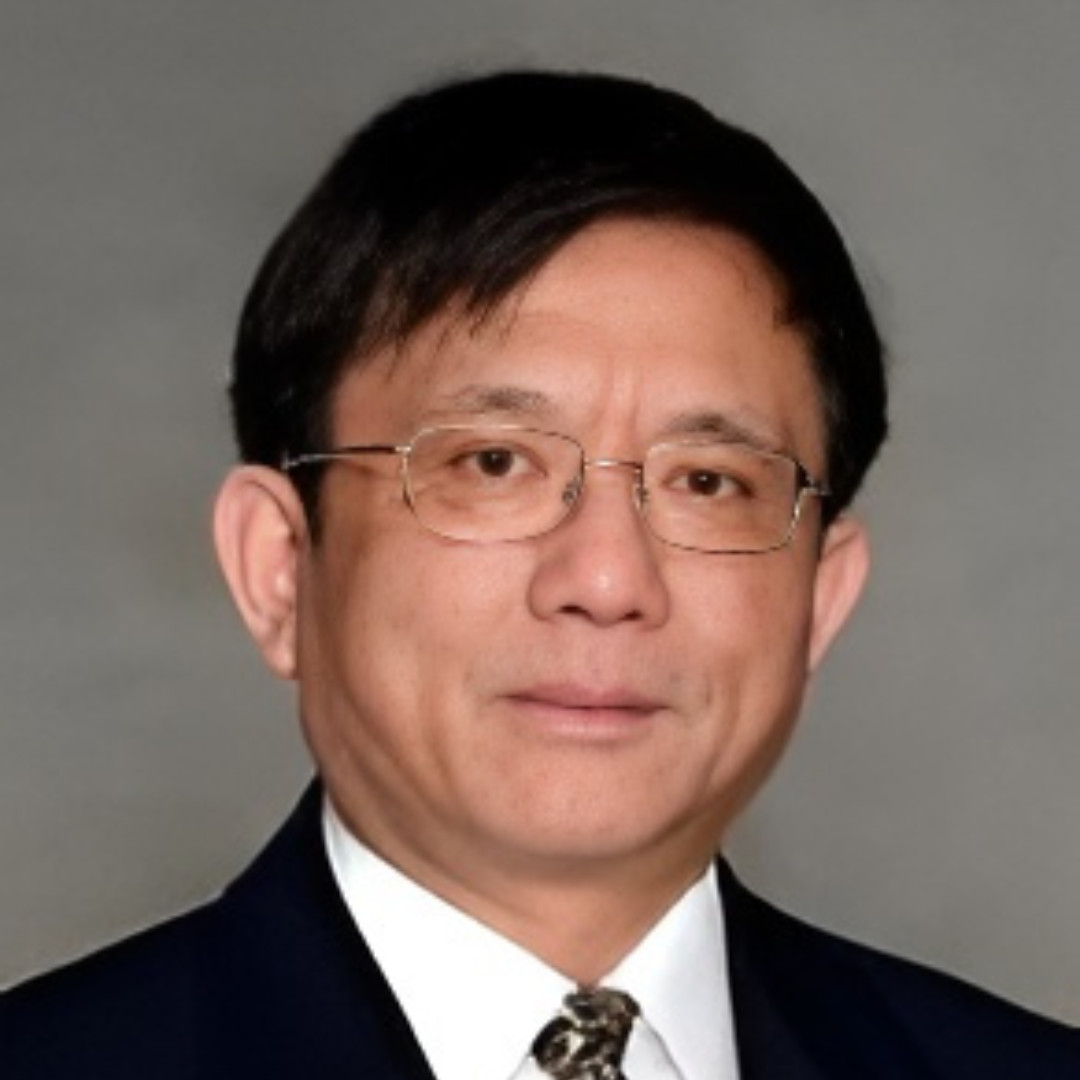
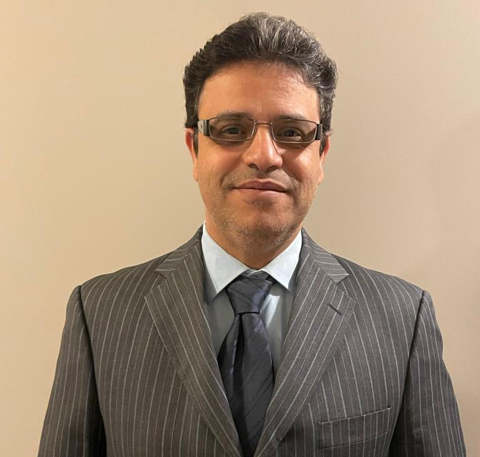
Bai Gao is a Professor of Sociology at Duke University. His research focuses on political economy, globalization trends, and industrial policy, particularly in the context of China and East Asia. He holds a Ph.D. from Princeton University (1994). Research Interests : Impact of state industrial policy on emerging technologies (e.g., electric vehicles in China) Globalization dynamics and post-neoliberal policy paradigms Comparative analysis of developmental models (China, Japan, Germany) Geopolitical implications of China's Belt and Road Initiative Key Contributions : Author of Japan’s Economic Dilemma (2001) and High-Speed Rail: An Analysis of the Chinese Innovation System (2021) Edited volumes on China-Pakistan Economic Corridor and global political economy Grants & Funding : "FDI and the Chinese Model of Economic Development" (2005-2007) "Institutional Analysis of Global Production Networks" (2003-2004) Courses Taught : SOCIOL 541: The United States and the Asian Pacific Region SOCIOL 344: Technology and Organizational Environments
Roles and Affiliations: Professor David Levinson is a Professor of Transport in the School of Civil Engineering at the University of Sydney since 2017. He holds adjunct faculty status at the University of Minnesota's Department of Civil, Environmental, and Geo-Engineering (since 1999–2016). He previously directed the Accessibility Observatory and the Networks, Economics, and Urban Systems (NEXUS) research group. He is a member of The Net Zero Institute and leads the TransportLab research group. Education: PhD 1998 in Urban and Regional Planning from the University of California, Berkeley. Research Interests: Focuses on transportation networks, urban systems, accessibility analysis, and policy. Key themes include spatial equity, transport economics, and the co-evolution of land use and transport infrastructure. His work emphasizes data-driven approaches to urban mobility challenges, including modeling transport networks and evaluating infrastructure impacts on accessibility and equity. Grants and Projects: Recent grants include Design of micro-decisions in automated transport (2022, ARC) and Reducing pedestrian crashes through better intersection design (2021, Australian Road Safety Innovation). Collaborates internationally on projects like the Accessibility Observatory. Labs and Teams: Leads the TransportLab and collaborates with the NEXUS group. Active in interdisciplinary research, including urban analytics and transport policy.
Norwegian University of Science and TechnologyNorway
Albert Lau is an Associate Professor of Civil and Environmental Engineering at the Norwegian University of Science and Technology (NTNU), located in Trondheim, Norway. He specializes in railway engineering, structural dynamics, and transportation systems. Lau holds leadership roles as the Study Program Leader for the MSc in Road, Railway, and Transportation Engineering, overseeing curriculum development and program coordination. His research focuses on railway track design, dynamic modeling of train-track interactions, and infrastructure maintenance, with projects such as the MeTinT initiative (Measurement with Train in Regular Traffic). He has extensive experience supervising master’s and PhD students, and his work emphasizes innovation in rail infrastructure and sustainable transportation solutions. Education and Professional Background: Lau earned his PhD from NTNU in 2018, focusing on numerical simulations of railway turnouts. Prior roles include Postdoc (2018–2020) and Assistant Professor (2017–2018) at NTNU, and teaching at Oslo Metropolitan University (2020). His industry experience includes roles as a Design Engineer (2010–2012) and Project Engineer (2013–2014) in Malaysia, where he managed construction projects and structural design. Research Interests: Lau’s work spans railway track dynamics, infrastructure health monitoring, and machine learning applications in transportation. Key projects include developing digital twins for railway test sites and analyzing ground displacement impacts on track anomalies. His contributions to the Road, Railway and Transport Group at NTNU aim to advance rail safety and efficiency through interdisciplinary approaches. Teaching and Outreach: Lau coordinates courses such as TBA4225 (Railway Engineering) and BA6012 (Fundamental Railway Technology). His outreach includes expert commentary on railway incidents, such as an interview on NRK (2024) discussing potential causes of a train accident. Current initiatives focus on revitalizing regional rail services and optimizing train positioning systems.
Saori N. Katada is a Professor of International Relations at the University of Southern California (USC). She specializes in geoeconomics, Japanese foreign policy, international political economy, regionalism, and Indo-Pacific relations. Her research emphasizes Japan’s strategic engagement in global and regional financial governance, including its responses to crises like the 1997 Asian financial crisis and the 2008 Great Recession. Her academic contributions include seminal works such as Japan’s New Regional Reality: Geoeconomic Strategy in the Asia-Pacific (2020) and Taming Japan’s Deflation (2018). She has held leadership roles at USC, including multiple terms as Director of the International Relations Program and Graduate Director. Katada’s awards include a National Endowment for the Humanities Fellowship and recognition for teaching excellence. Her recent research explores China-Japan competition in infrastructure diplomacy, the role of geoeconomics in Indo-Pacific stability, and the evolution of regional financial architectures. She serves on editorial boards, including Review of International Political Economy , and has contributed to policy debates on monetary policy, trade agreements, and developmentalist ideas.
Duminda Wijesekera serves as Professor in the Department of Cyber Security Engineering and Department of Computer Science at George Mason University, where he was inaugural chairman of the Cyber Security Engineering Department until December 2022. He concurrently held the position of visiting research scientist at the National Institute of Standards and Technology (NIST) from 2007-2022 and maintains status as a fellow at the Potomac Institute of Policy Studies. He leads the Mason Innovation Laboratory at Mason Square, driving translational research in cyber-physical security. His educational foundation includes: PhD in Computer Science, University of Minnesota (1997) PhD in Mathematical Logic, Cornell University (1990) BSc in Mathematics, University of Colombo Professor Wijesekera's research centers on cyber-physical system security , with pioneering work in Intelligent Transportation Systems spanning trains, aircraft, and connected vehicles. His digital forensics innovations establish frameworks for evidence-based scenario reconstruction and error management, while his formal methods research provides mathematical guarantees for safety-critical systems. Current projects address Next G-based edge services, digital twin vulnerability detection, and healthcare security architectures, consistently bridging theoretical rigor with real-world infrastructure protection. Analysis of his 2022-2025 publications reveals intense focus on autonomous vehicle security (38% of recent output), including traffic signal control optimization, ramming attack countermeasures, and CARLA-based scenario validation. Digital forensics using AI (20%) and secure manufacturing/edge computing (27%) constitute other major thrusts, demonstrating how formal verification and machine learning converge to solve complex cyber-physical security challenges across transportation, energy, and healthcare domains. His scientific recognition includes: CCI Impact Award (2022) for groundbreaking cyber-physical security contributions Fellowship at the Potomac Institute of Policy Studies for cybersecurity policy leadership Professor Wijesekera has secured substantial research funding through: NIST grants for health record security frameworks (2014-2015) US Department of Transportation projects on wireless frequency mapping for high-speed rail (2013-2014) Cyber Security Research Alliance funding for trust architectures in cyber-physical systems (2014) Commonwealth Cyber Initiative awards for autonomous vehicle security and energy-efficient manufacturing His industry partnerships with Honeywell and NIST ensure practical impact of theoretical research. The Mason Innovation Laboratory under his direction serves as an interdisciplinary hub for cyber-physical security, integrating researchers from computer science, electrical engineering, and policy studies to develop deployable solutions for transportation networks, power grids, and critical infrastructure protection.
Dr. Yuping He is a Professor in the Department of Automotive and Mechatronics Engineering at the University of Ontario Institute of Technology (UOIT). He holds a PhD in Mechanical Engineering from the University of Waterloo (2002) and has extensive academic and industry experience, including postdoctoral fellowships at the University of Windsor and University of Waterloo. His research focuses on autonomous driving, vehicle dynamics, chassis design, and active safety systems, with expertise in modeling and simulation techniques. Education: PhD (Mechanical Engineering), University of Waterloo, 2002 MASc (Automotive Engineering), Tsinghua University, China, 1991 BASc (Automotive Engineering), Hubei Automotive Industries Institute, China, 1985 Research interests include automated design synthesis, multidisciplinary optimization, and driver-hardware-in-the-loop simulations. He has contributed to advancements in heavy vehicle stability control, trailer steering systems, and energy-saving strategies for steer-by-wire vehicles. His work bridges mechanical systems, control engineering, and real-time simulation technologies. Awards include the 2010 Research Excellence Award from UOIT’s Faculty of Engineering and Applied Science, and a nomination for the Governor-General’s Gold Medal (2003). His publications span journals like Vehicle System Dynamics and ASME Journal of Computational and Nonlinear Dynamics , with a focus on improving vehicle safety and performance through advanced control strategies. Advising and Grants: Dr. He has advised student teams in capstone projects, including the 2010 FEAS Capstone Design Competition-winning team. His research integrates industrial collaboration, as seen in roles like Senior Product Engineer at American Axle & Manufacturing (2005). His work emphasizes practical applications in automotive and mechatronic systems.
Professor David Thompson is a globally recognized expert in railway noise and vibration reduction at the University of Southampton's Institute of Sound and Vibration Research (ISVR). He holds a part-time role in ISVR Consulting while continuing full-time research. His research focuses on low-noise railway design, ground vibration control, and aerodynamic noise from high-speed trains. He leads collaborative EU projects and advises industry partners. David earned his MA and PhD from the University of Cambridge and the ISVR, respectively. His career includes roles at British Rail Research and TNO in the Netherlands, where he developed the influential TWINS rolling noise model. He has authored over 250 papers and a seminal textbook translated into Chinese, with a second edition in 2024. Awards include the 2018 Rayleigh Medal for outstanding contributions to acoustics. Research Highlights: Modelling noise sources (rolling, aerodynamic, curve squeal), vehicle interior noise transmission, and ground-borne vibration. Collaborations: Partnerships with EU initiatives, Korean Railroad Research Institute, and Chinese universities. Teaching: Courses on noise control engineering, railway systems, and acoustic design. His work bridges theoretical models with practical solutions, aiming to reduce railway noise through innovative designs and mitigation strategies.
Maurizio Conti is a Full Professor of Economics at the Department of Economics, University of Genova . He holds a PhD from the University of Essex and an MSc from the University of Warwick, with additional affiliations as an IZA Research Fellow and board member of the Italian Association of Labor Economics (AIEL) . Educational Background : PhD in Economics (Essex, 2004); MSc Economics (Warwick, 2000); Laurea in Business and Economics (Genova, 1998). Research Focus spans labour economics , industrial economics , and transport economics . Key topics include: Impact of labour market institutions (e.g., employment protection, unions) on firm investment in physical/human capital Transport infrastructure effects on productivity, house prices, and regional development Policy evaluation in regulated industries and public procurement Recent Publications analyze high-speed rail impacts, cooperative industrial relations, and firm dynamics under regulatory frameworks, with methodologies ranging from quasi-experimental designs to cross-country comparative analyses. Scientific Recognition : IZA Research Fellow (since 2006) Organized conferences like the Genoa Labour Workshop and participated in COMPIE and NERI networks Teaching includes courses on MICROECONOMICS , Economic Policy , and Transport Economics , with a focus on applied analysis, productivity measurement, and regulatory frameworks.
Erick Guerra is a Professor and Associate Dean for Research at the Stuart Weitzman School of Design , University of Pennsylvania, specializing in transportation planning and urban development. He teaches courses on transportation planning, multimodal systems, and studio projects focused on transit-housing integration in Latin America. Education: Ph.D. in City and Regional Planning, University of California Berkeley Master of Urban Planning, Harvard University B.A. from University of Pennsylvania Guerra’s research examines the interconnections between transportation systems, land use patterns, and travel behavior, particularly in developing cities. His work addresses transportation equity, technology adoption, and public health impacts in urban environments. Recent publications analyze highway expansion economics ( Overbuilt: The High Costs and Low Rewards of US Highway Building , 2025), automated vehicle impacts on pedestrian behavior, speed camera effectiveness, and comparative studies of low-income commuting patterns in the U.S. and Mexico. Research trends highlight his focus on sustainable mobility, policy evaluation, and cross-cultural urban dynamics.
Anming Zhang serves as a Professor in the Operations and Logistics Division of UBC's Faculty of Commerce and Business Administration, holding the prestigious Vancouver International Airport Authority Professorship in Air Transportation. His academic foundation includes a B.Sc. from Shanghai Jiao-Tong University and M.Sc./Ph.D. degrees from the University of British Columbia. Education : B.Sc. (Shanghai Jiao-Tong University), M.Sc. & Ph.D. (University of British Columbia) His research focuses on Transport Economics and Policy , Air Cargo Logistics , and Industrial Organization , with particular expertise in air-rail competition dynamics, pandemic impacts on aviation, and infrastructure economics. Zhang employs advanced methodologies including spatial econometrics and complex network analysis to examine transportation systems. Analysis of his 2024-2025 publications reveals three dominant trends: (1) Resilience of global air networks against pandemics and geopolitical conflicts, (2) Economic implications of urban air mobility integration, and (3) Non-aeronautical revenue optimization in airport management. His work increasingly bridges transportation economics with environmental sustainability concerns. Zhang actively supervises graduate students in Transportation & Logistics MSc and PhD programs within Business Administration, teaching undergraduate courses including Logistics and Operations Management and Air Transportation. He maintains strong institutional ties through the Center for Transportation Studies and collaborates extensively with international researchers on aviation policy challenges.
Dr. Mohamed Youssef is an Associate Professor in the Department of Electrical, Computer and Software Engineering at Ontario Tech University. He holds a PhD (Electrical and Computer Engineering) from Queen’s University (2005). His primary affiliation is the Faculty of Engineering and Applied Science, with research focusing on propulsion systems, power electronics, railway systems, and renewable energy technologies. Education: PhD, Electrical and Computer Engineering, Queen’s University (2005) MSc, Power Electronics, Concordia University (2001) MSc, Electric Power and Machines, Ain Shams University (1999) BSc, Electric Power and Machines, Ain Shams University (1995) Research Interests: Dr. Youssef’s expertise spans propulsion systems for automotive and hyperloop technologies , power electronics for IoT and renewable energy , railway electromagnetic compatibility , and power system stability . His work emphasizes practical applications in electric vehicles, smart grid integration, and sustainable energy systems. He leads the PEDAL (Power Electronics and Drives Laboratory) at Ontario Tech. Awards and Recognition: Recipient of the NSERC Post-doctorate Scholarship (2006) Best Paper Award at IECON 2004 Award of Merit from Ontario Center of Excellence (2006) Nominated for the Howard Alper Prize (2007) Professional Activities: He serves as a reviewer for IEEE Transactions on Power Electronics , IEEE Transactions on Industrial Electronics , and others. He has held roles as Technical Chair at IEEE SEGE 2015 and Track Chair at IEEE SEGE 2016. Current affiliations include Senior Member of IEEE and Chair of the IEEE Power Electronics Chapter in Toronto. Labs and Teams: He directs the PEDAL Lab , focusing on advanced power electronics and electric vehicle technologies. Collaborations include Bombardier Transportation and Armstrong Pumps.
Dr. Sylwia Horska-Schwarz serves as a Lecturer at the Department of Landscape Research and Environmental Management within the Institute of Socio-Economic Geography and Spatial Management at the Faculty of Social Sciences, University of Gdańsk. Her academic role centers on environmental geography with a focus on river basin dynamics and sustainable landscape management. Her research spans environmental geography , hydrology , and landscape ecology , emphasizing the Oder River system's hydromorphological evolution under anthropogenic pressures. Key investigations include renaturalization strategies, climate change adaptation through small water retention, and biodiversity conservation in river valleys. She examines critical intersections between infrastructure development (e.g., high-speed rail) and ecosystem integrity using ecological indicators and landscape typology frameworks. Analysis of her 15 most recent publications reveals a methodological trajectory from detailed habitat studies (2007-2011) toward contemporary socio-ecological challenges (2023-2024). Current work prioritizes strategic infrastructure investments in Poland and the Oder River's resilience amid climate crises, while maintaining foundational expertise in fluvial geomorphology and plant community ecology. Her scholarship consistently bridges theoretical landscape assessment with practical water management solutions.
Dr. E. John Ward is an Associate Professor in Infrastructure Planning at The Bartlett School of Planning, University College London , where he also serves as Director of the MSc Infrastructure Planning, Appraisal and Development . His work bridges quantitative and qualitative methodologies in infrastructure appraisal, focusing on Cost-Benefit Analysis , Multi-Criteria Analysis , and Strategic Risk Mitigation . Education: BEng/MSc in European Civil Engineering, University of Warwick (1999) MSc/DIC in Earthquake Engineering and Structural Dynamics, Imperial College London (2001) PhD in Computer Modelling of Pedestrian Movement, UCL (2007) Research Focus: Success metrics for Mega Transport Projects and Infrastructure Interdependencies Integration of Sustainable Development Goals into appraisal frameworks Policy-led Multi-Criteria Analysis for complex stakeholder environments Professional Contributions: Senior Research Fellow at the OMEGA Centre External Examiner for MSc SEM4ID, University of Swansea (2018-2023) Consultancy roles for the European Investment Bank , EIB , and governments including Malta and Croatia Key Publications include foundational work on Policy-Led Multi-Criteria Analysis and Risk Management in mega infrastructure projects. His scientific award as Senior Research Fellow at the OMEGA Centre highlights his expertise in strategic infrastructure appraisal.
Professor Min An is a Professor of Construction and Risk Management at the University of Salford, leading the Infrastructure Research Group within the School of Science, Engineering & Environment. He holds an honorary professorship at two overseas universities (China and Portugal) and serves on the editorial boards of 12 international journals. With over 40 years of experience, his career spans academic roles at Heriot-Watt University, Coventry University, and the University of Birmingham, alongside industry roles as a civil engineer and researcher. His research focuses on safety and risk management in construction, transportation systems, and energy sectors, with over 200 publications. Key areas include railway and highway safety, offshore oil & gas risk assessment, and nuclear reliability management. He has secured funding from EPSRC, EU, DfT, and industry partners, leading 20+ projects. Notable achievements include developing methodologies for infrastructure safety and maintaining collaborations with 30+ industrial partners. Professor An has supervised 30 PhD students and over 280 postgraduate projects, contributing to industry workshops and best practices. Awards include multiple science technology prizes and conference best paper/keynote recognitions. His teaching spans risk management, construction safety, and project management across MSc programs.
Claes Beckman is a part-time senior researcher in the Division of Communication Systems at KTH Royal Institute of Technology. He was appointed Professor in antenna systems at KTH in 2013 and previously served as Professor in microwave engineering at HIG in 2004. Beckman was the founding director of the research center Wireless@kth in 2001. His career spans over 40 years across academia, government, and industry, with significant contributions to wireless communications, antenna systems, and spectrum management. Beckman's research interests focus on wireless communications systems, particularly antenna design, MIMO technology, 5G networks, and mobile connectivity solutions for challenging environments including transportation systems and remote regions. His work bridges theoretical research with practical implementation, resulting in numerous patents, products, and industry standards. Recent research has examined satellite-cellular integration, high-reliability communication for transportation systems, and private 5G networks for industrial applications. Analysis of his recent publications reveals a strong focus on practical wireless communication challenges, with particular emphasis on real-world implementation issues in mobile and transportation environments. His work spans theoretical antenna design, field measurements, network performance analysis, and spectrum policy considerations, reflecting his unique position at the intersection of academic research, industry application, and regulatory frameworks. Beckman has advised close to 100 M.Sc. students, 7 licentiate, and 3 PhD theses throughout his career. He has secured over $30 million in research funding through multiple Vinnova, KK-foundation, and SSF projects, including serving as KTH's Principal Investigator for the EU FP7 METIS project on 5G. His industry experience includes roles as a microwave design engineer for Ericsson and research manager for Allgon Systems. Beckman serves as a technical expert for Icomera AB and technical consultant to Proan t AB. He has significant regulatory experience, having served on international standards committees (ETSI and 3GPP) and consulted for the Swedish National Regulator for Post- and Telecommunications (PTS), the Swedish Competition Authority, Swedavia, Teracom, and the Swedish Armed Forces.