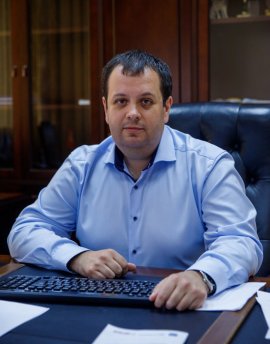
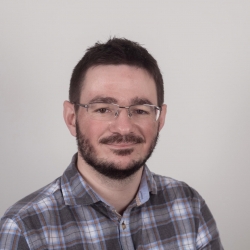
Dilum Abeyakone Dissanayake is an Associate Professor at Newcastle University in the Geography, Earth and Environmental Sciences department. He actively supervises PhD students and leads research initiatives in sustainable mobility, electric vehicle infrastructure, and transport behavior analysis. Research Focus: Travel demand modeling, behavioral change, and sustainable transport systems. Methodologies: Discrete choice analysis, machine learning, and statistical modeling. The 2025 publications highlight advancements in electric vehicle charging pattern prediction, automated public transport adoption, and environmental noise mitigation through smart motorway management. His work spans technical modeling (e.g., deep-fuzzy logic control) and socio-behavioral analysis. Funded Projects: CLEETS (NSF/UKRI, £10m): Global clean energy mobility infrastructure. eHUBS (INTERREG): Shared green mobility hubs across Europe. Doctoral Supervision includes both quantitative and qualitative research on electric mobility, transport safety, and policy impacts. His students have completed work on topics ranging from cyclist safety to carbon tax management.
Marco Ferrando is an Associate Professor at the Department of Naval, Electrical, Electronic and Telecommunications Engineering (DITEN) within the University of Genoa’s College of Engineering. His primary research focuses on naval architecture, cavitation analysis, and marine hydrodynamics, with significant contributions to propeller dynamics, two-phase flow modeling, and energy-saving technologies in maritime applications. His work includes experimental studies on cavitation using computer vision, numerical self-propulsion simulations for high-speed marine vehicles, and innovative heat pump systems. He has also explored virtual reality applications for dynamic modeling and operator training. Ferrando’s research frequently involves collaborations with experimental facilities like cavitation tunnels and computational tools for hydrodynamic analysis. He leads the Campus universitario della Spezia and serves as a delegate to the rector for academic affairs. His teaching responsibilities include courses in Naval Architecture for undergraduate programs in Naval and Nautical Engineering.
Diego Villa is an Associate Professor at the Department of Naval, Electrical, Electronic, and Telecommunications Engineering (DITEN) within the Polytechnic School of the University of Genoa. He teaches courses including Naval Architecture , Numerical Marine Hydrodynamics , and Yacht Dynamics , covering advanced topics in maritime engineering and yacht design. His research focuses on marine hydrodynamics, propeller optimization, ship wake detection, and computational fluid dynamics (CFD) applications. Research Highlights: Developed optimization frameworks for marine propellers and pumpjet systems Explored AI integration in maritime surveillance Investigated ship stability in complex sea conditions Recent Projects: UEIKAP (space-based ship wake detection) Hull form optimization for resistance reduction Hydrodynamic analysis of rim-driven pumpjets Scientific Awards: Not explicitly mentioned in provided texts Villa serves on institutional committees including the Department Board, School Council, and Teacher-Student Commission. He actively contributes to teaching at both undergraduate and postgraduate levels in naval engineering and yacht design curricula.
Martin Moreno is a tenure-track Assistant Professor in the Department of Computer Science and Engineering at The Ohio State University. His office is located in Dreese Laboratories at 2015 Neil Ave, Columbus, OH. His research focuses on the intersection of compilers, programming languages, high-performance computing, and quantum computing, with goals to enhance program execution speed, reliability, and portability across architectures. Research Interests: Dr. Moreno specializes in polyhedral compilation, GPU optimizations, quantum computing abstractions, distributed-memory algorithms, and energy-aware computing. His work bridges theoretical compiler design with practical performance improvements for modern hardware, including GPUs and quantum processors. Recent Research Trends: Analysis of his 15 most recent publications reveals strong emphasis on: 1) Automated code generation for distributed systems and tensor computations, 2) Quantum program optimization through affine transformations, 3) Energy-efficient GPU computing via polyhedral models, and 4) Novel compiler frameworks for task-based parallelism. His work consistently integrates formal methods (e.g., SMT solvers) with practical runtime systems. Student Advising: Actively seeks motivated students for research projects in compiler optimizations and quantum computing. Applicants to OSU are encouraged to list him as a potential advisor and mention PLSE/HPC interests in statements of purpose.
Dr. Mathias Hüsing is an Adjunct Professor at the Institute of Mechanism Technology, Machine Dynamics and Robotics within the Faculty of Mechanical Engineering at RWTH Aachen University. His research focuses on robotics, compliant mechanism design, and energy-efficient mechanical systems, with applications in surgical manipulation, additive manufacturing, and human-robot interaction. Research Interests: Robotics (specifically compliant grippers, parallel kinematics, and hybrid robots) Energy-efficient mechanism design (cam systems, dynamic balancing) Smart manufacturing (digital tool chains, multidirectional additive manufacturing) Human-robot collaboration (inclusive workplaces, task adaptation) Sensor integration (calibration methods, non-contact safety systems) Algorithm development (motion planning, optimization techniques) Trends in Publications show a focus on surgical robotics, human-robot collaboration, and additive manufacturing. His work combines mechanism theory with practical implementation, emphasizing industrial applications and energy efficiency. Institute Affiliation includes leadership roles at the Institute of Mechanism Technology, Machine Dynamics and Robotics. He actively develops educational tools like the Software Mechanism Developer and integrates robotics into Industry 4.0 frameworks.
Adrian Hugh Alexander Lutey serves as Associate Professor in the Department of Systems Engineering and Industrial Technologies (DISTI) at the University of Parma, teaching core manufacturing and mechanical engineering courses including Design and Production Technologies, Machine Learning for Manufacturing, and Mechanical Technology across Management and Mechanical Engineering undergraduate programs through the 2025/2026 academic year. His academic foundation includes: Bachelor of Science in Mechanical Engineering with First Class Honours from The University of Western Australia (2008) Doctoral degree from the University of Bologna (2013) focused on High-Speed Laser Processing of Thin Single and Multi-Layer Films Research centers on laser-material interactions with dual industrial applications: battery technology enhancement (laser-textured current collectors for improved adhesion/electrochemical performance in Si/C anodes) and advanced manufacturing (laser-patterned microscale features for aluminum adhesive joints, neural network-driven microstructure prediction in alloy extrusion). His work bridges precision engineering metrology with energy storage innovation, emphasizing high-throughput femtosecond processing and interfacial characterization. 2025 publications reveal convergent trends where laser processing parameters are optimized for battery electrode fabrication while computational methods (finite element simulation, neural networks) solve manufacturing challenges in structural materials. This dual focus positions his research at the intersection of sustainable energy systems and Industry 4.0 manufacturing paradigms. No scientific awards were documented in available materials. Teaching responsibilities span curriculum development for six distinct courses annually, with office hours conducted by appointment at the Science and Technology Campus (Parco Area delle Scienze, 181/A, Parma). Research operations occur within DISTI facilities though specific laboratory configurations weren't detailed.
Prof. Dr. İbrahim ÇAYIROĞLU currently holds a full-time Professor position at Karabük University's Faculty of Engineering and Natural Sciences, Department of Mechatronics Engineering. He has served as Department Chair since 2024 and previously held administrative roles including Dean Assistant and Department Chair between 2003-2021. Education: PhD in Mechanical Engineering (2002), Kırıkkale University MSc in Mechanical Engineering (1996), Kırıkkale University BSc in Mechanical Engineering (1991), Istanbul Technical University Research Focus: Specializes in Computer-Aided Design/Manufacturing, Finite Element Analysis, and Machine Dynamics. His work spans robotics, 3D printing optimization, welding technology, and mechanical system simulation. Recent Trends: 2024 publications highlight autonomous robotics, AI-integrated quality control in manufacturing, and advanced finite element analysis. Earlier works focused on SIFT-based object tracking, 3D printing reinforcement, and welding process evaluation. Advising Record: Supervised 11 graduate theses across diverse topics including autonomous robots, composite materials, and 3D printer design. Technical Projects: Led 12 projects between 2007-2023, including TÜBİTAK-funded excavator simulators, composite 3D printers, and automated glass mosaic tiling systems.
Emmanuel Ndashimye is a Teaching Professor at Carnegie Mellon University Africa. He holds a PhD in Computer Science from Auckland University of Technology (2018), an MSc in Communication and Information Systems (with Distinction) from Huazhong University of Science and Technology (2009), and a BSc in Electronics and Telecommunication Engineering from the University of Rwanda (2005). His research integrates IoT, machine learning, and network technologies to address practical challenges in agriculture and infrastructure. Key focus areas include: IoT-enabled pest/bird monitoring using acoustic sensors and radar systems 5G/LTE network optimization for high-mobility environments Smart irrigation and water management solutions Network security frameworks for IoT deployments Recent publications (2021–2025) demonstrate a strong trend toward applying computational techniques to Rwandan agricultural contexts, with innovations in acoustic pest detection, weather radar analytics, and resource optimization systems. His work consistently bridges theoretical models with field validations in African settings. Honors include : MSc awarded With Distinction IEEE membership Editor for Engineering Science & Technology (2019–2022)
Dr. Chunjiang Qian (commonly referred to as 'CJ') is the Mary Lou Clarke Endowed Professor and Department Chair at the Department of Electrical and Computer Engineering within the Klesse College of Engineering and Integrated Design at The University of Texas at San Antonio (UTSA). Holding a Ph.D. in Electrical Engineering & Computer Science from Case Western Reserve University (2001), Dr. Qian has progressed through academic ranks at UTSA from Assistant Professor (2001-2005) to Associate Professor (2005-2012) and, since 2012, Professor . His work focuses on advanced control systems for autonomous vehicles, nonlinear dynamics, and cybernetics. Dr. Qian has received significant recognition, including the NSF CAREER Award (2003), Regents’ Outstanding Teaching Award (2009), 3rd Best Paper Award at the ISA POWID Symposium (2011), and Best Poster Paper Award at the IFAC ICONS (2013). He was named an IEEE Fellow in 2021 and AAIA Fellow in 2023, underscoring his impact in control systems and artificial intelligence. His research spans diverse areas including model predictive control , finite-time stabilization , sampled-data systems , and non-smooth control theory . Dr. Qian has authored or co-authored over 170 technical papers with an H-index of 33 (as of 2016), reflecting his substantial scholarly influence. He has also served as Associate Editor for Automatica and Subject Editor for the International Journal of Robust and Nonlinear Control . Dr. Qian leads the UTSA Control, Computation, and Cybernetics Laboratory (C³) and holds affiliate positions at the Institute of Cyber Security (ICS) , the Center of Simulation, Visualization, and Real-Time Prediction (SiViRT) , and the Center of Excellence for Engineering Education (CE³) . He has taught courses such as Applied Engineering Analysis and Advanced Quality Control , with a commitment to minority student recruitment and mentoring . Scientific Awards and Recognitions: AAIA Fellow (2023) IEEE Fellow (2021) NSF CAREER Award (2003) Regents’ Outstanding Teaching Award (2009) Best Poster Paper Award , IFAC ICONS (2013) 3rd Best Paper Award , ISA POWID Symposium (2011)
Professor Tapan Saha is a faculty member at The University of Queensland's School of Information Technology and Electrical Engineering. His research focuses on modern power systems, including renewable energy integration, smart grid technologies, transformer condition monitoring, and distributed energy resources management. He leads investigations into dynamic grid operation, cybersecurity for power networks, and sustainable energy transitions. His core research explores: Power system stability and control under high renewable penetration Advanced diagnostics for electrical assets using AI and signal processing Peer-to-peer energy markets and transactive control systems Dynamic operating envelopes for distribution networks Cyber-physical security for critical infrastructure Recent publications demonstrate strong emphasis on grid modernization challenges, particularly in voltage regulation, demand response, and distributed resource integration. His work frequently combines theoretical modeling with hardware validation.
Denis Vladimirovich Kapulin is an Associate Professor at the School of Space and Information Technologies, Siberian Federal University, holding the academic title of доцент (Associate Professor) with a Candidate of Technical Sciences degree in technical sciences. His work spans multiple departments related to radio-electronic systems and space instrumentation, with an office located at Kirensky street, 26B, building № 17 (F), room 2-20a. He serves as Acting Director of a research unit focused on space instrumentation and navigation systems. Dr. Kapulin's research interests center around space instrumentation, satellite navigation systems, radio-electronic equipment design, and production optimization. His work bridges theoretical research with practical applications, particularly in developing miniature band-pass microwave filters, angular satellite navigation equipment, and automated production planning systems. He has made significant contributions to both aerospace engineering and manufacturing optimization fields, with numerous patents reflecting his practical approach to solving engineering challenges. His publication trends show consistent research output with 15+ publications annually, demonstrating expertise across multiple domains including satellite navigation, production planning, and radio-electronic equipment design. Recent work focuses on digital transformation in manufacturing, augmented reality applications for predictive maintenance, and optimization of small-batch production systems. Scientific Awards and Recognition: Laureate of the award for young talents of the head of Krasnoyarsk city for achievements in scientific and educational activities Laureate of the award from JSC AKC "International Financial Club" for contributions to space instrumentation science Expert in the scientific and technical field of FSBSI NII RINKTSE Member of the expert council of the Krasnoyarsk regional innovation and technology business incubator Dr. Kapulin has secured multiple significant research grants from the Russian Ministry of Education and Science, including projects on high-tech production of miniature band-pass filters (2017-2019), development of highly selective microwave filters (2017-2019), creation of angular satellite navigation equipment (2016-2017), and architecture development for System-on-Chip navigation receivers (2015-2017). His collaborative research involves extensive work with colleagues like Oleg Drozd and Polina Russkikh across multiple laboratories focused on radio-electronic systems and space technologies. The research team he participates in maintains strong connections with industry partners in the aerospace and radio-electronic sectors, facilitating technology transfer from academic research to practical applications. Current projects focus on digital transformation of manufacturing processes, advanced satellite navigation systems, and optimization of production planning for small-batch manufacturing environments.
Marion Leibold is a Private Lecturer at the Faculty of Electrical Engineering , Technical University of Munich (TUM) . She holds a Habilitation (2020) and a Dr.-Ing. in Control Engineering (2007) from TUM, preceded by a Diploma in Techno-Mathematics (2002) from TU Munich. Research interests include Nonlinear and Robust Control , Model Predictive Control (MPC) , Safety in Regulation , and applications to Bipedal Robots and Autonomous Driving . Her work focuses on stochastic MPC , trajectory planning , and uncertainty handling in dynamic environments. Recent publications address greenhouse climate control , autonomous driving safety , data-driven MPC , and dual-arm robotic manipulation . She collaborates frequently with researchers like Dirk Wollherr and Martin Buss , with affiliations to the Chair of Control Engineering at TUM.
Antonella Bogoni serves as Professor at Sant'Anna School of Advanced Studies in Pisa, Italy, and directs the CNIT National Laboratory on Photonic Networks and Technologies (PNTLab). She previously led the Integrated Photonic Technologies Center (INPHOTEC) as technical responsible from 2020-2021 and pioneered the Integrated Research Center for Photonic Networks established in 2001. Her research spans photonics technologies for optical communication and sensing, with specialized applications in security, space systems, automotive safety, and precision agriculture. Notable achievements include developing the photonic-based fully digital radar system published in Nature (2014), securing three ERC grants, and advancing distributed radar architectures for space applications through the SPACEBEAM project. Recent 2024 publications reveal intense focus on integrated photonics for radar systems, particularly space-based implementations. Key advancements include micro-transfer-printed multi-band transceivers, spectrally pure W-band RF generation, and machine learning-enhanced target modeling. Her work demonstrates convergence of silicon photonics, microwave engineering, and AI-driven signal processing across automotive, space, and agricultural domains. Scientific Awards: Fulbright Fellowship 9 Best Paper Awards Professor Bogoni has secured over 48 national and international grants exceeding 10M€, including ERC Starting and Proof of Concept grants. Her leadership in major projects like INPHOTEC and PNTLab indicates significant mentorship activities despite unlisted student names. She contributes to research strategy through technical committee roles at international conferences and editorial work for Optics Letters. She directs the CNIT National Laboratory on Photonic Networks and Technologies (PNTLab) and previously led INPHOTEC—a technology center for integrated photonic circuit fabrication. Her research group collaborates globally, including with USC under Fulbright sponsorship, driving innovations in photonic radar systems and space applications through the Integrated Research Center established in 2001.
Kevin GODINEAU is a Lecturer at ENS Paris-Saclay (Université Paris-Saclay) since 2020, specializing in mechanical engineering and additive manufacturing. He coordinates the ORACLE project focused on trajectory interpolation optimization in LPBF processes and contributes to the RA(SI) educational project involving augmented reality for engineering sciences. Education: Doctorate in Mechanics (2019), Master 2 in Digital Product Process Engineering (2016) Research Focus: Laser powder bed fusion (LPBF), opto-mechanical calibration, digital twin development, and augmented reality applications in production system calibration His recent publications analyze spatter formation in Inconel 718 manufacturing, laser trajectory control, and calibration techniques for LPBF machines. He supervises Master's internships and teaches modules on poly-articulated systems, production machine control, and proof-of-concept methodologies. Scientific contributions include: Industrial Engineering Science Aggregation Competition Winner (2015) Key developments in CNC-laser interaction modeling for additive manufacturing
Dr. Anthony Brown is an Assistant Professor in the Department of Physics at Durham University, affiliated with the Institute of Hazard, Risk and Resilience. His research focuses on high-energy astrophysics and dark matter detection through gamma-ray observations. Key research areas: Dark Matter Detection, Gamma-ray Astronomy, Cherenkov Telescopes, Cosmic Ray Interactions Instrumentation expertise: Atmospheric Cherenkov Detectors, Balloon-borne Platforms, UAV Calibration Systems Supervision: Mentored three postgraduate research students (Amrit Nayak, Ed Dewit, Ieva Jankute) Recent publications highlight his work on Cherenkov Telescope Array calibration techniques (2022), millisecond pulsar gamma-ray modeling (2024), and dark matter signatures in globular clusters (2018). His research spans ultra-high energy neutrino detection (2021), extragalactic cosmic ray propagation (2017), and multi-messenger astronomy approaches combining gamma-ray and neutrino observations (2015). Scientific contributions include: Development of airborne calibration systems for ground-based observatories Analysis of gamma-ray emission from active galactic nuclei (2017-2024) Investigations into dark matter annihilation signatures in galaxy clusters Innovations in stratospheric imaging telescope performance (2020) Current projects involve the Cherenkov Telescope Array's line search capabilities for dark matter (2024) and studying pulsar geometry effects on emission spectra (2024). His work bridges experimental astrophysics with particle physics, particularly in high-energy cosmic phenomena and neutrino detection.