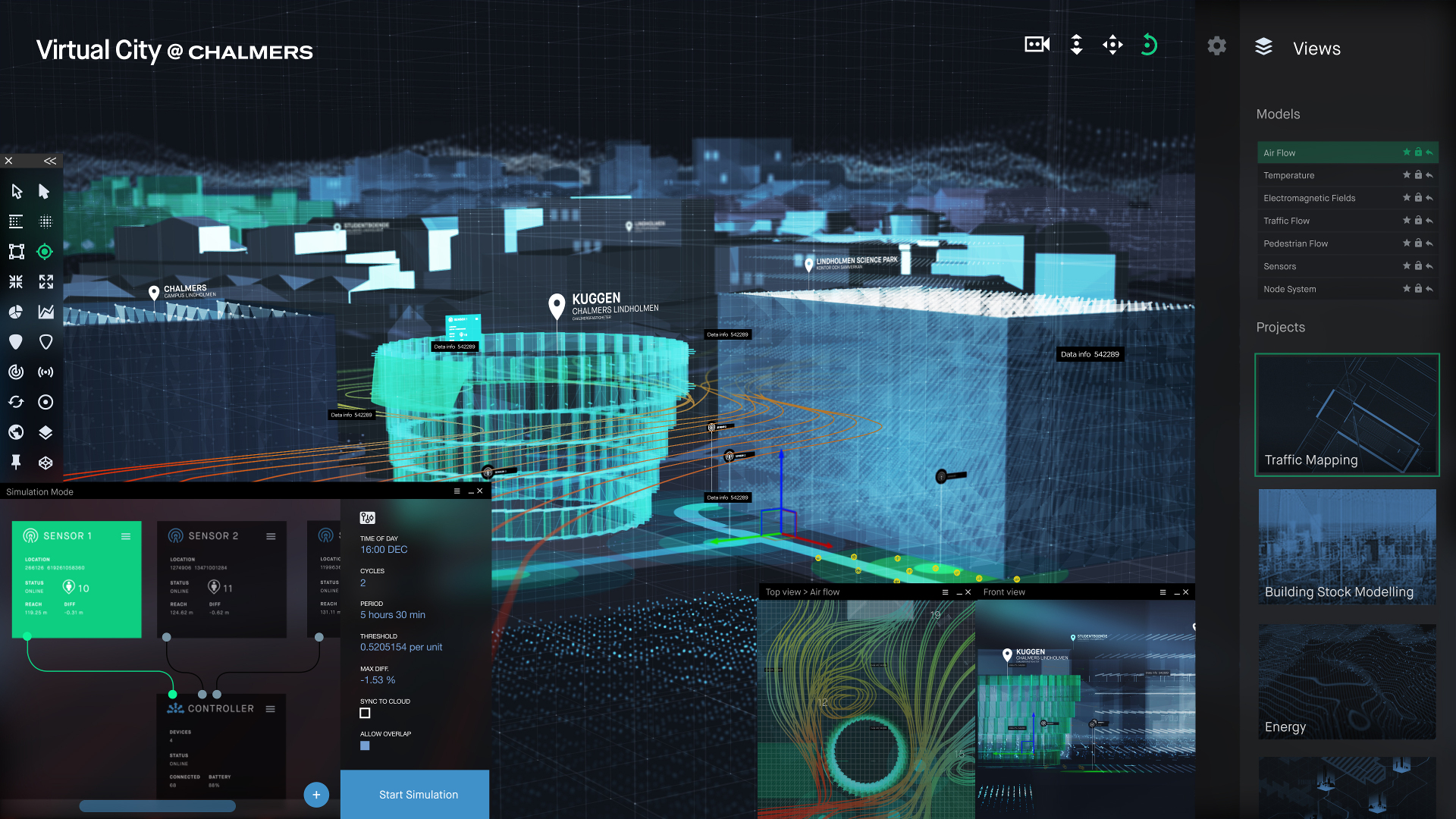
Anders Logg is a Professor of Computational Mathematics at Chalmers University of Technology , Sweden. He serves as Director of the Digital Twin Cities Centre and leads the interdisciplinary VirtualCity@Chalmers project, aiming to build digital twins of urban environments for simulating traffic, wind flow, pollution dispersion, and flooding. Expertise in finite element methods and FEniCS software development Pioneer in mesh generation with tools like mshr Active in scientific computing and domain-specific languages His research team includes experts in mathematical modeling, Unreal Engine development, and building information modeling . Recent work focuses on integrating IoT with digital twins for energy management and developing scalable simulation frameworks for urban planning. Key research trends across publications include: Digital twin technologies for urban environments Mesh generation in complex geometries Multiphysics simulations (fluid dynamics, heat transfer) Automated computing through domain-specific languages Machine learning integration with urban modeling
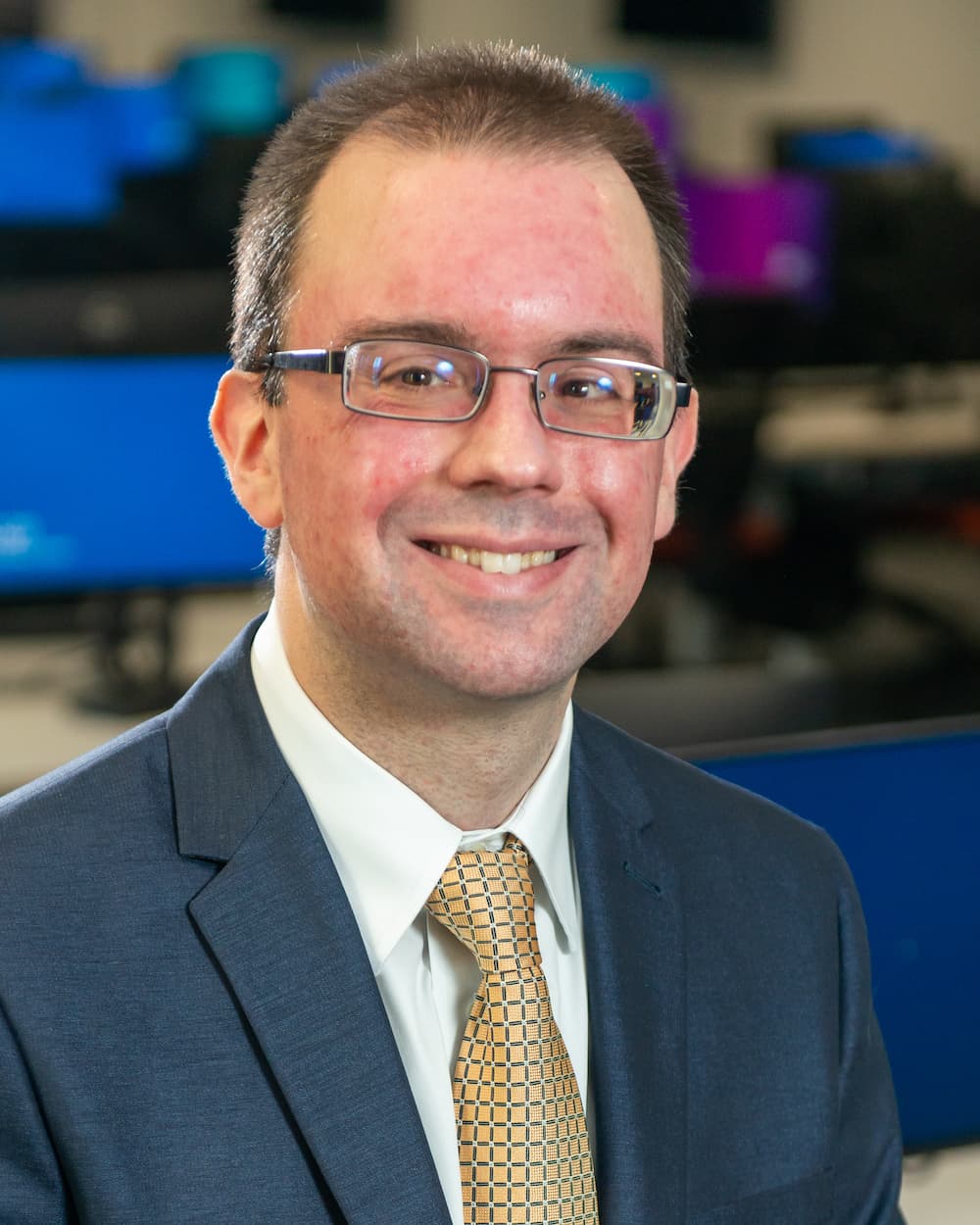
Jonas Unger is a Professor at Linköping University's Department of Engineering and Natural Sciences (ITN) and Media and Information Technology (MIT). As a research leader in computer graphics and image processing, he contributes to advanced visualization techniques, GPU computing, and AI applications in healthcare and climate adaptation. Specializes in BRDF modeling, spectral light field imaging, and augmented intelligence Active in AI4Climateadaptation and Wallenberg Autonomous Systems Program (WASP) Recipient of the 2023 Chester Carlson Research Prize Develops AI methods for medical imaging (SCAPIS dataset) and autonomous systems His recent work focuses on deep learning for material acquisition, real-time rendering optimizations, and visual analytics pipelines for disaster response systems. Current projects include multi-agent reinforcement learning for air traffic control and GPU-accelerated signal processing techniques. Scientific awards include: Chester Carlson Research Prize (2023) He collaborates with Visual Sweden's Augmented Intelligence platform, co-leads major visualization conferences, and contributes to Horizon 2020 Marie Skłodowska-Curie funded research. Contact: jonas.unger@liu.se
Robert Georges is a Professor in the Department of Molecular Physics at the University of Rennes. His research focuses on molecular spectroscopy, astrophysics, and chemical kinetics, with applications in exoplanetary atmospheres and astrochemical processes. He utilizes advanced techniques such as cavity ring-down spectroscopy, Fourier transform infrared spectroscopy, and computational fluid dynamics to study gas-phase molecular behavior under extreme conditions.
Jan Wissink is a Lecturer in the Department of Mechanical Engineering at Brunel University, affiliated with the School of Engineering and Design. He is also a member of the CLIMSEAS project, contributing expertise in computational fluid dynamics and heat transfer. Research Interests: Numerical methods and simulations, heat transfer, diffusion at high Schmidt numbers, buoyant flows Active Projects: DNS of gas transfer across air-water interface driven by bottom-shear turbulence and buoyant convection; LES of laminar heat transfer augmentation by external disturbances His work focuses on Direct Numerical Simulations (DNS) and Large Eddy Simulations (LES) of complex fluid flows, particularly involving heat transfer, turbulence, and buoyant convection. Collaborations include Dr. Herlina (KIT, Germany) and PhD students Boris Kubrak and Matthew Fleetwood. Students: Boris Kubrak (PhD student), Matthew Fleetwood (PhD student) Publications: Key areas include DNS/LES of turbine cascades, wake interactions, heat transfer enhancement, and transitional flows.
Professor Shu-chin Kuo is a distinguished faculty member at the College of Law, National Cheng Kung University (NCKU) in Taiwan. With a Doctor of Law from Northwestern University, she has established herself as a leading scholar in legal anthropology, civil procedure, family law, and gender studies. Her academic career spans over two decades with continuous scholarly contributions from 2003 to the present, including publications scheduled through 2025. Professor Kuo's research interests encompass Legal Anthropology, Civil Procedure, Identity Law, Family Law, Law and Society, Gender and Law, and Legal Culture Studies. Her work uniquely bridges legal theory with anthropological methods, examining how law operates in real-world contexts, particularly in family disputes and civil litigation. She has developed significant expertise in non-litigation dispute resolution mechanisms and their application in family law contexts. Her scholarly output demonstrates remarkable consistency and depth, with numerous publications in prestigious journals including TSSCI-indexed publications. Her recent work examines contemporary issues such as the impact of Covid-19 on civil courts, intergenerational family conflicts, and the cultural dimensions of legal procedures. Her research shows a clear trajectory from foundational work on legal anthropology toward increasingly sophisticated analyses of family law and civil procedure in Taiwan's evolving legal landscape. 2022/11-present: Tainan City Government Medical Practitioner Disciplinary Committee Member 2022/07-present: National Lawyers Association Ethics and Discipline Committee Member 2019/09: NCKU Teaching Excellence Award 2017/04: MOST Special Outstanding Talent Award 2013/08: National Science Council Wu Ta-You Memorial Award 2013/04-present: Taiwan Jurisprudence Association Board Member Professor Kuo actively contributes to legal education and practice beyond scholarship. She serves as a mediation committee member at the Taiwan High Court Tainan Branch and holds leadership positions at NCKU including Deputy Director of the Academic Integrity Promotion Office. Her research projects, consistently funded by Taiwan's Ministry of Science and Technology, demonstrate her sustained scholarly productivity and relevance to contemporary legal issues in Taiwan.
Prof. Thomas Bohlen is a Professor at the Karlsruhe Institute of Technology (KIT), affiliated with the Geophysical Institute (GPI). He leads the GPI research group and is based at Campus West 06.36. His work focuses on advanced seismic imaging techniques, including Full-Waveform Inversion (FWI) and its applications in environmental geophysics, CO₂ sequestration, and glacial sediment characterization. He has contributed to developing numerical methods for seismic wave modeling and boundary conditions like perfectly matched layers (PML). Research Interests: His primary areas include seismic inversion methodologies, viscoelastic and poroelastic modeling, crosshole and surface seismic imaging, and integrating multi-source geophysical data (e.g., GPR and seismic) for subsurface characterization. Applications span CO₂ storage monitoring, glacial geology, and infrastructure safety assessments. Key Achievements: Over 100 peer-reviewed articles since 2013, focusing on FWI advancements, anisotropy detection in glacial sediments, and innovative numerical techniques. He collaborates on projects like the ICDP DOVE site and the Sleipner CO₂ reservoir. His work bridges computational geophysics with field applications, emphasizing high-resolution subsurface imaging. Labs/Teams: Active in the GPI, leading research on FWI and seismic tomography. Involved in the Toolbox for Applied Seismic Tomography (TOAST) and underground lab experiments at Freiberg Reiche Zeche.
Dr. Alex Richings is a Lecturer in Data Science, Artificial Intelligence, and Modelling at the University of Hull, affiliated with the Centre for Data Science, Artificial Intelligence and Modelling (DAIM) and the E.A. Milne Centre for Astrophysics. He holds a PhD in Astrophysics from Leiden University (2015), with postdoctoral experience at Durham University (2018–2022) and Northwestern University (2016–2018). His research focuses on galaxy formation and evolution using numerical simulations, particularly modeling non-equilibrium chemistry in interstellar gas to interpret observations and refine cosmological models. Richings develops the CHIMES chemical model, which tracks ionization states and molecular abundances in simulations. He investigates molecular outflows driven by active galactic nuclei (AGN) winds and their role in galaxy evolution. His work bridges theoretical models with observational data, such as analyzing James Webb Space Telescope (JWST) surveys. He leads grants funded by NASA and the Royal Astronomical Society, focusing on molecular emission predictions and AGN-driven outflows. Richings teaches the 'Fundamentals of Data Science' module for the MSc in Artificial Intelligence and Data Science. He collaborates internationally and contributes to open-source software for astrophysical simulations. His research aims to understand gas cooling processes, star formation regulation, and the interplay between chemistry and radiation in galactic environments.
Professor Hansong Tang is a faculty member in the Department of Civil Engineering at The City College of New York (CCNY), part of The Grove School of Engineering. He holds a professorial rank and is affiliated with the Earth System Science and Environmental Engineering program. His research focuses on coastal and environmental fluid dynamics, with expertise in numerical modeling of multiphysics systems, including fluid-structure interactions, sediment transport, and infrastructure resilience under extreme events. He has made significant contributions to domain decomposition methods, hybrid modeling frameworks for coastal processes, and computational approaches for complex hydrosystems. Key research areas include: Coastal hydrodynamics and morphodynamics Hybrid computational models for ocean flows Infrastructure vulnerability under climate change Fluid dynamics of energetic suspensions Machine learning applications in coupled PDE solutions His work emphasizes bridging scales in coastal systems (e.g., coupling Navier-Stokes equations with geophysical fluid dynamics models) and addressing challenges in tidal energy generation, storm surge impacts, and hydraulic fracturing fluid behaviors. Recent studies include assessments of New York City coastal bridges' vulnerability to extreme storm surges and investigations into solitary wave impacts on bridge decks. Publications reflect a focus on numerical methods, experimental validations, and environmental engineering applications, with frequent exploration of interface treatment algorithms and error correction techniques in fluid dynamics simulations.
Cynthia Edwards is a Professor of Psychology at Meredith College, affiliated with the School of Education, Health and Human Sciences. She has been with Meredith since 1991, balancing teaching, research, and administrative roles. Her research focuses on social support during transitional phases for young adults, particularly high school-to-college and college-to-career transitions. Edwards mentors students in collaborative research projects and supervises Psychology Community Field Placements. Edwards holds a Ph.D. and M.A. in Developmental Psychology from the University of North Carolina at Chapel Hill, and a B.A. in Psychology from Wake Forest University. She completed the Harvard Institute for Higher Education's leadership program in 2008. Her work emphasizes leadership development in young women, stress management during life transitions, and fostering social networks. Notable outputs include co-authored publications on leadership dynamics, invited addresses on career-building strategies, and TEDx talks addressing political polarization through psychological frameworks. Received the Dean’s Award for Outstanding Contributions to the Profession (20XX) Friend of Dorothea Dix Mental Health Community Service Award (20XX) Distinguished Alumna in Psychology from Wake Forest University (20XX) Maintains an active student-led research laboratory and has mentored numerous students presenting at national/international conferences. Her teaching spans Developmental and Social Psychology courses, with a focus on applied learning through community placements.
Andrés I. Ávila is an Associate Professor in the Department of Mathematical Engineering at the University of La Frontera, Chile. He holds a Ph.D. in Mathematics (1999) and a postdoctoral fellowship (1999) from the University of Missouri. His research focuses on Partial Differential Equations , Numerical Methods for PDEs , High Performance Computing , and Mathematical Modeling . Education Ph.D. in Mathematics (1999), University of Missouri Postdoctoral Fellow (1999–2000), Universidade Estadual de Campinas His work spans nonlinear PDEs (e.g., Schrödinger systems, combustion theory), high-performance computing (Xeon Phi coprocessors, agent-based models), and environmental modeling (floods, wildfires, crop optimization). Articles highlight interdisciplinary applications in physics, biology, and engineering. He has supervised 8 Master’s and 2 Ph.D. students, advised national projects (e.g., Corfo Innovation , Fondef grants), and co-led the National Laboratory for High-Performance Computing (EMC-02) . Collaborations include institutions in Germany, Brazil, and France.
Souvik Roy is an Associate Professor in the Department of Mathematics at the University of Texas at Arlington (USA). His primary research focuses on inverse problems in medical imaging, stochastic models for cancer dynamics, and optimization algorithms for cure rate models. He leads the Center for Integrative Math-Bio and Experimental Research (CIMBEX) and has secured major grants from NSF, NIH, and UTA. His work spans interdisciplinary areas including medical imaging, signal processing in chromatography, and PDE optimal control frameworks. Education: Ph.D. in Mathematics (Tata Institute of Fundamental Research, India, 2015); B.Sc. (Honors) in Mathematics (University of Calcutta, India). Research Interests: Medical imaging algorithms, stochastic cancer modeling, numerical optimization, and mathematical biology. Awards: 2024 College of Science Teaching Award, Top Cited Article in Statistica Neerlandica (2023), Best Paper Award (2022). His lab develops algorithms for quantitative photoacoustic tomography and Fokker-Planck models for cancer treatment optimization. He has supervised 8+ Ph.D. students and co-developed software tools like CERTS and ADICC for imaging and stochastic simulations.
Ryan Sriver is an Associate Professor of Atmospheric Sciences at the University of Illinois at Urbana-Champaign, with a joint appointment at the National Center for Supercomputing Applications (NCSA). He has been with UIUC since 2012, after previously working as a research associate in Penn State's Department of Geosciences and as a NOAA Climate and Global Change postdoctoral fellow in Penn State's Department of Meteorology. His educational background includes: Ph.D. in Earth and Atmospheric Science from Purdue University (2008) M.S. in Physics from Purdue University (2003) B.S. in Physics from Purdue University (2001) Ryan Sriver's research focuses on developing a deeper understanding of the physical processes influencing variability within Earth's climate system and quantifying relevant uncertainties surrounding future climate projections. His work combines observational products, statistical methods and tools, and numerical models spanning a wide range of complexities and scales to understand how extreme weather and climate events are changing with global warming, their physical drivers, and implications for natural and human systems. His primary research areas include Climate Dynamics, Earth System Modeling, Ocean-Atmosphere Interactions, Uncertainty and Risk, Weather and Climate Extremes, Tropical Cyclones, Sea-Level Rise, Seasonal Prediction, and Multi-Sector Dynamics. Professor Sriver teaches multiple courses in atmospheric sciences, including ATMS 140: Climate and Global Change, ATMS 302: Atmospheric Dynamics I, ATMS 404: Risk Analysis in the Earth Sciences, ATMS 491: General Circulation of the Atmosphere and Ocean, ATMS 491: Physical Oceanography, ATMS 500: Dynamic Meteorology, ATMS 507: Climate Dynamics, ATMS 526: Risk Analysis in the Geosciences, and ATMS 571: Professional Development. His research output demonstrates a strong focus on climate modeling, uncertainty quantification, and the impacts of climate change on extreme events. His work often involves analyzing climate model ensembles, particularly from the Coupled Model Intercomparison Project (CMIP), and developing methods to understand and communicate climate-related risks. His research has implications for decision-making related to climate adaptation and mitigation strategies. Based in the Natural History Building (Room 3046) at UIUC, Professor Sriver can be reached at rsriver@illinois.edu or by phone at +1.217.300.0364.
Dr. Priya Kathpalia is an Associate Professor of Medicine at the University of California, San Francisco (UCSF) School of Medicine. She serves as the Medical Director of Motility at UCSF Health and Program Director for UCSF's Gastroenterology Fellowship Training Program. Her educational background includes: MD from Loyola University Chicago - Stritch School of Medicine (2010) BA from Northwestern University (2006) Internal Medicine Residency at Loyola University Medical Center (2013) Internal Medicine Chief Residency at Loyola University Medical Center (2014) Gastroenterology Fellowship at UCSF (2017) Diversity, Equity, and Inclusion Champion Training at UCSF (2020) Dr. Kathpalia specializes in esophageal motility disorders, gastroesophageal reflux disease (GERD), eosinophilic esophagitis, and other complex foregut conditions. Her clinical work involves advanced diagnostic modalities such as esophageal manometry, Bravo pH-impedance testing, EndoFLIP, and mucosal impedance studies. She is also deeply committed to medical education and curriculum development, with a focus on improving gastroenterology training programs and developing innovative educational resources for trainees. Her recent publications demonstrate a strong focus on quality improvement in esophageal disorders, medical education innovations, and addressing healthcare disparities. She has contributed significantly to developing clinical guidelines and quality indicators for conditions like eosinophilic esophagitis and achalasia, while also exploring educational methodologies to improve trainee competency in motility interpretation. Dr. Kathpalia has received numerous honors and awards: UCSF Haile T. Debas Academy of Medical Educators Member UCSF Division of Gastroenterology Inaugural Teaching Award American College of Gastroenterology AztraZeneca Senior Fellow Award Loyola University Chicago - Stritch School of Medicine Margaret Raiford Hano Memorial Scholarship Award Loyola University Chicago - Stritch School of Medicine Honors in Bioethics Northwestern University Cum Laude Northwestern University Phi Beta Kappa Honor Society As Program Director for the Gastroenterology Fellowship, Dr. Kathpalia mentors numerous trainees and has developed innovative educational curricula, particularly in esophageal motility interpretation. She serves on professional committees including the Clinical Practice Committee of the American Foregut Society and previously sat on the editorial board of Gastroenterology. Her work in medical education extends to virtual interview methodologies during the pandemic era. Dr. Kathpalia co-chairs the UCSF Medical Staff Committee on Professionalism and is an active member of professional organizations such as the American College of Gastroenterology, the American Gastroenterological Association, and the American Society for Gastrointestinal Endoscopy (ASGE), where she contributed to the Training Committee.
Katiana Constantinidou is an Associate Research Scientist at the Environmental Predictions Department (EPD) of the Climate and Atmosphere Research Center (CARE-C) at The Cyprus Institute. Her research focuses on regional climate modeling, urban and land surface interactions, and climate change impacts. She completed her PhD in Energy, Environment and Atmospheric Sciences at The Cyprus Institute in 2020, followed by a postdoctoral fellowship (2020–2024) in the same institution. She holds a BSc in Physics and MSc in Astrophysics, Geophysics, and Meteorology from Sofia University, Bulgaria. Education: BSc Physics, Sofia University MSc Astrophysics, Geophysics & Meteorology (Meteorology specialization), Sofia University PhD in Energy, Environment & Atmospheric Sciences, Cyprus Institute Research Interests: Regional climate modeling with WRF Urban climate dynamics and heat islands Land surface parametrization impacts on climate simulations Climate change impacts on Mediterranean/MENA regions Key Contributions: Developed frameworks for urban thermal environment modeling Evaluated climate model performance across varying resolutions and schemes Explored urbanization effects on temperature extremes in MENA regions Lab/Team Affiliation: Member of the Climate System Processes (CliSP) research group at CARE-C.
William Ford III, Ph.D., is an Associate Professor in the Biosystems and Agricultural Engineering Department at the University of Kentucky's Stanley and Karen Pigman College of Engineering. His research focuses on watershed-scale water quality assessment, integrating field and laboratory experimentation with advanced stable isotope tracers and numerical modeling. Ph.D. Civil Engineering, University of Kentucky, 2014 M.S. Civil Engineering, University of Kentucky, 2011 B.S. Civil Engineering, University of Kentucky, 2010 Research interests emphasize biogeochemical and physical processes affecting nutrient fate and transport in agroecosystems, particularly through surface/subsurface runoff analysis, edge-of-field monitoring, and restoration impact quantification. His work employs time series analysis, deterministic watershed modeling, and uncertainty evaluation to address climate-land-use interactions. Recent publications demonstrate his focus on phosphorus dynamics in tile-drained landscapes, karst stream nutrient removal, PFAS transport modeling, and isotopic methods for sediment fingerprinting. Key themes include preferential flow pathways, vegetation impacts on nutrient cycling, and sensor-enabled high-resolution water quality monitoring.