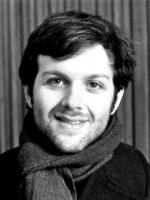
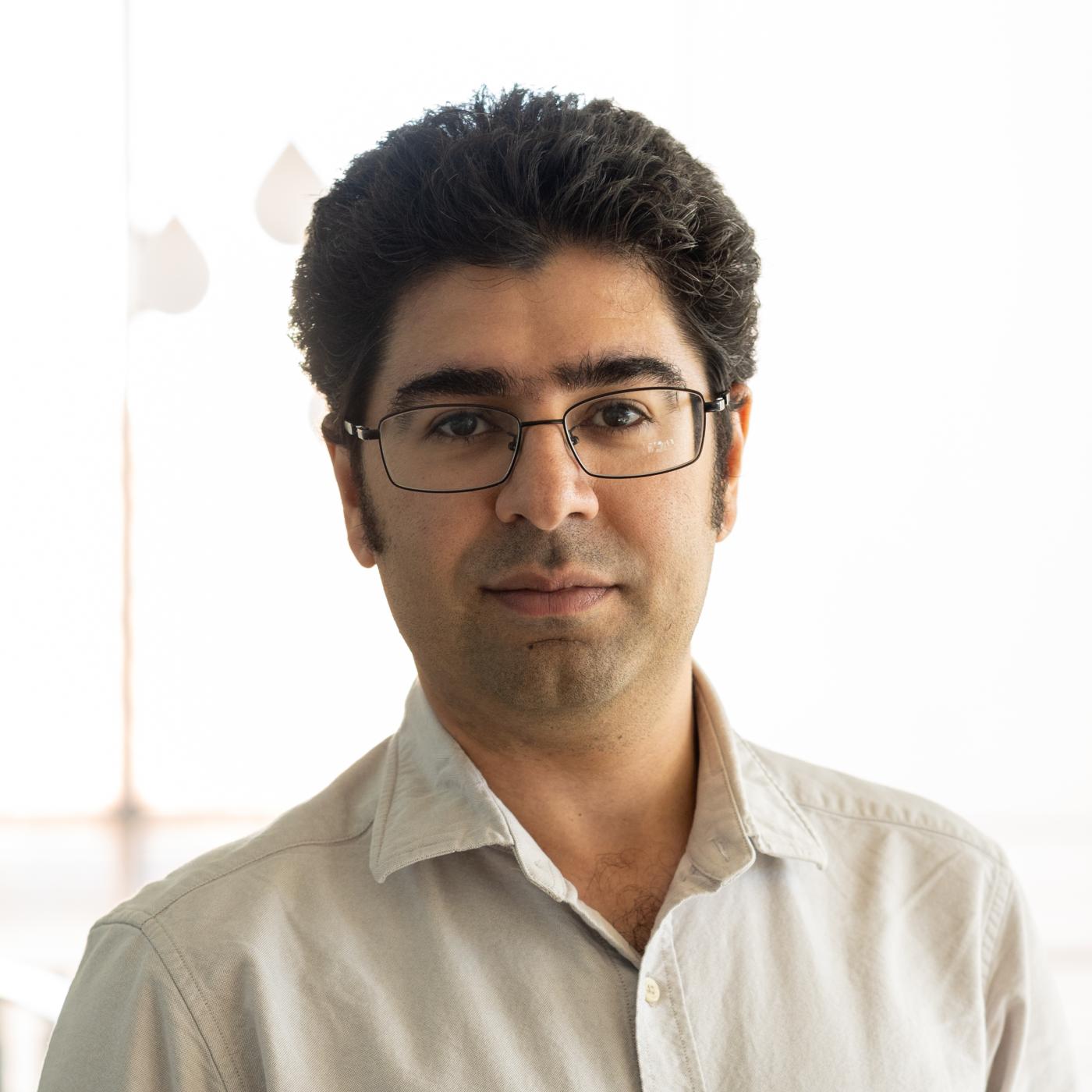
Gianfranco Bertone is a Professor at the Faculty of Science, University of Amsterdam, specializing in astrophysics and theoretical physics with a focus on dark matter, black holes, and gravitational waves. His work bridges cosmology and particle physics through multi-messenger approaches. Research Interests: Dark matter detection via gravitational wave signatures Black hole binary dynamics in dark matter environments Relativistic simulations of extreme mass ratio inspirals Multi-messenger astronomy and fundamental physics Cosmological simulations for dark matter distribution Publication Trends: Recent works emphasize gravitational wave astronomy's role in dark matter studies, including waveform distortions from dark matter spikes, boson cloud effects in black hole binaries, and simulation-based inference for astrophysical observations. His research spans theoretical modeling, computational astrophysics, and observational constraints.
Cristiano Porciani is Professor of Astrophysics at the University of Bonn's Argelander Institute for Astronomy, specializing in cosmological structure formation and galaxy evolution. He leads a research group working on numerical simulations of large-scale structure and theoretical cosmology. His research focuses on dark matter distribution, galaxy bias, and cosmological parameter estimation using perturbation theory and high-performance computing. Recent work examines relativistic effects in large-scale structure and intensity mapping techniques. Publications show strong emphasis on Euclid mission science, including instrument characterization, survey simulations, and cosmological tests. Article trends reveal consistent development of statistical methods for analyzing next-generation sky surveys. Supervises 9 graduate students working on cosmological simulations, galaxy clustering statistics, and radiative transfer modeling. Leads research projects within the Euclid Consortium and Transregional Collaborative Research Centre.
Tobias Marriage is a Professor in the William H. Miller III Department of Physics & Astronomy at Johns Hopkins University, within the Krieger School of Arts & Sciences. He co-leads the Cosmology Large Angular Scale Surveyor (CLASS) project and contributed to the Atacama Cosmology Telescope (ACT) by designing its initial receiver and analysis pipeline. His research focuses on understanding the universe's evolution through measurements of the cosmic microwave background (CMB) and studying dusty star-forming galaxies (DSFGs) and galaxy clusters. Education: PhD in Physics from Princeton University. He actively collaborates on large-scale cosmological surveys and develops cutting-edge instrumentation for millimeter-wave observations, including aerogel filters and polarization-sensitive detectors. His work addresses fundamental questions about cosmic inflation, reionization, and the thermal Sunyaev-Zel’dovich effect in galaxy clusters. Research highlights include leading the CLASS telescope’s design and operations, analyzing ACT data for extragalactic point sources, and exploring quasar feedback mechanisms. His contributions span both observational cosmology and instrument innovation, with a focus on maximizing sensitivity and reducing noise in CMB measurements. Notable projects include the CLASS experiment’s E-mode polarization measurements and efforts to characterize the physical properties of high-redshift DSFGs. He emphasizes the need for future space-based far-infrared telescopes to advance studies of these galaxies. His work also includes calibrating galaxy cluster masses via weak-lensing techniques and improving data analysis pipelines for large-scale surveys.
Prof. Adam Deller is a Professor at Swinburne University of Technology, affiliated with the School of Science, Computing and Emerging Technologies. His academic journey includes a BSc, BE (1st class honours), and PhD in Astrophysics from Swinburne. He specializes in radio interferometry, neutron star physics, fast radio bursts (FRBs), and space domain awareness. His research focuses on compact objects like pulsars and black holes, using radio telescopes for high-resolution imaging. He co-founded Fourier Space Pty Ltd, developing signal processing solutions for radio astronomy and space industries. **Research Interests**: Radio interferometry instrumentation, neutron star magnetospheres, FRB localization and cosmological applications, and space domain awareness through radio observations. **Awards**: Includes the Pawsey Medal (2020), Newcombe Cleveland Prize (2022), and multiple grants from ARC and industry partners. His grants focus on SKA pulsar timing, FRB studies, and gravitational wave astronomy collaborations. **Teaching**: Teaches Computational Astrophysics, emphasizing numerical simulations for astrophysical problems. **Grants & Collaborations**: Key roles in ARC Centre of Excellence for Gravitational Wave Discovery, SKA pulsar timing projects, and international telescope collaborations like ASKAP and VLBI networks.
Prof. Sherry Suyu is an Associate Professor at the Technical University of Munich (TUM) and a Max Planck Fellow at the Max Planck Institute for Astrophysics (MPA). Her research focuses on probing the dark cosmos through gravitational lensing, dark energy, dark matter, and supermassive black holes. She leads the H0LiCOW program measuring the universe's expansion rate using lensed quasars and the HOLISMOKES program studying lensed supernovae. Her work has been supported by an ERC Consolidator Grant. Education and Affiliations: PhD in Physics from Caltech (2008), postdoctoral positions at UC Santa Barbara and Stanford University. Joint appointments at MPA (since 2016) and TUM. Member of the Excellence Cluster ORIGINS. Holds honorary positions including Emmy Noether Visiting Fellowship at Perimeter Institute (2018). Research Interests: Gravitational lensing, cosmic expansion rate, galaxy evolution, supernovae, tidal disruption events, and deep learning applications. Her group studies galaxy clusters, dark matter distribution, and cosmological models using lensing techniques. Awards: 2021 Berkeley Prize (AAS), 2024 ISIMM Senior Prize. Over 90 peer-reviewed publications. Teaches courses on extragalactic astrophysics and gravitational lensing at TUM. Labs/Teams: Head of the Observational Cosmology Group at TUM-MPA. Collaborates internationally with institutions in the US, Europe, Japan, and Taiwan. Supervises postdocs, PhD students, and bachelor/master researchers.
Blake Sherwin is a Professor of Cosmology and Astrophysics at the Department of Applied Mathematics and Theoretical Physics (DAMTP), University of Cambridge. He has held roles including Assistant Professor (2017–2022), STFC Ernest Rutherford Fellow (2017–2022), and NASA Einstein Fellow (2016–2017). His research focuses on theoretical and observational cosmology, particularly gravitational lensing of the Cosmic Microwave Background (CMB) and large-scale structure. Education: PhD in Physics from Princeton University (2008–2013); Part III Mathematics and Parts I/II NST Physics at the University of Cambridge (2004–2008). Research Interests: Sherwin's work spans CMB physics, gravitational lensing analysis, and precision cosmological measurements. He leads the CMBLENS project, funded by the European Research Council, focusing on lensing effects in the CMB to probe cosmological parameters and structure formation. Publications: Over 30 peer-reviewed articles, including studies on CMB lensing reconstruction, POLARBEAR and ACTPol collaborations, and cross-correlation analyses with galaxy surveys. Key contributions involve delensing techniques, Sunyaev-Zel'dovich effect measurements, and dust foreground mitigation. Group: Current members include postdocs Boris Bolliet and Fiona McCarthy, and PhD students Frank Qu, Gerrit Farren, Irene Abril Cabezas, and Carmen Embil-Villagra. Former members have transitioned to roles at institutions like Harvard, Princeton, and the University of Geneva.
Arya Farahi is an Assistant Professor of Statistics and Data Sciences at the University of Texas at Austin since 2021. His research bridges astroinformatics, urban informatics, and AI ethics, focusing on mitigating algorithmic bias and uncertainty quantification in real-world applications. He holds PhDs in Physics and Scientific Computing from the University of Michigan, where he was a Data Science Fellow at the Michigan Institute for Data Science. Farahi's work includes collaborations with international projects such as the Dark Energy Survey (DES), COsmostatistics Initiative (COIN), and XMM-XXL Consortium. He leads the D3 Lab, which develops AI tools for scientific discovery and societal challenges, emphasizing interdisciplinary collaboration. His open-source contributions include TATTER, KLLR, and PoPE for statistical analysis and visualization. Key awards include the Best Student Paper Award at KDD’18 and a $400k+ grant. He is a volunteer with Statistics Without Borders and actively involved in projects like the Fire and Smoke Digital Twin for urban resilience. His research spans cosmology, healthcare AI, and urban economics, with a focus on trustworthy models and equitable AI systems.
Tim Schrabback is a Full Professor at the Institute for Astro- and Particle Physics , Faculty of Mathematics, Computer Science and Physics, University of Innsbruck . He leads research in extragalactic astrophysics, focusing on weak gravitational lensing, galaxy clusters, and cosmology through major international collaborations such as the Euclid Mission , eROSITA , DES , SPT , and HSC . His research interests include: Observational cosmology using galaxy clusters Weak and strong gravitational lensing Dark energy and large-scale structure X-ray and Sunyaev-Zel'dovich cluster surveys Machine learning applications in astrophysics Calibration of space-based instruments His recent publications (2023–2025) span high-impact journals including Astronomy & Astrophysics , Physical Review D , and Monthly Notices of the Royal Astronomical Society . The work emphasizes cosmological parameter estimation , cluster mass calibration , systematic error mitigation in weak lensing , and multi-messenger cosmology . A strong trend is the integration of data from optical, infrared, X-ray, and microwave surveys to constrain models of dark energy and modified gravity. Scientific contributions include: Leading roles in Euclid’s weak lensing and cluster science working groups Co-authorship on foundational Euclid mission papers Key contributions to eROSITA all-sky survey analysis Development of shear calibration techniques using deep learning Mass calibration of galaxy clusters via weak lensing He actively participates in advising and collaborative research, working closely with postdocs and early-career scientists such as Sebastian Grandis , Florian Kleinebreil , Henrik Jansen , and Lukas Linke . He has secured access to major datasets and leads analysis efforts in joint cluster cosmology programs. His public engagement includes frequent outreach lectures on astrophysics and telescope observation, particularly through the annual Astronacht events at the University of Innsbruck. He has also contributed to media interviews on cosmological tensions and galaxy cluster physics. He leads or participates in several research labs and teams: Euclid Weak Lensing Science Working Group eROSITA Cluster & Cosmology Working Group Institute for Astro- and Particle Physics Observing Team Alpine Cosmology Collaboration
Dr. Sownak Bose is an Associate Professor (Research) at Durham University's Department of Physics and holds a UKRI Future Leaders Fellowship. His work focuses on computational cosmology, galaxy formation, and dark matter studies through large-scale simulations. Research Interests Cosmological simulations (MillenniumTNG, IllustrisTNG, AbacusSummit) Dark matter properties and modified gravity models Galaxy clustering and large-scale structure AGN feedback and baryonic effects His recent publications explore topics including: Accreted stellar halos in low-mass galaxies Impact of massive neutrinos on cosmic structure Multiwavelength mass accretion rate estimation Machine learning-based galaxy-halo connection Scientific Awards: UKRI Future Leaders Fellowship He supervises postgraduate research students and collaborates on major projects like DESI, eROSITA, and H3 survey. His work bridges theoretical models with observational data to constrain cosmological parameters.
Stephen Eikenberry is a Professor of Optics & Photonics Physics at CREOL, The College of Optics and Photonics, University of Central Florida. His academic journey includes a Ph.D. in Astronomy from Harvard University (1997), a Sherman Fairchild Postdoctoral Prize Fellowship at Caltech, and prior tenured roles at Cornell University and the University of Florida. His research focuses on black holes, neutron stars, gravitational waves, and astronomical instrumentation, with applications in biomedical imaging and spectroscopy. Key professional milestones include the 2016 Breakthrough Prize in Fundamental Physics (as part of the LIGO Science Consortium), the NSF CAREER Award (2000), and multiple University of Florida Research Foundation Professorships. He has designed advanced optical instruments and contributed to LIGO's gravitational wave discoveries. Eikenberry's research group explores astrophotonics, dark energy, and extrasolar planets. His recent work includes analyzing gravitational wave data from LIGO/Virgo and developing lunar occultation missions. He advises multiple graduate students and collaborates on international projects like the PolyOculus Array (OPA!). Education: Ph.D. in Astronomy, Harvard University (1997) Postdoctoral Fellowship at Caltech (Sherman Fairchild Prize) Awards: Breakthrough Prize in Fundamental Physics (2016) Gruber Prize for Cosmology (2016) UK Royal Astronomical Society Team Achievement Award (2016) His publications emphasize gravitational wave astronomy, cosmology, and instrument design. He has pioneered methods to constrain cosmic expansion using gravitational wave 'standard sirens' and studies correlations between fast radio bursts and gravitational wave events.
James M. Lattimer is a Distinguished Professor of Astronomy at Stony Brook University, affiliated with the Department of Physics & Astronomy. He specializes in neutron star structure, dense matter equation of state, core-collapse supernovae, and nuclear astrophysics. His research integrates observational data from missions like NICER with theoretical models rooted in nuclear physics. B.S. in Physics (University of Notre Dame, 19XX) Ph.D. in Astronomy (University of Texas at Austin, 19XX) His work focuses on constraining neutron star properties via X-ray observations and gravitational wave events. Key projects include NASA's Binary Neutron Star Mergers Grand Challenge and analyses of pulsar data (e.g., PSR J0740+6620, PSR J0030+0451). He teaches advanced courses like PHY 521 (Stars) and CEN 511 (Recent Discoveries in Astronomy), emphasizing stellar structure, compact objects, and cosmic phenomena. Recent research highlights include studies of symmetry energy constraints, universal neutron star relations, and implications of NICER/XMM-Newton measurements for dense matter physics. His work bridges nuclear theory, astrophysical observations, and computational modeling to address fundamental questions about matter under extreme conditions.
Nadia Zakamska is a Professor in the Department of Physics & Astronomy at Johns Hopkins University and serves as Vice Chair for Academics. She holds a PhD from Princeton University and has held fellowships at the Institute for Advanced Study and Stanford University. Her research focuses on observational and theoretical astrophysics, including quasar-driven galactic winds, stellar variability, binary systems, and the co-evolution of supermassive black holes and galaxies. Her work leverages cutting-edge facilities like the James Webb Space Telescope (JWST) and the Atacama Large Millimeter/submillimeter Array (ALMA). Key research areas include: (1) Discovery of galactic winds powered by supermassive black holes, which influence galaxy formation and star formation suppression. (2) Exploration of variable astrophysical phenomena using surveys like LSST and WISE, with a focus on binary stars, white dwarfs, and neutron star mergers. (3) Analysis of dual quasars and their role in galaxy mergers. Recent achievements include detecting extreme outflows in 'extremely red quasars' and using JWST to study starburst galaxies. Zakamska has mentored over 30 graduate and undergraduate students, many of whom have pursued postdoctoral roles at prestigious institutions. She leads the JWST Early Release Science Program Q3D and collaborates on projects like the Sloan Digital Sky Survey (SDSS-V). Awards include the Newton Lacy Pierce Prize (2014), Alfred P. Sloan Fellowship (2011–2013), and JHU Catalyst Award (2016).
Nichole Barry is a Scientia Lecturer (Level B) in the School of Physics at the University of New South Wales (UNSW), where she began her tenure-track journey in 2024. Previously, she has worked at the University of Melbourne and Curtin University, following completion of her PhD at the University of Washington. Dr. Barry earned her educational credentials from prestigious institutions: a Doctor of Philosophy in Physics from the University of Washington (2018), a Master of Science Minor in Astrobiology and a Master of Science in Physics from the University of Washington (2018 and 2016), and a Bachelor of Science in Physics from the University of California Davis, Integrated Studies Honors Program (2012). As an avid researcher in observational cosmology, radio science, and precision analysis, Dr. Barry specializes in Epoch of Reionisation searches, developing unique analysis approaches that push the boundaries of achieved precision within the radio-science community. Her work primarily focuses on the detection of the 21 cm cosmological signal using radio interferometers like the Murchison Widefield Array (MWA), with particular expertise in instrumental calibration, foreground removal, and power spectrum analysis. Her research bridges theoretical cosmology with practical observational techniques, making significant contributions to our understanding of the early universe. Analysis of Dr. Barry's most recent publications reveals a consistent focus on improving the precision and reliability of Epoch of Reionization measurements. Her work demonstrates increasing sophistication in handling instrumental systematics, foreground contamination, and radio frequency interference - the primary obstacles to detecting the faint cosmological signal. Recent papers emphasize the critical importance of accurate beam modeling, careful data processing pipelines, and innovative approaches to extracting the cosmological signal from noisy observational data. Discovery Early Career Researcher Award, Australian Research Council, 2024 ($381,237 AUD for three years) Astronomy Data & Compute Services Merit Allocation Program, six semesters from 2021 to 2024 ($217,000 AUD equivalent) Louise Webster Prize for Early Career Researchers from the Astronomical Society of Australia, 2023 (co-winner) Forrest Research Foundation Forrest Fellowship 2020 Laby ECR Travel Scholarship, 2019, 2021 Dr. Barry actively supervises research students, with Aman Chokshi being one of her current supervisees at the University of Melbourne. Her grant portfolio demonstrates strong research support, with significant funding from the Australian Research Council and other competitive programs. She is always welcoming conversations about pursuing Honours or PhD projects in early Universe cosmology using radio interferometers, indicating her commitment to mentoring the next generation of astronomers. As a key contributor to the Murchison Widefield Array (MWA) collaboration, Dr. Barry works within a large international team of radio astronomers focused on detecting the faint signal from the Epoch of Reionization. Her work involves close collaboration with researchers across multiple Australian institutions and international partners, contributing to one of the most promising approaches to studying the formation of the first stars and galaxies in our universe.
Jens Hjorth is a Professor of Astrophysics at the University of Copenhagen's Niels Bohr Institute, where he leads research in the DARK center. With over 400 refereed publications, more than 35,000 citations, and an h-index of 96, he is a prominent figure in modern astrophysics. His work spans cosmology, dark matter research, and high-redshift galaxy studies, with approximately 33 papers published in Nature or Science journals. Professor Hjorth's primary research focuses on astrophysical transients, very high-redshift galaxies, cosmology, and the origin of universality in dark-matter halos. His work bridges theoretical modeling with observational data, particularly through his involvement with the Euclid space mission. His research often explores the intersection of astrophysics with art and science, demonstrating a commitment to interdisciplinary approaches. His recent publications reveal a strong emphasis on dark matter halo structure, galaxy evolution across cosmic time, and the development of sophisticated simulations for cosmological studies. His publication record shows consistent high-impact contributions, with recent work heavily focused on the Euclid mission's instrumentation and data analysis. These publications span theoretical cosmology, observational techniques, and the development of advanced simulation methods for understanding large-scale structure formation. The research demonstrates both depth in specialized areas like dark matter physics and breadth across related astrophysical disciplines. Villum Investigator: Time in Astrophysics Member of the boards of the Carlsberg Foundation Member of the boards of the Tuborg Foundation Approximately 33 scientific papers in Nature or Science journals Most cited lead-author paper: J. Hjorth et al. Nature 423, 847–850 (2003) with ~1300 citations As a Villum Investigator, Professor Hjorth leads significant research initiatives focused on time-domain astrophysics. He also serves as Co-lead of the UCPH Forward career development program, demonstrating his commitment to academic leadership and mentorship. His extensive publication record and high citation count reflect substantial research impact across multiple funding cycles and collaborative projects. Professor Hjorth is deeply involved with the DARK research center at the Niels Bohr Institute, which focuses on cosmology, dark matter, and dark energy research. His work with the Euclid mission places him at the forefront of international space-based cosmological surveys. The research teams he participates in combine observational astronomers, theoretical physicists, and computational scientists to tackle fundamental questions about the universe's structure and evolution.
Ivan Baldry is a Professor at the Astrophysics Research Institute of Liverpool John Moores University , with a career focused on galaxy formation and cosmology. His work spans large-scale surveys like GAMA, XXL, and Euclid, emphasizing photometric redshifts, stellar mass functions, and galaxy environment interactions. PhD in Astrophysics from University of Sydney (1995-1999) Research interests center on galaxy evolution , cosmic star formation , and observational cosmology , with significant contributions to understanding galaxy bimodality and low-surface-brightness systems. His work integrates multi-wavelength data (UV to radio) and advanced clustering techniques. Key publications include studies on galaxy mass-size relations, star formation rate indicators, and the cosmic spectral energy distribution. He co-authored over a dozen GAMA project papers and contributed to Euclid mission frameworks. Scientific Awards & Professional Roles Royal Astronomical Society Group Achievement Award (2008) Fellow of the Higher Education Academy (2014) Fellow of the Royal Astronomical Society (2009) Member of Euclid Science Team (2011-present) International Member, Australian Time Assignment Committee (2015) His collaborations span institutions like the Isaac Newton Group, VISTA surveys, and the 2dF Galaxy Redshift Survey Team, with leadership in data release protocols and survey diagnostics.