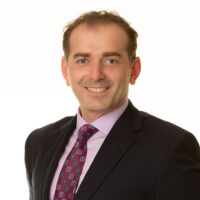
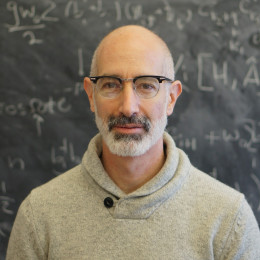
Paschalis Antonis is a Professor at the Department of Informatics and Telecommunications, National and Kapodistrian University of Athens. His research focuses on hardware architectures for space systems, embedded systems, and image compression standards such as CCSDS. He specializes in FPGA implementations, radiation-hardened electronics, and biomarker development for immunogenic responses to cancer therapies. Research Interests: High-performance FPGA-based hardware accelerators Space-grade embedded systems and data compression CCSDS standard implementations for aerospace applications Molecular biomarkers for immunotherapy response prediction Recent Trends: His work emphasizes resilient systems against radiation effects (e.g., SEUs in FPGAs), high-throughput image compression cores for space missions, and interdisciplinary research linking computational hardware with medical diagnostics via prothymosin α analysis. Grants & Labs: Leads the ASPIICS coronagraph project for ESA's Proba-3 mission, involving advanced optical instrumentation and formation flying systems. Collaborates on COTS FPGA utilization in extreme environments.
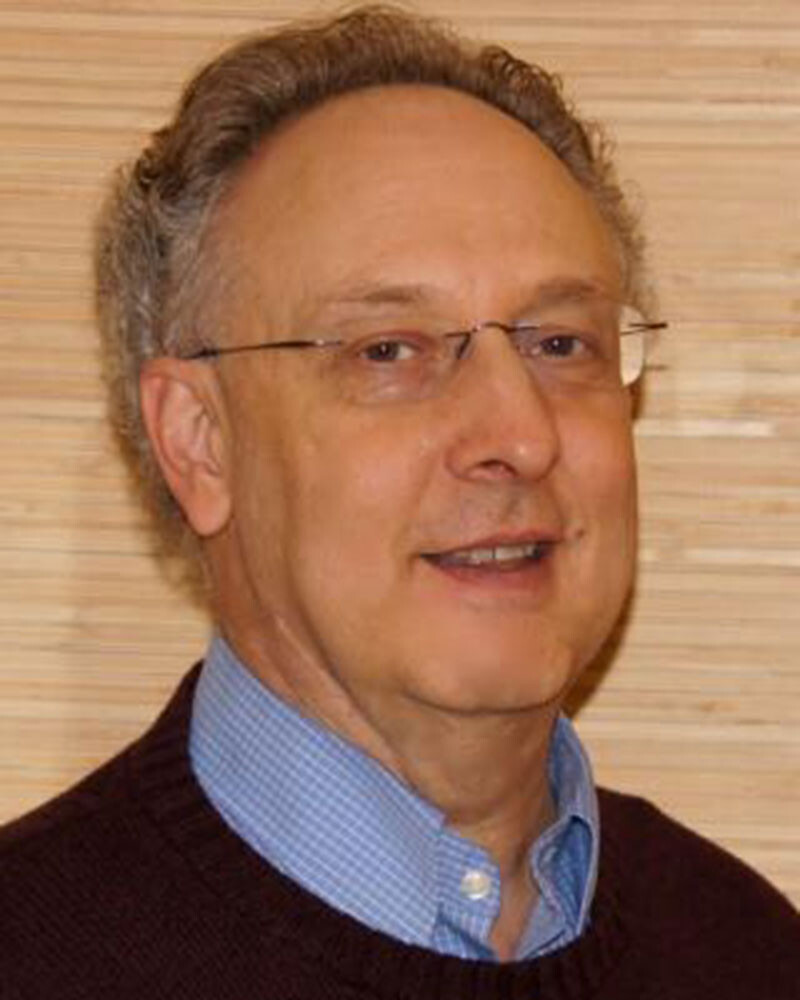
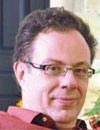
Mohammad Karim, PhD, is a Professor in the Department of Electrical & Computer Engineering at the University of Massachusetts Dartmouth (UMass Dartmouth), affiliated with the College of Engineering. He previously held leadership roles including Provost, Executive Vice Chancellor for Academic Affairs, and Chief Operating Officer at UMass Dartmouth. His career includes serving as Vice President of Research at Old Dominion University (2004–2013), Dean of Engineering at City College of New York (2000–2004), and Head of Electrical and Computer Engineering at the University of Tennessee (1998–2000). He is an elected fellow of multiple prestigious organizations, including IEEE, OSA, and SPIE. Dr. Karim holds a BS Honors in Physics from the University of Dhaka (1976) and MS in Physics (1978) and MS/PhD in Electrical Engineering (1979/1981) from the University of Alabama. His research focuses on optical computing, pattern recognition, electro-optical systems, and sensors, with funding from agencies like the Office of Naval Research and NASA. He has authored 19 books, over 365 papers, and 13 book chapters, and served as guest editor for 36 journal special issues. His awards include Fellowships from IEEE, OSA, and the Bangladesh Academy of Sciences. He mentors students in MS/PhD programs and advises on research proposals. His work spans academic leadership, technical innovation, and interdisciplinary collaboration in engineering and optics.
Dr. Berker Bilgin is an Assistant Professor in the Department of Electrical & Computer Engineering at McMaster University. His research focuses on next-generation electric motor drive technologies, including acoustic noise reduction, power electronics, and sustainable electrification. He leads projects sponsored by Fiat Chrysler Automobiles (FCA) and Automotive Partnership Canada (APC), and co-founded a university spin-off company. He teaches courses such as Electric Motor Drives and Switched Reluctance Machine Design. Research Focus: Electric motor drives (46% of global electricity demand), hybrid-electric powertrains, and transportation electrification. His work emphasizes high-efficiency, low-cost solutions and acoustic noise modeling for high-power-density applications like traction motors. He has 10 patents and authored a textbook on Switched Reluctance Motor Drives. Publications Trends: Recent work spans advanced motor designs, acoustic noise mitigation, and thermal/structural modeling of electric machines. Key themes include switched reluctance motor optimization, PWM control strategies, and multi-physics design approaches. Awards: Patented inventions in switched reluctance technology, textbook authorship Grants: FCA/APC-funded hybrid-electric powertrain development Labs/Teams: McMaster University spin-off company for technology commercialization
David R. Reichman is the Centennial Professor of Chemistry at Columbia University, affiliated with the Department of Chemistry within the School of Arts and Sciences. His research focuses on the chemistry, physics, and biology of disordered materials, including glass-forming systems, soft materials (gels, colloids, emulsions), and biological systems. Key themes include disorder, dynamical heterogeneity, and metastable configurations. His work spans computational methods such as Quantum Monte Carlo, time-dependent variational principles, and exciton theory. Notable contributions include studies on singlet fission mechanisms, halide perovskites, and optically pumped phonon dynamics in superconductors. Leads the Reichman Group, based at 520 Havemeyer Hall. Active in cross-disciplinary collaborations, as seen in publications across journals like Nature Communications and Physical Review B . Research emphasizes bridging microscopic quantum phenomena with macroscopic material behavior, particularly in energy-related materials and nanostructured systems.
Nicole Church is a Beatrice Mary Dale Research Fellow at Newnham College and a member of the Rolls-Royce University Technology Centre (UTC) in the Department of Materials Science & Metallurgy at the University of Cambridge. She holds an MSci and PhD in Materials Science from Cambridge, where she specialized in titanium alloys. Her research focuses on superelastic and shape-memory titanium alloys for biomedical and aerospace applications, particularly investigating functional fatigue and microstructural degradation mechanisms. She lectures the Fracture and Fatigue course in the Materials Science Part II of the Natural Sciences Tripos. Key achievements include developing a new theory governing transforming alloys and being awarded the IOM3 Prize for her undergraduate research. Her work addresses challenges in alloy design, including optimizing composition and processing to prevent in-service property degradation. Nicole has collaborated with Rolls-Royce UTC on high-temperature structural alloys and solid-state welding processes. Recent research highlights include studies on Ti-Nb-Au alloys for low-modulus biomedical applications, functional fatigue mechanisms in Ti2448 alloys, and microstructural stability in nickel-based superalloys. Her interdisciplinary approach combines advanced characterization techniques like high-energy diffraction and electron microscopy to advance material science solutions.
Peter HO is a Professor at the National University of Singapore (NUS), affiliated with the Organic Nano Device Laboratory (ONDL). He holds a PhD from the University of Cambridge (1999) and focuses on the physics and technology of organic semiconductor devices. Current Research: Physics and technology of organic semiconductor devices including light-emitting diodes, field-effect transistors, and solar cells. Key Research Areas: Doped polymer semiconductors, charge carrier dynamics, contact engineering, and photovoltaic device modeling. His work explores fundamental interactions in organic materials, such as Madelung and Hubbard effects in polaron band models, interface engineering for ohmic contacts, and photocrosslinking techniques for high-performance heterostructures. Selected Affiliations Vice Provost (Undergraduate Studies & Technology-Enhanced Learning), NUS Organic Nano Device Laboratory (ONDL)
Chao Li is a Principal Research Fellow at the University of Cambridge's Faculty of Mathematics, specializing in AI-driven healthcare solutions. His research focuses on precision medicine through image-based AI and multi-omics integration, with applications in neurological disease modeling, surgical oncology, and clinical AI safety. He leads the Centre for Mathematical Imaging in Healthcare , advancing translational AI for personalized medicine. Research Themes: Image-based AI for precision mental health AI in surgical and interventional oncology Multi-omics approaches for disease characterization Evaluation of AI innovations for clinical translation Publications highlight advancements in multimodal fusion for diagnostics, histology-molecular marker integration, and neuroimaging analytics for mental health. His work bridges computational mathematics with clinical challenges, emphasizing real-world healthcare impact. Labs/Teams: Active member of the Centre for Mathematical Imaging in Healthcare , collaborating across departments to develop AI tools for clinical deployment.
Christopher Gourlay is a Professor of Physical Metallurgy at Imperial College London's Department of Materials, part of the Faculty of Engineering. He has been affiliated with the Engineering Alloys research theme since 2008, specializing in microstructure development during phase transformations in alloys and solders. His research focuses on lightweight magnesium and aluminum alloys, electronic solder joint reliability, and solidification processes. He holds a MEng in Metallurgy from the University of Oxford (2002) and a PhD from the University of Queensland (2007), where his work centered on semi-solid deformation of Al and Mg alloys. He was awarded a RAEng/EPSRC Research Fellowship in 2008. Research interests include solidification microstructure control, intermetallic compound effects in solders, and alloy recyclability. Key projects involve thermal fatigue resistance of solder joints, grain refinement in magnesium alloys, and in-situ imaging of microstructural dynamics. He is a Fellow of the Institute of Materials (FIMMM) and the Institute of Cast Metals Engineers (FICME), and currently chairs the Electronic Packaging and Interconnection Materials Committee at TMS (USA, 2023–2027). His group employs advanced characterization techniques like synchrotron radiography and FIB-based nanoscale engineering, addressing challenges in electronic materials and sustainable manufacturing processes.
Professor Simon Cox is a Professor of Computational Methods and Director of the Microsoft Institute for High Performance Computing within the Faculty of Engineering and Physical Sciences at the University of Southampton. He holds a doctorate in Electronics and Computer Science, complemented by first-class degrees in Mathematics and Physics. His research focuses on computational tools and platforms, particularly in high-performance computing, cloud computing, and interdisciplinary applications in engineering and science. He has secured over £30 million in research and enterprise funding, published over 250 papers, and is a Microsoft Most Valuable Professional since 2003. Research interests include computational electromagnetics, meshless methods, and data management. His team, the Computational Engineering and Design Group, develops high-performance computing systems and commercial distributed computing solutions. Notable projects include a Raspberry Pi and Lego-based supercomputer and a spin-off company from computational electromagnetics research. He actively supervises PhD students in Engineering and Environmental Science. Key awards include the Microsoft MVP title. His work spans environmental monitoring (e.g., methane sensors, IoT-based peatland tracking), cybersecurity for IoT devices, and biomedical applications like 3D X-ray histology. He leads outreach initiatives, including the 'Supercomputing in Engineering Course' since 2005.
Professor Shankar N Ekkanath Madathil is a Chair in Power Electronic Systems at the University of Sheffield's School of Electrical and Electronic Engineering. He holds a PhD from the University of Cambridge and has over three decades of expertise in power semiconductor devices, wide bandgap materials (GaN, SiC), and high voltage technologies. His research focuses on innovative device solutions like clustered IGBTs, polarization superjunction structures, and GaN-based power electronics. He has led projects funded by Rolls-Royce, the Royal Academy of Engineering, and the Royal Society, and is a Fellow of IET and IOP. His contributions include groundbreaking work on GaN 2D hole gas, superjunction technologies, and power integrated circuits. Education: PhD (Engineering), University of Cambridge, 1992 MTech (Physical Engineering), Indian Institute of Science, Bangalore, 1986 MSc (Applied Sciences), PSG College of Technology, India, 1984 BSc (Applied Sciences), PSG College of Technology, India, 1982 Research Interests: Power semiconductor devices, wide bandgap semiconductors, high power density converters, SiC and GaN technologies, and nanotechnologies in power electronics. His work emphasizes high-voltage device design, dynamic performance optimization, and industry partnerships for technology transfer. Publications: Over 150 peer-reviewed articles in journals like IEEE Transactions on Electron Devices, IET Power Electronics, and Japanese Journal of Applied Physics, focusing on GaN/SiC devices, superjunction structures, and power electronics applications. Recent work includes advancements in polarization superjunction HFETs and hybrid power switches. Awards: Royal Academy of Engineering Research Professor (2007-2012) Royal Society Industry Fellow of Rolls-Royce (2013-2017) Fellow of IET and IOP Grants & Collaborations: Led projects transferring power device technologies to industry, including Rolls-Royce collaborations. Current collaborations include Kyushu University (Japan) under a JSPS Invitation Fellowship. Labs & Affiliations: Leads the Electrical Machines and Drives Research Group at Sheffield and is a Visiting Professor at IIT Bombay. Editor of IEEE Transactions on Electron Devices and associated editor of IET Journal of Power Electronics.
Arthur F Witulski is a Research Professor of Electrical Engineering at Vanderbilt University's School of Engineering. He specializes in radiation effects on electronic power semiconductor devices and systems, focusing on radiation reliability in aerospace and nuclear environments. His research addresses challenges in satellites, robotics, and high-reliability power electronics. Education: PhD, MS, and BS in Electrical Engineering from the University of Colorado. Research Interests include radiation hardening of power electronics, semiconductor reliability under ionizing environments, and system-level modeling of radiation effects. His work spans energy systems, nano-materials, and risk mitigation strategies for complex engineering projects. Key contributions include developing models for SiC power device failures, Bayesian assurance frameworks for space systems, and methodologies linking component-level testing to system reliability. His recent articles emphasize single-event effects in advanced semiconductors and radiation tolerance in commercial-off-the-shelf (COTS) components. Witulski has pioneered radiation assurance tools for small satellites and robotic systems, emphasizing probabilistic modeling and fault-tolerant designs. His work integrates theoretical physics with practical engineering solutions for harsh radiation environments.
Leslie Greengard is a Silver Professor of Mathematics and Computer Science at New York University's Courant Institute, part of the Faculty of Arts and Science. His research focuses on integral equation methods for electromagnetics, acoustics, plasma physics, and fluid dynamics, with recent work extending to kernel-based methods in statistical inference. He leads the Courant Mathematics and Computing Laboratory and contributes to novel electromagnetic simulation techniques. Education: Ph.D. and M.D. in Computer Science and Medicine from Yale University (1987) B.A. in Mathematics from Wesleyan University (1979) Research Interests: Greengard's group develops fast solvers for complex geometries in electromagnetics and fluid dynamics. Notable contributions include the Fast Multipole Method (FMM) for particle simulations and Quadrature by Expansion (QBX) for layer potential evaluations. His work bridges computational mathematics and applications in physics, engineering, and biomedicine. Recent Article Trends: Recent publications emphasize fast algorithms (e.g., FMM, adaptive Gauss transforms), biomedical applications (e.g., deep brain stimulation modeling), and cosmological simulations. His methods address challenges in high-dimensional data, multiscale problems, and real-time computation. Awards & Recognition: While no specific prizes are listed, his foundational work on FMM has had a transformative impact on computational science. Advising & Collaborations: Collaborations span academia and industry, with co-authors including V. Rokhlin, M. O’Neil, and others. No formal advisees are listed here, though his research involves postdoctoral fellows and graduate students. Labs & Teams: Active in the Courant Mathematics and Computing Laboratory, focusing on electromagnetic simulation and design methodologies.
Prof. Petra Rudolf is a Professor of Experimental Solid State Physics and Dean of Graduate Studies at the University of Groningen. She holds a PhD from the University of Namur (Belgium) and a MSc from the University of Rome "La Sapienza". Her research focuses on molecular motors/switches, 2D materials (graphene, transition metal dichalcogenides), organic thin films, and energy-related nanomaterials. She leads the Surfaces and Thin Films group at the Zernike Institute for Advanced Materials. Education: PhD in Physics (1995) from University of Namur MSc in Physics (1987) from University of Rome Research Interests: Design of functional surface architectures using molecular switches and motors Synthesis and characterization of 2D materials (graphene, MXenes) Development of nanomaterials for energy storage (lithium-sulfur batteries) and catalysis Electrochemical processes and surface functionalization techniques Recent Article Trends: Advances in organic solar cell efficiency via interlayer engineering Electrocatalytic strategies for sustainable chemical production Innovative 2D material synthesis methods (vapor phase, solvothermal) Self-healing materials and smart adhesives Awards: EU Descartes Prize (2007) for molecular machine research Member of Academia Europaea (2021) Fellowships: APS (2010), Institute of Physics (2001) Advising & Grants: Guided 35+ PhD students and 10 current advisees Leadership in European research networks and funding initiatives Labs/Teams: Surfaces and Thin Films Group at Zernike Institute Collaborations with Max Planck Institute, SOLARIS Synchrotron, and others
Pär Olsson is a Professor in the Department of Nuclear Science & Engineering at KTH Royal Institute of Technology. His research focuses on computational and experimental studies of radiation damage in nuclear materials, with particular emphasis on understanding defect dynamics, microstructural evolution under irradiation, and the behavior of advanced nuclear fuels. He leads courses such as Multiscale Modeling of Nuclear Materials and Radiation Damage Physics, emphasizing both theoretical and practical aspects of materials science in nuclear contexts. His research interests include the development of advanced accident-tolerant fuels (e.g., UN-UO2 composites), the computational modeling of radiation effects in metals like Fe and W, and the interplay between solute atoms and defects in irradiated materials. His work combines first-principles calculations, kinetic Monte Carlo simulations, and experimental validation to address challenges in nuclear energy systems. Notable contributions include studies on fission product solubility in nuclear fuels, oxygen’s role in tungsten defect evolution, and the thermal performance of UN-based composites. His team’s projects, such as the M4F initiative (Multiscale Modelling for Fusion and Fission Materials), aim to bridge atomistic and continuum-scale models for material design. Pär Olsson collaborates extensively with international institutions and contributes to nuclear materials education through course coordination and supervision of graduate studies in physics and materials science.
Hantao Cui is an Associate Professor in the Department of Electrical and Computer Engineering at NC State University. He previously served as an Assistant Professor at Oklahoma State University (2021–2024) and earned his Ph.D. in Electrical Engineering from the University of Tennessee, Knoxville (2018). His research focuses on applying mathematical and computational methods to model, simulate, and analyze modern power systems, particularly those dominated by renewable energy sources and inverter-based technologies. He is the author of the ANDES simulation tool and a recipient of the NSF CAREER Award (2024) and the 2020 R&D 100 Award for his work on the CURENT Large-Scale Testbed. His expertise spans power electronics, grid stability, and cyber-physical system integration. Education: Ph.D. in Electrical Engineering, University of Tennessee, Knoxville (2018) M.S. in Electrical Engineering, Southeast University, China (2013) B.S. in Electrical Engineering, Southeast University, China (2011) Research Interests: Large-scale power system simulation and modeling Inverter-based resource control and grid stability Renewable energy integration and optimization Cyber-physical system testbed development Open-source software tools for power systems analysis Key Contributions: Developed ANDES, an open-source framework for power systems modeling Advanced virtual inertia scheduling (VIS) techniques for microgrids Pioneered data-driven adaptive control strategies for grid-forming inverters Awards & Honors: NSF CAREER Award (2024) R&D 100 Award (2020) Best Paper Award at IEEE PES General Meeting (2022) Senior Member of IEEE (2020) Grants & Labs: Principal Investigator for NSF-funded research on inverter-based grid stability Core contributor to the CURENT Large-Scale Testbed project

/prod01/production-cdn-pxl/media/umassdartmouth/profiles/engineering/Mohammad-Karim2.jpg)