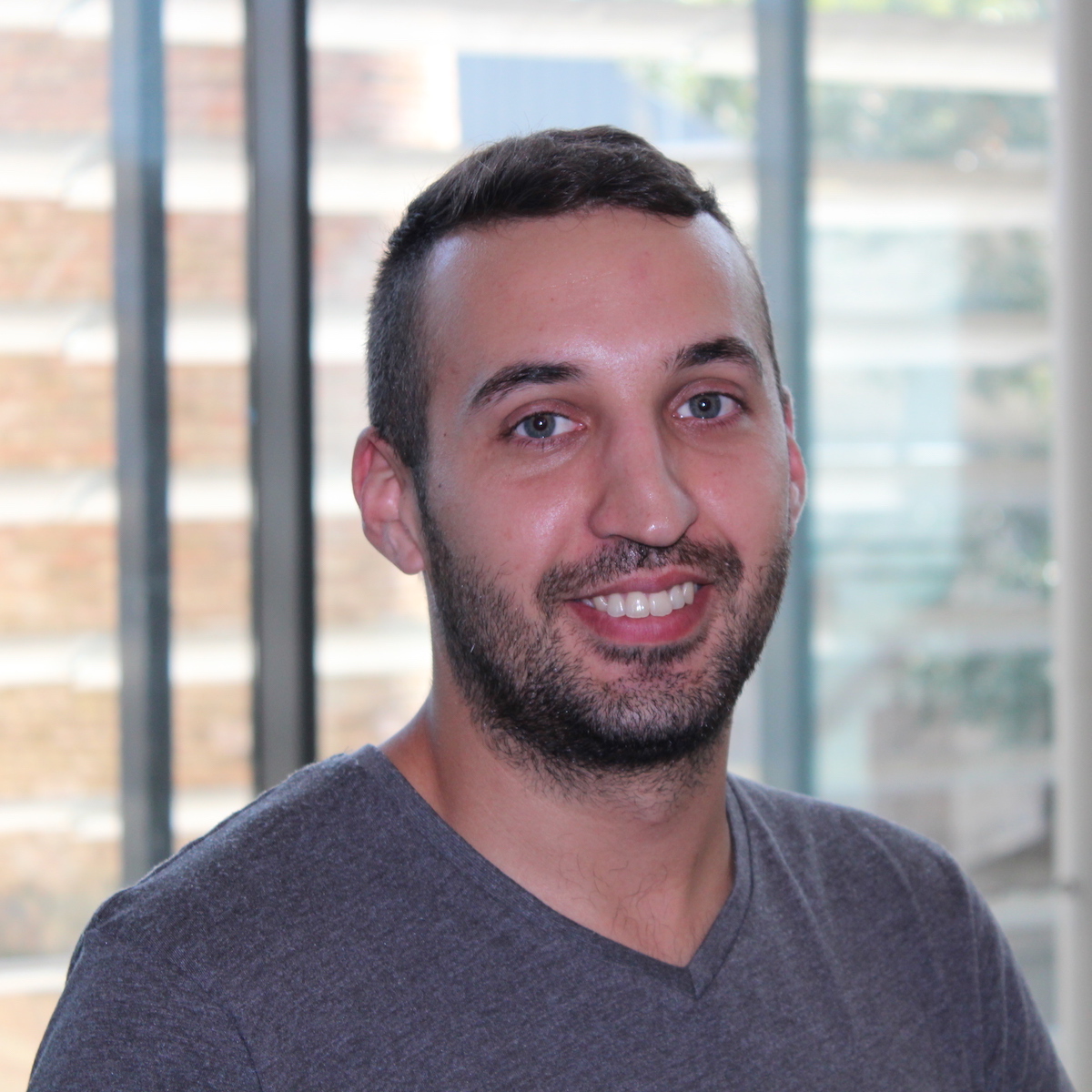
Mario Cesar Acosta Cobos is a Researcher at the Department of Computer Architecture of the Barcelona School of Informatics (FIB) at the Universitat Politècnica de Catalunya (UPC). His work focuses on optimizing computational performance and energy efficiency in Earth system models, particularly within the EC-Earth3 framework for the Coupled Model Intercomparison Project (CMIP6). He collaborates extensively with the Barcelona Supercomputing Center (BSC) and other international institutions. Key research interests include high-performance computing , climate modeling , parallel computing , and scientific data compression . His contributions address challenges like workflow optimization for HPC platforms, GPU acceleration for atmospheric chemistry models, and minimizing computational costs in Earth system simulations. Recent work highlights include analyzing the computational and energy costs of CMIP6 simulations, improving EC-Earth3 coupling efficiency, and developing optimized GPU implementations for atmospheric chemistry solvers. His publications span journals like Geoscientific Model Development , Computer Physics Communications , and Future Generation Computer Systems . Acosta Cobos has been involved in collaborative projects such as the Joint-Laboratory of Extreme Scale Computing and contributed to HighResMIP, focusing on high-resolution climate models. His research bridges computational science with environmental applications, emphasizing reproducibility, scalability, and sustainable computing practices.
Rosa Maria Badia Sala is a Research Professor at the Universitat Politècnica de Catalunya (UPC), affiliated with the Departament d'Arquitectura de Computadors and the Barcelona Supercomputing Center (BSC-CNS). She specializes in distributed computing, heterogeneous systems, and task-based programming models. Her work focuses on advancing high-performance computing (HPC), cloud computing, and workflow management for large-scale scientific applications. She holds a Doctorat en Informàtica and has been actively involved in numerous research projects, including contributions to the COMPSs programming framework and the optimization of HPC workflows. Her collaborations span institutions like BSC-CNS and international initiatives such as JLESC. Recent research includes GPU-accelerated computing, quantum optimization algorithms, and digital twins for power networks. Badia's publications span journals like Future Generation Computer Systems and IEEE Transactions on Parallel and Distributed Systems, reflecting her expertise in parallel computing, distributed systems, and real-time data analysis. She has supervised multiple doctoral theses and contributes to research grants focused on HPC and AI integration.
Antonio Garrido del Solo is a Professor in the Department of Computer Systems at the School of Computer Engineering, University of Castilla-La Mancha (UCLM). He has been affiliated with UCLM since 1986, becoming a Catedrático (Full Professor) in the area of Computer Architecture and Technology (ATC) in 2003. He served as Director of the School of Engineering at UCLM (2000-2008), Director of the Information Technology section at the Regional Development Institute (IDR) of UCLM (1996-2000), and Deputy Director of the Informatics Department at UCLM (1993). Professor Garrido earned his Licentiate in Physical Sciences from the University of Granada in 1986 and his Doctorate from the University of Valencia in 1991. Since 1993, he has been the co-founder of the High-Performance Networks and Architectures (RAAP) research group at UCLM, which currently includes 23 doctors. His academic leadership includes heading the Computer Architecture and Technology area from 2008 to 2021. His research interests span wireless networks, multimedia communications, video transcoding, software-defined networking, edge computing, and energy efficiency in networks. Professor Garrido has focused on digital image processing, broadband video transmission, video transcoding, and multimedia data transmission over wireless networks. His recent work demonstrates a strong emphasis on software-defined networking applications for wireless LANs, particularly in multicast transmission, load balancing, and energy efficiency. His publication record shows a clear evolution from video transcoding and wireless communications to software-defined networking and edge computing. The past decade reveals a significant shift toward SDN-based solutions for wireless networks, with particular attention to quality of service, resource allocation, and energy efficiency in enterprise WLAN environments. His work often combines theoretical networking principles with practical implementations for real-world applications. Professor Garrido has been deeply involved in university quality evaluation since 2000, serving as an external evaluator for Spain's National University Quality Evaluation Plan (PNECU), ANECA's Evaluation Plan (PEI), and multiple ANECA programs including VERIFICA, MONITOR, and ACREDITA. Since 2018, he has been a member of the EURO-INF seal commission, which he has chaired since 2022. He has also collaborated with regional quality agencies (ACCUEE, AQUIB, DEVA) in evaluating university programs and faculty. His research has been supported by numerous competitive research projects, including MECODIVI (2018-2021), excellence networks in computer architecture and advanced communications (2017-2019), and multiple projects focused on multimedia content delivery, wireless sensor networks, and energy management systems. He has led the RAAP research group for nearly three decades, securing funding from both regional and national sources. Professor Garrido co-founded the RAAP (High-Performance Networks and Architectures) research group at UCLM in 1993, which has grown to include 23 doctors. The group has maintained a consistent research focus on network architectures, wireless communications, and multimedia systems, while adapting to emerging technologies like software-defined networking and edge computing. Their collaborative approach has resulted in numerous publications in top-tier networking journals and conferences.
Dr. José María Alonso Moral is an Associate Professor at the Department of Electronics and Computation of CiTIUS-USC (Research Center for Intelligent Technologies) at the University of Santiago de Compostela. With a PhD in Telecommunication Engineering from Universidad Politécnica de Madrid (2007) and a 'Doctor Europeus' distinction, he has held prestigious positions including Ramón y Cajal researcher (2018-2022), Juan de la Cierva postdoctoral researcher (2012), and served as President of the European Society for Fuzzy Logic and Technology (EUSFLAT) and Vice-Chair of IEEE Computational Intelligence Society's Explainable Fuzzy Systems Task Force. IEEE Senior Member Associate Editor: IEEE Computational Intelligence Magazine (Q1) and International Journal of Approximate Reasoning (Q2) Board Member: ACL SIGGEN (2019-2022) His research focuses on Explainable AI and Trustworthy Artificial Intelligence , particularly through interpretable fuzzy systems and natural language generation. Key contributions include the ExpliClas web service for decision tree explanations and JFML library for IEEE 1855-2016 fuzzy system modeling. Recent publications examine counterfactual explanations, fuzzy temporal constraint networks, and feature attribution faithfulness metrics. He leads projects like TRUST (Trustworthy AI) and ReproHum (NLP Evaluation Reproducibility), emphasizing human-centered AI design and cross-disciplinary applications in healthcare and education. As an educator, he developed high school workshops on explainable AI fundamentals through CiTIUS-USC's STEM outreach program. His technical work includes developing explainable classifiers for Alzheimer's disease progression and implementing fuzzy logic systems in embedded platforms like Arduino and Raspberry Pi.
Jose Manuel Dominguez Alonso is a researcher at the University of Vigo , affiliated with the Faculty of Sciences and the Marine Research Center . His work focuses on Earth Physics and Smoothed Particle Hydrodynamics (SPH) applications in marine and renewable energy systems. He is part of the FA9 EphysLab research group at the Ourense campus. Education: PhD in Applied Physics from the University of Vigo (2014) under advisors Dr. Moncho Gómez Gesteira and Dr. Alejandro Jacobo Cabrera Crespo. His research explores fluid dynamics , off-shore wind turbines , wave energy converters , and fluid-structure interaction . He has developed DualSPHPhysics for high-performance computing in marine environments. His recent articles (2024-2025) emphasize teaching numerical modeling to students, 3D hydrodynamic analysis , and coupled simulation techniques . His work bridges computational methods with real-world marine engineering challenges like coastal protection and renewable energy optimization.
Fritz Henglein is a Professor at the Department of Computer Science, University of Copenhagen (DIKU), with affiliations also at Deon Digital. His career spans over three decades, with notable roles including Head of the Algorithms and Programming Languages (TOPPS) research group and Director of the HIPERFIT research center. Research interests include Programming languages and type systems Functional programming and DSLs High-performance computing Contracts and distributed ledger technology Algorithmic logic and formal semantics His work often bridges theoretical rigor with practical applications, particularly in financial information technology and compiler design. Collaborations include leadership in conferences like POPL, ICFP, and PEPM, with a focus on mentoring through academic events and community-building initiatives.
Dr. Emilie Bekaert is a Group Leader at CIC energiGUNE, specializing in electrochemical energy storage systems. Her expertise spans battery technology from laboratory to industrial scale, with a focus on ageing mechanisms, post-mortem analysis, and safety. She leads a multidisciplinary team addressing challenges in battery performance and lifespan through advanced characterization techniques. Education: She earned her PhD in Materials Science from the University of Lille I (France, 2004), focusing on glass synthesis from chlorides. As a postdoc at ALISTORE Excellence Network, she applied solid-state NMR to Li-ion battery materials. Later roles included research at ZSW (Germany) and the Helmholtz Institute Ulm, focusing on electrode materials and scaled synthesis for industry. Research Interests: Her work bridges fundamental and applied research, emphasizing battery ageing (accelerated testing, degradation pathways), post-mortem analysis techniques (SEM, XRD, NMR), and material innovations for Li-ion, Na-ion, and redox flow batteries. She also explores sustainable circular economy practices for battery recycling. Awards: Recognized for her NMR contributions (Prix Denis Boudot) and leadership in electrochemical energy storage conferences. Her team collaborates with industrial and academic partners globally, driving advancements in energy storage reliability and safety. Labs/Teams: Her group operates within the Electrical Characterization Platform at CIC energiGUNE, leveraging cutting-edge analytical tools for failure mode detection and material characterization. Current projects include optimizing lithium-ion capacitor designs and developing predictive models for battery lifespan.
Antonio de la Oliva is a Professor at the University Carlos III de Madrid, affiliated with the School of Engineering. His primary research focuses on advanced networking technologies, including 5G/6G, Software-Defined Networking (SDN), Network Functions Virtualization (NFV), and mobile edge computing. He leads and contributes to major EU-funded projects such as 5G-CORAL, 5G-Transformer, and 5G-Crosshaul, which aim to integrate and optimize transport networks for industry verticals. He has supervised PhD students like Maria Isabel Sanchez Bueno (awarded UC3M's Special PhD Award) and Sergio Gonzalez Diaz. His work spans experimental evaluations of SDN-based service provisioning, network slicing, and deterministic communications for Industry 4.0. He actively engages in standardization efforts (e.g., IEEE 802.21, IETF) and collaborates with industry partners like Ericsson, Nokia, and Telecom Italia. His research also explores edge robotics, digital twins, and AI integration in networked systems. Key projects include developing the 5G-Crosshaul architecture for integrated fronthaul/backhaul networks and the SLICES-Madrid multi-domain TSN framework. He emphasizes practical applications in healthcare, emergency response, and industrial automation, leveraging edge-fog-cloud architectures.
Francesc Wilhelmi is a Tenure-Track Professor at Universitat Pompeu Fabra (UPF) and a Research Engineer at Nokia Bell Labs . He holds a Ph.D. in Information and Communication Technologies (2020) and an M.Sc. in Intelligent and Interactive Systems (2016), both from UPF. His research focuses on Wi-Fi technologies , machine learning , decentralized learning , and blockchain applications in telecommunications . He previously served as a researcher at CTTC and taught at UPF (2015–2020) and Universitat Oberta de Catalunya (2020–2022), specializing in networking courses. Key contributions include the Komondor wireless network simulator and standardization work at ITU-T , notably editing recommendation Y.3181 on Machine Learning Sandboxes. Active in FG-ML5G , organizing problem statements for the ITU AI/ML in 5G Challenge. Explores blockchain for O-RAN sharing and AI-driven spatial reuse in 5G/6G networks. His work bridges network simulation with machine learning to address challenges in dense wireless environments, emphasizing practical implementations and open-source tools.
Feliu Maseras is a Professor and Group Leader at the Institute for Chemical Research of Catalonia (ICIQ-CERCA) , where he leads a research group focused on computational chemistry and its application to catalytic processes. His work bridges theoretical modeling and experimental collaboration, particularly in homogeneous catalysis, mechanochemistry, and photocatalysis. Education: PhD in Chemistry, Autonomous University of Barcelona (1991) Postdoctoral Training: Okazaki, Japan (Prof. Morokuma); Montpellier, France (Prof. Eisenstein) Academic Position: Associate Professor, UAB (1998–2004); Group Leader, ICIQ (2004–present) His research interests center on computational homogeneous catalysis , with a strong emphasis on DFT and QM/MM methods . He investigates cross-coupling , C–H activation , photocatalysis , mechanochemistry , and organic electrosynthesis . A key methodological focus is microkinetic modeling to connect computed energies with experimental kinetics, and the discovery of hidden descriptors using statistical analysis of large DFT datasets. The recent publications highlight a strong trend in mechanochemistry , photocatalysis , and transition metal catalysis , with increasing integration of artificial intelligence and data-driven methods . Many studies involve close collaboration with experimental groups, validating computational predictions. Scientific Awards: Rafael Usón Medal (2024) Miguel Catalán-Paul Sabatier Award (2024) Bruker Prize in Physical Chemistry (2011) Chemical Society Lecture Award, RSC (2008) Prof. Maseras has supervised 24 doctoral theses and hosted numerous postdoctoral researchers. His group is currently supported by grants such as the MECHAPHOTOCOMP project (Ministry of Science) and the Beatriu de Pinós fellowship. He serves as Associate Editor of ACS Catalysis and on the Editorial Advisory Board of Chemical Society Reviews . The research group includes PhD students, postdocs, technicians, and administrative staff, fostering a collaborative and interdisciplinary environment. Laboratory and Teams: The Maseras Group at ICIQ operates within a state-of-the-art research infrastructure, utilizing high-performance computing and collaborating with experimental teams across Europe. The group actively develops computational tools and models to advance understanding in sustainable synthesis and catalysis.
Eliseo García García is a Professor at the University of Alcalá, affiliated with the Department of Automatic Control and Systems Engineering. He holds a Ph.D. from the University of Alcalá, awarded in 2005 for his thesis on computational electromagnetics. His primary research focuses on computational methods for electromagnetic analysis, including the development of efficient algorithms like the Characteristic Basis Function Method (CBFM) and hybrid techniques with the Multilevel Fast Multipole Algorithm (MLFMA). He is a core member of the GEC (Computational Electromagnetic Group), where he explores geophysical applications, antenna design, and high-frequency electromagnetic problems. His research interests bridge theoretical and applied electromagnetics, with particular emphasis on reducing computational costs in solving large-scale EM problems. Notable contributions include advancements in radar cross-section (RCS) computation, radome structure analysis, and geothermal exploration frameworks using hydrogeophysical methods. He has also published extensively on numerical techniques for antenna trajectory simulations and sparse matrix preconditioning. Eliseo’s work spans multiple disciplines, including aerospace engineering, environmental science, and software development, as evidenced by his contributions to Altair Feko 2023 updates. Despite no listed awards, his prolific publication record (over 70 articles from 2013–2024) underscores his active role in advancing computational electromagnetics and its interdisciplinary applications. His advising and grants section remains unreported, but his involvement in collaborative projects is implied through frequent co-authorships and institutional affiliations. He leads the GEC lab, focusing on cutting-edge computational tools and their practical deployment in real-world engineering challenges.
Pablo Vazquez Regueiro is a Professor at the Faculty of Physics, Department of Particle Physics, University of Santiago de Compostela. He is affiliated with the Galician Institute of High Energy Physics (IGFAE) and the GAES High Energy Physics Group. Education: Ph.D. from University of Santiago de Compostela (2000) - Thesis: Development and construction of electronics for microstrip detector readout Research Interests: His work focuses on experimental particle physics, including detector technology, microstrip electronics, and high-energy collision analysis. Key contributions involve CP violation studies, baryon spectroscopy, and trigger system development. Scientific Contributions: His publications highlight expertise in LHCb collaborations, detector simulation, and data analysis techniques. Research spans Higgs boson properties, dark matter searches, and hadronization mechanisms. Labs & Teams: Actively participates in IGFAE and GAES High Energy Physics Group activities, contributing to international collaborations like LHCb.
Max Rossmannek is a Researcher at IBM Research Europe - Zurich, specializing in the integration of quantum computing and high-performance computing (HPC) systems. His work focuses on developing hybrid quantum-classical algorithms that surpass the capabilities of individual paradigms. Education: Master of Science from ETH Zürich (2020), Dr. sc. nat. from University of Zürich and IBM Research Zürich Research Interests: Quantum Algorithms, Quantum Chemistry, HPC Integration, Computational Materials Science Notable Collaborations: Ivano Tavernelli (Quantum Computing), Antonio Córcoles (Quantum + HPC), Antonio Mezzacapo (Quantum-Centric Supercomputing)
Pablo Floria Martín is an Associate Professor in the Department of Sport and Computer Science at Universidad Pablo de Olavide (Seville), specializing in Physical Education and Sport. His academic work centers on biomechanical analysis within athletic performance contexts. His doctoral education includes a PhD from Universidad Autónoma de Madrid (2006) with thesis "Biomechanical Analysis of the Discus Throw: Categorization of Technique Efficiency Variables" supervised by Dr. Amelia Ferro. Research focuses on movement and coordination variability in athletic contexts, particularly running biomechanics . He actively explores advanced biomechanical methodologies through the International Society of Biomechanics in Sports (ISBS), contributing since 2016 via conference presentations and editorial board service for Sports Biomechanics journal. His work bridges computer science applications with sport performance analysis. He maintains active affiliations with the Research Centre for Physical and Sports Performance (CIRFD) and the AFSD research group (Physical Activity, Health and Sport), with prior involvement in RFYD (Physical Performance and Sport) and ESAR (Exercise, Health and High Performance) groups.
David Tomás Sánchez Martínez is a Professor in the Department of Energy Engineering at the University of Seville, specializing in advanced energy systems with a focus on supercritical CO2 cycles, concentrated solar power (CSP), and hybrid renewable energy technologies. His work spans thermodynamic modeling, techno-economic analysis, and system optimization. University Professor at University of Seville Researcher in Thermal Machines and Engines group Coordinator of International ORC Power Systems seminars Research Interests include: Supercritical CO2 power cycles for solar and hydrogen applications Micro gas turbine hybridization with ORC and fuel cells Thermal energy storage and desalination integration Computational fluid dynamics for turbomachinery Techno-economic assessment of renewable systems Recent Publications demonstrate expertise in CO2-based power cycles, hybrid fuel cell-turbine systems, and off-grid energy solutions. Key trends include hydrogen integration, solar thermal optimization, and advanced compressor design. Advising includes PhD theses on solar micro gas turbines, energy storage roadmaps, and CO2 cycle commercialization. He collaborates on major EU projects like StreamSTEP, ASTERIx-CAESar, and REMIND.