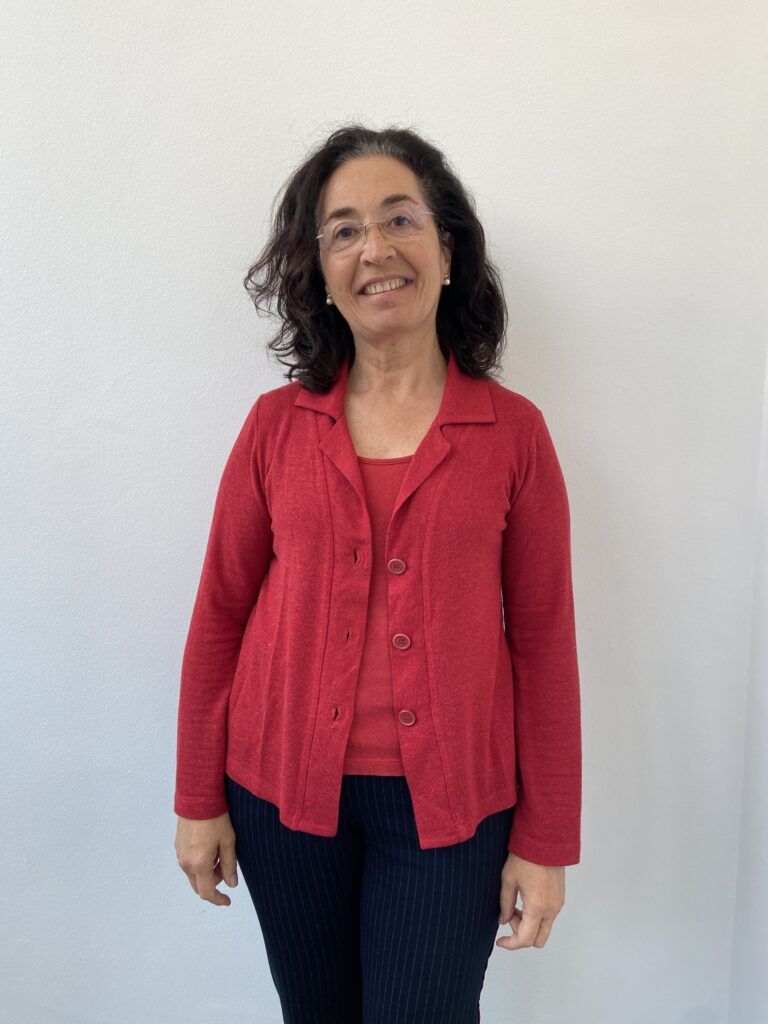
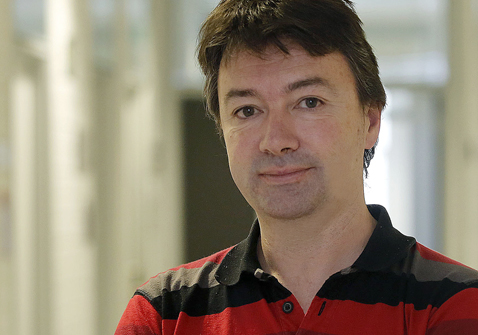
Carlos Iván Del Valle Morales is an Adjunct Professor at Carlos III University of Madrid. His research focuses on visible light communication (VLC), Li-Fi systems, and energy-harvesting technologies. He leads projects in the Grupo Universitario de Tecnologías de Identificación (GUTI), developing optical communication interfaces for IoT, high-power LED characterization, and indoor positioning systems using trilateration and angular diversity. Recent work emphasizes perovskite photovoltaic applications for self-powered IoT nodes and hybrid RF-VLC positioning systems. His publications span 2020–2024, addressing energy efficiency, bandwidth optimization, and hardware design for VLC systems in automotive and multimedia contexts.
Cecilio Angulo Bahón is a full Professor at the Polytechnic University of Catalonia (UPC), affiliated with the Barcelona School of Industrial Engineering (ETSEIB) and the Department of Systems, Automatics and Industrial Informatics Engineering . He leads research in Artificial Intelligence and Robotics , with significant contributions to healthcare data analytics, digital twins, and human-robot collaboration. His research spans machine learning for medical data harmonization, generative adversarial networks in health informatics, and evolutionary algorithms for control systems. Recent publications focus on synthetic healthcare data generation, climate-resilient agriculture , and UMAP-based data analysis . His work bridges AI theory with practical applications in industrial and healthcare domains. Scientific awards include the Sant Jordi 2023 Digital Polytechnic Initiative Award . He has supervised doctoral candidates like Carlos Flores-Vázquez and N. Raya, with key collaborations at the IDEAI-UPC Intelligent Data Science and AI Research Group and the Institute of Robotics and Industrial Informatics (CSIC-UPC).
Miquel Moreto Planas is a Senior Lecturer in the Department of Computer Architecture at the Barcelona School of Informatics, Universitat Politècnica de Catalunya (UPC). He is also affiliated with the Barcelona Supercomputing Center (BSC-CNS), a leading institution in high-performance computing. His academic profile is deeply rooted in computer architecture and high-performance computing, with a strong emphasis on practical and theoretical advancements in multicore systems, memory management, and hardware acceleration. His research interests span a wide range of topics including computer architecture, high-performance computing, multicore and manycore systems, cache and memory management, hardware acceleration for genomics and AI, RISC-V processor design, processing-in-memory, interconnection networks, and real-time systems. These interests are reflected in his extensive publication record and collaborative projects. The most recent articles highlight a significant trend toward interdisciplinary research, particularly the application of advanced computer architecture techniques to bioinformatics and healthcare. Key themes include the acceleration of genomic sequence alignment using novel hardware such as processing-in-memory, the development of benchmarks for ARM-based HPC systems in genomics, and the creation of AI-based 3D decision support tools for neurosurgical applications. His work also continues to advance core computer architecture topics like cache management, power-aware resource allocation in heterogeneous systems, and the design of secure, post-quantum cryptographic hardware based on RISC-V. Fulbright Award 2011 HiPEAC Paper Award HiPEAC Paper Award 2024 HiPEAC Paper Award Moreto has been a principal investigator or key contributor to multiple competitive R&D+i projects, such as the STRATUM project for neurosurgical tools, REDIOH for open hardware, and the Laboratorio Zettaescala de Barcelona. He has advised several doctoral students, including López, G., Kostalampros, I., and Haghi, A., and is a core member of the CAP (High Performance Computing) research group at UPC. His work is characterized by strong collaborations with leading researchers like Mateo Valero, Eduard Ayguadé, and Jesús Labarta, often bridging the gap between UPC and BSC-CNS. His laboratory and team affiliations are centered around the CAP group and the Barcelona Supercomputing Center, where he contributes to cutting-edge research in high-performance and embedded computer architectures. His recent work on the BIMSA accelerator and the STRATUM project demonstrates a clear future direction toward applying high-performance computing solutions to critical problems in genomics and medicine.
Marc Gonzalez Tallada is a researcher at the Universitat Politècnica de Catalunya (UPC), affiliated with the Department of Computer Architecture within the Barcelona School of Informatics (FIB). He is a member of the MGT Research Group, focusing on Programming Models and high-performance computing systems. His research interests lie in the domain of computer architecture and programming models, with a strong emphasis on parallel and distributed computing, performance optimization, and system-level software. His work contributes to the design and implementation of efficient programming models that exploit modern parallel architectures. The recent publications (2010–2024) reflect a consistent focus on programming models, particularly in the context of high-performance computing. Key themes include task-based programming, runtime systems, compiler optimization, memory management, and performance analysis. The research spans computer architecture, system software, and compiler design, demonstrating a multidisciplinary approach to solving challenges in parallel computing. Scientific Awards and Recognitions: Premi o reconeixement Advising and Grants: While specific student names are not listed, his involvement in competitive R&D+i projects indicates active participation in funded research. These projects suggest leadership or collaboration in grant-supported initiatives related to programming models and computer systems. His role in innovation and research projects highlights contributions to both academic and applied domains. Labs and Research Teams: He is a core member of the MGT (Programming Models) research group at UPC, which focuses on advancing the state-of-the-art in programming models for parallel and distributed systems.
Pablo José Fernández Galdo is a faculty member at the University of A Coruña, affiliated with the University College of Industrial Design and the Department of Civil Engineering. His expertise lies in Engineering Projects, with a strong focus on industrial design, product development, and additive manufacturing. He is an active member of the research group 'Observatorio para el diseño e innovación en movilidad, medios de transporte y automoción', contributing to innovation in transportation and mobility systems. His research interests span Industrial Design , Product Development , Additive Manufacturing , Automotive Design , Urban Furniture , and Smart Mobility . He emphasizes design methodology, sustainability, and user-centered innovation, particularly in educational and real-world applications. His work integrates design with engineering principles to solve contemporary mobility challenges. The recent articles and project concepts reflect a strong trend toward future mobility , including autonomous vehicles, electric transportation, shared urban mobility, and habitat vehicles for sports tourism. Many projects are linked to industry collaborations, especially with SEAT/Cupra, indicating applied research with commercial relevance. There is a recurring focus on design for experience , adaptability , and innovation in public and personal spaces . He has supervised numerous final-year and master's theses, mentoring students in advanced design projects. His collaborative work includes publications in engineering education and service-learning practices, highlighting his commitment to pedagogical innovation. His research has been supported through various R&D contracts with entities such as Fundación PRODINTEC, TELEVES S.A., CTAG, and LOREFAR S.L., demonstrating strong industry engagement. He has contributed to books and journal articles, particularly in the domain of design education and applied engineering. He is involved in designing experimental projects, models, and prototypes, often in collaboration with students and other researchers. His work environment fosters innovation through hands-on workshops and real-world design challenges, especially in the context of sustainable and intelligent mobility solutions.
Yolanda Becerra Fontal is a faculty member at the Universitat Politècnica de Catalunya (UPC), affiliated with the Department of Computer Architecture within the Barcelona School of Informatics (FIB). She is actively involved in research projects and collaborations, notably with the Barcelona Supercomputing Center, and is a member of prominent research groups such as the High Performance Computing Group (CAP) and CROMAI (Computing Resources Orchestration and Management for AI). Research Interests: Her research spans a broad spectrum of computer systems, with a consistent focus on performance, efficiency, and scalability. Key areas include Computer Architecture , High-Performance Computing (HPC) , Distributed and Cloud Systems , Resource and Energy Management in virtualized environments, and Data-Intensive Computing . More recently, her work has centered on innovative time-series database systems and data management for edge and cloud analytics. Publication Trends: Her recent scholarly output (2020-2022) shows a strong emphasis on time-series data management, proposing novel database architectures like NagareDB and strategies for polyglot persistence. Earlier work (2009-2013) was pivotal in MapReduce workload management, energy accounting for virtualized systems, and optical data center networks, demonstrating a long-standing contribution to foundational distributed computing challenges. Scientific Contributions: Her work has been published in top-tier journals and conferences such as Future Generation Computer Systems , IEEE Transactions , and Nucleic Acids Research . She has also contributed to significant competitive R&D projects and holds patents related to data flow management and distributed indexing. Advising and Grants: Dr. Becerra Fontal has served as a thesis advisor for doctoral students. Her research has been funded through competitive grants from national and regional programs, including Spanish State Research Plans (Plan Estatal de Investigación) and Catalonia's RIS3CAT strategy, supporting projects on high-performance computing and data management. Research Groups and Labs: She is a core member of the CAP - High Performance Computing Group and the CROMAI - Computing Resources Orchestration and Management for AI group at UPC. Her work is closely associated with the Barcelona Supercomputing Center (BSC) , one of Europe's leading supercomputing facilities, indicating access to advanced computational infrastructure.
Kenichi Oyaizu is a Professor in the Department of Applied Chemistry at the Faculty of Science and Engineering, Waseda University, Tokyo. His research spans polymer chemistry, energy storage, and materials science, with a focus on functional polymers for batteries, hydrogen storage, and high refractive index applications. He maintains active collaborations across academia and industry. Professor Oyaizu's research centers on designing polymers with tailored redox properties for energy storage systems, including organic radical batteries and hydrogen carriers. He pioneers high refractive index materials through molecular engineering of hydrogen-bonded networks and sulfur-rich frameworks. His group integrates machine learning with experimental synthesis, utilizing lossless data platforms for materials discovery and optimization in electrochemistry and optical applications. Analysis of his 15 most recent publications (2020-2025) reveals three dominant research trajectories: (1) High-refractive-index polymers leveraging hydrogen bonding and sulfur incorporation for optical devices, (2) Energy storage systems using redox-active polymers for batteries and hydrogen carriers, and (3) Materials informatics approaches applying generative models and quantum-inspired algorithms to accelerate polymer design. These streams demonstrate consistent innovation in structure-property relationships for functional materials. No scientific awards or major honors are documented in the provided materials. Professor Oyaizu leads an active research group mentoring graduate students and postdoctoral researchers in polymer synthesis and characterization. His work receives funding from Japanese national agencies supporting sustainable energy materials and advanced polymer research, though specific grant details are not disclosed in the source text. Current projects emphasize machine learning-driven development of solid-state electrolytes and hydrogen storage polymers. His laboratory operates within Waseda University's advanced materials infrastructure, utilizing specialized facilities for polymer synthesis, electrochemical testing, and optical characterization. The team collaborates with international researchers on battery technologies and participates in university-industry consortia focused on sustainable materials development, with recent projects highlighted in Waseda University News and EurekAlert!.
Jose Miguel Reynolds Barredo is an Associate Professor and Director of the Doctorate in Plasmas and Nuclear Fusion at Carlos III University of Madrid. His research focuses on plasma physics, magnetohydrodynamics (MHD), and energy systems resilience. He leads studies on stellarator reactor design, plasma confinement optimization, and the integration of renewable energy into power grids. His work spans advanced MHD equilibrium solvers (e.g., SIESTA, FLIPEC) and fusion device optimization for ITER and Wendelstein 7-X. He also investigates climate impacts on renewable energy efficiency and power grid stability under high renewable penetration. Notable contributions include HVDC grid segmentation strategies and non-axisymmetric plasma transport modeling. Key Areas: Fusion reactor design, MHD stability, power grid resilience, climate-energy interactions Tools: SIESTA, FLIPEC, GENE, OPA cascading blackout model Projects: Doctorate in Plasmas and Nuclear Fusion, W7-X bootstrap current studies, climate-energy system interdependencies Research emphasizes computational plasma physics and interdisciplinary energy solutions, blending theoretical, numerical, and applied engineering approaches.
Dr. Maria Ribera Sancho is a Professor at the Polytechnic University of Catalonia (BarcelonaTech), holding roles as Dean of the Faculty of Informatics of Barcelona (2004–2010), Vice-Dean (1998–2004), and currently Manager of the Education and Training Department at the Barcelona Supercomputing Center (BSC-CNS). She chairs the EQANIE Accreditation Committee and serves on the ACM-W Europe Executive Committee. Her research focuses on Software Engineering, Conceptual Modeling, Ontologies, Learning Analytics, and IoT applications. Notable contributions include work on automated design using conceptual models, model-driven software development, and semantic-based IoT infrastructure monitoring. She leads projects like LinDaFIX (social welfare data tools) and REMEDiAL (ontology-driven software automation). Key awards include the UPC Quality in Teaching Prize (2005, 2021), Jaume Vicens Vives Distinction (2005), Sapiens Award (2011), and Festibity Award (2011). She advises doctoral and master’s students on topics like IoT semantic monitoring and educational ontology development. Academic director of the inLab FIB Talent Program, she also directs the PRACE Advanced Training Center at BSC. Main projects include TINTIN (SQL integrity tool), e-Catalunya (collaborative government platform), and PILARES (learning analytics for secondary education). Her work bridges academia and industry through competitive projects with companies and institutions.
Salvador Naya is a Professor of Statistics and Operations Research at the University of A Coruña, affiliated with the Polytechnic School of Engineering (EPEF). He is a researcher in the Modeling, Optimization and Statistical Inference Group (MODES) and linked to the CITIC Research Center. His work focuses on statistical methodologies applied to maritime technology, energy efficiency, materials science, and interlaboratory studies. Recent activities include a keynote lecture on data and AI applications across domains (land, sea, air, space) at the Ferrol Industrial Campus. Research interests span statistical quality control, predictive modeling for naval engineering, thermal degradation analysis of biomaterials, and anomaly detection in energy systems. He collaborates with industry partners like Navantia Seanergies and has contributed to projects on Panama Canal vessel transit optimization, renewable energy, and waste-to-resource initiatives. His academic contributions include R package development (e.g., TTS, ILS) for statistical analysis in materials science and interlaboratory studies. He actively engages in education and industrial partnerships, emphasizing Industry 4.0 applications in maritime and construction sectors.
Albert Y. Zomaya is a Chair Professor of High Performance Computing & Networking at the University of Sydney's School of Computer Science. He also directs the Centre for Distributed and High Performance Computing. His research focuses on parallel and distributed computing, networking, and complex systems. He holds numerous prestigious fellowships, including IEEE Fellow, AAAS Fellow, and Fellow of the Australian Academy of Science. Roles: Chair Professor, Director of Centre for Distributed and High Performance Computing Affiliations: University of Sydney His expertise spans advanced computing architectures and networking solutions, with contributions to high-performance systems and complex adaptive systems. His awards reflect recognition for impactful research in computer science and engineering.
Alejandro Laguna Sanz is an Assistant Professor in the Department of Electronic Engineering at the School of Engineering, Universitat de València. His work bridges biomedical engineering and clinical diabetes care, focusing on technological solutions for glucose regulation. His research interests include diabetes technology, artificial pancreas systems, glucose monitoring accuracy, and the impact of exercise on glycemic control. He is particularly active in developing and evaluating predictive algorithms for glycemic management, especially in dynamic conditions such as physical activity and post-bariatric hypoglycemia. His work often combines control theory with clinical validation. The recent publications reveal a strong focus on real-world performance of continuous glucose monitors (CGMs), sex-specific responses in women with type 1 diabetes, and innovative interventions like elastic band resistance training and dual-hormone closed-loop systems. His research increasingly integrates population modeling, in silico studies, and virtual education platforms for artificial pancreas training. He is a member of the CLIDET research group (Clinimetry and Technological Development in Therapeutic Exercise), where he contributes to the design and clinical evaluation of advanced monitoring and control systems for metabolic diseases. Alejandro Laguna Sanz earned his PhD from Universitat Politècnica de València with a thesis on uncertainty in postprandial glucose modeling in type 1 diabetes, supervised by Dr. Paolo Rosseti and Dr. Jorge Bondía Company. He has not received any explicitly listed scientific awards in the provided text. He advises students within his research group, though no specific names are listed. His work is supported by collaborative projects in diabetes technology and engineering, particularly in the development of adaptive control systems and clinical validation of glucose monitoring devices. He is involved in both experimental and simulation-based studies.
Jose Santiago Garcia Cremades is an Associate Professor at Miguel Hernández University, affiliated with the Department of Statistics, Mathematics and Computer Science within the Institute of Operational Research. His primary teaching responsibilities include Statistics courses for dual-degree students in Audiovisual Communication and Journalism, as well as single-degree Journalism students. Contact information includes office location in the Torretamarit Building (room 32), Altabix-3, 03207 Elche, Alicante, Spain, and institutional email contact through dppto.estadistica@umh.es. Teaching: Statistics (2023/24, 2024/25, 2025/26 academic years) Research: Mathematical modeling on supercomputers and high-performance systems
Eneko Agirre is a Full Professor at the Faculty of Computer Science of the University of the Basque Country UPV/EHU, where he serves as the director of the HiTZ Centre on Language Technology. He is an active member of the Ixa Research Group and has established himself as a leading figure in Natural Language Processing, particularly in multilingual and low-resource language settings. His work bridges theoretical advances with practical applications for language technology. Agirre received his PhD from the University of the Basque Country in 1999 with a thesis on conceptual relationships and ontologies, supervised by Dr. Kepa Sarasola Gabiola and Dr. Arantza Díaz de Ilarraza Sánchez. His academic journey has been marked by significant contributions to computational linguistics and language technology. His research primarily focuses on Natural Language Processing challenges, with special emphasis on Word Sense Disambiguation, cross-lingual transfer learning, dialogue systems, and Large Language Models for low-resource languages. He has pioneered work on Basque language technology and has consistently addressed the challenges of multilingual AI systems, particularly examining how language models perform across different linguistic contexts and cultural settings. Analysis of his recent publications reveals a strong trajectory toward advancing Large Language Models for low-resource languages, with particular attention to Basque. His work spans vision-language models, information extraction techniques, and rigorous evaluation methodologies for NLP systems. A recurring theme is the exploration of how language models handle low-resource languages compared to high-resource ones, with groundbreaking findings about cultural knowledge transfer between languages. Fellow of the ACL (2021), one of only 74 research leaders worldwide National Research Prize on Informatics (2021) Best resource paper award at ACL 2024 Honourable mention paper award (top 1%) at EMNLP (2020) Outstanding Paper award (top 2%) at COLING (2020) Recipient of three Google Faculty Research Awards (2017, 2018, 2019) Agirre has supervised over 25 PhD students, many of whom have received prestigious awards including the EurAI Artificial Intelligence PhD Dissertation Award. His research has been supported by numerous European projects including LIHLITH (2018-2020) on lifelong learning for dialogue systems, and he has served as principal investigator for multiple CHIST-ERA and FP7 projects. His work with Google includes collaborative projects on entity dictionaries and conversational question answering systems. As director of the HiTZ Centre on Language Technology and member of the Ixa Research Group, Agirre leads a vibrant team focused on advancing language technology for Basque and other under-resourced languages. The center has developed significant resources including Latxa, an open language model for Basque, and has established itself as a hub for multilingual NLP research. His group actively collaborates with international institutions including Stanford, NYU, and various European universities, fostering a global network for language technology research.
Oscar Esparza Martin is a Professor at the Department of Telecommunications Engineering within the Barcelona School of Telecommunications Engineering at Universitat Politècnica de Catalunya (UPC). He is an active researcher with over 222 academic activities documented, specializing in network security and information security. His work spans multiple research groups including ISG - Grup de Seguretat de la Informació and ISG-MAK - Information Security Group - Mathematics Applied to Cryptography. Dr. Esparza Martin holds a Telecommunications Engineering degree and a Doctorate from UPC, with postgraduate studies in Networks, Advanced Broadcasting Systems and Services. His expertise centers on network security, with significant contributions to blockchain security, IoT security, satellite communications security, and data exchange protocols. His recent research output shows strong focus on secure blockchain applications, particularly with his work on DA2Wa (a secure pairing protocol between DApps and wallets), and data exchange protocols with free sampling services. His publications span high-impact journals including Computer Communications, IEEE Access, and Electronics. Award or recognition Dr. Esparza Martin actively participates in numerous international conferences as committee member, particularly in areas of IoT, wireless communications, vehicle technology, and security. His collaborations span multiple institutions with key partners including Muñoz Tapia, Soriano Ibáñez, Alins Delgado, and Mata Diaz. His research is supported by various competitive projects including the Cátedra CARISMATICA and Catalonia Digital Innovation Hub (DIH4CAT). His work connects theoretical cryptography with practical security implementations across multiple domains including blockchain, IoT, satellite communications, and data marketplaces, demonstrating both academic rigor and practical relevance to current security challenges.