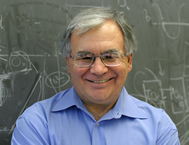
Falk Herwig is a Professor and Director of the Astrophysical Research Center (ARC) at the University of Victoria's Department of Physics and Astronomy. His research focuses on stellar hydrodynamics, nucleosynthesis, and the origin of elements. He leads the Computational Stellar Astrophysics (CSA) group, which conducts large-scale 3D hydrodynamics simulations of stellar convection and nucleosynthesis processes. The CSA group collaborates with the NSF Physics Frontier Center Joint Institute for Nuclear Astrophysics (JINA-CEE) and the NuGrid collaboration, leveraging high-performance computing resources like the Niagara supercomputer. Herwig's work includes studying convection-nuclear burning interactions in massive and binary stars, nucleosynthesis in diverse astrophysical environments, and the chemical evolution of galaxies. He has pioneered methods to model stellar yields and integrate computational models with observational data. His research spans topics from core convection in massive stars to the physics of merging white dwarfs and nova explosions. Herwig has contributed significantly to advancing computational infrastructure for astrophysics, including the development of tools like SYGMA for galactic chemical evolution modeling. His projects are supported by Compute Canada and involve collaborations with international institutions. Recent research highlights include investigating the role of neutron capture processes in element formation and refining models of white dwarf cooling and stellar evolution.