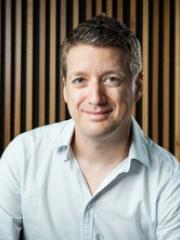
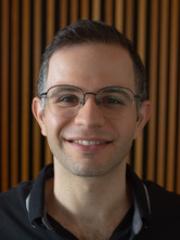
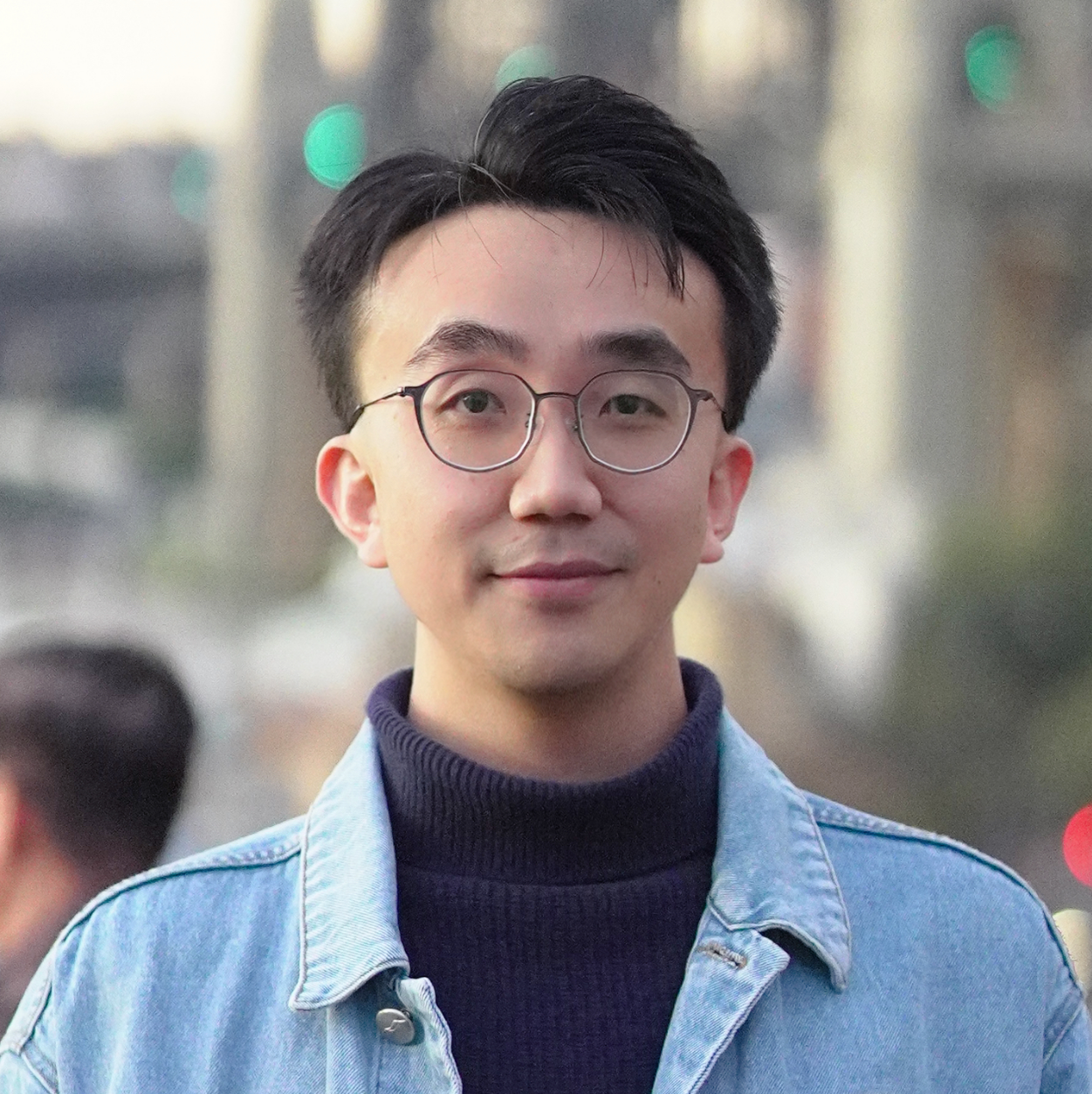
Buyung Kosasih is a Professor in the School of Mechanical, Materials, Mechatronic and Biomedical Engineering at the University of Wollongong. He has held this position since 2000 and focuses on teaching and research in mechanical engineering, including Machine Dynamics, Finite Element Methods, and Renewable Energy Technology. His research spans fluid dynamics in industrial processes, renewable energy systems, and aqueous lubrication. Key projects include 3D-printed surfboard fin optimization and steel coating dynamics. Research interests emphasize experimental and computational fluid dynamics, particularly in renewable energy turbines and tribological systems. Notable awards include the 2013 Outstanding Contribution to Teaching and Learning Award. He has supervised numerous students and led over 20 funded projects, including ARC grants for steel innovation and renewable energy. Collaborative work includes the Steel Research Hub and HVAC/cool roof efficiency studies.
Associate Professor David Lange serves as Deputy Director of Higher Degree by Research at the School of Civil Engineering , University of Queensland . With academic qualifications from the University of Edinburgh (PhD and MSc), he specializes in fire safety engineering and structural engineering , focusing on timber buildings, lithium-ion battery fire safety, and risk analysis techniques. Chartered Engineer (CPEng), Fellow of Engineers Australia (FIEAust) Registered Professional Engineer of Queensland (RPEQ) APEC Engineer and International Professional Engineer (IntPE) His research explores fire behavior in mass timber structures , vertical fire spread , and infrastructure resilience . Publications highlight his expertise in probabilistic modeling, fire dynamics, and structural response to extreme conditions. Recent collaborative studies examine flame spread in ventilated façades, compartment fire behavior, and risk evaluation frameworks. He actively supervises PhD projects in areas like fire safety of low-carbon concrete, diagrid structures, and physics-informed machine learning for fire modeling.
Veronica Garcia Hansen is an Associate Professor in the School of Architecture & Built Environment at Queensland University of Technology (QUT). Her research focuses on the interplay between building design and performance, emphasizing visual/thermal comfort, human health/wellbeing, and innovative methodologies using sensors, machine learning, and VR. She is an internationally recognized expert in high-performance building envelopes, daylighting, and lighting's non-visual health effects. Her 2020 WiSTEM2D award ($250k grant) supported 'healing environments in hospitals via efficient lighting design,' one of six global awards selected from 550 applications. Education: PhD (Queensland University of Technology), BArch (Other). Professional memberships include AIA, ASA, ISES, CIE (Division 3 Editor), and multiple editorial roles. Research Leadership: HDR Training Coordinator (2019–2021), Deputy Academic Lead (Architecture), and leader of QUT's Design Lab 'Emerging Technologies' program. She chairs CIE Division 3 (Interior Environment & Lighting Design) and represents Australia in IEA Task 61. Awards & Recognition: 2020 Johnson & Johnson Scholar; 2003 Asian Innovation Award (Bronze); Division Editor roles; and leadership in global architectural science initiatives. Supervision & Grants: Advised over 100 postgraduate students and led projects like 'Designing Healthy and Efficient Luminous Environments' (LP150100179). Current supervision includes lighting design strategies for healthcare staff wellbeing. Labs/Teams: Core member of QUT's Design Lab, focusing on emerging technologies and interdisciplinary architectural science research.
Dr. Anwar Orabi is a Lecturer in Fire Safety Engineering at the School of Civil Engineering, University of Queensland , where he joined in mid-2023. His research focuses on Structural Fire Engineering , Numerical Simulation for performance-based design, Large-Scale Structural Analysis under fire conditions, and the Integration of AI and Data Science for real-time risk mitigation. He previously contributed to keystone projects in Hong Kong, including SureFire: Smart Urban Resilience and Firefighting and the Integrated Safety Engineering knowledge transfer initiative. Research Themes : Structural Fire Engineering, AI-Driven Design, Performance-Based Analysis Key Tools : OpenSees Framework, Finite Element Modeling, Hybrid Fire Simulation His recent work explores fire behavior in diagrid structures , composite floors , and steel/timber systems , with a focus on automated design and disaster resilience . Publications span Springer , Fire Technology , and Engineering Structures . Current supervision includes projects on physics-informed machine learning , mass timber coatings , and fire hazard mitigation in wildland-urban interfaces. Collaborators : Associate Professor David Lange, Dr. Felix Wiesner, Professor Asif Usmani
Professor Pejman Sharafi is a leading academic at Western Sydney University, specializing in modular and sustainable construction systems. His research focuses on prefabrication, industrialized building methods, and structural resilience. He holds a Doctor of Philosophy from the University of Wollongong and has contributed to over 80 peer-reviewed publications. His work aligns with UN Sustainable Development Goals, emphasizing environmental and economic sustainability. Education: Doctor of Philosophy, University of Wollongong Research Interests: Professor Sharafi’s expertise includes modular construction, smart building systems, and seismic-resistant design. He explores innovations in inter-modular connections, energy harvesting for infrastructure, and recycled materials for blast protection. Projects & Collaborations: Development of high-performance modular systems funded by Infratech Industries Robotics array facility for construction automation (with Monash University) Collaborations with industry partners like Alspec Aluminium Awards: Discovery Early Career Research Award (2019) Multidisciplinary Research Team of the Year (2023) Researcher of the Year (2023) Advising & Grants: Supervises HDR candidates and leads projects on net-zero digital platforms and industrialized sustainable construction. Active in funding initiatives from the Australian Research Council and industry partnerships. Labs & Teams: Engaged with cross-disciplinary teams focusing on modular building systems, smart construction technologies, and structural health monitoring.
Philip Oldfield is Professor and Head of the School of Built Environment at UNSW Sydney, specializing in sustainable high-rise architecture and embodied carbon reduction. His research examines tall building design, housing sustainability, and climate-responsive urban development. Research interests include: Decarbonizing skyscraper design Embodied carbon assessment Sustainable housing solutions Urban density strategies Climate-responsive architecture
Chengyang Liu is a Lecturer in Construction Management (Education Focused) at the School of PCPM, RMIT University. His research focuses on renewable energy systems, building design optimization, and sustainable urban planning. He specializes in integrating photovoltaic technologies with building envelopes, virtual power plants, and data-driven approaches for energy decision-making. Research Interests: Building performance assessment, urban energy systems, solar energy applications, and digitalization in construction education. Key methods include machine learning for urban morphological analysis, reinforcement learning for VPP optimization, and frameworks for BIPV conceptual design. Recent work emphasizes community-focused renewable transitions, kinetic façade energy performance, and algorithmic approaches to energy pattern extraction. His articles bridge technical innovation with practical applications in urban sustainability. Service & Engagement: Organizing Committee Member for Asia-Pacific Solar Research Conference (2023-2023), and RMIT CIB Student Chapter Member (2021-2022).
Dr. Eugenia Gasparri is a Senior Lecturer in Architectural Technologies at the University of Sydney's School of Architecture, Design and Planning. She serves as Associate Dean (Research Education) and Stream Director for Sustainable Design in the Master of Architectural Science program. A Fellow of the Higher Education Academy (FHEA) and former co-chair of the University of Sydney Pride Network (Gold AWAI Awards 2022–2024), she holds a PhD in Building Engineering with honors from Politecnico di Milano. Educations : MEng, PhD in Building Engineering (Politecnico di Milano), FHEA Her research focuses on sustainable construction through multi-disciplinary innovation, particularly in high-performance facades and industrialized timber technologies . She develops strategies to reduce environmental impact, enhance construction productivity, and promote circular approaches. Her work bridges academia and industry, serving as scientific advisor for national and international projects. Recent publications highlight trends in cross-laminated timber systems , carbon emission assessment , and agrivoltaics integration into building envelopes. These works emphasize lifecycle assessment, moisture management, and machine learning applications for sustainable design. Scientific Awards : Gold AWAI Awards (2022–2024), Fellowship of the Higher Education Academy (FHEA) Dr. Gasparri supervises research students working on industrialized timber façades , AI-powered design frameworks , and mold resilience in building envelopes. She has secured grants including the 2024 Ignition Grant for Timber Active Envelopes, 2023 ARC Research Hub for Timber in Australian Built Environment, and 2022 Victorian Building Authority Research Grant. As a member of the Sydney Environment Institute, Net Zero Institute, and Nano Institute, she contributes to multidisciplinary research through her timber envelope lab and collaborations with international teams.
Professor Mahendran Mahen is a distinguished academic in Structural Engineering at Queensland University of Technology's School of Civil Engineering. With over two decades of research excellence, his work has significantly advanced the understanding of cold-formed steel structures under extreme conditions, particularly fire and bushfire scenarios. His leadership in the field is evidenced by his extensive publication record and supervision of numerous doctoral students. Professor Mahen's research interests center on structural performance under fire conditions, with particular emphasis on light steel framing systems, bushfire-resistant construction, and numerical modeling of structural behavior. His work bridges theoretical analysis with practical applications, focusing on developing safer building systems that comply with stringent safety standards while maintaining structural integrity during extreme events. His research has directly influenced building codes and safety standards for steel construction in fire-prone regions. The publication portfolio reveals a clear research trajectory focused on fire resistance of light steel frame systems, with recent work expanding into bushfire protection for residential structures. His articles demonstrate sophisticated integration of experimental testing with advanced numerical modeling techniques, providing comprehensive insights into structural behavior under thermal stress. The consistent high citation counts across his publications indicate significant impact within the structural engineering community. Professor Mahen has received recognition through substantial research funding and collaborative projects with industry partners, though specific awards aren't detailed in the publication record. His work has formed the foundation for several building code provisions related to steel construction in fire conditions. As a dedicated educator and mentor, Professor Mahen has supervised numerous PhD and Master's students, many of whom have become prominent researchers in their own right. His laboratory facilities support cutting-edge research in structural fire engineering, with specialized equipment for full-scale fire testing of building components. Current research directions include developing innovative safe room designs for bushfire protection and enhancing the fire resistance of steel structural systems through novel material applications.
Dr. Parmendra Sharma is a Senior Lecturer in the Department of Accounting, Finance and Economics at Griffith University, where he also serves as a member of the Griffith Asia Institute. He holds a PhD in Banking and Financial Economics from Griffith University. His research focuses on banking and finance in developing and emerging Asia-Pacific markets, particularly in the Pacific region, with an emphasis on strengthening policy-making capacities through collaborations with central banks and government ministries. Key affiliations include the Griffith Asia Institute and leadership roles in the Pacific Islands Centre for Development Policy and Research (PICDPR). He has established strong partnerships with Pacific Island nations' financial institutions, including Fiji, Papua New Guinea, and Vanuatu. His work emphasizes capacity-building through joint research projects, publications, and policy dialogues. Dr. Sharma has secured numerous grants, including major funding from DFAT and the World Bank, supporting initiatives such as the 'Pacific Digital Economy' and 'Developing Research Capacity at Central Banks.' He has convened high-level policy dialogues and conferences, fostering collaboration among regional policymakers. His research outputs span topics like SME credit constraints, Pacific banking integration, and microfinance impacts. He supervises PhD candidates exploring themes such as fintech in the Pacific and inflation dynamics. His work aligns with Sustainable Development Goals 8, 9, and 10, addressing economic growth, innovation, and inequality reduction.
Glenda Caldwell is a Professor in the Design Department within the Creative Industries Faculty at Queensland University of Technology (QUT), with an extensive research portfolio spanning media architecture, human-robot interaction, and radical placemaking. Her academic career shows consistent productivity with 139 publications from 1999 to forthcoming 2025 works, demonstrating sustained research leadership in interdisciplinary domains that bridge technology, urban design, and community engagement. Dr. Caldwell completed her PhD by Publication at QUT in 2016 titled 'Media architecture: Facilitating the co-creation of place,' establishing her foundational work in digital placemaking. Her educational trajectory shows progression from early architectural design education to interdisciplinary research that increasingly incorporates robotics and healthcare applications. She has developed significant expertise in both theoretical frameworks and practical implementations of media architecture through projects like the InstaBooth. Caldwell's research program centers on how digital technologies transform urban experiences and healthcare environments. Her work explores media architecture as a tool for community empowerment, human-robot collaboration in surgical and aged care settings, and participatory design approaches for sustainable communities. She has pioneered 'radical placemaking' frameworks that use digitally situated narratives to address social inequalities and has increasingly incorporated 'more-than-human' perspectives that examine urban ecosystems beyond human-centric viewpoints. Analysis of her 15 most recent publications (2024-2025) reveals three dominant research trajectories: 1) Human-robot interaction in healthcare (particularly surgical robotics and aged care), 2) Radical placemaking through community-driven digital narratives, and 3) More-than-human approaches to urban technology that consider ecological and multispecies perspectives. Her work demonstrates strong methodological diversity, employing co-design, qualitative analysis, and scoping reviews across these domains. Dr. Caldwell has received significant recognition through high-impact publications in top venues including ACM/IEEE HRI conferences, Urban Planning journal, and Scientific Reports. Her work on the InstaBooth methodology has influenced community engagement practices in urban design, while her recent healthcare robotics research is contributing to improved human factors in surgical and aged care settings. She actively supervises and collaborates with numerous researchers across disciplines, including notable work with PhD candidates Waldemar Jenek and Kavita Gonsalves. Caldwell has secured research funding for projects examining human-robot collaboration in healthcare settings and community-based media architecture initiatives, though specific grant details aren't documented in her publication record. Her research is connected to QUT's Human-Robot Interaction Lab and Media Architecture Research Group, where she contributes to developing frameworks for ethical and effective technology deployment in healthcare and urban contexts. Caldwell's current work focuses on future directions including multispecies storytelling in precarious times, systemic impacts of rehabilitation robots, and pandemic-responsive urban design approaches that address contemporary social challenges.
Professor Priya Rajagopalan is the Associate Dean (Research and Innovation) and Director of the Post Carbon Research Centre for Infrastructure and the Built Environment at RMIT University's School of Property, Construction and Project Management. Her work focuses on sustainable built environments, energy efficiency, and urban climatology. She actively engages with industry and governments to develop practical solutions for climate change adaptation and mitigation. Her research interests include sustainable building design, energy benchmarking, urban heat island effects, indoor environmental quality simulation, lighting, acoustics, and citizen science approaches to urban microclimate monitoring. She has led multidisciplinary teams and secured competitive grants to create actionable guidelines for the building industry, such as energy performance benchmarks for aquatic centers adopted by Aquatics and Recreation Victoria. Priya’s articles consistently address challenges in urban thermal resilience, indoor air quality, and building system optimization. Recent trends show her expanding focus on user-centric design solutions and integrating machine learning into environmental modeling for higher precision. She has received the National University of Singapore Research Scholarship Award and maintains strong collaborations with organizations like Energy@RMIT. Her teaching includes the Master of Energy Efficient and Sustainable Building Programme, emphasizing cutting-edge tools for navigating evolving environmental standards. Priya’s advisory role and supervision of research projects highlight her commitment to advancing AI-driven frameworks for net-zero building design, circadian lighting systems, and urban cooling strategies. She also leads initiatives like the HEAL Network to enhance health resilience against urban climate challenges.
Mark Dewsbury is a Senior Lecturer and Director of the Tasmania Architectural Science Laboratory (TASL) at the University of Tasmania , with over 30 years of experience in sustainable building design. His research informs national building codes through hygrothermal analysis and mold risk modeling for residential systems. PhD, University of Tasmania (2011) M. Architecture (2002) B. Environmental Design (2000) Mark's research focuses on architectural science and building physics , particularly hygrothermal performance, mold growth analysis, and energy-efficient envelope design. His work addresses Australia's 2050 net-zero targets through timber construction innovation and empirical validation of simulation tools. Recent publications analyze moisture management in timber systems, climate-responsive wall design , and carbon sequestration in engineered wood. These align with national building regulations and industry partnerships. Scientific Awards: Fellow, Architectural Science Association (2024) He supervises doctoral candidates in projects like Hygrothermics for prefab construction and High performance timber envelopes , while leading industry collaborations with CSIRO, Fraunhofer Institute, and Australian Building Codes Board. His consultancy work includes condensation risk mitigation and thermal performance assessments.
Francesco Fiorito is an Associate Professor in High Performance Architecture at the Faculty of Built Environment of the University of New South Wales. Prior to joining UNSW, he held appointments at The University of Sydney in the Architectural Science discipline and at Politecnico di Bari (Italy) in the Architectural Engineering program. His educational background includes a MEng (1st class Hons), PhD, and CPEng (Italy). Fiorito's research focuses on facade engineering and design, with recent work centered on kinetic facades and smart materials including shape memory alloys, phase-change materials, and chromogenic materials. His research aims to create self-adaptive building components that reduce energy demand while improving indoor comfort. His current activities include development of smart kinetic facade technologies, integrated thermal and visual comfort analyses, implementation of photovoltachromics and electro-active polymers in building envelopes, and integration of renewable energy conversion systems. He serves as the Australian representative in the European COST Action on 'Adaptive Facades Network' and is Chief Investigator for the ARC-funded Training Centre for Advanced Manufacturing of Prefabricated Housing. 2015-2019: ARC Training Centre for Advanced Manufacturing of Prefabricated Housing 2014-2016: Sydney Opera House Concrete Conservation Strategy Project 2014-2015: Prototyping a self-adaptive shading device activated by smart materials 2014-2015: International Network for High Performance Smart Kinetic Facades 2013-2015: Smart materials for dynamically activated building components 2011-2012: BMG - biomimetic microwind generator project Fiorito is a member of the Chartered Institute of Engineers of Bari (since 2002), International Solar Energy Society (since 2004), and Ar.Tec. (Italian Architectural Engineering scientific association). His professional practice includes structural engineering, building integration of renewable energy systems, and restoration of historic buildings. He teaches ARCH1331 Architectural Fabrication, ARCH7809 Architectural Environment and Building Services, and ARCH7213 High Performance Building Systems at UNSW.
Dr. Teng Xiong is a Researcher affiliated with the Faculty of Arts, Design & Architecture at UNSW Sydney , focusing on thermal energy storage and nanomaterials for building applications. His work integrates phase change materials (PCMs), graphene, and metallic nanowires to improve building energy efficiency and sustainability. His research interests span Phase Change Materials (PCM) in Construction Thermal Conductivity Enhancement Sustainable Building Materials Heat Transfer Optimization Nanoparticle Integration in Concrete Dr. Xiong's publications highlight trends in PCM composites, waste material utilization in concrete, and advanced cooling systems for tropical climates. His recent work explores corona discharge for condensation enhancement and slag-based geopolymers for marine infrastructure durability. Scientific awards include the Early Career Researcher (ECR) Development Fund . He has contributed to 21 journal articles and 3 book chapters, primarily on energy-efficient materials and systems. Contact: teng.xiong@unsw.edu.au | ORCID