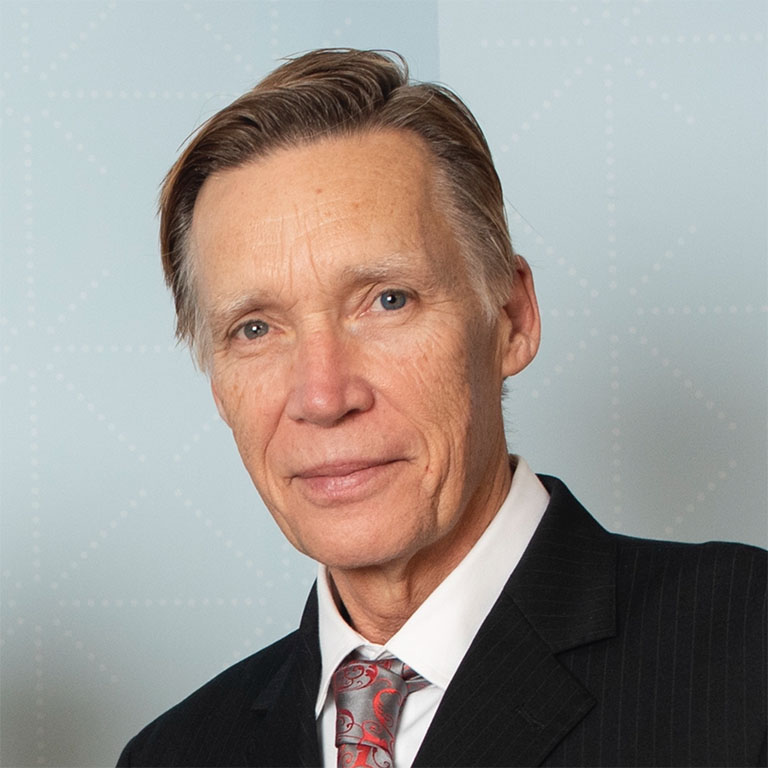
Alessia Ferrari is a fixed-term researcher in the Department of Engineering and Architecture at the University of Parma, Italy. She lectures on Hydrology within the Bachelor’s degree programme in Civil and Environmental Engineering and serves as the reference teacher for the same programme across multiple academic years (2020/2021 – 2025/2026). Research Focus Ferrari’s research integrates advanced numerical modelling with real-world flood-risk management. Key themes include: High-resolution 2-D shallow-water simulations using GPU-parallel codes. Porosity-based approaches for large-scale urban flood modelling. Levee-breach hydraulics and emergency-action planning. Calibration of hydraulic models using tools such as PEST. Integration of machine-learning techniques with physics-based flood forecasting. Publication Trends Across more than 25 peer-reviewed works (2015-2025), Ferrari has concentrated on computational hydraulics applied to extreme flood events in Northern Italy (e.g., Parma 2014, Lamone 2024). Her papers consistently advance numerical schemes (ADER, HLLEM Riemann solvers) and GPU acceleration while validating models against field data, thereby bridging theoretical development and practical flood-mitigation strategies. Contact & Office E-mail: alessia.ferrari@unipr.it Office: Science and Technology Campus – Pavilion 10, Engineering Scientific Headquarters, Parco Area delle Scienze 181/A, 43124 Parma, Italy.
Stefano Grivet Talocia is a Full Professor in the Department of Electronics and Telecommunications at Polytechnic University of Turin. He serves as Director of the Doctoral School, is a member of the Interdepartmental Center SmartData@PoliTO - Big Data and Data Science Laboratory, and holds positions on the University Committee for Research and the Commission for the Promotion of Library, Archive and Museum Heritage. He is also President of the Doctoral School Council. His educational background includes a Laurea degree (summa cum laude) in Electronic Engineering (1994) and a Ph.D. in Electronic and Communication Engineering (1998), both from Polytechnic University of Torino. From 1994 to 1996, he worked at NASA/Goddard Space Flight Center in Greenbelt, MD, USA. Professor Grivet Talocia's research focuses on passive macro-modeling of concentrated and distributed interconnect structures for Signal/Power Integrity, order reduction techniques, and modeling and simulation of fields, circuits, and their interactions. His work spans several key areas including fast simulation of transmission lines (TOPLine technique), macromodeling and model order reduction, simulation methods for fields and circuits, passivity enforcement of lumped macromodels, waveform relaxation techniques, and wavelet applications. His research has significant applications in electromagnetic compatibility and signal integrity verification of complex electronic systems. His recent publications demonstrate strong trends in model order reduction techniques applied to power integrity verification, advanced macromodeling for electromagnetic compatibility, nonlinear circuit analysis, uncertainty quantification in PCB design, and power electronics modeling. These works consistently address practical engineering challenges in high-speed electronic design with emphasis on computational efficiency and accuracy. URSI Young Scientist Award (1999) Best symposium paper (2006) Three IBM Shared University Research Awards (2007-2009) IEEE Transactions on Advanced Packaging Best Paper Award (2007) Best EPEP conference paper awards (2007, 2008) Best Associate Editor Award - IEEE Transactions (2020) Best Conference Paper Award (2020) Three Intel SRS Grants (2022-2024) IEEE Fellow (2018) Professor Grivet Talocia actively supervises PhD students working on cutting-edge topics including machine learning applications in signal integrity, model reduction techniques, and electromagnetic compatibility. He has secured significant research funding through competitive grants including PRIN projects and multiple industry-sponsored research contracts with major technology companies such as IBM, Intel, Nokia, Hitachi, and Infineon. His technology transfer activities include co-founding the spin-off IdemWorks (acquired by CST in 2016) and maintaining active collaborations with industry partners. He leads the EMC Group (Electromagnetic Compatibility) within the Department of Electronics and Telecommunications and has developed the autoCircuits web service for automated generation of circuit theory problems. His research has been recognized by inclusion in the top 2% worldwide researcher catalog (Stanford) since 2019.
Antonio Vairo is a full Professor at the Department of Physics, TUM School of Natural Sciences, Technical University of Munich, where he holds the Chair of Theoretical Physics - Applied Quantum Field Theory (T39) at the James-Franck-Str. 1/I campus in Garching bei München. His research focuses on the theoretical foundations of quantum chromodynamics with emphasis on heavy quark systems and non-perturbative phenomena. Professor Vairo's primary research interests include Quantum Chromodynamics (QCD), Heavy Quark Physics, Lattice Gauge Theory, Effective Field Theories, and Exotic Hadron Spectroscopy. His work bridges computational approaches with analytical frameworks to investigate quarkonium dynamics in extreme environments like the quark-gluon plasma, while developing novel applications of Born-Oppenheimer effective theory to multi-quark systems. Recent investigations extend into dark matter bound state formation in the early universe, demonstrating interdisciplinary reach across particle physics and cosmology. Analysis of his 2024-2025 publications reveals three dominant research thrusts: (1) quarkonium suppression mechanisms in heavy-ion collisions using open quantum systems approaches, (2) high-precision lattice QCD computations of static forces and chromoelectric correlators, and (3) systematic development of effective field theories for exotic hadrons and dark matter pairs. His work on pNRQCD (potential non-relativistic QCD) provides critical connections between lattice results and experimental observables in heavy-ion physics. Professor Vairo maintains active research leadership through collaborations with international groups including the Belle II experiment, as evidenced by his contributions to 'The Belle II Physics Book'. His methodological innovations in applying quantum trajectory methods to quarkonium evolution and developing FeynOnium computational tools for effective field theories demonstrate significant technical contributions to the field. Current research directions emphasize next-to-leading order corrections in heavy quark dynamics and Debye mass effects in dark matter bound state formation.
Cesare Franchini is a full Professor at the University of Vienna's Faculty of Physics, leading the Computational Materials Physics research group. His work focuses on theoretical understanding and computational modeling of quantum materials using first principles methods, particularly VASP. He maintains an active research program with numerous postdocs, PhD students, and collaborations across multiple institutions including the University of Bologna. Professor Franchini's research centers on quantum materials with many interacting degrees of freedom (lattice, spin, and electron orbital) that enable novel electronic and magnetic phases. His specific interests include metal-insulator transitions, polaron physics (electron-phonon interactions), non-collinear spin orderings, topological Dirac/Weyl phases, multiferroism, and superconductivity. He has increasingly incorporated machine learning data-driven tools and diagrammatic Monte Carlo techniques into his computational approaches. Analysis of his recent publications (2024-2025) reveals a strong focus on polaron physics across multiple material systems, with significant work on hematite, titanium dioxide, and quantum paraelectrics like KTaO3. His research increasingly integrates machine learning with traditional first-principles methods, particularly for studying hydrogen diffusion, surface science phenomena, and electronic structure calculations. There's also substantial work on single-atom catalysis and the application of advanced computational techniques to understand fundamental charge transport mechanisms in energy materials. Professor Franchini actively supervises numerous PhD students and postdocs, including Andrea Angeletti, Viktor Birschitzky, Lorenzo Celiberti, and several others working on diverse aspects of computational materials physics. He leads or participates in major research projects including TACO (Taming Complexity in Materials Modeling), DCAFM (Doctoral College Advanced Functional Materials), and the recently launched Spin-orbit entangled anharmonic polarons project. His group maintains strong collaborations with experimentalists at Charles University, Technical University of Vienna, and other international institutions.
Rafał Latała is a distinguished Professor at the Institute of Mathematics, Faculty of Mathematics, Informatics and Mechanics, University of Warsaw, where he has held a full professorship since 2013. He is also a Corresponding Member of the Polish Academy of Sciences since 2016 and an AMS Fellow since 2013. His academic career spans over 25 years at the University of Warsaw, progressing from Instructor (1994-1997) to Assistant Professor (1997-2003), Associate Professor (2003-2012), and finally to his current position as Professor. Additionally, he held a part-time professorship at the Institute of Mathematics of the Polish Academy of Sciences from 2009-2012. His educational background includes a PhD in Mathematics from the University of Warsaw (1997) with a dissertation on estimation of moments of sums of independent random variables under the supervision of Professor Stanisław Kwapien, a Habilitation degree in Mathematics (2002), and the title of Professor awarded by the President of Poland (2009). He completed his MSc in Mathematics at the University of Warsaw in 1994. Latała's research focuses on the intersection of probability theory and geometric analysis, with particular expertise in convex geometry, functional analysis, asymptotic geometric analysis, and the theory of log-concave measures. His work bridges theoretical mathematics with applications in high-dimensional statistics and random matrix theory. He has made significant contributions to understanding moment inequalities, concentration phenomena, and the geometric structure of high-dimensional random objects. His recent work demonstrates increasing sophistication in handling complex relationships between different norms of random vectors and matrices. His publication record shows a consistent focus on probabilistic methods in geometric settings, with recent articles demonstrating advanced techniques for analyzing random matrices, log-concave measures, and canonical processes. The research trajectory reveals increasingly sophisticated methods for bounding norms and moments in high-dimensional spaces, with applications spanning theoretical mathematics to statistical learning theory. Kolmogorov Lecture 2024 Prize of the Foundation for Polish Science in mathematics, physics, and engineering sciences 2023 Orlicz Lecture 2023 Institute of Mathematics of the Polish Academy of Sciences Prize 2014 AMS Fellow since 2013 Foundation for Polish Science Grant Mistrz 2007-2011 Prime Minister Award for Habilitation Thesis 2003 Invited Speaker at International Congress of Mathematicians 2002 Latała has supervised five PhD students to completion (Rafal Meller, Marta Strzelecka, Jakub Wojtaszczyk, Radoslaw Adamczak, and Rafal Lochowski) and four MSc students (Maciej Bartczak, Dariusz Matlak, Tomasz Tkocz, and Marcin Lis). His editorial service includes positions at Probability Surveys (2024-26), The Annals of Probability (2015-20), and Studia Mathematica (2006-present). He has organized numerous international conferences including the High Dimensional Probability X conference in 2023 and served on various professional committees including the Central Commission for Academic Degrees and Titles.
Joerg Sander is a Professor and Chair of the Department of Computing Science at the University of Alberta's Faculty of Science. His research focuses on knowledge discovery in databases, particularly density-based clustering (e.g., DBSCAN, OPTICS, HDBSCAN*) and outlier detection (e.g., LOF). He is a leading contributor to foundational algorithms in data mining, including the DBSCAN paper which received the 2014 SIGKDD Test-of-Time Award. Education: M.A., Philosophy of Science (University of Munich, 1989) Diploma in Computer Science (University of Munich, 1996) Ph.D., Computer Science (University of Munich, 1998) Research Interests: Design and theoretical analysis of clustering algorithms Outlier detection methodologies Spatial and high-dimensional data mining Algorithm scalability and visualization Key Contributions: DBSCAN (density-based spatial clustering of applications with noise) OPTICS (ordering points to identify the clustering structure) LOF (local outlier factor) Awards: SIGKDD Test-of-Time Award (2014)
Jerome Busemeyer is a Distinguished Professor and Provost Professor in the Department of Psychological and Brain Sciences at Indiana University Bloomington, with a joint affiliation in the Cognitive Science Program. He is a Fellow of the American Academy of Arts and Sciences, reflecting his significant contributions to the science of decision-making and cognitive modeling. His educational background includes a Ph.D. in Psychology from the University of South Carolina (1979), an M.A. from the same institution (1976), and a B.A. cum laude from the University of Cincinnati (1973). He completed postdoctoral training in Quantitative Methods at the University of Illinois in 1980. Busemeyer's research focuses on mathematical and computational models of human judgment and decision-making , with pioneering work in quantum cognition , dynamic models , and neural network modeling . He developed Decision Field Theory , a dynamic cognitive model of decision processes, and has led the application of quantum probability to explain cognitive 'errors' such as order effects and violations of rational decision rules. His recent publications reveal a consistent trend toward integrating quantum-theoretic frameworks with empirical decision research, exploring topics such as pricing behavior, confidence judgments, multi-attribute decisions, and medical decision-making. These works appear in top journals including Psychological Review , Trends in Cognitive Sciences , and Proceedings of the National Academy of Sciences , indicating sustained high-impact contributions. Fellow, American Academy of Arts and Sciences Distinguished Professor, Indiana University Provost Professor, Indiana University Busemeyer has advised numerous graduate students and postdoctoral researchers, many of whom have become active collaborators and co-authors. His lab, the Judgment and Decision-Making Laboratory (Decision Research Laboratory), supports interdisciplinary research in cognitive science and receives ongoing funding for theoretical and experimental work. He has authored influential books, including Quantum Models of Cognition and Decision and Cognitive Modeling . The lab, located in Room A300G of the Psychology Building, fosters collaborative research on decision-making, quantum cognition, and computational modeling, with active projects involving fMRI, behavioral experiments, and theoretical development.
Thorsten Koch serves as Head of the Department of Applied Algorithmic Intelligence Methods within the Division of Mathematical Algorithmic Intelligence at Zuse Institute Berlin (ZIB). His research spans mathematical optimization, energy systems modeling, quantum computing applications, and scientometrics. Koch leads significant research projects including FAN (focusing on AI in scholarly communication), UNSEEN (energy scenarios), HPO-NAVI (research software visibility), and Multi-Energy Models for European Energy System Planning. Koch's research interests center on developing advanced optimization algorithms for complex systems, particularly in energy networks and scientific data analysis. His work bridges theoretical mathematics with practical applications in gas network optimization, wind farm design, portfolio management, and quantum computing. He has pioneered methods for large-scale mixed-integer programming, scenario generation, and the integration of machine learning with traditional optimization techniques. His recent publications demonstrate growing emphasis on quantum optimization, scientometrics, and the application of AI to scientific communication infrastructure. His publication trends reveal a strategic expansion from traditional mathematical optimization into quantum computing applications and scientific data infrastructure. Recent work shows increasing collaboration across disciplines - connecting energy systems analysis with financial modeling, integrating machine learning with optimization solvers, and applying computational methods to scientometrics. The 15 most recent articles highlight three major thrusts: quantum optimization (33%), energy systems modeling (27%), and scientific data infrastructure (40%), reflecting his leadership in both theoretical algorithm development and practical implementation for societal challenges. Koch actively contributes to research infrastructure through leadership roles in projects like KOBV (Berlin-Brandenburg Cooperative Library Network), HDC (Humanities Data Centre), and CIB (future library networks). His work on the DeepGreen initiative focuses on establishing legally secure workflows for implementing open-access components in scientific publication licensing agreements, demonstrating his commitment to open science principles and research data management.
Brian Vermeire is an Associate Professor in the Department of Mechanical, Industrial and Aerospace Engineering at Concordia University. His research focuses on computational fluid dynamics, aerodynamics, high-performance computing, turbulence modeling, numerical methods, and optimization. He leads the Computational Aerodynamics Laboratory, emphasizing scale-resolving simulations and high-order numerical techniques. Key interests include large eddy simulation (LES), direct numerical simulation (DNS), and gradient-free optimization. His work often involves developing advanced algorithms for unstructured grids and high-performance computing platforms. Research Interests: High-order numerical methods Implicit/explicit time integration schemes Polynomial adaptation for adaptive meshing Aeroacoustic shape optimization Large eddy simulation (LES) and direct numerical simulation (DNS) Software development for CFD (e.g., PyFR) Recent work trends show strong focus on hybridized flux reconstruction methods, energy-conservative algorithms, and industrial adoption of high-fidelity simulations. Major contributions include scalable implementations for petascale computing and open-source tools like PyFR. His group collaborates on applications such as wind turbine aerodynamics and low-pressure turbine design. Labs/Teams: Computational Aerodynamics Laboratory (website: link )
Dr. Jean-Christophe Nave is an Associate Professor in the Department of Mathematics and Statistics at McGill University. He holds a PhD from the University of California, Santa Barbara (2004), under advisors Xu-Dong Liu and Sanjoy Banerjee. Prior to McGill, he served as a Lecturer and Instructor at MIT's Mathematics Department (2005-2010). His research focuses on numerical analysis, partial differential equations, fluid mechanics, and computational methods for interface problems. He has led research groups involving postdocs, PhD, and undergraduate students, collaborating on projects like the Correction Function Method for PDEs and the Characteristic Mapping Method for advection problems. Education: Ph.D. in Applied Mathematics from UCSB (2004). Affiliations include the Institut des Sciences Mathematiques Steering Committee, Centre de Recherches Mathematiques Applied Math Lab, and CNRS-UMI. Active in teaching courses like Numerical Analysis I/II and Non-Linear Dynamics at McGill, with sabbatical periods noted in recent years. Research interests span numerical methods for PDEs, fluid-structure interaction, and multi-phase flows. His work integrates computational geometry and invariant numerical techniques, addressing challenges in complex fluid dynamics and interface-driven phenomena. Over 40 peer-reviewed publications and continuous contributions to the field of computational applied mathematics. Scientific advising includes over 20 graduate and undergraduate students, with notable alumni now in academia and industry. Collaborations include projects on volcano dynamics, fiber drawing instabilities, and concentrated solar power systems. His methods have advanced numerical simulations for engineering and physical systems involving discontinuous coefficients and sharp interfaces.
Prof. David Ham is a Professor of Computational Mathematics at the Department of Mathematics, Faculty of Natural Sciences, Imperial College London. His research focuses on high-level abstractions for scientific computation, particularly in geophysical fluids and numerical software. He leads the Firedrake project and co-developed the dolfin-adjoint framework, which received the 2015 Wilkinson Prize for Numerical Software. Ham holds a BSc (Mathematics) and LLB from The Australian National University, and a PhD from TU Delft. His career includes roles as a NERC Independent Research Fellow and Grantham Research Fellow at Imperial College. He is affiliated with the Grantham Institute, Mathematics of Planet Earth, and Software Performance Optimisation groups. His research spans computational science, including finite element methods, adjoint-based inversion, and parallel computing. Recent work emphasizes differentiable programming integration with machine learning and geophysical modeling. Ham has contributed to numerous grants and projects, including EPSRC and NERC-funded initiatives. He leads development of software tools like Firedrake and Thetis, advancing computational methods for oceanography and geodynamics.
Tim Colonius is the Frank and Ora Lee Marble Professor of Mechanical Engineering and Medical Engineering and holds the Cecil and Sally Drinkward Leadership Chair at the California Institute of Technology. He has been affiliated with Caltech since 1994 and currently serves as Executive Officer for Mechanical and Civil Engineering . Colonius earned his B.S. from the University of Michigan (Ann Arbor), and both his M.S. and Ph.D. from Stanford University. Research Interests: His work focuses on fluid dynamics (global instabilities, cavitation, aerodynamic sound), flow control (closed-loop control, reduced-order modeling), and biomedical applications (shock waves, lithotripsy, ultrasound). He also develops advanced numerical methods for interface capturing, immersed-boundary techniques, and high-order accuracy. Scientific Contributions: Recent publications highlight his research in multiphase flows, vortex ring collisions, turbulent jet analysis, GPU-accelerated simulations, and biomedical applications. His group uses computational and data-driven approaches to study turbulence, instabilities, and flow optimization. Scientific Awards: AIAA Aeroacoustics Award Fellow of the Acoustical Society of America Fellow of the American Physical Society (APS) NSF and DoD research grants
Jennifer Ryan is a Professor of Numerical Analysis and Division Head of Numerical Analysis, Optimization, and Systems Theory at the Department of Mathematics, KTH Royal Institute of Technology. Her research focuses on designing and developing numerical schemes to extract accuracy from simulations, particularly through superconvergence properties and computational efficiency improvements. She applies these techniques to applications such as imaging, fluid visualization, and plasma dynamics. Education: PhD in Applied Mathematics, Brown University; MS in Mathematics, Courant Institute; BA in Applied Mathematics, Rutgers University. Professional Activities: Member of editorial boards for BIT Numerical Mathematics, ESAIM:M2AN, and Communications on Applied Mathematics and Computation; Steering committee member of AWM's Women in Numerical Analysis and Scientific Computing (WINASc). Her publications emphasize discontinuous Galerkin methods, SIAC filtering, and applications in fluid dynamics. She has served on multiple grant review panels and received awards for diversity and inclusion initiatives. Grants: Principal Investigator for projects funded by the Swedish Research Council, NSF, and US Air Force Office of Scientific Research. Awards: Fellow of UK Higher Education Academy, DAAD Fellowship, and Householder Fellowship.
Stefano Grivet-Talocia is a Full Professor at the Department of Electronics and Telecommunications at the Polytechnic University of Turin, where he also serves as Director of the Doctoral School and President of the Doctoral School Council. He is a member of the Interdepartmental Center SmartData@PoliTO - Big Data and Data Science Laboratory, the University Committee for Research, Technology Transfer and Services to the Territory, and the Commission for the Promotion of Library, Archive and Museum Heritage. His academic career spans over two decades at Politecnico di Torino, where he has established himself as a leading researcher in electromagnetic modeling and signal integrity. Grivet-Talocia earned his Laurea degree (summa cum laude) in Electronic Engineering in 1994 and his Ph.D. in Electronic and Communication Engineering in 1998, both from the Polytechnic University of Turin. Between 1994 and 1996, he conducted research at NASA/Goddard Space Flight Center in Greenbelt, Maryland. His educational background laid the foundation for his expertise in electromagnetic modeling, wavelet analysis, and signal processing. His research focuses on behavioral modeling, electromagnetic compatibility, macromodeling, model order reduction, numerical modeling, passivity, power integrity, signal integrity, transmission lines, and wavelets . Grivet-Talocia is particularly renowned for his work on passive macromodeling of interconnect structures, development of the TOPLine technique for transmission line simulation, and pioneering contributions to passivity enforcement algorithms. He has co-authored the first book entirely dedicated to Macromodeling (2016) and developed innovative approaches to waveform relaxation and wavelet-based signal processing. His recent publications (2024-2025) demonstrate continued leadership in model order reduction, with significant contributions to data-driven modeling of linear and nonlinear systems, power integrity analysis, and electromagnetic compatibility. His work spans both theoretical advances in numerical methods and practical applications in circuit design, with strong industry relevance particularly for semiconductor and electronic design automation companies. IEEE Fellow (2018-present) Three Intel SRS Grants (2022-2024) Three IBM SUR Grant Awards (2007-2009) Best Associate Editor Award - IEEE Transactions on Components, Packaging and Manufacturing Technology (2020) Multiple Best Conference Paper Awards (2006-2020) URSI Young Scientist Awards (1999) Ranked among the "top 2% worldwide researchers" (Stanford) since 2019 Grivet-Talocia actively supervises doctoral students including Michele Cusano, Sara Paknezhad Panahi, Antonio Carlucci, and Kun Zhao. He has secured numerous research grants from competitive national calls (PRIN) and commercial contracts with industry partners including Intel, IBM, Nokia, Hitachi, Infineon, and Cadence. His technology transfer activities include co-founding the spin-off IdemWorks (2007-2016), which was acquired by CST in 2016. He also developed the autoCircuits web service for automated circuit problem generation, widely used in electrical engineering education. He leads the EMC Group (Electromagnetic Compatibility) at DET and has been instrumental in establishing the Compact Dynamical Modeling research area. His work has practical applications in high-speed electronics design, with algorithms embedded in commercial tools like IBM PowerSPICE. Grivet-Talocia maintains strong industry connections through his research projects and serves as Associate Editor for IEEE Transactions on Components, Packaging and Manufacturing Technology.
Endre Süli is a Professor of Numerical Analysis at the University of Oxford, affiliated with Worcester College and Linacre College. He has held various academic roles since 1985, including Fellowships and Tutorships in Mathematics. University Education: B.Sc. in Mathematics, University of Belgrade (1974-1978) M.Sc. in Mathematics, University of Belgrade (1978-1980) Ph.D. in Mathematics, University of Belgrade (1985) M.A., University of Oxford (1985) British Council Visiting Student, Reading University and University of Oxford (1983/84) Süli's research focuses on numerical methods for partial differential equations (PDEs), with expertise in finite element methods, adaptive algorithms, error control, and computational modeling of fractures and non-Newtonian fluids. His work bridges mathematical theory and practical applications in fluid dynamics and material science. His recent publications emphasize finite element approximations, nonlinear PDEs, and stochastic models for polymer dynamics. Themes include multiscale methods, tensor-sparsity for high-dimensional problems, and compressible flow simulations. Scientific Awards: Fellow of the Royal Society (2021) London Mathematical Society Naylor Prize and Lectureship (2021) Pro Urbe Prize, City of Subotica (2021) SIAM Fellow (2016) Member, Academia Europaea (2020) Foreign Member, Serbian National Academy of Sciences and Arts (2009) IMA Service Award (2011) Fellow, European Academy of Sciences (EurASc) (2010) Fellow, Institute of Mathematics and its Applications (2007) London Mathematical Society/New Zealand Mathematical Society Forder Lecturer (2015) Professor Hospitus, Charles University, Prague (2012) Distinguished Visiting Chair Professor, Shanghai Jiao Tong University (2013) Invited Speaker, International Congress of Mathematicians, Madrid (2006) Süli has supervised numerous research projects and held visiting appointments globally. His contributions to numerical analysis span foundational work on error estimation, nonlinear stability, and advanced computational frameworks for complex physical systems.