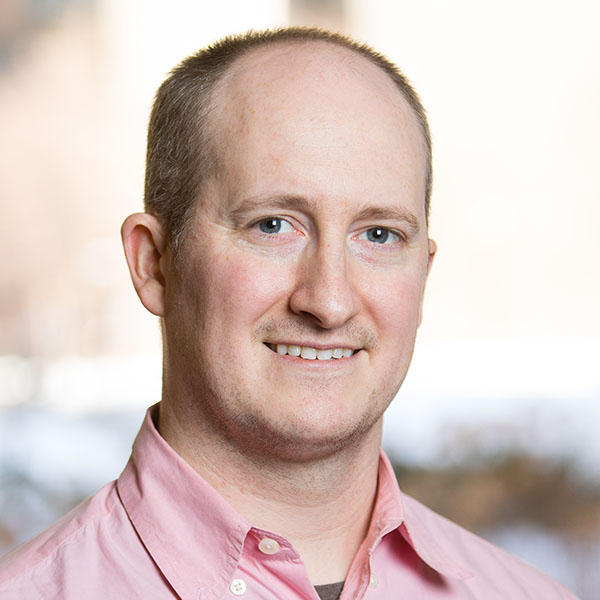
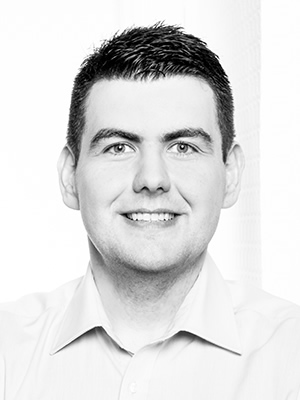
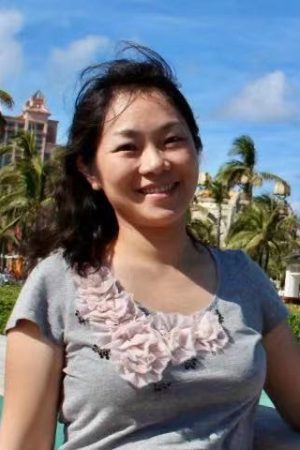
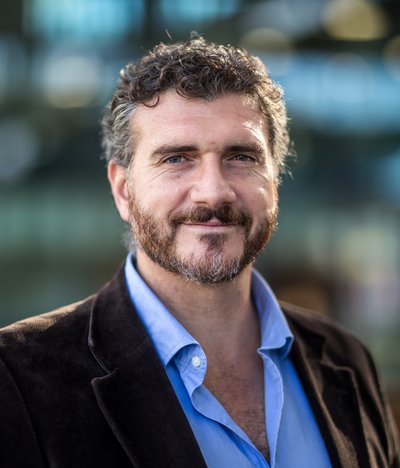
Eric F. Lock is an Associate Professor in the Division of Biostatistics & Health Data Science at the University of Minnesota's School of Public Health. He is also a Member of the Masonic Cancer Center (MCC) and has been at the University of Minnesota since 2014, after completing his PhD in Statistics from the University of North Carolina in 2012 and a postdoctoral fellowship in Statistical Genomics at Duke University in 2014. Lock's research focuses on developing methods for the analysis of multi-faceted high-dimensional data, particularly in "omics" fields such as genomics, metabolomics, and proteomics. His work emphasizes the integrated analysis of data from multiple sources (e.g., gene expression, metabolomics, imaging) or measured in multiple dimensions (e.g., multiple tissue types or body regions). He also specializes in exploratory factorization and clustering methods, and Bayesian nonparametric inference. His recent publications demonstrate significant contributions to tensor data imputation (BAMITA), matrix decomposition (EV-BIDIFAC), and methods for handling complex genomic data. His work bridges statistical theory with practical applications in molecular biology, addressing challenges in data integration across multiple biological measurement platforms. Delta Omega, Honorary Society in Public Health (2019) As an active researcher and educator, Lock serves on dissertation committees, including for Mykhaylo M. Malakhov who recently defended his PhD at the University of Minnesota School of Public Health. He is involved in organizing and participating in major conferences such as STATGEN 2025, demonstrating his leadership in the biostatistics community.
Sophie H. Yu is an Assistant Professor of Operations, Information and Decisions at the Wharton School of Business, University of Pennsylvania. She completed her postdoctoral work in the Department of Management Science and Engineering at Stanford University before joining Wharton. Her academic journey includes a Ph.D. in Decision Sciences from the Fuqua School of Business at Duke University (2023), an M.S. in statistical and economic modeling from Duke University (2017), and a B.S. in Economics from Renmin University of China (2015). Ph.D. in Decision Sciences, Fuqua School of Business, Duke University (2023) M.S. in Statistical and Economic Modeling, Duke University (2017) B.S. in Economics, Renmin University of China (2015) Sophie's research focuses on high-dimensional statistics, algorithm design, and performance evaluation in large-scale networks and stochastic systems . Her work draws inspiration from real-world business, engineering, and natural sciences problems that can be modeled into large and complex networks. She has explored fundamental limits and efficient algorithms on graph matching, online platform policy design with bounded regret, and data confidentiality protection. Her research spans the intersection of operations research, applied probability, statistics, and computer science, with particular emphasis on network science and information theory. Sophie's publications demonstrate a strong focus on matching problems in networks, with significant contributions to understanding random graph matching, network correlation testing, and online matching algorithms. Her work shows a progression from fundamental theoretical questions to practical applications in resource allocation and market design. Recent papers indicate increasing focus on practical implementations of theoretical concepts in real-world matching markets. Thomas M. Cover Dissertation Award from IEEE Information Theory Society (2024) Best Dissertation Award from Fuqua George Nicholson Student Paper Competition finalist, INFORMS 2022 Sophie has been actively involved in academic service, presenting her work at numerous prestigious institutions including University of Texas at Austin, University of Toronto, London School of Business, and MIT. She has taught graduate courses in decision modeling and served as a teaching assistant for various statistics and operations courses during her doctoral studies at Duke University. Her research has been supported through academic appointments and likely research grants related to her work in network science and matching algorithms.
Dr. Sean Hodgman is a Research Fellow in the Department of Quantum Science & Technology within the Research School of Physics and Engineering at the Australian National University (ANU). He is an active researcher in the He* BEC (Helium Bose-Einstein Condensate) group, focusing on cutting-edge quantum physics experiments with ultracold atoms. Dr. Hodgman's research spans multiple areas of quantum physics, with particular expertise in ultracold atomic systems, quantum correlations, and precision measurements. His work frequently involves metastable helium atoms, which serve as an excellent platform for studying fundamental quantum phenomena due to their favorable properties for laser cooling and trapping. His research interests include quantum entanglement, many-body quantum systems, Bose-Einstein condensation, quantum optics, and precision atomic spectroscopy. Analysis of Dr. Hodgman's recent publications reveals a strong focus on quantum nonlocality tests, matter-wave interferometry, and precision measurements of fundamental atomic properties. His work on helium tune-out frequencies provides independent tests of quantum electrodynamics, while his research on fermionic and bosonic quantum gases explores novel quantum statistical phenomena. Recent work has expanded into positron polarimetry and developing new techniques for quantum measurement and control. Dr. Hodgman is an active contributor to the international quantum physics community, collaborating with leading researchers both within ANU and internationally. His work appears in high-impact journals including Physical Review Letters, Nature, Science, and Physical Review A.
Prof. Dr.-Ing. Marc Reichenbach serves as the Chair of Integrated Systems at the Institute for Applied Microelectronics and Data Technology at the University of Rostock. His office is located at Albert-Einstein-Straße 26, 18059 Rostock, Room 102 (1st floor), with contact information including telephone (0381) 498 7270 and email marc.reichenbach@uni-rostock.de. Professor Reichenbach's research focuses on the intersection of hardware design and artificial intelligence, with particular expertise in memory technologies and computing architectures. His work spans several key areas: Development of specialized computer architectures for deep learning applications Advanced VLSI design and CPU architecture Emerging memory technologies, particularly RRAM (Resistive Random-Access Memory) FPGA-based acceleration systems Hardware implementations for neural networks and AI applications Analysis of Professor Reichenbach's recent publications (2023-2025) reveals a strong focus on memory computing technologies, particularly RRAM-based systems. His work demonstrates expertise across multiple dimensions of computer architecture including ASIC design, FPGA acceleration, and novel memory systems. The publications show a clear trajectory toward implementing AI and machine learning capabilities directly in hardware, with applications ranging from edge computing to satellite systems. A significant portion of his recent work addresses the challenges of implementing neural networks using emerging memory technologies, focusing on efficiency, reliability, and performance optimization. Professor Reichenbach teaches several advanced courses including: Computer architectures for deep learning applications Project seminar Embedded Systems Advanced VLSI Design (Advanced CPU Design) His research group appears to be actively engaged in several cutting-edge projects related to hardware acceleration for AI applications, memory computing, and embedded systems design. The group collaborates on projects involving digital twins for hardware systems, real-time operating systems for heterogeneous architectures, and specialized computing systems for various applications from medical devices to drone technology.
Roberto Giorgi is an Associate Professor of Computer Engineering at the Department of Information Engineering, University of Siena, Italy. He has held this position since October 1, 2006, following his tenure as an Assistant Professor since March 15, 1999. His educational background includes a Ph.D. in Computer Engineering from the University of Pisa (1999) with a thesis on coherence protocols for shared-memory multiprocessors, and an Electronic Engineering degree (1995) with a thesis on trace-driven performance evaluation of multiprocessors. Giorgi's primary research focuses on Computer Architecture , particularly on multiprocessor/multicore issues including processor design, coherence protocols, programmability, and energy efficiency. His work spans both theoretical and practical aspects of computer architecture, with emphasis on real-world implementations and educational tools. He has coordinated significant EU-funded projects including AXIOM (2014-2018) on Smart Cyber-Physical Systems and TERAFLUX (2009-2014) on Many-Cores. His recent publications (2022-2025) demonstrate a strong progression toward practical applications of computer architecture research, with particular emphasis on RISC-V architecture, FPGA-based acceleration, dataflow computing models (especially DF-Threads), and graph processing. Many of his papers address educational tools for computer architecture education, real-time object detection on embedded platforms, and novel execution paradigms for edge computing and HPC. IEEE Senior Member ACM Lifetime Member Coordinator of EU-funded AXIOM project (2014-2018) on Smart Cyber-Physical Systems Coordinator of EU-funded TERAFLUX project (2009-2014) on Many-Cores Giorgi has been actively involved in securing research funding and building collaborations, particularly in high-performance computer architecture research with emphasis on scalable architectures and embedded systems. He leads the Computer Architecture Lab (ROOM 223) at the University of Siena, which was established in 2007, and has been instrumental in developing practical implementations of architectural concepts including the AXIOM platform for cyber-physical systems.
Zakaria BABUTSIDZE is a Professor of Economics at SKEMA Business School in France, where he has been teaching since 2011, progressing from Assistant Professor to Associate Professor and finally to full Professor in 2021. His academic affiliations also include positions at Côte d'Azur University, Sciences Po Paris (where he serves as an Economist at OFCE since 2011), and previous visiting positions at institutions including Griffith University, North Carolina State University, and Maastricht University. His research interests span behavioral and environmental economics, with a particular focus on consumer decision-making in digital contexts, green consumer behavior, social networks, and agent-based modeling of economic phenomena. BABUTSIDZE has made significant contributions to understanding how digital environments shape consumer interactions, environmental attitudes, and trust formation. His recent publications demonstrate a strong trend toward interdisciplinary research combining economics with psychology, computer science, and environmental studies. His work frequently employs experimental methods, both laboratory and field-based, to examine consumer behavior in digital environments, the impact of social networks on market dynamics, and the relationship between media consumption and environmental attitudes. SMBG special prize for innovation 2015 (awarded to MSc Digital Business in capacity of Academic Director) The Best Young Scholar Paper Award 2011 (DIME final conference / DIME network of Excellence) The Outstanding PhD Paper Award 2009 (European Meeting on Applied Evolutionary Economics) As an academic advisor, BABUTSIDZE has supervised multiple doctoral students at SKEMA Business School and Université Côte d'Azur. His research has been supported by numerous grants from Université Côte d'Azur, the Sloan Foundation, and other institutions. He is also actively involved in conference organization and serves as a reviewer for numerous prestigious economics and interdisciplinary journals.
Willis Lang is a Researcher at Microsoft , focusing on Database Systems , Cloud Computing , and Data Management . His work bridges academic research with industrial applications in cloud databases. Education: PhD in Computer Sciences - Databases (University of Wisconsin-Madison, 2012) MS in Computer Science and Engineering - Databases (University of Michigan, 2008) BMath in Honours Computer Science - Bioinformatics (University of Waterloo, 2006) Research Interests: Willis’s research spans Database Systems , Cloud Computing , and Energy Efficiency , with a focus on scalability, tenant management, and predictive provisioning. His work addresses real-world challenges in cloud database optimization, multi-tenancy, and power-aware systems. Recent Publications highlight trends in Cloud Database Efficiency , including auto-scaling, tenant placement, and energy-conscious cluster design. His contributions often involve collaboration with industry leaders like Microsoft and Jignesh M. Patel. Scientific Awards: Best Paper Award, DaMoN 2010 Best Presented Award, Midwest Database Research Symposium 2007 Service: Willis has served as a reviewer for conferences like SIGMOD, VLDB, and journals including VLDBJ and JPDC. His expertise is sought in cloud and database research communities.
Manfred Zinn serves as a Professor at the University of Applied Sciences and Arts Western Switzerland (HES-SO), specifically within the School of Chemistry and Life Sciences. He leads the Biotechnology and Sustainable Chemistry research group at the Life Science Engineering department in Sion, Switzerland. His academic position includes significant research leadership responsibilities and active contributions to the field of bioplastics and sustainable materials. Professor Zinn's research focuses primarily on biotechnology applications for sustainable materials, with particular expertise in polyhydroxyalkanoates (PHAs) and other bioplastics. His work spans microbial biosynthesis, material characterization, and industrial applications of biodegradable polymers. He investigates the metabolic pathways of PHA-producing microorganisms, develops novel analytical methods for biopolymer characterization, and explores practical applications of bioplastics in medical and industrial contexts. His research integrates microbiology, polymer chemistry, and process engineering to address challenges in sustainable materials development. Analysis of his recent publications (2019-2024) reveals a strong focus on advancing the science and technology of bioplastics, particularly polyhydroxyalkanoates. His work addresses key challenges in monomer composition control, polymer characterization, biosynthesis optimization, and industrial applications. A significant trend in his research involves developing sophisticated analytical methods for biopolymer production monitoring and exploring novel applications for biodegradable materials in medical and industrial contexts. His collaborative work spans multiple countries and institutions, reflecting the international nature of bioplastics research. Professor Zinn has secured significant research funding through multiple competitive grants, including Innosuisse and Swiss National Science Foundation projects. His research portfolio includes projects on biosynthesis of Chlorella, electroplating processes for biodegradable materials, and online flow cytometry analysis for microbial bioplastic production. These projects demonstrate his ability to secure funding for interdisciplinary research at the intersection of biotechnology, materials science, and sustainable chemistry. His collaborations extend to institutions including the Frauenhofer Institute and Chulalongkorn University in Bangkok. The Biotechnology and Sustainable Chemistry research group led by Professor Zinn maintains strong laboratory facilities for microbial cultivation, biopolymer synthesis and characterization. The group utilizes advanced equipment including bioreactors, flow cytometry systems, and polymer analysis instrumentation. Their research bridges fundamental science with practical applications, focusing on developing sustainable alternatives to conventional plastics while addressing technical challenges in production, characterization, and implementation.
Nan Chen is an Associate Professor at the Department of Mathematics, University of Wisconsin-Madison, and a faculty affiliate of the Institute for Foundations of Data Science (IFDS), a multi-University TRIPODS Phase II Initiative. His research spans applied mathematics with applications in atmosphere-ocean science, climate dynamics, and data science. Education: PhD from Courant Institute of Mathematical Sciences (CIMS) and Center of Atmosphere and Ocean Science (CAOS), New York University (NYU), May 2016 Postdoc research associate at CIMS, NYU (June 2016-May 2018) Master's degree from School of Mathematical Sciences, Fudan University, Shanghai Undergraduate in Mechanical Engineering, Fudan University, Shanghai Visited Department of Scientific Computing at Florida State University working with Dr. Max Gunzburger and Dr. Xiaoming Wang Nan Chen's research focuses on contemporary applied mathematics, particularly modeling complex systems, stochastic methods, numerical algorithms, and data science. He specializes in uncertainty quantification (UQ), data assimilation, and developing statistically accurate algorithms to address the curse of dimensionality in large-dimensional complex dynamical systems with strong non-Gaussian features. His work has significant applications in atmosphere-ocean science, including predicting phenomena such as the Madden-Julian Oscillation (MJO), monsoons, El Niño Southern Oscillation (ENSO), and sea ice dynamics. He has also extended his research to material science, neuroscience, and other complex systems. His recent publications demonstrate expertise in inverse problems, wave equations, numerical methods, and data compression techniques that blend mathematical theory with practical applications. Dr. Chen has authored a book titled "Stochastic Methods for Modeling and Predicting Complex Dynamical Systems --- Uncertainty Quantification, State Estimation, and Reduced-Order Models" published by Springer, and a tutorial paper "Taming Uncertainty in a Complex World: The Rise of Uncertainty Quantification — A Tutorial for Beginners" in the Notices of the AMS. Professional Activities: Organizing "Data Meets Dynamics: Workshop on Data Assimilation for Complex Systems and Applications" (August 21-22, 2025) Author of two articles in Elsevier's Reference Module in Earth Systems and Environmental Sciences Participant in Wisconsin Science and Computing Emerging Research Stars (WISCERS) program Judge for Outstanding Student Paper Award (OSPA) program at American Geophysical Union (AGU) fall meetings Involved in Madison Experimental Mathematics Lab (MXM Lab) Dr. Chen actively mentors undergraduate students for research during semesters and summers, encouraging them to present at the UW undergraduate symposium. He also offers reading and independent study courses for interested undergraduates. He is currently seeking highly motivated PhD students to join his research group with possible Research Assistantship support.
CARMEN PADILLA RASCÓN is a Researcher at the Department of Chemical, Environmental and Materials Engineering at the University of Jaén. She obtained her Doctorate in 2022 with the thesis "Production of furfural and bioethanol from olive stones." Education: PhD in Chemical Engineering, University of Jaén (2022) Her research focuses on lignocellulosic biomass valorization through biorefinery systems, particularly using agricultural residues like olive stones and vine shoots for producing biofuels and high-value chemicals. Key techniques include steam explosion, acid/alkaline pretreatments, and microwave-assisted processing. Recent publications highlight integrated biorefinery strategies, furfural production optimization, and recovery of bioactive phenolic compounds. The work often involves process engineering, catalytic transformations, and circular economy principles.
Stig Arve Sæther is a Professor of Sports Science at the Department of Sociology and Political Science, Norwegian University of Science and Technology (NTNU), Faculty of Social and Educational Sciences. His research focuses on talent development, elite sports, and sports psychology, with specific emphasis on transitions from junior to senior elite, stress, perfectionism, and coach-athlete relationships. He leads the research group Skill and Performance Development in Sports and School (SPDSS) and the NTNU Sports Network. Primary research areas: Talent development environments, dual careers, relative age effects, and athlete stress Ongoing projects: Female athlete development, Norwegian football club mergers, international youth football environments, senior transitions in school sports, and destructive leadership in sports Collaborations: Rosenborg Ball Club, Kristiansund Ball Club (NEAS Academy), Norwegian Handball Association, Norwegian Ice Hockey Association Editor-in-Chief: Scandinavian Journal of Sport and Exercise Psychology His recent research explores gender differences in talent environments (handball/ice hockey), parental impacts on biathlon transitions, and communication barriers around menstrual cycles in female football. With 60+ international journal articles and multiple books, his work bridges academic rigor and practical sports insights. Media presence spans 200+ TV/radio/podcast appearances (TV2 Sporten, NRK, GameChanger) and newspapers (Wall Street Journal, Aftenposten). Key students include Max Bergström (PhD) and 46+ master’s graduates. Awards not explicitly mentioned, but his editorial and research group leadership highlight institutional recognition.
Summer Rupper is a Professor at the School of Environment, Society & Sustainability at the University of Utah, where she has held her position since July 2019. Her research focuses on understanding the interactions between climate, glaciers, and water resources, with particular emphasis on high mountain regions including High Mountain Asia, the Himalayas, and polar regions. She leads multiple research projects examining glacier dynamics, hydrological processes, and climate change impacts on water security for downstream populations. BS in Geology from Brigham Young University (2001) MS in Geology from University of Washington (2004) PhD in Earth and Space Sciences from University of Washington (2007) Professor Rupper's research spans physical geography, environmental geoscience, and climate change science, with specific expertise in glaciology, hydrology, and atmospheric sciences. Her work integrates field measurements, remote sensing, and numerical modeling to understand glacier dynamics, snow processes, and water resource availability in mountainous regions. She has particular expertise in High Mountain Asia, where glaciers provide critical water resources for over a billion people. Her research addresses fundamental questions about glacier response to climate change, hydrological partitioning, and the implications for water security in vulnerable regions. Her recent publications demonstrate a consistent focus on understanding glacier dynamics, hydrological processes, and climate interactions in mountainous regions. The work spans multiple methodologies including remote sensing analysis, numerical modeling, statistical approaches, and field-based measurements. Key themes include glacier melt contributions to river systems, precipitation patterns in complex terrain, snow density modeling, and the impacts of climate change on water resources in High Mountain Asia and polar regions. Her research often integrates multiple data sources and approaches to address complex questions about cryospheric processes and their societal implications. Superior Research Award (2024, CSBS, University of Utah) G.K. Gilbert Award for Excellence in Geomorphic Research (2022) Outstanding Utah Higher Education Science Teacher (2021) Top Researcher Award, Celebrate U showcase (2017) Antarctic Service Medal (2010, USAF) Professor Rupper actively mentors graduate students through thesis research courses at both the PhD and Master's levels, as well as individual projects. She has secured significant research funding from multiple federal agencies including NSF, NASA, and USAID, with current projects examining climatic controls on Antarctic ice sheets, glacier dynamics in High Mountain Asia, and historical glacier changes. Her collaborative work extends across international boundaries, working with scientists in Pakistan, Bhutan, and other regions to address shared water security challenges. She also engages in community outreach through workshops with school districts and science teacher associations to communicate climate science to broader audiences. Professor Rupper participates in multiple collaborative research teams including the NASA High Mountain Asia Team (HiMAT), where she contributes expertise in glacier dynamics and hydrology. She serves on several scientific committees including the NSF Ice Core Facility Sample Allocation Committee and the American Geophysical Union Cryosphere Section Fellows Committee. Her research often involves interdisciplinary teams combining expertise in glaciology, hydrology, remote sensing, and climate modeling to address complex questions about mountain water systems under changing climate conditions.
Anne-Laure Dalibard is a Professor at Sorbonne University's Faculty of Science and Engineering, affiliated with the Jacques-Louis Lions Laboratory (UMR CNRS 7598). She also serves as a Junior member of the Institut Universitaire de France (2020-2025) and was previously a part-time professor at the École Normale Supérieure in Paris (2021-2024). Her research focuses on mathematical analysis of fluid mechanics with applications to geophysical and oceanographic phenomena. Education: Student at ENS Ulm (2001-2005) PhD at CEREMADE, Paris-Dauphine University (defended October 8, 2007) Dalibard's research centers on geophysical fluids, boundary layers in fluid mechanics, congestion models, roughness models, scalar conservation laws, and homogenization theory. She specializes in asymptotic analysis of fluid equations relevant to oceanographic models, particularly those involving rotating fluids and boundary layer phenomena. Her work bridges rigorous mathematical analysis with practical applications in environmental fluid dynamics. Her recent publications demonstrate a consistent focus on boundary layer phenomena in fluid mechanics, with particular emphasis on geophysical applications. She has made significant contributions to understanding boundary layers in rotating fluids, congestion models in Navier-Stokes systems, and wave phenomena in stratified fluids. Her mathematical approach typically involves rigorous analysis of partial differential equations with singular perturbations, often using asymptotic methods, homogenization theory, and kinetic formulations. Scientific Awards: Junior member of the Institut Universitaire de France (2020-2025) Principal Investigator for ERC Starting grant BLOC (2015-2020) Leader of ANR BOURGEONS project (2023-2027) Dalibard leads substantial research initiatives including the ANR BOURGEONS project (2023-2027), which involves over 30 researchers, PhD students, and post-docs working on fluid dynamics aspects relevant to geophysical flows. She has supervised several PhD students including Jean Rax and Gabriela Lopez-Ruiz, and mentored post-doctoral researchers such as Frédéric Marbach, Marc Briant, and Matthew Paddick. Her research has been supported by prestigious grants from the European Research Council and the French National Research Agency. She is actively involved with the Jacques-Louis Lions Laboratory at Sorbonne University and collaborates extensively with researchers across France and internationally. Her work often intersects with oceanographic applications, connecting mathematical theory with environmental fluid dynamics problems.
Jing Yang is a full Professor and Director of MS CS Program in the Computer Science Department at the University of North Carolina at Charlotte (UNCC). She has been actively involved in data visualization and visual analytics research since joining UNCC in 2005 after completing her PhD at Worcester Polytechnic Institute. Dr. Yang earned her Bachelor's degrees in Engineering Mechanics and Computer Science from TsingHua University in 1997 and completed her Ph.D. in Computer Science from Worcester Polytechnic Institute in May 2005 under advisors Matthew O. Ward and Elke A. Rundensteiner. Her research focuses on developing visual analytics techniques for abstract data including multidimensional data, time-oriented data, networks, hierarchies, text documents, and trajectory data. She conducts design studies for application domains such as sports, bioinformatics, finance, network security, and health, while exploring fundamental visualization topics like interactions, insight management, clustering-based approaches, and animations. Her recent work emphasizes sports analytics, urban data, and multivariate time series visual analytics. Analysis of Dr. Yang's publication record reveals a strong focus on practical applications of visualization techniques across diverse domains. Her work consistently bridges theoretical visualization frameworks with real-world data challenges, particularly in transportation (taxi trajectories), sports (tennis match analysis), financial transactions, and bioinformatics. The publications demonstrate an evolution from foundational visualization techniques to increasingly sophisticated domain-specific applications. Dr. Yang has secured substantial research funding from NSF, EPA, DHS, and industry partners including Google and Bank of America. Her grants portfolio includes significant projects like TrajAnalytics (NSF, $200,950), Visualizing Event Dynamics (NSF EAGER, $75,317), and Visualizing High Dimensional Categorical Datasets (Google Faculty Research Award, $60,000), among others totaling over $4 million in research support. As an educator, Dr. Yang has taught numerous courses including Visual Analytics, Information Visualization, and Database Design. She directs the Charlotte Visualization Center and has mentored numerous students through research projects. Her collaborative approach is evident in her extensive co-authorship network spanning multiple institutions and disciplines. Current research directions include narrative animation for streaming text visualization and advanced techniques for exploring high-dimensional categorical datasets.
Ramiro Serra is an Associate Professor at the Department of Electrical Engineering at Eindhoven University of Technology (TU/e) in the Netherlands. He is affiliated with the Electrical Energy Systems group and the High Tech Systems Center , focusing on Power Conversion and Electromagnetics . Research Interests include Electromagnetic Compatibility (EMC) , Statistical Electromagnetics , Wireless Coexistence , and Interference Studies . His expertise spans the design, modeling, and operation of Electromagnetic Mode-Stirred Reverberation Chambers , noise propagation in IC substrates, and EMC aspects in large infrastructures. Notable Contributions involve novel methods for EMI Reduction in mixed electrical class modules, VNA-Based TRP Measurements , and quantifying Loading Effects in reverberation chambers. His work impacts domains like Consumer Electronics , Automotive , and Medical Devices . Academic Leadership includes roles in international committees such as the International Steering Committee of EMC Europe , Chair of URSI Commission E , and Secretary of the General National URSI Committee . He also contributes to standardization efforts via IEC 61000-4-21 and CIRED/CIGRE joint working groups.