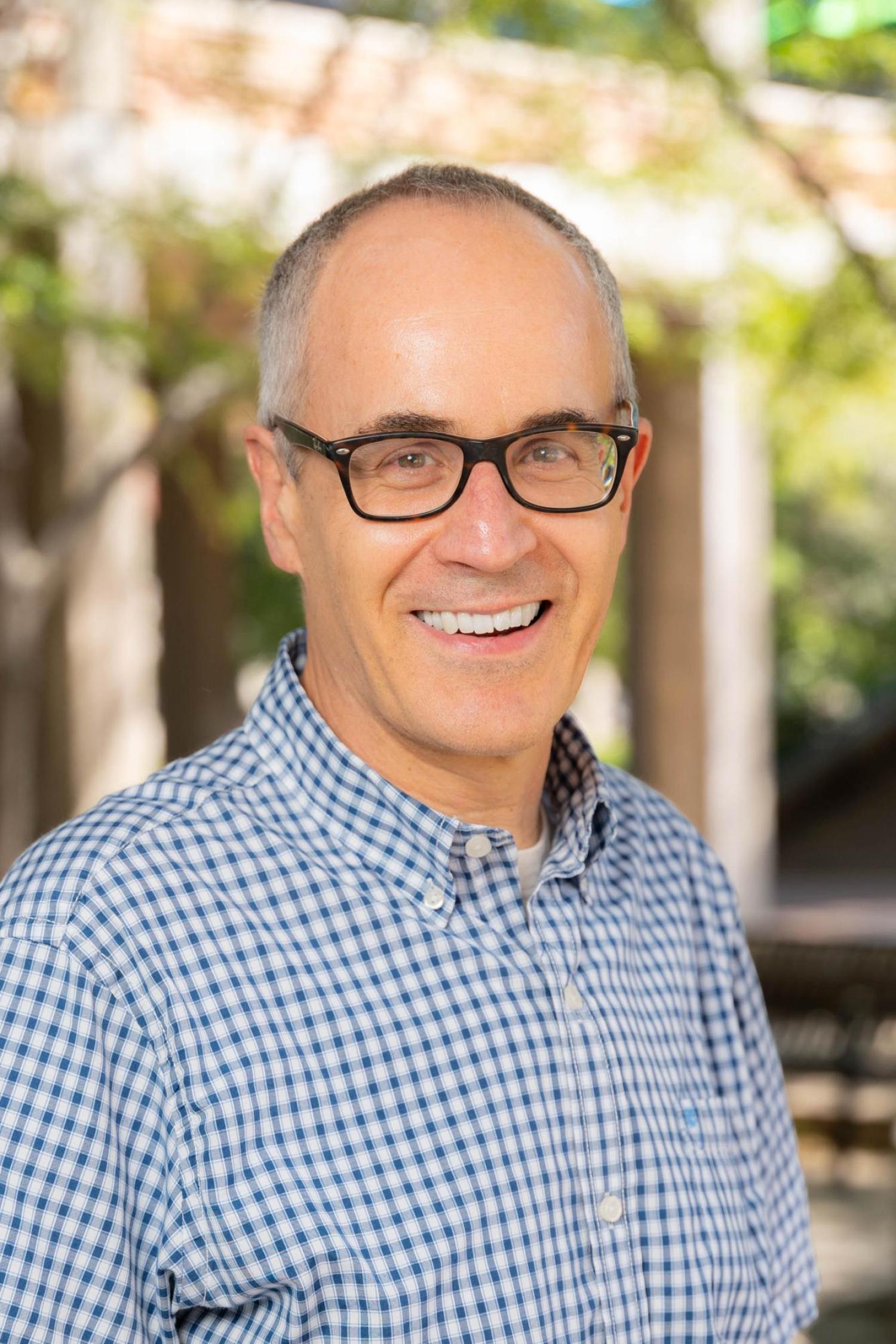
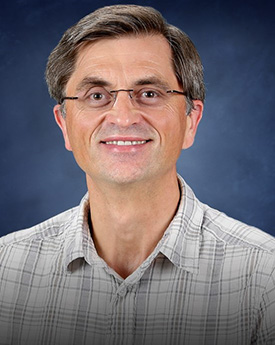
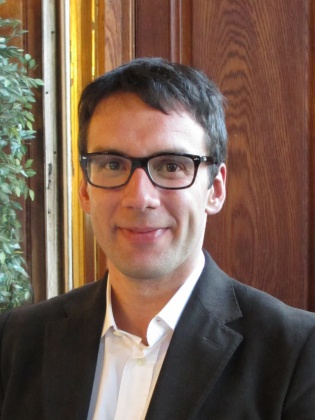
Philipp Schlatter is a Professor in the Department of Mechanics at KTH Royal Institute of Technology. His research focuses on fluid mechanics, turbulence, and computational fluid dynamics (CFD), with expertise in high-performance computing and direct numerical simulations (DNS). He leads projects involving scalable CFD frameworks like Neko and Nek5000, and investigates turbulent boundary layers, flow control, and coherent flow structures. His work includes experimental and numerical studies of wing profiles, rotating systems, and transition dynamics. Schlatter teaches courses on computational fluid dynamics and turbulence, emphasizing both theoretical and practical aspects of fluid mechanics. Key research interests include developing numerical methods for high-fidelity simulations, understanding turbulence mechanisms, and optimizing flow control strategies. His contributions span aerodynamics, heat transfer, and the application of machine learning to fluid dynamics problems. Schlatter collaborates extensively on interdisciplinary projects, leveraging advanced computing resources to address complex fluid flow phenomena. Publications highlight advancements in DNS frameworks, Bayesian optimization for flow control, and analysis of turbulent structures in pipe and boundary layer flows. His research also addresses challenges in measurement techniques and uncertainty quantification in CFD simulations.
Keith A. Brown is an Associate Professor in Mechanical Engineering at Boston University's College of Engineering with additional appointments in Materials Science & Engineering and Physics. He serves as Associate Chair for Graduate Programs in ME and leads the interdisciplinary KABLab research group. Education: PhD, Harvard University Dr. Brown's research centers on hierarchical soft matter systems including polymers and smart fluids. His group develops innovative approaches to accelerate materials research through nanocombinatorics , autonomous experimentation , and scanning probe lithography . Key focus areas include connecting nanoparticle properties to bulk smart fluid behavior, designing 3D-printed structures with programmed mechanics, and creating self-driving laboratories for materials discovery. His recent publications (2024-2025) demonstrate a strong emphasis on autonomous experimentation systems integrating machine learning with physical research. This work spans energy-absorbing foam design, nanoscale fluid manipulation, and physics-informed modeling for mechanical systems, establishing new paradigms in accelerated materials development. Scientific Awards: The Early Career Research Excellence Award, College of Engineering, 2021 Professor of the Year, Mechanical Engineering, 2020 Frontiers of Materials Award, The Minerals Metals and Materials Society (TMS), 2020 Dean’s Catalyst Award (2018) Dean’s Catalyst Award (2020) Moorman-Simon Interdisciplinary Career Development Professor, 2016 Dr. Brown teaches undergraduate courses including Fluid Mechanics (ME 303), Introduction to Materials (ME 306), and Nanomanufacturing (ME/MS 576). His research is supported by: Federal Grants : AFOSR MURI, NSF Nanomanufacturing, ACS Petroleum Research Fund Foundations : Gordon and Betty Moore Foundation Industry : Google Faculty Research Award University : BU Dean's Catalyst Award, Nanotechnology Innovation Center The KABLab employs interdisciplinary teams to develop novel instrumentation for hierarchical soft matter research, with particular expertise in autonomous experimentation platforms that combine scanning probe techniques with machine learning for accelerated materials discovery.
Kurt Maute is a Professor and Palmer Engineering Chair at the University of Colorado Boulder’s College of Engineering and Applied Science (CEAS). He currently serves as Associate Dean for Undergraduate Education. His academic journey includes a PhD in Civil Engineering (University of Stuttgart, 1998) and a Dipl.-Ing. in Aerospace Engineering (University of Stuttgart, 1992). He has held progressively senior roles at CU Boulder, including Associate Dean for Research (2012–2014), Associate Professor (2006–2012), and Assistant Professor (2000–2006). Maute’s research focuses on structural topology optimization, multi-disciplinary optimization, and aeroelastic systems. He has pioneered methods integrating XFEM, level-set techniques, and isogeometric analysis for complex engineering problems. His work spans fluid-structure interaction, hypersonic vehicle design, and additive manufacturing. His notable contributions include advancements in immersed boundary methods, multi-material optimization, and uncertainty quantification. Awards include the NSF Career Award (2004) and Palmer Endowed Chair (2016–present). Maute’s lab (Aerospace Mechanics Research Center, AMREC) addresses challenges in computational mechanics and multi-physics systems. He has advised numerous students and led grants in battery modeling, topology optimization, and aerospace systems. His research bridges theory and application, emphasizing industrial relevance and computational innovation.
Professor Stephen Croft is a faculty member at Lancaster University , affiliated with the School of Engineering . His research focuses on Nuclear Materials Measurement Science , with expertise in radiation detection, neutron interrogation, and X-ray/gamma-ray spectroscopy. Current projects include cosmic ray neutron monitoring , active neutron interrogation of nuclear materials , and radiation damage assessment . His recent publications emphasize semi-empirical modeling of atomic interactions and advanced detection techniques for nuclear applications. He has contributed to understanding vacancy transfer probabilities , X-ray fluorescence cross-sections , and water detection in nuclear environments . His work supports nuclear security, power plant safety, and space weather monitoring. Scientific awards : None explicitly mentioned in the text. Research groups : Involved in Nuclear Space Weather initiatives.
Brian Vermeire is an Associate Professor in the Department of Mechanical, Industrial and Aerospace Engineering at Concordia University. His research focuses on computational fluid dynamics, aerodynamics, high-performance computing, turbulence modeling, numerical methods, and optimization. He leads the Computational Aerodynamics Laboratory, emphasizing scale-resolving simulations and high-order numerical techniques. Key interests include large eddy simulation (LES), direct numerical simulation (DNS), and gradient-free optimization. His work often involves developing advanced algorithms for unstructured grids and high-performance computing platforms. Research Interests: High-order numerical methods Implicit/explicit time integration schemes Polynomial adaptation for adaptive meshing Aeroacoustic shape optimization Large eddy simulation (LES) and direct numerical simulation (DNS) Software development for CFD (e.g., PyFR) Recent work trends show strong focus on hybridized flux reconstruction methods, energy-conservative algorithms, and industrial adoption of high-fidelity simulations. Major contributions include scalable implementations for petascale computing and open-source tools like PyFR. His group collaborates on applications such as wind turbine aerodynamics and low-pressure turbine design. Labs/Teams: Computational Aerodynamics Laboratory (website: link )
Outi Tammisola is a Professor at KTH Royal Institute of Technology, specializing in Fluid Mechanics within the Department of Mechanics. Her research focuses on non-Newtonian fluids, viscoelasticity, multiphase flows, and microfluidics. She is actively involved in teaching and course coordination for mechanics and fluid dynamics courses, including Mechanics I, Mechanics II, and Wave Motion and Hydrodynamic Stability. Her work bridges numerical methods, experimental validation, and industrial applications, with a strong emphasis on understanding complex fluid behaviors in both theoretical and applied contexts. Dr. Tammisola’s research interests span topics such as elastoviscoplastic fluids, particle migration in microchannels, and interfacial phenomena in viscoelastic systems. Her recent publications address challenges in multiphase flow dynamics, including droplet coalescence, bubble migration, and the rheology of non-Newtonian fluids. She contributes to advancements in numerical methods, such as phase-field modeling and immersed boundary techniques, to simulate complex fluid-structure interactions. Her articles highlight trends in understanding fluid behavior under extreme conditions, such as high aspect ratio microchannels and porous media. Collaborations with experimentalists and computational scientists ensure her work remains both innovative and grounded in real-world applications. While no scientific awards are explicitly mentioned, her extensive publication record reflects significant contributions to the field of fluid mechanics. Outi Tammisola is also engaged in academic leadership, overseeing degree projects and contributing to the development of educational programs at KTH. Her research group likely explores cutting-edge topics in microfluidics and viscoelastic turbulence, though specific lab or team affiliations are not detailed in the provided texts.
Hans Bihs is a Professor in the Department of Civil and Environmental Engineering, Faculty of Engineering. His research focuses on computational fluid dynamics (CFD), wave hydrodynamics, and wave-structure interaction using the open-source framework REEF3D. Key Research Areas: CFD simulations, wave modeling, floating body dynamics, ocean wave energy, aquaculture hydrodynamics, sediment transport, and high-performance computing. Projects: ERC Consolidator Grant PARTRES (2023-2028), EEA Grants Portugal SurfWave (2023), NFR KPN IPIRIS (2021-2025), EEA Baltic SolidShore (2021-2024), NTNU's MAPLE (2022-2025), and DigiCoast (2021-2024). Email: hans.bihs@ntnu.no His recent publications (2025-2020) analyze fluid-structure interaction, ship-induced waves, floating offshore wind turbines, submerged vegetation, and coastal structures using advanced CFD techniques. Topics include wave hydrodynamics, turbulence, and numerical modeling for marine and aquaculture systems.
Professor Michael Manhart is affiliated with the Technical University of Munich (TUM) as an Extraordinary Professor in the Department of Hydromechanics . His research focuses on fluid mechanics, turbulent flow dynamics, and computational fluid dynamics (CFD) simulations, particularly in porous media and environmental fluid mechanics. Education: Not explicitly stated in the provided text. His recent publications investigate turbulent flow over random sphere packs, scalar transport at porous-turbulent interfaces, acoustic resonances in HVAC systems, and nonlinear oscillatory flow modeling. He employs advanced numerical techniques like direct numerical simulations (DNS) and large-eddy simulations (LES) to study flow structures, energy budgets, and particle transport mechanisms. Professor Manhart collaborates with researchers such as Yoshiyuki Sakai, Simon Wenczowski, and Daniel Quosdorf. His work addresses applications in environmental engineering, hydraulic modeling, and industrial fluid dynamics, with a strong emphasis on validating computational models against experimental data (e.g., PIV measurements). He leads the Professorship for Hydromechanics at TUM, conducting high-fidelity simulations and experimental studies on topics like wall shear stress estimation, sediment erosion around cylinders, and turbulence decomposition in complex flows.
Oskari Ville Pakari is a Lecturer at the School of Basic Sciences, École polytechnique fédérale de Lausanne (EPFL), affiliated with both the Institute of Physics (IPHYS) and the Swiss Plasma Center (SPH-ENS). He contributes to teaching and research, particularly in reactor physics and radiation detection. His research focuses on nuclear reactor diagnostics , gamma noise analysis , and neutron spectroscopy . He actively develops mixed reality visualization tools for radiation detection data and participates in the European CORTEX project for reactor monitoring. Selected publications highlight his work in gamma-ray imaging , neutron noise simulations , and detector system validation using advanced statistical methods like bootstrapping and Welch's technique. Teaching activities include courses on Radiation biology, protection, and applications Radiation and reactor experiments He advises PhD student Saliba Michel and collaborates with international institutions such as CEA, KIT, and LRS (Laboratory of Reactor Physics and Systems Behaviour) at EPFL.
Marco Paggi is a Full Professor of Structural Mechanics at the IMT School for Advanced Studies Lucca, Italy, since 2017. He previously held academic roles at Politecnico di Torino (Assistant Professor, 2007-2013) and has been an Alexander von Humboldt Fellow at Leibniz University Hannover. His research focuses on fracture mechanics, contact mechanics, and computational methods applied to renewable energy systems, composite materials, and multi-scale modeling. Key Themes: Fracture propagation, contact interfaces, phase field modeling, photovoltaic durability, and material heterogeneity. Awards: Stanford Top 2% Scientists (2020-2024) Research.com Top Scientists (2022-2024) European Structural Integrity Society Young Scientist Award (2010) Publications: His work spans tribology, computational fracture mechanics, and material degradation, with recent emphasis on phase field modeling for quasi-brittle materials and photovoltaic systems. He has pioneered methods for multi-scale and multi-physics analysis of structural systems. Mentorship: Supervised 17 PhD graduates and 14 postdocs, including award-winning researchers like Pietro Lenarda and Zeng Liu.
Roozbeh Mottaghi is a Senior AI Research Scientist Manager at Meta's Fundamental AI Research (FAIR) division and an Affiliate Associate Professor at the Paul G. Allen School of Computer Science & Engineering, University of Washington. His career spans roles as Research Manager at the Allen Institute for AI and Postdoctoral Researcher at Stanford University. He holds a Ph.D. in Computer Science from UCLA, advised by Alan Yuille, and advanced degrees from Simon Fraser University, Georgia Tech, and a B.Sc. from Sharif University of Technology. Ph.D., Computer Science, UCLA (2016) M.Sc., Computer Science, Simon Fraser University M.Sc., Electrical Engineering, Georgia Institute of Technology B.Sc., Computer Engineering, Sharif University of Technology His research focuses on Embodied AI, Robotics, Computer Vision, and Multimodal Learning, with key contributions to human-robot collaboration benchmarks (PARTNR), 3D scene understanding, and adaptive navigation systems. Recent work explores zero-shot manipulation via video tracking (Track2Act) and lifelong navigation benchmarks (GOAT-Bench). Publications span 3D vision, reinforcement learning, and visual reasoning, including NeurIPS 2022 Outstanding Paper Award for "Ask4Help" and leadership in organizing challenges at CVPR and ICCV workshops. He advises students and interns who have transitioned to leading institutions like AI2, Stanford, and Brown University.
Daniele Venturi is a Professor of Applied Mathematics at the University of California, Santa Cruz, where he has been faculty since 2015, rising from Assistant Professor to full Professor by 2021. Previously, he was a Research Assistant Professor at Brown University from 2010-2015. His academic journey began at the University of Bologna, where he earned both his combined B.S./Sc.M. in Mechanical Engineering (2002) and Ph.D. in Applied Physics with a focus on thermo-fluid dynamics (2006). University of Bologna: B.S./Sc.M. Mechanical Engineering (2002), Ph.D. Applied Physics (2006) Brown University: Research Assistant Professor (2010-2015) UC Santa Cruz: Assistant to Associate to Full Professor (2015-present) Professor Venturi's research spans multiple cutting-edge areas in computational mathematics. His primary interests include stochastic modeling and uncertainty quantification, numerical tensor methods for high-dimensional PDEs, data-driven modeling approaches, approximation of functional-differential equations, and theoretical/computational fluid dynamics. His work bridges theoretical mathematical frameworks with practical computational implementations, particularly focusing on overcoming the curse of dimensionality in complex systems. His recent research has been heavily focused on hierarchical tensor methods for solving high-dimensional partial differential equations. The analysis of his publication record reveals a strong emphasis on developing computational frameworks that address high-dimensional challenges in uncertainty quantification and model reduction. His work frequently intersects machine learning techniques with traditional numerical methods, particularly in developing physics-informed neural networks and multifidelity modeling approaches. A consistent theme across his publications is the development of mathematical frameworks that maintain computational tractability while preserving physical fidelity in complex systems. Professor Venturi has secured substantial research funding from major agencies including the Air Force Office of Scientific Research (AFOSR), Department of Energy (DoE), National Science Foundation (NSF), Army Research Office (ARO), and Defense Advanced Research Projects Agency (DARPA). His most significant current grant is a 2024-2029 AFOSR MURI award totaling $7.5M as co-PI for 'Tensor Network for simulating kinetic systems.' 2024-2029: AFOSR MURI, $7.5M (co-PI) 2023-2027: DoE, $3.8M (co-PI) 2023-2026: AFOSR, $2.5M (co-PI) 2020-2025: NSF TRIPODS, $2.3M (co-PI) At UC Santa Cruz, Venturi teaches a range of courses including Fundamentals of Uncertainty Quantification, Applied Dynamical Systems, Nonlinear Dynamical Systems, and Numerical Methods for Differential Equations. His teaching spans both undergraduate and graduate levels, reflecting his expertise across theoretical and computational mathematics. His lecture notes for these courses are publicly available and demonstrate his commitment to pedagogical excellence in complex mathematical subjects.
Robert Dodds Jr. is a Research Professor in the Department of Civil and Environmental Engineering at the University of Tennessee, Knoxville, within the Tickle College of Engineering. His work is centered on fracture mechanics, computational modeling of crack growth, and material failure in advanced alloys and functionally graded materials. His research interests include: Fracture and failure analysis in ductile and brittle materials Cohesive zone modeling and delamination in aluminum-lithium alloys 3D finite element modeling of crack propagation under small-scale yielding Thermomechanical and cyclic plasticity modeling Fracture in functionally graded materials with mixed-mode loading The analysis of his publications from 2002 to 2018 reveals a strong focus on computational fracture mechanics, particularly on cohesive models, T-stress effects, and delamination in aerospace-grade materials. His work bridges experimental validation with high-fidelity simulations, emphasizing engineering applications in structural integrity. His scientific awards include: National Academy of Engineering George R. Irwin Medal (ASTM) Fracture Mechanics Medal (ASTM) Nathan M. Newmark Medal (ASCE) Walter L. Huber Award (ASCE) Fellow, Engineering Mechanics Institute (ASCE) Dr. Dodds has collaborated extensively with researchers such as C. Ruggieri, M. Messner, A. Beaudoin, J. Sobotka, and G. Paulino. While no formal list of advisees is provided, his mentorship is evident through co-authored student-level research. He has not mentioned specific grants or funding sources in the provided text. His research likely involves a computational mechanics lab or research group focusing on fracture simulation and material modeling, though no lab name is specified.
Alejandro Strachan is an Assistant Professor of Materials Engineering at Purdue University's College of Engineering. His research focuses on molecular modeling of advanced materials, with specific emphasis on atomistic and mesoscale simulations of condensed-phase chemistry, active materials, nanotechnology, and mechanical properties of structural materials. Ph.D. in Physics, University of Buenos Aires (1998) Postdoctoral Research, Caltech's Materials Process Simulation Center (1999-2002) Strachan's work integrates computational methods with machine learning to study material behavior under extreme conditions, including shock waves and high-pressure environments. His research spans energetic materials, phase transitions, and multiscale modeling frameworks. Recent publications highlight trends in combining quantum-accurate simulations with deep learning for non-equilibrium systems, FAIR data infrastructure for materials discovery, and multiscale reactive models for energetic composites. He also explores mechanochemistry, defect dynamics, and microstructure-property relationships. His computational simulations often address practical challenges in material stabilization, polymer interactions, and hotspot formation mechanisms. Strachan actively contributes to open science initiatives through platforms like nanoHUB and HUBzero.
Prof. Juan Alonso is the Vance D. and Arlene C. Coffman Professor and James & Anna Marie Spilker Chair in the Department of Aeronautics & Astronautics at Stanford University. He directs the Aerospace Design Laboratory (ADL), focusing on high-fidelity computational methods for aerospace system design. His expertise spans transonic/supersonic/hypersonic aircraft, rotorcraft, and launch vehicles. Alumni include record-holding teams for human-powered watercraft and lightweight unmanned aerial vehicles. Education: PhD (1997) from Princeton University in Mechanical & Aerospace Engineering; M.A. (1993) Princeton; B.S. (1991) MIT Aeronautics/Astronautics. Research emphasizes multi-disciplinary optimization, numerical methods, and parallel computing applied to advanced aircraft design, sustainable aviation, and UAS systems. Notable contributions include computational design frameworks like SU2 and SUAVE, and initiatives in curriculum development for engineering education. Recent work focuses on: GPU-accelerated CFD solvers, multi-fidelity surrogate models (e.g., VortexNet), contrail simulation frameworks, and battery degradation modeling for electric aircraft. Active in urban air mobility and high-fidelity trajectory optimization for hypersonic systems. Labs/Teams: Aerospace Design Laboratory (ADL) leading open-source computational tools development. Involved in NASA-funded projects and industry partnerships for advanced propulsion systems.