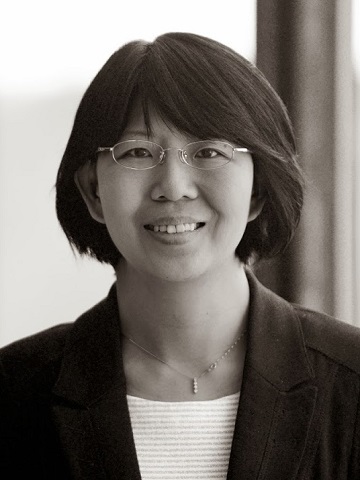
Shuai Ma is a researcher at Beihang University , School of Computer Science and Engineering, China. His work spans database systems , machine learning , and natural language processing , focusing on temporal knowledge graphs, graph neural networks, and privacy-preserving federated learning. He received his PhD from the University of Edinburgh , UK, in 2011. Research interests include graph theory , spatiotemporal data analysis , data mining , and anomaly detection . His recent publications address: 2025 : Technology mapping for ASICs, temporal network motifs, and 3D geometry compression. 2024 : Knowledge graph completion, scene mining for e-commerce, and secure aggregation for federated learning. Article trends reveal expertise in graph neural networks , temporal data processing , and privacy-aware systems . Collaborations with institutions like Concordia University and industry leaders underscore his interdisciplinary impact.
Michail Vlachos is a researcher affiliated with the University of Lausanne, Switzerland, with a focus on data mining, machine learning, and interpretable AI. His work spans algorithm design, time-series analysis, and data privacy, often intersecting with applications in recommender systems and neural network transparency. Research Interests: Data mining, machine learning, XAI (Explainable AI), time-series analysis, clustering algorithms, privacy-preserving data publishing, and recommender systems. Publication Trends: Recent work emphasizes interpretable deep learning architectures (2024), detection of deceptive AI explanations (2023), and neural recommender systems for educational platforms (2024). Earlier contributions include compressive data mining (2015), clustering preservation techniques (2017), and trajectory analysis (2009). Collaborations: Regularly works with Johannes Schneider, Ahmad Ajalloeian, and teams from institutions like IBM Research, ETH Zurich, and University of Lausanne.
Professor Zi Yang Meng is a theoretical and computational physicist at the Department of Physics, University of Hong Kong , with prior affiliation at the Institute of Physics, Chinese Academy of Sciences . He earned a B.Sc. from University of Science and Technology of China , and M.Sc. and Ph.D. from University of Stuttgart , followed by postdoctoral work in the US and Canada. His research focuses on quantum many-body simulations to study quantum materials, topological phases , and entanglement phenomena . His work spans quantum phase transitions , non-Fermi liquid behavior , and dynamical signatures in quantum magnets , with over 140 publications and ~7000 citations. He develops numerical methods for constrained lattice models and Rydberg atom arrays , addressing challenges in high-temperature superconductivity and quantum computer building blocks . Recent grants include Collaborative Research Fund (CRF) 2022/23 and General Research Fund (GRF) projects for quantum moiré materials and entanglement computation . Research Grants: CRF C7037-22G (2022): Many-body paradigm in quantum moiré material research GRF 17302223 (2023): Novel phases of Rydberg arrays GRF 17301924 (2024): Precise computation of quantum entanglement Supervision: PhD students in computational quantum physics, 2D materials, and condensed matter theory Projects on topics like fractional Chern insulators , dimension-tunable quantum systems , and disorder operators Collaborations: Prof. Kai Sun (University of Michigan) Prof. Han-Qing Wu (Sun Yat-sen University) International teams from CUHK, Yale, UCSB, and German institutions He actively contributes to knowledge exchange via public lectures and science communication , and serves on editorial boards for journals like Reports on Progress in Physics . Upcoming conferences include "Fractional Chern Insulators: Theory, Numerics, and Experiment" (2025) at HKU, where he chairs the organizing committee.
Rafał Wcisło serves as a Lecturer at the Institute of Computer Science within the Faculty of Computer Science at AGH University of Science and Technology in Kraków, Poland. His academic profile combines teaching responsibilities with active research in computational methods for data visualization and biomedical simulation, contributing to the university's reputation in computer science and interdisciplinary applications. Dr. Wcisło's research centers on innovative approaches to visualizing high-dimensional data and modeling complex biological systems. He has pioneered GPU-accelerated techniques for embedding large datasets and developed the Particle Automata Model (PAM) for simulating tumor dynamics and pathogen expansion. His work in medical applications extends to stroke rehabilitation, where he has designed multimedia holistic methods for patient recovery. These diverse interests reflect a commitment to solving real-world problems through computational innovation. Analysis of his publication record from 2012-2020 reveals a consistent focus on efficiency and interactivity in visualization tools, with a strong emphasis on GPU parallelism. His research trajectory shows increasing integration of computational biology, particularly in oncology, where his models address tumor progression under anti-tumor treatments. The recurring theme across his work is the development of robust, scalable methods that balance computational demands with practical utility in medical and scientific contexts.
Sam Green is a Researcher at the University of New South Wales , affiliated with the Computational Modelling & Data Specialist (CMDS) team within the Climate Change Research Centre and the ARC Centre of Excellence for the Weather of the 21st Century . His work focuses on computational modeling and climate-related data analysis, leveraging advanced software engineering techniques. Expertise: Python programming, data analysis and visualization, code optimization, machine learning, GPU computing, and data management. Research Background: Prior research in computational astrophysics, particularly predicting thermal radiation from stellar wind bubbles using multi-dimensional simulations. Current Role: Provides technical and analytical support for climate research projects through the CMDS team.
Xosé Manuel Pardo López is an Associate Professor of Software and Computer Systems at the University of Santiago de Compostela (Spain). His research focuses on computer vision, robotics, and machine learning, with significant contributions to visual saliency, object and scene recognition, and robot vision systems. He collaborates extensively with research centers across Spain and internationally, particularly in the fields of computer vision and robotics applications. Dr. Pardo received his PhD in Physics from the University of Santiago de Compostela in 1998, with research focused on 3D medical image analysis. Following his doctoral studies, he completed postdoctoral research at the Computer Vision Center of Barcelona (Spain) and INRIA Sophia Antipolis (France) between 1998 and 2000. His primary research interests span biologically inspired computer vision , visual saliency modeling , object and scene recognition , human activity recognition , and machine learning applications in robotics. Dr. Pardo's work bridges theoretical computer vision with practical applications, particularly in robot vision systems, photogrammetry, and visual inspection technologies. His research has evolved from early work in medical image analysis to current projects focusing on advanced dimensional control systems and damage inspection methodologies for high-impact industrial sectors. Dr. Pardo's recent publications demonstrate a strong trend toward open-world recognition systems , incremental learning approaches , and practical applications of computer vision in robotics . His work increasingly addresses challenges in face verification systems , scene understanding for mobile robots , and 3D scene reconstruction using wireframe models. The research shows a clear trajectory from fundamental visual attention modeling toward applied solutions for industrial and robotic applications. Dr. Pardo has been actively involved in numerous research projects spanning over a decade, including: "Federated and continuous learning from heterogenous data in devices and robots" (2021-2024) "Glocal" and continuous Machine Learning for a society of intelligent devices (2018-2020) Development of new advanced dimensional control systems in manufacturing processes (2011-2014) Development of new generation techniques for damage inspection in aeronautics, railway, naval and wind power sectors (2009-2010) His collaborative research approach is evident in his extensive publication record across leading computer vision and robotics venues. Dr. Pardo has supervised numerous research projects and has been instrumental in developing practical computer vision solutions for industrial applications, particularly in the areas of dimensional metrology and visual inspection systems.
William L. Goffe is a Professor in the Department of Economics at Pennsylvania State University within the College of the Liberal Arts. His career focuses on computational economics, econometrics, and technology-enhanced teaching methods. His research interests include: Computational Economics Econometrics Optimization Algorithms Technology in Economics Education Statistical Computing Online Education Teaching Methods Dynamic Economic Modeling Recent publications highlight his work in educational technology and cognitive science applications in economics teaching. Notable trends include: Advancements in computational methods (multi-core CPUs, clusters, grid computing) Global optimization using simulated annealing Metadata standards for economics web resources Interactive digital tools for economic education Behavioral approaches to teaching economics
Prof. Dr. Jochen Kruppa-Scheetz is a Professor for Bio Data Science at the Faculty of Agricultural Sciences and Landscape Architecture of Osnabrück University of Applied Sciences since 2022. His expertise spans biostatistics, bioinformatics, and data science applications in agricultural and biological contexts. Dr. Kruppa-Scheetz completed his habilitation in 2024 at FU Berlin with the topic "Robust analysis of high-dimensional omics data using computer simulation and graphical visualization" in the field of Bioinformatics. He previously served as deputy institute director at the Institute for Biometry and Clinical Epidemiology at Charité Universitätsmedizin Berlin until 2021, where he also led the Statistical Bioinformatics research group from 2018 to 2021. His research interests focus on developing new statistical methods for direct application, including machine learning for classification, parametric models, analysis of high-throughput data (microarray, NGS, and expression data), and metagenomics and genome analysis. He also has a strong interest in the didactics of statistical teaching, having led the "Teaching and Didactics in Biometry" working group within the German region of the International Biometric Society from 2018 to 2020. Dr. Kruppa-Scheetz is actively involved in teaching across multiple programs, offering courses in mathematics, statistics, biostatistics, and statistical bioinformatics at both bachelor's and master's levels. He has developed extensive teaching materials available through his GitHub repository and YouTube channel, including an Open Book on Bio Data Science. As a freelance lecturer, he provides statistical training for PhD students and postdocs at institutions including the Leibniz Center Borstel and pharmaceutical companies.
Dan B Goldman is an affiliate associate professor at the University of Washington's Computer Science and Engineering department, while serving as a Principal Engineer and AI/ML architect for Lucasfilm & ILM. His career bridges academia and industry, with prior roles at Adobe's Creative Technologies Lab (2007-2015) and Google (2015-2024), where he led computer vision R&D for Project Starline. He is a member of the Visual Effects Society and holds a PhD in Computer Science (2007) from the University of Washington. Research Focus: Computer graphics, computer vision, artificial intelligence, and human-computer interaction Notable Projects: Content-Aware Fill (Photoshop), Project Starline (Google), HyperNeRF (neural radiance fields), and Nerfies (deformable 3D modeling) Academic Legacy: Mentored by David Salesin, with an Erdős-Bacon number of 6 (via Rose Byrne and David Salesin's academic lineage). His work appears in top venues like SIGGRAPH, CVPR, and ECCV, covering topics from neural rendering to 3D reconstruction. Industry Impact: Pioneered technologies used in major films (Star Wars, Jurassic Park) and Adobe Photoshop features. His recent work at Google Labs (2022-2024) focused on generative media, reflecting his dual expertise in creative tools and computational methods.
Prof. Alexander Gelfgat is a faculty member at the School of Mechanical Engineering , part of the Faculty of Engineering at Tel Aviv University . His research focuses on hydrodynamic stability , bifurcations , flow control , and computational fluid dynamics (CFD) , particularly in crystal growth , MHD , and high-performance computing contexts. Research Interests: Hydrodynamic stability and bifurcations Convection and rotating flows Shear layer dynamics Moving boundary tracking Crystal growth and melt flow His work spans three-dimensional flow instabilities , with applications to Czochralski crystal growth , Dean flows , and two-phase stratified channels . Recent studies emphasize non-modal disturbances and quasi-two-dimensional flow projections for enhanced visualization. Prof. Gelfgat has advised notable researchers including Yuri Feldman and Helena Vitoshkin . His publications address critical challenges in boundary layer instability , cross-flow wave propagation , and pressure-velocity coupled formulations for lid-driven flows in complex geometries.
Dr. Yoram Kozak is a Senior Lecturer at the School of Mechanical Engineering within The Iby and Aladar Fleischman Faculty of Engineering at Tel Aviv University. He established his research group in 2020, focusing on cutting-edge topics in energy and fluid dynamics. His academic journey includes a B.Sc. (2006–2010), M.Sc. (2010–2012), and Ph.D. (2012–2016) in Mechanical Engineering from Ben-Gurion University of the Negev, followed by postdoctoral research at Texas A&M University (2017–2020) and Ben-Gurion University (2016–2017). His research spans: Energy Systems : Thermal energy storage, phase-change phenomena Combustion Dynamics : Hydrogen ignition, detonation physics, metal combustion Computational Methods : High-performance computing, multiphase flow modeling, non-Newtonian fluid interactions Recent publications (2023–2025) demonstrate strong emphasis on hydrogen safety, computational fluid dynamics innovations, and phase-change material behavior, with advanced applications in energy storage and propulsion systems. Dr. Kozak actively recruits students and postdocs for projects in combustion, CFD, and thermal energy systems, highlighting ongoing research expansion. His laboratory focuses on fundamental and applied thermo-fluid phenomena using high-fidelity simulations and experimental validations.
Kjeld Svidt is an Associate Professor at the Department of the Built Environment , Faculty of Engineering and Science , Aalborg University , where he serves as the Head of the Construction Management and Building Informatics Research Group . His academic career spans decades, focusing on Building Information Modeling (BIM) , Virtual Reality , and Digitalization in Construction . Role: Associate Professor and Research Group Leader Department: Built Environment University: Aalborg University His research emphasizes integrating digital technologies into construction, including Virtual Design and Construction (VDC) and Hybrid Ventilation Systems . He leads projects like DDD Green (2022–2025), promoting sustainability, and IFC-modelserver (since 2004), enhancing data interoperability. His work bridges academic innovation with industry applications . Recent publications highlight Digital Twins for HVAC optimization and fault detection , leveraging machine learning and multiobjective algorithms . Awards include the Energy and Buildings Best Paper Award (2023) and The Chair's Award for Best Paper Presentation (2020). Projects: DDD Green, IFC-modelserver, Hybrid Ventilation Dataset: Danish high-resolution office building monitoring (2023) Media Mentions: Over 43 instances (2019–2023), including student-led construction initiatives
Dr. H.J. Hauptmann is an Assistant Professor at the Faculty of Science , Utrecht University , specializing in Human-Centered Computing and Artificial Intelligence . Their work bridges Health Informatics , Visual Analytics , and Human-AI Interaction . Research Themes : Health Recommender Systems, Gamified Interfaces, Explainable AI, Nutritional Informatics Affiliation : Utrecht University (2024–present) Research Interests : Hauptmann's research focuses on designing health-promoting technologies that integrate recommender systems with uncertainty-aware explanations . They explore visual analytics for sheet music , language models , and nutritional support systems , emphasizing user-centered design and inclusive technology for neurodiverse populations. Publication Trends : Recent work (2024–2025) includes health equity in AI , exergames for skill adaptation , and privacy-respecting medical reporting systems . Collaborations span health sciences , musicology , and data ethics . Scientific Awards : HAI-small grant (2023) Lab & Collaborations : Affiliated with Utrecht's AI Labs Human-Centered Artificial Intelligence , Hauptmann collaborates on big data visualization and persuasive AI projects. Their lab explores visual feedback mechanisms in mixed-method studies and long-term user engagement in health technologies.
Dr. Yada Zhu is a Researcher at IBM T. J. Watson Research Center , affiliated with the Future of Computing – Finance Research team. She leads initiatives in foundational AI/ML capabilities for financial decision-making and risk management. Research Focus: High-dimensional time series analysis, heterogeneous data modeling, graph learning, and statistical applications in finance, e-commerce, and smart energy. Grants: Principal Investigator for MIT-IBM AI Lab projects funded by Refinitiv and a major financial institution. Leadership: Technical lead in analytics projects contributing to commercialized IBM products. Scientific Achievements: IBM Research Division Outstanding Technology Achievement Award High Valuable Innovation Award Her publications span AI/ML, statistical modeling, and financial applications, with recent work on graph transformers, time-series unification, and zero-shot tool optimization for LLM agents. She serves on editorial boards for statistics journals and as Senior Program Committee member for AAAI.
Rishi Parashar serves as a Research Professor in Hydrologic Sciences at the Desert Research Institute (DRI), affiliated with the University of Nevada Reno's Graduate Program of Hydrologic Sciences. His work bridges computational hydrology, geothermal systems, and microbial transport processes within fractured rock environments. Education: Ph.D. in Civil Engineering, Purdue University (2008) M.S. in Civil Engineering, Purdue University (2003) B.S. in Civil Engineering, Indian Institute of Technology, Roorkee (2001) Parashar's research centers on computational subsurface hydrology , where he develops discrete fracture network (DFN) models to simulate anomalous transport in porous media and upscaling techniques for complex flow systems. His hydro-bio-chemical systems work examines microbial motility, biofilm growth, and biogeochemical reactions governing contaminant fate. In thermo-hydro-mechanical interactions , he investigates enhanced geothermal systems (EGS) and induced seismicity through coupled process modeling. Recent publications reveal increasing integration of machine learning with traditional hydrological modeling, particularly in particle tracking and reactive transport upscaling. Analysis of his 15 most recent articles (2021-2025) shows dominant focus areas: 40% on microbial transport in porous media (including bacterial motility and biofilm effects), 30% on fracture network modeling and upscaling, 20% on contaminant remediation (particularly arsenic), and 10% on geothermal system dynamics. His collaborative work spans environmental engineering, computational science, and microbiology, with frequent co-authorship patterns indicating strong mentorship of early-career researchers. Parashar actively secures research funding through Department of Energy contracts, particularly for Nevada National Security Site projects involving fractured rock characterization. His advising portfolio includes numerous graduate students leading publications in high-impact journals like Water Resources Research and Advances in Water Resources . Current projects involve quantum algorithms for well capture zone determination and heat-sensitive epoxy foams for geothermal permeability alteration. Research Infrastructure: His work leverages DRI's computational resources for large-scale DFN simulations and collaborates with DOE laboratories on experimental validation through microfluidic devices and field-scale tracer tests. The Hydrologic Sciences division provides access to advanced characterization facilities for fractured rock systems.