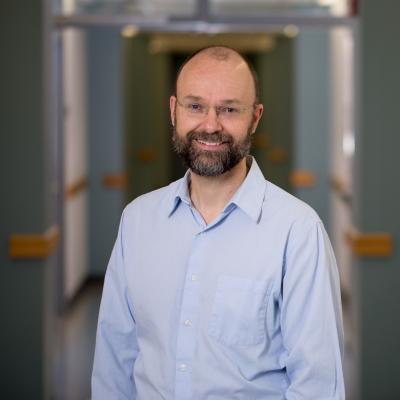
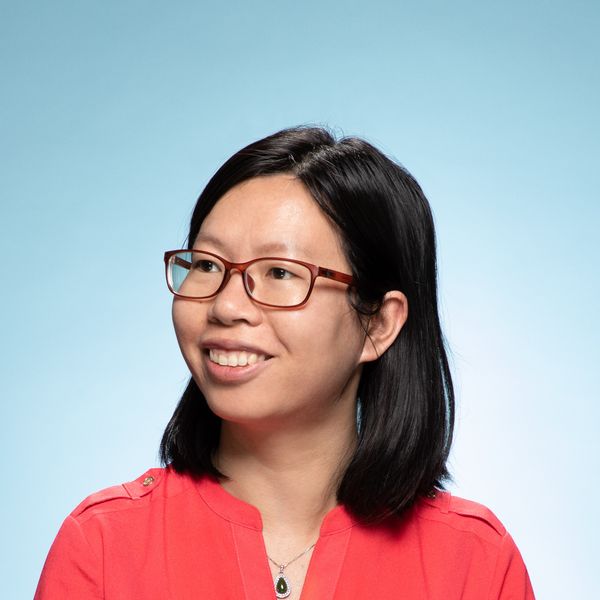
Shirshendu Ganguly is an Associate Professor in the Department of Statistics at the University of California, Berkeley. His research focuses on probability theory, statistical physics, and their applications, including percolation models, phase transitions, Markov chains, and random graphs. He holds a PhD in Mathematics from the University of Washington and has held postdoctoral positions at UC Berkeley. Ganguly has been recognized with the 2019 Sloan Research Fellowship. Education: PhD in Mathematics, University of Washington, 2011–2016 Miller Postdoctoral Fellow, UC Berkeley, 2016–2018 Research Interests: Probability Theory, Statistical Mechanics, Markov Chains, Random Graphs, Percolation Theory, Sparse Combinatorial Structures His work explores geometric and probabilistic phenomena in disordered systems, including polymer models, self-organized criticality, and random matrix theory. He has advised multiple PhD students and contributes to teaching advanced probability courses at Berkeley. Awards: 2019 Sloan Research Fellowship
Jean-Claude Besse is a Lecturer in the Department of Physics at ETH Zürich, specializing in superconducting circuits and quantum optics. His research focuses on quantum computing, microwave photonics, and artificial atoms. Research Interests: Besse works on the fabrication of superconducting circuits, modular quantum computing processors, and microwave quantum optics using artificial atoms. His work includes single-photon detection, parity measurements, entanglement stabilization, and quantum networking. He has developed technologies like high-fidelity multiplexed readout and tunable ZZ gates. Key Contributions: Besse led breakthroughs in non-destructive single-photon detection, deterministic remote entanglement, and loophole-free Bell inequality violations. His research enables error-corrected quantum communication protocols and scalable microwave quantum systems. Publications Trends: Recent articles emphasize modular quantum architectures, entanglement stabilization, and microwave photon engineering. Topics include cluster state generation, defect mode mitigation, and reinforcement learning for quantum feedback systems. Labs & Teams: Affiliated with the Laboratorium für Festkörperphysik at ETH Zürich, Besse contributes to advancing superconducting quantum technologies and microwave quantum optics.
Meng Cheng is an Assistant Professor of Physics at Yale University, specializing in condensed matter theory. He holds a B.S. from Nanjing University (2008) and a Ph.D. in Condensed Matter Theory from the University of Maryland (2013). After a postdoctoral position at Microsoft Research Station Q (2013–2016), he joined Yale in 2017. His research focuses on quantum criticality, fractonic phases, and symmetric topological phases, with a particular emphasis on classification and characterization of exotic quantum matter. He has received prestigious awards including the NSF CAREER Award (2019) and the Alfred P. Sloan Fellowship (2019). Key research interests include topological superconductivity, global symmetry interactions, and applications in quantum information. His work bridges theoretical frameworks with experimental implications, exploring topics like Wilson loop operators, disorder operators, and entanglement entropy in gapless systems. He has contributed to advancements in understanding symmetry-enriched topological phases and their surface topological order. Publications span high-impact journals and cover topics such as fractionalization in electronic insulators, quantum Hall effects, and topological stabilizer models. His talks highlight interdisciplinary approaches, including seminars at the Perimeter Institute and Université de Montréal on fractonic topological phases and infinite-component Chern-Simons theories. Awards and grants underscore his contributions to advancing theoretical physics, with a focus on fostering innovation in quantum materials and computational methods. Teaching and mentorship activities further his commitment to education within the Yale Physics Department.
Assoc Prof Ying Chen is an Associate Professor at the National University of Singapore , affiliated with the Department of Mathematics, Asian Institute of Digital Finance (as Academic Director of PhD Program in Digital FinTech 2022–2024), Risk Management Institute (2019–2023), Department of Statistics and Data Science (2019–2023), and Department of Economics (2018–2023). She also contributes to NUS Graduate School for Integrative Sciences and Engineering since 2016. Research Interests include: AI forecasting and quantum computing for finance Nonstationary time series and functional data analysis Energy data analytics and precision medicine Network autoregression and spatial-temporal modeling Explainable AI and citation metrics Portfolio liquidation and market-making algorithms Article Trends demonstrate expertise in: Adaptive forecasting for gas flows and electricity prices Blockchain network influence detection Quantum computing applications in finance Functional autoregression with mixed predictors Credit rating fairness and explainability High-resolution implied volatility modeling Scientific Awards include: ISI Elected Member (2016–) International Statistical Institute Council (2023–2027) IASC Scientific Secretary (2017–2019, 2023–2025) Advisory roles for EU FIN-TECH and xAIM projects
Song Mei is an Assistant Professor in the Department of Statistics and Department of Electrical Engineering and Computer Sciences at the University of California, Berkeley. She received her Ph.D. from Stanford University in 2020 under Andrea Montanari and maintains active research collaborations with institutions including Amazon (as a 2023 Amazon Research Award recipient) and OpenAI (where she is currently on leave). Her research spans the intersection of statistics, machine learning, information theory, and computer science, with particular emphasis on foundational theories for modern AI systems. Key interests include language models, diffusion models, quantum algorithms, and high-dimensional statistics, often leveraging insights from statistical physics literature. Analysis of her recent publications reveals a strong focus on theoretical underpinnings of generative AI, with significant contributions to understanding contrastive pre-training (CLIP), attention mechanisms in LLMs, and mathematical foundations of diffusion models. Her work demonstrates consistent interdisciplinary connections between statistical theory and practical AI development. Sloan Research Fellowship (2025) Noether Early Career Scholar Award (2025) Google Research Scholar Award (2024) Amazon Research Award (2024) She actively advises graduate students through MA programs and has secured significant research grants including Amazon Research Awards. Her work with AGI Labs at Amazon demonstrates applied impact of theoretical research. Current projects focus on mechanistic interpretability of large language models and mathematical frameworks for generative AI. Professor Mei leads research on the statistical principles behind frontier AI models, with particular focus on developing rigorous theoretical frameworks for understanding emergent behaviors in large-scale systems.
Assoc Prof Ng Teng Yong is an Associate Professor at the School of Mechanical & Aerospace Engineering (NTU), specializing in numerical modeling and simulation. With a background as Research Manager at A*STAR Institute of High Performance Computing, his work spans materials science, nanotechnology, and aerospace engineering. Current focus on graphene-based desalination membranes Expertise in molecular dynamics simulations Investigates nanoscale fluid mechanics and structural dynamics Recent publications highlight advancements in energy-efficient electrodialysis, smart robotics, and nonlinear vibration analysis. His interdisciplinary approach integrates computational methods with experimental validation in additive manufacturing and soft material mechanics.
David Jerison is a Professor of Mathematics at the Massachusetts Institute of Technology (MIT), where he conducts research in Fourier analysis and partial differential equations. His work focuses primarily on free boundary problems and, more recently, on internal Diffusion Limited Aggregation (internal DLA), a stochastic growth model. He maintains an active research program with numerous publications in leading mathematical journals. Professor Jerison's research spans several interconnected areas of mathematical analysis. His primary interests include Fourier analysis and partial differential equations, with particular emphasis on free boundary problems. In recent years, he has expanded his research to include internal Diffusion Limited Aggregation, a stochastic growth model that has connections to probability theory and mathematical physics. His work often bridges geometric analysis, spectral theory, and probabilistic methods, demonstrating the deep connections between different branches of mathematics. Analysis of Professor Jerison's recent publications reveals a consistent focus on geometric aspects of partial differential equations, particularly free boundary problems. His research shows progression from classical PDE theory toward more stochastic and probabilistic approaches, as evidenced by his work on internal DLA. The publications demonstrate interdisciplinary connections between mathematical analysis, probability theory, and mathematical physics, with applications ranging from geometric measure theory to quantum mechanics. Professor Jerison is actively involved in teaching and mentoring at MIT. He has taught courses including Differential Equations (18.03), Fourier Analysis and Applications (18.103), and Differential Analysis (18.155). He also directs the Summer Program for Undergraduate Research (SPUR), which is exclusively for MIT undergraduates, and organizes the mathematics section of the Research Science Institute (RSI) for high school students. His teaching materials are available through MIT's Open Courseware platform, indicating his commitment to educational outreach and accessibility.
Jiwoong Park is Professor of Chemistry and Chair of the Department of Chemistry at the University of Chicago, and simultaneously Professor of Molecular Engineering in the Pritzker School of Molecular Engineering. His interdisciplinary research group, the Park Group, is jointly affiliated with the James Franck Institute and the Materials Research Science and Engineering Center (MRSEC) at UChicago, and operates from the Gordon Center for Integrative Science. Education & Training Ph.D., University of California, Berkeley (2003) B.S., Seoul National University (1996) Junior Fellow, Rowland Institute, Harvard University (2003–2006) Assistant → Associate Professor, Department of Chemistry and Chemical Biology, Cornell University (2006–2016) Research Interests Park’s research centers on the science and technology of precisely engineered nanomaterials, particularly atomically-thin two-dimensional (2D) crystals and van der Waals solids. Spanning chemistry, physics, materials science and electrical engineering, his group develops novel synthetic, imaging and characterization techniques to uncover new physical phenomena and translate them into scalable device technologies. Key thrusts include growth of wafer-scale molecular crystals, optical and transport spectroscopy of 2D semiconductors, mechanical behavior of polycrystalline nanomembranes, and integration of these materials into photonic, electronic and energy-harvesting devices. Scientific Awards Elected Fellow of the American Physical Society (2022) – “for the development of synthetic, imaging, and characterization techniques of atomically thin materials and the discovery of novel properties of van der Waals solids.” Clarivate Highly Cited Researcher (2023) – recognition for multiple papers ranking in the global top 1% by citations in Materials Science and Chemistry. Group & Collaborations The Park Group is an interdisciplinary team of postdocs, graduate researchers and undergraduates housed in the Gordon Center for Integrative Science. The group actively collaborates with colleagues across the Department of Chemistry, Department of Physics, and the Pritzker School of Molecular Engineering, leveraging shared facilities at the James Franck Institute and MRSEC to push the frontiers of 2D material science.
Eugene Demler is a Full Professor at the Department of Physics, ETH Zurich. Previously, he held academic positions at Harvard University from 1998 to 2021, including Assistant Professor (2001-2004), Associate Professor (unspecified dates), and Full Professor (2005-2021). His work bridges theoretical condensed matter physics, atomic and molecular physics, quantum optics, and quantum simulations. Education: MSc in Physics, Moscow Institute of Physics and Technology (1993) Diploma work, Lebedev Physics Institute (1992-1993) PhD in Theoretical Physics, Stanford University (1998), supervised by S.C. Zhang Demler's research focuses on strongly correlated quantum systems, spintronics, quantum sensing, and photo-induced phase transitions. His recent publications explore topics such as quantum polarons, Josephson plasmons, magnon dynamics, and terahertz spectroscopy in superconductors. He has pioneered hybrid quantum-classical methods for electron-phonon systems and cavity-mediated quantum materials. His Google Scholar articles (2023-2025) span theoretical and experimental domains, with keywords including Quantum Physics , Condensed Matter Physics , and Quantum Optics . Subfields include Quantum Control , Superconductivity , Spin Waves , Quantum Sensing , Non-Equilibrium Dynamics , and Quantum Simulation . Scientific Awards: Hamburg Prize for Theoretical Physics (2021) Simons Investigator (2021) Moore Distinguished Scholar (2020) Hanna Visiting Scholar (2019) Highly Cited Researcher (2017-2020) Senior Fellow at ETH Zurich's Institute for Theoretical Studies (2015) Simons Fellowship (2015) Distinguished Scholar at Max Planck Institute of Quantum Optics (2015) Thomson Reuters Highly Cited Researcher (2014) Siemens Research Award (2006) Johannes Gutenberg Lecture Award (2006) NSF Career Award (2002) Sloan Fellowship (2002) Demler teaches courses such as Statistical Physics and Strongly Correlated Systems in Atomic and Condensed Matter Physics . His work integrates theoretical modeling with experimental collaborations, particularly in quantum optics and condensed matter systems.
Professor Emilio Artacho is a faculty member in the Department of Physics at the University of Cambridge, based at the Cavendish Laboratory. He transitioned from the Department of Earth Sciences in 2011, where he was granted a Professorship in 2006. His research focuses on computational simulations of non-equilibrium processes in condensed matter, particularly using first-principles molecular dynamics and density-functional theory. He co-developed the SIESTA program for linear-scaling electronic structure calculations, widely utilized in computational materials science. Artacho’s work spans far-from-equilibrium phenomena in irradiated matter, multiferroics, nanoconfined water systems, and surface chemistry. His contributions include studies of electronic stopping power in materials, 2D electron gas formation at ferroelectric interfaces, and the structural dynamics of water under confinement. His academic roles include adjunct positions at Ikerbasque (Nanogune, Spain) and visiting professorships at institutions like the University of California, Berkeley, and École Normale Supérieure de Lyon. Research interests are anchored in theoretical condensed matter physics, with applications to nanomaterials, radiation effects, and interfacial phenomena. His computational methods bridge quantum mechanics and classical dynamics, enabling insights into complex systems like proton-irradiated solar cells and confined water films.
Stephen Robert Hanneke is an Assistant Professor in the Department of Computer Science at Purdue University, specializing in theoretical machine learning and statistical learning theory. His work focuses on reducing the number of training examples required for learning, with contributions to supervised, semi-supervised, active, and transfer learning. He joined Purdue in Fall 2021 after roles including Research Assistant Professor at the Toyota Technological Institute at Chicago (2018–2021), Visiting Lecturer at Princeton University (2018), and Visiting Assistant Professor at Carnegie Mellon University (2009–2012). Education: B.S. in Computer Science from the University of Illinois at Urbana-Champaign (2005), Ph.D. in Machine Learning from Carnegie Mellon University (2009). Research interests include statistical learning theory, machine learning foundations, algorithms, and quantum computing. Notable contributions explore the theoretical underpinnings of active learning, adversarial robustness, and universal learning frameworks. His research bridges disciplines like probability theory, philosophy of science, and algorithmic information theory. Key awards include the Best Paper Award at ALT 2021 for 'Stable Sample Compression Schemes' and runner-up for COLT 2021. He has also received the COLT 2020 Best Paper Award and an Honorable Mention for the ICML 2017 Test of Time Award. His work on 'A Bound on the Label Complexity of Agnostic Active Learning' (ICML 2007) received further recognition in 2017. Teaching includes courses on machine learning theory and data mining at Purdue, Princeton, and Carnegie Mellon. He has organized workshops like the ALT 2019 'When Smaller Sample Sizes Suffice for Learning' and chaired the program committee for ALT 2017. His research outputs span over 100 publications in top venues like COLT, NeurIPS, and JMLR, focusing on foundational questions in learning theory and algorithmic efficiency.
Mohammadreza Karamad is an Assistant Professor in the School of Sustainable Energy Engineering at Simon Fraser University (SFU), with a joint appointment in the Sustainable Energy Engineering department. His research focuses on computational materials discovery, leveraging quantum-mechanical methods (e.g., DFT) and machine learning (ML) to design advanced energy materials for clean technologies like hydrogen storage and catalysis. He holds a Ph.D. from the Technical University of Denmark (DTU) and completed postdoctoral research at Stanford University. His academic background includes leadership roles in the CMD Lab (Computational Materials Discovery), where he explores novel materials for electrochemical energy conversion processes. Key research areas include electrochemistry, heterogeneous catalysis, and material science, with a particular emphasis on CO2 reduction, ammonia synthesis, and sustainable energy storage solutions. Dr. Karamad collaborates with industry and academic partners to advance materials discovery through high-throughput computational screening and AI-driven approaches. He actively seeks motivated students (undergraduate and graduate) to join his research program, focusing on developing next-generation energy materials. His lab is located in room B8220, and he can be reached at mkaramad@sfu.ca. Notable technical contributions include pioneering work on transition metal nitrides for CO2 reduction, single-atom catalysts for ammonia synthesis, and machine learning frameworks for predicting material properties. His research bridges fundamental theory with practical applications, addressing global challenges in sustainable energy and environmental technology.
Ju Sun is an Assistant Professor at the University of Minnesota, Twin Cities, in the Computer Science & Engineering department. He leads the Group of Learning, Optimization, Vision, Healthcare, and X (GLOVEX) and plays key roles in the UMN Data Science Initiative (DSI), Program for Clinical AI, and AI-CLIMATE institute. Research Focus : Theoretical foundations of machine learning, computer vision, and numerical optimization with applications in healthcare, inverse problems, and medical imaging. Grants : $4.5M+ in funding including NSF ACED Program and NIH R01 grants for constrained deep learning and imbalanced classification. Teaching & Leadership : Featured in UMN seminars and AI institutes, with affiliations across Electrical and Computer Engineering, Health Informatics, and Medical School. Recent Publications address inverse problems, federated learning, imbalanced classification, and phase retrieval using deep generative priors and diffusion models. His group website details these innovations. Scientific Awards : McKnight Land-Grant Professorship (2025–2027) 2021 AAAI New Faculty Highlights Advising : Mentored three PhD graduates now at Meta, Amazon, and UCLA. Collaborations span medicine, materials science, and biomedical engineering, integrating physics-informed constraints into AI.
Andrew McCallum is a Distinguished Professor and Director of the Center for Data Science at the University of Massachusetts Amherst. He holds a PhD in Computer Science from the University of Rochester (1995) and a BS from Dartmouth College (1989). His research focuses on machine learning, natural language processing, and information extraction, with applications to scientific literature and knowledge base construction. He has pioneered work on conditional random fields and probabilistic databases, and led the development of systems like Rexa, an advanced research paper search engine. Affiliations: Center for Data Science, Center for Intelligent Information Retrieval, Computational Social Science Institute Key Projects: OpenReview.net, Unified Information Extraction, Automated Knowledge Base Construction His work emphasizes extracting actionable knowledge from unstructured text, with contributions to social network analysis, entity resolution, and semi-supervised learning. McCallum has over 300 publications and has received awards including the NSF ITR Grant, IBM Faculty Partnership Awards, and ACM/AAAI Fellowships. He has advised numerous students and served as ICML General Chair (2012). Recent Research Trends: Probabilistic box embeddings, case-based reasoning for knowledge bases, scalable clustering algorithms, and applications in biomedical informatics.
Xi Ling is an Associate Professor in the Department of Chemistry and Materials Science & Engineering at Boston University. They lead the Ling Group, which focuses on the fundamental science and applications of nanomaterials, particularly 2D van der Waals materials. Their research integrates synthesis, characterization via advanced spectroscopy, and device development for energy conversion and chemical sensing. The group utilizes facilities at the Photonics Center for cutting-edge materials analysis. Education: B.A. in Chemistry (Lanzhou University, 2007); Ph.D. in Physical Chemistry (Peking University, 2012). Research emphasizes interdisciplinary approaches to synthesize novel 2D crystals, investigate their physical properties through Raman and photoluminescence spectroscopy, and engineer flexible, transparent devices. Recent publications highlight innovations in strain engineering, ferroelectricity modulation, and exciton dynamics in materials like NiPS3 and GaSe. Students gain expertise applicable to academia and industry roles in semiconductor manufacturing, materials engineering, and instrumentation. The group’s work bridges foundational science and practical applications, addressing challenges in nanoelectronics and sustainable energy technologies.