Larry Goldstein is a Professor of Mathematics at the University of Southern California, specializing in probability theory, mathematical statistics, and their applications. He holds a Ph.D. in Mathematics from the University of California, San Diego (1984). His research focuses on distributional approximation via Stein’s method, high-dimensional statistics, concentration inequalities, and statistical efficiency, with applications in epidemiology and biomedical monitoring. He has organized and participated in numerous conferences, including the 'Stein’s Method: The Golden Anniversary' in Singapore (2022) and the 'BIRS Stein Conference' in Banff (2022). Goldstein teaches advanced courses such as Probability Theory, Statistical Consulting, and Mathematical Statistics, often incorporating modern computational tools like R. He has led international summer programs at the University of Perugia, Italy, on topics including mathematical statistics and high-dimensional probability. His work bridges theoretical foundations with practical applications, including modeling transdermal alcohol concentration and analyzing complex sampling designs in cohort studies. His contributions to Stein’s method include developing couplings for distributional approximation and concentration inequalities. Goldstein’s teaching emphasizes statistical inference, machine learning, and data analysis, reflecting his dual focus on rigorous theory and real-world problem-solving.
Liuba Shrira is a Professor of Computer Science at Brandeis University, affiliated with the Michtom School of Computer Science and the Benjamin and Mae Volen National Center for Complex Systems. Her research focuses on distributed systems, storage systems, blockchain technology, concurrent programming, and system architectures. She holds a Ph.D., M.S., and B.S. from the Technion – Israel Institute of Technology. Her work emphasizes reliable and highly available systems, including innovations in snapshot management, transactional memory, and adversarial cross-chain commerce. She has been recognized with awards such as the ACM Distinguished Scientist (2009), Lady Davis Fellowship (2010-2011), and a Best Paper Award (2020). Her research has been supported by grants from the National Science Foundation and other institutions. Recent publications highlight advancements in optimistic concurrency control, blockchain interoperability, and modular past-state systems. Shrira has also contributed to middleware design and distributed computing frameworks, with applications in both academic and industry settings.
Ping Ma is a Professor of Statistics with a courtesy appointment in Computer Science at the University of Georgia. His research focuses on developing innovative statistical and machine learning methodologies for complex high-dimensional data, with applications spanning bioinformatics, computational biology, social network analysis, and anomaly detection in power systems. Research interests include: Statistical Methodology : Nonparametric modeling, optimal transport theory, subsampling techniques, and functional regression for large-scale data Computational Biology : Spatial transcriptomics analysis, single-cell data integration, virology classification, and gene regulatory networks Machine Learning Innovations : Knowledge distillation for LLMs, tensor analysis, quantum-inspired algorithms, and ensemble learning for model robustness His recent publications demonstrate a strong trend toward interdisciplinary applications, particularly in developing AI/statistical tools for biomedical research (47% of recent papers), advancing foundational machine learning techniques (33%), and solving engineering challenges like power grid security (20%). Methodologically, 67% focus on novel algorithm development while 33% refine existing techniques for scalability.
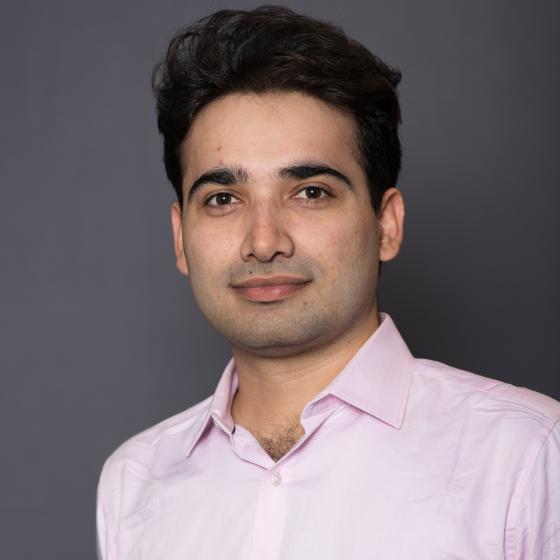
Raaz Dwivedi is Assistant Professor in Operations Research and Information Engineering at Cornell University and Cornell Tech. His research develops statistical and computational methods for personalized decision-making, focusing on causal inference, reinforcement learning, and distribution compression. Recent publications advance kernel thinning techniques, counterfactual inference methods, and adaptive nearest-neighbor algorithms with applications in healthcare and recommendation systems. Research appears in top venues with 15+ publications since 2022. Awards and honors: Blackwell-Rosenbluth Award (2024) ASA Best Student Paper Award (2022) MIT LIDS Best Presentation Award Harvard Teaching Excellence Award FODSI Postdoctoral Fellowship Holds PhD in EECS from UC Berkeley and BTech from IIT Bombay.
Fabio Nobile is a Full Professor at the École Polytechnique Fédérale de Lausanne (EPFL) in the School of Basic Sciences (SB), Department of Mathematics (MATH), holding the CADMOS Chair in Scientific Computing and Uncertainty Quantification. He leads the CSQI (Chair of Scientific Computing and Uncertainty Quantification) group. His work focuses on numerical methods for partial differential equations (PDEs), uncertainty quantification, stochastic modeling, and computational fluid dynamics. He is involved in collaborative projects involving fluid-structure interaction, cardiac electro-mechanics, and energy systems. Professor Nobile has extensive teaching experience, including courses on advanced analysis, stochastic simulation, and numerical integration of stochastic differential equations. He supervises numerous PhD students and has contributed to over 200 peer-reviewed publications, covering topics such as low-rank approximation methods, multilevel Monte Carlo techniques, and optimal control under uncertainty. His research emphasizes interdisciplinary applications, including biomedical engineering (e.g., personalized cardiac simulations) and renewable energy (e.g., probabilistic load forecasting). He collaborates with industries and academic institutions globally, advancing computational methodologies for engineering and scientific challenges.
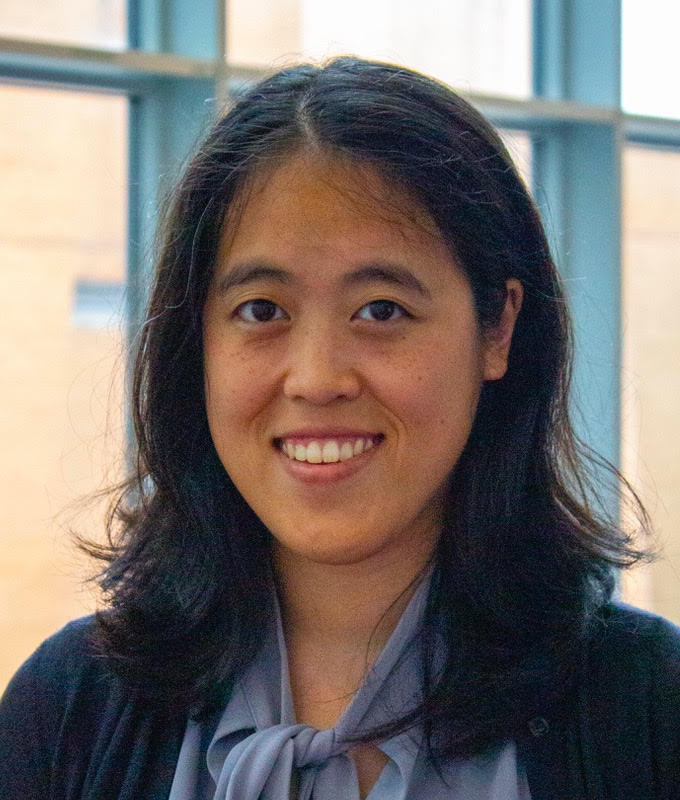
Jennifer Tang is a Postdoctoral Associate at the Massachusetts Institute of Technology (MIT), holding dual appointments in the Institute for Data, Systems, and Society (IDSS) and the Laboratory for Information and Decision Systems (LIDS). She conducts her research under Professor Ali Jadbabaie, focusing on interdisciplinary problems at the intersection of information theory, network science, and social dynamics. Her position is temporary as she actively seeks a permanent academic role through the 2025 job market. Her academic credentials include: Ph.D. in Electrical Engineering and Computer Science from MIT, advised by Professor Yury Polyanskiy Bachelor of Science in Engineering (B.S.E.) in Electrical Engineering from Princeton University, with independent work supervised by Paul Cuff Dr. Tang's research program centers on theoretical and applied aspects of information theory, including channel capacity, quantization, and data compression. She investigates prediction and estimation in high-dimensional settings, data analytics for complex systems, and mathematical modeling of social dynamics and inference in multi-agent networks. Her work employs tools from statistics, optimization, and network theory to address challenges in communication, decision-making, and societal systems, with particular emphasis on opinion dynamics under social pressure and efficient representation of probability distributions. Analysis of her publication record reveals consistent contributions to information-theoretic limits, social network modeling, and compression techniques. Her works frequently appear in top venues like IEEE Transactions on Information Theory and major conferences (ISIT, CDC, ACC), demonstrating expertise in bridging theoretical foundations with real-world applications in networked systems and societal challenges. Her scientific achievements have been recognized with: Best Student Paper Award at IEEE International Symposium on Information Theory (ISIT) 2022 Best Student Paper Award at IEEE Machine Learning for Signal Processing (MLSP) 2022 Student Competition Winner at the Shannon Centennial Celebration Dr. Tang maintains an active teaching portfolio, having served as instructor for MIT 1.022: Introduction to Network Models (Spring 2025) and teaching assistant for multiple core courses including 6.008 (Introduction to Inference), 6.041/6.431 (Probabilistic Systems Analysis), 6.437 (Inference and Information), and 6.439 (Statistics, Computation and Applications). She also contributed to the MIT Women's Technology Program as a Mathematics Instructor during summer 2017. Her research is embedded within MIT's Laboratory for Information and Decision Systems (LIDS) and Institute for Data, Systems, and Society (IDSS), two premier interdisciplinary laboratories fostering collaboration on data-driven decision-making, societal challenges, and foundational theory in information and systems.
Kasper Green Larsen is a Professor in the Department of Computer Science at Aarhus University. His research focuses on theoretical computer science, machine learning, algorithms, and data structures. He has made significant contributions to boosting algorithms, PAC learning theory, and computational geometry. His work often bridges algorithm design with complexity theory, addressing challenges in optimization, memory efficiency, and lower bounds analysis. Key research areas include: Algorithmic Learning Theory (e.g., boosting, bagging, and PAC learners) Data Structure Design (e.g., invertible Bloom tables, succinct representations) Computational Complexity (e.g., lower bounds for dynamic and oblivious algorithms) Geometric Algorithms (e.g., hierarchical searching, range queries) Recent publications emphasize foundational advancements in learning theory (e.g., optimal weak-to-strong learning) and data efficiency (e.g., memory-reduced Bloom filters). His work frequently appears in top conferences like IJCAI, ICALP, and SODA, reflecting rigorous theoretical contributions with practical implications.
Yiying Wu is a Distinguished Professor of Chemistry at The Ohio State University, affiliated with the College of Arts and Sciences. He holds a B.S. (1998) from the University of Science and Technology of China and a Ph.D. (2003) from the University of California, Berkeley. His research focuses on materials chemistry for energy conversion and storage, including dye-sensitized solar cells (DSSCs), electrocatalysis, and lithium-ion batteries. He has pioneered studies on nanomaterials, such as Co 3 O 4 nanowire arrays and graphene-based composites, to enhance battery performance and energy storage efficiency. Dr. Wu has received prestigious awards, including the Cottrell Scholar Award (2008) and NSF-CAREER Award (2010). His work is funded by the National Science Foundation and Department of Energy. Recent projects include developing localized high-concentration electrolytes for alkali metal batteries and designing superoxide-based potassium-oxygen batteries. His group emphasizes interdisciplinary approaches, combining materials synthesis, electrochemistry, and nanotechnology. Key research areas include: (1) DSSC optimization for efficiency and stability, (2) high-rate Li-ion batteries using mesoporous nanowire arrays, and (3) electrocatalysts for oxygen evolution reactions. Collaborations with industry and academic institutions have led to impactful innovations in energy storage technologies. Scientific Awards: Cottrell Scholar Award NSF-CAREER Award Advising & Grants: Dr. Wu has mentored students now in faculty, postdoctoral, and industry roles. His grants focus on advancing nanomaterials for energy applications. Recent publications highlight breakthroughs in potassium-ion batteries, solid-state electrolytes, and quantum spin liquid candidates. Labs/Teams: His research group operates at the interface of chemistry and engineering, with active projects on battery interfaces, nanomaterial fabrication, and electrochemical characterization.
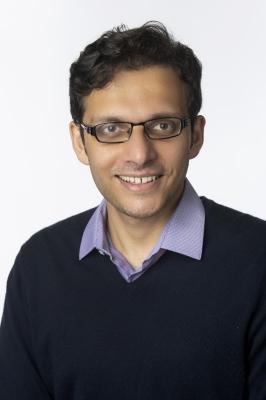
Ashwin Pananjady Martin is an Assistant Professor at Georgia Tech with a joint appointment between the H. Milton Stewart School of Industrial and Systems Engineering and the School of Electrical and Computer Engineering. His research focuses on high-dimensional statistics, statistical machine learning, reinforcement learning, and information theory, with applications in data science and signal processing. He holds a Ph.D. from UC Berkeley's EECS department and a B.Tech. from IIT Madras. Education: Ph.D. in Electrical Engineering and Computer Sciences, UC Berkeley B.Tech. in Electrical Engineering, IIT Madras His research emphasizes statistical and computational challenges in high-dimensional data with geometric structures. Notable awards include the Lawrence D. Brown award and David J. Sakrison Prize for dissertation work, alongside teaching and industry fellowships. Awards: Inaugural Lawrence D. Brown Ph.D. student award David J. Sakrison Memorial Prize Swiss Re Research Fellowship Prior industrial experience includes research at Amazon and Microsoft during his Ph.D. No specific grants or advising details are provided in the text.
Indrabati Bhattacharya is an Assistant Professor in the Department of Statistics at Florida State University. Their research focuses on advanced statistical methodologies including dynamic treatment regimes, machine learning applications in healthcare, and Bayesian asymptotics. Bhattacharya’s work emphasizes nonparametric Bayesian approaches for addressing partial compliance in sequential decision-making frameworks and developing robust quantile regression techniques. Key research areas include: Quantile Regression and Shape-Restricted Inference Bayesian Nonparametric Methods for Multivariate Analysis Optimization of Dynamic Treatment Regimes in Clinical Trials Development of Marginal Structural Models for Sequential Treatment Decisions Recent contributions highlight Bayesian Q-learning algorithms for policy optimization under partial compliance scenarios, as well as innovative Gibbs posterior frameworks for multivariate quantile inference. Bhattacharya has also applied Bayesian techniques to sports analytics, notably exploring the Duckworth-Lewis method in cricket. Current research trends emphasize integrating machine learning with Bayesian statistical theory to address complex real-world problems in healthcare and decision science. No academic awards or grants are explicitly listed in available materials.
Francisco Manuel Bernal Martínez is an Associate Professor in the Department of Mathematics at Carlos III University of Madrid. His research focuses on numerical methods, partial differential equations, and computational mathematics, with applications in industrial engineering and materials science. He leads projects such as 'Financiación adicional 5º año (2022)' and collaborates on initiatives like 'Clustering Automático de Comportamientos de Invertebrados en Libertad mediante Imagen 3D.' His work emphasizes domain decomposition algorithms, radial basis functions, and stochastic control problems. He has advised at least one PhD thesis and holds grants from regional and national funding bodies. Key research interests include meshless methods, probabilistic domain decomposition, and uncertainty quantification in energy systems. Recent publications highlight advancements in hybrid algorithms for large-scale PDEs and volatility modeling. Bernal Martínez actively participates in academic networks and has presented at international conferences on computational methods and industrial mathematics.
Prof. Miles Simon is a University Professor at Otto von Guericke University Magdeburg since 2011. His academic journey includes postdoctoral positions at the Max Planck Institute for Mathematics in the Sciences (Leipzig) and Humboldt University Berlin, followed by a long tenure at Albert Ludwigs University Freiburg until 2012. He earned his PhD from Melbourne University in 1997 and completed his habilitation at Freiburg in 2007. Simon specializes in geometric analysis, with a focus on Ricci flow, mean curvature flow, and geometric PDEs. Education: High school (Hawker College, Canberra), BSc(Honours) at Australian National University, PhD (Melbourne University), and habilitation (Freiburg). His research explores curvature bounds, singularities, geometric evolution equations, and compactness theorems in geometry. He leads the Project Leader SPP 2026 "Geometry at Infinity" . Teaching includes advanced courses like Analysis III, Differential Geometry, and Geometric Evolution Equations. Group members include Dr. Florian Litzinger and M.Sc. Priyamvada Vishwamitra. His recent work addresses Ricci flows of non-smooth metrics and curvature estimates in geometric flows. Simon’s publications analyze geometric flows in low dimensions, stability of spaces under Ricci flow, and curvature regularity. His projects emphasize nonlinear geometric diffusion equations and geometric evolution dynamics. Award: None explicitly listed. Grants: German Research Foundation (SPP 2026).
Aaron J Molstad is an Assistant Professor in the Department of Statistics at the University of Minnesota – Twin Cities, within the College of Science and Engineering. His research lies at the intersection of statistical methodology and genomic data science, with a focus on developing rigorous and scalable methods for modern high-dimensional datasets. His research interests include high-dimensional statistics, covariance and precision matrix estimation, regression modeling with structured responses, variable selection, and integrative analysis of omics data. He develops methods tailored for compositional data, multivariate responses, and ancestry-specific genetic association studies, contributing to both theoretical statistics and public health applications. The recent publications and funded projects highlight a strong trend in developing objective, reliable, and heterogeneous-aware statistical frameworks for genomics and biomedicine. His work emphasizes methodological innovation with direct applicability to complex biological data, particularly in diverse populations and multi-omics integration. Awarded grants from the National Science Foundation and the National Institutes of Health demonstrate recognition of his research’s significance and impact. These include projects on inference from omics data, new regression models for categorical responses, and integrative genomics in African American populations. Objective and reliable methods for inference from modern omics data (NSF, 2024–2027) Collaborative Research: New Regression Models for Multiple Categorical Responses (NSF, 2024–2025) Integrative Genomics into Genetic Association Studies of Blood Pressure and Stroke in African Americans (NIH/Fred Hutchinson, 2023–2024) Dr. Molstad advises and collaborates on major genomic studies involving protein expression, blood pressure, stroke, and ancestry-specific effects. While specific PhD students are not listed, his role as Principal Investigator on multiple grants indicates mentorship of graduate researchers and postdoctoral scholars. He is also active in the broader statistical community, with publications in top-tier journals such as Biometrika , Biometrics , and Genome Biology .
Soyeon Ahn is a full-time Professor in the Department of Education and Psychological Studies at the University of Miami's School of Education and Human Development. Her academic profile demonstrates active research leadership in health communication, educational assessment, and psychometrics, with recent publications spanning 2024-2025. Contact details include email s.ahn@miami.edu, phone (305)284-2929, and ORCiD 0000-0003-2581-306X. Research interests focus on Health Belief Model applications in social media health campaigns, fairness evaluation of high-stakes educational exams, and eHealth interventions for obesity management. She investigates how content creator characteristics (e.g., race, occupation) affect user engagement with health messages, examines psychometric validation of assessment tools via Rasch modeling, and explores generative AI's pedagogical impact. Her work integrates intersectionality frameworks to address health disparities in clinical settings. Recent publications reveal strong interdisciplinary trends connecting public health, education, and technology. Key themes include methodological rigor in meta-analyses of occupational cancer studies, social media's role in vaccine behavior change, and AI literacy training for educators. Her findings consistently emphasize practical implications: optimizing health messaging through HBM constructs, addressing test bias in educational equity, and leveraging technology for behavior intervention. The 2024-2025 output shows increasing focus on real-world application of measurement theory.
Bruno Olshausen is a Professor at the University of California, Berkeley, holding appointments in the Helen Wills Neuroscience Institute and the School of Optometry. He also directs the Redwood Center for Theoretical Neuroscience, focusing on mathematical and computational models of brain function. His research explores visual system processing, sparse coding, and neural mechanisms underlying perception. Olshausen earned his B.S. and M.S. in Electrical Engineering from Stanford University and a Ph.D. in Computation and Neural Systems from Caltech. Previously, he was on the faculty at UC Davis (1996–2005) before joining UC Berkeley. Education : Ph.D. in Computation and Neural Systems, California Institute of Technology, 1994 M.S. in Electrical Engineering, Stanford University, 1987 B.S. in Electrical Engineering, Stanford University, 1986 Research Interests : Olshausen's work bridges neuroscience and computer science, emphasizing the development of computational models for understanding visual processing, sparse coding, and neural representation. His lab explores topics such as optic flow analysis, hierarchical scene representation, and neuromorphic systems. Key themes include the study of neural circuits, probabilistic models of perception, and the application of these insights to AI and data compression. Grants & Labs : Director of the Redwood Center for Theoretical Neuroscience Recipient of grants in computational neuroscience and neuromorphic engineering Labs/Teams : His research group collaborates on projects involving neural network models, analog computing with emerging memory systems, and hyperdimensional computing architectures.