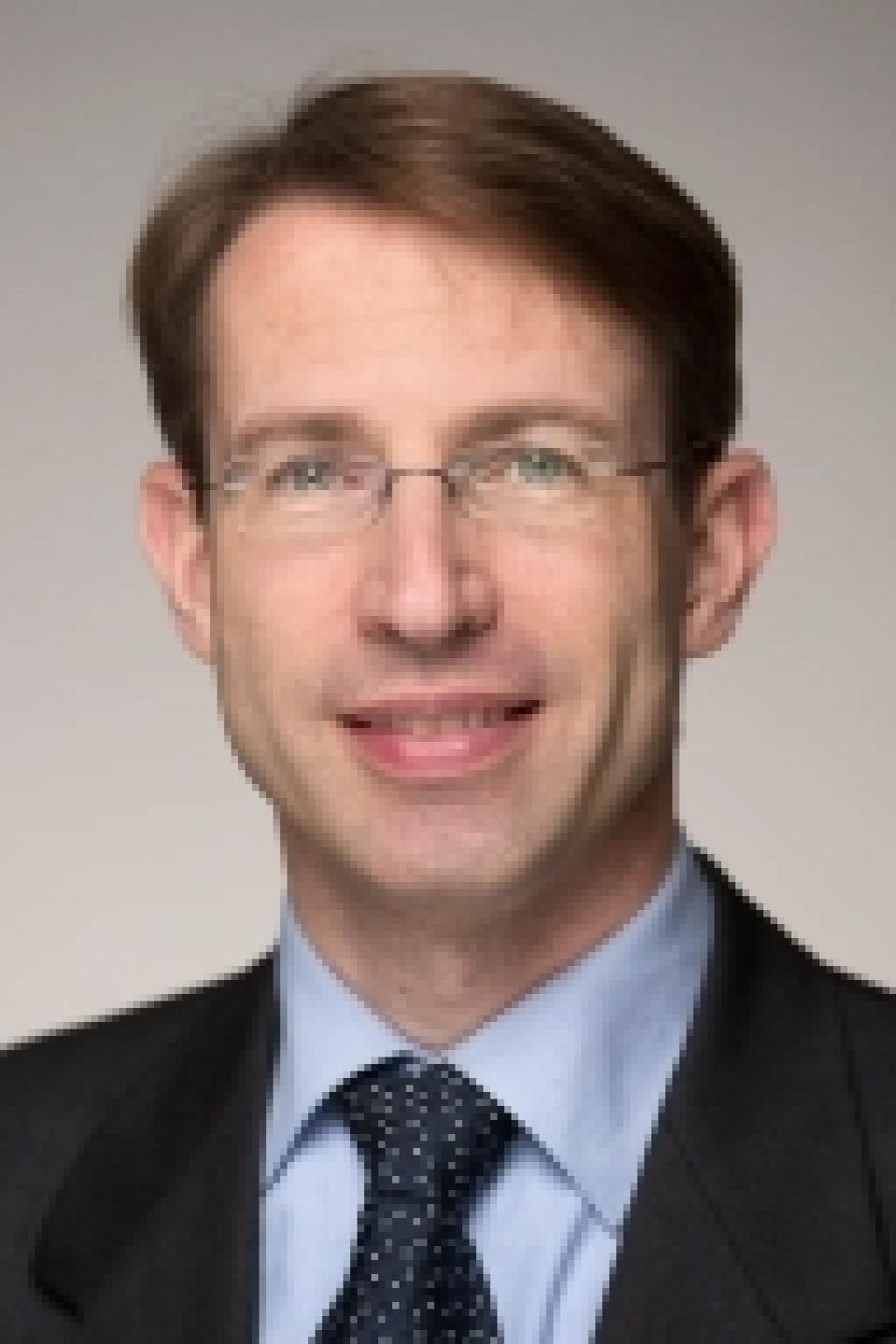
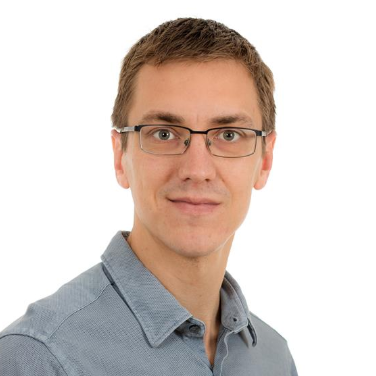
Václav Snásel is a Professor at the Department of Informatics, VSB - Technical University of Ostrava, Czech Republic. He holds a PhD from Masaryk University (Brno, Czech Republic). His research focuses on optimization algorithms, machine learning, metaheuristics, data mining, and their applications in engineering and computational intelligence. Key research interests include developing novel metaheuristic algorithms (e.g., Walrus Optimizer, Artificial Protozoa Optimizer), optimization frameworks for engineering problems, and applications in wireless sensor networks, power systems, and medical diagnostics. He also explores computational methods for data analysis, including graph-based techniques and surrogate-assisted evolutionary algorithms. His recent work emphasizes multi-objective optimization, algorithm design for high-dimensional problems, and interdisciplinary applications in agriculture, energy systems, and bioinformatics. Collaborations span institutions globally, with frequent co-authorship on topics like swarm intelligence and evolutionary computation.
Dr. M.B. Eichler is an Associate Professor of Econometrics at the QE Econometrics Department within the School of Business and Economics at Maastricht University. His research focuses on advancing methodologies for causal inference in time series analysis, particularly addressing limitations in Granger causality and developing algorithms for multivariate time series with latent variables. He collaborates with institutions like Raytheon BBN Technologies on projects involving heterogeneous data sources for predicting rare events. His expertise spans econometrics, functional time series analysis, and dynamic factor models. Notable projects include electricity spot price modeling, semi-parametric approaches for non-stationary processes, and applications in neuroscience and energy economics. He advises PhD students such as Carlos A. Moreno, Dennis Tuerk, and Anne van Delft. Research Themes: Causal inference, Granger causality, time series econometrics, dynamic factor models Labs/Teams: QE Econometrics Research Group Grants: Open Source Indicator (OSI) Program funded by IARPA Publications highlight contributions to spectral analysis, graphical modeling of time series, and applications in energy markets. His work bridges theoretical advancements with practical challenges in economics, neuroscience, and engineering.
Philip Wilsey is a Professor at the University of Cincinnati, specializing in High Performance Computing, Big Data Analysis, and Parallel and Distributed Simulation. He holds a Ph.D. in Computer Science from the University of Louisiana Lafayette (1987) and has extensive experience in Topological Data Analysis (TDA), particularly in persistent homology. His research also spans Privacy Preserving Data Mining, Embedded Systems, and medical device development through collaborations with the College of Medicine. Education: Ph.D., Computer Science, University of Louisiana Lafayette (1987) M.S., Computer Science, University of Louisiana Lafayette (1985) B.S., Mathematics, Illinois State University (1981) Research Interests: Optimizing TDA algorithms with partitioning and parallelism Privacy-preserving clustering using random projection hashing High-performance simulation techniques for multi-core platforms Development of point-of-care medical devices Key Contributions: Pioneered work on streaming persistent homology and big data clustering Advanced Time Warp parallel simulation mechanisms Secured over $20M in grants, including NSF and NIH funding Labs/Teams: Collaborates with the BioSensors group and the College of Medicine on medical device projects. Active in the WARPED simulation kernel development team.
Florian Frommlet holds positions in two faculties: the Faculty of Business, Economics and Statistics (Department of Statistics and Operations Research) and the Faculty of Computer Science (Research Group Visualization and Data Analysis). His academic rank is Senior Lecturer. His research focuses on statistical methodologies, optimization, and computational statistics, with applications in genomics and data analysis. Key research interests include statistical properties, high-dimensional data analysis, and genome-wide association studies. He has contributed to projects such as Optimal selection procedures in genome wide association studies (2010–2014), funded by research grants. Notable publications span topics like multiple testing procedures and semidefinite programming bounds in combinatorial optimization. No academic awards or formal advisees are listed. His interdisciplinary work bridges statistics, computer science, and genomics, reflecting his dual affiliation across faculties.
Dr. Bo Wang is an Assistant Professor at the University of Toronto's Department of Laboratory Medicine & Pathobiology, with a joint appointment in the Department of Computer Science. He holds the Canada CIFAR Artificial Intelligence Chair and serves as Chief Artificial Intelligence Scientist at the University Health Network (UHN). Previously, he was affiliated with the Department of Medical Biophysics and Surgery. Dr. Wang leads the Temerty Centre for AI Research and Education in Medicine (T-CAIREM), focusing on integrating AI into biomedical research and education. He earned his PhD in Computer Science from Stanford University in 2017, specializing in computational biology, cancer subtype prediction, and single-cell analysis. His research interests bridge artificial intelligence, genetics, and healthcare, with a focus on causal inference, machine learning applications in biomedicine, and genomic data analysis. He has pioneered courses like Basic Principles of Machine Learning in Biomedical Research alongside Dr. Rahul G. Krishnan. His work includes developing algorithms for high-dimensional variable selection and instrumental variable methods in causal analysis. Dr. Wang's publications emphasize causal mediation analysis, genetic risk scoring, and longitudinal health outcomes. Notable contributions include studies on vaccine efficacy against long-COVID, schizophrenia treatment efficacy, and Alzheimer’s disease biomarker modeling. Awards include the Canada CIFAR AI Chair (Vector Institute). His research is supported by collaborations with leading institutions and spans computational biology, healthcare analytics, and precision medicine.
Berkant Savas is an Associate Professor at Linköping University's Department of Science and Technology (ITN) within the Physics, Electronics and Mathematics school. His research focuses on scientific computing, numerical linear/multilinear algebra, large-scale graph/network computations, and tensor analysis. He has developed influential algorithms like Clustered Matrix Approximation (CMAPP) and Grassmann manifold computational tools. His work bridges theoretical foundations with practical applications in data science and engineering. Key contributions include scalable methods for massive graphs, low-rank tensor approximations, and optimization on manifolds. Savas' MATLAB-based tools (e.g., Grassmann classes, tensor approximation packages) are widely used in academic and industrial research. He has published extensively in top journals and conferences such as SIAM Journal on Matrix Analysis and IEEE transactions. Current research explores applications in link prediction, recommendation systems, and high-dimensional data analysis. Savas collaborates internationally, with notable co-authors like Inderjit Dhillon and Lars Eldén. His work emphasizes computational efficiency and memory optimization for large-scale problems arising in networks and information retrieval. Though no explicit awards are mentioned, his impactful contributions highlight recognition within the computational mathematics community.
Fredrik Lindsten is a Senior Associate Professor in Machine Learning and Head of the Division of Statistics and Machine Learning at Linköping University's Department of Computer and Information Science (IDA). His research focuses on statistical machine learning, emphasizing probabilistic modeling and uncertainty quantification in methods such as approximate Bayesian inference, representation learning, and graph-based approaches. Applications span weather forecasting, materials science, biochemistry, and automotive industry challenges. Education: MSc (2008), PhD (2013) in Automatic Control from Linköping University; Postdoctoral roles at University of Cambridge, UC Berkeley, and University of Oxford. Affiliations: WASP (Wallenberg AI, Autonomous Systems and Software Program), ELLIIT (Lab for Information and Communication Technology). Research Interests: Lindsten’s work bridges statistical methodology and machine learning, particularly in quantifying uncertainty in predictions. His team explores method development across diverse applications, including spatio-temporal models and graph-based techniques. Recent projects include probabilistic weather forecasting with graph neural networks and cryo-EM reconstruction techniques. Publications: Over 25+ peer-reviewed articles, with recent highlights in Nature Methods , NeurIPS , and Physical Review Materials , focusing on Bayesian methods, generative models, and computational statistics. Awards: Ingvar Carlsson Award (Swedish Foundation for Strategic Research), Benzelius Award (Royal Society of Sciences in Uppsala). Grants & Teams: Supervises 7+ PhD students; active in collaborative projects funded by WASP, ELLIIT, and VR (Swedish Research Council). Labs/Teams: Leads the Division of Statistics and Machine Learning (STIMA) at IDA, fostering interdisciplinary research in probabilistic machine learning.
Robert T. Jantzen is a Professor in the Department of Mathematics and Statistics at Villanova University, affiliated with the College of Arts and Sciences. He holds an A.B. in Physics from Princeton University (1974) and a Ph.D. in Physics from UC Berkeley (1978), specializing in general relativity. His research focuses on mathematical general relativity, cosmology, differential geometry, and Lie groups, with collaborations at institutions like the University of Rome's ICRA. He teaches applied mathematics courses, coordinates the Differential Equations with Linear Algebra course, and advocates for active learning in STEM education. Notable awards include the 2018 Mendel Award. His work bridges mathematics and physics, exploring topics like gravitoelectromagnetism and spacetime splitting. He is an honorary member of the Italian research group G9 and contributes to interdisciplinary projects, including climate change advocacy. Education A.B. in Physics, Princeton University, 1974 Ph.D. in Physics, UC Berkeley, 1978 Research Interests Focuses on general relativity, cosmological models with symmetry, observer-based spacetime analysis, gravitoelectromagnetism, differential geometry, and applications of Lie groups. His work integrates abstract mathematics with physical interpretation, often using computational tools like Maple. Publications & Talks His articles appear in journals like Classical and Quantum Gravity and General Relativity and Gravitation . Recent talks include discussions on geodesics on pasta surfaces and relativity. He has organized international conferences, including Marcel Grossmann Meetings, and co-edited their proceedings. Teaching & Innovation Develops Maple-based educational resources for calculus and differential equations. Emphasizes active learning, problem-solving, and technical communication. Maintains extensive course materials, including quizzes, tests, and grade calculators. Collaborations & Outreach Collaborates with Italian researchers on relativistic astrophysics. Engages in public science communication and progressive activism, supporting independent media and climate change initiatives. Serves as faculty advisor for student groups like the Armenian Student Organization and Villanova Against Sweatshops. Labs & Teams Active in the International Center for Relativistic Astrophysics (ICRA) network and the Vatican Observatory collaboration. Leads interdisciplinary projects blending mathematics, physics, and technology.
Matthew Smith is a Professor in Biomedical Engineering and Neuroscience Institute with a focus on computational and systems neuroscience. As Co-Director of the Center for the Neural Basis of Cognition, his research explores neural circuits, motor control, and spatial cognition. His work bridges experimental and computational methods, including studies on neural plasticity, electrophysiological recordings, and non-invasive neurostimulation techniques. Key contributions include advancing methods for estimating intracranial pressure and optimizing brain stimulation protocols. His interdisciplinary approach integrates machine learning, statistical analysis, and neuroimaging to understand complex brain functions. Research interests span neural coding mechanisms, visual perception dynamics, and the interplay between arousal systems and motor planning. Notable projects include investigations into V4 neuronal activity modulation by recent experience and the development of compact deep neural network models for visual cortex analysis. Smith’s lab employs advanced signal processing tools, such as SLEX analysis and latent dynamic factor modeling, to decode high-dimensional neural data. His recent publications highlight breakthroughs in understanding working memory robustness, transcranial ultrasound modulation specificity, and the spatial organization of prefrontal cortical networks. While no formal awards are listed, his extensive grant-funded research includes collaborations on cerebral autoregulation studies and neurovascular impedance modeling. Advising activities focus on training interdisciplinary PhD candidates in systems neuroscience and neural computation.
Francesco Quinzan is a Researcher at the University of Oxford's Department of Computer Science. His work focuses on advancing AI alignment, causal machine learning, and combinatorial optimization with applications in medical imaging, reinforcement learning, and fair algorithm design. He leads the ELSA project under Prof. Marta Kwiatkowska's supervision. Research interests include: Safe AI development through causal representation learning and doubly robust methods Optimization techniques for submodular functions and evolutionary algorithms Counterfactual analysis for bias detection in medical AI systems Reinforcement learning frameworks incorporating human feedback Recent publications (2020-2025) demonstrate contributions to: Causal feature selection and invariant predictors Scalable optimization methods for large-scale problems Robustness in multi-agent systems and diffusion-based models Algorithmic fairness in constrained feature selection Current projects involve: ELSA: Developing explainable and safe AI systems Optimal transport applications for domain correction Causal discovery from temporal data streams
Mohsen Farid is a Senior Lecturer in Data Science at the College of Science and Engineering. His research spans interdisciplinary areas including artificial intelligence, machine learning, neurotechnology, and healthcare analytics. He has contributed to advancements in genomics data management, video authentication, and neurotechnological solutions for mental health conditions like PTSD. His work frequently integrates computational methods with real-world applications in healthcare and cybersecurity. Key research outputs include studies on storage-optimized genomics systems (2024), neurotechnological interventions for PTSD (2023), and deep learning analyses of histopathology images (2021). His earlier contributions include gait recognition systems (2018) and semantic mapping of legal arguments (2015). Farid’s publications reflect a strong focus on applied data science and its societal impact, particularly in healthcare, security, and biomedical engineering. While no specific awards or grants are explicitly mentioned, his extensive publication record highlights sustained contributions to interdisciplinary data-driven research. His articles often address challenges in data management, pattern recognition, and ethical applications of AI.
Thomas Schnake is a postdoctoral researcher at the Machine Learning Lab of the Technical University of Berlin and the Berlin Institute for the Foundations of Learning and Data (BIFOLD). He holds a Ph.D. in Machine Learning from TU Berlin and prior degrees in Mathematics and Scientific Computing from Humboldt University of Berlin. His research focuses on Explainable AI (XAI), Natural Language Processing, and the mathematical foundations of machine learning. He has also gained industry experience at ebuero AG and GFaI e.V. in Berlin. Education: B.Sc. Mathematics & Philosophy, Humboldt University Berlin (2014) M.Sc. Mathematics, Humboldt University Berlin (2018) M.Sc. Scientific Computing, Technical University Berlin (2018) Ph.D. Machine Learning, Technical University Berlin (2024) Research Interests include: Explainable AI for complex domains like quantum chemistry and histopathology Graph neural network interpretability through walk-based explanations High-resolution data synthesis with minimal input Unsupervised anomaly detection in text and energy systems His recent publications (2021-2025) demonstrate contributions to XAI frameworks, graph neural network explanations, and transformer model interpretability. He is affiliated with two prominent institutions and maintains active research in interdisciplinary areas combining mathematics and machine learning.
Alex Wein is an Assistant Professor of Mathematics at the University of California, Davis. His research bridges theoretical computer science, statistics, and probability, with a focus on the mathematical foundations of data science. Key areas include understanding optimal algorithms for signal detection in noise, computational complexity of statistical inference (especially via the low-degree polynomial framework), tensor analysis, and applications of group actions in computational problems. Research Interests: Mathematics of data science: optimal algorithms for hidden structure detection Computational-statistical gaps via low-degree polynomials Tensors: computational challenges and applications Bayesian inference and connections to statistical physics Group actions in molecular structure determination and representation theory Recent Talks: Banff International Research Station (2024): 'Optimality of AMP Among Low-Degree Polynomials' Bernoulli-IMS Symposium (2020): 'Low-Degree Framework for Statistical Inference' Professional Service: Program committee member for COLT, STOC, FOCS Organizer of workshops on computational complexity and statistical inference
Antoine Deza is a Professor in the Department of Computing and Software at McMaster University, part of the Faculty of Engineering. His research focuses on applied computing, theory of computation, and digital & smart systems, with a strong emphasis on discrete geometry, optimization algorithms, and combinatorial problems. He is actively involved in optimizing systems for transportation, energy, and infrastructure, leveraging geometric and computational methods. His work explores geometric structures such as polytopes and zonotopes, with applications to network design, stochastic modeling, and resource allocation. Key themes include sparsity-inducing norms, congestion management in charging networks, and robust optimization for industrial processes. He also contributes to foundational topics in discrete mathematics, including packing problems and lattice geometry. Deza collaborates on interdisciplinary projects, particularly in digital systems and smart infrastructure. He is currently accepting graduate students and maintains a lab focused on advancing optimization techniques and their practical applications. His research bridges theoretical insights with real-world challenges in engineering and computational science.
Ákos Horváth is a Professor at the Department of Geometry, Budapest University of Technology and Economics. He holds a Doctorate from the Hungarian Academy of Sciences and specializes in advanced geometric studies. His teaching includes courses such as Geometry 2, Non-Euclidean Geometry, and Descriptive Geometry for engineering students. His research focuses on non-Euclidean geometries, convex geometries, Minkowski spaces, and discrete geometry, with significant contributions to hyperbolic plane analysis and geometric optimization problems. Recent research highlights include studies on seashell geometry, affine constructions of conic sections, and extremal problems involving simplices. His work frequently explores metric properties in normed spaces and the interplay between geometric structures and algebraic methods. Collaborations extend to international journals and platforms like MTMT, ResearchGate, and Google Scholar. No specific awards are listed, but his extensive publication record reflects sustained academic engagement. His advising and grants remain unspecified in available texts, though his professional resume may provide further details. He actively contributes to the department's seminar programs and maintains a personal website with research resources.