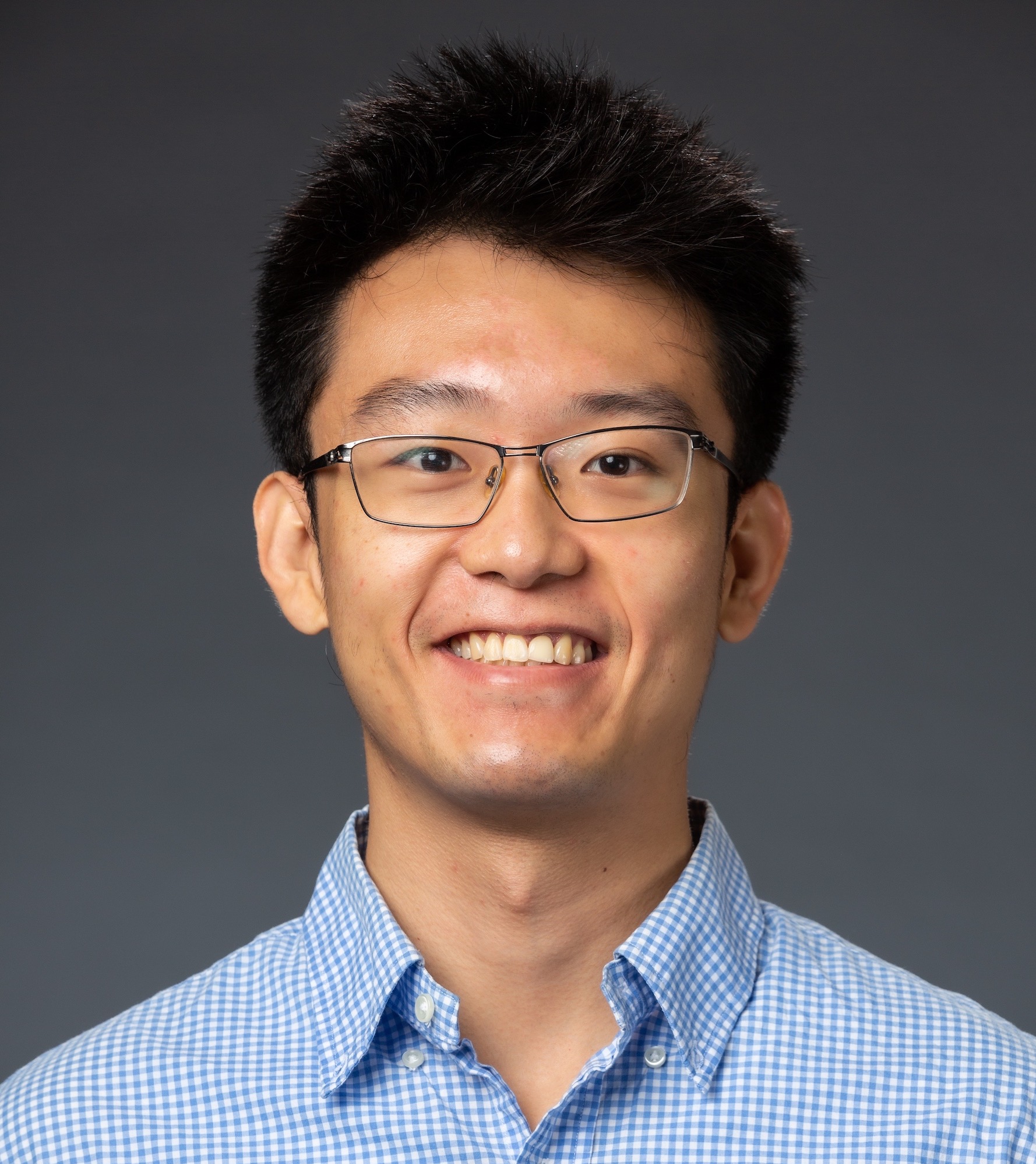
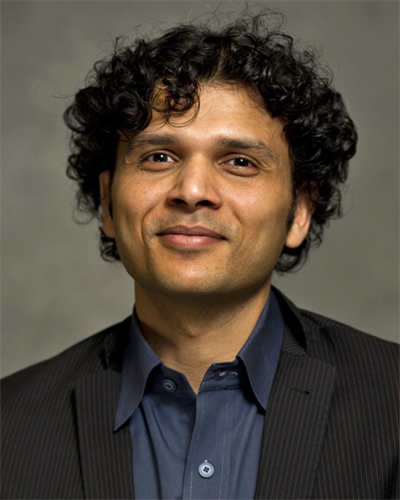
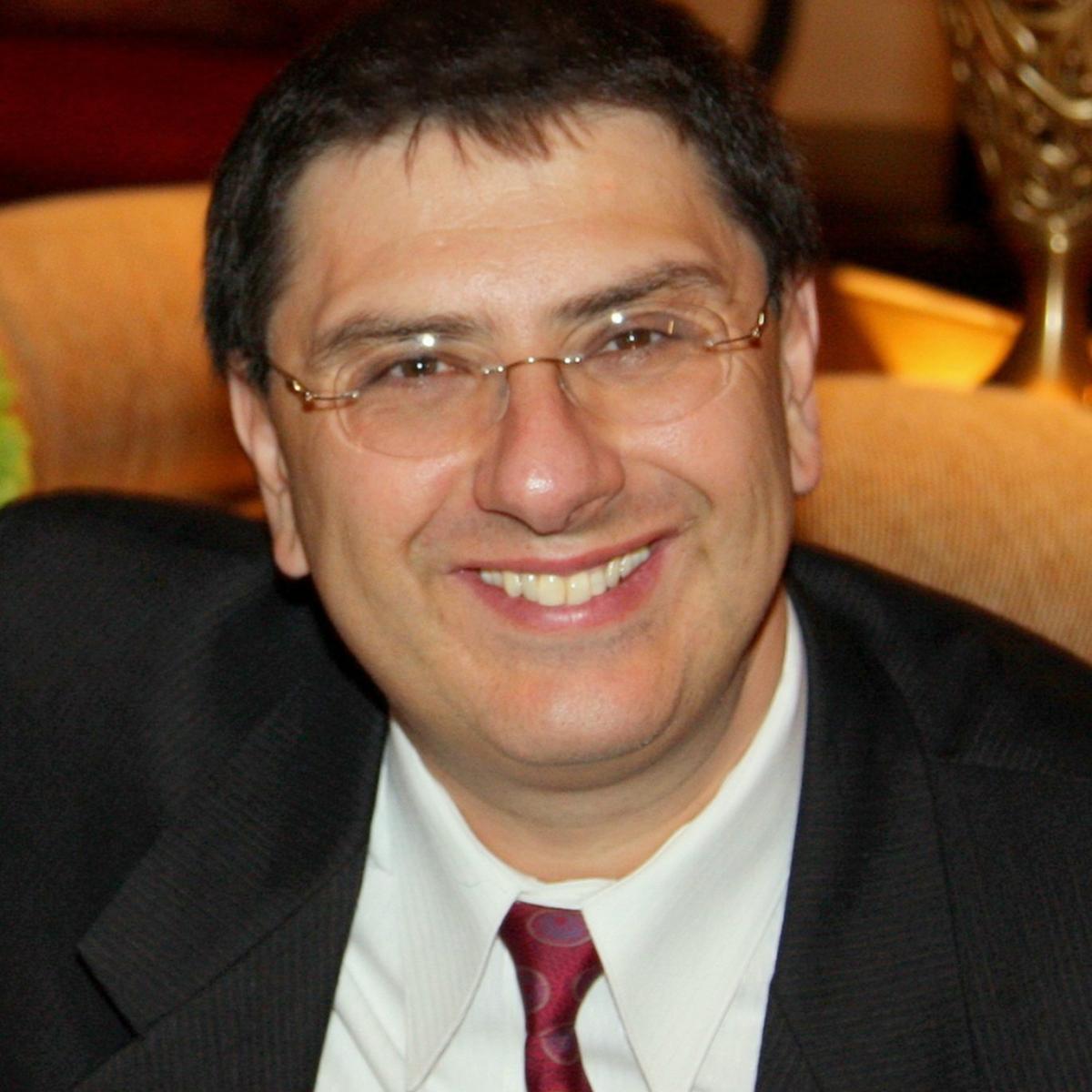
Haobo Wang is a researcher affiliated with Zhejiang University , specifically within the School of Software Technology under the College of Computer Science and Technology . His work bridges Computer Science and Electrical Engineering , focusing on Machine Learning , Signal Processing , and Remote Sensing .
Başak Esin KÖKTÜRK-GÜZEL is an Assistant Professor at İzmir Democracy University's Electrical and Electronics Engineering Department and Co-Founder of Zoi Data. Her research focuses on Image Processing, Machine Learning applications in Marketing AI, and interdisciplinary projects in biotechnology and healthcare. She actively collaborates on initiatives like the ERA-NET NEURON project (Brain-Body interactions) and the INSECTAI Annual Meeting (insect conservation). Recently published work combines statistical methods and machine learning to optimize xylanase production in Fermentation (MDPI). Education: Unspecified in text. Affiliations: İzmir Democracy University, Zoi Data. Research Interests include Statistical Learning Theory, Signal Processing, and real-world applications like Sales Prediction and Customer Segmentation. She emphasizes translating machine learning into practical tools for clinicians and researchers through Zoi Data. Key Projects: Participated in the 2025 ERA-NET NEURON kick-off meeting and presented at the Workshop on Advancing Medical Imaging. Active in COST Action CA22129 for insect monitoring. Grants/Awards: None explicitly mentioned. Collaborative projects highlighted instead. Zoi Data focuses on automated bioanalytical imaging solutions, aligning with her mission to drive healthcare innovation through AI-driven tools.
Jiachang Liu is an Assistant Research Professor at Cornell University's Center for Data Science for Enterprise and Society (CDSES), hosted by Professors Andrea Lodi and Soroosh Shafiee. He holds a Ph.D. in Electrical and Computer Engineering from Duke University (2024), advised by Cynthia Rudin, and a B.S. in Physics and Mathematics with a Computer Science minor from the University of Michigan, Ann Arbor (2018). His research focuses on interpretable machine learning solutions for high-stakes domains like healthcare and criminal justice, optimization techniques for discrete/continuous problems, and open-source software for data science. Notable achievements include the 2025 Outstanding Dissertation Award from Duke ECE, 2023 Bell Labs Prize (2nd Place), and multiple INFORMS awards. Key contributions include OKRidge for sparse ridge regression (NeurIPS 2023), FastSurvival for Cox models (NeurIPS 2024), and FasterRisk for interpretable risk scores (NeurIPS 2022). He co-authored work on the Rashomon Effect's societal impact (ICML 2024) and developed KATE for GPT-3 in-context example selection (ACL Workshop 2022).
Gregory Valiant is an Associate Professor of Computer Science at Stanford University , specializing in Algorithms, Machine Learning, Statistics, and Information Theory. He holds a PhD from UC Berkeley and a BA in Mathematics from Harvard University. His research focuses on designing efficient algorithms for inferring information from limited data, addressing challenges in computation, memory, communication, and data quality. He advises multiple PhD students and collaborates with institutions like Microsoft Research New England. Educations: PhD, Computer Science, UC Berkeley (2012) BA, Mathematics, Harvard University (2006) Research Interests: Gregory’s work centers on the interplay between algorithms and statistical inference, particularly in high-dimensional settings. His lab explores topics like distribution learning, sample amplification, and adversarial robustness. Recent projects include developing algorithms for trace reconstruction, matrix completion, and transformer-based in-context learning. His methodologies often combine theoretical rigor with practical applications in machine learning and data science. Key Article Trends: His publications span theoretical foundations (e.g., sample amplification, convex optimization complexity) and applied machine learning (e.g., transformer capabilities, adversarial testing). Notable work includes contributions to distribution testing, statistical estimation under constraints, and algorithmic lower bounds. Advising: Current advisees include Annie Marsden, Steven Cao, and Chirag Pabbaraju. Former students have pursued roles at institutions like Harvard, Berkeley, and companies like Google, Waymo, and Facebook.
Ben Harwood is a Research Scientist at CSIRO's Collaborative Intelligence Future Science Platform (CINTEL FSP), where they focus on developing next-generation scientific workflows for human-AI collaboration. They work on interdisciplinary projects like enhancing human-technology information sharing for the Australian Square Kilometre Array Pathfinder (ASKAP) and integrating Social Science with Machine Learning expertise to maximize positive societal impact. Education: PhD in Computer Systems Engineering (2019), Monash University Bachelor of Mechatronics Engineering with Honours (2012), Monash University Bachelor of Science (Computer Science and Mathematics) (2012), Monash University Bachelor of Computer Science Honours (2011), Monash University Ben's research spans Machine Learning , Pattern Recognition , and Human-Computer Interaction , with a focus on efficient algorithms for high-dimensional big data. They also contribute to organizational initiatives as an officer in the Data61 Diversity, Inclusion and Belonging Committee and co-founder of the CSIRO Neurodiverse Staff Network. Their professional work intersects with Reinforcement Learning , Indexing and Retrieval , and translational science applications, while maintaining interests in community engagement through roles like national committee member for Queers In Science.
Eirini Ntoutsi is an Associate Professor at the Faculty of Electrical Engineering and Computer Science at Leibniz University Hannover and a member of the L3S Research Center. Her academic journey includes a post-doctoral position at LMU Munich with an Alexander von Humboldt Foundation fellowship, and she earned her PhD from the University of Piraeus, Athens under the supervision of Y. Theodoridis. She holds a diploma and M.Sc. in Computer Engineering & Informatics from the University of Patras, Greece. Her research lies at the intersection of Artificial Intelligence and Machine Learning, focusing on two main pillars: learning over complex data and data streams (covering adaptive learning, change detection, and model stability), and responsible Artificial Intelligence (covering fairness-aware learning, data quality, and proper evaluation of AI/ML methods). Her work addresses critical societal challenges related to bias in algorithmic decision-making systems. Dr. Ntoutsi's recent publications demonstrate a strong focus on drift-aware learning for imbalanced data streams and fairness in AI systems. Her research shows a clear progression from foundational work in pattern management during her PhD to cutting-edge applications addressing real-world challenges in social streams, sensor data, and recommendation systems. Alexander von Humboldt fellowship for postdocs Best-student paper award at ICBK 2018 1st place in the 2006 innovation competition in Greece Dr. Ntoutsi actively mentors PhD and master's students while leading major research initiatives including NoBIAS (EU-funded, as Network coordinator), BIAS (Volkswagen Stiftung-funded), and OSCAR (DFG-funded). Her interdisciplinary approach combines technical AI solutions with philosophical and legal considerations to develop more equitable algorithmic systems.
Shuchin Aeron is an Associate Professor in the Department of Electrical and Computer Engineering at Tufts School of Engineering, with joint appointments in the Departments of Computer Science and Mathematics. He holds a Ph.D. from Boston University (2009) and completed postdoctoral research at Schlumberger Doll Research, focusing on borehole acoustic signal processing. His research spans statistical signal processing, machine learning, compressed sensing, and information theory, with applications in geophysics, bioengineering, and imaging. Aeron has authored over 175 publications and holds patents in acoustic signal processing. He received the NSF CAREER Award (2016) and is a Senior Member of the IEEE. Educations: Ph.D., Electrical Engineering, Boston University, 2009 M.S., Electrical Engineering, Boston University, 2004 B.Tech., Indian Institute of Technology, 2002 Research Interests: Statistical signal processing (SSP), inverse problems, compressed sensing, information theory, convex optimization Machine learning applications in geophysical signal processing, imaging, and bioengineering His work emphasizes optimal sampling and recovery of multidimensional signals, with contributions to compressed sensing architectures and generative models for particle physics experiments. He leads NSF-funded projects on data science and domain generalization, and collaborates with industry partners like Schlumberger and Mitsubishi Electric Research Labs. Awards: NSF CAREER Award (2016) Mitsubishi Electric Research Lab Research Gift (2015) Grants and Funding: NSF HDR TRIPODS (2019–2023) AFOSR: Enabling Trusted Human-Like Artificial Teammates (2018–2023) NSF: Optimal Sampling and Recovery for Multilinear Signals (2013–2016) Aeron teaches advanced courses in probabilistic systems analysis, information theory, and machine learning. He directs the Tufts Data Science undergraduate and graduate programs, and serves on editorial boards of journals including Frontiers in Signal Processing and IEEE Transactions on Geoscience and Remote Sensing .
Conrado Martinez Parra is a Professor in the Department of Computer Science at the Faculty of Computer Science, Universitat Politècnica de Catalunya (UPC). He is a core member of the ALBCOM research group, which focuses on Algorithmics, Bioinformatics, Complexity, and Formal Methods. Affiliation : Department of Computer Science, Faculty of Computer Science (FIB), UPC Research Group : ALBCOM - Algorísmia, Bioinformàtica, Complexitat i Mètodes Formals Email : conrado@cs.upc.edu ORCID : 0000-0003-1302-9067 Researcher ID : G-4629-2015 His research spans theoretical computer science with a strong emphasis on the design and analysis of algorithms and data structures. His work includes average-case analysis of algorithms, combinatorial generation, probabilistic methods in algorithmics, and applications in information retrieval and data stream processing. He has extensively studied multidimensional data structures such as quadtrees, K-d trees, and skip lists, analyzing their performance under various query models including partial match and orthogonal range searches. His recent publications reveal a sustained focus on algorithmic efficiency, sampling techniques, and probabilistic modeling in data structures. Trends indicate a deep engagement with randomized algorithms, unbiased estimation, and cache-efficient selection methods, reflecting both theoretical rigor and practical applicability in modern computing environments. Scientific Contributions Extensive publication record spanning over three decades, from 1989 to 2024. Active in major algorithmic conferences such as ANALCO, AofA, and AAAI. Contributions to foundational algorithm analysis including Hoare’s FIND, Quickselect variants, and deletion in binary search trees. Collaborative research with prominent figures in theoretical computer science across Europe. Professor Martinez Parra has advised or collaborated with several doctoral students, including Gustavo Lau, whose thesis on partial match queries he supervised. He has participated in numerous competitive R&D projects funded by national and regional programs, focusing on large-scale information processing and graph-based computing models. His work is supported by long-standing grants from Spanish and Catalan research councils. He is affiliated with the ALBCOM research group, a leading team in algorithmic research at UPC, contributing to both theoretical advances and practical implementations in combinatorics and data structure optimization.
Min Xu is an Assistant Professor in the Department of Statistics at Rutgers University – New Brunswick. He is affiliated with the School of Arts and Sciences and focuses his research on theoretical and methodological aspects of machine learning and high-dimensional statistics, with applications in network analysis and nonparametric estimation. Education: Ph.D. in Machine Learning, Carnegie Mellon University (2015) B.S. in Electrical Engineering and Computer Science (with minor in Mathematics), UC Berkeley Research Interests: Min Xu’s research lies at the intersection of machine learning , high-dimensional statistics , and network science . He develops computationally scalable methods with strong theoretical guarantees for complex data structures, particularly in nonparametric estimation , network analysis , and large-scale inference . His work addresses fundamental challenges in estimating high-dimensional distributions and understanding the structure of evolving networks, with applications in economics and social sciences. Grants & Funding: NSF Grant DMS-2113671 NSF Grant DMS-2311299 Research Trends: Across his publications, a consistent theme is the development of statistically rigorous methods for high-dimensional and network data. His work spans optimal estimation in stochastic block models, convex M-estimation, and inference on dynamic network structures, with a strong emphasis on theoretical guarantees and practical scalability. Affiliations: Previously, Min Xu served as a departmental postdoctoral researcher in the Statistics Department at the Wharton School, University of Pennsylvania. He is currently based at Hill Center, Rutgers University.
Anxiang Zeng is a researcher affiliated with the University of Kansas School of Business , Department of Management and Leadership. His work focuses on machine learning applications in e-commerce , particularly in search engines, recommender systems, and preference optimization.
Mohammad Sadoghi is a Professor in the Department of Computer Science at University of California, Davis, where he leads the Exploratory Systems Lab. His research spans database systems, distributed computing, and blockchain technologies with over 54 publications from 2007-2025 and more than 900 citations. His primary research domains include: Distributed database transactions Byzantine fault tolerance Consensus protocols Event processing systems Blockchain applications Database indexing techniques Prof. Sadoghi's publication trajectory shows evolution from foundational work on boolean expression indexing and event processing to cutting-edge research on blockchain consensus mechanisms. His recent work (2023-2025) demonstrates significant contributions to understanding BFT protocols, with publications in top venues like VLDB, EuroSys, and IEEE TKDE. His research bridges theoretical analysis with practical implementations, particularly focusing on performance optimization and security in distributed environments. His notable recognition includes: ACM Senior Member (2020) Prof. Sadoghi has advised multiple doctoral students who have become active researchers in distributed systems, including Suyash Gupta and Thamir M. Qadah. His lab has secured research funding for projects spanning database engines, consensus protocols, and blockchain infrastructure. The Exploratory Systems Lab maintains strong industry and academic collaborations worldwide, with recent work focusing on edge-cloud consensus applications and high-performance data management systems.
Rafail Ostrovsky is a Distinguished Professor of Computer Science and Mathematics at UCLA, holding the Norman E. Friedman Chair in Knowledge Sciences at the Henry Samueli School of Engineering and Applied Science. As Director of the Center for Information and Computation Security, he leads research in cryptography, theoretical computer science, and secure computation with over 350 refereed publications and 15 issued USPTO patents. His primary research focuses on cryptography and theoretical computer science, with significant contributions to private information retrieval, zero-knowledge proofs, secure multi-party computation, and privacy-preserving technologies. His work bridges theoretical foundations with practical applications in network security, data analysis, and cryptographic protocols. Dr. Ostrovsky's research has evolved from fundamental cryptographic primitives to complex systems addressing modern security challenges in distributed environments, with recent work emphasizing efficient secure computation, robust protocols, and privacy-preserving techniques for high-dimensional data. His publication record demonstrates consistent leadership in cryptography, with recent articles focusing on zero-knowledge systems, secure computation protocols, and cryptographic primitives with enhanced security properties. The research trends show increasing emphasis on efficiency, robustness against malicious adversaries, and practical implementations of theoretical cryptographic concepts. 1993 Henry Taub Prize 2017 IEEE Computer Society Edward J. McCluskey Technical Achievement Award 2018 RSA Award for Excellence in Mathematics 2022 W. Wallace McDowell Award (highest award from IEEE Computer Society) Fellow of AAAS, ACM, IEEE, and IACR Foreign member of Academia Europaea Fellow of the National Academy of Inventors Dr. Ostrovsky has held significant leadership roles including chair of the IEEE Technical Committee on Mathematical Foundations of Computing (2015-2018) and chair of the IEEE FOCS 2011 Program Committee. He has served on over 40 international conference program committees and currently serves on editorial boards for Journal of ACM, Algorithmica Journal, and Journal of Cryptology. At UCLA, he teaches foundational courses including Introduction to Cryptography (CS183), Foundations of Cryptography (CS282A/M209A), and Cryptographic Protocols (CS282B/M209B). As Director of the Center for Information and Computation Security, Dr. Ostrovsky leads a multidisciplinary team advancing research in cryptography, network security, and privacy technologies. His group collaborates across computer science, mathematics, and engineering disciplines to develop innovative solutions for contemporary security challenges, with upcoming work focusing on obfuscation, proof systems, and secure computation as evidenced by his scheduled visiting scientist position for Summer 2025.
Professor Dr. Tom Hanika is affiliated with the University of Hildesheim , working in the Intelligent Information Systems (IIS) division within the Institute of Computer Science. His research bridges formal concept analysis , machine learning , and knowledge representation , focusing on geometric interpretations of data and explainable AI systems. Research Themes: Intrinsic dimensionality, lattice structures, and hybrid human-AI collaboration Teaching: Offers courses in databases, C++ programming, and semantic technologies Contact: Office (SC.C. 2.03), Phone +49 5121 883-40312, Email via contact form Recent publications highlight his work on geometric data analysis and formal context manipulation , including applications in graph neural networks, ordinal pattern recognition, and conceptual lattice visualization. His Collaborative Hybrid Human AI Learning framework demonstrates practical implementations of these theories. Current projects explore dimensionality resilience in machine learning models and topic flow visualization in academic networks, reflecting his dual focus on theoretical foundations and applied knowledge systems.
Dmitriy (Tim) Kunisky is an Assistant Professor in the Department of Applied Mathematics and Statistics at Johns Hopkins University's Whiting School of Engineering. He is also affiliated with the Data Science and AI Institute, the Department of Mathematics, and the Algorithms and Complexity Group at Johns Hopkins. Dr. Kunisky received his bachelor's degree in mathematics from Princeton University, worked as a software engineer for Google, earned his PhD in mathematics from the Courant Institute at NYU under the supervision of Afonso Bandeira and Gérard Ben Arous, and was a postdoctoral associate in computer science at Yale University before joining Johns Hopkins. His research broadly concerns how probability theory and mathematical statistics interact with computational complexity and the theory of algorithms. He investigates the mathematical phenomena that govern the power and limitations of algorithms processing massive and high-dimensional inputs, drawing on asymptotic statistics, convex geometry, random matrix theory, statistical physics, and representation theory. His work includes studying convex relaxation algorithms on combinatorial optimization problems, computational intractability in high-dimensional statistics, pseudorandomness, and experimental approaches to number theory and combinatorics. His recent publications demonstrate a consistent focus on the intersection of computational complexity, statistical inference, and random matrix theory. There's a clear trajectory from theoretical foundations to practical algorithmic applications, with particular emphasis on information-computation gaps, spectral methods, and the sum-of-squares hierarchy. His work often bridges theoretical computer science with statistical physics approaches. Dr. Kunisky actively advises graduate students at Johns Hopkins, including PhD candidates in Applied Mathematics and Statistics. He has taught courses on Random Matrix Theory in Data Science and Statistics, Probability Theory, Sum-of-Squares Optimization, and Modern Probability for Theoretical Computer Science, demonstrating his commitment to both research and education in mathematical data science.
Guillaume Lecué is Professor of Statistics and Machine Learning at ESSEC Business School , Department of Information Systems, Decision Sciences and Statistics, and a Permanent Member and Associate Professor at CREST . He is also a Fellow of the Institut Louis Bachelier and serves as an Associate Editor for ALEA and the Annals of Statistics . Education: Graduate – École Normale Supérieure de Cachan, France M.Sc. in Applied Mathematics – Université Paris XI-Orsay, 2005 Ph.D. in Statistics – Université Paris VI-Jussieu, 2007 (advisor: Prof. A. Tsybakov) Habilitation – Laboratoire d’analyse et mathématiques appliquées, Université Paris-Est Marne-la-Vallée, 2008 Research Focus: His work centers on the mathematical foundations of statistical learning and high-dimensional data analysis. Major themes include empirical process theory, robust estimation, compressed sensing, aggregation of estimators, minimax optimality, and the emerging area of benign overfitting in over-parameterized models. Recent efforts concentrate on robustness questions and large-scale graph analytics for healthcare. Honours & Awards: Mark Fulk Award (COLT 2006) – best student paper Prix ROSEMONT/DEMASSIEUX (2008) – best PhD thesis in Mathematics & Applications, Chancellerie des Universités de Paris Advising & Teams: He is actively recruiting PhD students, post-doctoral researchers, and interns for the GRAPH4HEALTH initiative, a multidisciplinary project that uses statistical and machine-learning tools on large-scale graphs to study healthcare accessibility and health outcomes. General inquiries for the ESSEC PhD program in Data Analytics are also welcomed.