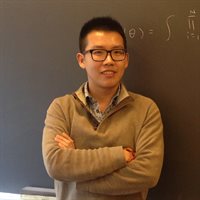
Bharath Sriperumbudur is a Professor in the Department of Statistics (with a courtesy appointment in the Department of Mathematics) at the Pennsylvania State University. His research focuses on non-parametric statistics, machine learning, optimal transport, statistical learning theory, regularization and inverse problems, functional and topological data analysis, and reproducing kernel Hilbert spaces. His work is supported by grants such as NSF-DMS-CAREER-1945396 and NSF-DMS-2413425. PhD in Statistics, University of California, San Diego (2010) His research interests span foundational aspects of statistical learning, kernel methods, optimal transport theory, and their applications. Recent work includes advancements in Gromov-Wasserstein geometry, Stein variational methods, and robust topological data analysis. Key contributions include publications on kernel-based quadrature rules, regularization theory, and functional data analysis. His research bridges theoretical statistics, machine learning, and applied mathematics.
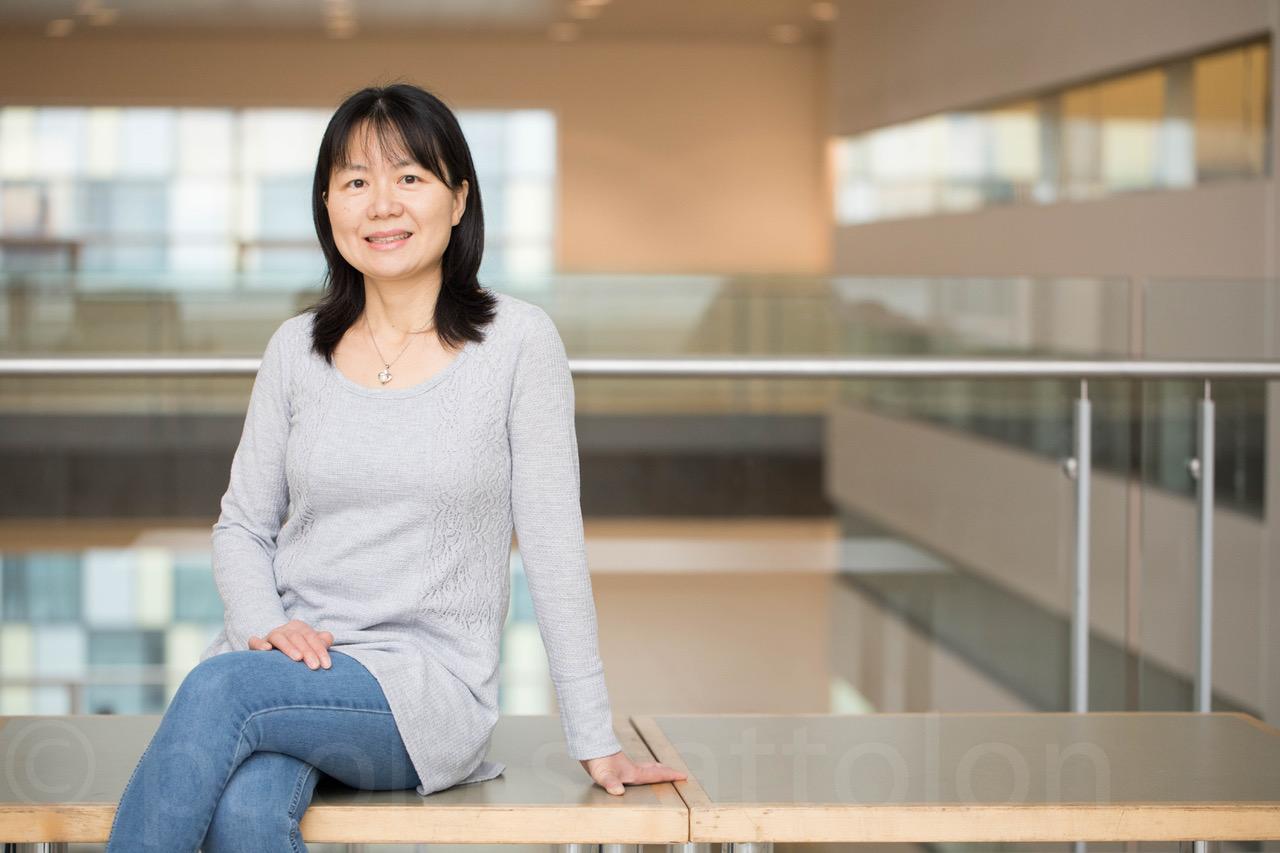
Yubai Yuan is an Assistant Professor of Statistics at the Pennsylvania State University, affiliated with the Department of Statistics within the Eberly College of Science. He holds a PhD from the University of Illinois Urbana-Champaign (2020) and completed postdoctoral research at UC Irvine. His research focuses on network science, causal inference, and statistical machine learning, with applications to neuroscience and social systems. Notable awards include the 2022 NSF-Simons Center Fellow Award and the 2019 ASA Student Paper Award. Education: PhD in Statistics (UIUC, 2020), MS in Statistics (Sun Yat-sen University, 2016), BS in Mathematics (Shandong University, 2012). Research interests span complex network analysis, optimal transport, active learning, and mediation analysis. Current projects include de-confounding causal inference and hypergraph modeling. Teaching includes courses on probability theory and statistical modeling at Penn State. Advises PhD students Yuanchen Wu (active learning on graphs) and Siyu Huang (latent network structures). Collaborates with the Center for Social Data Analytics and organizes workshops in statistical network science. Publications emphasize methodological advancements in network analysis, causal pathways, and data integration. Recent work addresses disaster response via social media data and neuronal activity analysis using optimal transport frameworks.
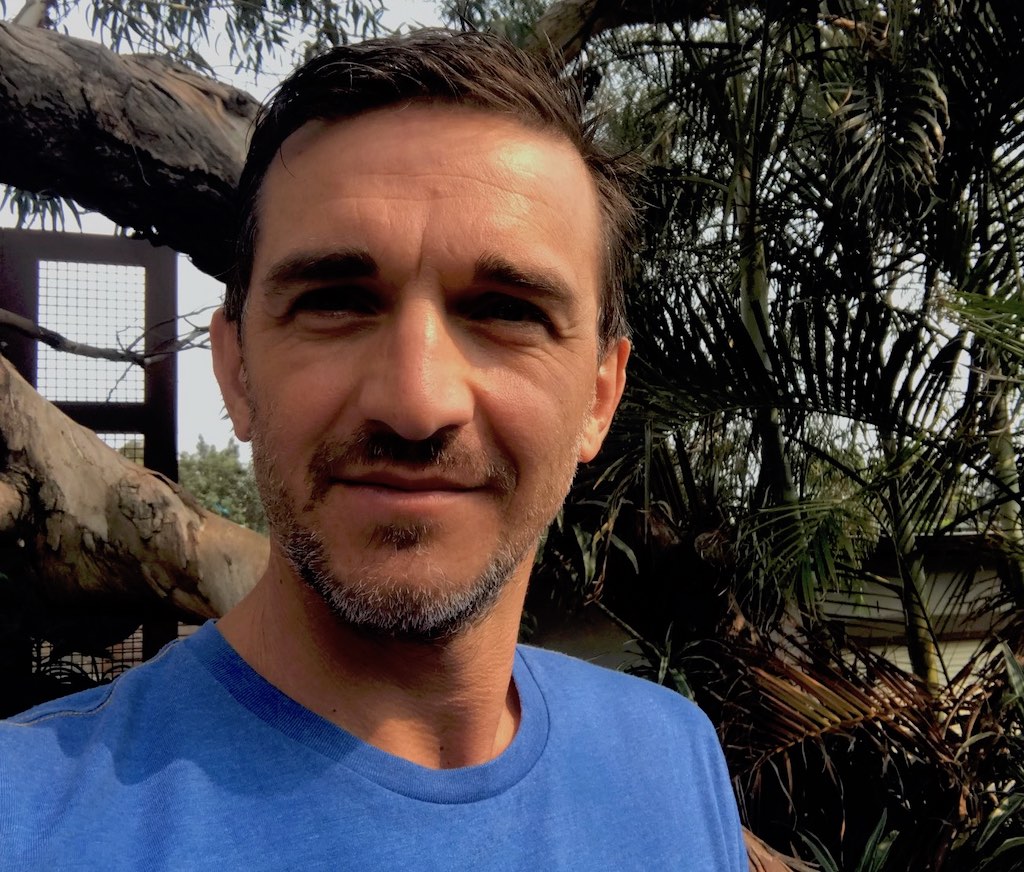
Dr. Yunxiao Chen is an Associate Professor in the Department of Statistics at the London School of Economics and Political Science (LSE), where he co-leads a psychometric lab with Professor Irini Moustaki. Previously, he was an Assistant Professor at Emory University (2016–2018) and earned his PhD in Statistics from Columbia University (2016). His research focuses on developing statistical and computational methods for social data science, addressing challenges in high-dimensional data analysis, latent variable models, and educational assessment. Education: PhD in Statistics, Columbia University, 2016 Research Interests: High-dimensional factor models (matrices, tensors, counting processes) Dynamic behavioral data analysis Sequential decision theory in personalized learning Statistical inference for large-scale item response data Applications in education, psychology, and marketing Publications: Recent work includes advancements in factor analysis, change-point detection, and DIF statistical inference Key journals: Journal of the American Statistical Association , Psychometrika , Journal of Machine Learning Research Awards: 2024 Psychometrics Society Best Reviewer Award 2022 Early Career Award 2018 NCME Loyd Dissertation Award Advising & Grants: Accepts PhD students in statistical methodology Funded by National Academy of Education/Spencer Fellowship (2018–2020) and IEA R&D grants (2022–2023) Labs & Teams: Runs LSE’s psychometric lab focused on educational measurement Collaborates with interdisciplinary teams on machine learning applications
Chuanping Sun is a Lecturer in Finance at Bayes Business School, City, University of London. He earned his PhD in Economics from Queen Mary University of London and has held visiting positions at New York University and FGV Sao Paulo. His research bridges machine learning and empirical finance, with a focus on robust factor selection in asset pricing models. His research interests include: Empirical Asset Pricing Financial Econometrics Machine Learning in Finance Portfolio Choice Cross-Sectional Asset Returns Factor Models His recent work investigates the impact of factor correlations on model robustness, proposing a correlation-robust machine learning approach (using OWL shrinkage) to identify key drivers of asset returns, including the market, liquidity, momentum, and profitability factors. His research shows that traditional methods like LASSO and Fama-MacBeth often fail to detect the market factor due to high correlations, while his approach maintains robustness and delivers superior out-of-sample portfolio performance. His two recent publications in the Journal of Empirical Finance (2024, 2022) demonstrate his focus on methodological innovation in high-dimensional financial datasets, particularly in handling correlated factors and exploiting stock return correlations. He has received internal research funding from City University of London's Pump Priming Fund, supporting his ongoing projects in machine learning applications in finance. While no formal advisees are listed, his role as a lecturer and research supervisor (as indicated by his CRediT contribution) suggests involvement in student mentorship. Chuanping Sun is affiliated with the Finance department at Bayes Business School, where he contributes to research and teaching in quantitative finance and econometrics.
Xin Gao is a Professor in the Department of Mathematics and Statistics at York University, Toronto. His research focuses on Artificial Intelligence , Machine Learning , and Statistical Genetics , with applications in biomedical data analysis and planetary science. He leads the Artificial Intelligence and Machine Learning Lab , which has developed impactful tools like an online Type 2 Diabetes risk predictor using logistic regression and Mars rock composition analyzers for NASA. His methodological work includes penalized composite likelihood and multi-task feature learning , implemented in R packages FusionLearn and lassoGEE . Scientific Awards NSERC Discovery Acceleration Award ($120,000, 2018-2020) Key Software Contributions FusionLearn : Correlated multi-task feature learning lassoGEE : High-dimensional clustered/longitudinal data analysis Notable Collaborations Vector Institute (AI scholarship mentoring) Fields Institute (committee roles) International genomic data integration projects
Fabio Luciani is a Professor in Systems Immunology and Machine Learning at the School of Medical Sciences at UNSW Sydney, with visiting fellow positions at the Garvan Institute for Medical Research and Weill Cornell College of Medicine NY, USA. His interdisciplinary research program integrates immunology, genomics, and computational approaches to develop novel immunotherapies for cancer and autoimmune diseases. With a background spanning physics, theoretical biology, and biophysics, Luciani leads an interdisciplinary team with expertise in immunology, mathematical modeling, statistics, and bioinformatics. His research focuses on T cell responses using single-cell genomic technologies to understand immune responses in viral infections, autoimmunity, and CAR T cell therapies. He has developed landmark bioinformatic methods for combining single-cell transcriptome data with antigen receptor sequences and computational models for haplotype reconstruction. Luciani's work demonstrates a strong emphasis on translating molecular and genomic discoveries into clinical interventions, particularly in predicting side effects and identifying solutions for unmet clinical needs in immunotherapy. His research spans multiple collaborative projects including single-cell multi-omics analysis in coeliac disease with Prof Chris Goodnow's team at the Garvan Institute, and CAR T cell therapy response studies with clinicians at Westmead Hospital and Weill Cornell. His scientific contributions include over 140 peer-reviewed publications and successful acquisition of more than $20 million in research funding from organizations including ARC, NHMRC, JDRF, NIH, and private industry partners. He serves as Principal Investigator of the UNSW Future Institute of Cellular Genomics, which has secured $4.5 million over seven years for single-cell technologies in cellular genomics. As an academic supervisor, Luciani currently mentors 3 PhD students, 2 honours students, and 2 postdoctoral researchers, welcoming applications from students interested in bioinformatics, statistics, data science, immunology, and genomics. His work bridges theoretical approaches with experimental immunology to advance precision medicine and transform current immunotherapies into more precise and accessible solutions.
Mohammad Kamrul Hasan is an Associate Professor and Head of the Network and Communication Technology Research Lab at the Center for Cyber Security, Faculty of Information Science and Technology, Universiti Kebangsaan Malaysia (UKM). He holds a Ph.D. in Electrical and Communication Engineering from the International Islamic University Malaysia (IIUM) and has over a decade of prior industry experience in communication systems and network design. He has held academic positions at Universiti Malaysia Sarawak and IIUM, and is currently active in research and leadership at UKM. Ph.D. in Engineering (Electrical and Computer Engineering), International Islamic University Malaysia, 2016 M.Sc. in Communication Engineering, International Islamic University Malaysia, 2012 His research focuses on cutting-edge areas in network and communication technologies. Key interests include Wireless Communication and Network Security , Industrial Internet of Things (IIoT) , Cyber-Physical Systems , 5G and Beyond (6G) Networks , Smart Grids , and AI-driven security . He explores machine learning, federated learning, blockchain, and optimization algorithms to enhance network resilience, privacy, and efficiency in critical infrastructure and consumer electronics. His recent publications (2023–2025) demonstrate a strong trend toward intelligent and secure next-generation networks. Topics include intrusion detection in IIoT, passwordless authentication, federated learning for healthcare IoT, 6G security, and digital twins for SCADA systems. His work is frequently published in high-impact IEEE and Springer journals, reflecting a consistent and influential research output. Gold Medal for research excellence Young Scientist Award Fulbright Scholarship (Ministry of Higher Education Malaysia) Senior Member, IEEE (since 2013) Member, Institution of Engineering and Technology (IET) Member, Internet Society Dr. Hasan has served as an editorial member for prestigious journals including IEEE, IET, and Elsevier. He has led funded research projects such as the design of a two-way wireless communication system for medium-voltage electrical networks at Universiti Malaysia Sarawak. He has mentored students and collaborated widely, with co-authors from Malaysia and international institutions. He has also contributed to professional service as Chairperson of the IEEE IIUM Student Branch and as a peer reviewer for over 13 journals including Computer Networks , Internet of Things , and Soft Computing . He leads the Network and Communication Technology Research Lab at UKM, focusing on secure, intelligent, and scalable communication systems for smart cities, industry, and healthcare. His team works on AI-powered intrusion detection, blockchain for critical infrastructure, and privacy-preserving data fusion in IoT environments.
Samuel Severance is an Assistant Professor in the Center for Science Teaching & Learning (CSTL) at Northern Arizona University (NAU), where he contributes to STEM education research and teacher development. His work is centered on improving science and computational thinking instruction through project-based learning and research-practice partnerships. His research interests include: Project-Based Learning (PBL) Computational Thinking (CT) in K-12 education Equity and inclusion in STEM Teacher learning and professional development Curriculum design aligned with NGSS Multilingual and culturally diverse learners His recent publications reflect a strong focus on integrating making, computing, and cultural relevance into science education. He emphasizes design principles for equitable access and has contributed to major educational frameworks and encyclopedias. His work is frequently published in leading venues such as Studies in Science Education and the International Conference of the Learning Sciences . Notable scientific contributions include: Advancing PBL and NGSS alignment Designing CT instruction for multilingual learners Strengthening research-practice partnerships in teacher education Centering cultural assets in STEM for immigrant communities While no formal list of awards is provided, his high-impact publications and collaborations suggest recognition in the learning sciences community. He is actively involved in mentoring and likely advises graduate students, though specific names are not listed. His research is supported through collaborative grants and partnerships focused on improving STEM teaching and learning in diverse contexts. Samuel Severance is affiliated with research networks focused on learning sciences and computational thinking, collaborating with leading scholars such as Joseph Krajcik and Emily Miller. His work is part of a broader effort to transform science education through innovation, equity, and practical application.
Byeong U. Park is a Professor in the Department of Statistics at Seoul National University, College of Natural Sciences. He has held this position since 1999 and previously served as Assistant Professor (1988–1992) and Associate Professor (1992–1999) at the same university. His research focuses on nonparametric structured models, semiparametric inference, and non-Euclidean data analysis. 1982: B.Sc., Department of Computer Science and Statistics, Seoul National University 1984: M.Sc., Department of Computer Science and Statistics, Seoul National University 1987: Ph.D., Department of Statistics, University of California at Berkeley (supervised by Peter J. Bickel) His research spans nonparametric regression, density estimation, and analysis of complex data on manifolds. Key methodologies include smooth backfitting, local likelihood estimation, and handling of errors-in-variables. He has developed techniques for additive models, varying coefficient regression, and high-dimensional data analysis. Notable scientific awards include the 2019 Incheon Award of Science and Technology, 2018 Carver Medal from IMS, 2017 Seoul National University Research Award, and fellowships from IMS, ASA, and KAST. He has served as Editor-in-Chief for multiple journals and held leadership roles in the Bernoulli Society and ISI. 2019–2023: Vice President, International Statistical Institute 2013–2017: Elected Council member, Bernoulli Society 2002–2004: Editor-in-Chief, Journal of Korean Statistical Society As head of the Nonparametric Inference Lab at Seoul National University, he leads research on infinite-dimensional statistical models and nonparametric methods, emphasizing applications to real-world problems in economics and biomedical data.
Mingyi Hong is an Associate Professor in the Department of Electrical and Computer Engineering at the University of Minnesota , where he leads the OptimAI-Lab . His work bridges optimization theory , machine learning , and signal processing , with a focus on foundation models like LLMs and diffusion models. Education : Not explicitly mentioned in the text Current Projects : NSF grants on bilevel optimization, LLM unlearning, and inverse reinforcement learning Research Themes : Bilevel Optimization : Applications in LLM alignment, unlearning, and wireless systems LLM Safety : Unlearning, alignment with human feedback, robustness Diffusion Models : Inference-time alignment, adversarial training Distributed Optimization : Privacy-preserving algorithms, federated learning Recent Publications highlight trends in LLM unlearning (BLUR, LUME), optimization theory (Barrier Functions, νSAM), and diffusion models (Direct Noise Optimization). His group has secured NSF , AWS , Cisco , and Open Philanthropy grants. Scientific Recognition : IEEE Fellow (2025) SPS Best Paper Award (2022, 2021, 2018) Doctoral Dissertation Fellowship (2024) IBM Pat Goldberg Memorial Award (2022) He mentors PhD students like Siliang Zeng and Xinwei Zhang , and collaborates with institutions including Michigan State University , Amazon , and NIH on projects spanning UHF MRI technology to climate-smart agriculture .
Mathias Munschauer leads the Department of Molecular Virology at Heidelberg University's Faculty of Medicine, within the Center for Infectious Diseases. His research group focuses on unraveling RNA regulatory mechanisms that govern viral infection outcomes, with emphasis on HCV, HBV, and Dengue virus. His research interests lie at the intersection of RNA biology and virology, particularly in understanding how viral RNA molecules interact with host cell components. The lab employs cutting-edge methodologies including RAP-MS and SHIFTR for RNA interactomics, integrated with functional genomics, single-cell transcriptomics, and AI-driven analysis of high-dimensional data. This systems-level approach enables the identification of host factors and regulatory pathways critical for viral replication and immune evasion. The recent publications highlight a strong trend toward spatially and temporally resolved analysis of RNA-protein interactions across diverse RNA viruses. There is a consistent focus on developing and applying innovative technologies to map host-virus interfaces, with applications in identifying antiviral targets and understanding infection mechanisms. The work spans molecular, cellular, and systems biology, with increasing integration of computational and machine learning approaches. Systems virology RNA-protein interactomics Host-pathogen interactions CRISPR screening Single-cell analysis Antiviral strategies Dr. Munschauer mentors a research team and contributes to the doctoral program in Infectious Diseases. His lab develops and shares novel reagents and methods, fostering collaborative science. While specific grants are not listed, the technological sophistication suggests substantial funding support. The lab operates within a vibrant research environment alongside other virology groups such as AG Bartenschlager and AG Ruggieri. The Munschauer Lab is part of a larger virology and infectious disease research ecosystem at Heidelberg University, collaborating across disciplines to advance understanding of viral pathogenesis. The team actively develops and applies innovative tools for RNA-centric discovery, positioning the group at the forefront of molecular virology.
Nathan Garland is a Lecturer in Applied Mathematics and Physics at Griffith University, Australia. He is affiliated with the Queensland Quantum and Advanced Technologies Research Institute (QUATRI) and the Centre for Quantum Dynamics. Prior to joining Griffith, Garland conducted postdoctoral research at Los Alamos National Laboratory and served as sessional teaching staff at James Cook University. Education: PhD in Electrical and Electronic Engineering and Mathematics from James Cook University B.Eng (Hons) and B.Sc in Electrical and Electronic Engineering and Mathematics from James Cook University His research focuses on computational plasma modeling, with applications in low-temperature plasmas, tokamak fusion, electron transport in liquids, and deep learning integration for plasma simulations. He combines advanced numerical methods with experimental validation to address challenges in energy systems and plasma medicine. Recent publications highlight trends in plasma physics, machine learning-driven cross-section determination, and electron transport across gas-liquid interfaces. Garland contributes to fusion energy discourse through media appearances and peer review roles in journals like Plasma Sources Science and Technology and European Physical Journal D . Grants: Quantum Mechanics: The Missing Link? - $1.2M LANL LDRD grant (2019-2021) Digitally Disrupted Demos - $7.5K Griffith Sciences grant (2022) Supervision: Principal Supervisor for PhD project 'Better Modelling of Solvents' Associate Supervisor for PhD projects on landscape evolution modeling and non-equilibrium electron scattering Collaborations: Member of Tokamak Disruption Simulation (TDS) SciDAC Center IAEA Fusion Energy Conference Program Committee member
Dacheng Xiu is the Joseph Sondheimer Professor of Econometrics and Statistics at the Booth School of Business , University of Chicago, and an Affiliated Faculty in the Department of Statistics. He serves as a Research Associate at the National Bureau of Economic Research and holds editorial roles at journals like Journal of Business & Economic Statistics and Journal of Financial Econometrics . PhD and MA in Applied Mathematics from Princeton University BS in Mathematics from University of Science and Technology of China His research focuses on statistical methodologies for financial data , including risk measurement , portfolio management , and empirical asset pricing using high-frequency data and machine learning . Recent work analyzes text data and large language models for economic forecasting. Editorial leadership includes Co-Editor and Associate Editor roles at top journals like Journal of Finance and Annals of Statistics . His lab ( Risk Lab ) specializes in systemic risk assessment through transaction-level data analysis. 2024 Dimensional Fund Advisors Prize 2023 GSU-RFS FinTech Conference Best Paper Award 2022 Society for Financial Econometrics Fellow 2018 Swiss Finance Institute Outstanding Paper Award
Brigitta Stockinger is a distinguished Professor at the Francis Crick Institute, leading research in the Division of Molecular Immunology. With a career spanning over three decades, she has established herself as a leading authority in immunology, particularly in the study of T cell biology and the aryl hydrocarbon receptor (AHR) pathway. PhD in Biology from the University of Mainz Postdoctoral training in London, Cambridge, and Heidelberg Member of the Basel Institute for Immunology (1985-1991) Group leader at MRC National Institute for Medical Research (1991-present, now part of Francis Crick Institute) Head of Division of Molecular Immunology (2010-present) Professor Stockinger's research has evolved from studying immune tolerance using T cell receptor transgenic mouse models to pioneering work on immunological memory with CD4 memory T cells. Her lab made seminal discoveries regarding Th17 cell differentiation factors, which led to groundbreaking research on the aryl hydrocarbon receptor (AHR) as an environmental sensor in the immune system. Her work spans fundamental immunology, infection responses, inflammation, and the intersection of environmental factors with immune regulation. Analysis of her extensive publication record (over 65 Crick publications) reveals a strong focus on Immunology (38 publications), followed by Model Organisms (12), Genetics & Genomics (10), and Tumour Biology (9). Her most influential work appears in top journals including Nature (5 papers), Nature Immunology (6 papers), and Immunity (6 papers), demonstrating the high impact of her research on understanding T cell plasticity, AHR signaling, and mucosal immunity. Fellow of the Academy of Medical Sciences (2005) EMBO fellow (2008) Fellow of the Royal Society (2013) ERC Advanced Investigator grant (2009) Wellcome Senior Investigator Grant (2013) CRUK grant (2015) Wellcome Investigator Grant (2018) Professor Stockinger's laboratory investigates how environmental factors influence immune responses through the AHR pathway, with particular emphasis on intestinal immunity, inflammation, and host-microbe interactions. Her work has significant implications for understanding inflammatory bowel diseases, infection responses, and the role of dietary components in immune regulation. She has established numerous collaborations across the Francis Crick Institute and maintains active research programs examining AHR's role in both innate and adaptive immunity.
Christian Tominski serves as an apl. Professor (non-tenured) at the University of Rostock, holding the außerplanmäßige Professur for Human-Data Interaction within the Institute for Visual and Analytic Computing. His academic work spans teaching in Visual Computing and Computer Science programs, with active research contributions in data visualization and visual analytics. His research focuses on multi-variate data visualization, time-series and geo-visualization, graph visualization, and coordinated multiple views. He investigates interaction techniques including interactive lenses, visual comparison, navigation, and guidance mechanisms, alongside computational aspects such as efficient algorithms and asynchronous processing for visualization systems. Recent work emphasizes task-driven approaches and analytic support for interactive exploration. Analysis of his publication trends reveals strong emphasis on visual analytics for complex data structures, particularly in process mining and multivariate graphs. His work consistently explores guidance frameworks, progressive computation models, and novel interaction paradigms for large high-resolution displays, bridging theoretical foundations with practical applications in visual data analysis. Tominski holds professional roles as a member of the Faculty Council of IEF and the System Technical Group of Computer Science Institutes at the University of Rostock. He actively participates in the Informatik-Forum Rostock (INFO.RO), contributing to the regional computer science community through collaborative initiatives and knowledge sharing.