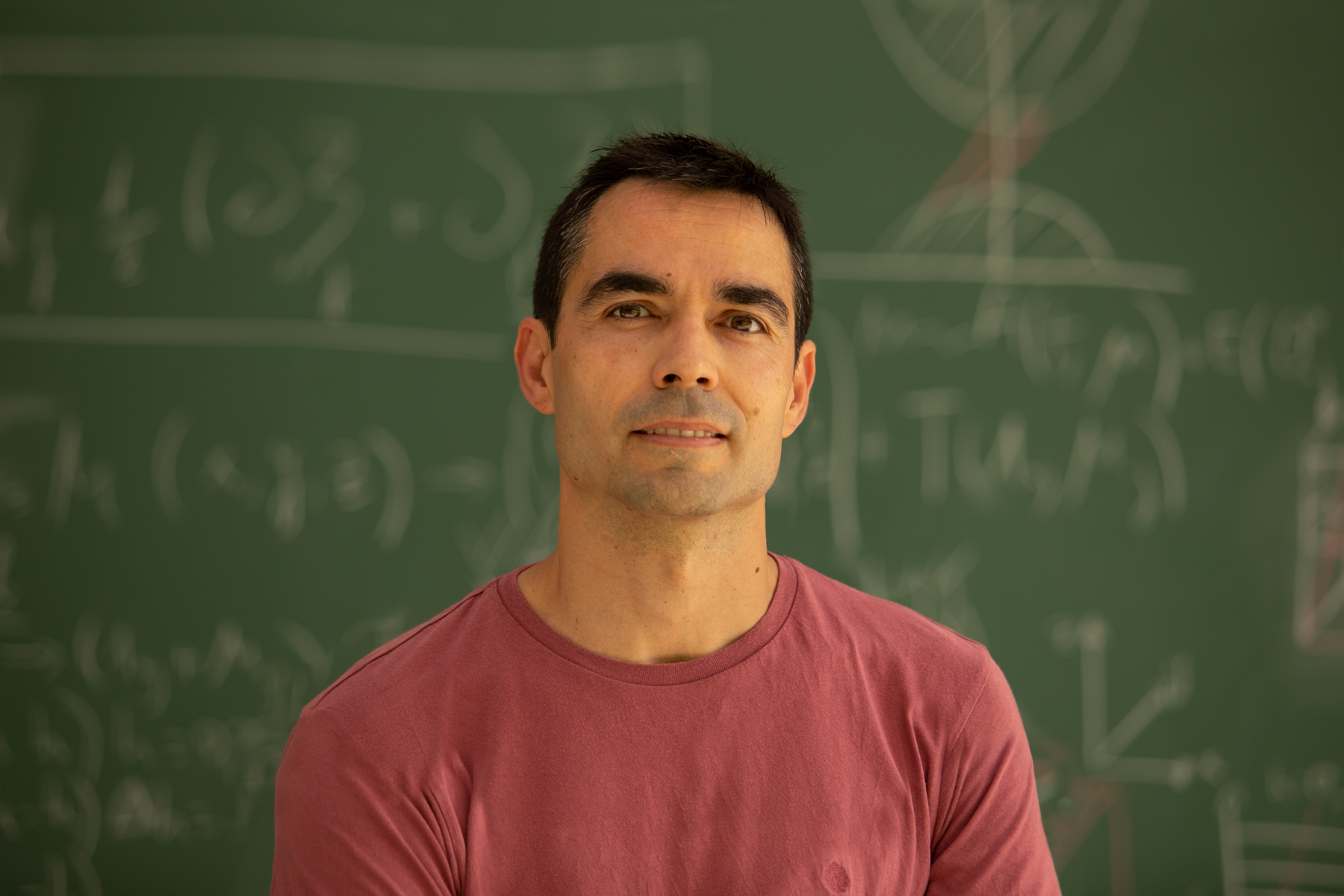
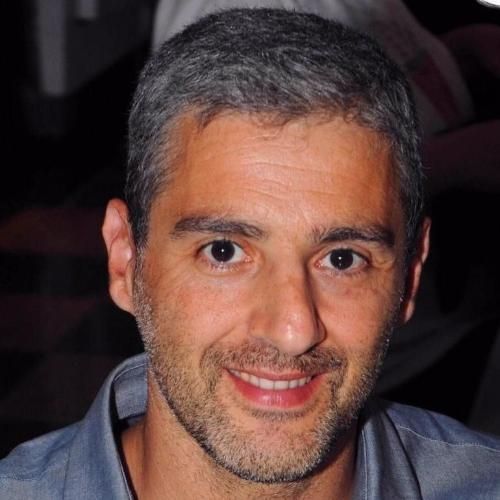
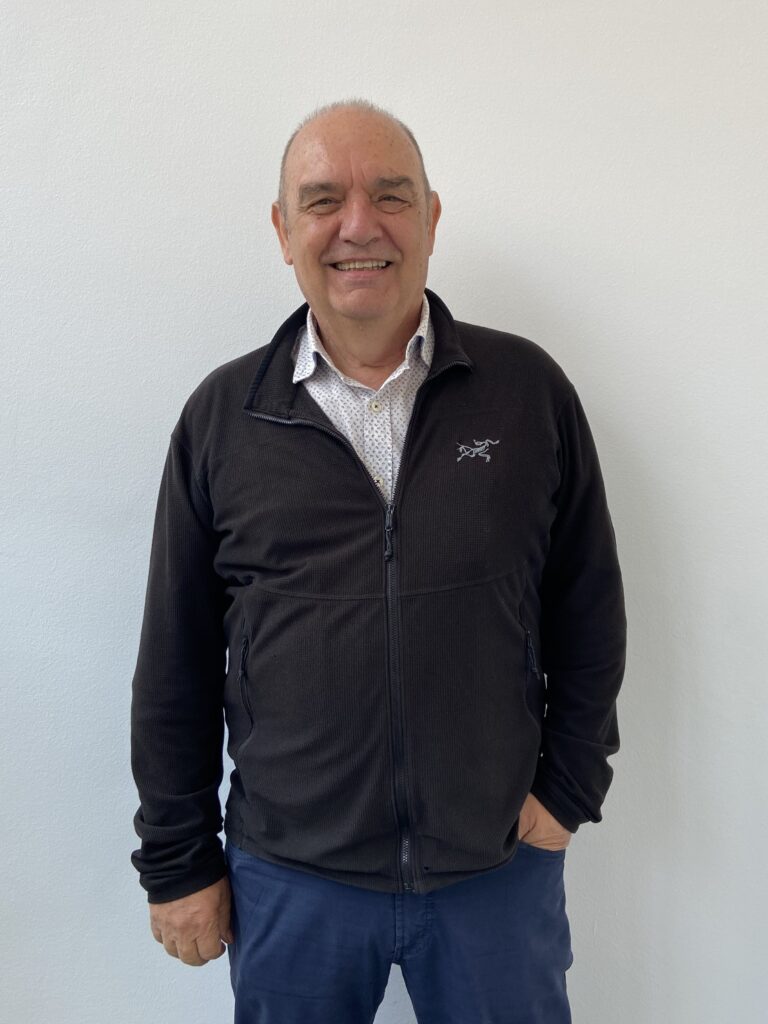
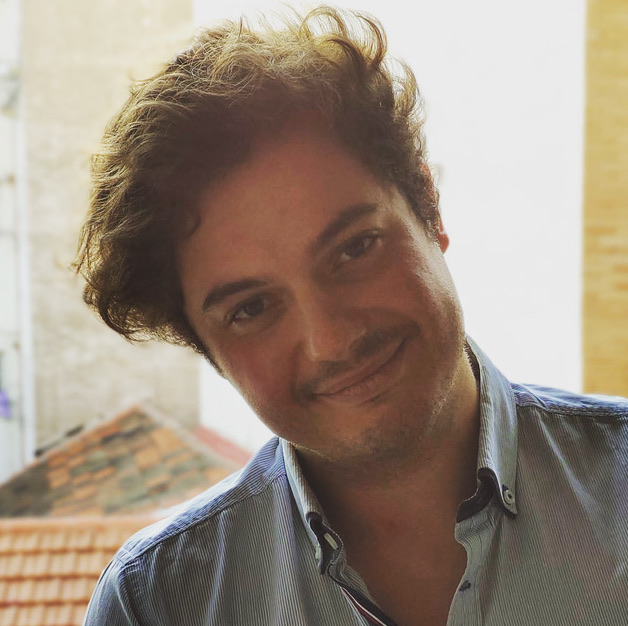
Luis Antonio Azpicueta Ruiz is an Associate Professor in the Department of Signal Theory and Communications at Carlos III University of Madrid. He leads research in the Signal Processing and Learning Group (GTSA) and Machine Learning for Data Science (ML4DS) group, focusing on interdisciplinary applications spanning acoustics, telecommunications, and machine learning. Research Interests: His work bridges signal processing theory with practical applications in environmental acoustics, adaptive filtering systems, and machine learning. Key research themes include: Advanced adaptive filtering architectures for nonlinear systems Distributed estimation in sensor networks Acoustic echo cancellation and room equalization Psychoacoustic evaluation methods Machine learning applications in noise monitoring and sound analysis Research Projects: Principal investigator for multiple funded projects including: Diagnóstico del ruido de chorro en aeronaves (AEI, 2022-2025) LearnINg FLow and Noise Dynamics via AI (COMUNIDAD DE MADRID, 2024-2026) BODYinTRANSIT - Sensory-driven Body Transformation (EUROPEAN COMMISSION, 2022-2026) Aprendizaje Automático para análisis Big Data (MINISTERIO DE ECONOMÍA, 2018-2021)
Alberto Ros is a Full Professor at the University of Murcia , Spain, in the Computer Engineering Department (DITEC) . His work focuses on cache coherence , memory hierarchy designs , memory consistency , and processor microarchitecture , with over 100 peer-reviewed publications. Dr. Ros earned his MS (2004) and PhD (2009) in Computer Science from the University of Murcia. He interned at the School of Informatics, University of Edinburgh , and held postdoctoral positions at the Technical University of Valencia and Uppsala University . He is an IEEE Senior Member . Research interests include optimizing hardware for multicore systems. His work spans cache coherence protocols, transactional memory, speculative execution, and data/instruction prefetching techniques. He led the ERC Consolidator Grant (2018) and ERC Proof of Concept Grant (2023) to improve multicore architecture performance. Recent publications emphasize hardware transactional memory efficiency, speculative execution, and secure cache systems. Notable works include cache locking, memory dependency prediction, and fine-grain coherence protocols. Scientific awards : Inducted into the MICRO Hall of Fame ISCA Hall of Fame 27 HiPEAC paper awards (MICRO, ISCA, HPCA, ASPLOS) Winner, ML-based Data Prefetching Competition Winner, 1st Instruction Prefetching Championship IEEE MICRO TopPicks for ISCA'17, MICRO'21 (honorable), MICRO'16 (honorable) Best paper awards at HiPC'16, FORTE'16 Honorable mention at HPCA'24 Nomination at ISCA'22 Grants as Principal Investigator include ERC Proof of Concept (2023) ERC Consolidator (2018) Europe Excellence (2018) Seneca Foundation, Young Leaders in Research (2014) . Dr. Ros is affiliated with the Computer Architecture and Parallel Systems Group (CAPS) at the University of Murcia and previously with UPMARC at Uppsala University.
Mohamed H. Doweidar is a Full Professor in the Mechanical Engineering Department at the University of Zaragoza, Spain. He is affiliated with the School of Engineering and Architecture (EINA), the Bioengineering Division of the Aragón Institute of Engineering Research (I3A), and the CIBER-BBN (Bioengineering, Biomaterials, and Nanomedicine). His academic career spans over three decades, with teaching roles since 1994 and significant contributions to computational biomechanics and biomedical engineering. Education: Ph.D. in Computational Fluid Mechanics (2004), University of Zaragoza M.Sc. in Engineering Mathematics (2001), Ain Shams University Bachelor's in Statistics & Computer Science (1997), Mansoura University Industrial Engineering Degree (1993), Benha Higher Institute of Technology Research Interests: Focus on Computational Biomechanics , Cell Simulation , Hyperelastic Materials , Finite Element Method , and Error Estimation . His work integrates computational models to study cellular behavior, tissue regeneration, and biomedical applications. Key Contributions: Authored/co-authored books on biomechanics and computational modeling, including "Digital Human Modeling and Medicine: The Digital Twin" (2022). Supervised numerous doctoral students, some of whom received university awards. Active in editorial boards, project evaluations (ANEP), and international conferences. Labs & Groups: Member of the Applied Mechanics and Bioengineering Group (AMB), CIBER-BBN, and I3A. Research spans cell migration , biomaterials , and computational oncology .
Ramon Canal is a Professor at the Universitat Politècnica de Catalunya (UPC), affiliated with the Barcelona School of Informatics and the Computer Architecture Department. He has served as Vice Dean of postgraduate studies and leads the VirtuOS (Virtualization and Operating Systems) research group. His academic background includes BSc, MSc, and PhD from UPC, with thesis supervision by Antonio González (UPC) and James E. Smith (University of Wisconsin-Madison). He completed sabbaticals at Harvard University (2006-2007) and University of Cyprus (2019-2020). Education: PhD, MSc, BSc in Computer Engineering (UPC) Research focus: Microarchitecture security, reliability across circuit/system levels, cloud optimization Recent publications address privacy in IoT, secure hardware accelerators, and safety-critical systems. His work contributes to the DRAC project (2019-2022), Red-RISCV network, and Horizon's Vitamin-V project. Awards include HiPEAC Paper Awards, IEEE Senior Member status, Fulbright recognition, and multiple education excellence accolades. Scientific Honors HiPEAC Paper Award (ISCA-44, 2017) IEEE Senior Member (2016) Best Paper Nominee (ICCD-32, 2014) UPC Outstanding PhD Award supervision (2011) He advises current MSc students and has mentored multiple PhD graduates. Professional activities span academic leadership, research collaborations with Barcelona Supercomputing Center (BSC), and technical contributions to reliability analysis frameworks like RECIPE and FRACTAL.
Thaleia Dimitra Doudali is an Assistant Professor at the IMDEA Software Institute in Madrid, Spain, leading the Muse research lab. She holds a PhD in Computer Science from Georgia Institute of Technology (2021), advised by Ada Gavrilovska, focusing on hybrid memory management with machine learning. Prior to her PhD, she earned a Diploma in Electrical and Computer Engineering from the National Technical University of Athens (2015). Her research interests span systems for machine learning, machine learning for systems, and computer vision applications in resource management. Her work has been recognized with awards including the 'César Nombela' (2024), 'Juan de la Cierva' (2021), and Rising Star in EECS (2020). She serves on program committees for top conferences (ASPLOS, EuroSys) and organizes workshops. Her lab's projects address cloud resource management, carbon efficiency, and sustainable computing. She advises multiple PhD and intern researchers, contributing to impactful publications in SIGMOD, EuroSys, and other venues. Notable contributions include Cronus (CV-based memory management), CaRE (carbon-efficient cloud-edge orchestration), and foundational work on ML-driven resource forecasting. Her research bridges systems and AI, aiming to optimize data center efficiency and sustainability. She actively promotes diversity in STEM through mentorship roles in ACM-W Greece and Women in HPC initiatives.
Miquel Moreto Planas is a Senior Lecturer in the Department of Computer Architecture at the Barcelona School of Informatics, Universitat Politècnica de Catalunya (UPC). He is also affiliated with the Barcelona Supercomputing Center (BSC-CNS), a leading institution in high-performance computing. His academic profile is deeply rooted in computer architecture and high-performance computing, with a strong emphasis on practical and theoretical advancements in multicore systems, memory management, and hardware acceleration. His research interests span a wide range of topics including computer architecture, high-performance computing, multicore and manycore systems, cache and memory management, hardware acceleration for genomics and AI, RISC-V processor design, processing-in-memory, interconnection networks, and real-time systems. These interests are reflected in his extensive publication record and collaborative projects. The most recent articles highlight a significant trend toward interdisciplinary research, particularly the application of advanced computer architecture techniques to bioinformatics and healthcare. Key themes include the acceleration of genomic sequence alignment using novel hardware such as processing-in-memory, the development of benchmarks for ARM-based HPC systems in genomics, and the creation of AI-based 3D decision support tools for neurosurgical applications. His work also continues to advance core computer architecture topics like cache management, power-aware resource allocation in heterogeneous systems, and the design of secure, post-quantum cryptographic hardware based on RISC-V. Fulbright Award 2011 HiPEAC Paper Award HiPEAC Paper Award 2024 HiPEAC Paper Award Moreto has been a principal investigator or key contributor to multiple competitive R&D+i projects, such as the STRATUM project for neurosurgical tools, REDIOH for open hardware, and the Laboratorio Zettaescala de Barcelona. He has advised several doctoral students, including López, G., Kostalampros, I., and Haghi, A., and is a core member of the CAP (High Performance Computing) research group at UPC. His work is characterized by strong collaborations with leading researchers like Mateo Valero, Eduard Ayguadé, and Jesús Labarta, often bridging the gap between UPC and BSC-CNS. His laboratory and team affiliations are centered around the CAP group and the Barcelona Supercomputing Center, where he contributes to cutting-edge research in high-performance and embedded computer architectures. His recent work on the BIMSA accelerator and the STRATUM project demonstrates a clear future direction toward applying high-performance computing solutions to critical problems in genomics and medicine.
Yolanda Becerra Fontal is a faculty member at the Universitat Politècnica de Catalunya (UPC), affiliated with the Department of Computer Architecture within the Barcelona School of Informatics (FIB). She is actively involved in research projects and collaborations, notably with the Barcelona Supercomputing Center, and is a member of prominent research groups such as the High Performance Computing Group (CAP) and CROMAI (Computing Resources Orchestration and Management for AI). Research Interests: Her research spans a broad spectrum of computer systems, with a consistent focus on performance, efficiency, and scalability. Key areas include Computer Architecture , High-Performance Computing (HPC) , Distributed and Cloud Systems , Resource and Energy Management in virtualized environments, and Data-Intensive Computing . More recently, her work has centered on innovative time-series database systems and data management for edge and cloud analytics. Publication Trends: Her recent scholarly output (2020-2022) shows a strong emphasis on time-series data management, proposing novel database architectures like NagareDB and strategies for polyglot persistence. Earlier work (2009-2013) was pivotal in MapReduce workload management, energy accounting for virtualized systems, and optical data center networks, demonstrating a long-standing contribution to foundational distributed computing challenges. Scientific Contributions: Her work has been published in top-tier journals and conferences such as Future Generation Computer Systems , IEEE Transactions , and Nucleic Acids Research . She has also contributed to significant competitive R&D projects and holds patents related to data flow management and distributed indexing. Advising and Grants: Dr. Becerra Fontal has served as a thesis advisor for doctoral students. Her research has been funded through competitive grants from national and regional programs, including Spanish State Research Plans (Plan Estatal de Investigación) and Catalonia's RIS3CAT strategy, supporting projects on high-performance computing and data management. Research Groups and Labs: She is a core member of the CAP - High Performance Computing Group and the CROMAI - Computing Resources Orchestration and Management for AI group at UPC. Her work is closely associated with the Barcelona Supercomputing Center (BSC) , one of Europe's leading supercomputing facilities, indicating access to advanced computational infrastructure.
Ignacio Arganda Carreras is an Associate Professor at the Universidad del País Vasco/Euskal Herriko Unibertsitatea (UPV/EHU) and an Ikerbasque Research Associate, affiliated with the Donostia International Physics Center (DIPC). His research focuses on biomedical computer vision, with a strong emphasis on deep learning applications in microscopy and medical imaging. Key areas include bioimage analysis pipelines, domain adaptation for cross-modal image segmentation, and AI-driven solutions for healthcare diagnostics. He has contributed extensively to open-source tools like BiaPy, CartoCell, and DL4MicEverywhere, which advance accessibility to deep learning in bioimaging. His work bridges computational methods with biological and medical challenges, addressing issues like 3D object detection, super-resolution imaging, and automated classification in microscopy and clinical settings. Research highlights include developing the MitoEM and Nucmm datasets for mitochondria and neuronal nuclei segmentation, as well as innovative applications in wound healing modeling and aquaculture monitoring. His methodologies emphasize reproducibility, generalization, and mitigation of overfitting in deep learning models.
Giovanni Dalmasso is an Associate Professor in the Department of Mathematics and Data Analytics at the IQS School of Engineering, Ramon Llull University. His research focuses on computational modeling of biological systems, including morphogenesis, cellular homeostasis, and biomedical image analysis. He specializes in developing tools for 3D/4D visualization of developmental processes and agent-based models of cellular dynamics. Key research areas include: 3D/4D reconstruction of embryonic development (e.g., limb bud morphogenesis) Biological shape correspondence algorithms (μMatch) Systems biology approaches to mitochondrial function and stress responses Mathematical modeling of calcium signaling dynamics His work contributes to UN Sustainable Development Goals related to innovation and infrastructure through advances in bioimaging and computational tools. Collaborations span institutions globally, including projects with the University of Edinburgh and University Pompeu Fabra. He has developed open-source software like LimbLab and veda for scientific visualization. Research outputs emphasize interdisciplinary methods combining engineering, mathematics, and biology to address fundamental questions in developmental biology and cellular systems. Current efforts focus on integrating moral decision frameworks into AI agents through contractualist models.
David Lopez Vilariño is a **Professor** at the **University of Santiago de Compostela**, affiliated with the **Department of Electronics and Computing** within the **Faculty of Physics**. He earned his PhD in 2001 with a thesis titled *"Active contours at the pixel level: design and implementation on cellular network architectures,"* advised by Dr. Diego Cabello Ferrer. His research focuses on **Computer Architecture**, **FPGA Acceleration**, **LiDAR Data Analysis**, and **Embedded Systems**, with notable contributions to LiDAR-based applications in urban planning, infrastructure monitoring, and medical imaging. He is part of the **ARQCOMP (Computer Architecture)** and **Artificial Vision** research groups. His work spans topics such as high-performance computing, parallel processing, and hardware optimization for vision-capable systems. Key projects include developing FPGA-based solutions for real-time video surveillance, retinal vessel analysis, and autonomous navigation systems. Publications emphasize **LiDAR data processing**, including algorithms for road detection, power line characterization, and 3D point cloud analysis. He also pioneered tools like the *Open Lidar Visualizer and Analyser* for 3D stereoscopic visualization. His expertise bridges hardware design and software development, particularly in leveraging FPGAs for embedded vision systems. No scientific awards or grants are explicitly listed, but his prolific publication record highlights sustained innovation in computer vision and geospatial technologies. His research team collaborates on projects involving manycore systems, GPU acceleration, and reconfigurable computing architectures.
Josep Casanovas is a Full Professor at the Statistics and Operations Research Department of the Technical University of Catalonia (UPC), affiliated with the Barcelona School of Informatics. He previously served as head of inLab FIB (2012-2020) and as dean (1998-2004) and vice-rector (2006-2011) of UPC, leading strategic initiatives in university governance and ICT policies. His research focuses on Modelling and Simulation , Internet and Information Systems , and Urban Mobility . He has led projects for the European Union, including C-ROADS Spain, REMEDiAL, and ECHORD++, addressing intelligent transport, software automation, and robotic innovation. Recent publications highlight his work on agent-based simulation for urban health, deep learning applications in traffic and energy savings, and wildfire management tools . He co-directs LogiSim and coordinates the Severo Ochoa Research Excellence Program at the Barcelona Supercomputing Center (BSC-CNS).
Daniel Jimenez Gonzalez is a faculty member at the Universitat Politècnica de Catalunya (UPC), affiliated with the Department of Computer Architecture within the School of Informatics (FIB). He is an active researcher in programming models and high-performance computing, contributing extensively to the field through publications, projects, and academic supervision. Research Interests: His work focuses on Computer Architecture , Programming Models , and Parallel Computing . He investigates task-based programming, runtime systems, compiler optimizations, and performance modeling for multi-core and heterogeneous architectures. His research addresses challenges in scalability, energy efficiency, and resilience in modern computing environments. His recent publications show a consistent trend in task-based programming models , runtime scheduling , and performance optimization across diverse architectures, including NUMA and GPU-accelerated systems. The work spans from theoretical modeling to practical implementation, often targeting real-world HPC applications. Scientific Awards: No awards explicitly mentioned in the provided text. Advising and Grants: While specific students are not listed, his involvement in doctoral theses and R&D projects suggests an active role in mentoring graduate students. He has participated in both competitive and non-competitive R&D+i projects, indicating grant acquisition and project leadership experience in areas related to programming models and computer architecture. Labs and Teams: He is a member of the UPC PM - Programming Models research group, which focuses on the design, analysis, and optimization of modern programming paradigms for high-performance systems.
Oscar Romero Moral is a Professor at the Polytechnic University of Catalonia (UPC), affiliated with the Department of Services and Information Systems Engineering at the Barcelona School of Informatics (FIB). He leads research in the inSSIDE, inLab FIB, and DTIM groups, focusing on data management, data science, and big data technologies. His work emphasizes knowledge graphs, data governance, and machine learning integration with data systems. Affiliations: UPC, inSSIDE, inLab FIB, DTIM Group Research Interests: Data Management, Data Engineering, Big Data, Knowledge Graphs, Data Governance, Machine Learning Integration He has authored over 276 academic contributions, including peer-reviewed articles on federated healthcare data systems, GPU-accelerated workflows, and graph-driven data integration. His recent work addresses challenges in heterogeneous computing, automated data governance, and scalable data architectures. Romero has served on the program committees of major conferences like VLDB, ICDE, and EDBT, and led competitive research projects in data systems and analytics. He collaborates extensively with industry partners and academic institutions, driving innovations in distributed data management and edge computing.
Fernando Lobato Alejano is a Researcher at the Pontifical University of Salamanca, affiliated with the Faculty of Informatics and Department of Computer Languages and Systems since 2018. Education: He earned his Ph.D. from the Pontifical University of Salamanca in 2022. His doctoral thesis, supervised by Dr. Daniel Hernández de la Iglesia and Dr. Mariano Raboso Mateos, developed a Multi-Agent System for heterogeneous hardware resource communication via industrial Modbus protocol in Industry 4.0 contexts. Research Focus: Dr. Lobato Alejano specializes in Industry 4.0 infrastructure, with core expertise in Industrial Automation and Multi-Agent Systems for industrial communication. His work addresses critical challenges in hardware interoperability through protocols like Modbus, advancing distributed control systems for smart manufacturing environments. Current research bridges Industrial Communication Protocols with resource coordination in heterogeneous industrial ecosystems. Research Affiliation: He contributes to the "TEC. Tecnologías, educación y comunicación" (Technologies, Education and Communication) research group, focusing on applied technological solutions in industrial contexts.
David Chaves-Fraga is an Assistant Professor at Universidade de Santiago de Compostela (Spain), affiliated with CiTIUS (Center for Intelligent Technologies) and a research collaborator at KU Leuven's DTAI group. His expertise lies in Knowledge Graph Construction (KGC), focusing on declarative mapping rules, data integration, and semantic web technologies. He completed his PhD at Universidad Politécnica de Madrid in 2021, researching Knowledge Graph Construction from heterogeneous data sources. Education PhD in Artificial Intelligence, Universidad Politécnica de Madrid (2016–2021) Master in Artificial Intelligence, Universidad Politécnica de Madrid (2015–2016) Bachelor in Computer Science, Universidade de Santiago de Compostela (2011–2015) Research Interests Dr. Chaves-Fraga specializes in optimizing data integration systems using declarative rules (e.g., RML), scalable KG materialization, and benchmarking tools like KROWN. He emphasizes reproducibility and sustainability in KG creation, advocating for community-driven standards. His work bridges theory and practice, addressing challenges in real-world KG adoption. Contributions He co-chairs the W3C Knowledge Graph Construction Community Group, organizes workshops like KGC and Sem4Tra, and coordinates initiatives like Open Summer of Code. His tools (e.g., SDM-RDFizer, RMLdoc) are widely used in the semantic web community. Key themes include RDF-star generation, SHACL constraint extraction, and ontology-mapping interoperability.

.JPG)