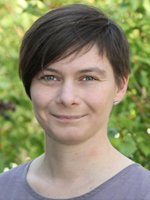
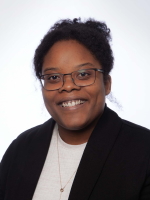
Johanna Olweus is a Professor at the Institute of Cancer Research, University of Oslo, and heads the KG Jebsen Center for Cancer Immunotherapy. She leads the SFF PRIMA research group, focusing on experimental immunotherapy in cancer. Her work bridges cutting-edge research in tumor immunology, T cell engineering, and neoantigen targeting. Affiliation: Faculty of Medicine, University of Oslo Research Focus: Cancer immunotherapy, T cell biology, antigen presentation, and tumor microenvironment Her recent publications highlight advances in aberrant mRNA translation as a source of targetable antigens, TCR engineering for leukemia, and regulatory T cell dynamics in lymphoma. These studies intersect with Nature , Cancer Cell , and Immunity journals. She has contributed to clinical translation in hematological malignancies, including FLT3 mutation targeting and T cell receptor optimization . Her work also explores peptide presentation anomalies in melanoma and alloreactive T cell applications in tumor antigen discovery.
Andreas Kleppe is an Associate Professor at the Department of Digital Signal Processing and Image Analysis, University of Oslo. His research focuses on integrating deep learning with medical imaging for cancer prognosis, particularly in gynecological and colorectal cancers. Research Interests Digital Signal Processing Medical Image Analysis Machine Learning Artificial Intelligence Deep Learning Medical Informatics Publication Trends Recent works emphasize deep learning for cancer outcome prediction, biomarker validation (e.g., DNA ploidy, L1CAM), and histopathological analysis. Collaborative studies span gynecological oncology, prostate cancer, and colorectal cancer, often leveraging automated staging markers. Labs/Groups He is affiliated with the Digital Signal Processing and Image Analysis (DSB) research group at UiO.
Amirhosein Taherkordi is an Associate Professor at the Department of Information Security and Communication Technology within the Faculty of Information Technology and Electrical Engineering at the Norwegian University of Science and Technology (NTNU). His academic profile shows continuous research activity with publications spanning from 2011 through 2025, indicating an established career trajectory in computer science and networking research. Dr. Taherkordi's research interests focus on addressing fundamental challenges in distributed computing environments, particularly in resource-constrained scenarios. His work spans Internet of Things (IoT) systems, edge and fog computing architectures, network security protocols, and machine learning applications for network traffic analysis. He has made significant contributions to energy-efficient data collection protocols for wireless sensor networks, privacy-preserving techniques for industrial IoT systems, and communication-efficient approaches for federated learning in vehicular networks. His research consistently bridges theoretical innovation with practical implementation, addressing real-world challenges in smart transportation, environmental monitoring, and industrial automation systems. An analysis of Dr. Taherkordi's recent publication trends (2023-2025) reveals a strong emphasis on federated learning applications for vehicular networks (FedAGL, FedAPT), energy-efficient IoT data collection strategies (eU2U, ECMSH), and the integration of transfer learning with edge computing for transportation applications (TELEGAIT, FOGFLEET). His work increasingly addresses the critical tension between computational efficiency and accuracy in distributed systems, with growing applications in environmental monitoring (PmForecast) and circular economy frameworks. The interdisciplinary nature of his research spans computer science, electrical engineering, and environmental science domains. Dr. Taherkordi maintains an active collaborative research profile, working with international colleagues across multiple institutions as evidenced by his diverse publication venues including IEEE Transactions, ACM journals, and various conference proceedings. His research program appears to be well-established with consistent funding, though specific grant details aren't provided in the available text. He likely leads or contributes significantly to research groups focused on networking, IoT, and edge computing at NTNU, mentoring students in these emerging technology domains.
Akshay Rajhans is a Chief Research Scientist and Head of the Advanced Research & Technology Office at MathWorks . His work bridges technical computing, model-based design, and AI-enabled cyber-physical systems (CPS), with a focus on verification, simulation, and industrial applications. He holds a Ph.D. in Electrical and Computer Engineering from Carnegie Mellon University (2013) and an M.S. in Electrical Engineering from University of Pennsylvania (2007).
Tom Luk R Michoel is a Professor at the Computational Biology Unit within the Department of Informatics at the University of Bergen. His research focuses on bioinformatics, computational biology, and machine learning applied to understanding gene regulation and causal relationships in biological systems. He teaches in both the Bachelor and Master programs in Informatics, including courses like BINF301 and MNF130. Research Interests: Michoel’s work explores how genetic variation influences gene expression and disease mechanisms. He develops machine learning algorithms to infer causal gene regulatory networks from large-scale genomic data, emphasizing causal inference over mere correlations. His recent projects include analyzing plasma protein networks linked to cardiovascular disease and applying Bayesian networks to understand gene-disease associations. Publications: His most recent work (2025) focuses on causal protein networks in myocardial infarction risk and network-driven frameworks for coronary artery disease studies. He also contributes to methodological advancements like integrating graph neural networks with metabolic models. Current Activities: Michoel leads the development of tools like Findr.jl for network inference and teaches short courses on causal inference in drug discovery. His lab collaborates on projects involving single-cell analysis, multi-tissue genomics, and systems pharmacology.
Einar Iversen is a Professor at the Department of Earth Science, University of Bergen (UiB), affiliated with the Geophysics research group. His work focuses on advanced computational methods in geophysics, including seismic modeling, wave propagation in anisotropic media, and dynamic ray tracing. He has contributed to developments in numerical simulation techniques for multiphysics processes in porous media and higher-order Hamilton-Jacobi perturbation theories. Research interests emphasize applications of mathematical physics to geophysical problems, such as full-waveform inversion, traveltime extrapolation, and geometrical spreading analysis. His studies often involve collaborations with institutions like NTNU, Rice University, and international researchers in seismology and applied mathematics. Key contributions include advancing ray-centred coordinate systems for dynamic ray tracing, improving finite-difference modeling accuracy in discontinuous media, and reconstructing metrics from boundary diffraction data. His work bridges theoretical developments with practical seismic data processing techniques, contributing to reservoir simulation and imaging technologies. Funding includes grants from the Research Council of Norway (e.g., projects 294404, 267769). His research outputs span journals like Geophysical Journal International , Computer Methods in Applied Mechanics and Engineering , and Geophysical Prospecting , reflecting a strong focus on computational and theoretical geophysics.
Per Gunnar Kjeldsberg is a Professor and acting head of the Department of Electronic Systems at NTNU. He holds a PhD (Dr.ing) from NTNU (2001) and an MSc (Siv.ing) from NTH (1992). His research focuses on energy-efficient embedded systems, heterogeneous multi-processor architectures, and IoT applications. He leads the Circuit and Radio Systems group and the Energy Efficient Computing Systems (EECS) initiative at NTNU. Kjeldsberg has been principal researcher in EU projects like READEX (FET-HPC) and TULIPP (LEIT), and currently supervises the MSCA-IF project Palmera. Education: Dr.ing. (PhD), NTNU, 2001 Siv.ing. (MSc), NTH, 1992 Research Interests: Embedded systems design, low-power cache optimization, multi-media signal processing, and scenario-driven design methodologies. Collaborations include imec (Leuven), UC Irvine, and UNSW Sydney. Teaching: Master courses: TFE4141, TFE4208, TFE02 PhD course: FE8109 Key Projects: PALMERA (EU MSCA-IF): Low-power cache design READEX: Runtime optimization for exascale computing TULIPP: Ubiquitous image processing platforms HiPEAC: European HPC/Embedded Architecture Network Professional Activities: Senior Member of IEEE, Board Member roles, frequent journal/conference reviewer, and visiting researcher at imec (Belgium), UC Irvine, and UNSW Sydney.
Stefano Basso is an Associate Professor at the Norwegian University of Science and Technology (NTNU), Department of Geography and Social Anthropology. His research focuses on hydrology, environmental hazards, and the water-energy-ecosystems nexus. He has held roles including Senior Scientist at the Norwegian Institute for Water Research (NIVA) and Research Group Leader at the Helmholtz Centre for Environmental Research (UFZ), Germany. His work emphasizes predicting extreme floods and understanding climate adaptation impacts. Education and Career Highlights: PhD from Eawag (Swiss Federal Institute of Aquatic Science and Technology), 2016 Visiting Research Scholar at Duke University, USA (2014–2015) Supervised multiple PhD candidates and postdocs, including recipients of prestigious awards. Research Interests: Extreme flood prediction using hydrograph dynamics Landscape-based climate adaptation Hydropower and biodiversity interactions Solute and sediment fluxes in river basins His methods link ordinary hydrologic data to extreme event analysis, with applications in Norway, Germany, and beyond. Awards and Recognition: Water Resources Research Editors’ Choice Award (2020) 2020 Supervision Award, Helmholtz Centre for Environmental Research Grants and Advising: Main supervisor for PhD student Hsing-Jui Wang (Glory Foundation-funded) Co-supervisor for Larisa Tarasova (completed 2020) Recipient of grants for hydropower and ecosystem studies. Outreach and Labs: Collaborates with Norwegian agencies like NVE on flood risk. Active in international projects like ClimDesign for climate services.
Achim Kohler is a Professor in the Department of Physics at the Faculty of Science and Technology, Norwegian University of Life Sciences (NMBU). He leads the BioSpec research group under RealTek, focusing on vibrational spectroscopy of biological materials. His work integrates physics, data analysis, and measurement technology for high-throughput characterization of microorganisms and other biological systems. His research interests lie at the intersection of physics, spectroscopy, and data science . The BioSpec group pioneers in modeling scattering and absorption in infrared spectroscopy and develops advanced multivariate analysis methods for interpreting complex spectral data. Their work enables automated, label-free screening of biological samples with applications in microbiology, medicine, and environmental monitoring. The recent publications reflect a strong trend toward automated, data-driven analysis of biological systems using vibrational spectroscopy . Key fields include infrared and Raman spectroscopy, multivariate calibration, machine learning for spectral classification, and non-destructive testing of cells and tissues. The research spans fundamental optical modeling to applied diagnostics and process monitoring. The BioSpec group has achieved global recognition as one of the leading teams in multivariate analysis of vibrational spectroscopic data. Professor Kohler has led multiple Norwegian and European research projects, contributing significantly to the advancement of spectroscopic techniques in life sciences. He supervises research within the BioSpec group, mentoring students and researchers in interdisciplinary projects that combine experimental spectroscopy with computational modeling. While specific grant names are not listed, his leadership of national and international projects indicates substantial external funding. The group actively develops new methodologies for real-time, high-throughput characterization of biological materials. The BioSpec group is a multidisciplinary team conducting cutting-edge research in vibrational spectroscopy. They focus on both theoretical modeling and practical applications, including automated screening platforms and advanced chemometric tools. More information can be found at: https://www.nmbu.no/en/faculty/realtek/research/groups/biospectroscopy .
Esten Høyland Leonardsen is a Postdoctoral Fellow in the Department of Psychology at the University of Oslo, specializing in cognitive and clinical neuroscience. His academic background includes a BSc and MSc in Informatics (Programming and Networks) from UiO (2014 and 2016, respectively). His research focuses on applying artificial intelligence, machine learning, and neuroimaging techniques to study brain aging, Alzheimer’s disease, and psychiatric disorders. He collaborates with the Center for Lifespan Changes in Brain and Cognition. Education: MSc in Informatics (Programming and Networks), University of Oslo (2016) BSc in Informatics (Programming and Networks), University of Oslo (2014) Research Interests: Esten’s work bridges AI, neuroscience, and clinical applications. Key areas include machine learning for neuroimaging analysis, brain age prediction, Alzheimer’s genetics, and the intersection of computational methods with mental health. His recent studies emphasize explainable AI in dementia diagnosis and the role of immune dysfunction in psychiatric disorders. Publications: Recent work highlights trends in AI-driven neuroimaging, genetic influences on brain aging, and translational research linking computational models to clinical outcomes. For example, he has explored vaccine hesitancy via mixed methods and applied small CNNs for Alzheimer’s classification. Awards: No scientific awards explicitly mentioned in the text. Advising/Grants: Collaborates on projects involving brain imaging, genetics, and computational modeling. No specific grants or advisees listed. Labs/Teams: Active in the Center for Lifespan Changes in Brain and Cognition, leveraging interdisciplinary approaches to study neurodevelopment and aging.
Anne C. Elster is a Professor in the Department of Computer Science at the Norwegian University of Science and Technology (NTNU), within the Faculty of Information Technology and Electrical Engineering. She is the founder and director of the HPC-Lab, a leading research group in heterogeneous and parallel computing. She also maintains a long-standing affiliation with the Oden Institute at the University of Texas at Austin as a Senior Visiting Scientist until Summer 2025. Research Interests: Her work spans high-performance computing (HPC), GPU computing, parallel algorithms, auto-tuning, performance optimization, and machine learning applications in scientific computing. She leads research in heterogeneous architectures and has contributed significantly to compiler and runtime systems for GPUs and accelerators. Publications Trends: Her recent publications (2021–2024) focus on GPU acceleration, auto-tuning frameworks (e.g., BAT, LS-CAT), performance modeling (Roofline), machine learning integration in HPC, and applications in geophysical and scientific computing. There is a strong emphasis on empirical evaluation, benchmarking, and practical optimization techniques. Scientific Awards and Recognition: IEEE Senior Member (2000) IEEE Computer Society Distinguished Contributor Charter member, NTNU's Board (2021) Distinguished Speaker, IEEE Computer Society (2019–2022) Advising and Grants: She has advised over 100 master’s students and several PhD students. She has led major funded projects including the RCN SFI Centre for Geophysical Forecasting, EU H2020 CloudLightning and TICOH, and NFR FRINATEK on Computational Microscopy. She has served on numerous international program committees and evaluation boards. Labs and Teams: She leads the HPC-Lab at NTNU, which includes postdocs, PhDs, and master’s students, and collaborates with international researchers. The lab is a hub for innovation in GPU computing, auto-tuning, and HPC applications.
Noeska Smit is a Professor in Medical Visualization at the Department of Informatics, University of Bergen , where she has held a tenure-track position funded by the Trond Mohn Foundation since 2017. She is also a senior researcher and member of the leadership team at the Mohn Medical Imaging and Visualization (MMIV) Centre . Her research focuses on novel interactive visualization techniques for exploring and communicating multimodal medical imaging data , particularly in multi-parametric MR acquisitions . She leads projects in gynecologic cancer imaging , Multiple Sclerosis neuroimaging , and human anatomy education through collaborations with institutions like UGent (Belgium) and HVL. 2019: Dirk Bartz Prize for Visual Computing in Medicine 2016: PhD at Delft University of Technology , Netherlands 2012: MSc in Computer Science (Computer Graphics & Visualization) , Delft University Recent publications highlight her work in MRI radiomics , narrative visualization , open-source anatomy platforms , and interactive clustering tools for tumor analysis. Her methods are applied in oncological pelvic surgery planning , neurological disease monitoring , and 3D learning environments . She supervises PhD candidates Eric Mörth and Sherin Sugathan , and has contributed to open-source medical visualization tools like RegistrationShop and Online Anatomical Human (OAH) . Her work bridges clinical practice and computer science through collaborations with radiologists, surgeons, and ML researchers.
Ramis Örlü is a Professor at Oslo Metropolitan University (OsloMet) in the Department of Mechanical, Electronics and Chemistry within the Faculty of Technology, Art and Design. He previously held positions at KTH Royal Institute of Technology (Associate Professor in experimental fluid physics) and the University of Bologna (Adjunct Professor). He has also served as a Visiting Professor at Karlsruhe Institute of Technology, Friedrich-Alexander-Universität Erlangen, and Turkish-German University. Education: Engineering Degree (Dipl.-Ing.) in Mechanical Engineering, Ruhr University Bochum, Germany (2003) Ph.D. in Engineering Mechanics (experimental fluid dynamics and turbulence), KTH Royal Institute of Technology, Sweden (2009) Örlü's research focuses on turbulent flows, particularly drag and friction reduction through passive/active control techniques. His work combines large wind tunnel experiments, advanced measurement methods, and high-fidelity simulations for cross-validation. He contributes significantly to fluid dynamics journals and conferences. Scientific Contributions: Recent publications (2022–2025) highlight studies on turbulent boundary layers, NACA wing aerodynamics, helical pipe flow stability, and innovative measurement techniques. His article trends emphasize computational/experimental synergy, adverse pressure gradient effects, and vortex dynamics. Leadership: He serves as Managing Editor of Experimental Thermal and Fluid Science , Editorial Board member for Flow, Turbulence and Combustion and Advances in Aerodynamics , and Co-Editor of the Progress in Turbulence series.
Manuela Karola Zucknick is a Professor in the Department of Biostatistics at the University of Oslo , where she leads statistical learning research for translational and clinical cancer applications. Her work focuses on integrating multi-omics data for personalized cancer therapies, predicting drug responses, and modeling prognosis. Director of Oslo Centre for Biostatistics and Epidemiology (2023–present) Professor (2022–present) and Associate Professor (2015–2022) at University of Oslo Research Interests span high-dimensional statistical modeling, Bayesian methods for heterogeneous data integration, regularization techniques, and applications in pharmacogenomics. She develops tools for drug combination screens, survival modeling, and risk prediction incorporating prior biological knowledge. Key domains: Biostatistics, Integrative Genomics, Precision Medicine Methodological focus: Bayesian structured variable selection, Penalized Regression Publications demonstrate expertise in pan-cancer transcriptomics, proteomics for pregnancy complications, and machine learning for DNA methylation analysis. Recent work includes Tutorial on Survival Modeling (2024) and Dose-Response Prediction (2023) applied to pharmacogenomic datasets. Collaborations span clinical trials in colorectal cancer nutrition, prostate cancer screening for Lynch syndrome patients, and chronic pain research using molecular profiling.
Nadine Parker is a Researcher at the Centre for Precision Psychiatry within the Faculty of Medicine at the University of Oslo. She is affiliated with Oslo University Hospital HF - Ullevål, Section for Precision Psychiatry, where she conducts cutting-edge research at the intersection of psychiatric genetics, neuroimaging, and precision medicine. Her work primarily focuses on understanding the genetic architecture of mental health disorders and their biological underpinnings. Dr. Parker's research interests center on psychiatric genetics, neuroimaging biomarkers, and precision psychiatry approaches. Her work explores the genetic overlap between various mental health conditions including depression, schizophrenia, bipolar disorder, and substance use disorders. She investigates how these disorders relate to physiological markers like white blood cell counts, inflammatory markers, and brain structure. Her research employs advanced genomic techniques including genome-wide association studies, polygenic risk scoring, and cross-disorder pleiotropy analysis to uncover shared biological mechanisms. Her publication record shows a strong focus on genetic architecture of psychiatric disorders, with numerous high-impact publications in journals like Nature Communications, Biological Psychiatry, and Molecular Psychiatry. Her work often examines how mental health conditions intersect with immune function, metabolic processes, and brain structure. A recurring theme across her publications is the identification of shared genetic mechanisms across seemingly distinct disorders, suggesting common biological pathways that could inform new treatment approaches. Dr. Parker is an active collaborator within the precision psychiatry research community, frequently working with colleagues including Guy Hindley, Alexey Shadrin, and other researchers at the University of Oslo. Her research is supported by institutional resources at Oslo University Hospital and likely external funding sources given the scale of her collaborative projects involving large datasets and international consortia. She is part of the Precision Psychiatry research group at Oslo University Hospital, which focuses on developing more targeted approaches to psychiatric diagnosis and treatment through integration of genetic, neuroimaging, and clinical data. This group works at the forefront of translating genetic discoveries into clinically actionable insights for mental health care.