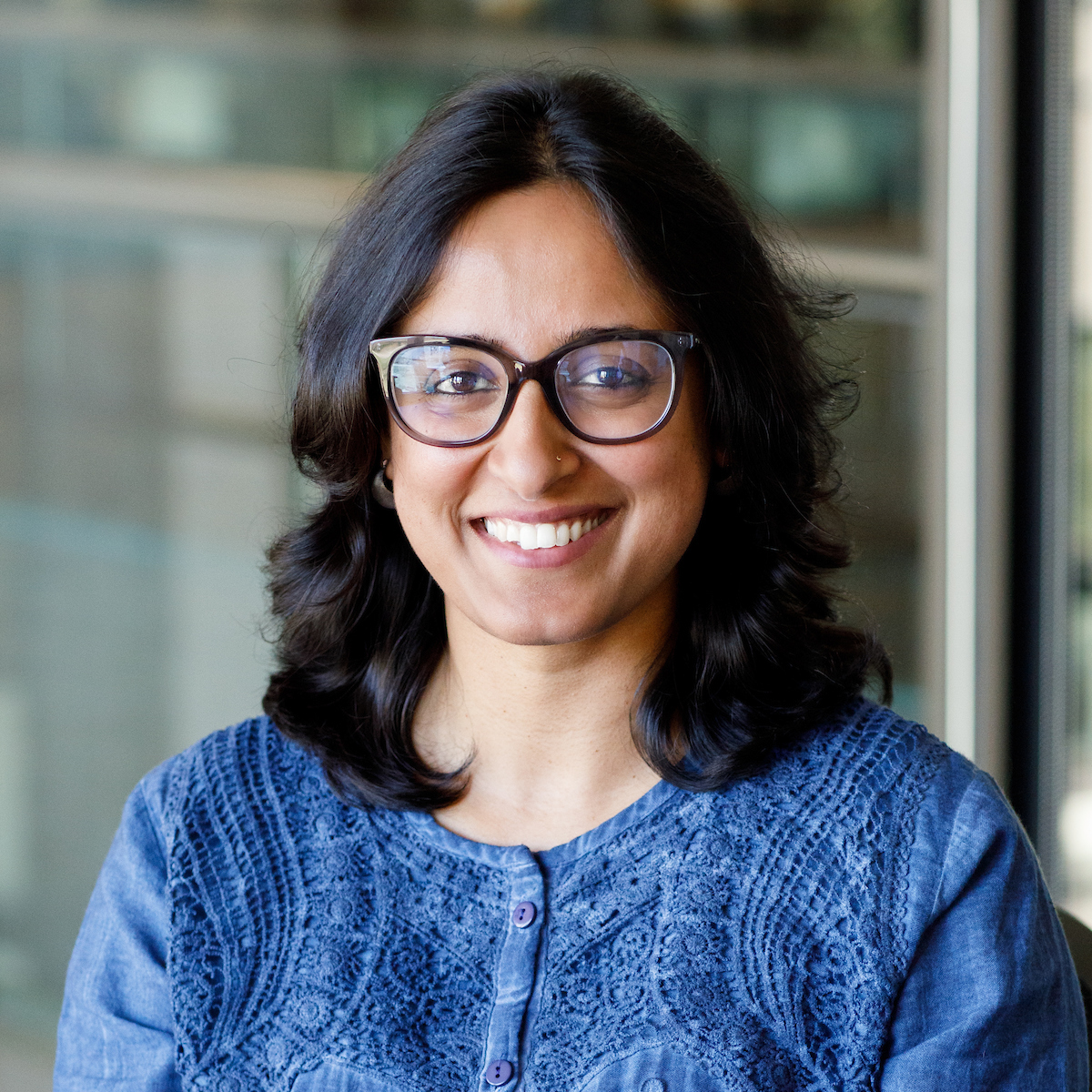
Shamya Karumbaiah is an Assistant Professor in the Learning Sciences department at the University of Wisconsin–Madison's School of Education. She holds a PhD in Learning Sciences from the University of Pennsylvania (2021) and previously served as a postdoc fellow at Carnegie Mellon University. Her research focuses on equitable and responsible use of AI in education, addressing algorithmic bias, and methodological innovations in learning analytics. Education: PhD in Learning Sciences (University of Pennsylvania, 2021), MS in Computer Science (University of Massachusetts Amherst, 2017), BE in Computer Science (Sri Jayachamarajendra College of Engineering, 2011). Research Interests: Human-centered AI in education, algorithmic bias mitigation, affective computing, and teacher practices in human-AI collaboration. She critiques colonial continuities in algorithmic systems and advocates for upstream equity in AI development. Awards: Includes the Nellie McKay Fellowship (UW-Madison), multiple best paper nominations, and the Dean’s Fellowship (UPenn). Grants & Labs: Active in projects analyzing multimodal classroom data and AI ethics. Collaborates with institutions like Cisco and USC ICT.
Ruth Owusu-Antwi is a full-time Lecturer in the Department of Psychiatry at the School of Medical Sciences, Kwame Nkrumah University of Science and Technology (KNUST), Ghana. She is also a Senior Specialist and immediate past Head (2017–2024) of the Psychiatry Unit at Komfo Anokye Teaching Hospital, Kumasi. As an International Scholar with the Center for Global Health, she collaborates with global institutions like the University of Michigan to strengthen child and adolescent psychiatry in Ghana. Bachelor of Science in Human Biology, KNUST MBChB in Medicine and Surgery, KNUST Master of Science in Global Mental Health and Policy, KNUST Fellow, Ghana College of Physicians and Surgeons (Adult Psychiatry) Dr. Owusu-Antwi’s research focuses on global mental health , with special emphasis on gender-based violence , addiction , women's mental health , and psychosocial support during public health crises . Her work bridges clinical practice, policy, and community outreach, particularly in underserved populations. She has led numerous community mental health initiatives and a campaign supporting survivors of the Apiatse Gas Explosion. Her recent publications reflect a strong trend in addressing mental health stigma, maternal mental health, and gender-based violence in Ghana and Sub-Saharan Africa. Collaborative studies with institutions in the US highlight her role in building psychiatric capacity and training health workers. 2019 International Fellow, Association of Women Psychiatrists, USA Commendation from Ghana Health Service for COVID-19 psychosocial response Recognition by the President of Ghana, Nana Addo Danquah Akufo-Addo Dr. Owusu-Antwi has mentored numerous trainees and led national initiatives through her role as immediate past President of the Psychiatric Association of Ghana (2021–2023). She has secured research support through international collaborations and funding bodies, contributing to policy development and mental health advocacy. She is the Medical Director of Recovery Pathways, a private practice offering specialized mental healthcare and Employee Assistance Programs (EAP). She leads community mental health outreach programs under her unit, delivering services to deprived communities nationwide. She also co-leads initiatives with the University of Michigan to build child and adolescent psychiatry expertise in Ghana, focusing on training and knowledge dissemination.
Elizabeth Canning is an Associate Professor in the Psychology Department at Washington State University (WSU), where she leads the BOLD Lab (Build. Opportunity. Learn. Develop.). Her research focuses on creating equitable and inclusive educational environments through social-psychological interventions, with specific emphasis on achievement motivation, social inequality, and organizational behavior. Ph.D. in Social Psychology from the University of Wisconsin-Madison (2016) Postdoctoral research at Indiana University’s Mind and Identity in Context Lab (2016-2019) Dr. Canning’s work investigates how institutional messages about belonging, value, and ability shape student motivation and achievement. She employs controlled experiments, randomized interventions, and longitudinal studies to mitigate disparities in STEM education, particularly for first-generation, minoritized, and stigmatized groups. Her recent publications highlight the impact of instructor mindset communication on student outcomes, strategies for reducing imposter syndrome, and the role of growth mindset cultures in organizational success. Notably, her 2024 research in CBE-Life Sciences Education demonstrated how growth mindset messaging improves first-generation student performance. Editor’s Choice, Science (2014) Dr. Canning mentors undergraduate RAs (9+ hours/week commitment) and Ph.D. students in the Experimental Psychology program. She will be on sabbatical at the Wissenschaftskolleg in Berlin during 2025-2026.
Dr. Andrea Martinez is a Research Fellow in Qualitative Methods at the University of Surrey's School of Psychology. She holds a PhD in Psychology from King’s College London, a bachelor’s degree in Behavioural Science, and a master's in Special Education from the University of the Philippines. Her research focuses on mental health, violence against women and children, health inequalities, and migration-related health issues, particularly among marginalized communities. Dr. Martinez has over 25 years of public service in charity and non-profit organizations, addressing mental health, homelessness, domestic violence, and modern slavery. She has led monitoring and impact evaluations of welfare programs and serves as a speaker/trainer on mental health and well-being. Her work emphasizes co-production research methods and participatory action research. Her publications explore mental health literacy among Filipino migrant workers, barriers to help-seeking in Filipino communities, ethnic disparities in dementia outcomes, and online child sexual exploitation. She collaborates with interdisciplinary teams and has contributed to global health equity efforts. While no specific grants or advising roles are detailed, her extensive engagement with vulnerable populations underscores her commitment to applied research with real-world impact.
Bruce M. McLaren is a Professor at Carnegie Mellon University's Human-Computer Interaction Institute (HCII), where he heads the McLearn Lab. He previously served as President of the International Artificial Intelligence in Education Society (2017-2019) and has been elected to the Executive Committee of the AI-ED Executive Committee for two separate terms (2012-2017 and 2022-2027). Dr. McLaren's research focuses on how technology can support education through digital learning games , intelligent tutoring systems , and collaborative learning environments. His work has demonstrated that students can learn decimals more effectively through Internet-based learning games compared to conventional methods. He has also conducted significant research on erroneous examples in learning, showing how students benefit from working with incorrect solutions alongside intelligent tutors. His publications reveal a strong trend toward integrating artificial intelligence with educational technologies, particularly in analyzing student learning patterns, developing adaptive educational games, and creating tools that support both students and teachers in classroom settings. Recent work increasingly focuses on the application of generative AI like ChatGPT in educational contexts. Best Paper Award at ECTEL 2023 for research on ChatGPT in decimal learning Fulbright Scholarship recipient for educational technology work in Chile (2019) Multiple best paper awards at major AI in Education conferences Erskine Fellowship for teaching Intelligent Tutoring Systems in New Zealand As an advisor, Professor McLaren has mentored numerous students in the HCII program and has secured significant research funding, including NSF grants for projects like AdaptErrEx and LASAD. His lab, the McLearn Lab, serves as a hub for interdisciplinary research at the intersection of learning sciences and artificial intelligence. Beyond academia, he brings over 20 years of commercial sector experience, having served as Director of eCommerce Technologies at OpenWebs Corporation and leading expert system projects at Carnegie Group, Inc.
Michelle Perry is a Professor in Educational Psychology at the University of Illinois, Urbana-Champaign, with appointments at the Beckman Institute for Advanced Science and Technology. Her research focuses on children's acquisition of mathematical concepts in elementary classrooms, teacher professional development through online platforms, and equity in STEM education. She has received NSF funding for projects examining gesture-based learning and statistical concept development. Education: Ph.D., The University of Chicago Research Interests: Mathematics education and cognitive development Online learning environments and teacher professional development Equity in STEM for underrepresented students Gesture-speech integration in education Statistical reasoning and virtual manipulatives Scientific Awards: Richard C. Anderson Professor of Cognitive Science of Teaching & Learning Recent Publications: 2025: Gesturing to understand abstract mathematical concepts 2025: Online video instruction and student engagement 2024: Teacher mindset theories and classroom observation skills 2023: Digital help-seeking and social presence Advising & Grants: Mentored NSF-funded projects on teacher development Collaborated with University of Chicago and NYU researchers
Professor Peter Bamberger is a distinguished academic at Tel Aviv University's Coller School of Management, where he serves as Head of the Organizational Behavior Department. He holds a Ph.D. in Organizational Behavior from Cornell University and currently serves as Editor-in-Chief of Academy of Management Discoveries. Bamberger also maintains a research directorship at the Smithers Institute, ILR School, Cornell University. His educational background includes a doctoral degree from Cornell University, establishing a strong foundation for his career in organizational behavior research. Bamberger's scholarly work has positioned him as a leading expert in workplace behavior dynamics and employee adjustment processes. Bamberger's research primarily focuses on employee behavioral health (particularly substance misuse and trauma), compensation strategy and pay communication, cognition in team contexts, employee adjustment during transitions, and workplace helping behaviors. His work bridges theoretical organizational behavior with practical workplace applications, often examining how psychological processes manifest in organizational settings. A significant portion of his research investigates the darker aspects of workplace behavior, including alcohol use among newcomers, the impact of rudeness on team performance, and the complex relationship between retirement and substance misuse. His publication portfolio reveals a consistent pattern of high-impact research in top-tier management and psychology journals. Bamberger's work demonstrates particular strength in longitudinal studies examining workplace transitions and their consequences. His research often employs interdisciplinary approaches, connecting organizational behavior with healthcare settings, educational contexts, and military environments. Recent work shows increasing focus on financial stressors, pay transparency, and the psychological mechanisms underlying workplace civility and incivility. Best Paper, HR Division of the Academy of Management (March, 2012) Fellow, Society for Industrial and Organizational Psychology (April, 2012) Outstanding Reviewer Award, Human Relations (August, 2012) Member, Society for Organizational Behavior (March, 2014) Runner-up for Best Paper, Academy of Management Journal (August, 2014) Best Paper, OB Division of the Academy of Management (March, 2016) Thomas A. Mahoney Mentoring Award, HR Division, Academy of Management (August, 2017) Bamberger currently leads two major research initiatives: an ISF-funded project (2016-2020) on Cognitive Implications of Workplace Injuries, and a US Department of Defense project (2019-2022) examining Suicide-related cognition and behavior in the discharge-to-work transition. These projects demonstrate his ability to secure substantial external funding for research addressing critical workplace issues with practical implications. His role as Editor-in-Chief of Academy of Management Discoveries further underscores his leadership position in the field.
Arlen Rowe is a Postdoctoral Research Fellow at the University of Southern Queensland (USQ) within the Centre for Health Research, affiliated with the School of Psychology and Wellbeing. Her work focuses on improving health outcomes for vulnerable populations through technology-driven interventions. BPych(Hons), University of Southern Queensland (2017) PhD, University of Southern Queensland (2020) Dr. Rowe's research examines digital mental health engagement, particularly for youth and rural populations. Key areas include: Adherence and engagement behaviors in online programs Digital mental health solutions for adolescents Adaptive technology applications Chronic health population interventions Cancer survivorship support Her recent work explores adolescent anxiety interventions, eHealth user experience frameworks, and geographical disparities in cancer care. Notable grants include the HCF Health Services Research Grant (2022) and Australian Rotary Health funding (2020). Awards: Advance Queensland PhD Scholarship (2017) Australian Psychological Society Health Psychology Thesis Award (2021) Dr. Rowe contributes to digital mental health supervision and collaborates on projects addressing rural healthcare challenges.
Stephen Saunders, Ph.D., is a Professor in the Department of Psychology at Marquette University, where he directs the Mental Health Services Research Lab. He earned his B.A., M.A., and Ph.D. from Northwestern University. His research examines mental health service delivery systems, including treatment effectiveness, therapeutic alliance dynamics, spirituality in care, and barriers to help-seeking—particularly for conditions like trichotillomania and depression. Dr. Saunders teaches undergraduate courses (General Psychology, Introduction to Clinical Psychology) and graduate seminars in interviewing skills, supervision, and research methods. He mentors doctoral students researching topics ranging from suicidal behavior assessment to cultural factors in treatment efficacy. Recent publications focus heavily on trichotillomania interventions, with emphasis on acceptance-enhanced behavior therapy efficacy, neurocognitive predictors, and long-term outcomes. His work integrates spirituality/religion with clinical practice and addresses stigma in mental healthcare. No scientific awards were noted in available records. He advises PhD students on projects covering military mental health access, therapeutic alliance, and borderline personality disorder treatments. Undergraduate assistants in his lab frequently pursue advanced degrees. No grant details were provided. Dr. Saunders leads the Mental Health Services Research Lab, collaborating on studies related to treatment barriers, spirituality in therapy, and outcome measurement optimization.
Pentti Juhana Henttonen is an active Researcher at the University of Helsinki, affiliated with the Swedish School of Social Sciences and the Institute of Humanities and Social Sciences. He serves as a Doctoral Researcher in the Doctoral Program in Human Behavior and works as a project planner, contributing to multiple research initiatives focused on human interaction and psychological phenomena. His research interests span cognitive science with particular emphasis on narcissism, sisu (the Finnish concept of inner strength and perseverance), second language acquisition, and physiological responses during social interactions. Henttonen employs diverse methodologies including physiological measurements, conversation analysis, and experience sampling methods to investigate how individuals process emotions, interact with others, and demonstrate mental fortitude in challenging situations. His publication record shows significant activity with 49 publications spanning from 2009 to 2025, with particular concentration in recent years (2023-2025). His work appears across interdisciplinary journals in psychology, linguistics, and social sciences, demonstrating a trend toward increasingly sophisticated methodologies combining physiological measurements with conversational analysis. Recent publications focus on narcissistic traits and their physiological correlates, the cultural phenomenon of sisu, and second language learner behavior. Henttonen actively contributes to the academic community through peer review services for journals including Scientific Reports, BMC Psychology, and Heliyon. He has organized academic events such as the HSSH workshop on motion energy and pose analysis and the HSSH seminar on VR methodology, demonstrating leadership in advancing methodological approaches in social science research. His research is supported through multiple projects funded by institutions including the Academy of Finland (Suomen Akatemia), with his most recent work focusing on patterns in second language learners' behavior (2023-2024) and previous projects examining narcissism (2019-2023) and neighbor dialogues (2018-2020). His work bridges theoretical psychological concepts with practical applications, as evidenced by his media appearances discussing narcissism and sisu for broader public understanding.
Alannah Oleson is an Assistant Professor in the Department of Computer Science at the University of Denver's Ritchie School of Engineering and Computer Science. Her work focuses on inclusive design, computing education, and addressing equity issues in technology. She is actively involved in the KIHA Innovation Labs, exploring human-centered approaches to computing education and HCI. Her research investigates how demographic factors influence learning outcomes in computing courses, develops pedagogical methods for teaching inclusive design (e.g., the CIDER framework), and examines the ethical implications of technology in K-12 and university settings. Notable areas include algorithmic fairness, gender bias in software systems, and culturally responsive computing education for underrepresented groups. Dr. Oleson's research emphasizes practical methods for integrating critical thinking into software design processes, with recent work exploring peer feedback systems for equity analysis in large courses and curriculum reforms to promote ethical awareness. Her contributions bridge theory and practice, aiming to make computing education more equitable and socially responsible.
Daniela Ghio is Lecturer in Psychology at the University of Manchester's Division of Psychology and Mental Health. A chartered psychologist with PhD in Clinical and Health Psychology, her research develops digital interventions for chronic conditions across the lifespan, with special focus on paediatric psychology. Research spans: Digital health interventions for chronic illness Self-management of long-term conditions Paediatric pain perception Behaviour change methodologies Co-production of healthcare research Publication analysis reveals three core themes: Paediatric chronic pain mechanisms and management Parental experiences of childhood illness Digital intervention development for dermatological conditions Awards: None reported Research involvement includes the Manchester Centre for Health Psychology and national NIHR projects. Activities demonstrate commitment to knowledge translation and public engagement.
Hannah Long is a Researcher at the University of Manchester, affiliated with the Division of Nursing, Midwifery and Social Work within the Healthier Futures Research Platform. Her primary role involves investigating health inequalities and public health policy impacts through evidence synthesis methods, with a focus on cancer screening outcomes and healthcare interventions. She currently holds an Open Research Fellowship developing data reporting guidelines for qualitative health datasets (DeNOTE study). Education: Hannah completed her BSc (Hons) Psychology (with International Study), MSc Health Psychology, and PhD in Health Psychology at the University of Manchester. Her PhD explored the psychological effects of false positive breast screening results, funded by NIHR Manchester Biomedical Research Centre and the University of Manchester. Research Interests: Her work addresses health inequalities, qualitative research methodologies, open science practices, and the psychological impacts of medical screening. She has conducted systematic reviews on shift worker health behaviors, false positive screening outcomes, and end-of-life carer support systems. Key Awards: She received the MSc Health Psychology Award for Outstanding Performance (2016) and was a runner-up for the British Psychological Society Division of Health Psychology Award (2017). Advising & Grants: Hannah has been funded by NIHR, Cancer Research UK, and the University of Manchester. Her collaborative projects include work on diabetes management systems (SuMMiT-D project) and cancer symptom help-seeking behaviors at the International Hub for Quality of Life Research. Labs/Teams: She is affiliated with the Manchester Centre for Health Psychology and contributes to interdisciplinary teams advancing open science practices and healthcare equity initiatives.
Dr. Alexa Bagnell is a Professor & Head of the Division of Child and Adolescent Psychiatry at Dalhousie University and Chief of Psychiatry at IWK Health. She completed her medical training at Dalhousie University and post-graduate studies at Harvard University. Since joining IWK in 2003, she has co-founded the Treatment of Anxiety Group (TAG) program and established eastern Canada's first OCD clinic in 2013, focusing on evidence-based care for youth. Her leadership emphasizes improving access, inclusivity, and quality in mental health and addiction services for children and youth. Education: Medical Degree: Dalhousie University Post-Graduate Training: Harvard University Research Interests: Dr. Bagnell’s work centers on child and adolescent mental health system optimization, anxiety and OCD treatment, and advocating for mental health literacy. She actively engages in community education through schools, media, and public forums to reduce stigma and promote help-seeking behaviors. Labs/Teams: Co-founder of the TAG program at IWK Health and director of the OCD clinic in Halifax. She also serves as a co-opted member of Dalhousie University’s Board of Governors.
Dr. Lisa Sparks is a Professor at Chapman University with the Foster and Mary McGaw Endowed Chair in Behavioral Sciences. She serves as Founding Dean of the School of Communication and holds joint appointments in the Crean College of Health and Behavioral Sciences and the School of Pharmacy. With over 150 peer-reviewed publications and 13 books, she is a leading scholar in health communication, cancer communication, aging, caregiving, and research methods. Her work bridges academic research with community impact, including documentaries, media appearances, and public policy engagement. Education: Ph.D., M.A., B.A. from the University of Oklahoma Post-graduate Certification: Harvard Institute for Management and Leadership in Education Research Interests: Dr. Sparks’ scholarship focuses on clinician-patient communication, health disparities, cancer care navigation, and intergroup dynamics in healthcare. She has developed frameworks for patient-centered decision-making and designed interventions for vulnerable populations. Scientific Awards: Club for Growth Foundation Fellowship (2020) Recognized among top ten most prolific Health Communication authors Grants & Collaborations: Dr. Sparks has served as Principal Investigator, Co-PI, and Consultant on numerous research grants, collaborating with institutions like the National Cancer Institute, University of California, Irvine, and Vrije Universiteit Amsterdam. She has also contributed to cancer research at the Chao Family Comprehensive Cancer Center.