Suleymanov Murad is a Lecturer at Institut National des Langues et Civilisations Orientales (INALCO), specializing in Eurasian languages and cultures. His work focuses on the linguistic traditions of the Near and Middle East regions. Dr. Murad's research interests span across several key areas of linguistics: Language contact and areal typology Linguistic variation and change Documentation and description of languages Syntax His teaching focuses on grammar and textual analysis, with particular expertise in Azerbaijani (Azeri) and Turkish languages. As a member of the Eurasia department at INALCO, he contributes to the study of Eurasian linguistic traditions within the broader context of Middle Eastern and Near Eastern cultures. Dr. Murad is affiliated with CNU Discipline 15, which covers Arabic, Chinese, Japanese, Hebrew languages and literatures, and other linguistic fields. His work bridges theoretical linguistics with practical language instruction, emphasizing both structural analysis and cultural context.
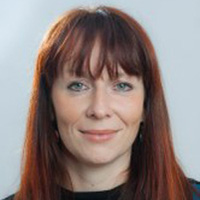
Yu Xinyue Cécilia is a Lecturer in the Chinese Studies Department at INALCO (National Institute of Oriental Languages and Civilizations), specializing in Chinese language education and research. She falls under CNU Discipline 15 (Arabic, Chinese, Japanese, Hebrew languages and literatures, other linguistic fields) with expertise focused on Asian languages. Dr. Cécilia's research centers on Chinese linguistics, with particular emphasis on syntax, lexical semantics, and second language acquisition. Her scholarly work contributes to understanding the structural and cognitive dimensions of Chinese language learning. She holds the administrative position of Head of L3 (third-year undergraduate program) in the Chinese Studies Department, demonstrating her leadership role within the academic structure. Her teaching responsibilities include: Grammar and Vocabulary Introduction to Chinese Linguistics Written Chinese Expression Oral Chinese Expression Modern Chinese: Contrastive Approach She is affiliated with the CRLAO (Centre de Recherche sur les Langues et les Arts de l'Orient) research team, which supports scholarly activities in Asian languages and cultures.
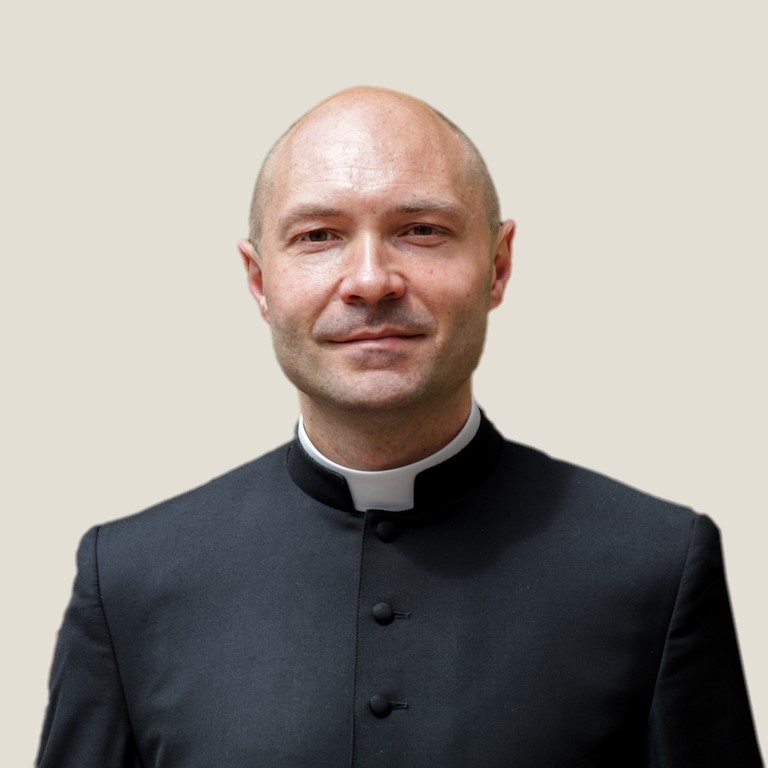
Pawel Jablonski is a Lecturer at Inalco (Institut national des langues et civilisations orientales), specializing in Hebrew and Jewish Studies. His research focuses on the linguistics and philology of Tannaitic Hebrew, with particular interest in syntax and semantics of indefinite, reflexive, and reciprocal pronouns. Teaching areas include Reading Acquisition, Methodology for Biblical Literature, Classical Rabbinic Literature, History of the Hebrew Language, and Israeli Press Administrative roles involve teaching courses like HEBA111b Reading and texts 1 and HEBB111b Reading and Texts 2
Violeta Moretti is an Associate Professor and Head of the Department of Classical Philology at the Faculty of Philosophy, Juraj Dobrila University in Pula. She has been a member of the university faculty since 2006, progressing from external collaborator to assistant, and eventually to associate professor in January 2023. Her academic career spans teaching, research, and administrative roles within the university. Dr. Moretti completed her undergraduate studies in Croatian language and literature and history at the Faculty of Philosophy in Puli, University of Rijeka, graduating in 2002 with her thesis "Comparison of the vowel systems of the Žminj dialect and standard language." She further specialized in Latin language and Roman literature, earning her degree as a professor of Latin language and Roman literature in 2006 with the thesis "Oratio pro Croatia Bernardina Frankapana." She completed her doctoral studies in linguistics at the Faculty of Philosophy, University of Zagreb, defending her dissertation "Language and style of the Latin poetic epistles of Pavle Ritter Vitezović" in 2014. Professor Moretti's research interests focus on Latin philology, particularly the works of Pavao Ritter Vitezović, a 17th-18th century Croatian Latinist. Her scholarly work spans multiple disciplines including classical studies, Croatian linguistics, onomastics (the study of names), medieval literature, and cultural transfer studies. She has made significant contributions to understanding how linguistic data and knowledge were transferred between Asia and Europe through travel, as well as examining vernacular influences on Neo-Latin texts from the Eastern Adriatic coast. Her research often bridges historical, linguistic, and cultural perspectives, with particular attention to Croatian literary heritage within broader European contexts. Her recent publications demonstrate a consistent focus on Croatian Latinist literature, particularly the works of Pavao Ritter Vitezović. She has published extensively on his poetic epistles, examining their language, structure, and cultural significance. Her work also explores broader themes such as the reception of antiquity in Western culture, border imagery in medieval anti-Ottoman writings, and the role of Latin as an intermediary in knowledge transfer. Professor Moretti frequently publishes in both Croatian and international journals, demonstrating her commitment to making Croatian scholarship accessible to international audiences while maintaining strong connections to local academic traditions. Professor Moretti has supervised numerous graduate theses, including her own doctoral dissertation on Vitezović's Latin poetic epistles and earlier graduate work on Bernardin Frankapan's Oratio pro Croatia. She has been involved in significant research projects such as "Textual Networks of Early Modern Croatia (TeMrežaH)" at the University of Zagreb. Her teaching responsibilities span a wide range of subjects including Latin language and literature, Croatian linguistics, world literature, and language theory. Throughout her career, Professor Moretti has participated in numerous scholarly conferences worldwide and has been an active member of several academic associations including the International Association for Neo-Latin Studies, The Renaissance Society of America, and the Mediterranean Studies Association. Her scholarly activities reflect a deep commitment to interdisciplinary research that connects classical studies with Croatian cultural heritage and European intellectual history.
Benjamin Bruening is a Professor and Chairperson of the Department of Linguistics and Cognitive Science at the University of Delaware, within the College of Arts & Sciences. His research focuses on syntax and its interactions with morphology and semantics, with particular expertise in the Algonquian languages Passamaquoddy-Maliseet and Mi'kmaq. Dr. Bruening received his Ph.D. in Linguistics from the Massachusetts Institute of Technology in 2001 and his B.A. from the University of Utah. His research interests span multiple areas within linguistic theory, with a primary focus on syntactic structure and its interfaces. He has made significant contributions to our understanding of Algonquian languages, ditransitive constructions, auxiliaries and inversion in English, reflexivity, reciprocals, wh-scope phenomena, and the syntax-morphology-phonology interface. His work often combines theoretical analysis with empirical fieldwork, particularly on Passamaquoddy-Maliseet and Mi'kmaq. Bruening's recent publications demonstrate a consistent focus on fundamental questions in syntactic theory while expanding into new empirical domains. His work frequently challenges established theoretical assumptions, as seen in his arguments against the DP hypothesis and lexicalist approaches to morphology. The research shows strong engagement with cross-linguistic data, particularly from Algonquian languages, and often incorporates experimental methodologies to test theoretical predictions. Winner of the Best Paper in Language Award 2018 for "The Lexicalist Hypothesis: Both Wrong and Superfluous" Dr. Bruening co-organizes the Syntax-Semantics Lab (SySeL) at the University of Delaware with Satoshi Tomioka. He has led the Scope Fieldwork Project, funded by the National Science Foundation (grant number BCS-0518308), which has developed visual materials to aid in fieldwork on quantifiers and quantifier scope across languages. His research has been supported by multiple grants that have enabled extensive fieldwork and experimental investigations. Dr. Bruening is actively involved in research collaborations, particularly with colleagues working on Algonquian languages and syntax-semantics interface phenomena. His lab has produced numerous publications and resources that have been adopted by linguists worldwide for cross-linguistic research on quantification.
Daphna Heller serves as Associate Professor in the Department of Linguistics at the University of Toronto, located in Sidney Smith Hall, Room 4088. Her academic work bridges theoretical linguistics with experimental methodologies to investigate core aspects of human language processing. Research interests focus on psycholinguistics , experimental semantics/pragmatics , and referential processing . Key specialties include perspective-taking in communication, probabilistic models of reference, language processing in understudied languages (particularly Hebrew and Niuean), and the cognitive mechanisms underlying definite descriptions. Her work integrates theoretical linguistics with experimental paradigms including eye-tracking, corpus analysis, and cross-linguistic comparison. Recent publications reveal strong trends in perspective integration theory and referential choice mechanisms , with increasing focus on mental state attribution in communication. The 2020-2025 publications demonstrate methodological diversity spanning psycholinguistic experimentation, cross-linguistic analysis of Niuean and Hebrew, silent gesture studies, and computational modeling of pragmatic phenomena. 2022 Faculty Research Fellow, Jackman Humanities Institute Heller's research program examines how speakers and listeners manage reference in context, with particular attention to the probabilistic weighing of multiple perspectives. Her work on Hebrew linguistics contributes to understanding Semitic language processing, while Niuean studies provide insights into ergative language comprehension. Current projects appear to extend the Multiple Perspectives Theory to question-answer dynamics and mental state attribution in communication.
Dr. Camil Staps is a Researcher in the research area 'Semantics & Pragmatics' at Leibniz-Zentrum Allgemeine Sprachwissenschaft (ZAS Berlin). His research focuses on how abstract concepts like causation and evidentiality are represented in the mind, particularly studying the relation between spatial and non-spatial meanings of prepositions, demonstratives, and other function words. His educational background includes a PhD in Linguistics from Leiden University (2024), a Research MA in Hebrew and Aramaic Studies from Leiden University, and an MSc in Software Science from Radboud University Nijmegen. His research interests span computational linguistics, cognitive science, and formal semantics. Dr. Staps has received significant research funding including an NWO Rubicon Grant (2024-2026) and NWO PhDs in the Humanities Grant (2019-2024). His publications demonstrate a strong focus on formal semantics, Biblical Hebrew linguistics, and computational approaches to language analysis. He maintains several software projects including Məḇaqqēš (for Biblical Hebrew scholars), HebrewTools (educational tools), and Nitrile (a package manager for Clean programming language).
Hagit Borer is a Professor of Linguistics at the Department of Linguistics, School of Languages, Linguistics and Film (SLLF), Queen Mary University of London. Her research focuses on comparative syntax, morphosyntax, and language acquisition within the generative framework. She proposes that inter-grammatical variation stems from the functional/inflectional component, leading to a morphosyntactic model. Her recent work shifts computational demands from lexical entries to syntactic structures, emphasizing structural constraints over lexical specifications. Education: PhD in Linguistics from MIT. Research Interests include syntax-semantics interfaces, word formation, and the role of functional categories in grammar. She advocates for syntactic derivation of complex words and explores non-compositionality through functional structure. Key contributions address nominalizations, agentive activities, and the syntax of adjectives. Selected Awards: Fellow of the British Academy (2014), Fellow of the Linguistic Society of America (2018). Advocacy: Active in academic activism, notably challenging Israeli policies through public engagement. Labs/Teams: Collaborates with the Formal Linguistics Research Group at Queen Mary.
Ben Ambridge is a Professor of Psychology at the University of Liverpool, specializing in child language acquisition, syntax, and morphology. His research focuses on how children learn grammar across multiple languages, including English, Hebrew, Hindi, Japanese, and others. He is also involved in Open Science initiatives, founding the journal Language Development Research , and has authored popular books like Psy-Q and Are You Smarter Than a Chimpanzee? . He teaches Psychology in the Real World on the Psychology BSc programme. His work integrates computational modeling, cross-linguistic studies, and experimental methods. Key areas include overgeneralization errors in child language, semantic constraints in syntax, and the role of input frequency in language learning. Collaborations span institutions globally, contributing to projects like ACCLAIM, exploring inflectional morphology across languages. Ambridge's research emphasizes empirical rigor, with studies published in journals like Cognition , Cognitive Science , and Developmental Science . He has supervised numerous studies on topics such as passive constructions, pronoun interpretation, and cross-linguistic acquisition, often employing pre-registered and open science practices.
Dr Esther-Miriam Wagner is an Affiliate Lecturer in the Faculty of Asian and Middle Eastern Studies at the University of Cambridge and serves as Executive Director of the Woolf Institute. She holds a PhD from Cambridge (2007) on mediaeval Judaeo-Arabic letters and has held roles including Senior Research Fellow at the Woolf Institute and Research Associate at the Taylor-Schechter Genizah Research Unit (part-time). Her research focuses on sociolinguistics, historical linguistics of Judaeo-Arabic and Yiddish, scribal practices, and Jewish-Muslim relations in Egypt and Muslim Spain. She has authored/co-authored works such as A Handbook and Reader of Ottoman Arabic (2021) and Scribes as Agents of Language Change (2013). Her work bridges academic and public engagement, including lectures at the Hay on Wye Festival and contributions to TV/radio programs like BBC3's The Essay . Education: Magistra Artium (Semitic Philology, Islamic Studies, Indo-European Studies) from Friedrich-Schiller-University Jena (2001), PhD (Cambridge, 2007). Professional roles include Editor-in-Chief of A l-Masāq and Vice-President of the Society for the Medieval Mediterranean. Key research areas: Genizah manuscripts, multilingualism in medieval Mediterranean contexts, and language contact phenomena. Research interests emphasize epistolary practices, scribal agency, and linguistic diversity in Jewish communities. She has organized conferences on topics like 'Ottoman Arabic' and 'Merchants of Innovation,' and her work often intersects with interdisciplinary studies of medieval Mediterranean cultures.
Kenneth Wexler is a Professor of Brain & Cognitive Science at the Massachusetts Institute of Technology (MIT), affiliated with the Department of Linguistics and Philosophy. He leads the Wexler Lab and the Language Acquisition Lab, focusing on syntax, semantics, and language acquisition. His research explores grammatical development in children, particularly addressing the optional infinitive stage and Specific Language Impairment (SLI). Wexler has collaborated extensively with researchers like Mabel Rice, investigating SLI's genetic and longitudinal aspects. His work integrates cognitive science and linguistics, examining how language matures and the innate structures underlying grammatical principles. Key research themes include the maturation of syntactic principles, cross-linguistic studies in Russian, Dutch, and Hebrew, and neurolinguistic mechanisms of speech perception. Wexler has contributed to theories of parameter-setting in syntax and the role of innate constraints in language development. His in-press and submitted works continue to explore these areas, emphasizing longitudinal studies and genetic influences on language disorders. Wexler’s contributions span experimental linguistics, clinical applications of language deficits, and theoretical syntax. He has advised numerous studies on SLI and child language, with findings published in top journals and conference proceedings. His labs foster interdisciplinary collaborations, combining behavioral, neuroscientific, and computational approaches to language acquisition.
Itamar Francez is an Associate Professor in the Department of Linguistics at the University of Chicago, serving as Director of Undergraduate Studies. He holds a Ph.D. from Stanford University (2006) and has been teaching at UChicago since 2012. His research focuses on semantics, pragmatics, and the syntax-semantics interface, with additional interests in linguistic ideologies and the grammar of Hebrew. His work explores how lexical, contextual, and pragmatic factors interact to shape meaning, and how interpretation informs morphological and syntactic generalizations across languages. Francez’s teaching includes courses such as Semantics and Pragmatics , Language and Violence , and Introduction to Linguistics , reflecting his commitment to both theoretical and sociocultural dimensions of language. His recent manuscript on apprehensive marking in Hebrew contributes to formal semantics and cross-linguistic typology. Francez’s research also addresses social and political dimensions of language, including language ideologies and the role of speech in broader cultural narratives. While no specific grants or lab affiliations are detailed, his work is part of the broader research ecosystem within the University of Chicago’s Department of Linguistics, which hosts active research groups and projects.
Rev. Dr. Krzysztof Kinowski is an Assistant Professor at the Department of Biblical Philology and Intertestamental Literature within the Institute of Biblical Studies at John Paul II Catholic University of Lublin. He also serves as a lecturer at Gdańsk Theological Seminary, Theological Institute of the Archdiocese of Gdańsk (affiliated with Warsaw’s Cardinal Stefan Wyszyński University), and Nicolaus Copernicus University in Toruń. His academic roles include former Rector of Gdańsk Theological Seminary (2017–2022) and member of the Association of Polish Biblical Scholars. Education: Completed philosophical/theological studies at Gdańsk Theological Seminary (1999–2005) Master's degree from Cardinal Stefan Wyszyński University in Warsaw (2001–2004) Advanced studies at the Pontifical Biblical Institute in Rome (2007–2016), earning Doctor of Biblical Studies (SSD) in 2017 Specialized studies at Hebrew University of Jerusalem (2008–2009) Research Interests: Focus on Ancient Near Eastern history (especially Mesopotamia), biblical archaeology, Semitic linguistics, and interdisciplinary bioethics. Explores the historical context of the Deuteronomic History, textual traditions of the Old Testament, and the influence of Mesopotamian culture on ancient Israel. Publications & Academic Contributions: Author of peer-reviewed articles in Zeszyty Naukowe Stowarzyszenia Biblistów Polskich , Verbum Vitae , and Collectanea Theologica . Leading a revision of the Bible of the Millennium (Polish edition) and preparing a new translation of the Books of Kings. Editorial work as Language Editor for Verbum Vitae since 2022. Teaching & Media Engagement: Teaches biblical studies, bioethics, and ancient languages at multiple institutions. Active in media through TV appearances (e.g., TV Trwam’s Biblical University, TVP3 Gdańsk commentaries) and digital platforms like eKAI and the mobile app “Dzieło Biblijne.”
Prerna Nadathur is a Visiting Assistant Professor in the Department of Linguistics at New York University (AY24-25) and previously held positions at Ohio State University and postdoctoral roles at institutions including the University of Konstanz Zukunftskolleg and Hebrew University of Jerusalem. She holds a PhD from Stanford University (2019), an MPhil from the University of Oxford (2013 as a Rhodes Scholar), and a B.A. in Mathematics from the University of Chicago (2010). Her research focuses on semantics, pragmatics, and causal reasoning, particularly exploring causal dependence in lexical semantics and its interaction with aspect and modality. Key themes include causal models for event types, telicity, and the cognitive representation of causation. She has published a monograph on actuality inferences and contributed to studies on causative verbs, exceptive constructions, and conditionals. Teaching highlights include courses on semantics, pragmatics, and causation at NYU, Ohio State, and international institutions. She has also taught mathematics and linguistics at multiple universities.
Michał Németh is a Full Professor and Head of the Research Centre for Language Documentation at the Institute of Linguistics, Translation Studies, and Hungarian Philology at Jagiellonian University in Kraków. His academic career includes roles as an Alexander von Humboldt Foundation Postdoctoral Fellow (2015-2018) and positions at Adam Mickiewicz University in Poznań. He holds a habilitation (2020) and PhD (2011) in Linguistics. His research focuses on historical linguistics, specializing in Turkic languages (particularly Karaim), Hungarian etymology, and Slavic language influences. Key projects include the ERC-funded '(Re)constructing a Bible' initiative, which digitizes and analyzes Karaim Biblical manuscripts. He leads critical editions of Karaim texts and explores language contact phenomena in Eastern Europe. Notable achievements include ERC Starting Grant (2018), Humboldt Fellowships, and Rector Awards for scientific contributions. His work bridges philology, codicology, and digital humanities, creating semantic web platforms for linguistic data. He investigates Karaim dialect diversification, Slavic-Turkic loanword dynamics, and the sociohistorical context of minority languages. Research interests span Turkic historical phonology, etymology of Hungarian words, and documentation of endangered languages. He collaborates internationally on Karaim language preservation and has published extensively on linguistic methodology and manuscript analysis.