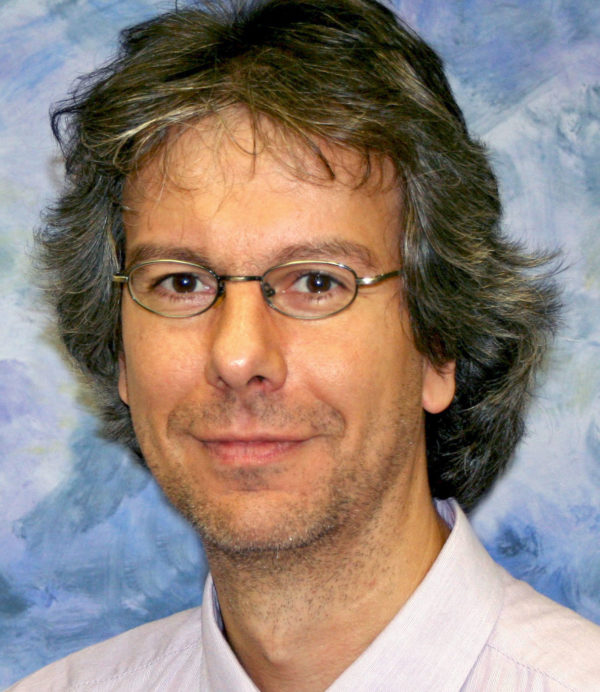
Dr. Prasanna Egodawatta is an Associate Professor in the School of Civil & Environmental Engineering at Queensland University of Technology (QUT). He specializes in Water/Environmental Engineering with over 15 years of industry and academic experience. His research focuses on urban hydrology, stormwater management, water quality modelling, and resilience in water systems. Education: PhD from QUT. Teaching areas include Engineering Hydraulics, Advanced Water Engineering, and Civil Engineering Thesis Projects. He has co-supervised over 15 doctoral/master’s students and contributed to teaching innovation projects funded by QUT and the Office for Learning and Teaching (OLT). Research interests span stormwater pollution, treatment technologies, water-sensitive urban design, and risk-based water management. Key projects include ARC Linkage grants on climate change adaptation of WSUD, and collaborations with Gold Coast City Council, Port of Brisbane Corporation, and industry partners like Holcim and SPEL Environmental. He has published over 75% of his work in Q1 journals (SCIMago) and secured >$600k in research funding. His work emphasizes statistical methods for environmental data analysis and multivariate techniques for pollutant source identification. Past roles include Higher Degree Research Director (2015–2017) and RDC committee member (2015–2017). He actively reviews for journals like Water Research and Environmental Modelling & Software . Notable contributions include advancing stormwater quality models, assessing health risks of PAHs, and developing methodologies for heavy metal prediction in urban catchments. His lab focuses on bridging environmental engineering with sustainable urban systems.
Prof. Dr. Bayram TALİ is a Physics Professor at Adıyaman University, affiliated with the Faculty of Arts and Sciences. His academic journey includes a B.Sc. from Süleyman Demirel University (1993–1997), M.Sc. and Ph.D. from Çukurova University (1998–2009). He has held roles as Assistant Professor (2011–2016), Associate Professor (2016–2022), and Professor (2022–present) at Adıyaman University. His research focuses on high-energy physics, particularly at CERN's CMS experiment, involving detector development, particle physics, and collider-based studies. He has participated in international collaborations at CERN, Fermilab, and Turkish Accelerator Center. His work includes studies on Higgs boson decays, supersymmetry, dark matter, and exotic particles. Notable projects include CMS detector improvements and analyses of W boson production in heavy ion collisions. He has supervised multiple M.Sc. and Ph.D. students, including co-supervision of Dr. Emine GÜRPINAR under TÜBİTAK funding. He has published over 50 peer-reviewed articles in journals like Physics Letters B and Physical Review Letters. Awards include TÜBİTAK Publication Incentive Awards (2019–2021). His technical expertise includes C++, Python, and CMS-specific frameworks like CMSSW. He actively contributes to the CMS collaboration, focusing on forward physics, missing energy analysis, and detector performance studies.
Martin Albertsson is a Research Fellow and Doctoral Student in Mathematical Physics at the Department of Physics, Lund University. His research focuses on nuclear fission dynamics, superheavy element synthesis, and computational modeling of nuclear reactions. He actively contributes to projects like ChaSE Lundium, investigating novel superheavy elements via transfermium reactions and decay chain spectroscopy. Education: Doctoral studies in Mathematical Physics Research interests include fission fragment angular momentum distribution, excitation energy correlations, and potential energy landscapes in heavy-ion collisions. His work bridges theoretical models with experimental data from advanced detector systems. Collaborates internationally on projects involving flerovium isotopes and radioactive decay mechanisms, with publications emphasizing fine structure analysis and reaction dynamics.
Wiktor Adam Mucha is a PreDoc Researcher at TU Wien's Faculty of Informatics, Department of Computer Vision. He is affiliated with the visuAAL project (2020–2026) focused on Egocentric Vision for Active Assisted Living. His research emphasizes egocentric vision systems, hand pose estimation, action recognition, and privacy-preserving sensor technologies. Mucha collaborates with the CMS collaboration in particle physics, contributing to high-energy experiments. His research interests center on computer vision applications in assistive technologies, wearable devices, and robotics. He explores how egocentric perspectives (first-person viewpoints) can enhance human-robot interaction through hand-object interaction analysis and depth sensing innovations. Recent work includes developing systems like SHARP for 3D hand segmentation and TEXT2TASTE for intelligent reading assistance using large language models. Publications highlight advancements in 2D/3D hand pose estimation, egocentric action recognition frameworks, and privacy solutions for depth sensors in healthcare. His particle physics contributions address axion-like particles and heavy resonance detection at the LHC. Advising no documented students, Mucha's work is supported by projects like visuAAL. His lab activities involve interdisciplinary teams advancing computer vision for medical and assistive applications.
Manoel Couder is an Associate Professor in the Department of Physics & Astronomy at the University of Notre Dame. He holds an office in Nieuwland Science Hall and conducts research focused on nuclear reactions of astrophysical and medical importance. His work includes developing techniques to measure low-cross-section reactions using recoil separators (e.g., St. George and SECAR) and underground facilities like CASPAR. He also investigates accelerator-based production of medical isotopes, such as 99m Tc. Education: B.Sc., M.Sc., and Ph.D. in Physics from Université Catholique de Louvain (1998–2004). Research Interests: Radiative capture processes in nucleosynthesis, low-energy nuclear astrophysics, and isotope production for medical applications. Techniques include recoil mass separation, underground experiments, and indirect reaction measurements. Collaborations involve Michigan State University, Texas A&M University, and the CASPAR underground laboratory. Notable Projects: SECAR separator development, CASPAR facility operations, and studies of neutron-rich nuclei for the r-process. His work addresses challenges in measuring reactions critical to stellar explosions and medical isotope availability.
Anna Simon-Robertson is an Associate Professor and Associate Chair in the Department of Physics & Astronomy at the University of Notre Dame, where she also serves as Director of Graduate Studies. Her primary research focuses on nuclear astrophysics, specifically studying neutron and proton capture reactions relevant to astrophysical processes like the p-process, γ-process, and stockpile stewardship. She leads the development of advanced detectors such as HECTOR (High Efficiency TOtal absorption spectrometeR) and collaborates with institutions like Texas A&M and Lawrence Livermore National Laboratory. Education : M.Sc. and Ph.D. in Physics from Jagiellonian University, Krakow, Poland. Her research group investigates reactions critical to understanding nucleosynthesis in supernovae and stellar explosions, with a focus on experimental techniques like the surrogate method and Oslo method. They also explore the behavior of materials under extreme conditions for national security applications. Key projects include measuring cross sections for heavy nuclei using the Hyperion array and analyzing γ-ray strength functions to refine astrophysical models. Recent Highlights : Published results on Zn, Sn, and Kr isotopes for γ-process modeling; contributions to neutron capture measurements via HECTOR; leadership in training >20 graduate and undergraduate students. Collaborative efforts include the CENTAUR Center for Excellence under NNSA funding. Awards : Group members have received accolades like the Browne Award, though no specific awards for Dr. Simon-Robertson are explicitly listed. Grants : Supported by NNSA via the CENTAUR Center and other initiatives. Her lab’s infrastructure includes the NSL (Nuclear Science Lab) and access to cutting-edge facilities like DANCE (Differential Die-away Detector for Neutron Capture Experiments).
Bernd Stelzer is a Professor in the Department of Physics at Simon Fraser University (SFU). His research focuses on subatomic particle physics, particularly collider experiments at the high-energy frontier using the ATLAS detector at CERN. He leads the High Energy Physics Group, which includes Ph.D. candidates and postdoctoral researchers investigating topics like Higgs boson physics, top quark behavior, and advanced analysis techniques. Education: BSc (Honors) in Physics from the University of Cape Town, Dipl. Phys (Physics) from Heidelberg University, PhD in Physics from the University of Toronto. He was a Feodor Lynen Fellow at UCLA supported by the Humboldt Foundation. Research interests include mechanisms of electroweak symmetry breaking, top quark physics as a probe of beyond-Standard-Model physics, and development of advanced analysis methods. His group actively contributes to ATLAS experiments analyzing proton-proton collisions at the LHC. Key achievements include studies of Higgs boson production and decay mechanisms, searches for new particles like vector-like quarks, and investigations of quantum chromodynamics (QCD) dynamics. He has published extensively on topics ranging from jet flavor tagging to environmental sustainability of high-energy physics computing. Advises several graduate students and collaborates internationally on ATLAS-related projects. His lab focuses on leveraging large-scale computing and machine learning to enhance particle physics analysis capabilities.
Prof. Toyoko Orimoto is a Professor of Physics at Northeastern University's College of Science, specializing in experimental particle physics. She leads research at the CMS Experiment at CERN's Large Hadron Collider (LHC), focusing on Higgs boson physics, beyond the Standard Model (BSM) searches, and detector development. Her work includes studies of Higgs boson interactions, dark matter signatures, and the CMS electromagnetic calorimeter upgrade. Prof. Orimoto also advocates for diversity, equity, and inclusion in science. Education: PhD in Physics from UC Berkeley (2006), followed by postdoctoral roles at Caltech (2006-2009) and CERN (2009-2012). She has been at Northeastern since 2012. Research interests span experimental particle physics, including Higgs boson decay mechanisms, BSM physics (supersymmetry, extra dimensions), and future colliders like the muon collider. Her group contributes to CMS detector improvements, such as the MIP timing layer and electromagnetic calorimeter readout electronics. Notable achievements include co-winning the 2025 Breakthrough Prize in Fundamental Physics for LHC research and organizing the 2024 Large Hadron Collider Physics Conference at Northeastern. Her work bridges cutting-edge physics with detector technology and accelerator R&D.
René Reifarth is a Professor of Experimental Astrophysics at Goethe Universität Frankfurt, leading the research group 'Experimental Astrophysics' within the Institute for Applied Physics (IAP) in the Department of Physics. He is also a scientist at Los Alamos National Laboratory. His research focuses on nuclear astrophysics, particularly the origin of elements through stellar nucleosynthesis processes. Key activities include measuring nuclear reaction cross sections under stellar conditions to understand element production in stars. Research interests emphasize neutron capture processes, proton-induced reactions on radioactive ions, and experimental techniques using storage rings. Collaborations involve facilities like CERN n_TOF and the FRANZ setup. Over 100 supervised theses (PhD, Master's, and Bachelor's) reflect his mentorship in nuclear astrophysics. No scientific awards are explicitly listed, though his contributions to the field are highlighted through peer-reviewed publications. Advising and grants involve guiding students through experimental nuclear physics projects. His lab work centers on the IAP's infrastructure, including neutron capture experiments and detector development. Recent publications (2025) address topics like storage ring measurements, surrogate reactions, and fission dynamics, showcasing interdisciplinary approaches in nuclear astrophysics.
Hamilton Joseph holds the rank of Professor of Physics at Vanderbilt University, where he has been affiliated since 1958. He is also a University Distinguished Laboratory Fellow at Oak Ridge National Laboratory and has held adjunct roles at Tsinghua University and Fudan University. His academic leadership includes founding the Joint Institute for Heavy Ion Research (JIHIR) in 1981 and serving as its first director. He earned his B.S. from Mississippi College (1954), M.S. and Ph.D. from Indiana University (1956, 1958), and multiple honorary doctorates from institutions worldwide. His research focuses on experimental nuclear physics, particularly the synthesis of heavy elements (e.g., Element 117), nuclear structure studies, and fission dynamics. Notable achievements include pioneering work on high-spin states and the discovery of ternary fission processes. Recipient of over 20 distinguished awards, including the Jesse Beams Gold Medal (1975), Senior Alexander von Humboldt Prize (1979), and the G. N. Flerov Prize (2003), his contributions have been internationally recognized. He has led major collaborations such as the UNISOR/UNIRIB consortium and organized seminal conferences in nuclear physics. Hamilton’s career spans six decades with over 300 publications. He remains active in advancing nuclear science through leadership in institutions like JIHIR and Oak Ridge National Laboratory.
Dr. Qiance "Quincy" Zhang is a Postdoctoral Researcher at the University of Oxford and an Honorary Research Associate at the University of Bristol. His primary role is as a Postdoctoral Research Assistant in TRISO, a project funded by the National Nuclear Laboratory (NNL). Before joining Oxford in 2024, he worked at the University of Manchester (2022) and the University of Bristol (2023). He holds a PhD from the University of Manchester, focusing on SiCf/SiC composites for nuclear and aerospace applications under supervisors Prof. Ping Xiao and Prof. Philip Withers. Dr. Zhang's educational background includes a BSc, a DPhil (PhD), and an MEng degree. His PhD research at the University of Manchester centered on the fabrication of SiCf/SiC composites for nuclear and aerospace applications, supervised by Prof. Ping Xiao and Prof. Philip Withers. His research interests span multiple areas, including: Materials for nuclear and aerospace applications, particularly TRISO fuel particles, graphite, and claddings. Advanced characterization techniques such as in-situ XCT, synchrotron x-ray, FIB-DIC, and FDTR. He has received numerous awards and recognitions, including: ICACC 2024 Student and Young Professional Grant Award (2024) Fellowship (FHEA) from Advance HE (2023) President's Doctoral Scholar Award Medal, University of Manchester (2022) Chartered Member of IOM3 (MIMMM) (2022) Associate Fellowship (AFHEA) from Advance HE (2021) ICACC Student Speaker Travel Grant Award (2019) Provincial Excellent Master Dissertation Award, Hunan Province (2019) Dr. Zhang's advising and grant activities are not detailed in the provided text. He is affiliated with TRISO research and collaborates with international organizations like the National Nuclear Laboratory (NNL).
Prof. Ralf Rapp is a University Professor at Texas A&M University specializing in high-energy nuclear physics and nuclear theory. His research focuses on quark-gluon plasma dynamics, heavy-ion collisions, and compact star physics. He leads a team studying spectral properties of hadrons and quarks under extreme conditions. Education: PhD in Physics from University of Bonn (1996). Postdoctoral positions at SUNY Stony Brook (1996–1999), followed by research roles at NORDITA (2001–2003). Joined Texas A&M in 2003 as Assistant Professor, advancing to Full Professor (2010). Research interests include QCD phase transitions, quarkonium suppression mechanisms, and color-superconducting quark matter in neutron stars. His work bridges theoretical models with experimental data from RHIC, LHC, and SPS. Recent studies emphasize Bc meson recombination, J/ψ collectivity, and thermal photon emission in heavy-ion collisions. Key contributions include advancing T-matrix approaches to QGP transport and dilepton spectroscopy as probes of QCD matter. Notable awards include APS Fellow (2014), NSF CAREER Award (2004), and the Humboldt Foundation’s Bessel Award (2007). Collaborations include the HEFTY Collaboration and Texas A&M’s Cyclotron Institute.
Dr. Mark Pownceby is an Adjunct Professor in the School of Science at RMIT University, specializing in Resources Engineering and Extractive Metallurgy. His research focuses on geochemistry, chemical engineering, and materials chemistry, with an emphasis on sustainable mineral processing and environmental applications. He collaborates internationally on projects involving e-waste processing, rare earth element recovery, and fluvial sediment analysis. His work includes experimental studies on slag liquidus behavior for metal recovery, leaching mechanisms for sulfide ores, and the geochemical characterization of river sediments in Bangladesh. He has co-authored 18 peer-reviewed publications since 2014, with recent contributions addressing challenges in hydrometallurgy, radioactive waste containment, and heavy mineral beneficiation. Pownceby's articles highlight advancements in mineral processing technologies, including magnetic separation of lateritic ores and pyrometallurgical routes for PCB metal recovery. His research bridges fundamental material science with industrial-scale applications, emphasizing environmental sustainability and resource efficiency.
Dr. Billy Wu is an Associate Professor (Reader) and Director of Research at the Dyson School of Design Engineering, Imperial College London . His expertise lies in electrochemical design engineering, focusing on energy storage systems such as batteries, fuel cells, and supercapacitors. He leads the Electrochemical Science and Engineering group and holds roles in the Faraday Institution, including co-investigator on the Multi-Scale Battery Modelling project and chair of the Training and Diversity panel. Dr. Wu also serves as Head of Programme for the MRes in Design Engineering Research and course leader for the 1st year Materials and Manufacturing course. With a PhD from Imperial College London (2014) in fuel cell hybrid powertrains and a MEng in Mechanical Engineering (2010), his research integrates fundamental science with engineering applications, covering energy materials, continuum modelling, thermal management, and degradation analysis. He has held an Industrial Fellowship with Williams Advanced Engineering and contributes to editorial roles for Energy & AI and Communications Engineering . His research interests span electrochemical interfaces, material degradation, and interdisciplinary approaches , addressing challenges in battery talent development and global sustainability. He advocates for interdisciplinarity to tackle battery industry shortages and emphasizes the environmental impacts of energy technologies. Dr. Wu’s work bridges academic and industrial collaboration, with projects funded by the Faraday Institution and industry partners. His contributions include developing predictive models for battery performance and diagnostics, alongside innovations in electrode design and materials science.
Luc Rey-Bellet is a Professor and Honors Coordinator in the Department of Mathematics and Statistics at the University of Massachusetts Amherst. He has been a faculty member at UMass since 2002, progressing from Assistant Professor to Associate Professor in 2008, and to Full Professor in 2013. His office is located in LGRT 1423K, and he maintains regular office hours on Tuesdays and Fridays. Dr. Rey-Bellet received his Dipl. Phys. from Eidgenössiche Technische Hochschule Zürich (ETH Zurich) in 1994 and his Ph.D. in Mathematics from Université de Genève in 1998. Following his doctoral studies, he held postdoctoral positions at Rutgers University (1998-1999) and served as a Whyburn Instructor at the University of Virginia (1999-2002) before joining UMass Amherst. Professor Rey-Bellet's research spans statistical mechanics, applied probability, and their applications across various domains. His work focuses on both theoretical foundations and practical applications, with particular emphasis on non-equilibrium systems, large deviations theory, and computational methods. He has made significant contributions to understanding physical and mathematical properties of non-equilibrium steady states, developing coarse-graining strategies for complex systems, and creating numerical schemes for lattice spin systems and stochastic processes. His research also extends to evolutionary game theory, mathematical economics, Monte-Carlo methods, information theory, uncertainty quantification, and machine learning. Recent publications reveal a strong trend toward interdisciplinary work at the intersection of probability theory, statistical mechanics, and machine learning. Rey-Bellet has been particularly active in developing mathematical frameworks for generative modeling, with focus on Wasserstein distances, divergence measures, and gradient flows. His work on structure-preserving generative models, group-invariant networks, and uncertainty quantification demonstrates how classical statistical mechanics concepts can inform modern machine learning theory. The consistent theme across his recent work is developing rigorous mathematical foundations for understanding complex probabilistic systems and their computational representations. Rey-Bellet has secured significant research funding throughout his career, with grants totaling $101K in 2003, $106K in 2006, $99K in 2010, $280K in 2015, $370K in 2020, and $300K in 2023. Notably, he was awarded larger collaborative grants of $900K in 2019, $1.950M in 2021, and $900K in 2016, reflecting the significance and collaborative nature of his research. While specific teaching awards aren't detailed in the available information, his faculty profile notes "Award-winning teaching," suggesting recognition for his pedagogical contributions. His role as Honors Coordinator further indicates his commitment to undergraduate education and academic excellence. Professor Rey-Bellet maintains an active research group, frequently collaborating with colleagues including Markos A. Katsoulakis, Jeremiah Birrell, Panagiota Birmpa, and others. His research spans theoretical developments in probability and statistical mechanics while maintaining strong connections to computational methods and applications in machine learning and data science. Current projects appear focused on developing mathematically rigorous frameworks for generative modeling, uncertainty quantification, and understanding the statistical properties of complex systems.