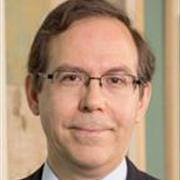
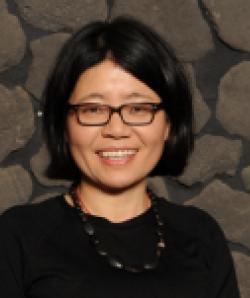
Dr Richard O'Quinn is a Lecturer in Management & Leadership at the School of Business, University of Queensland. He holds qualifications including a PhD from UQ, an MBA, and military degrees from institutions like the US Army Command and General Staff College. With a 23-year career in the US Army Special Operations Forces, his expertise bridges military strategy and academic leadership studies. Research & Teaching: Richard focuses on leadership, strategic decision-making, and organization studies using practice and process perspectives. He teaches in graduate, MBA, and executive education programs, emphasizing practical applications of leadership theory. Recent Research Trends: His work increasingly addresses veterans’ mental health in workplaces, cybersecurity policy, and organizational improvement. Notable projects include seed-funded studies on cybersecurity decision-making and veteran PTSD disclosure challenges. Grants & Collaborations: Funded projects include a 2022-2024 study on veteran mental health disclosure (East Coast Apprenticeships) and a 2021 project developing strategic decision-making simulations (Practera). He also contributes to UQ Cyber initiatives and national cybersecurity strategy submissions. Awards: None explicitly listed, but his work garners attention for bridging military and civilian organizational challenges.
Dr. George Chalhoub is a Lecturer (Assistant Professor) in Human-Computer Interaction at the UCL Interaction Centre (UCLIC), Department of Computer Science, University College London (UCL). He is also an Associate Member at the Department of Computer Science, University of Oxford, and a 2024–2025 Berkman Klein Fellow at the Berkman Klein Center for Internet & Society, Harvard Law School, Harvard University. His multidisciplinary research bridges cybersecurity, privacy, and human-centered computing, focusing on real-world technology use. DPhil in Cyber Security, University of Oxford (supported by Information Commissioner’s Office) MSc in Computer Science, University of Southampton (supported by Lloyd’s Register) BS in Computer Science, Lebanese American University His research centers on the security, privacy, and safety of digital technologies through a user-centered lens. Key areas include AI-powered systems (e.g., LLMs, smart assistants), emerging technologies in the wild (e.g., smart homes, IoT), embedded devices (e.g., routers), marginalized communities, data workers in AI, and online content creators. His work integrates UX principles to improve data protection in healthcare (e.g., NHS records) and children’s apps, with implications for GDPR compliance and responsible AI innovation. The analysis of his recent publications reveals a consistent focus on empirical studies of user experience in security and privacy, particularly in smart homes and data-intensive applications. His work spans design interventions, ethical frameworks, and policy-relevant findings, published in top venues like CHI, CSCW, SOUPS, and IJHCS. Themes include consent design, communal privacy, vulnerability patching, and developer support for privacy. UK Global Talent Visa recipient, UK Research and Innovation 2024–2025 Berkman Klein Fellow, Harvard University Dr. Chalhoub has advised on research projects related to secure networking by design and responsible AI (e.g., EWADA, RoboTIPS). He has received grant support from the Information Commissioner’s Office for his doctoral work. He is available for consultancy, collaborative research, grant assessment, and supervision of research degrees. His professional experience includes internships at Microsoft Research (Calc Intelligence) and Nokia Bell Labs (Social Dynamics), contributing to projects in AI and social computing. He is affiliated with research groups including the Human-Centered Computing group at Oxford, the UCL Interaction Centre (UCLIC), and the Berkman Klein Center at Harvard. His work is supported by tools and frameworks developed in collaboration with interdisciplinary teams focused on cybersecurity ethics, data governance, and platform accountability.
Mathew Yarossi is an Assistant Professor at Northeastern University with a joint appointment in the College of Engineering (Electrical and Computer Engineering) and Bouvé College of Health Sciences (Physical Therapy, Movement, and Rehabilitation Sciences). He holds a PhD from Rutgers University (2017) and joined Northeastern in 2022. Research Focus: His work bridges movement neuroscience, clinical research, and engineering, with emphasis on AI-driven solutions for rehabilitation. Key areas include physiological signal processing, neuromuscular control, and human-robot interaction. His NSF-funded project on dyadic object handover with robots highlights his interdisciplinary approach. Publications: Recent work explores VR-based interventions, EMG-driven prosthetics, and computational modeling of transcranial stimulation. His 2025 patent on virtual reality experiment design underscores his translational impact. Awards: Holds a patent for VR experiment systems (2025). Advising & Grants: Mentors students in PEAK Experiences programs and collaborates with the U.S. Army on AI applications in combat systems. His lab is part of the Institute for Experiential AI.
Dr Tim Rakow is a Reader in Psychology and Deputy Director of the BSc Psychology program at King's College London's Institute of Psychiatry, Psychology & Neuroscience. He holds a PhD from University College London (UCL) and has over 25 years of academic experience, including roles at the University of Essex. His research focuses on judgment under uncertainty, decision-making processes, and risk communication in healthcare contexts. Rakow is an Associate Editor for Decision (APA journal) and a Principal Fellow of the Higher Education Academy. Education: PhD (UCL, 2001) on medical decision making; MSc (UCL, 1997); BSc (Durham University, 1988). Teaching: Coordinates Research Methods modules and supervises final-year projects. Leads the transition support system for BSc Psychology students and oversees the Graduate Teaching Assistant program. Research highlights include developing tools for patient decision-making in healthcare (e.g., children’s heart surgery data interpretation) and analyzing clinical judgment processes in pharmacists and clinicians. He has authored/co-authored over 70 peer-reviewed publications and contributed to three research projects funded by institutions like the British Academy and Great Ormond Street Hospital. Awards: Principal Fellow of the Higher Education Academy (2014), Leadership in education and research on decision-making methodologies. Labs/Teams: Collaborates with interdisciplinary teams on projects like the Children’s Heart Surgery Information website and risk communication frameworks for medical professionals.
Kitty Hernlen is an Associate Professor and Program Director for the Health Services program at Augusta University's College of Allied Health Sciences. With 20 years at AU and 34 years as a respiratory therapist, she bridges clinical expertise with academic leadership. Her roles include coordinating courses like Health Economics and Research in Health Services. EDD, Educational Evaluation and Research (Augusta University, 2019) MBA, Business Administration (Brenau University, 1996) BBA, Business Administration (Augusta State University, 1991) Her research focuses on asthma management and indoor air quality in schools, while her teaching interests emphasize online education and technology integration. Recent scholarship explores medical simulation applications in interprofessional education (IPE) and flipped classroom methodologies. Key trends in her publications include: Medical simulation for IPE faculty training Flipped classroom critical thinking assessment Simulation-based pedagogy innovations Educational technology implementation Scientific honors include the Distinguished Respiratory Therapist Credentialing Success Award (2024) and multiple service recognition certificates. She directs the Augusta Area Asthma Camp and contributes to curriculum committees across Augusta University.
Pedro Oliveira is a leading academic and administrator with diverse roles across institutions. He currently serves as Dean at Nova School of Business and Economics , where he holds the Cascais Chair in Operations, Technology, and Innovation Management . Additionally, he is a Professor MSO at Copenhagen Business School , Academic Fellow at Cornell University , and Adjunct Professor at MIT Sloan School of Management . He also founded the Patient Innovation platform and co-founded PPL Crowdfunding . Education: Ph.D. in Operations, Technology, and Innovation Management (2004), University of North Carolina at Chapel Hill M.Sc. in Operations Research and Systems Engineering (2000), Instituto Superior Técnico Licenciatura in Naval Engineering (1996), Instituto Superior Técnico Research Focus: Pedro Oliveira's work centers on Open and User Innovation , Patient Innovation , and Social and Impact Innovation , with a strong emphasis on Service Operations Management and Artificial Intelligence in Innovation . His studies often bridge Technology Strategy with Healthcare and Financial Services , exploring how users can drive innovation in resource-constrained environments. Publication Trends: His recent works emphasize collaborative innovation in public and semi-public domains , patient-driven healthcare solutions , and user innovation in digital finance . He has also published extensively on knowledge commons and innovation during crises , such as the COVID-19 pandemic . Leadership and Advisory Roles: Pedro has held significant administrative roles, including Senior Associate Dean for Faculty & Research and Director of the Research Unit in Business and Economics . He has advised the Portuguese Ministry of Science, Technology, and Higher Education and served on the Environment & Sustainability Council at EDP Energias de Portugal . He is also the President of the Open and User Innovation Society and a counselor on the National Council for Science, Technology, and Innovation (CNCTI) and Economic and Social Council (CES) in Portugal. Labs and Teams: As founder of Patient Innovation , he has established a global platform for user-driven healthcare solutions. His work also includes collaborative digital health initiatives , such as the Saúde.Come Senior program addressing food insecurity in elderly populations through TV-based eHealth interventions.
Prof. Selim YAZICI is a Professor at the Department of Business Administration, Faculty of Political Sciences, Istanbul University. He has been actively involved in academic and managerial roles since 1993, including multiple terms as Head of Department and Deputy Head of Department , and serves on ethics committees and academic boards. Education: PhD (1999) and Master's (1994) in Business Administration from Istanbul University; BSc (1992) in Mechanical Engineering from Yildiz Technical University. Research Interests span Entrepreneurship , FinTech , Business Ethics , Organizational Behavior , Project Management , and Healthcare Management , with a focus on cultural and cognitive factors influencing organizational resilience and technological adoption. Recent Publications highlight trends in FinTech ecosystems , organizational governance , and design thinking applications for business models. His studies often integrate cross-sectoral analysis, especially in healthcare and financial services. Thesis Advisory includes mentoring 18 doctoral and 21 non-thesis Master's students on topics ranging from project culture to entrepreneurial potential . He has contributed to Technopark research projects and scientific consultancies for institutions like TARSİM . International Collaborations include Erasmus lecturing at Universität Hamburg (2007) and conference presentations in Turkey, Sweden, and the USA.
Dr Nour Ali is a Reader in the Department of Computer Science at Brunel University London , where she co-heads the Brunel Software Engineering Lab and serves as Vice-Dean of Education for the College of Engineering, Design and Physical Sciences. She holds a PhD in Software Engineering from Universidad Politecnica de Valencia, Spain, and a Major in Computer Science from Bir-Zeit University, Palestine. Research Interests: Software architecture for distributed and adaptive systems, integrating techniques like Model-Driven Engineering, Reverse Engineering, and Machine Learning. Teaching: Module leader for Software Project Management and supervisor of undergraduate group projects and final-year projects. Scientific Contributions: Over 70 publications in journals, conferences, and books. Key research areas include microservice architecture recovery, autonomic healthcare systems, and mobile self-adaptive architecture. Scientific Awards: Fellow of the Higher Education Academy (HEA). Membership: Deputy Editor-in-Chief for IET Software, member of multiple conference program committees, and reviewer for EPSRC, NWO, and other funding bodies.
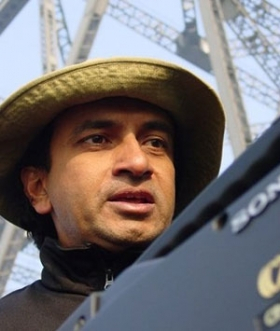
Sanjeev Chatterjee is a Professor at the University of Miami's School of Communication with primary appointments in the Department of Cinema and Interactive Media and secondary appointments in the Department of Journalism. He also serves on the faculties of the Salzburg Academy on Media and Global Change (since 2006) and the Young India Fellowship (since 2011). Chatterjee has been at the University of Miami since 1994, after previously teaching at Emerson College, Boston as an assistant professor starting in 1989. He earned his M.F.A. in Radio and Television from Brooklyn College in 1989 and an M.A. in English Literature from Delhi University in 1985. Chatterjee's research focuses on Documentary Media Making, Sustainability, Environment, and the Indian Diaspora. His work bridges academic scholarship with practical media production, creating documentaries that address global issues while serving educational purposes. He has developed numerous media projects that combine storytelling with social impact, particularly in the areas of water sustainability and cross-cultural understanding. His filmography demonstrates consistent engagement with environmental issues, particularly water resources, as seen in his acclaimed 'One Water' series and related projects. Chatterjee's work also explores urban environments, cultural identity, and diaspora communities, reflecting his interdisciplinary approach to media production. His documentaries have reached global audiences through film festivals, television distribution, and educational screenings worldwide. Fulbright Scholar (India) 2011 AMAP Prize at EcoVision film festival Best Environmental Feature Award at Artivist Film Festival Multiple Best Documentary awards at international film festivals King Award, Best of Festival at Broadcast Education Association Numerous technical merit awards for documentary production As an educator, Chatterjee has directed the University of Miami's semester abroad program in India (UIndia) since 2013 and founded the non-profit Media for Change in 2015. His administrative roles have included Vice Dean of the School of Communication (2006-2010) and founding Executive Director of the Knight Center for International Media (2007-2011). He has secured significant funding from organizations including the Knight Foundation, Florida Humanities Council, UNDP, UN Water, and the United States Institute for Peace to support his media projects. Chatterjee directs the University of Miami's semester abroad program in India and founded Media for Change, a Florida-based non-profit creating a global network of media changemakers. His work demonstrates a commitment to using media as a tool for social change, environmental awareness, and cross-cultural understanding.
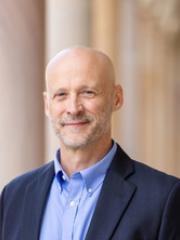
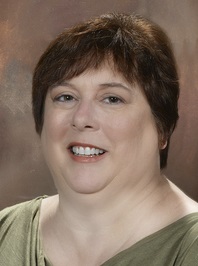
Professor Garry Tew serves as the founding Director of the Institute for Health and Care Improvement and holds the position of Professor of Clinical Exercise Science at York St John University's School of Science, Technology and Health. As a BASES Accredited Sport and Exercise Scientist, he leads interdisciplinary research initiatives focused on improving community health through evidence-based practices. He also serves as the Academic Lead of Scarborough Coastal Health and Care Research Collaborative (SHARC), a partnership with York and Scarborough Teaching Hospitals NHS Foundation Trust. Professor Tew's research program centers on the role of physical activity and exercise in preventing, managing, and treating long-term health conditions. He is internationally recognized for his pioneering work on exercise interventions for intermittent claudication and exercise-based prehabilitation to enhance surgical readiness. His research spans mental health contexts, inflammatory bowel disease, peripheral artery disease, and multimorbidity in older adults, with a particular focus on developing accessible interventions for diverse patient populations. His extensive publication record demonstrates significant contributions across multiple health domains, with recent work emphasizing co-produced physical activity programs for severe mental illness, chair-based yoga for older adults with multiple conditions, and digital health coaching for surgical preparation. These publications reflect a consistent trajectory toward developing practical, evidence-based exercise interventions that can be implemented in real-world healthcare settings. Professor Tew actively contributes to the research community as a member of the East Midlands Nottingham One Research Ethics Committee and serves on the Selection Committee for the NIHR Doctoral Fellowship Programme. He regularly reviews grant applications for major funding bodies including the National Institute for Health and Care Research, Medical Research Council, and British Heart Foundation. His teaching expertise encompasses research methods and exercise physiology at both undergraduate and postgraduate levels. He also conducts specialized workshops for staff and postgraduate research students on research-related topics, demonstrating his commitment to developing the next generation of researchers in health and care disciplines.
Prof. Philip Joos is a Full Professor of Accounting at Tilburg University's Tilburg School of Economics and Management (TiSEM) and academic director of the Tilburg Institute for Private Debt since 2020. He is affiliated with the TIAS Finance LAB and previously served as vice dean education (2013-2018), academic dean of TIAS School for Business & Society (2010-2013), and Research Coordinator of CentER's Accounting Research Group until 2010. Prior to Tilburg, he held professorships at the University of Rochester's Simon School of Business. His academic credentials include a Business Economics degree from Ghent University, Master of Science in Finance from Vlerick School of Management, and Master in Statistics/PhD in Accounting from Stanford University. Doctoral work focused on earnings prediction, equity valuation in biotech/pharmaceuticals, and real options modeling using R&D metrics. Research centers on empirical financial accounting with sustained expertise in corporate governance, CSR, capital markets, and ESG reporting. Key contributions examine default risk in IPOs, IFRS adoption effects across Europe, and sustainable investment frameworks. Current projects analyze economic impacts of ESG disclosures, bridging accounting theory with finance and business strategy. Recent publications reveal evolving focus from traditional financial reporting (e.g., stock option disclosures, IFRS impacts) toward sustainability-driven topics like ESG performance during crises and pharmaceutical R&D valuation. Work consistently intersects capital markets, corporate strategy, and regulatory frameworks across Accounting, Finance, and Business journals. Scientific recognition includes: TIAS Best Teacher Award (December 2009) TIAS Best Teacher Award (June 2018) He teaches PhD-level courses in TiSEM's Research Master program, MSc financial accounting theory, and executive programs at TIAS. Leadership roles encompass directing academic programs and shaping global accounting education through the European Accounting Association (EAA), where he served as President (2017-2019) and founded initiatives supporting young scholars. Core affiliations include the TIAS Finance LAB and Tilburg Institute for Private Debt, which he established to study non-bank lending markets. His EAA presidency and chairmanship of the Education Committee since 2019 demonstrate active influence in accounting education innovation and international scholarly networks.
Jodi Halpern is a full-time Professor at the University of California, Berkeley, and a co-founder of the Kavli Center for Ethics, Science and the Public (2022). She serves as Faculty Director of BERGIT (Berkeley Group for Ethics and Regulation of Innovative Technologies) and actively consults for organizations including the Federal Reserve Bank of San Francisco, Kaiser Permanente, Intel, Salesforce, and the Mayor’s Office of Los Angeles. Halpern’s work bridges psychiatry, philosophy, and bioethics to address empathy in leadership, AI ethics, and gene editing. Professor at UC Berkeley Co-founded Kavli Center (2022) Faculty Director of BERGIT Consults for tech, healthcare, and government entities Halpern’s research focuses on empathic curiosity as a tool for conflict resolution and trust-building in healthcare, post-war reconciliation, and AI ethics. Her current projects include Engineering Empathy (investigating AI’s impact on emotional relationships), Gene Editing from Bench to Bedside (exploring scientists’ beliefs about gene editing), and Remaking the Self in the Wake of Illness (narratives of adaptation to illness). She integrates philosophical analysis with empirical research in psychology, neuroscience, and behavioral economics. Her notable scientific awards include the 2022 Guggenheim Fellowship in Health and Medicine, the 2019 Chancellor’s Chair at UC Berkeley, and the Yale University Award for the best PhD of significance to humanity across disciplines. Halpern received her MD and PhD through the NIH Medical Scientist Training Program Award , completed psychiatry residency at UCLA, and held fellowships at Princeton, Greenwall, and Townsend centers.
Scott Gitlin serves as Assistant Dean of the Medical Education Continuum at Michigan Medicine, University of Michigan. He holds a faculty position in the Department of Internal Medicine within the Medical School, with a focus on hematology/oncology education and medical curriculum development. Dr. Gitlin's research interests center on medical education, particularly competency-based medical education (CBME) in internal medicine clerkships. His work examines educational frameworks, assessment methodologies, and the development of entrustable professional activities (EPAs) for medical students. Additionally, he has substantial expertise in hematology/oncology education, with a specific focus on addressing the shortage of specialists in non-malignant hematology. Medical Education Curriculum Development Competency-Based Assessment Systems Internal Medicine Clerkship Design Hematology/Oncology Education Non-Malignant Hematology Workforce Issues Research Mentorship Training His publication record reveals a strong emphasis on medical education innovation, with significant contributions to competency-based frameworks for internal medicine clerkships and research on hematology-oncology career pathways. His work addresses critical challenges in medical education, including the declining interest in non-malignant hematology specialties and effective assessment methodologies for medical knowledge. Dr. Gitlin has been instrumental in developing faculty development initiatives, notably through the American Society of Hematology (ASH) Medical Educators Institute, which provides curriculum development skills and professional growth opportunities for hematology educators. Principal investigator on medical education research projects Co-developer of competency-based assessment frameworks for internal medicine clerkships Contributor to ASH Medical Educators Institute Researcher studying hematology-oncology career pathways His work spans both educational scholarship and clinical research, with publications in hematology/oncology addressing conditions like haemophagocytic lymphohistiocytosis and multiple myeloma, demonstrating his dual commitment to medical education and clinical hematology.
Rong Xu is a Professor of Biomedical Informatics at Case Western Reserve University School of Medicine, where she also serves as Director of the Center for AI in Drug Discovery. She is a member of the Cancer Genomics and Epigenomics Program at the Case Comprehensive Cancer Center. Dr. Xu's research focuses on developing innovative computational approaches including artificial intelligence, natural language processing, data mining, machine learning, and knowledge representation to advance biomedical discovery. Her work spans both computer science and biomedical science domains. Her computer science research interests include Artificial Intelligence, Natural Language Processing, Machine Learning, Deep Learning, Systems Biology, Data Mining, Graph Theory, and Ontology. Her biomedical science interests encompass Drug Discovery, Drug Repositioning, Disease Gene Discovery, Gene-Environment Interactions, Human Gut Microbiome, Drug Target Discovery, Drug Toxicity Prediction, Cancer Drug Toxicity, Drug Addiction, and Neuroscience Informatics. Dr. Xu's recent publications demonstrate a strong focus on applying AI and computational methods to drug discovery, particularly for neurological conditions, diabetes-related complications, and substance use disorders. Her work prominently examines the effects of GLP-1 receptor agonists like semaglutide on various health outcomes, including Alzheimer's disease, opioid use disorder, and cancer. Fellow of American College of Medical Informatics (FACMI) 2020 American College of Medical Informatics Research Scholar 2016 American Cancer Society New Investigator Award 2015 American Medical Informatics Association AACR INNOVATOR Award 2015 Landon Foundation Director's Innovator Award 2014 National Institutes of Health Siebel Scholar 2004 Dr. Xu directs the Center for AI in Drug Discovery and has received significant grant funding for her research, including a $1.4 million grant from NIDA for developing AI technologies to identify potential medications for cocaine use disorder. Her work bridges computational science with clinical applications, focusing on translating AI discoveries into practical healthcare solutions.
Matteo Robiglio is a Full Professor at the Department of Architecture and Design (DAD) , Polytechnic University of Turin, and serves as Project Manager for the Future Urban Legacy Lab (FULL) . His work focuses on the intersection of architectural design, urban regeneration, and sustainable development. Research Themes : Adaptive reuse of built heritage, cohousing models, cultural heritage conservation, and sustainable urban policies. Awards : Recognized internationally with the World Architecture Award (WACA, 2018) and Solar Decathlon China (2018), alongside multiple Italian accolades (Revealed Architecture Awards, CASACLIMA AWARD). Key Projects include ResQ - Re-school (2021-2022) addressing pandemic-era school spaces, and collaborative agreements with public institutions for urban regeneration in Turin and Lombardy. His recent articles emphasize incremental strategies for heritage reuse, daylighting metrics, and social innovation tools. Teaching Roles span Architecture PhD and Master’s programs, where he oversees design studios on adaptive reuse, green architecture, and transdisciplinary research. He has supervised doctoral research on topics like post-earthquake temporality and community-led housing.






/prod01/yorksjacuk/media/content-assets/staff-profile-images/garry_tew-2.jpg)