Eduardo Azevedo is the John M. Bendheim and Thomas L. Bendheim Professor of Business Economics and Public Policy at the Wharton School , University of Pennsylvania. He holds a courtesy appointment as Professor of Economics and was awarded the 2016 Sloan Foundation Fellowship. His research integrates economic theory with practical applications across science and business domains. His research interests include: Market design Selection markets Social science genetics Experimental economics Game theory Recent publication trends focus on: Economic theory applications to healthcare and digital markets Empirical Bayes methods in A/B testing Adverse selection in insurance markets Strategic behavior in two-sided matching Evolutionary behavioral economics He serves as an instructor for BEPP2500 - Managerial Economics , emphasizing real-world application of microeconomic theory to business problems. His work also involves software development for economic research, including MATLAB-based empirical Bayes tools for analyzing treatment effects in large-scale experiments. Scientific awards : Sloan Foundation Fellow (2016)
Jorge Lemus is an Associate Professor of Economics at the University of Illinois at Urbana-Champaign, with a dual appointment in the College of Liberal Arts & Sciences and the College of Law. His research focuses on industrial organization, microeconomics, and the intersection of patent law with innovation policy. He holds a PhD in Economics and maintains affiliations in both economics and law schools, reflecting his interdisciplinary work. Key research interests include strategic patent examination processes, merger impacts on market competition, and design of contests and contracts in regulatory contexts. His work often addresses issues such as signaling in dynamic competitions, regulatory frameworks for innovation, and antitrust implications of patent settlements. Lemus has contributed to debates on topics like organizational disruption in the airline industry and the efficacy of post-grant patent opposition systems. Publications frequently explore empirical and theoretical dimensions of contests, patent litigation strategies, and regulatory outcomes. His work bridges economic theory with legal and policy analysis, particularly in areas affecting technological advancement and market dynamics. External collaborations and grants are not explicitly detailed in the provided texts, but his research website (https://sites.google.com/site/jorgelemuswebsite/) likely contains further details on ongoing projects and affiliations.
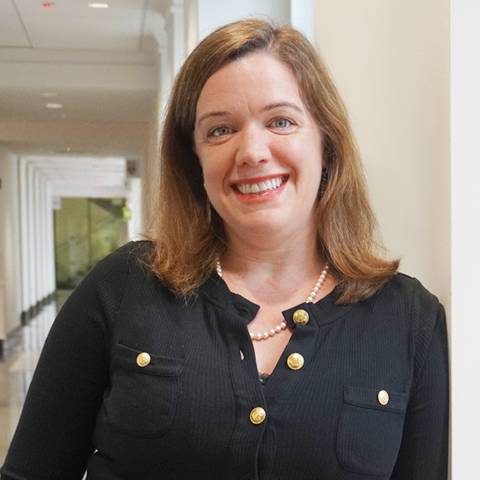
Colleen Carey is an Associate Professor at the Jeb E. Brooks School of Public Policy, Cornell University. Her research focuses on the industrial organization of healthcare systems, particularly federal regulation of health insurance markets like Medicare and Medicaid. She examines topics such as reinsurance mechanisms, risk adjustment policies, and the impact of physician-industry financial relationships on prescribing behaviors. Carey is a Faculty Research Fellow at the National Bureau of Economic Research and previously held roles including Robert Wood Johnson Scholar in Health Policy Research and Staff Economist at the Council of Economic Advisers. Education: Bachelor’s Degree: Yale University Ph.D. in Economics: Johns Hopkins University Research Interests: Federal health insurance market design (e.g., ACA marketplaces) Adverse selection mitigation strategies in subsidized insurance Pharmaceutical industry practices and physician prescribing Opioid abuse policy evaluation Social Security Disability Insurance health outcomes Recent Work Trends: Her 2020-2025 publications emphasize healthcare policy evaluation, including analyses of Medicare Advantage enrollment dynamics, racial disparities in disability programs, and the effects of prescription drug marketing on clinical decisions. She consistently bridges economic theory with applied policy analysis. Scientific Awards and Roles: Editorial Board Member, American Journal of Health Economics Robert Wood Johnson Health Policy Research Scholar (2018-2020) NBER Faculty Research Fellow (ongoing) Advising and Grants: Though no formal advisees are listed, her research often involves collaborations with institutions like the Council of Economic Advisers and NBER. She contributes to policy discussions through evidence-based insights. Labs and Teams: Collaborates extensively with NBER’s Health Economics Group and maintains affiliations with Princeton’s Center for Health and Wellbeing.
Robert Swinney is the Senior Associate Dean for Executive MBA and Quantitative Management Programs and a Professor of Operations Management at Duke University's Fuqua School of Business. He specializes in strategic supply chain operations, consumer behavior dynamics, and platform management. His research explores sustainability, risk mitigation, and ethical practices within complex supply networks. Education: Bachelor of Science in Astronomy, California Institute of Technology PhD in Operations Management, Wharton School, University of Pennsylvania Prior Role: Associate Professor at Stanford University Graduate School of Business Research Interests: His work addresses operational implications of consumer behavior, start-up and platform operations, supply chain resilience, and ethical sourcing strategies. He emphasizes practical applications in healthcare, food delivery systems, and digital content platforms. Editorial Contributions: Currently serves as Department Editor at Manufacturing & Service Operations Management , with prior roles at Management Science and Production & Operations Management . Advising & Grants: No specific grants or advising roles explicitly listed in provided text.
Shinsuke Tanaka is an Assistant Professor and Director of Graduate Studies in the Department of Agricultural and Resource Economics at the University of Connecticut (2023–present). Previously, he held positions at Tufts University’s Fletcher School (2011–2023) and Department of Economics (2022–2023). He holds a Ph.D. in Economics from Boston University (2011), M.A. in International and Development Economics from Yale (2006), and B.A. in Liberal Arts from Soka University of America (2005). His research focuses on environmental economics, health economics, and development economics, with emphasis on interactions between environmental policies, public health, and economic activities in low-income countries. Key areas include pollution’s health impacts, environmental policy evaluations, and early childhood health policies. Recent publications analyze sunlight’s effect on suicide rates, long-term air pollution mortality links, daylight saving time’s cardiovascular impacts, and EV adoption challenges. His work combines econometric rigor with policy relevance, often covered in media like UConn Today, The Economist, and VoxEU. Teaching includes courses on environmental valuation, climate economics, and applied research methods for PhD students. He directs the Zwick Center for Food and Resource Policy and maintains active research collaborations through institutions like NBER and CEEPR.
Christopher S. Tang is a UCLA Distinguished Professor and Edward W. Carter Chair in Business Administration at the Anderson School of Management , where he researches global supply chain management with a focus on social innovation in developing countries . He also serves as Senior Associate Dean for Global Initiatives and Faculty Director of the Center for Global Management . Education: Ph.D. in Management Science (1985, Yale University) M.Phil. in Administrative Science (1983, Yale University) M.A. in Statistics (1983, Yale University) B.Sc. in Mathematics (First Class Honors, 1981, King’s College, University of London) His research explores the intersection of corporate responsibility and supply chain innovation , addressing topics like microfinancing , mobile platforms for developing economies , direct agricultural procurement , and disaster response logistics . He emphasizes visibility, integrity, and agility in uncertain environments. Recent work highlights AI adoption benefits for supply chains , strategies to reduce forced labor risks , and policy impacts on ride-sharing platforms . His research bridges operations management and social justice , advocating for environmental stewardship alongside business growth. Scientific Awards: Salzberg Medallion (2017) Lifetime Fellow, INFORMS (2011) Responsible Research in Management Award (2017) Teaching Excellence Award (multiple years, UCLA-NUS) Dean’s Excellent Service Award (2014) As an influential adviser and consultant , Tang has worked with Amazon, HP, IBM, Nestlé, GKN , and Accenture . He has taught at Stanford University, UC Berkeley, Hong Kong University of Science and Technology , and served as visiting professor at Cambridge University and the Institute of Advanced Study at HKUST .
Yusupova Guzel Fatehovna is an Associate Professor at the Department of Applied Economics within the Faculty of Economic Sciences at the National Research University Higher School of Economics (HSE), where she has been working since 1998 with 28 years of scientific and teaching experience. She also serves as a Senior Research Fellow at the Institute for Enterprise and Market Analysis, specifically in the Laboratory of Competition and Antimonopoly Policy. Her research interests focus on Industrial Organization, Competition Policy, Antitrust Economics, Digital Markets, Market Analysis, and Economics of Network Effects, with particular attention to Russian industrial markets. Her professional expertise stems from her Candidate of Economic Sciences degree (2007) in Economics and Management of the National Economy, with a dissertation on "Boundaries of Russian markets and competition," and her Associate Professor title awarded in 2013. Dr. Yusupova's publication record shows a consistent focus on competition policy and market analysis, with her most recent work examining AI applications in cartel detection, digital platform competition, and the nuances of antitrust enforcement in specialized markets. Her research demonstrates progression from foundational industrial organization topics to increasingly complex digital market challenges. Honorary certificate of the Ministry of Science and Higher Education of the Russian Federation (November 2022) Gratitude of HSE (March 2022) Gratitude of the Faculty of Economic Sciences HSE (January 2021) Winner of the Competition for the best Russian-language scientific works of HSE employees - 2021 Multiple academic bonuses for publications and contributions to HSE reputation (2010-2024) As an educator, Dr. Yusupova teaches graduate and undergraduate courses including Analysis of Industry Markets and Competition Policy, Introduction to the Economy of Digital Platforms, and Theory of Industrial Markets. Her teaching reflects her research expertise, bridging theoretical industrial organization concepts with practical antitrust applications. She has participated in numerous international conferences and research projects focused on competition policy effectiveness, with particular emphasis on Russian market contexts and transition economy challenges.
Max H. Bazerman is the Jesse Isidor Straus Professor of Business Administration at Harvard Business School. His work bridges behavioral economics, decision making, and ethics, with a focus on organizational behavior and negotiation strategies. He has authored influential books such as Complicit , Decision Leadership , and The Power of Experiments , emphasizing ethical frameworks and practical decision-making tools. His research explores bounded awareness, ethical blind spots, and how individuals and organizations make suboptimal choices. Recent articles highlight applications of experiments in data-driven decision making, moral psychology in resource allocation, and strategies to mitigate complicity in unethical behavior. Bazerman has received numerous accolades, including an honorary doctorate from the University of London, the Aspen Institute's Life Achievement Award, and recognition as one of Ethisphere's 100 Most Influential in Business Ethics. He has collaborated with global institutions and advised leaders across 30 countries.
Professor Sandra Wachter is a leading academic in legal and ethical implications of AI, Big Data, and robotics at the Oxford Internet Institute (OII) , University of Oxford, and as Humboldt Professor at the Hasso Plattner Institute. She leads the OII's governance of emerging technologies (GET) research programme , focusing on AI regulation, algorithmic bias, and human rights. Affiliations : Berkman Klein Center (Harvard University), World Economic Forum, UNESCO, IEEE, World Bank, Bonavero Institute of Human Rights, Oxford Martin School, and more. Research : Legal and ethical frameworks for AI, explainability (notably Counterfactual Explanations ), fairness metrics, and combating algorithmic discrimination through her Conditional Demographic Disparity (CDD) tool. Awards : Alexander von Humboldt Foundation Research Award (2025), O2RB Excellence in Impact Award (2021, 2018), Computer Weekly Women in UK Tech (2021), Privacy Law Scholar (2019), CognitionX Outstanding Achievements (2023, 2017). Impact : Her work is implemented by Google, IBM, Amazon, and Microsoft; influences NHS and MHRA policies; and has been cited in major media outlets including The New York Times, BBC, and Nature.
Michelle Hanlon is the Howard W. Johnson Professor of Accounting and Deputy Dean for Faculty and Research at MIT Sloan School of Management. She specializes in taxation and its intersection with financial accounting, focusing on corporate taxation, tax avoidance, international tax policies, and book-tax conformity. Hanlon holds a BBA from Eastern Illinois University, an MAcc from the University of Missouri-St. Louis, and a PhD from the University of Washington. Her research has earned prestigious awards including the Distinguished Contribution to Accounting Literature Award and multiple Outstanding Manuscript Awards. She has also authored three textbooks: Financial Accounting , Taxes and Business Strategy , and Intermediate Accounting . Hanlon has testified before U.S. Senate and House committees on tax policy and served as an Academic Fellow for the U.S. House Ways and Means Committee. Key research interests include the economic consequences of tax policies, mergers and acquisitions taxation, and the reputational effects of tax avoidance. She has advised on global tax reforms like the OECD BEPS 2.0 project and Pillar 2 Global Minimum Tax.
Atreyi Kankanhalli is a Professor at the National University of Singapore, specializing in Information Systems with a focus on knowledge management, healthcare IT, and digital innovation. Their research spans over three decades, with prolific contributions in top journals like MIS Quarterly, Journal of AIS, and Information & Management. They have co-authored over 150 papers addressing topics such as crowdsourcing, online communities, and the impact of AI on scholarly practices. Notable work includes studies on user adherence to health apps, innovation in public sector data utilization, and the ethical challenges of generative AI in peer review. Kankanhalli has also led research on global virtual teams and digital technologies' role in social justice, reflecting a commitment to both technical and societal dimensions of information systems. Education & Background: While specific degree details are not provided, their extensive publication history and academic roles imply advanced qualifications in Information Systems or related fields. They have collaborated with global researchers across institutions like NUS, University of Illinois, and Singapore Management University. Research Themes: Core areas include digital health interventions (e.g., fitness app adherence), organizational innovation via open data and crowdsourcing, and the socio-technical challenges of AI in academia. Their work often bridges theoretical frameworks with practical applications, such as healthcare decision support systems and policy-driven technology adoption. Impact & Influence: As an editorial board member and frequent conference contributor (e.g., ICIS, PACIS), Kankanhalli shapes the field's research agenda. Their recent focus on generative AI's implications highlights proactive engagement with emerging technologies' ethical and methodological challenges.
Catherine Tucker is the Sloan Distinguished Professor of Management and Professor of Marketing at the MIT Sloan School of Management. She serves as the faculty director of the EMBA program and has chaired the MIT Sloan PhD Program. Her research focuses on the intersection of technology, marketing, and public policy, with expertise in digital privacy, online advertising, and blockchain applications. She co-founded the MIT Cryptoeconomics Lab and has testified before Congress on digital privacy issues. Tucker holds a PhD in Economics from Stanford University and a BA from the University of Oxford. Education: PhD in Economics, Stanford University Bachelor of Arts, University of Oxford Research Interests: Algorithmic bias and fairness Privacy regulation and consumer data Blockchain technology applications Healthcare technology and digital health Marketing strategy in digital ecosystems Awards: NSF CAREER Award (2010s) William F. O’Dell Award (Long-term Impact in Marketing) Garfield Economic Impact Award (2020) Editorial Roles: Senior editor at Marketing Science , former co-editor at Quantitative Marketing and Economics , and associate editor roles at Management Science and Journal of Marketing Research . Labs & Initiatives: Co-director of the NBER Digital Economics and AI program, and co-founder of the MIT Cryptoeconomics Lab studying blockchain applications.
Rachel M. Werner, MD, PhD, is a Professor of Medicine at the Perelman School of Medicine and holds the Robert D. Eilers Memorial – William Maul Measey Professorship in Health Care Management and Economics at the Wharton School , both at the University of Pennsylvania . She serves as Executive Director of the Leonard Davis Institute of Health Economics and is an Attending Physician at the Philadelphia Veterans Affairs Medical Center . Dr. Werner is a Core Investigator with the VA Center for Health Equity Research and Promotion and a Senior Fellow at the Leonard Davis Institute . Education: B.A. in Political Science, Macalester College (1992) M.D. in Medicine, University of Pennsylvania School of Medicine (1998) Ph.D. in Health Economics, Wharton School, University of Pennsylvania (2004) Dr. Werner's research program, spanning over two decades, explores the effects of health care payment policies and quality improvement incentives on delivery systems, with a focus on unintended consequences such as worsening racial disparities through public quality reporting. She employs causal inference methods from observational data and leads R01 grants from the Agency for Healthcare Research and Quality (AHRQ) and the National Institute on Aging (NIA) . Scientific Awards: Alice Hersh New Investigator Award Presidential Early Career Award for Scientists and Engineers American Federation of Medical Research (AFMR) Outstanding Investigator Award Elected member of the National Academy of Medicine Her work influences federal and state advisory committees and evaluates Medicaid policies , Medicare systems, and post-acute care models . She directs a VA national center assessing the medical home effectiveness and collaborates with institutions like the Center for Health Equity Research and Promotion and the Center for Health Incentives and Behavioral Economics .
Bert DE REYCK is the Dean of the Lee Kong Chian School of Business at Singapore Management University (SMU) and holds the rank of Professor of Operations Management. He holds a PhD in Business Economics from the University of Leuven, Belgium, along with an MSc in Business Information Systems and a BSc in Business Engineering from the same institution. His career includes roles as Founding Director and Professor at UCL School of Management (2015–2021), Professor and Head of Department at University College London (2009–2015), and various visiting professorships at institutions like London Business School and the University of Ghent. He has held academic positions since 1998, including Assistant and Associate Professor roles at prestigious institutions such as the London Business School and Rotterdam School of Management. DE REYCK’s research focuses on Operations Management, Business Analytics, and Project Management, with notable contributions to AI applications, transportation systems, and strategic sourcing. His work bridges theoretical rigor and practical impact, addressing challenges in project valuation, contract design, and operations optimization. He has received numerous accolades, including INFORMS’ AAS Best Paper Award (2022), multiple Daniel H. Wagner Prize recognitions, and teaching awards from London Business School and UCL. His research has been supported by grants from organizations like Eurocontrol, NHS, and private sector firms such as Vungle and Noble Group. DE REYCK has led significant industry collaborations, including projects on airport operations optimization, pharmaceutical R&D valuation, and AI-driven advertising strategies. His advisory work spans sectors like aviation, healthcare, and transportation, emphasizing real-world problem-solving through analytics and decision science.
Timo Minssen is Professor of Law at the University of Copenhagen (UCPH) and the Founding Director of UCPH's Center for Advanced Studies in Bioscience Innovation Law (CeBIL). He also holds affiliations as an LML Research Affiliate at the University of Cambridge and an Inter-CeBIL Research Affiliate at Harvard Law School's Petrie-Flom Centre. With extensive expertise in Intellectual Property, Competition, and Regulatory Law, Minssen focuses on the legal aspects of emerging health and life science technologies, including genome editing, big data, artificial intelligence, and quantum technology. His educational background includes a German law degree (Staatsexamen) from Georg-August-University in Göttingen, and Swedish biotech & IPR related LL.M., LL.Lic., and LL.D. degrees from Lund University and Uppsala University. His PhD thesis on the patentability of biopharmaceutical technology in the US & Europe received the prestigious Swedish King Oscar award. 2024: TUM Global Visiting Professor, Technical University of Munich (Germany) 2016: Visiting Research Fellow, University of Cambridge (UK) 2014: Visiting Research Fellow, University of Oxford (UK) 2013-14: Visiting Scholar, Harvard Law School (US) 2012: LL.D. - Doctor of Laws (Swedish "juris doktor"), EU/US patent law, Lund University, Sweden Minssen's research spans AI & Big Data in Health & Life Sciences, Sustainable and responsible innovation & tech transfer, Pharmaceutical-, Life Science- & Biotech Law, Comparative European & US Patent Law, Intellectual Property Law & Open Innovation, and EU Competition- & US Antitrust Law. His work addresses legal issues throughout the lifecycle of health and life science products and processes, from R&D regulation to technology transfer and commercialization. His extensive publication record includes 7 books and over 200 articles and book chapters published in leading journals such as Science, Nature Biotechnology, JAMA, and Harvard Business Review. His research has been featured in The Economist, Financial Times, and other major media outlets. Minssen's recent work shows a strong focus on AI regulation, quantum technology law, and data governance in health contexts, reflecting the evolving landscape of technology and law. Scientific Awards and Recognition King Oscar award for best Jur. Dr. thesis (2014) Jorcks Fonds Forsknings Pris (Jorck's Foundation Research Prize) (2017) Awapatent Research Prize (2009) Max Planck Research Scholarship (2005) Visiting Scholar appointments at Harvard Law School, University of Oxford, and University of Cambridge Recipient of a Novo Nordisk Foundation Grant for a "Collaborative Research Program in Biomedical Innovation Law" (2018) As an advisor, Minssen serves international organizations including the WHO, WIPO, and EU Commission. He has supervised numerous PhD students in areas including pharmaceutical law, biotechnology patents, and antimicrobial resistance. His current research projects include the Novo Nordisk Foundation's International Collaborative Bioscience Innovation & Law (Inter-CeBIL) Programme (50 million DKK), CLASSICA: EU Horizon Project on AI-assisted surgery, and AI@Care: Law and Ethics and Algorithmic Bias in Healthcare. Minssen leads the Center for Advanced Studies in Bioscience Innovation Law (CeBIL), which serves as a hub for interdisciplinary research on the intersection of law, technology, and innovation in the health and life sciences. The center collaborates with institutions worldwide to address pressing legal challenges in emerging technologies.