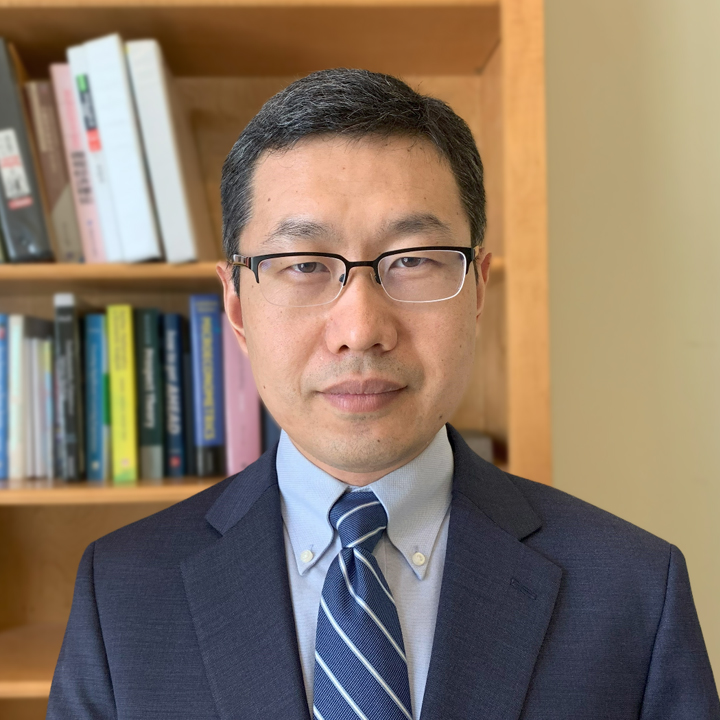
Felix Roesel is Professor of Economics, especially Urban and Regional Economics at Braunschweig University of Technology, where he joined in 2021. He currently serves as Dean of Studies for Business Science (since April 1, 2025) and is taking a research leave (Forschungssemester) during the winter term 2025/2026. His academic home is in the Carl Friedrich Gauss Faculty within the Institute of Economics, located at Spielmannstrasse 9 in Braunschweig, Germany. Roesel's primary research interests focus on regional and urban development, public economics, and social cohesion, with a distinctive approach that frequently utilizes historical datasets. His work spans several interconnected fields including political economy, migration studies, and the long-term effects of historical events on contemporary economic and social outcomes. A significant portion of his research examines how historical institutions and events continue to shape modern political and economic behavior, as evidenced by studies on the Turkish sieges of Vienna and Weimar Germany's political structures. The analysis of his recent publications reveals a strong emphasis on quasi-experimental research designs, with particular attention to electoral behavior, decentralization, and the relationship between government structure and public outcomes. His work frequently employs historical natural experiments to examine causal relationships in political economy, with a geographic focus spanning Germany, Austria, Ukraine, and other European contexts. The interdisciplinary nature of his research bridges economics, political science, and historical analysis, often producing insights relevant to contemporary policy debates. Roesel maintains an active research agenda as evidenced by his numerous publications in top economics and political science journals, with several works appearing in the American Economic Journal: Applied Economics, Journal of Economic Behavior and Organization, and American Journal of Political Science. His affiliation with CESifo as a Research Affiliate since 2020 further demonstrates his integration into the international economics research community. His academic trajectory shows progression from completing his PhD at TU Dresden in 2017, through post-doctoral research at the ifo Institute in Dresden, to his current professorship at Braunschweig University of Technology. This career path demonstrates a consistent focus on empirical political economy with particular attention to institutional persistence and historical effects on contemporary outcomes.