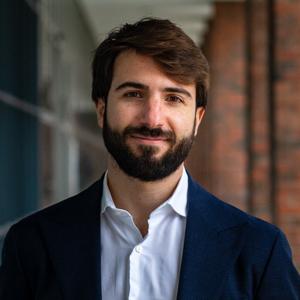
Dr. Edoardo Celeste is an Associate Professor of Law, Technology and Innovation at Dublin City University's School of Law and Government. He leads the Erasmus Mundus Master in Law, Data and Artificial Intelligence (EMILDAI) and serves as Deputy Director of the Dublin European Law Institute. PhD, University College Dublin Law degrees: University of Rome 'La Sapienza', University of Paris II 'Panthéon-Assas', King’s College London His research focuses on digital rights, constitutionalism in digital contexts, and the intersection of law, technology, and sustainability. He coordinates the DCU Law and Tech Research Cluster and co-founded the Digital Constitutionalism Network. Recent publications examine digital sovereignty, AI sustainability, and constitutional responses to social media exclusion. His 2022 book Digital Constitutionalism: The Role of Internet Bills of Rights (Routledge) established him as a leading voice in the field. Irish Research Council Early Career Researcher of Year Award (2022) Principal Investigator for Cross-Border Data Protection Network (IRC/ESRC funded) Facebook Research grant for Digital Constitutionalism: Content Governance Standard project He supervises PhD students in digital rights, data protection, platform regulation, and digital sustainability while holding affiliations with the ADAPT Centre and UCD Centre for Human Rights.
Dr. Eunice Eunhee Jang is a Professor in the Department of Applied Psychology and Human Development at the Ontario Institute for Studies in Education (OISE), University of Toronto. Her research focuses on synergistic learner modeling, dynamic assessment systems, and the intersection of language testing with educational measurement. PhD with specializations in language testing, educational measurement, and program evaluation Develops interactive digital assessment interfaces for struggling readers Author of "Focus on Assessment" (2014) and co-author of OECD Reviews on Evaluation and Assessment in Education Research Interests Dr. Jang's work explores prismatic assessment analytics to understand learner potential and predict learning pathways. She integrates natural language processing and machine learning to create diagnostic feedback systems that support cognitive, metacognitive, and affective growth in technology-rich classrooms. Scientific Awards Jacqueline Ross TOEFL Dissertation Award Caroline Clapham IELTS Master’s Award Tatsuoka Measurement Award Professional Contributions She has served on major advisory boards including EQAO provincial assessments and TOEFL Committees of Examiners. Currently, she is an elected board member for the International Language Testing Association and contributes to the Broader Measures of Success Advisory Committee for People for Education.
Arun Rai serves as Regents’ Professor and Howard S. Starks Distinguished Chair at Georgia State University's Robinson College of Business, where he co-founded and directs the Center for Digital Innovation. His career spans interdisciplinary research bridging information systems with societal impact through industry-university collaborations across global sectors. His educational foundation includes: Ph.D. from Kent State University MBA from Clarion University of Pennsylvania M.S. from Birla Institute of Technology & Science Rai's research explores digital innovation , AI governance , and societal impacts of technology through investigations of platform ecosystems, supply chain transformation, and digital solutions for poverty and health disparities. His work uniquely connects technical systems design with behavioral and organizational outcomes across contexts from rural India to global corporations. Recent publications (2023-2025) reveal intensifying focus on AI-human collaboration , digital risk assessment , and platform governance tensions , with growing emphasis on healthcare applications and equity implications. The trajectory shows evolution from organizational IT adoption toward complex sociotechnical systems addressing global challenges. His scientific recognition includes: Fellow of the Association for Information Systems Distinguished Fellow of the INFORMS Information Systems Society LEO Award for Lifetime Exceptional Achievement Rai has mentored over 60 doctoral students (30+ as chair) with alumni now holding leadership positions globally. His research attracts major funding from Apollo Hospitals, China Mobile, IBM, Intel, UPS, and federal agencies, enabling real-world implementations like the Global Supply Chain Solutions Program during UPS's digital transformation. Current initiatives focus on generative AI in education and healthcare IT policy impacts. As director of the Center for Digital Innovation, he cultivates cross-sector partnerships advancing digital transformation through collaborative research on AI governance, platform ecosystems, and societal impact measurement.
Dr. Anna Baldycheva is a Senior Lecturer in Electronic Engineering at the University of Exeter, within the College of Engineering, Mathematics and Physical Sciences. She leads the interdisciplinary STEMM Laboratory, focusing on applied R&D in smart materials, photonics, AI, and IoT. With prior research experience at MIT, Trinity College Dublin, and Tyndall National Institute, she has established herself as an internationally recognized innovator and entrepreneur in emerging technologies. PhD in Electronic and Electrical Engineering, Trinity College Dublin (2008–2012) BSc (Hons) in Physics, St. Petersburg State University (2003–2008) Postgraduate Certificate in Academic Practice, University of Exeter (2016–2017) Postgraduate Certificate in Technology Management, Smurfit Business School (2009–2010) Her research spans Nano-Engineering, Opto-Electronics, Photonics, AI, and IoT , with a strong emphasis on real-world applications. She pioneers work in fluid opto-electronics , graphene nanocoatings , and AI-driven emotion recognition and early cancer detection . Her lab develops smart composite materials for flexible electronics, e-textiles, and structural applications, integrating machine learning into healthcare, education, and communications systems. The recent publications highlight a strong trend toward applied interdisciplinary innovation , combining materials science with AI and photonics for healthcare diagnostics, energy-efficient computing, and educational technology. Her work frequently bridges fundamental physics with commercialization potential, as seen in spin-out technologies like GSurf and the Electronic-Nose for lung cancer detection. Fellow, Royal Microscopical Society (RMS) Fellow, Higher Education Academy (FHEA) Expert, Future and Emerging Technologies, European Commission Featured in Forbes and Forbes Tech Council Editor-in-Chief, InSTEMM Journal Associate Editor, Nature Scientific Reports and Discover Nano Trustee, Royal Microscopical Society Founder, STEMM Global Scientific Society Founder, It’s Her! Women in STEMM Initiative Dr. Baldycheva actively supervises PhD students and has secured industrial collaborations with organizations such as Qinetiq and Lumentum. She leads multiple outreach initiatives, including STEMM Junior for underprivileged children, and serves on the committee for the Jocelyn Bell Brunel PhD Scholarship. She has raised significant research funding through national and international grants, though specific grant names are not listed. She leads the STEMM Laboratory , a multidisciplinary research group with divisions in Smart Composite Materials, Machine Learning & AI, and Opto-Electronics & Photonics. The lab emphasizes industry collaboration and technology transfer, having produced a university spin-out (GSurf) and multiple media-highlighted innovations.
Professor Nicholas Carah is a leading academic at the School of Communication and Arts , The University of Queensland , and serves as Director of the Centre for Digital Cultures & Societies . He is also an Associate Investigator in the ARC Centre of Excellence for Automated Decision-Making and Society . His research focuses on the algorithmic and participatory advertising model of digital media platforms , with a sustained investigation into digital alcohol marketing . His research spans digital media, algorithmic culture, and affective capitalism , examining how platforms like Instagram, Snapchat, and Facebook shape promotional practices and user behavior. He has led major ARC-funded projects and co-edited works such as Digital Intimate Publics and Social Media (2018) and Conflict in My Outlook (2022). As Deputy Chair of the Foundation for Alcohol Research and Education , he contributes to policy development on unhealthy product marketing. His recent publications highlight trends in social media advertising, algorithmic transparency, and health-risk marketing . Supervision roles include Principal Advisor for PhD projects on topics like digital labor, FemTech, and augmented reality , and Associate Advisor for cross-cultural studies in media and communication. He advocates for citizen science approaches to monitor digital marketing and its societal impacts.
Vesa Pursiainen is an Associate Professor at the School of Business and Economics , University of St. Gallen (SBF-HSG). His research focuses on corporate finance, fintech, environmental economics, crowdfunding, and behavioral finance, with a particular emphasis on how technology, social dynamics, and crises impact financial decisions and market behavior.
Seongkyoon Jeong is an Assistant Professor of Supply Chain Management at the Haslam College of Business , University of Tennessee, Knoxville. His research addresses contemporary challenges in digital supply chains, cybersecurity risks, and sustainable operations. PhD (2022) - Supply Chain Management, Arizona State University MSc (2016) - Management, Georgia Institute of Technology MSc (2009) - Technology Management, Economics and Policy, Seoul National University BSc (2007) - Naval Architecture and Ocean Engineering, Seoul National University Jeong's work bridges supply chain security and sustainability , with recent publications examining cyberattack dynamics , epidemic-driven demand , and technology convergence . His 2018-2025 publications reveal a trajectory from R&D collaboration to digital transformation in supply chains. Scientific Awards Jack Meredith Best Paper Honorable Mention (JOM 2023) Arizona State University Outstanding Research Award (2022) Korea Management Association Consulting Excellence Award (2018) KIPO Director's Research Award (2016) Korea Institute for Industrial Economics and Trade Best Project (2013) Korea Inno-Skill Grand Prize (2010) Previously at Korea Institute of Machinery and Materials, Jeong contributed to interorganizational R&D before focusing on supply chain dynamics. His media contributions to Supply Chain Management Review and Supply Chain Dive highlight global cybersecurity risks and semiconductor production challenges .
James J. Gross is the Ernest R. Hilgard Professor of Psychology at Stanford University, with a courtesy appointment in Philosophy. He directs the Stanford Psychophysiology Laboratory and holds affiliations with Bio-X, Wu Tsai Human Performance Alliance, and Wu Tsai Neurosciences Institute. His academic journey includes a BA in Philosophy and Psychology from Yale University (1987) and a PhD in Clinical Psychology from UC Berkeley (1993). Gross's research examines emotion regulation mechanisms using multimodal approaches (behavioral, physiological, neuroimaging). Key interests include: Emotion coherence dynamics Cognitive reappraisal and suppression strategies Automatic emotion regulation processes Social anxiety pathophysiology Clinical applications for mood disorders His publications demonstrate consistent focus on affective science translation to clinical interventions, particularly for anxiety and mood disorders. Recent work explores neurophysiological correlates of emotion regulation and tech-enabled intervention tools. Notable scientific honors: 2025 Grawemeyer Award in Psychology (field-defining contributions) Dual Honorary Doctorates (UC Louvain, Tilburg University) American Academy of Arts and Sciences Fellowship APS Mentor Award and inaugural SAS Mentorship Award Walter J. Gores Award (Stanford's highest teaching honor) Gross directs the Stanford Psychophysiology Laboratory, mentoring doctoral candidates and postdoctoral scholars. He currently advises 8 graduate students across psychology and neuroscience programs. His lab investigates emotion regulation in clinical populations through NIH-funded trials, including studies on CBT mechanisms in social phobia.
George Henderson is a Professor at the Texas Tech University Health Sciences Center in the Department of Pharmacology & Neuroscience . His research focuses on the neurotoxic effects of ethanol and environmental toxins during development, particularly mechanisms of apoptosis and oxidative stress in the brain and placenta. Primary Affiliation: Texas Tech University Health Sciences Center Research Areas: Developmental neuroscience, neurotoxicity, oxidative stress, fetal alcohol spectrum disorder, nanoparticle drug delivery Research Trends: His publications from 1972–2023 show sustained expertise in ethanol-induced developmental damage, placental drug transport mechanisms, and antioxidant therapeutic strategies. Recent work (2023) explores chlorogenic acid as a neuroprotective agent via NFATc4/CSE pathways. Key Collaborations: Institute for One Health Innovation and translational neuroscience teams at TTUHSC.
Yu Chen is an Associate Professor in the School of Information Systems and Technology at San José State University’s Lucas College and Graduate School of Business. She holds a PhD in Computer and Communication Sciences from the Swiss Federal Institute of Technology at Lausanne (EPFL), and has held postdoctoral positions at the University of California, Irvine. Her work bridges human-computer interaction, AI, and social impact, with a strong focus on education and inclusive innovation. PhD, Computer and Communication, EPFL, Switzerland MS, Security and Mobile Computing, Aalto University, Finland MS, Security and Mobile Computing, Norwegian University of Science and Technology (NTNU), Norway BE, Information Security, Huazhong University of Science and Technology (HUST), China Her research centers on human-AI interaction , AI for social good , emerging technology education , and health informatics . She is particularly interested in how chat-based interfaces can support student success, career advising, and community problem-solving. She emphasizes design thinking, empathy, and interdisciplinary collaboration in her pedagogy. Her recent publications span AI education, chatbot design, inclusive learning, and ethical AI. A recurring theme is the use of conversational agents to empower students and address societal challenges such as food insecurity, housing, and mental health. The research demonstrates a strong commitment to experiential learning and real-world impact. Collaborative Research: Broadening Inclusive Participation in AI Undergraduate Education (NSF) Girls in AI: AI Education for K-12 Girls (SJSU RSCA) Innovation Farm: AI-Powered Social Innovation (SJSU CEP) AI Counselors and Tutors for Student Development (SJSU RSCA) Yu Chen has received numerous honors, including the SJSU College of Business Distinguished Undergraduate Teaching Award (2024), multiple Master Teacher Awards, and recognition for research excellence at AMCIS and ICIS. She was also awarded the Erasmus Mundus Scholarship and a Swiss National Science Foundation fellowship. She actively mentors undergraduate students in research, many of whom have co-authored peer-reviewed publications and won awards in student competitions. Her lab, the AI for Social Good initiative, fosters a collaborative, student-driven environment where interdisciplinary teams prototype AI solutions for community challenges. She advocates for trust in students, no-code tools, and education that is relevant, creative, and socially responsible.
Jodi Halpern is a full-time Professor at the University of California, Berkeley, and a co-founder of the Kavli Center for Ethics, Science and the Public (2022). She serves as Faculty Director of BERGIT (Berkeley Group for Ethics and Regulation of Innovative Technologies) and actively consults for organizations including the Federal Reserve Bank of San Francisco, Kaiser Permanente, Intel, Salesforce, and the Mayor’s Office of Los Angeles. Halpern’s work bridges psychiatry, philosophy, and bioethics to address empathy in leadership, AI ethics, and gene editing. Professor at UC Berkeley Co-founded Kavli Center (2022) Faculty Director of BERGIT Consults for tech, healthcare, and government entities Halpern’s research focuses on empathic curiosity as a tool for conflict resolution and trust-building in healthcare, post-war reconciliation, and AI ethics. Her current projects include Engineering Empathy (investigating AI’s impact on emotional relationships), Gene Editing from Bench to Bedside (exploring scientists’ beliefs about gene editing), and Remaking the Self in the Wake of Illness (narratives of adaptation to illness). She integrates philosophical analysis with empirical research in psychology, neuroscience, and behavioral economics. Her notable scientific awards include the 2022 Guggenheim Fellowship in Health and Medicine, the 2019 Chancellor’s Chair at UC Berkeley, and the Yale University Award for the best PhD of significance to humanity across disciplines. Halpern received her MD and PhD through the NIH Medical Scientist Training Program Award , completed psychiatry residency at UCLA, and held fellowships at Princeton, Greenwall, and Townsend centers.
Dr. Grigorios L. Kyriakopoulos (National Technical University of Athens, School of Electrical and Computer Engineering) is a multidisciplinary academic with 25+ years of teaching experience at NTUA and 10+ years across institutions like the Naval Academy and Athens School of Pedagogical and Technological Education. Holding dual PhDs in Low Carbon Economy and Chemical Engineering, he has 22 academic qualifications spanning Environmental Design, Energy, Theology, and Mental Health Counselling. PhD: Low Carbon Economy (Democritus University of Thrace, 2022) PhD: Chemical Engineering (NTUA, 2005) MSc: Environmental Design of Cities & Buildings (Hellenic Open University, 2018) MSc: Energy (Heriot-Watt University, 2017) MA: Orthodox Theology (Hellenic Open University, 2016) As a Researcher at NTUA, his work bridges Engineering, Energy, and Environmental Economics , with 134 publications, 2160 peer-reviewed papers reviewed, and 6700+ manuscript evaluations. He ranks in the World's Top 2% of Highly Cited Scientists (Stanford University, 2020-2023) and received the Sentinels of Science Award (2016) . His editorial roles include Frontiers in Environmental Science and PLOS ONE , while leading special issues on Microplastics Pollution and Digital Transformation Sustainability . Key research themes include Circular Economy , Renewable Energy Systems , and Behavioral Ecology , with empirical work on Wastewater Reuse and Climate Neutrality implementation. His 17833 citations (Scopus top-250 papers) reflect global impact, particularly in Energy Policy and Environmental Systems . Conference participation spans 500+ reviews at events like NEFES and DTI , with leadership in SMART-ICAE 2018 and NEFES 2022 .
Ben Green is an Assistant Professor at the University of Michigan School of Information and holds a courtesy appointment at the Gerald R. Ford School of Public Policy. He is also a Faculty Associate at Harvard’s Berkman Klein Center for Internet & Society and a Fellow at the Center for Democracy & Technology. Green earned his PhD in Applied Mathematics from Harvard University with a secondary field in Science, Technology, and Society. His research focuses on the ethics of government algorithms, emphasizing algorithmic fairness, human-algorithm interactions, and AI regulation. He advocates for design and governance practices that prevent algorithmic harms and advance social justice. His work includes critiques of overreliance on technology in urban planning, as highlighted in his book The Smart Enough City , and ongoing projects on equitable AI policies. Green’s contributions extend to publications analyzing human oversight in AI systems, privacy in public health contexts, and the societal impacts of smart city technologies. His interdisciplinary approach bridges computer science, law, and public policy to address real-world challenges in technology governance. As a Fellow at the Center for Democracy & Technology and through his academic roles, Green collaborates on initiatives promoting ethical technology use in government and urban environments. His research has informed policy discussions on data privacy, algorithmic accountability, and equitable technology deployment.
Professor Anne-Maree Farrell holds the Chair of Medical Jurisprudence at the University of Edinburgh's Edinburgh Law School, a position first established over 210 years ago. She is the first woman to occupy this role. Her academic expertise spans health law, bioethics, and medical jurisprudence, with a focus on the intersection of politics, regulation, and healthcare. She serves as Director of the Mason Institute, leading interdisciplinary research on health law, ethics, and governance at global scales. Current research projects include studies on post-Brexit public health law, organ donation policy across the UK, and legal responses to technological transformations in sexual health. Professor Farrell has secured over £1.76 million in research funding from bodies like the Wellcome Trust and the British Academy. She is a Fellow of the Academy of Social Sciences and actively advises governmental bodies such as the UK Home Office’s Biometrics and Forensic Ethics Group and the Scottish Government’s Abortion Law Review Expert Group. Education: BA, LLB, BLitt, MA, PhD. Research Interests: Public health law, devolution in healthcare systems, human tissue regulation, clinical negligence, and no-fault compensation schemes. Her work examines legal frameworks for emerging technologies, including online harms and digital sexual connections. Key Projects: 'When Borders Change: Public Health, Trade and Law' (Royal Society of Edinburgh-funded), 'Legal Transplants and Policy Transfers in Organ Donation' (British Academy/Leverhulme Trust), and 'Tech-Sex: The Technological Transformation of Sex' (Australian Research Council). Labs/Teams: Mason Institute for Health, Ethics, and Law at Edinburgh Law School.
Professor Bonnie Buchanan is the Director of the Sustainable and Explainable FinTech (SAEF) Center and a Professor of Finance at the University of Surrey's Surrey Business School (SBS). She previously served as Head of the Department of Finance and Accounting (2019–2023). Her affiliations include fellowships at the University's Center for Sustainability, the Center for AI, and the Centre for Digital Economy (CoDE). Professor Buchanan holds a BSc (Hons), MAppSc, and PhD. Her research focuses on FinTech, AI in financial services, securitization, CSR, and synthetic/alternative data. Notable projects include work on biodiversity in FinTech and regulatory frameworks for financial technologies. Recent grants include a 2020–2022 grant from the Liikesivistysrahasto in Finland (€200,000). She actively supervises PhD students in FinTech, AI, securitization, CSR, and law-related finance topics. Teaching roles include courses on FinTech (MANM493), Banking and Money (MAN3124), and historical financial crises. Her research aligns with UN Sustainable Development Goals, emphasizing environmental and social impacts. Key publications explore sustainability in private investing, creditor governance, and AI's role in UK financial services. Current initiatives include promoting biodiversity-friendly FinTech solutions and advising the Bank of England-FCA consortium (2025).