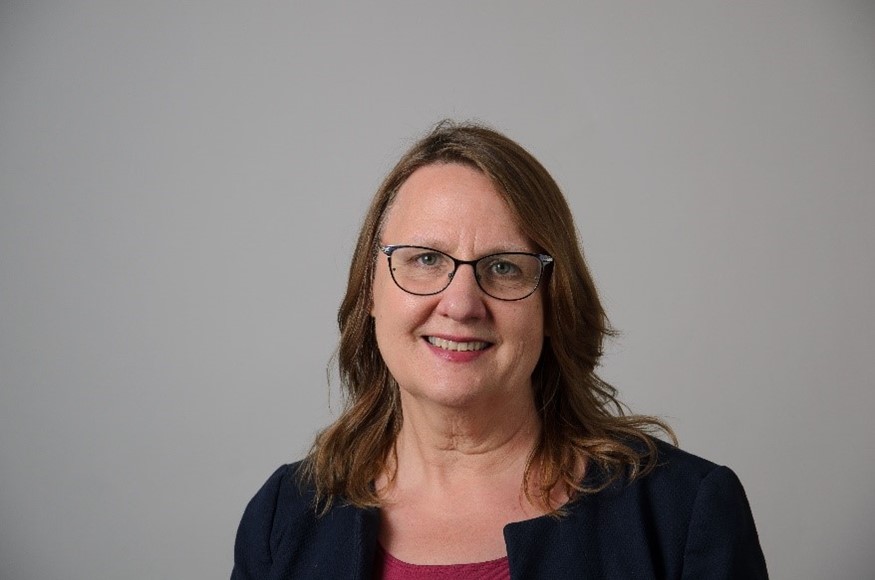
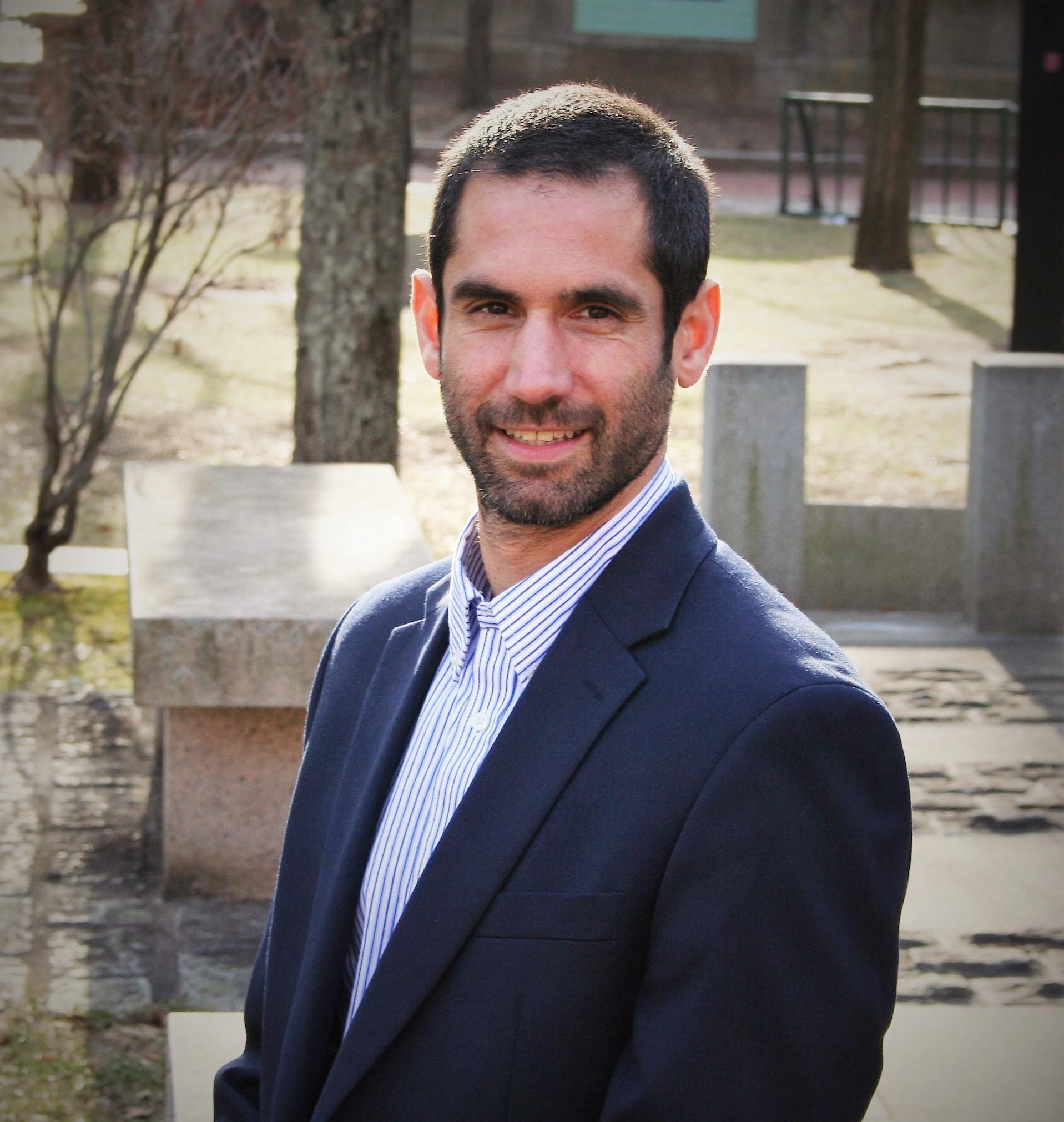
Dr. Ruth F. Lucas, PhD, RNC, CLS, is an Associate Professor at the University of Connecticut School of Nursing. Her research focuses on breastfeeding equity through biopsychosocial and molecular mechanisms, infant breastfeeding biomechanics, and pain self-management. Education: PhD in Nursing from University of Illinois at Chicago (2011) Dr. Lucas leads projects translating the PROMPT study for WIC-eligible populations and testing biomedical lactation devices for real-time intraoral pressure measurement. Her work integrates genetic factors (e.g., COMT and OXTR variants) with social determinants of health, particularly in African American communities. Her recent research trends span genomics education for nurses, maternity care deserts in the U.S., breastfeeding self-efficacy metrics, and global lactation disparities. Current efforts include competency frameworks for genomics nurse educators and meta-ethnographies on diverse breastfeeding experiences. Contact: ruth.lucas@uconn.edu
Dr. Seyed Mohammad Sadegh Khaksar is a Senior Lecturer in Technology Management at La Trobe Business School, specializing in digital transformation, innovation, and healthcare technology. He holds a PhD in Management and teaches courses like Project Management. As Head of the Project Management major, he employs innovative pedagogies such as blended learning and peer review to enhance graduate employability. His research focuses on digital excellence strategies in firms, with notable projects including an AUD 96k IoMT platform for rural healthcare and AUD 40k studies on aged care supply chain resilience. He advises startups and organizations on digital strategies, particularly in healthcare, oil & gas, and professional services. Key research areas include social robots in education and care, IoT applications, and agile-lean methodologies. He has secured over $300k in grants and serves on editorial boards like Technological Forecasting and Social Change . Awards include the 2024 Student Experience Award and 2021 Early Career Researcher Award. Current PhD supervision spans digital responsibility in healthcare and banking sectors, and IoT-driven service innovations. He leads funded projects on smart cities and pandemic logistics, reflecting his interdisciplinary impact across technology, healthcare, and education.
Associate Professor Bruno Schivinski is affiliated with RMIT University's School of Media & Communication. He specializes in online consumer behavior, quantitative research methods, and multivariate data analysis. His work bridges digital media impact, consumer psychology, and health behavior, with a focus on gaming disorder, social media engagement, and brand equity. Education and professional background include roles at Gdansk University of Technology and consulting for institutions like the Polish Ministry of Science. He serves as Associate Editor for the Journal of Management and Business Administration–Central Europe . Research interests span digital phenotyping, behavioral addictions, and sustainable consumption. Notable contributions include studies on gaming disorder measurement, food waste reduction, and influencer marketing effectiveness. His work is published in top-tier journals like Journal of Business Research and Journal of Clinical Medicine . Recognition includes the Vice-Chancellor’s Award for Research Impact (2020), Emerald Literati Outstanding Reviewer (2022), and multiple best paper awards. He supervises research projects on digital behavior, food waste, and social media's role in health. Professional memberships include the Royal Statistical Society, Higher Education Academy, and American Marketing Association. His interdisciplinary approach addresses real-world challenges in digital health, consumer behavior, and sustainability.
Professor Karin Verspoor is the Dean of the School of Computing Technologies at RMIT University in Melbourne, Australia. She previously held roles as Director of Health Technologies and Deputy Head of the School of Computing and Information Systems at the University of Melbourne, and as Scientific Director of Health and Life Sciences at NICTA's Victoria Research Laboratory. Her research focuses on applying artificial intelligence methods to biomedical discovery and clinical decision support, particularly through natural language processing of clinical texts and biomedical literature. Affiliations: RMIT University (STEM College), Australian Alliance for Artificial Intelligence in Health (Victorian Node Lead) Industry Experience: Intelligenesis/Webmind Corp., Applied Semantics, Los Alamos National Laboratory, National ICT Australia Research Interests: Artificial Intelligence in Medicine Biomedical Natural Language Processing Health Informatics Computational Biology Cheminformatics Her work emphasizes cross-modal data integration, EHR analytics, and AI-driven clinical tools to address challenges in healthcare outcomes, musculoskeletal disorders, and infectious disease surveillance. Advising & Grants: Supervises research on AI-based decision-making frameworks, EHR data quality, and chemical knowledge extraction. Leads projects funded by initiatives like CANAIRI (Collaboration for Translational AI in Healthcare). Labs & Collaborations: Co-founder of the Australian Alliance for AI in Health, advancing national AI healthcare policy and translational research.
Dinesh Bhandari serves as a Research Fellow at Monash University's School of Nursing and Midwifery. He is an early career public health researcher with a specific interest in global environmental health and infectious disease epidemiology. His research focuses on health risk assessment of climate change and identification/designing of sustainable adaptation strategies to protect human health from climate impacts. His research interests include: Climate change and human health Environmental epidemiology Child health Infectious diseases epidemiology Water Sanitation and Hygiene (WaSH) Dr. Bhandari's recent publications demonstrate a strong focus on climate-health linkages, disease burden analysis, and environmental determinants of health. His work spans multiple continents with particular attention to vulnerable regions in Asia. The research outputs show consistent productivity with 73 publications from 2015-2025, reflecting increasing contribution to the field of environmental health and climate change impacts on human health. His scientific recognition includes: 3rd International Young Researcher Travel Award (2015) Adelaide Scholarship International (ASI) (2017) ESCMID Attendance Grant (2015) Multiple International Society for Environmental Epidemiology Travel Awards (2019, 2020) Dr. Bhandari actively contributes to the academic community through peer review for journals including The Lancet Planetary Health, Nature Communications, and the British Medical Journal. He serves on the editorial board of PLOS Global Public Health and has participated in grant review responsibilities for disease elimination initiatives. He is currently accepting PhD students and serves as Chief Investigator on the Maternal and Child Health Climate Resilience in Indo-Pacific Region project.
Sapna Sharma is a Full Professor in the Department of Biology at York University's Faculty of Science. Her research focuses on predicting the effects of environmental stressors—such as climate change, invasive species, and habitat alteration—on lakes and aquatic ecosystems. She leads the Sharma Lab, emphasizing big data and machine learning to address global change biology challenges. Her work explores lake ice dynamics, water quality, and biodiversity responses to climate shifts, with a focus on Arctic and Northern Hemisphere lakes. Key research areas include cryosphere studies, aquatic ecology, and climate modeling. She has developed quantitative frameworks to predict ecosystem responses and collaborates on long-term projects like the Community Lake Ice Collaboration, spanning over 1,000 lakes. Her lab's contributions include datasets like the Global Lake area, Climate, and Population (GLCP), enhancing global environmental monitoring. Sharma's research highlights societal impacts of environmental changes, such as reduced lake ice safety and economic consequences for communities. She advocates for interdisciplinary approaches to limnology and emphasizes freshwater biodiversity conservation. Her work bridges ecological and social sciences, addressing climate adaptation and policy implications. Contact details: Email sharma11@yorku.ca , Office: Lumbers Building 326. She is eligible to supervise graduate students in the Biology Graduate Program at York University.
Professor Chin Hoong Chor is a Professor in the Department of Civil Engineering at the National University of Singapore (NUS), affiliated with the Faculty of Engineering. He specializes in transportation systems modeling, safety assessment, and congestion management. As a registered professional engineer and road safety auditor, he has contributed to numerous projects with Singapore’s land authorities and private companies. He holds leadership roles including Vice Chairman of the Chartered Institute of Logistics and Transport and Editorial Board membership for the International Journal of Transport Management. Qualifications include a BEng and MEng from NUS and a PhD in Transportation Engineering from the University of Southampton. His research interests span vehicle detection using image processing, traffic conflict analysis, and public transport optimization. Notable awards include the NUS Faculty Innovative Teaching (Gold) Award (2001/2002) and the UK Institution of Civil Engineers Webb Prize (2003). Education: BEng in Civil Engineering, National University of Singapore MEng in Civil Engineering, National University of Singapore PhD in Transportation Engineering, University of Southampton His research focuses on quantitative safety analysis, traffic flow modeling, and smart city initiatives. Recent work explores maritime collision risk modeling and sentiment analysis for transportation planning. He actively contributes to government committees and has authored over 40 peer-reviewed papers on traffic management and safety. Awards: Faculty Innovative Teaching (Gold) Award, 2001/2002 UK Institution of Civil Engineers Webb Prize 2003 Prof Chin has undertaken traffic impact studies and road safety reviews in Singapore, collaborating with public and private sectors. His work bridges academic research and practical policy implementation, emphasizing sustainable urban mobility solutions.
Pablo Durango-Cohen is an Associate Professor of Civil and Environmental Engineering at Northwestern University, located in Evanston, IL. He holds a Ph.D. in Industrial Engineering and Operations Research from UC Berkeley, following an M.S. from the same program and a B.S. in Industrial and Systems Engineering from the University of Southern California. His research focuses on developing and analyzing optimization and econometric models for transportation infrastructure systems, integrating environmental design, life-cycle assessment, and policy analysis to address decarbonization challenges in freight systems. He also explores dynamic segmentation models for nonprofit fundraising strategies. Education: Ph.D. Industrial Engineering and Operations Research, University of California, Berkeley (2006) M.S. Industrial Engineering and Operations Research, University of California, Berkeley B.S. Industrial and Systems Engineering, University of Southern California Research Interests: Prof. Durango-Cohen’s work bridges transportation engineering, environmental science, and operations research. He emphasizes infrastructure management through data-driven frameworks, including statistical process control for condition monitoring and predictive maintenance. His recent projects address decarbonization of freight rail systems, electric vehicle impacts on road infrastructure, and optimal auction designs for road concessions. He also applies mathematical models to analyze donor behavior and fundraising efficiency in universities, aiming to improve nonprofit resource allocation strategies. Awards: NSF Faculty Early CAREER Development Award (2006) Young Author Prize, 2007 World Congress on Transport Research Matthew G. Karlaftis Best Paper Awards (2020–2025) Advising & Grants: He advises current PhD candidates including Jing Yu, Adrian Hernandez, and Callahan Skiles, while mentoring former students across sustainability, infrastructure, and fundraising analytics. His research is supported by agencies like the National Science Foundation, Department of Energy (through ARPA-E), and Department of Transportation. He co-leads the LOCOMOTIVES project with ANL researchers, focusing on decarbonizing rail networks, and founded the Virtual Inter-university Symposium on Infrastructure Management (VISIM) to foster academic collaboration. Labs & Teams: As Principal Investigator (PI) on major initiatives like LOCOMOTIVES and VISIM, he collaborates with multidisciplinary teams at Northwestern and Argonne National Laboratory. His group develops tools such as the Locomotives interactive dashboard and a computational framework for input-output lifecycle assessments, accessible via repositories like CivEnv304 .
Dae-Jin Lee is an Assistant Professor at IE University’s School of Science and Technology, specializing in statistical modeling and data science. Previously, he served as a Research Line Leader at the Basque Centre for Applied Mathematics (BCAM) and coordinated the Knowledge Transfer Unit in Data Science/AI. His academic background includes a Ph.D. in Mathematical Engineering (2010) from Universidad Carlos III de Madrid and postdoctoral research at CSIRO (Australia). His research focuses on statistical methods for complex data, including penalized splines, tensor product smooths, and applications in biomedicine, epidemiology, environmental science, and sports analytics. He has led multidisciplinary projects funded by public and industry grants, collaborating globally with experts across fields like engineering, medicine, and biology. Key research themes include predictive modeling for health outcomes (e.g., SARS-CoV-2 pneumonia severity), sports injury prevention, and AI in healthcare. His work integrates machine learning with traditional statistical techniques, addressing real-world challenges like pedestrian dynamics simulations and automated medical diagnostics. He is actively involved in scientific organizations, including the Spanish Biostatistics Society and the Statistical Modelling Society. His recent publications highlight innovations in growth curve modeling, AI ethics, and spatiotemporal data analysis, reflecting his commitment to advancing both theoretical and applied statistics.
Professor Anne Verhoef is a leading academic at the University of Reading, specializing in environmental and hydrological sciences. Her research focuses on soil-plant systems, climate change impacts, groundwater dynamics, and remote sensing applications in ecological modeling. She collaborates internationally on projects like GEWEX and AMMA, advancing understanding of global hydrological cycles and land-atmosphere interactions. Key Research Areas: Hydrological modeling and prediction Climate change adaptation in semi-arid regions Soil health and pedotransfer functions Evapotranspiration dynamics in tropical ecosystems Remote sensing for biodiversity and water resource assessments Her work integrates field observations, satellite data, and numerical models to address challenges in water resource management, flood mitigation, and sustainable agriculture. She has published widely in top journals such as Reviews of Geophysics , Water Resources Research , and Nature Reviews Earth & Environment . Professor Verhoef contributes to interdisciplinary initiatives, including climate adaptation strategies in transboundary regions and improving land surface models for global Earth system simulations. Her research emphasizes bridging gaps between observational data and predictive frameworks to inform policy and environmental decision-making.
Dr. Edoardo Bertone is a Senior Lecturer at Griffith University's School of Engineering and Built Environment - Architecture and Design. He holds a PhD in Water Resources Engineering from Griffith University and Bachelor/Master degrees in Civil Engineering from the Polytechnic University of Turin. His research focuses on data-driven modeling, Bayesian Networks, and System Dynamics applied to water resources management, climate change adaptation, and the water-energy nexus. He is affiliated with Griffith's Cities Research Institute and Australian Rivers Institute, collaborating on projects with water utilities, governments, and private entities. Dr. Bertone has received awards such as the 2024 PVC Science Excellence in Teaching and the JSPS Fellowship (2022). He supervises doctoral and master's students in areas like water quality management and climate change impacts. Education: PhD in Engineering (Griffith University, 2015); MEng and BEng in Civil Engineering (Polytechnic University of Turin, 2009-2011). Research Interests: Water quality modeling, drinking water optimization, data-driven prediction, climate change adaptation, and sustainable development goals. He leads over 25 funded research projects, including initiatives on reservoir water quality management in Thailand, real-time nutrient monitoring, and cyanobacteria bloom modeling. Dr. Bertone’s work integrates advanced sensors, machine learning, and Bayesian networks to address environmental challenges. Awards: Listing includes PVC Excellence Awards (2024, 2017), JSPS Fellowship, and recognition as a Rising Star in Queensland Science (2015). Grants & Supervision: Principal supervisor for 10+ doctoral candidates and collaborator on projects funded by Seqwater, CSIRO, and the Ian Potter Foundation. Key grants include $745k for biofertilizer combatting eutrophication and $269k for coagulation optimization models. Dr. Bertone’s contributions extend to urban sustainability, co-editing the book *SeaCities: Urban Tactics for Sea-Level Rise* and developing frameworks for integrating SDGs into architectural education.
David M Williams is a Professor of Behavioral and Social Sciences and Psychiatry and Human Behavior at Brown University's School of Public Health , where he also serves as Associate Dean . His work bridges affective science and health behavior, focusing on exercise promotion and smoking cessation.
Dr. Jing Wang is a Professor in the Department of Bioinformatics at Southern Medical University's School of Medicine, with extensive research at the intersection of artificial intelligence and biomedical applications. Her work demonstrates strong cross-disciplinary collaboration across medical institutions, engineering departments, and computer science research groups. Her primary research interests include Artificial Intelligence in Healthcare , Biomedical Engineering , and Traditional Chinese Medicine Informatics , with recent publications showing particular expertise in medical imaging analysis, diagnostic assistance systems, and clinical decision support. Her work spans both theoretical algorithm development and practical clinical implementations. Analysis of her 15 most recent publications (2025-2026) reveals a strong trend toward clinically applicable AI systems, with approximately 60% of publications focused on medical diagnostics and treatment support systems. The remaining publications demonstrate expertise in industrial applications of computer vision and fundamental AI research. Her work shows consistent collaboration with both domestic Chinese institutions and international research groups. Notable scientific contributions include: Development of 'Tianyi', a traditional Chinese medicine language model for clinical practice Innovations in bionic soft robotics for rehabilitation assistance Novel approaches to medical image analysis for cancer diagnostics Her research program appears well-funded with consistent publication output across high-impact journals in biomedical engineering, AI, and medical informatics. Current work suggests strong emphasis on translating AI research into clinical practice, particularly in diagnostic support systems and rehabilitation technology.
Dr. Kelley Gabriel is a Professor and Associate Dean in the School of Public Health at the University of Alabama at Birmingham (UAB), with a primary appointment in the Department of Epidemiology. She holds additional roles as a Senior Scientist in multiple UAB research centers, including the Nutrition Obesity Research Center (NORC) and the Integrative Center for Aging Research. Her research focuses on optimizing physical activity and sedentary behavior measurement in large epidemiological studies, with a particular emphasis on cardiorespiratory fitness, chronic disease prevention, and life-course health trajectories. Dr. Gabriel earned her PhD in Public Health (Epidemiology) from the University of Pittsburgh, an MS in Exercise Physiology from Northeastern University, and a BS in Athletic Training and Sports Medicine from Ithaca College. Her research interests include developing methodological strategies for precise physical activity measurement, examining the timing of physical fitness and disease risk, and leveraging cohort studies like CARDIA and SWAN. She has secured grants from NIH, NHLBI, and other agencies to support studies on the 24-hour movement paradigm, cognitive health, and cardiovascular outcomes. Key collaborations involve large-scale epidemiological cohorts such as the Coronary Artery Risk Development in Young Adults (CARDIA) and the Multi-Ethnic Study of Atherosclerosis (MESA). Her over 200 peer-reviewed publications and four book chapters reflect expertise in physical activity epidemiology and translational research. Grants include NIH-funded projects on cognitive resilience to Alzheimer’s disease, cardiovascular health trajectories, and the role of activity patterns in aging populations. Her work emphasizes translational strategies to improve public health through evidence-based lifestyle interventions. Dr. Gabriel leads multidisciplinary teams at UAB, contributing to initiatives like the Osteoporosis in Men (MrOS) Study and the Cooper Center Longitudinal Study. Her research integrates wearable technologies, biomarker analysis, and advanced statistical methods to address global health challenges related to physical activity and chronic disease.
Aileen Nielsen is a Ph.D. Candidate at ETH Zurich's Center for Law & Economics and a Fellow in Law & Tech. She holds a J.D. from Yale Law School, a B.A. in Anthropology from Princeton University, and advanced degrees in Applied Physics (Columbia) and Comparative Human Development (University of Chicago). Her research focuses on regulatory and judicial responses to technological innovation, particularly in AI governance, data privacy, and medical technology. She has practiced law in NYC and worked in tech startups across healthcare and political organizations. Education: Ph.D. Candidate (ETH Zurich), J.D. (Yale), M.S. Applied Physics (Columbia), M.A. Comparative Human Development (Chicago), B.A. Anthropology (Princeton) Her work combines empirical and experimental methods to address challenges like algorithmic fairness, AI liability in medicine, and public perceptions of data markets. Recent findings explore regulatory frameworks for AI systems and the ethical implications of algorithmic surveillance. She teaches courses on algorithms and fairness, law & tech research, and authentication security. Publications span law journals, cybersecurity white papers, and AI ethics conferences, with a focus on balancing innovation with societal accountability. Her books Practical Fairness and Practical Time Series Analysis further bridge technical and legal domains.