Professor Ahmed Mushfiq Mobarak is a leading scholar in Development Economics at Yale University, holding concurrent appointments in the School of Management and the Department of Economics (Faculty of Arts and Sciences). He is the founder of the Yale Research Initiative on Innovation and Scale (Y-RISE), focusing on scaling evidence-based interventions in global development. His research spans Behavioral Economics, Development Economics, and Environmental Economics, with a focus on field experiments in Bangladesh, Nepal, Sierra Leone, and Indonesia. Key projects include strategies to address seasonal poverty through migration subsidies and consumption loans, and evidence-based responses to the COVID-19 pandemic. Collaborations with governments and NGOs have reached over 100 million people via mask distribution programs informed by the NORM model. Mobarak has been honored with the Carnegie Fellowship (2017) and recognition by Vox as a scientist shaping the future. His teaching includes PhD courses in development economics and an MBA course on business-government-society interactions, addressing policy issues like race, gender, and public health. Recent awards: 2017 Carnegie Fellowship, 2022 Vox '50 Scientists' Key research partnerships: Governments of Bangladesh, Sierra Leone, Global Innovation Fund Notable interventions: Malaria mask distribution, vaccine delivery in Sierra Leone
Joseph Trainor is the Interim Dean and Professor at the Joseph R. Biden, Jr. School of Public Policy and Administration, University of Delaware. He is a core faculty member of the Disaster Research Center, renowned for expertise in Disaster Science and Emergency Management. His research integrates behavioral and organizational dimensions of disasters, focusing on risk perception, warnings, equity, and policy integration. Trainor holds a PhD in Sociology from the University of Delaware (2009), with earlier degrees from the same institution and Millersville University. Education: Ph.D., Philosophy in Sociology, University of Delaware (2009) MA, Sociology, University of Delaware (2004) B.A., Double Major in Sociology and Psychology, Millersville University (2002) Research Interests: Trainor’s work spans risk communication, organizational management in crises, disaster mitigation, and equity. Key themes include household decision-making around insurance and retrofitting, multi-organizational response systems, and pandemic workforce dynamics. He emphasizes bridging academic research with practitioner needs, with a focus on policy applications. Public Service & Collaboration: Trainor collaborates with agencies like FEMA, DHS, and state emergency management offices. His projects address land-use policies, hurricane risk reduction, and pandemic response strategies. He frequently chairs doctoral committees and teaches at all academic levels. Labs & Teams: As part of the Disaster Research Center, he contributes to interdisciplinary teams advancing disaster science through mixed-methods approaches, including computational frameworks and community resilience models.
Adam Butt is an Associate Professor in the Research School of Finance, Actuarial Studies & Statistics at The Australian National University. His work focuses on actuarial education and retirement income systems, particularly superannuation and financial decision-making. He has held grants from CSIRO Data 61 and the Centre for International Finance and Regulation, examining topics like retirement living standards and superannuation defaults. Education: Bachelor of Commerce (BCom) Master of Health Economics (MHE) Doctor of Philosophy (PhD) Fellow of the Institute of Actuaries of Australia (FIAA) Senior Fellow of the Higher Education Academy (SFHEA) Research Interests: Adam's research explores retirement income design, superannuation systems, investment strategies for retirees, and actuarial education. Recent work includes analyzing age pension means-testing impacts, retirement portfolio optimization, and pandemic-driven investment behavior. Grants & Projects: CSIRO Data 61: Superannuation and retirement living standards analysis CIFR: Default superannuation arrangements study ANU Projects: Includes retirement income strategy design, dynamic programming applications, and actuarial education reviews Advisory Role: Registered to supervise research students in actuarial and financial domains. His work bridges academic research with practical policy implications for retirement systems.
Kimberly J. Morgan is a Professor of Political Science and International Affairs, and Associate Dean for Faculty Affairs at George Washington University's Elliott School of International Affairs. She holds a Ph.D. in Political Science from Princeton University and has held postdoctoral fellowships at NYU and Yale, as well as visiting faculty roles at institutions in Europe. Her research focuses on social policy, immigration, and European politics, with notable works on work-family policies and Medicare governance. Dr. Morgan's expertise spans comparative politics of Western Europe, immigration integration, and the interplay between religion and policy. She has co-authored influential books such as *The Delegated Welfare State* (2011) and edited major handbooks like the *Oxford Handbook of the Welfare State* (2021). Her teaching includes courses on comparative politics, European policy, and immigration studies. Her recent research explores topics such as Medicare Advantage reforms, childcare policy, and the enforcement mechanisms in immigration systems. While no specific awards are listed in the provided text, her extensive publications reflect significant contributions to social policy analysis. Her work bridges academic rigor with practical policy insights, emphasizing governance, marketization, and comparative institutional frameworks.
Philip Thai is an Associate Professor of History and Asian Studies at Northeastern University and Director of the Global Asian Studies Program. He holds an affiliation as an Associate in Research at Harvard University's Fairbank Center for Chinese Studies. His interdisciplinary research focuses on Modern China and East Asia, emphasizing legal, economic, and diplomatic history. Dr. Thai earned his PhD in History from Stanford University (2013). His current book project explores Cold War-era underground economies across Greater China, while his earlier work includes China’s War on Smuggling: Law, Economic Life, and the Making of the Modern State (Columbia University Press, 2018). His research has been supported by major institutions including the ACLS, Harvard Radcliffe Institute, American Philosophical Society, and the Chiang Ching-kuo Foundation. Key awards include the Business History Conference’s Philip Scranton Best Article Prize (2023) and an ACLS Frederick Burkhardt Fellowship (2022–23). Thai’s work bridges historical analysis with contemporary relevance, addressing topics like global health governance and Sino-American relations. His teaching and research programs emphasize transnational and interdisciplinary approaches to Asian Studies.
Rafael M. Di Tella is the William Ziegler Professor of Business Administration at Harvard Business School (HBS), where he has been faculty since 1997. He teaches courses on business history, the business environment, and institutions/macroeconomics. His research focuses on political economy, crime and corruption, happiness studies, and welfare state design. He holds a D.Phil in Economics from Oxford University (1996) and a first degree in Economics from the Universidad de Buenos Aires (1990). Affiliations: Harvard Business School, Business, Government and the International Economy department Teaching: Business History, Macroeconomic Policy, Institutions Research interests span political economy mechanisms shaping institutional development, happiness economics (linking subjective well-being to policy design), and the economic roots of crime and corruption. Notable contributions include analysis of Latin American political economies, fiscal responses to crises, and the role of beliefs in economic behavior. Key projects: Impact of electronic monitoring on recidivism, media bias effects on corruption, happiness adaptation to income Recent work includes studies on strategic political platforms during U.S./French elections (2023), pandemic drug diffusion (2023), and social media's role in polarization (2021). He has published over 100 peer-reviewed articles and authored/co-authored books like The Economics of Crime (2010). His research frequently bridges theory with real-world policy challenges in developing economies. Receives frequent media attention for insights on populism, fiscal policy, and macroeconomic governance. Serves on editorial boards of top journals including the American Economic Review and Journal of Comparative Economics.
Prof. Dr. Heinz Stapf-Finé is a Professor of Social Policy at Alice Salomon University of Applied Sciences Berlin (ASH Berlin) . His work focuses on democracy development , social equality , and political participation through applied research projects. Current projects include Krise als Chance (2023-2025) analyzing pandemic impacts on volunteer engagement Gleiche politische Teilhabe (2021-2024) guiding outreach political education DEMOKRATIE (2015) examining democracy-distant attitudes His research spans social policy analysis , healthcare systems , and democratic resilience , with emphasis on qualitative methodologies and participatory research . Publications include: Handbuch aufsuchende politische Bildung (2025) on outreach political education The World We Want to Live In (2022) addressing digital transformation Scientific awards encompass roles as Vertrauensdozent (Hans-Böckler & Friedrich-Ebert Stiftungen) and editorial board membership of Sozialer Fortschritt journal. He supervises PhD students like Irene Köppe and Nele Rathke , and has received third-party funding from institutions like the Stiftung Deutsche Klassenlotterie Berlin .
Avi Goldfarb is Professor of Marketing at the Joseph L. Rotman School of Management, University of Toronto, where he holds the Rotman Chair in Artificial Intelligence and Healthcare. He serves as Chief Data Scientist at the Creative Destruction Lab and Research Associate at the National Bureau of Economic Research (NBER). His academic career spans 2002-2012 as Assistant and Associate Professor, becoming Professor of Marketing in 2012. Rotman Chair in Artificial Intelligence and Healthcare (2018-present) Professor of Marketing (2012-present) Research Associate, NBER (2014-present) Chief Data Scientist, Creative Destruction Lab (2015-present) Research Interests : Specializing in digital economics and the economics of artificial intelligence, his work bridges technology, marketing, and public policy. Key focus areas include: Digital economics and platform behavior AI adoption in healthcare systems Quantum computing economic implications Privacy regulation and data markets AI's impact on labor and inequality General purpose technology frameworks Publication Trends : His recent work spans AI implementation strategies across industries, digital behavior economics, and emerging technology commercialization. Key subfields include AI adoption patterns, digital privacy frameworks, quantum computing applications, and workplace health safety analytics. Scientific Recognition : INFORMS Society of Marketing Science Long Term Impact Award (2018) Roger Martin Award for Excellence in Teaching (2017) Leadership Roles : Former Senior Editor at Marketing Science (2016-2021), with editorial board memberships at Management Science, Journal of Marketing Research, and Journal of Economics and Management Strategy. He contributes to the Acceleration Consortium and Schwartz Reisman Institute for Technology and Society.
Tarun Ramadorai is Professor of Financial Economics at Imperial College London, with a distinguished career spanning household finance, financial economics, behavioral economics, real estate, and international finance. He serves as Executive Editor of the Review of Financial Studies and holds prestigious fellowships including Research Fellow of the Centre for Economic Policy Research (CEPR), Senior Academic Fellow of the Asian Bureau of Finance and Economics Research (ABFER), and Nonresident Senior Fellow at the National Council of Applied Economic Research (NCAER). Education BA in Mathematics and Economics from Williams College MPhil in Economics from the University of Cambridge PhD in Business Economics from Harvard University Research Interests Professor Ramadorai's research spans household finance, financial economics, behavioral economics, real estate, and international finance. His work examines how households make financial decisions across different markets and countries, with particular focus on housing markets, investment behavior, and financial inclusion. He has established himself as a leading expert in international comparative household finance, having previously served as Principal Investigator on a transformational initiative financed by the Sloan Foundation to establish this sub-field of finance and economics. His recent research explores the intersection of technology and personal finance, housing market dynamics, and optimal tax policy. He has demonstrated how housing costs impact fertility decisions, how machine learning affects credit markets, and how privacy policies influence consumer data extraction. His work combines rigorous theoretical frameworks with innovative empirical approaches using large-scale datasets from diverse markets. Publication Trends Professor Ramadorai's recent publications reveal a strong focus on household decision-making in financial markets, with increasing attention to the digital transformation of finance. His work bridges theoretical insights with practical policy implications, particularly in emerging economies. There is a clear trend toward interdisciplinary research that combines finance, economics, and data science to address pressing questions about financial inclusion, housing affordability, and the impact of technology on traditional financial services. Scientific Awards Brattle prize for best paper in the Journal of Finance Jensen prize for the best paper in the Journal of Financial Economics Wharton School-WRDS Best Paper Award in Empirical Finance James A Lebenthal Excellence in Municipal Finance Research Prize FMA Napa Conference Best Paper Prize INQUIRE Europe third prize Viz Risk Management Best paper prize Policy Engagement and Advisory Roles Professor Ramadorai has made significant contributions to policy discussions worldwide. He served as Chairman of the Inter-Regulatory Committee on Household Finance constituted by the Reserve Bank of India, which produced the influential "Indian Household Finance" report. He has advised numerous institutions including the Economic Advisory Council to the Prime Minister of India, the European Securities and Markets Authority, and the Norwegian Sovereign Wealth Fund. Currently, he co-chairs the Fintech workstream of the India-UK Financial Partnership, helping to shape the future of financial technology across borders. Research Initiatives Professor Ramadorai previously led the Initiative on International Comparative Household Finance, funded by the Sloan Foundation, which established household finance as a distinct sub-field of research. He is in the process of setting up a new initiative at Imperial College Business School to further advance this area of study. His work has influenced both academic research and practical policy interventions in financial markets around the world.
Janine Leschke is Professor in Political Economy of Labour Markets at Copenhagen Business School's Department of Management, Society and Communication and a member of CBS Sustainability's Sustainability Governance Group. Her work centers on European labour markets, welfare states, and social policy through institutional and micro-data analysis. Her research focuses on comparative European labour market and welfare state analysis, emphasizing flexibility-security dynamics. Key areas include non-standard employment, job quality, gender disparities, platform work, and social sustainability. She investigates big data and algorithmic impacts on public employment services using institutional frameworks and micro-data. Recent publications (2023-2025) highlight platform work regulation, job quality measurement in digital markets, and intra-EU migration effects on wage structures. Her work consistently examines technological change, social protection, and flexicurity models within European governance. Leschke supervises projects on labour market inequality, digital transformation, migration, and social policy using diverse methodologies. She led the EU Horizon 2020 HECAT project (2020-2023) on disruptive labour market technologies and participates in EUSOCIALCIT, ReNEW, and STYLE through ESPAnet networks. She contributes to CBS's Sustainability Governance Group and European research networks including ESPAnet and Nordic ESPAnet to advance comparative social policy analysis.
PD Dr. Ansgar Schanbacher serves as a Research Fellow at the Institute for Regional Historical Research, University of Göttingen, specializing in environmental and urban history of Early Modern Central Europe and the Netherlands. His work examines resource management and hazard responses in cities like Braunschweig, Würzburg, and Utrecht through interdisciplinary environmental history frameworks. His academic formation includes a Dr. phil. from Göttingen University (2011-2015) on Potato Blight and Famine in Northwestern Germany (1845-1848), completed within the Research Training Group Interdisciplinary Environmental History. Earlier, he earned an M.A. in History, Economy, and Polish Language/Literature from Leipzig University and Lublin's Catholic University (2003-2010), followed by freelance translation work (2009-2011). Schanbacher's research centers on Environmental History, Urban History (17th-19th centuries), History of Science, and Eastern European History. His scholarship reveals how early modern cities navigated ecological challenges through municipal policies, technological adaptations, and social coping mechanisms, with particular attention to waste management, fire prevention, food crises, and horticulture across German and Dutch urban contexts. His 15 most recent publications demonstrate consistent focus on urban environmental resilience, showing evolution from specific hazard case studies (fires, earthquakes) toward broader sustainability frameworks. Key trends include comparative analysis of municipal responses, interdisciplinary methodology bridging history and environmental science, and contextualization of historical practices within modern sustainability discourse. His scientific recognition includes: Prize of the Historical Commission for Lower Saxony and Bremen (2016) DFG Scholarship at Göttingen University (2011-2014) DAAD Scholarship for Poznań/Kraków (2008) Grant leadership includes Scientific Coordination of 'Sustainability as Argument' (2016-2020) and a 2016 Graduate School of Humanities research grant. He actively disseminates research through the 'Stadtgeschichten' urban history blog (co-editor), 'Epidemien in der frühneuzeitlichen Stadt' podcast series, and public lectures on Central European urban environments. Current affiliations include the European Society for Environmental History and European Association for Urban History, with contributions to the Portal zur Geschichte and Frauenstift Gandersheim projects. Based at Göttingen University's Heinrich-Düker-Weg campus, he maintains active scholarly engagement through editorial work, conference presentations, and interdisciplinary collaborations exploring historical dimensions of urban sustainability.
David Ridley is a Professor at Duke University's Fuqua School of Business with additional appointments in the Department of Economics and Sanford School of Public Policy. He serves as Faculty Director of the Center for Health Sector Management (HSM) and is an Executive Core Faculty Member at the Duke-Margolis Institute for Health Policy. His work bridges business, economics, and public policy with a focus on healthcare innovation and policy. Ridley earned his Ph.D. from Duke University in 2001. His academic journey has been focused on applying economic principles to solve complex healthcare challenges, particularly in pharmaceutical markets and global health. Ridley's research centers on health economics , with special emphasis on incentives for innovation and pharmaceutical pricing . He is best known for developing the priority review voucher system, which creates market-based incentives for developing treatments for neglected diseases. His work examines how regulatory frameworks, pricing mechanisms, and market structures influence healthcare innovation and access. Through his research, Ridley has demonstrated how economic tools can be applied to improve health outcomes globally, particularly for underserved populations. Analysis of Ridley's recent publications reveals a consistent focus on pharmaceutical policy, with particular attention to incentive mechanisms like priority review vouchers. His work spans both theoretical economic analysis and practical policy applications, often examining how regulatory decisions impact drug development, pricing, and access. A significant portion of his research addresses neglected tropical diseases and the economic barriers to developing treatments for these conditions. Ridley has led significant research initiatives including the development of the FDA priority review voucher program (2007) and the EPA vector expedited review voucher program (2022). These policy innovations have created market-based incentives for developing treatments for neglected diseases, with the FDA having awarded more than 80 vouchers valued at approximately $100 million each. As Faculty Director of the Center for Health Sector Management, Ridley oversees a program that comprises about 20 percent of Duke MBA graduates each year. His grant portfolio includes significant funding for research on neglected tropical diseases, antimicrobial resistance, and biodefense. Current projects include "The Commercial Value of Pull Mechanisms for Drug Development in Neglected Tropical Diseases" (2024-2025) and "The Next Phase of Antimicrobial Resistance Payment Policy" (2022-2023). Ridley leads and participates in several research teams focused on healthcare innovation and policy. His work with the Duke-Margolis Institute for Health Policy connects academic research with practical policy applications. Through the Center for Health Sector Management, he fosters collaboration between business students and healthcare professionals to address pressing challenges in the health sector.
Lionel WILNER is a senior researcher at CREST (Centre de Recherche en Économie et Statistique) and teaches economics at ENSAE Paris. He earned his PhD from Université Paris 1 (Panthéon-Sorbonne) and an accreditation to supervise research (HDR) from École Normale Supérieure (ENS). Affiliated with CESifo, he contributes to empirical industrial organization, social insurance economics, and policy evaluation methods. Education: PhD (Université Paris 1), HDR (ENS) His research spans empirical industrial organization (focusing on healthcare markets and demand estimation), social insurance economics (health, labor, pensions), and policy evaluation using microsimulation, reduced-form, and structural econometric models. Recent work includes analyzing child penalties, wealth accumulation, and fuel price inflation compensation mechanisms. He has published in top journals like ILR Review , Journal of Environmental Economics and Management , and Oxford Economic Papers . His studies often integrate empirical rigor with policy implications, influencing debates on gender disparities, public finance, and healthcare access. Scientific Awards: Certificate of Excellence in Reviewing, International Journal of Industrial Organization (2015) WILNER actively engages in policy analysis, serving as a substitute member of France’s Conseil d'Orientation des Retraites (2018–2024). He is a referee for journals including American Economic Journal: Microeconomics and Journal of Health Economics , and participates in international workshops and seminars on topics like aging, taxation, and healthcare reform.
Sebastian Seitz is Lecturer in Economics at the University of Manchester, focusing on labor economics and public finance. His research examines wage structures, social capital impacts, and policy evaluation using empirical methodologies. Research investigates pay transparency effects on gender wage gaps, social capital's role in pandemic spread, and mental health impacts of COVID-19 policies. Recent studies analyze childcare challenges during remote work transitions and disability insurance privatization. Publications demonstrate strong empirical focus on labor market inequalities and policy impacts. Methodological approaches include event studies, dispersion measures, and cross-country comparative analysis. Current projects explore workplace norms evolution and economic behavior during crises.
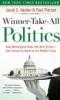
Jacob S. Hacker is the Stanley B. Resor Professor of Political Science at Yale University, Co-Director of the Ludwig Program in Public Sector Leadership at Yale Law School, and a resident fellow at the Institution for Social and Policy Studies. He specializes in American politics, public policy, and inequality, with a focus on health policy, welfare state dynamics, and 'predistribution' strategies. His seminal works include The Divided Welfare State (2002) and Winner-Take-All Politics (2010), which received the APSA's Aaron Wildavsky Award. He has held visiting roles at the Max Planck Sciences Po Center and the U.S. Library of Congress. Education: B.A., Harvard University (1994); Ph.D., Yale University (2000). Research interests span economic inequality, political economy, and policy design. His recent work critiques right-wing populism and explores strategies for equitable economic governance. He co-founded the Consortium on American Political Economy (CAPE) and chairs the APSA's American Political Economy section. Notable awards include the Robert Ball Award (2020) and membership in the American Academy of Arts and Sciences. His policy contributions include the 'public option' concept and advocacy for Medicare expansion.