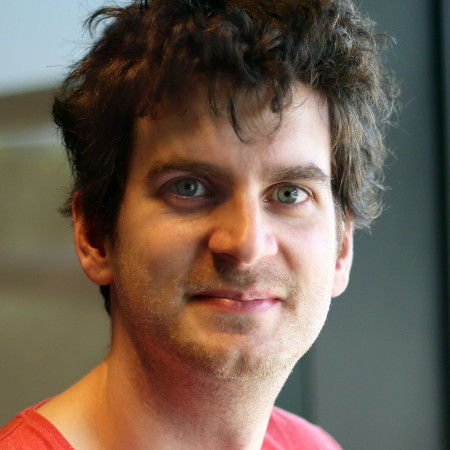
Ruben Verborgh is a Professor of Decentralized Web Technology at the Ghent University – imec and a Visiting Fellow at the Oxford Martin School (University of Oxford). He leads the Internet Technology and Data Science Lab (IDLab) and co-founded the Solid platform with Tim Berners-Lee to re-decentralize the Web. His research focuses on Linked Data Fragments , a paradigm for Web-scale query execution, and explores decentralized data governance , user-controlled data ownership , and rule-based Web agents for policy enforcement. He has co-authored two books on Linked Data and contributed to over 250 publications. Recent articles highlight trends in decentralized data ecosystems , including ODRL policy interoperability , event notification systems , and personal data vaults . His work bridges Linked Data , hypermedia APIs , and privacy-preserving technologies . Verborgh collaborates with institutions like MIT, Oxford, and the European Commission, and advises companies through Inrupt . His labs ( IDLab , Solid Ecosystem ) focus on sustainable data-driven societies.
Bruno Tiago da Silva Gomes is a Researcher in the Department of Electronics and Informatics at Vrije Universiteit Brussel (VUB), Belgium. His work focuses on FPGA-based hardware acceleration, biomedical signal processing, and embedded systems. He leads several high-impact projects, including ENACT (environmental health interventions) and Tech4Health (future health technologies). His research spans FPGA design, machine learning acceleration, and real-time signal processing. Education: PhD in Electronics and Informatics (2019, VUB), supervised by Professors Touhafi and Braeken. His thesis addressed streaming application acceleration on FPGAs. Research interests include Field-Programmable Gate Arrays (FPGA), biomedical sensors (e.g., photoplethysmography), beamforming, and high-level synthesis. He has co-authored over 60 publications and holds an h-index of 439. Key projects include OZR4103 (power-efficient AI for biomedical applications) and NSIS3 (decarbonisation technologies). His work integrates hardware-software co-design for edge computing and secure TinyML systems. Advising includes a Master’s thesis on PPG signal analysis. He contributes to datasets like the AMIVU Acoustic Map Imaging Dataset.
Catherine Legrand serves as Professor of Biostatistics at UCLouvain (Louvain-la-Neuve, Belgium), affiliated with the Institute of Statistics, Biostatistics and Actuarial Sciences (ISBA) and the Louvain School of Statistics, Biostatistics and Actuarial Sciences (LSBA) within the Faculty of Science. She chaired ISBA from 2019-2022 and currently presides over the Louvain Institute for Data Analysis and Modeling (LIDAM). Her academic foundation includes: Master Degree in Mathematics from Université Libre de Bruxelles (1998) PhD in Statistics from Hasselt University (2005) supervised by Prof. Paul Janssen and Prof. Luc Duchateau, specializing in survival analysis and frailty models Her research program centers on Survival Data Analysis with emphasis on frailty models, cure models, and Joint Models for Longitudinal and Survival Data. She develops methodologies for clinical trial design and analysis with direct applications in oncology data, bridging theoretical statistics and clinical practice through collaborations with medical researchers. Analysis of her recent publications (2023-2025) reveals three dominant trends: 1) Advanced survival modeling techniques (semi-Markov, cure rate models) for disease progression; 2) Validation frameworks for surrogate endpoints in clinical trials using joint modeling; 3) Emerging applications in health insurance analytics and public health systems. Her work increasingly addresses real-world healthcare challenges while maintaining methodological rigor. No scientific awards were documented in the available sources. Information regarding student supervision and research grant funding was not provided in the current materials. She leads research within LIDAM and ISBA, building on her prior role as primary statistician for the EORTC Lung Cancer Group where she contributed to multiple Phase II/III trials in lung cancer and mesothelioma. Her current work integrates biostatistical methodology development with practical applications across oncology, public health, and actuarial science domains.
Lenka Benova is a Researcher at the Institute of Tropical Medicine, Antwerp , where she serves as Unit Head in Reproductive and Maternal Health. She is a quantitative population health scientist with interdisciplinary training in management, economics, Middle East studies, demography, and epidemiology . Her career includes project coordination with Médecins Sans Frontières in Nigeria, West Bank, and South Sudan, as well as leading health pillar design in Egypt's conditional cash transfer program (2008-2010). Education: MA in Middle East studies (American University in Cairo) MSc in Demography and Health (London School of Hygiene & Tropical Medicine) PhD in Population Health (London School of Hygiene & Tropical Medicine) Her research focuses on health-seeking behavior in low- and middle-income countries, particularly reproductive/maternal health , with methodological interests in innovative data capture, self-reported indicator validity, and geospatial modeling . Her recent work examines maternal healthcare provision discontinuities in urban Sub-Saharan Africa through system dynamics and geospatial approaches. She teaches on Masters course modules and supervises PhD students , contributing to projects like: modeling maternal care accessibility in Guinea, analyzing fertility transitions in DR Congo, and evaluating hospital data utility for community epidemiology. Her research appears in journals such as Bioinformatics , BMC Pregnancy and Childbirth , and Scientific Reports , focusing on public health, maternal care, and health equity.
Gert Van Assche is a Full Professor at the Department of Chronic Diseases and Metabolism within the Faculty of Medicine at KU Leuven, affiliated with the Translational Research in GastroIntestinal Disorders unit at UZ Leuven. His institutional roles include membership in the Biomedical Sciences Group Evaluation Committee (Clinical), Council of the Faculty of Medicine, POC Arts-specialist in opleiding, Council of the Department of Chronic Diseases and Metabolism, and UZ Leuven Executive Board. His research focuses on translational gastroenterology, particularly inflammatory bowel disease (IBD), Crohn's disease, and ulcerative colitis. He leads the Clin-IC project (2018-2025) developing medtech solutions for patients, bridging clinical practice with technological innovation. His work spans clinical trials, health data utilization, and patient-centered outcomes research. Analysis of his 2020-2022 publications reveals a multidisciplinary approach integrating radiology, psychology, and health informatics. Key themes include advanced imaging for Crohn's disease (MRE-histology correlation), behavioral assessment tools (IBD-Bx questionnaire), international comparisons of IBD management challenges, and novel therapeutic interventions for refractory ulcerative colitis. He has served as promotor for the Clin-IC project and teaches courses including 'Innovative Health Technologies' (E0N72A) and 'Integrated Clinical Research and Reasoning' (E0C63B). His mentoring extends through co-authorship in international collaborations across gastroenterology, radiology, and patient quality-of-life studies. He operates within the Translational Research in GastroIntestinal Disorders unit at UZ Leuven, fostering collaboration between laboratory scientists and clinicians to accelerate therapeutic advancements for gastrointestinal diseases.
Jef Vandemeulebroucke is a researcher at the Department of Electronics and Informatics , Vrije Universiteit Brussel (VUB) , specializing in medical imaging, computer vision, and augmented reality applications in healthcare. His work bridges artificial intelligence with radiology and biomechanics , focusing on automated segmentation, predictive modeling, and real-time surgical navigation systems. Research interests include: Medical image analysis for disease prognosis (e.g., COVID-19 severity , neurosurgical drains ) Development of MedShapeNet , a 3D medical shape dataset for computer vision Augmented reality systems in orthopedic and neurosurgical interventions AI-driven fluorescence endoscopy and dynamic CT for joint kinematics Key trends in his 140+ publications emphasize deep learning , image registration , and 4D-CT applications . Supervised theses include brain age prediction and chest radiography automation. Active in 38 projects (e.g., AI-NIMO , TumorScope ), he collaborates with institutions like the Universitair Ziekenhuis Brussel (UZB) and FWO (Fund for Scientific Research-Flanders).
Herman Tournaye is a Physician Scientist at the Center for Reproductive Medicine of the Vrije Universiteit Brussel (VUB). With over 760 research outputs and an h-index of 86 , his work spans Reproductive Medicine , Andrology , and Stem Cell Research , focusing on fertility preservation and pregnancy complications . Education : Limited details provided, but inferred MD/PhD in Clinical Sciences. Research Trends : Recent articles emphasize AI in reproductive clinics , testicular stem cell transplantation , and pre-eclampsia biomarkers . His work bridges basic science (spermatogenesis, stem cells) with clinical applications (IVF, embryo transfer, surgical interventions). Scientific Awards : 2008 Fellowship from BSRM Central Office - Orga-med Advisory Role : Supervised 10+ theses, including studies on genetic infertility , IVF outcomes , and testicular fibrosis models . Grants & Projects : Led initiatives like SRP89 (spermatogonial stem cells) and FWOAL1141 (testicular tissue cryopreservation), funded by VUB and FWO. Media Engagement : Frequent expert commentator on fertility topics, appearing in De Morgen , Radio 1 , and Le VIF .
Lesley De Cruz is a Research Fellow at Vrije Universiteit Brussel's Electronics and Informatics department within the School of Electronics and Computer Science, with concurrent research affiliation at the Royal Meteorological Institute of Belgium since 2012. Current projects include climate-resilient urban modeling through BRGEOZ464 and flood prediction systems under FWOAL1127. Research focuses on AI-driven climate modeling with expertise in nonlinear dimension reduction (DIRESA framework), urban climate resilience, and renewable energy meteorology. Key methodologies integrate deep learning with environmental physics for applications including real-time flood prediction offshore wind farm optimization LEGO-based urban climate prototyping regional climate downscaling Recent publications (2023-2025) demonstrate strong trends in geospatial AI for environmental systems, with 64% focusing on climate change impact analysis, 54% on urban applications, and 51% on control measure development. The DIRESA framework represents a significant contribution to nonlinear dimension reduction in climate informatics. Awards include: Matìère Grise Science Communication Trophy (2024) Major media recognition for breakthrough rainfall prediction model (2021) Supervises multiple PhD candidates and leads public engagement initiatives including CurieuCity and Dag Van de Wetenschap. Current grants total 12 active projects (2021-2029) with €2.8M+ funding, primarily focused on climate adaptation and sustainable technology development. Labs and teams include the Climate Informatics Group at VUB and collaborative networks with Ghent University and the Flemish Institute for Carbon-Aware Technologies.
Femke De Backere is a part-time Associate Professor at Ghent University's IDLab research group (Faculty of Engineering and Architecture, Department of Information Technology) and a full-time Senior Scientist at imec. She holds a Bachelor's in Informatics and Master's in Computer Science Engineering from Ghent University, with doctoral research focused on semantic technologies and personalized healthcare systems through collaborations with intensive care units and industry partners. Her research integrates computer science, health psychology, and movement science across three primary domains: (1) developing explainable knowledge models, (2) creating personalized context-aware systems, and (3) designing engagement mechanisms like serious games and gamification. Current projects include digital interventions for cancer survivors, VR-based ecological validity platforms, and physical activity promotion in older adults. Recent publications (2020-2025) demonstrate strong focus areas: 60% address personalized health interventions using machine learning and ontologies; 30% explore virtual reality applications in clinical and behavioral contexts; and 10% examine academic systems development . Longitudinal trends show increasing emphasis on sensor-driven behavioral analytics and adaptive eHealth platforms. She leads significant research initiatives including: GRAY – Ghent University Research for Aging Young (2020-2030) FWO projects on eHealth self-management for cancer survivors and sedentary behavior interruption Interdisciplinary grants for VR-enabled consumer preference studies and physical activity interventions Her lab coordinates doctoral training for 9+ students and collaborates with the eBehaviourChange research unit, focusing on technology-mediated behavior modification across clinical and wellness domains.
Ellen Gorus is a Professor at the Department of Personality and Psychopathology at Vrije Universiteit Brussel (VUB), specializing in gerontology and clinical psychology. She conducts research on Alzheimer’s disease, Mild Cognitive Impairment, active ageing in frail elderly, and suicide risk assessment in older adults, with an h-index of 21. Her clinical work focuses on cognitive and emotional assessment of geriatric patients at UZ Brussel’s Geriatric Dayhospital. 2025: Biopsychosocial profiles of suicidal elderly 2024: Digital health technologies for neurocognitive disorders Research interests encompass early Alzheimer’s detection, psychosocial aspects of physical activity in frail elderly, and eHealth solutions for older adults. Her projects include collaborations with Québecois institutions and longitudinal studies on suicide risk in Flanders. Scientific awards : Best Oral Communication (2006) Gerontological Thesis Prize (2002) Psychogeriatric Award (2008)
Pierre Bulpa is an active researcher with expertise in hematology, pulmonary medicine, and critical care, focusing on thrombotic complications in severe COVID-19 and lung transplantation. His work intersects with the UN Sustainable Development Goals related to health and well-being (SDG 3) and innovation (SDG 9). Collaborations span international institutions, particularly in hemostasis and respiratory disease research. Key research areas: Thrombosis in critically ill patients, lung transplantation, methadone's role in transplant outcomes, and diagnostic algorithms for pulmonary aspergillosis. Recent publications (2020–2023) emphasize longitudinal hemostasis disturbances in COVID-19, validated biomarkers, and data-driven clinical insights. Collaborations include multidisciplinary teams across Belgium and France, with contributions to clinical guidelines.
An Jacobs is a prominent Professor at the Vrije Universiteit Brussel (VUB) in the Faculty of Social Sciences, specifically within the Department of Sociology and Communication Sciences. With a Doctor of Political and Social Sciences in Sociology, Jacobs has established herself as a leading researcher at the intersection of technology, healthcare, and social sciences. Her work spans multiple disciplines with significant contributions to human-robot collaboration, digital health, and the sociology of technology. Her research interests focus on Human-Computer Interaction , Human-Robot Collaboration , Participatory Design , and Digital Health Inclusion , particularly for older adults. Jacobs explores how technology can be designed with and for users, emphasizing the importance of understanding user experiences, especially in healthcare contexts. Her work on multimorbidity self-management platforms demonstrates her commitment to creating practical solutions that address real-world challenges in healthcare systems. She has pioneered approaches to studying technology acceptance among older adults and has made significant contributions to understanding digital bother and burden in aging populations. Analysis of Jacobs' recent publications reveals a strong trend toward human-centered AI applications in healthcare, with particular emphasis on explainable AI systems, breast cancer screening innovations, and digital self-management tools for chronic conditions. Her work consistently bridges technical development with social implications, ensuring that technological solutions are not only effective but also ethically sound and socially appropriate. The interdisciplinary nature of her research is evident in publications spanning biomedical engineering, oncology, endocrinology, and social robotics. Finalist science communication award 2019 from the Royal Flemish Academy of Belgium for Science and the Arts Jaarprijs Wetenschapscommunicatie 2019 Silver ITEA Achievement Award 2012 Sustainability Leadership Recognition in Robotics 2024 As a principal investigator on numerous research projects including Brubotics, COMPASs 2.0, and DIGIT-ABLE, Jacobs has secured substantial funding for interdisciplinary research that combines social sciences with technological innovation. Her approach emphasizes co-creation with end-users, particularly evident in her work on digital health solutions for older adults with multimorbidity. Jacobs leads the Digital Ageing Consortium, which has produced significant datasets on older adults' technology experiences in Flanders. Her laboratory work spans multiple domains, from robotics research at Audi Vorst (where humans and robots work side-by-side) to in vitro testing of nano-aerosol exposures. Jacobs collaborates extensively across disciplines, working with medical researchers, engineers, and social scientists to address complex challenges in technology adoption and healthcare innovation.
Pieter-Jan Daems is a postdoctoral researcher at Vrije Universiteit Brussel's Engineering Technology department, specializing in the Acoustics & Vibrations Research Group. With an h-index of 6, his work focuses on wind turbine dynamics and machine learning applications in renewable energy systems. Active in wind turbine research (100% focus) Specializes in modal analysis (78%) and farm-wide monitoring (35%) Expertise in condition monitoring (33%) and damping analysis (19%) Engages with machine learning (22%) for anomaly detection (19%) His recent publications demonstrate a multidisciplinary approach combining mechanical engineering, data science, and renewable energy systems. Key research themes include turbine-level power prediction, wake loss analysis, and drivetrain dynamics investigation. While no formal awards are listed, his collaborations with university researchers and industry experts indicate strong academic engagement.
Tijl De Bie is a Senior Full Professor at the University of Ghent, specializing in machine learning, data science, and their applications in bioinformatics, computational social sciences, and HR analytics. He leads the AI and Data Analytics (AIDA) research group within IDLab-ELIS. PhD in Machine Learning (KU Leuven, 2005) Worked at U.C. Berkeley, U.C. Davis, University of Southampton, and University of Bristol His research focuses on foundational aspects of data science, including fairness in AI, network embeddings, and human-centric methodologies. Recent work explores temporal network simulation, bias mitigation, and large-scale career trajectory datasets. Notable awards include an FWO Odysseus Group I grant and three ERC grants (Consolidator, Proof of Concept, Advanced). Current projects involve ethical AI frameworks and dynamic network analysis. Scientific Awards : FWO Odysseus Group I, ERC Consolidator, ERC Proof of Concept, ERC Advanced Grant He collaborates extensively in interdisciplinary research, applying machine learning to social media analysis and financial domains. His team develops open-source tools like EvalNE and Fondue for network embedding evaluation.
Jesse Davis is a Professor at the Department of Computer Science , KU Leuven , actively contributing to the Machine Learning group and the Sports Analytics Lab . He is part of the Faculty of Engineering Science and the Leuven.AI Institute . Ph.D. in Computer Sciences from University of Wisconsin-Madison (2007) M.S. in Computer Sciences from University of Wisconsin-Madison (2005) B.A. in Computer Science from Williams College (2002) His research focuses on machine learning, data mining, big data analytics, and sports analytics, with significant work in: Transfer learning and Markov logic networks Anomaly detection and semi-supervised learning Medical NLP and biomechanical data analysis Soccer performance metrics and tactical analysis His recent work explores spatio-temporal data analysis in sports and explainable AI for medical applications, with collaborations spanning finance, healthcare, and semiconductor manufacturing. Notable scientific awards include: Best Paper Award (Applied Data Science Track) at KDD 2019 Best Technical Paper Award at Intelligence Analysis Workshop He advises numerous PhD and Master's students in areas like: Football analytics Tree ensemble compression Medical question-answering systems Biomechanical load prediction His lab develops tools such as: GSSL for Markov network structure learning TODTLER for transfer learning Alchemy system for Markov logic networks